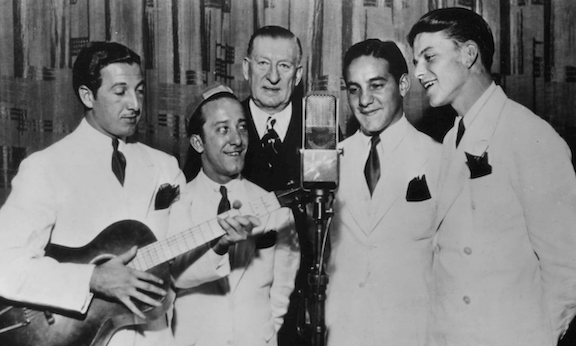
The Major’s Amateur Hour

Above: Photo of the Hoboken Four as they appeared on the "Amateur Hour with Major Bowes" in 1935. At center is "Major" Edward Bowes, and at right is Frank Sinatra. The other three members of the Hoboken Four were Frank Tamburro, Patty Prince and Jimmy Petro. (knkx.org)

Nearly seventy years before American Idol appeared on our TV screens, a hugely successful and influential talent show filled the airwaves from NBC’s radio studios at Rockefeller Center.
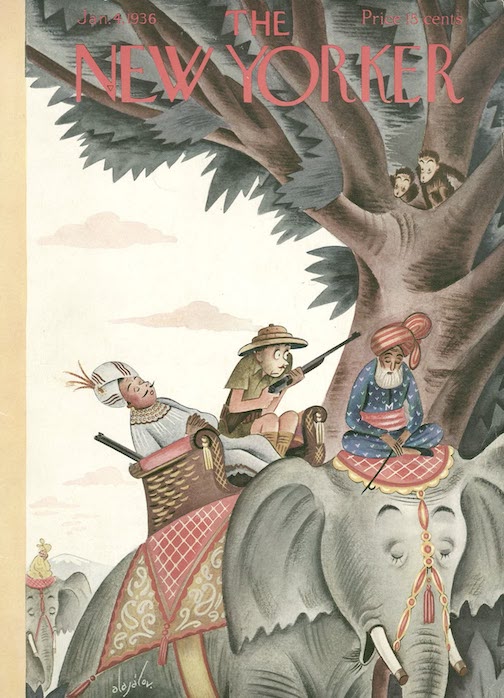
January 4, 1936 cover by Constantin Alajalov.

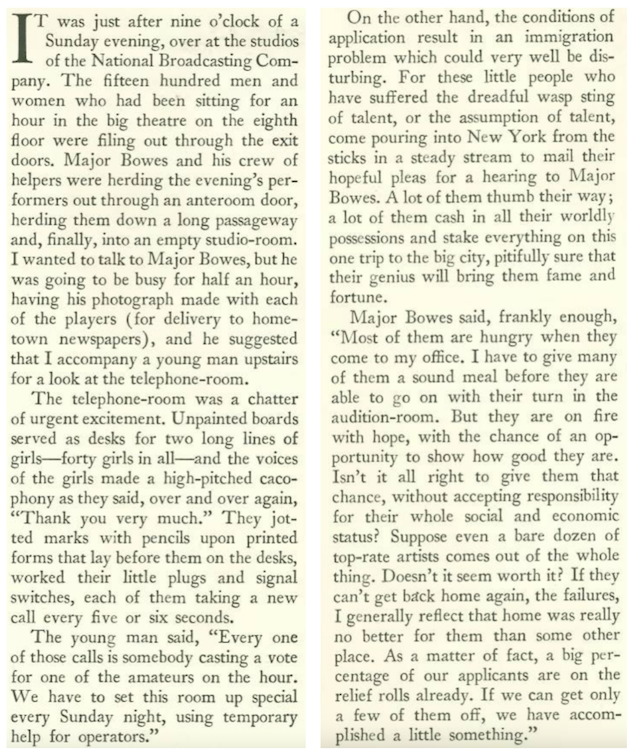
Millions tuned in each week to the Major Bowes Amateur Hour, which got its start in 1934 at radio station WHN before moving to NBC the following year. Created and hosted by “Major” Edward Bowes (1874–1946), Bowes would chat with contestants before listening to their performances, which could be cut short by the Major’s gong (see below). For his “A Reporter at Large” column, Morris Markey paid a visit to Bowes during evening auditions at the NBC studios. Excerpts:
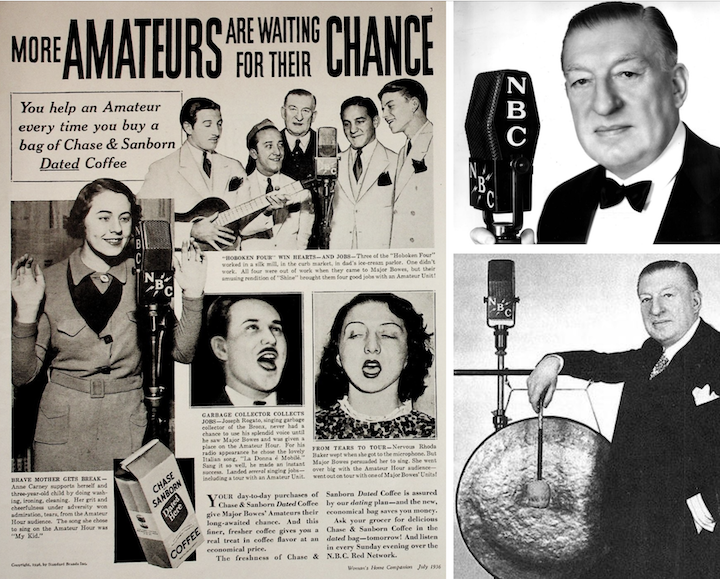
THE GONG SHOW…At bottom right, Edward Bowes with the gong he used to abruptly end acts he deemed poor or inept—he abandoned the prop in 1936 after receiving thousands of letters from listeners who objected to the premature termination of acts (apparently the concept was a direct inspiration for Chuck Barris’s 1970s TV program, The Gong Show). At left, a July 1936 Women’s Home Companion advertisement from the show’s sponsor, Chase & Sanborn. The ads highlighted the rags-to-riches stories of the more successful contestants. (eBay.com/Wikipedia)

Markey ended his piece noting the reality of the many contestants who, unlike Frank Sinatra, would not go on to successful entertainment careers.
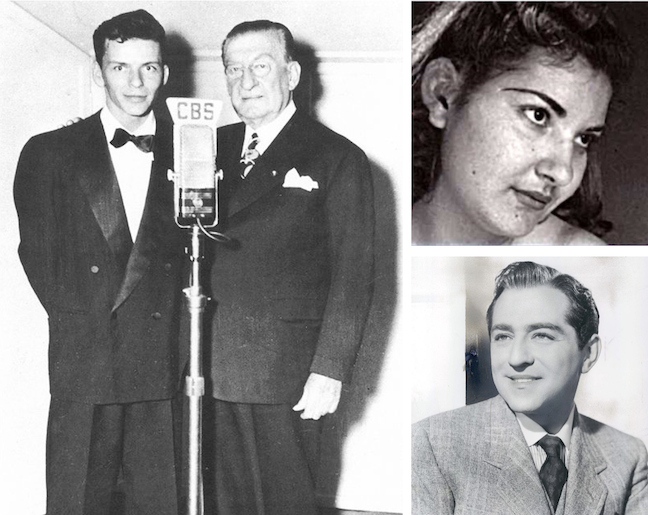
STARMAKER…Clockwise, from left: Major Edward Bowes and returning Amateur Hour performer Frank Sinatra in 1943; in 1935 eleven-year-old Maria Callas performed the Madama Butterfly aria “Un bel dì vedremo,” on the Amateur Hour; actor/baritone Robert Merrill performed on the show in 1936. (winnetoba.com/mariacallasestate.com/Wikipedia)

 * * *

Fleeing the Limelight

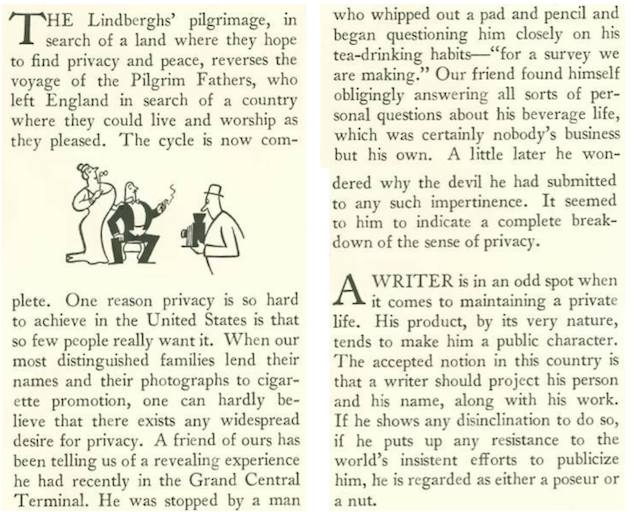
In December 1935 Charles and Anne Morrow Lindbergh secretly boarded a ship in New York and headed to England, seeking to escape the media frenzy that followed their son’s kidnapping and the subsequent trial. Thanks to connections through Anne’s family, they were able to move into a secluded estate in the Kent countryside. In his “Notes and Comment,” E.B. White explained:
HIDEOUT…From 1936 to 1938 Charles and Anne Morrow Lindbergh lived in a secluded English estate called “Long Barn.” The estate in County Kent was owned by a friend of Anne’s family. (waverlyhs.weebly.com)
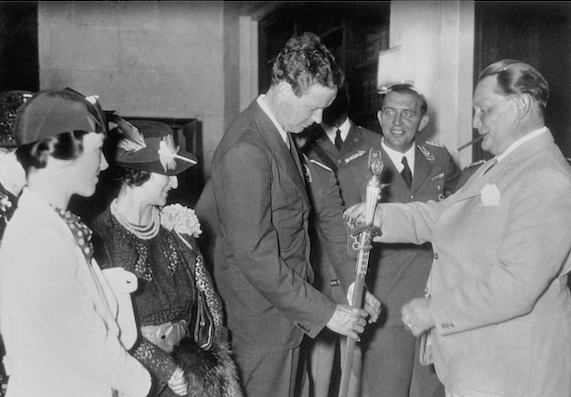
NOT HIS FINEST HOUR…In July 1936 Luftwaffe commander Hermann Goering (right) presented the Sword of Honor of the German Air Force to Charles Lindbergh during a visit to Berlin. Anne Morrow Lindbergh is to the far left. Goering would also present Lindbergh with a high-ranking Nazi-era civilian medal, the Service Cross of the German Eagle, during a 1938 visit. Anne presciently referred to the medal as “the albatross.” (Library of Congress)

According to White, Mayor Fiorello La Guardia cited lax police control of the media in the case of the fleeing Lindberghs. In turn, White attempted to explain the unique temperaments of Irish police officers.

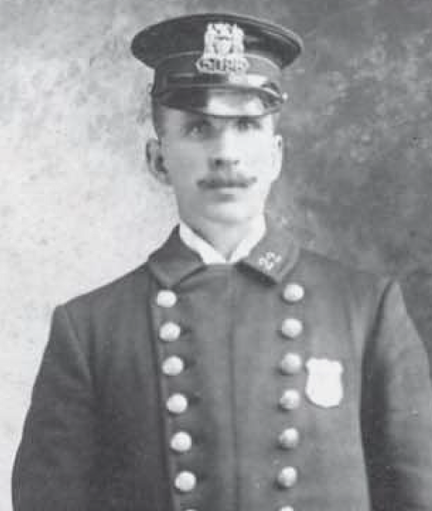
GIVE US A BREAK…E.B. White noted the courage and wisdom of Irish cops, but also found their lassitude “almost theatrical.” Pictured above is Irish immigrant Patrick Leddy, who joined the NYPD in 1910 and remained on the force for more than thirty-five years. (Courtesy of Margaret Fitzpatrick Leddy via nyirishhistory.us)

A final note on the Lindberghs from Howard Brubaker, a snippet from his “Of All Things” column.
 * * *

Italian Swashbuckler

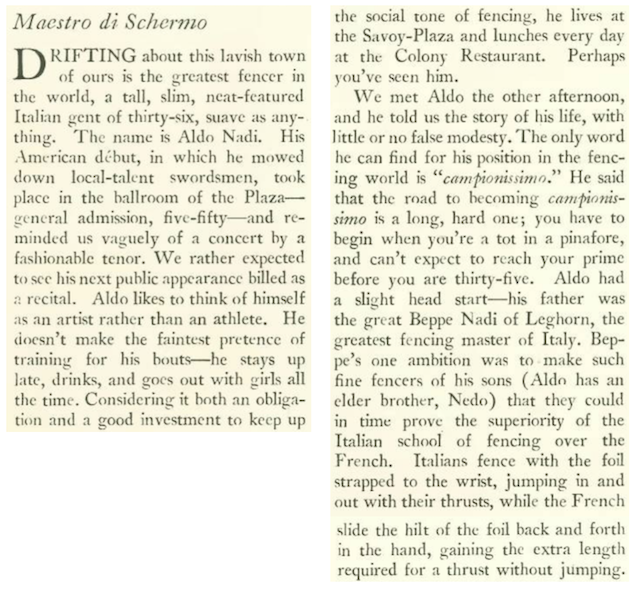
The Italian fencer Aldo Naldi (1899-1965) won three gold medals and one silver at the 1920 Olympics before turning professional. According to West Coast Fencing, Aldo traveled Europe like a prizefighter, “competing in well-attended matches for cash purses…in a world of travel, glamour, drinking, womanizing, gambling and fencing, Aldo Nadi reigned supreme, going nearly eight years without a defeat.” “The Talk of the Town” was on hand for his American debut. Excerpts:
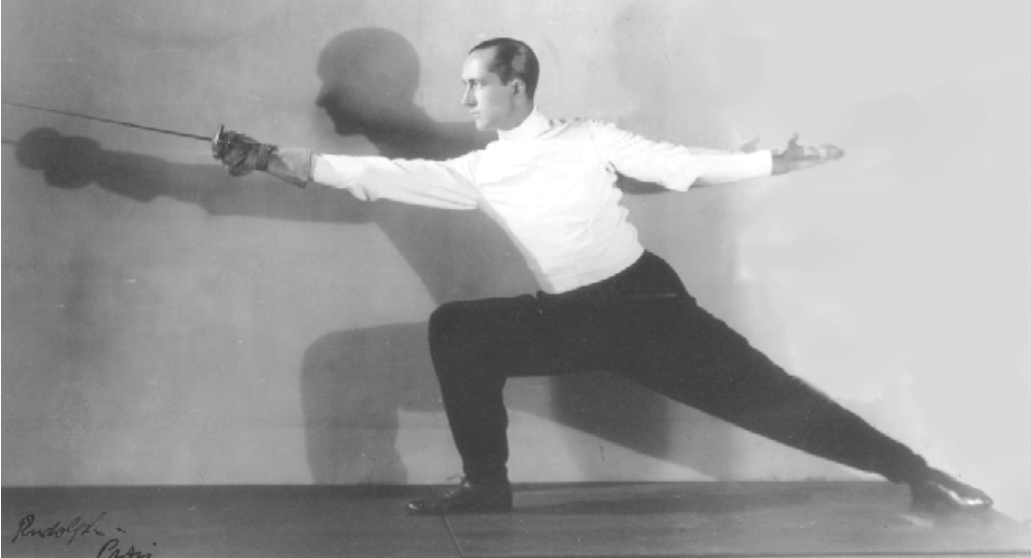
EN GARDE!…During the interwar years Aldo Nadi reigned supreme, going nearly eight years without a defeat. (dennishollingsworth.us)

“Talk” also examined the fuss being made over the Great Chalice of Antioch, which was on display at the Brooklyn Museum. Excerpts:
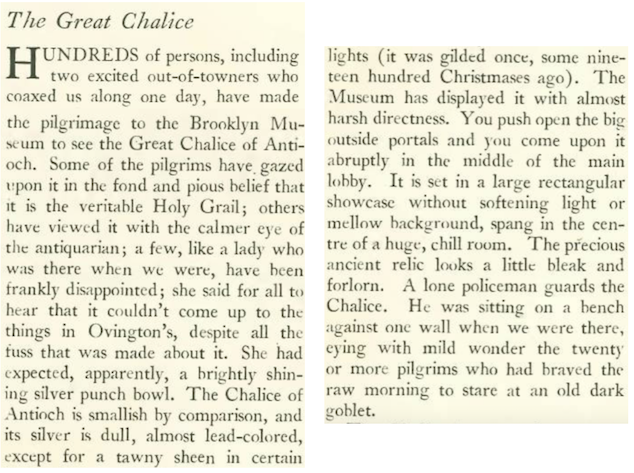
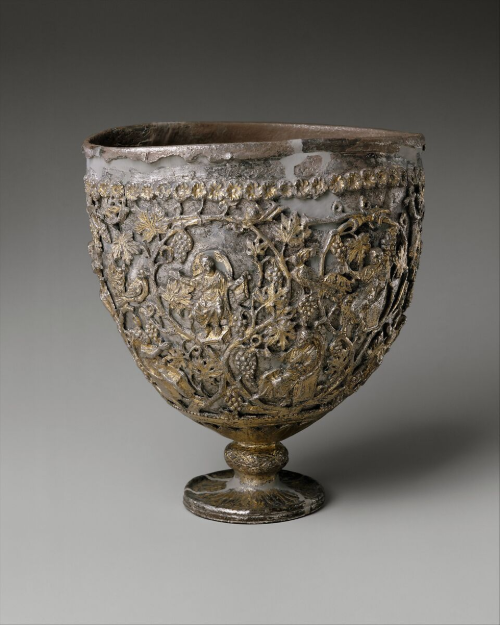
COULD IT BE?…Claimed to have been found in Antioch around 1900, this chalice’s plain silver bowl was ambitiously identified by some as the Holy Grail, the cup used by Christ at the Last Supper. It is displayed with the Metropolitan Museum’s Byzantium collection. (metmuseum.org)

* * *

Year, Schmear

To mark the New Year, Arthur Guiterman offered up one his humorous poems…
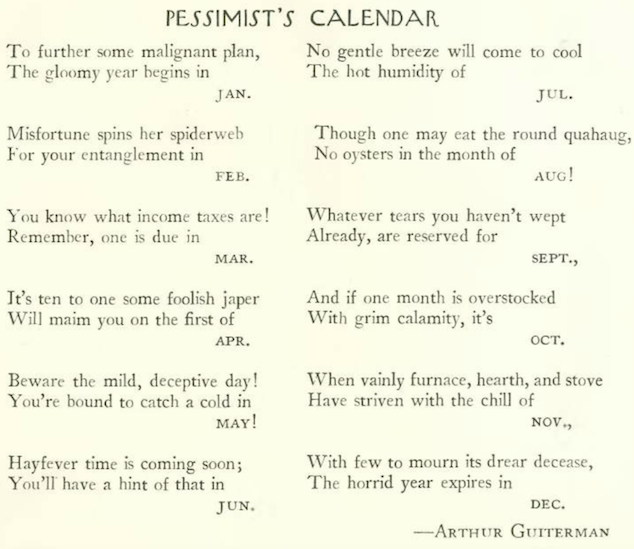
…Guiterman (1871–1943) was an early contributor to The New Yorker—the magazine’s very first issue, Feb. 21, 1925, featured the first installment of Guiterman’s recurring “Lyrics from the Pekinese,” which ran through the first eleven issues.
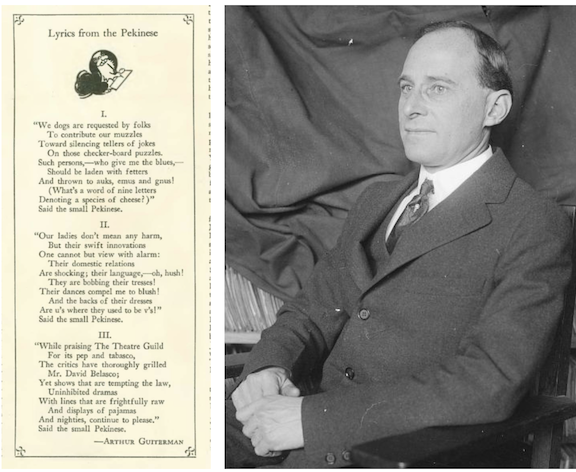
MEOW…Arthur Guiterman’s “Lyrics from the Pekinese,” featured in the first issue of The New Yorker. At right, Guiterman in an undated photo. (Library of Congress)

 * * *

Before He Was Spooky

Robert Benchley’s review of the stage began on a bright note with Victoria Regina, which starred Vincent Price as Prince Albert and Helen Hayes as Queen Victoria. Benchley praised the realism Price and Hayes lent to the production. Excerpts:
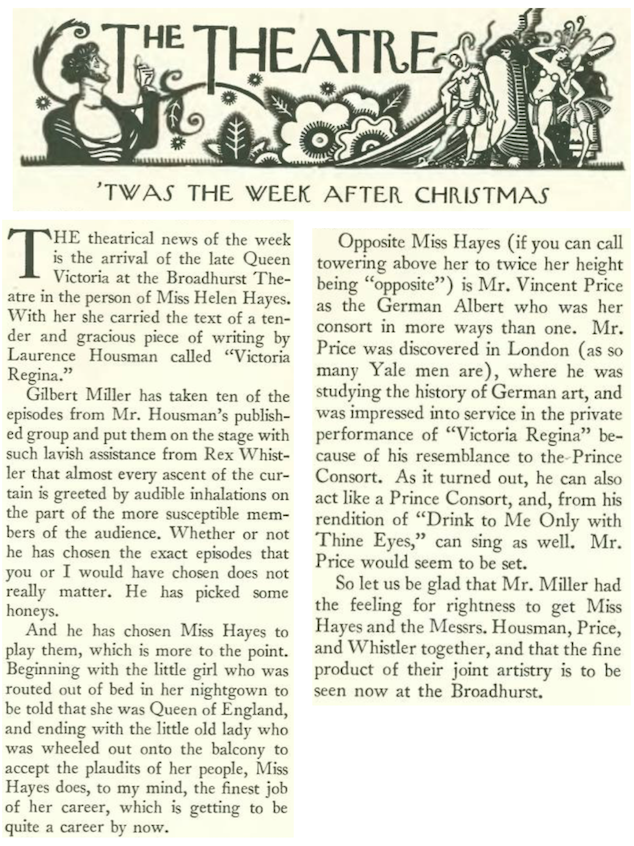
A MATCH MADE ON BROADWAY…The 24-year-old Vincent Price and the 35-year-old Helen Hayes portrayed Prince Albert and Queen Victoria in Victoria Regina, which ran for 203 performances at the Broadhurst Theatre. Robert Benchley thought their casting was ideal. (Pinterest)

Benchley also sat through George White’s latest Scandals revue, finding it similar to White’s older shows—beautiful showgirls, various singers and dancers, and assorted comedians—with Bert Lahr shining above it all.
IT SEEMED LIKE OLD TIMES to Robert Benchley as he took in the latest edition of George White’s Scandals. Bert Lahr (left) was among the headliners for the 1936 revue, which ran for 110 performances at the New Amsterdam Theatre before taking to the road. (Wikipedia/Playbill.com)

 * * *

At the Movies

John Mosher had a busy week at the movies, finding “considerable pleasure” in the screen adaptation of Eugene O’Neill’s Ah Wilderness!…
MILLER TIME…The Miller family attends a commencement ceremony that helps kick off the action in Ah Wilderness! From left, Aline MacMahon, Mickey Rooney, Spring Byington, and Bonita Granville. (IMDB)

Mosher also looked at films featuring leading actresses of the day—Barbara Stanwyck in Annie Oakley, Bette Davis in Dangerous, and Claudette Colbert in The Bride Comes Home.
A TRIO OF TALENTS…Clockwise, from top left, Claudette Colbert had her hands full with Robert Young and Fred MacMurray in The Bride Comes Home; Barbara Stanwyck took aim in Annie Oakley; and Bette Davis portrayed a down-and-out actress with trouble on her mind in Dangerous. For her performance, Davis won the Academy Award for Best Actress. (laurasmiscmusings.blogspot.com/girlswithguns.org/vanguardofhollywood.com )

 * * *

Gaming the Games

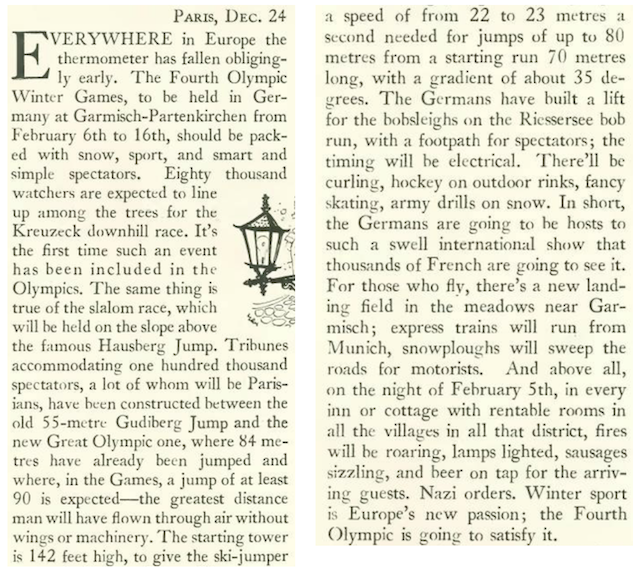
In her “Paris Letter,” Janet Flanner noted the preparations for the Fourth Olympic Winter games to be held in Garmisch-Partenkirchen, Germany.
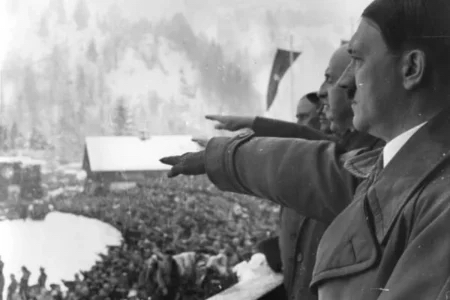
WINTER HAS ARRIVED…Adolf Hitler and his fellow Nazi thugs brought a certain chill to the 1936 Winter Games in Garmisch-Partenkirchen. Garmisch and Partenkirchen were separate communities until Hitler forced them to merge in anticipation of the games. (arolsen-archives.org)

 * * *

From Our Advertisers

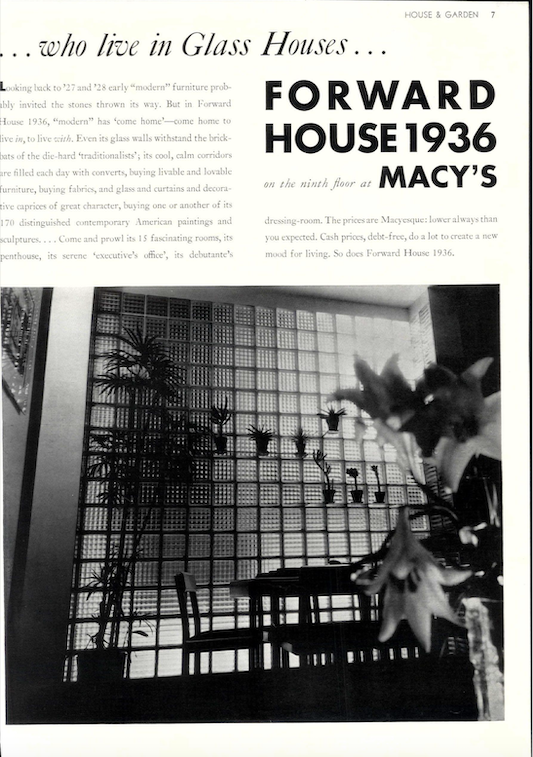
From 1933 to 1939, Macy’s hosted a series of unique design exhibitions under the title “Forward House” that showcased contemporary furniture, decor, and architectural ideas…

…for reference, here is another “Forward House” advertisement from the February 1936 House & Garden magazine…
…the folks at Robbins Island Oysters employed the legend of Giacomo Casanova to market their tasty little rocks…apparently Casanova claimed that he consumed more than fifty oysters each morning to sustain his amorous adventures…

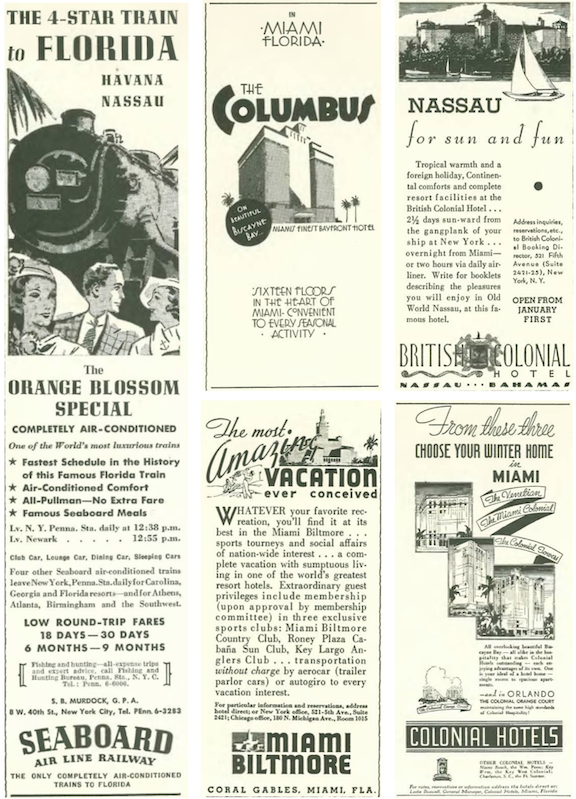
…with the holidays over, the number of ads decreased significantly, leaving readers with a mere sixty pages—less than the half the length of the fat pre-Christmas editions…the theme in the Jan. 4 issue was travel to warmer climes, these examples culled from several back of the book pages…
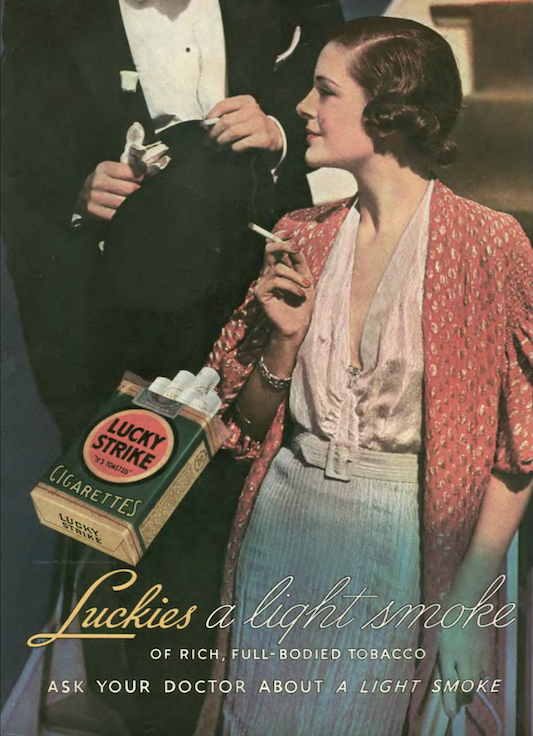
…the end of the holiday season did not stop tobacco companies from taking out lavish full-page advertisements targeting women smokers, this one gracing the back cover…note the implied medical endorsement at the bottom…
…we clear the air and move on to our cartoonists, beginning with spot drawings by D. Krán

…and Christina Malman

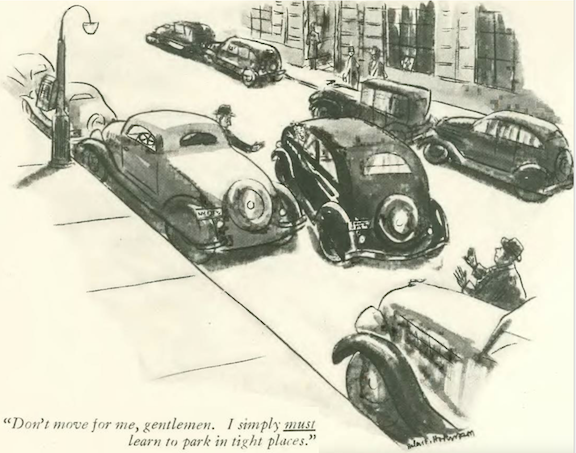
…one of Helen Hokinson’s girls sought an impromptu parking lesson…
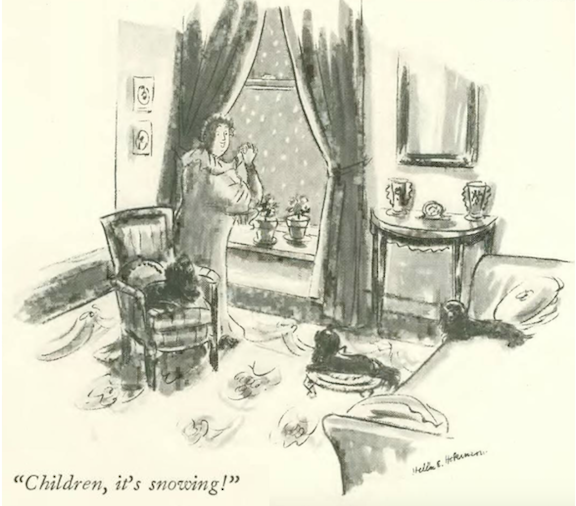
…while another welcomed winter with her furry charges…
Whitney Darrow Jr gave us a full-service information booth…

Mary Petty illustrated a dowager with simple tastes…

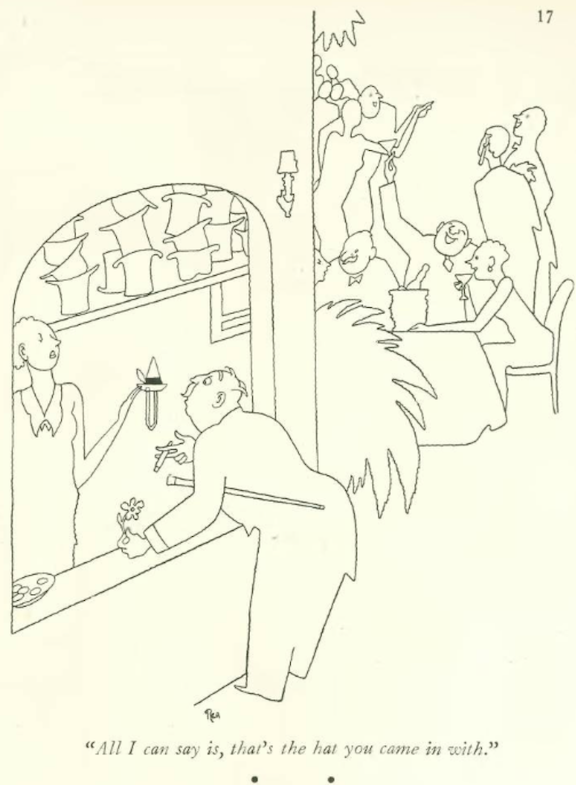
Gardner Rea was confounded at the hat check…
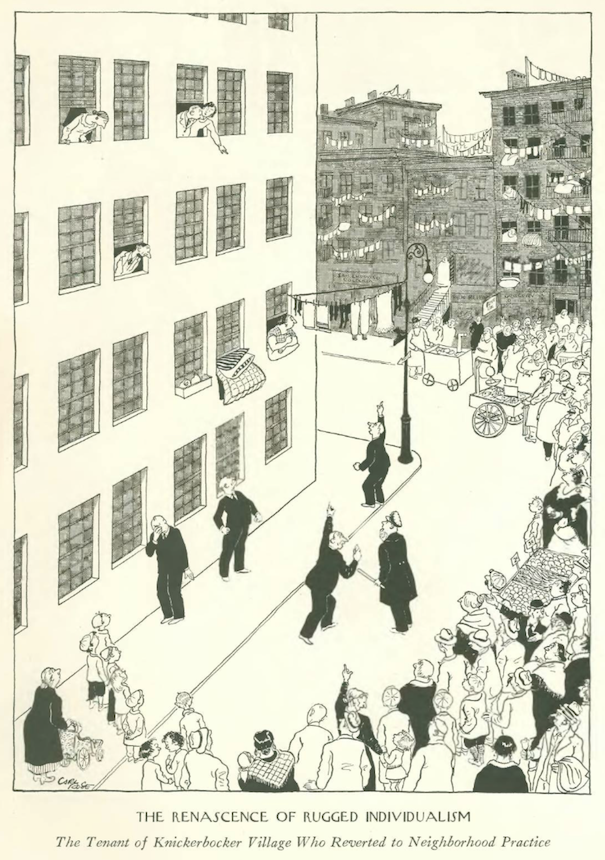
Carl Rose offered up another example of rugged individualism…
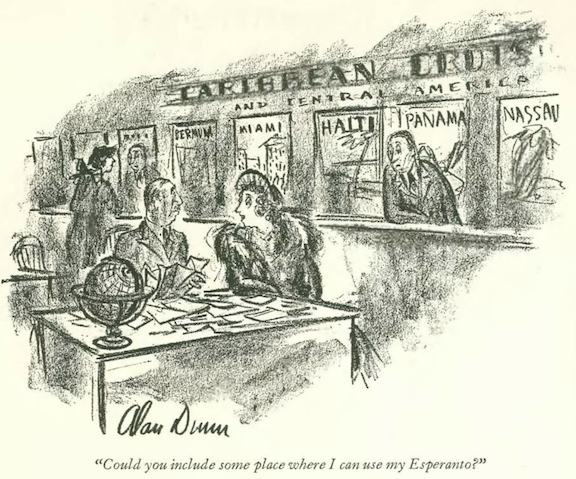
Alan Dunn served up a unique language challenge…
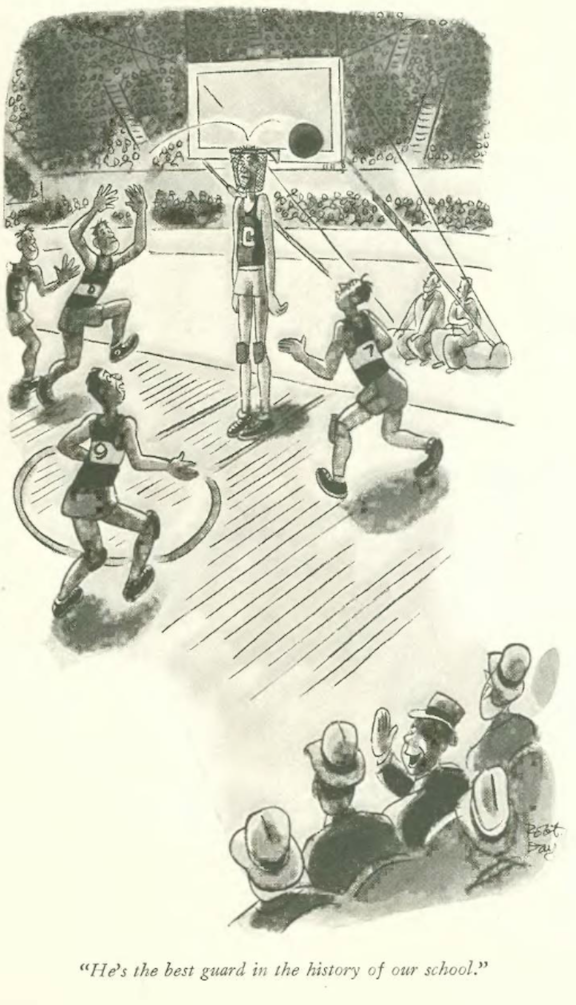
Robert Day stood tall at a basketball game…
William Crawford Galbraith was horsing around…

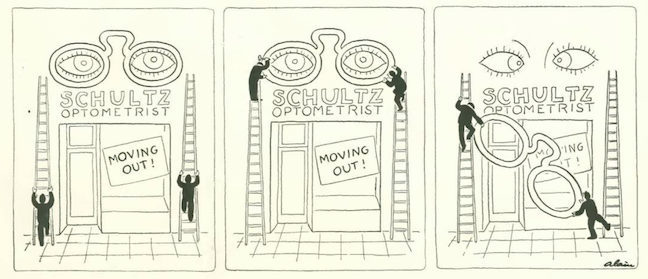
Alain looked crosseyed at a store closing…
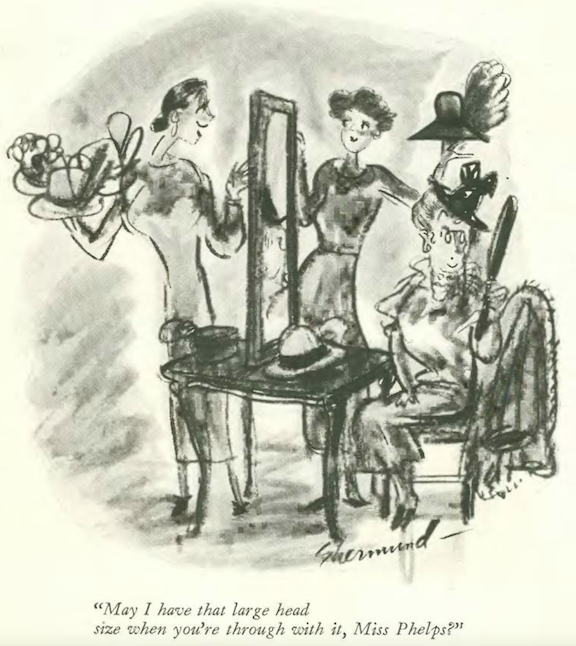
…and we close with Barbara Shermund, who sized up things at a hat shop…
Next Time: Magnificently Obsessed…

The Wild West

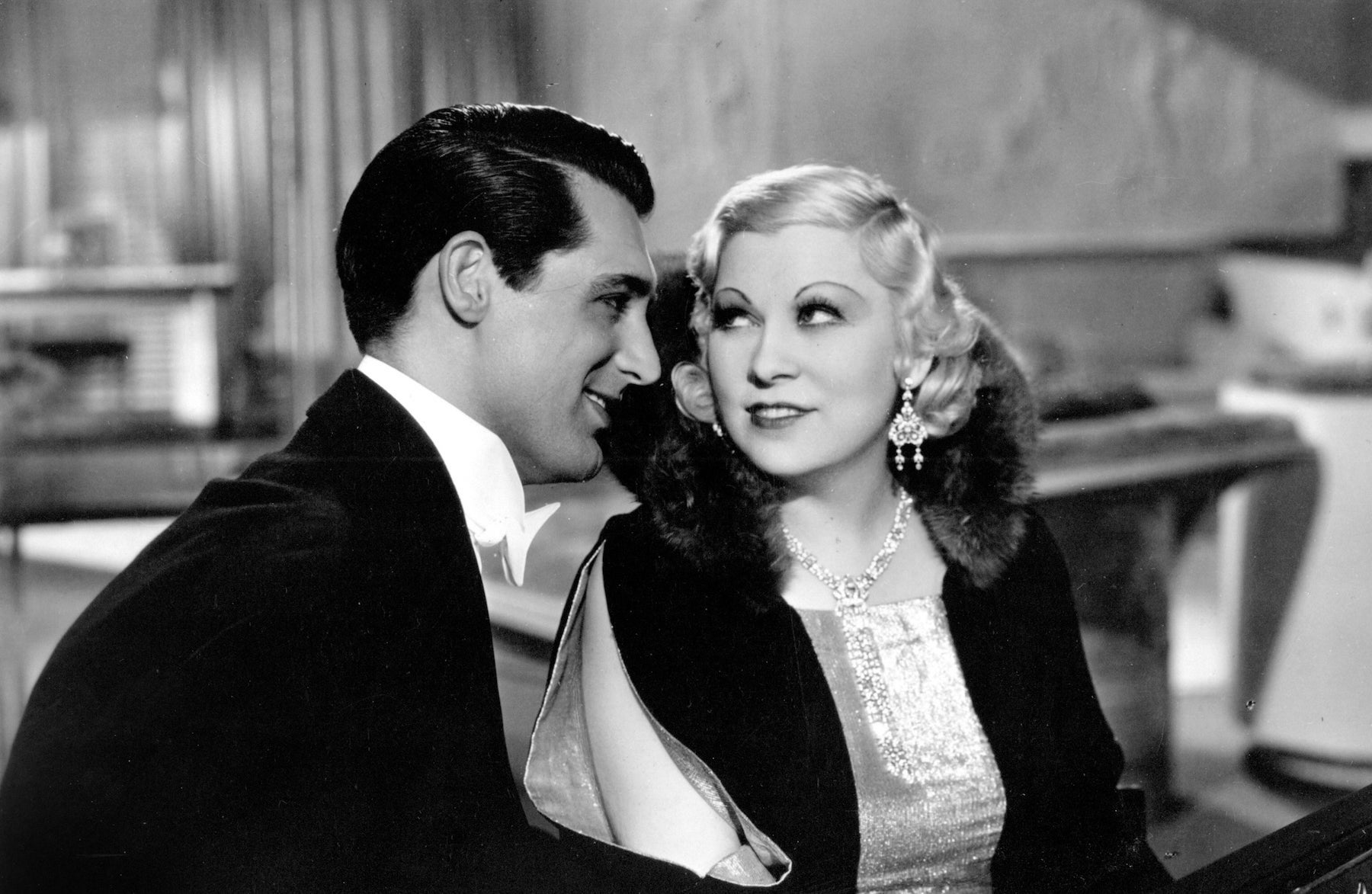
Kino Lorber)

We first encountered Mae West back in 1926 when The New Yorker commented on her risqué Broadway play, Sex. Although the play was the biggest ticket in town, it eventually attracted a police raid that landed West in jail on morals charges. Sentenced to ten days for “corrupting the morals of youth,” she could have paid a fine, but for West a short stint on Welfare Island was worth its weight in publicity gold.

Oct. 14, 1933 cover by Rea Irvin.

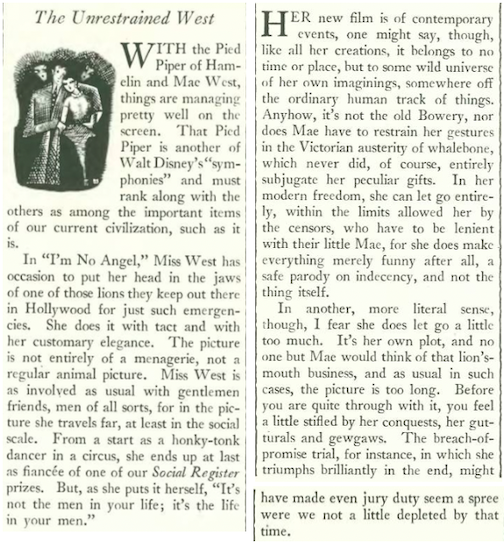
Fast forward seven years, and West is one of the nation’s biggest box office attractions and starring in her third film, I’m No Angel. Depression-era audiences responded enthusiastically to West’s portrayals of a woman from the wrong side of the tracks who in the end gains both fortune and social acceptance. Although puritanical forces continued to be outraged by West’s antics, New Yorker film critic John Mosher found her act to be “a safe parody on indecency.”

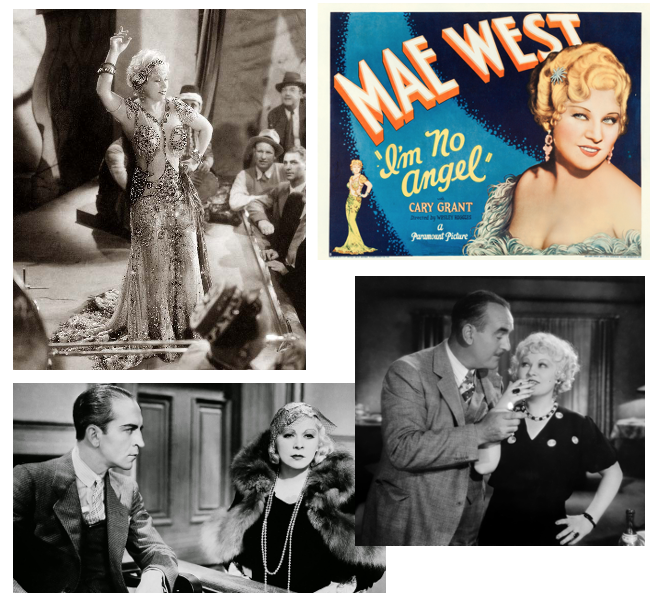
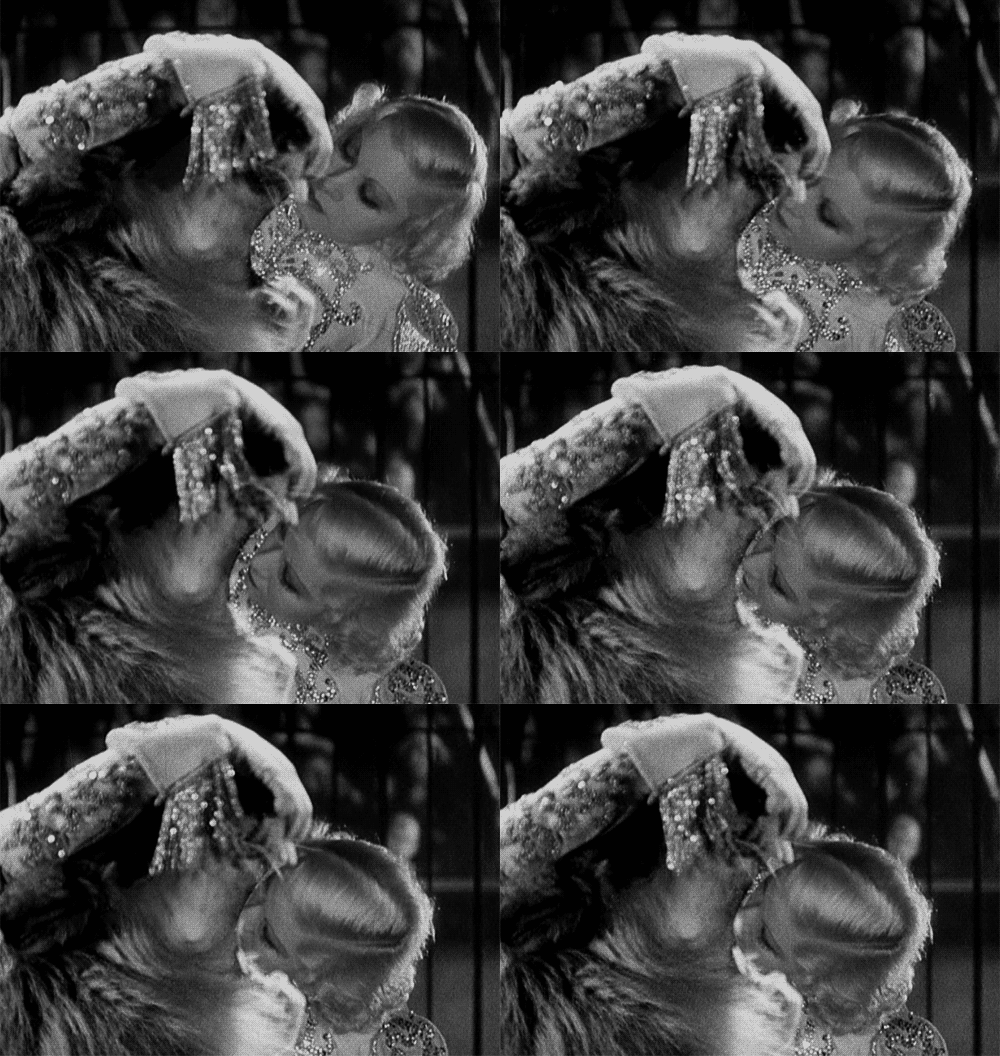
SHIMMY TO SUCCESS…Clockwise, from top left: At the beginning of I’m No Angel, Tira (Mae West) shimmies and sings in a circus sideshow; studio poster for the film— In the early 1930s, West’s films were key in saving Paramount Pictures from bankruptcy; a wealthy sideshow customer (William B. Davidson) arranges a private rendezvous; Tira has her day in court despite attempts by her ex-boyfriend, Slick Wiley (Ralf Harolde), to discredit her. (IMDB)
SHE GETS HER MAN…Cary Grant starred opposite Mae West for the second and final time in I’m No Angel. Eleven years junior to West, Grant portrayed Tira’s fiancé, Jack Clayton. (TCM)

And finally, a much-talked about scene from the movie featured West putting her head (rather sensually) into the mouth of a lion. In reality it appears to be a camera trick: West was actually placing her head to the side of the lion’s mouth. Still, a gutsy move by West. As for the lion, it was no picnic either.

 * * *

Comic Relief

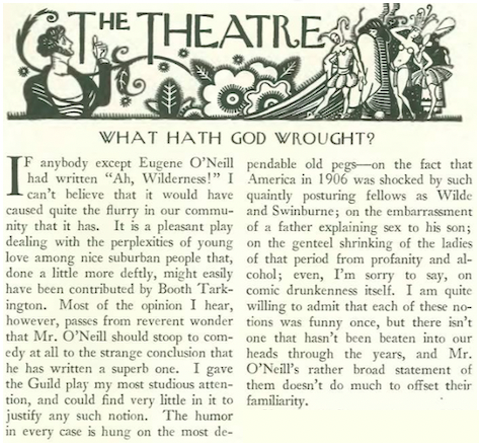
Eugene O’Neill surprised critics and audiences alike when he premiered Ah, Wilderness! at Broadway’s Guild Theatre on October 2, 1933. Among the critics was Wolcott Gibbs, who concluded that O’Neill should stick to his usual themes of disillusion and despair. An excerpt:

PASS THE CORN, PLEASE…Around the table in the original 1933 Broadway production of Ah, Wilderness! are (from left) George M. Cohan (Nat Miller), Eda Heinemann (Lily), Elisha Cook, Jr. (Richard), Gene Lockhart (Sid), Marjorie Marquis (Mrs. Nat Miller), Walter Vonnegut, Jr. (Tommy) and Adelaide Bean (Mildred). (Photograph by Vandamm for Stage magazine, November 1933)
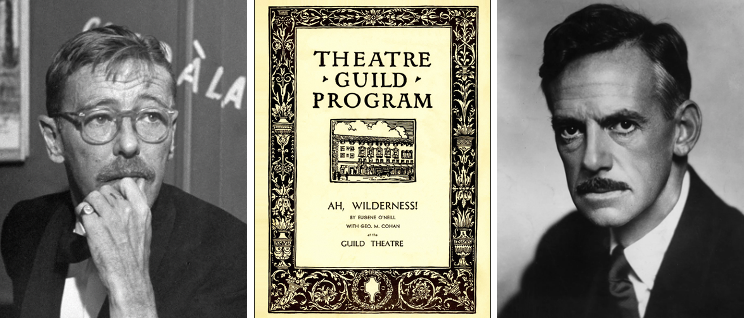
ERRORS OF COMEDY…Wolcott Gibbs (left) found Eugene O’Neill’s attempt at comedy to be nothing more than a recycling of corny old saws. However, Ah, Wilderness! proved successful in its first Broadway production and in the touring company that followed. It remains to this day a staple of community repertory. (The New Yorker/Playbill/Encyclopedia Britannica)

 * * *

Hell in a Handbasket

If Eugene O’Neill couldn’t offer up some woe, then leave it to E.B. White of all people to supply reason for despair. In his 1982 review of a collection of White’s poems and sketches,

For the Oct. 14 issue White bemoaned the loss of the American elm (of the 77 million elms in North America in 1930, more than 75 percent were lost to Dutch elm disease by 1989), the dangers of pesticide use, and other maladies. Excerpts:

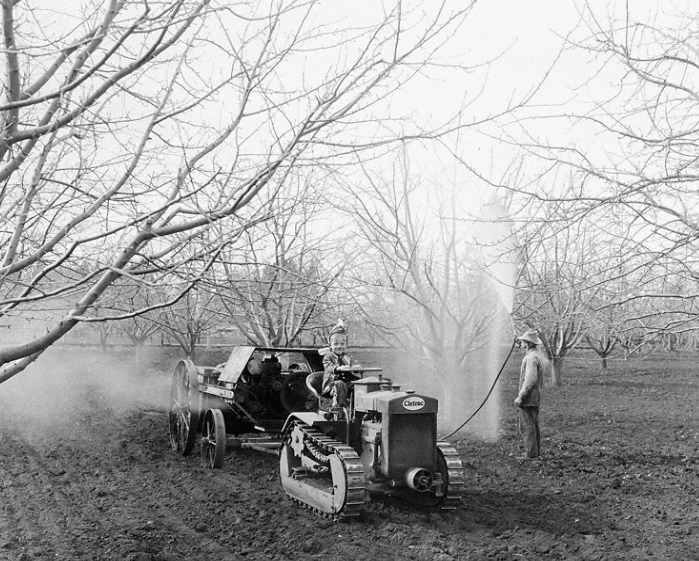
APPLE OF HIS EYE…E.B. White had reason to be concerned about the widespread practice of spraying lead arsenic on fruit trees. This 1930 photograph shows an Oregon orchardist and his child spraying apple trees with the stuff. (oregonhistoryproject.org)

White’s New Yorker colleague John O’Hara raised some concerns of his own, namely the likelihood of another world war in this prescient piece titled “Dynamite is Like a Mill Pond.” Excerpts:

FROM RUSSIA WITH LOVE…John O’Hara pondered the likelihood of another world war and an unlikely bedfellow: Soviet Russia. Photo circa 1938. (AP via loa.org)

 * * *

Pooh-Poohing Mr. Milne

In his review of A.A. Milne’s latest novel, The Red House Mystery, Clifton Fadiman seemed to recall Dorothy Parker’s own revulsion to Milne’s juvenile style (“Tonstant Weader Fwowed Up” Parker once wrote of The House at Pooh Corner). Excerpts:

 * * *

From Our Advertisers

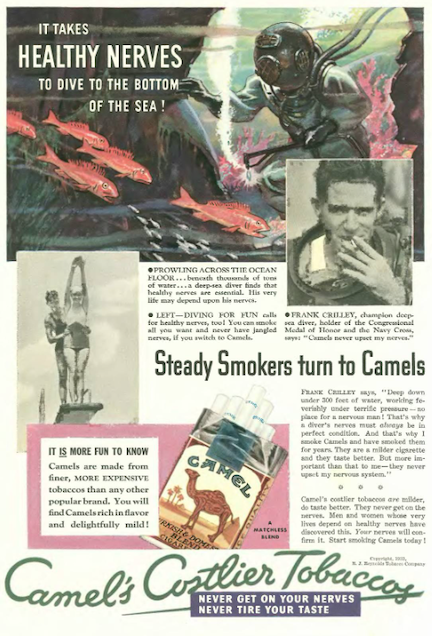
The makers of Camels took to the water to prove how their cigarettes supported “healthy nerves,” whether in the deep sea or on the high dive…

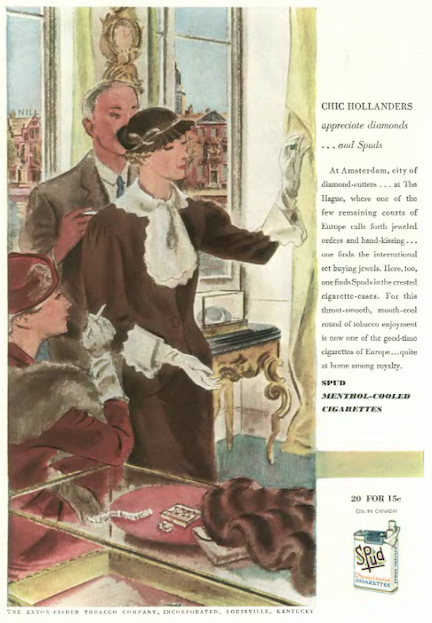
…with a name like “Spud” you really had to stretch to prove you were a choice of the smart set…here they claimed their product was “quite at home among royalty”…

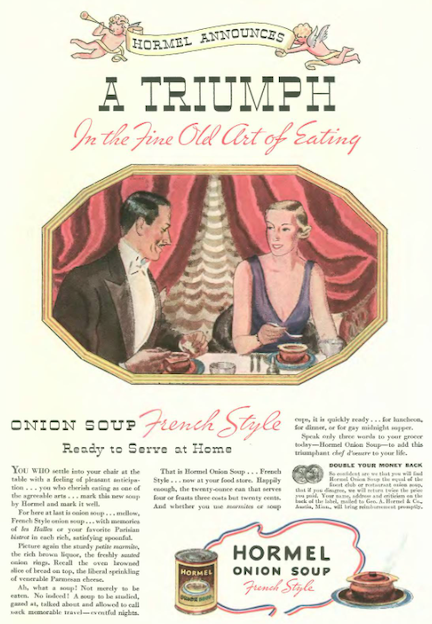
…here’s another great example of class appropriation, a white-tie dinner featuring a couple of toffs eating canned soup…

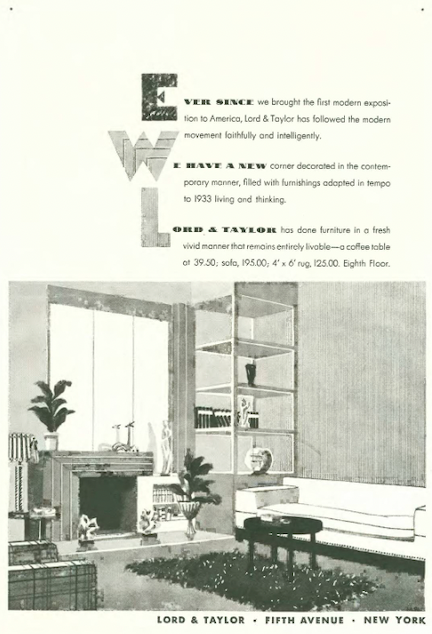
…and we give our eyes a break with a bit of elegance from Lord & Taylor, featuring the art of modern living…

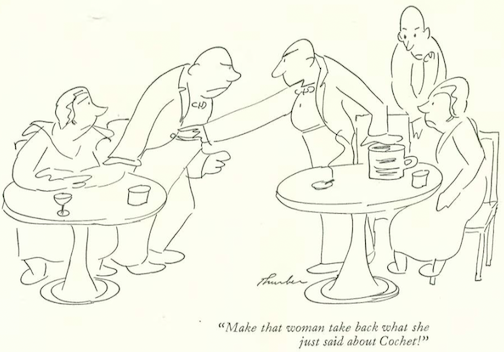
…on to our cartoons, we begin with James Thurber

…curious to know Thurber’s favorite songs?—then check out this Thurber Thursday post from Michael Maslin’s Inkspill...

…we continue with William Steig’s look at a “Lady With Mirror”…

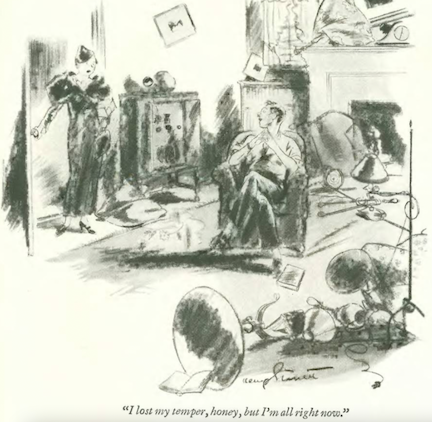
…and discover the calm after a storm in this domestic scene by Kemp Starrett

…visit the Century of Progress World’s Fair in Chicago, with George Price

…for reference, Price’s cartoon depicted the Federal Building at the Century of Progress…

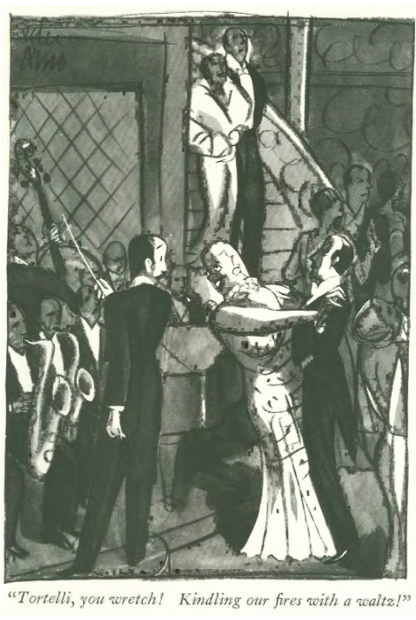
…and is often the case with this blog, we give Peter Arno the last word…

Next Time: As Millions Cheer…