Notes and Comment

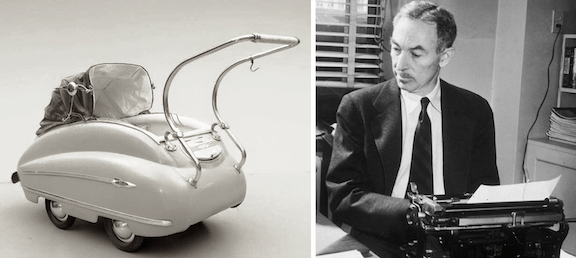
Above: Among E.B. White's notable happenings in the fall of 1935 was a streamlined baby carriage for the toddler of tomorrow. (Pinterest)

Occasionally, E.B. White would allow his seemingly random thoughts to fill out his “Notes and Comment” column, observing in no particular order various happenings of the day.
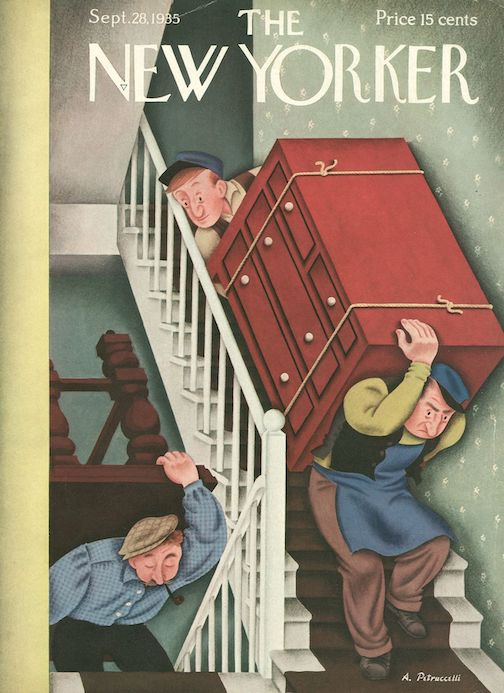
Sept. 28, 1935 cover by Antonio Petruccelli, who began his career as a textile designer. In addition to four New Yorker covers, Petruccelli (1907-1994) illustrated twenty-four Fortune magazine covers as well as several covers for House Beautiful, Collier’s, Life and other magazines.

What he accomplished, however, was a collection of snapshots of life in Manhattan and abroad. Here is the first part of E.B. White’s “Notes and Comment” for Sept. 28…
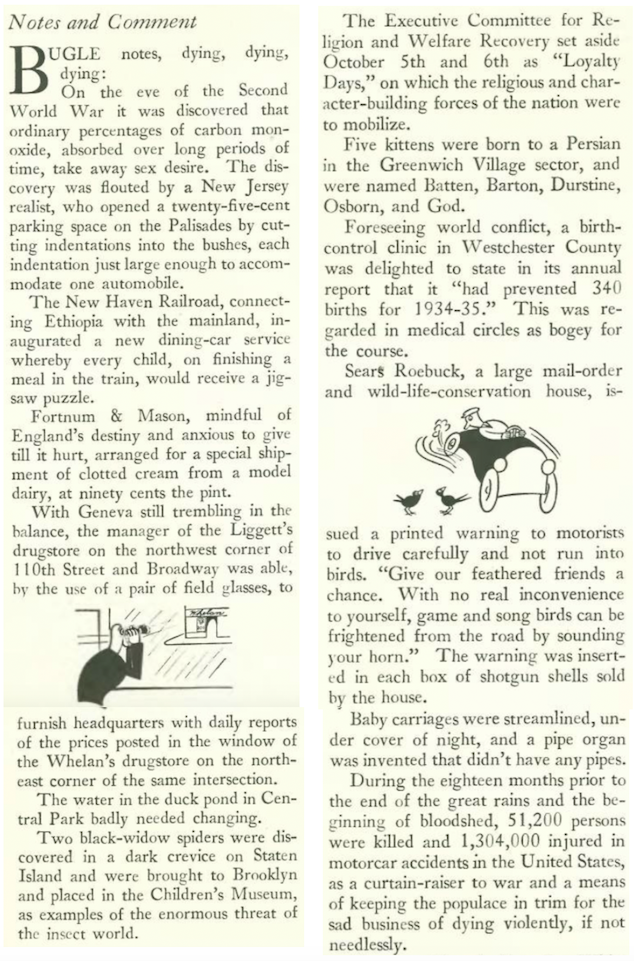
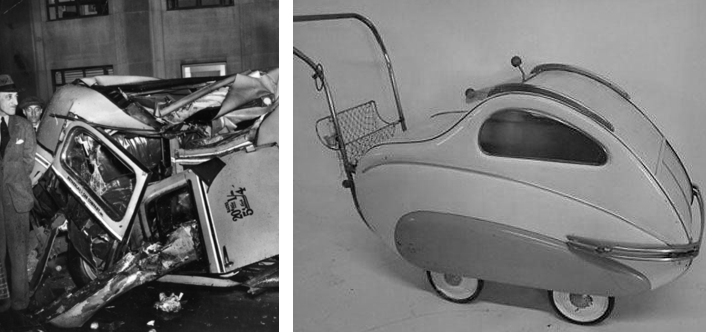
PERENNIAL PROBLEM…E.B. White noted that more than 51,000 Americans died in car accidents in an 18-month span, a number that is oddly similar to today’s statistics (although the U.S. has more than double the population today). At left, photo by Weegee (aka Arthur Fellig) of a wrecked taxicab in New York City, circa 1930s; at right, a streamlined baby buggy, 1930s. (Instagram/Pinterest)

…White also noted a number of cultural events, from airmailed lobsters to a new slogan for the State of Maine…

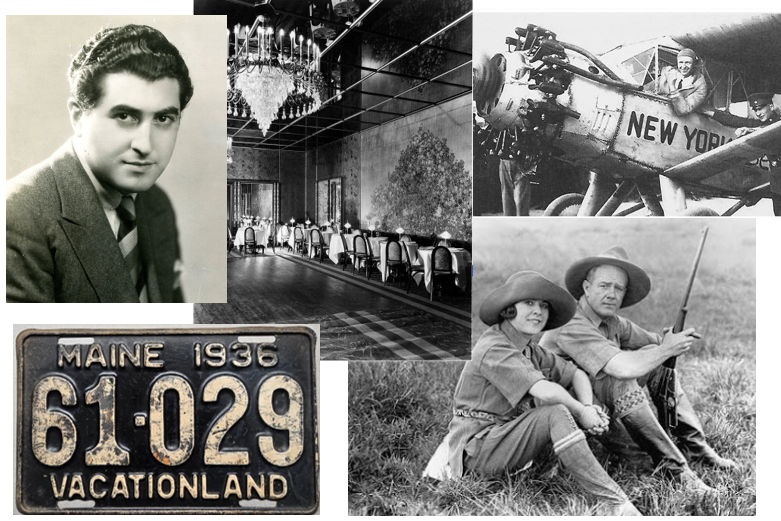
HODGEPODGE…Clockwise, from top left, Leo Reisman brought the sound of music to the beautiful Central Park Casino ballroom (adjoining photo), which was designed by Joseph Urban; in 1927 Clarence Chamberlain became the second man to pilot a fixed-wing aircraft across the Atlantic and the first to carry a transatlantic passenger—in 1935 he accepted a contract from boxer/restauranteur Jack Dempsey to fly two-hundred Maine lobsters to NYC; safari film celebrities Osa and Martin Johnson bought a picnic basket at Abercrombie & Fitch; the state of Maine announced plans to add “Vacationland” to license plates—a slogan still in use today. (IMDB/centralpark.org/alchetron.com/ebay)

 * * *

Class Acts

Lois Long continued to chronicle the nightlife scene in her “Tables For Two” column, observing the efforts of nightclub impresarios to promote their establishments as epitomes of sophistication.
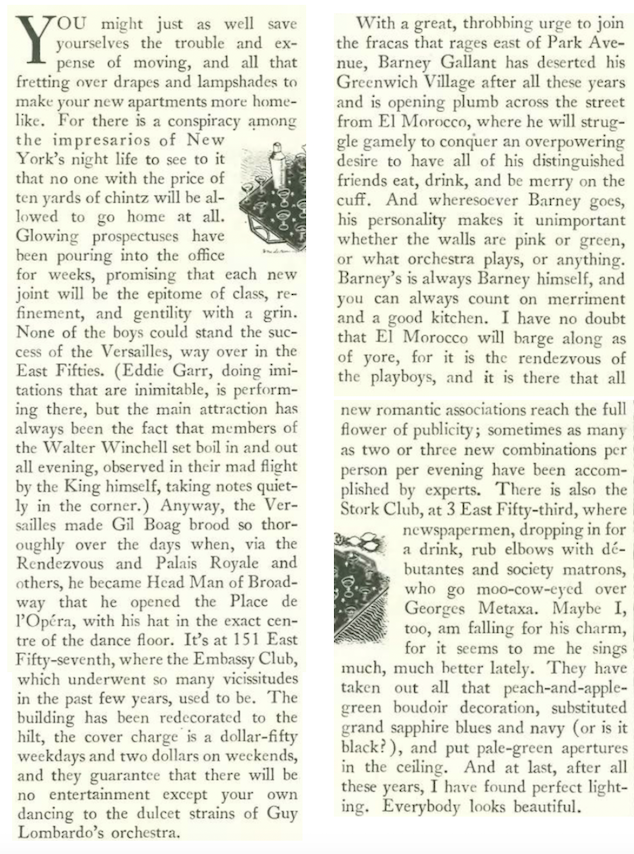
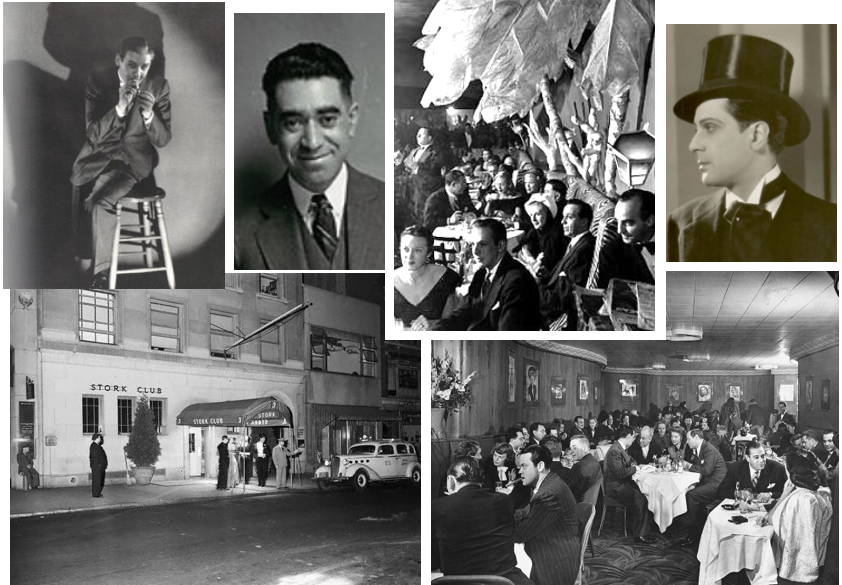
WHY GO HOME?…Lois Long noted the many reasons why New Yorkers might stay out into the wee hours. Clockwise, from top left: Gossip columnist Walter Winchell as photographed by Edward Steichen in 1930; nightclub impersario and former Village speakeasy king Barney Gallant; the exclusive confines of El Morocco; Romanian-born American crooner and actor Georges Metaxa made the society ladies swoon at the Stork Club; the Stork Club’s Cub Room in 1944 occupied by Orson Welles (left) among other notables; entrance to the club, 1930s. (CondeNast/boweryboyshistory.com/Pinterest/Wikipedia/NYPL)

 * * *

From Rough to Refined

Alva Johnston profiled acclaimed film director W.S. Van Dyke (1889–1943), whom Johnston portrayed as a tough guy who slipped effortlessly from the rough and tumble world of Westerns to the sophisticated heights of high society films such as 1934’s The Thin Man.

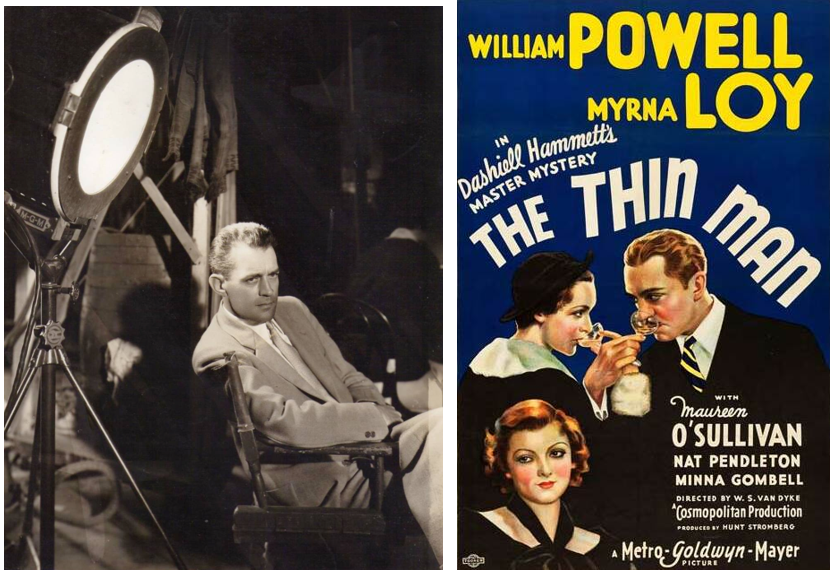
LOW TO HIGH…W.S. Van Dyke moved from making Westerns to more sophisticated fare including 1934’s The Thin Man. (Facebook/Wikipedia)

 * * *

Silly Mystification

Book reviewer Clifton Fadiman began his review of T.E. Lawrence’s Seven Pillars of Wisdom by first clearing the air about the enigmatic writer and diplomat who had recently died in a motorcycle accident. “Wittingly or unwittingly, willingly or unwillingly, he exhaled during his lifetime a vapor of silly mystification,” Fadiman wrote about Lawrence, who was known to embellish accounts of his adventures in the Arab world. Here is an excerpt of the review:

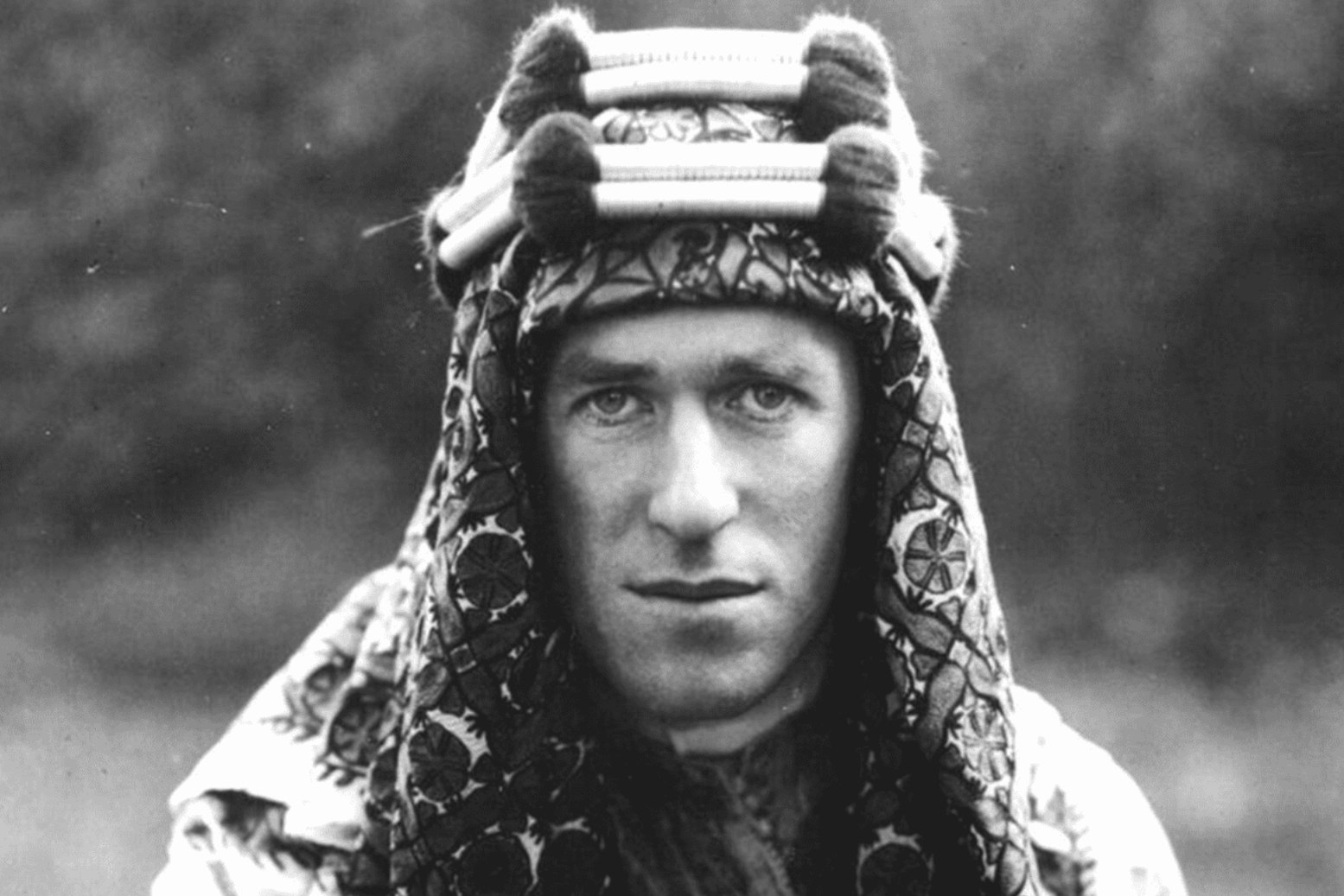
LITERARY COSPLAY…T.E. Lawrence (1888-1935) in an undated photo. Writing for the New Criterion, David Fromkin noted the importance of Lawrence’s prestige to the British Empire. “T. E…was of his time and ours. Of all the public figures of the twentieth century, across a wide range of interests, issues, and attitudes, he best expresses the century. ” (The New Criterion)

 * * *

At the Movies

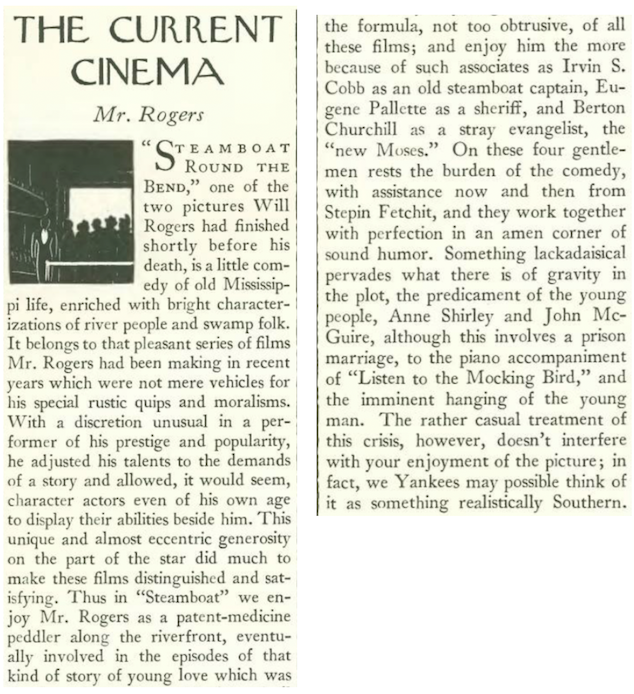
Critic John Mosher reviewed one of Will Rogers’ final films, Steamboat Round the Bend, released just weeks after Rogers’ death in an Alaska plane crash. Mosher found the film “satisfying.”
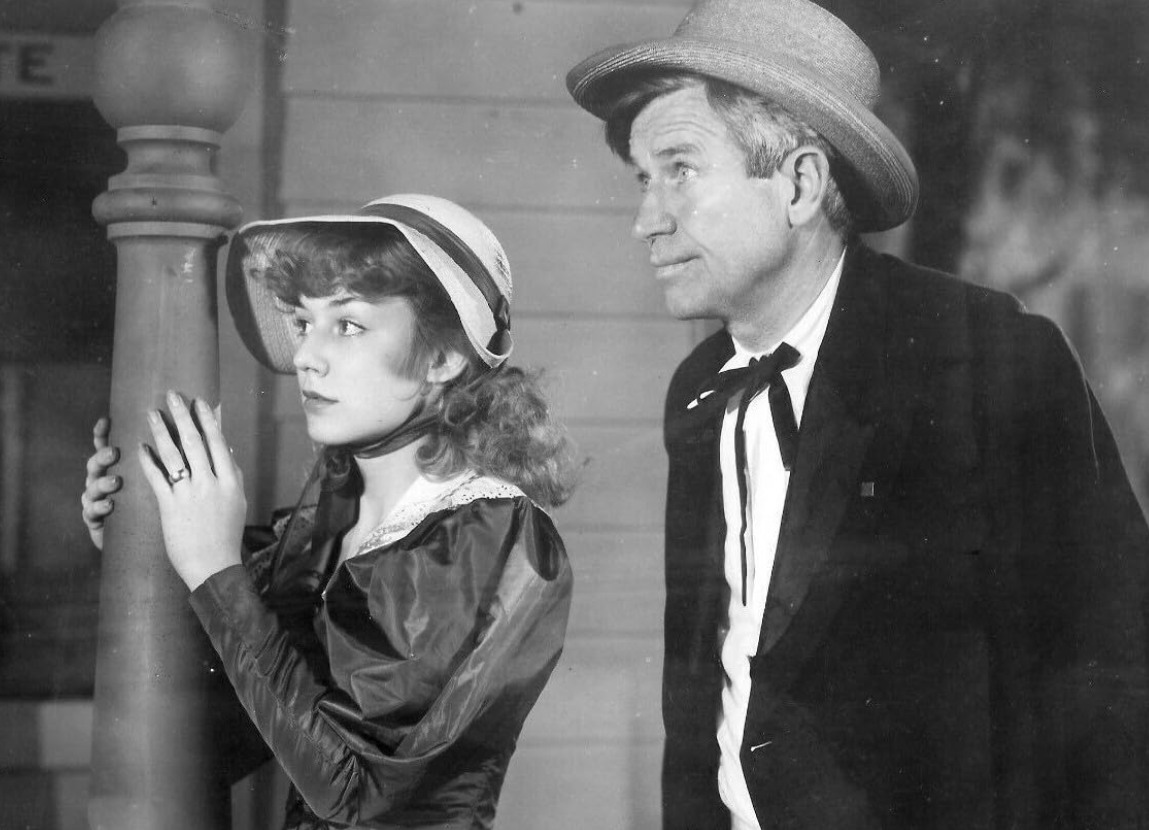
SOUTHERN CHARM was laid on thick in Steamboat Round the Bend, which featured Anne Shirley and Will Rogers in one of his final film roles (Rogers filmed In Old Kentucky before Steamboat, but In Old Kentucky wasn’t released until Nov. 22, 1935).

Mosher also took in another “revue” film, Broadway Melody of 1936, which served as a showcase of MGM’s star power.
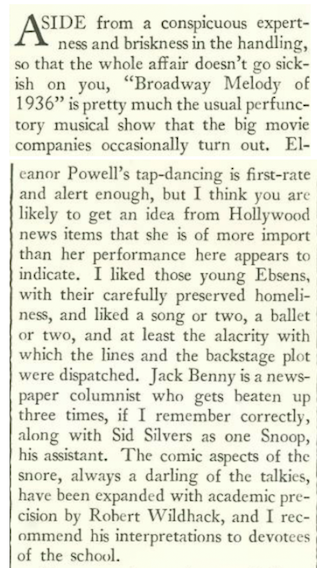
THE MGM STABLE OF STARS showcased in Broadway Melody of 1936 included, at top, the elegant Eleanor Powell; below, Powell (left) joins brother-sister dancing team Buddy and Vilma Ebsen in a down-home skit. Buddy Ebsen’s “carefully preserved homeliness” (quoting John Mosher) served him well 27 years later when he was cast as Jed Clampett in TV’s The Beverly Hillbillies. (IMDB)

Mosher also endured a “perfunctory” performance by Bette Davis in Special Agent, and a “mousy” Madeleine Renaud in Maria Chapdelaine.
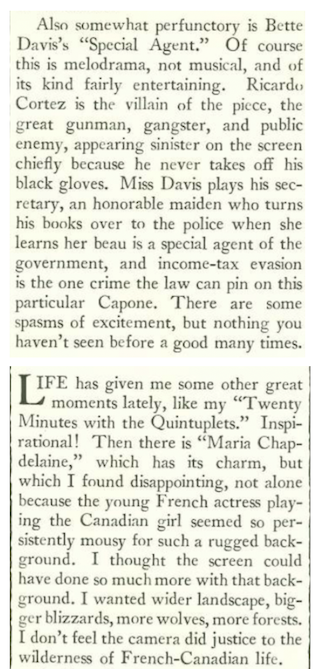
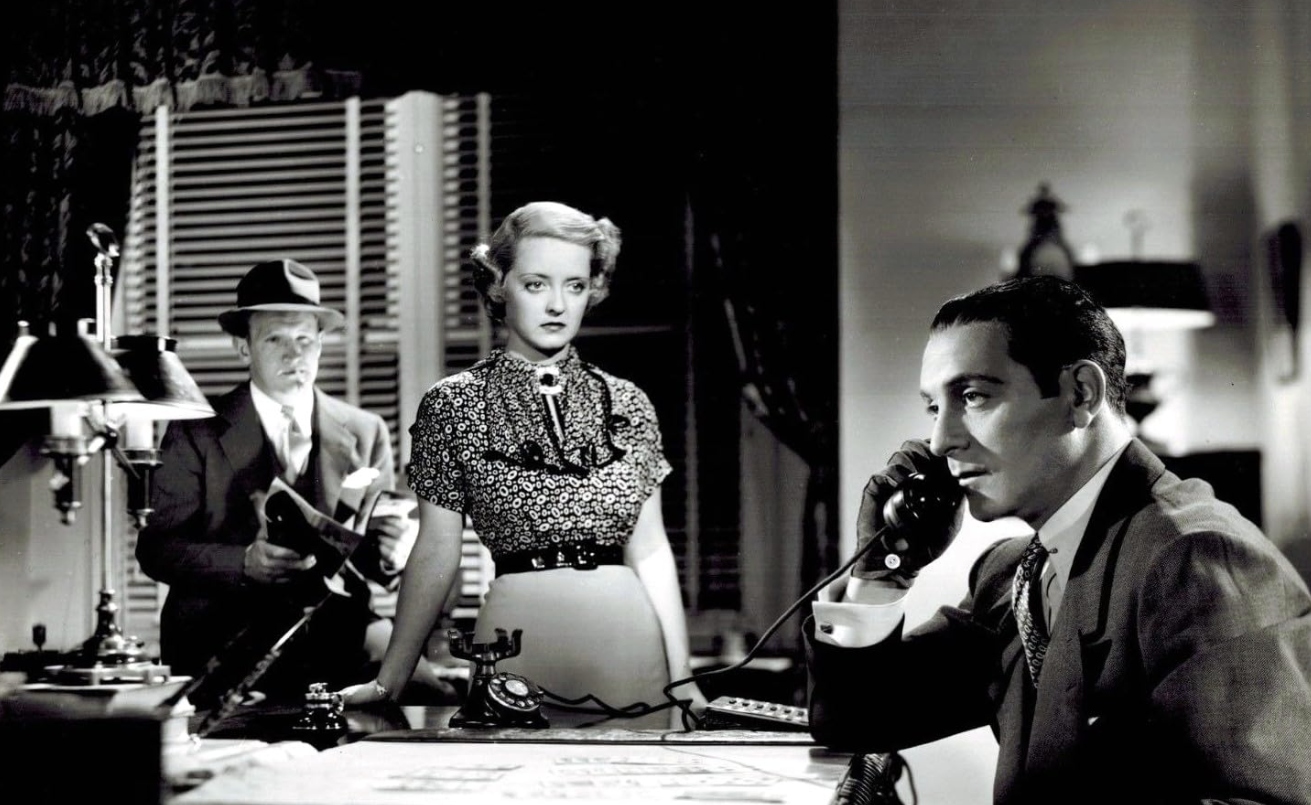
PHONING IT IN…Joe Sawyer, Bette Davis and Ricardo Cortez in Special Agent. (IMDB)
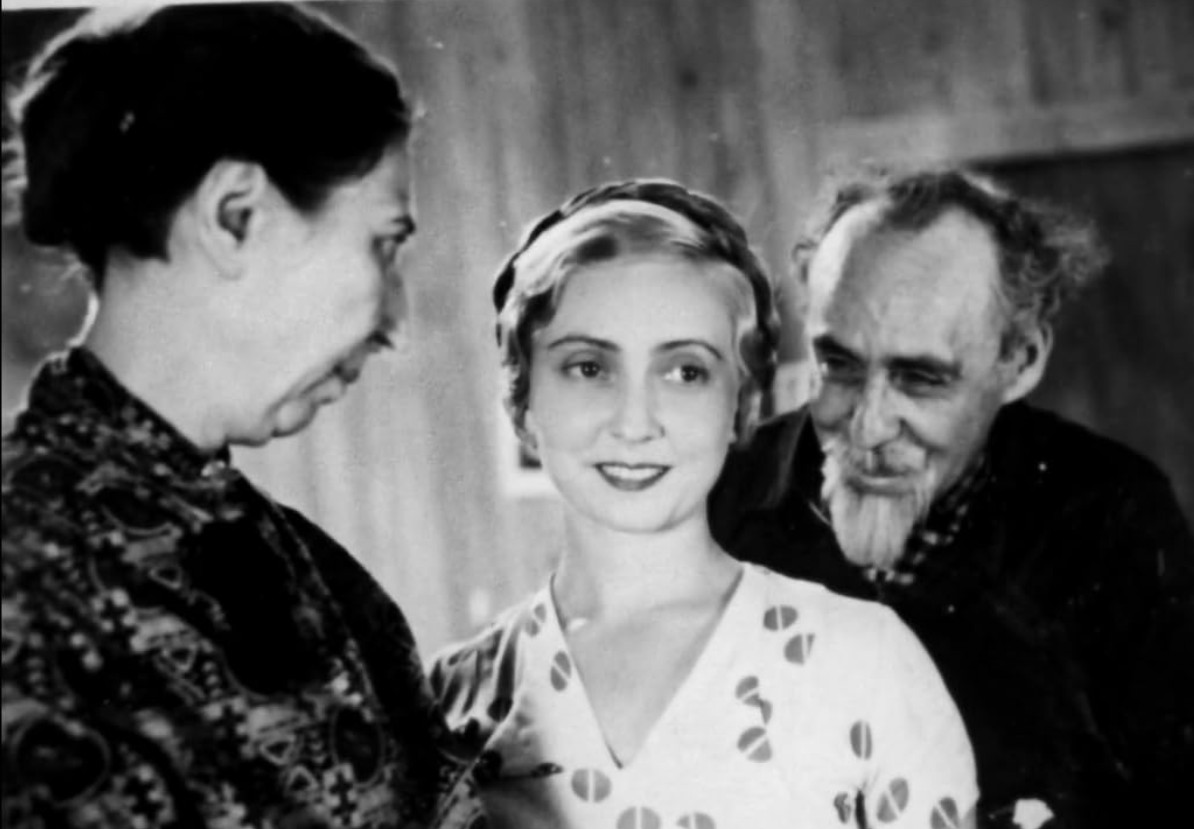
NOT GAGA-WORTHY…Critic John Mosher thought French actress Madeleine Renaud (center) was too “mousy” to be cast against the rugged beauty of the Canadian frontier in 1934’s Maria Chapdelaine. Based on a romance novel written in 1913 by the French writer Louis Hémon, the film cast Renaud as a young woman enduring the hardships of rural Quebec while she is pursued by three suitors. An IMDB reviewer writes that this early Julien Duvivier film “is mostly of pictorial interest: the location shooting in Quebec is impressive, but the story is thin-to-nonexistent. Madeleine Renaud is cute but not magnetic enough to have three men going absolutely gaga over her.” (IMDB)

  * * *

From Our Advertisers

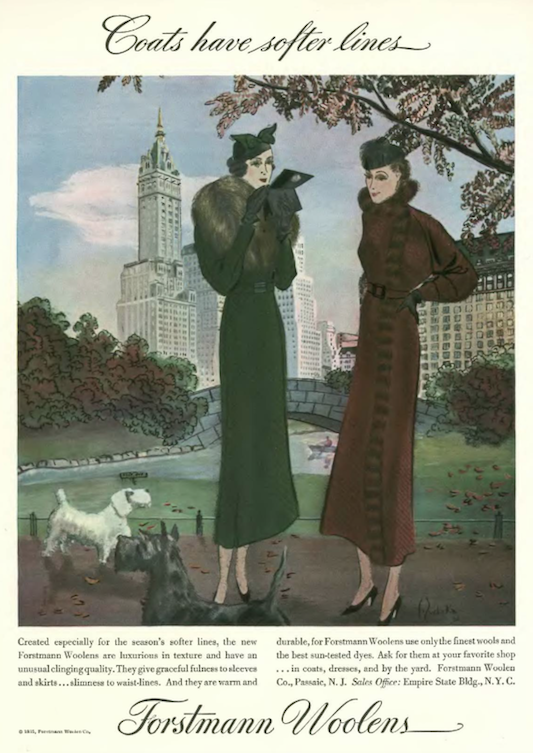
Forstmann Woolens kicks off our advertisements with this image of attenuated women posed in the autumnal landscape of Central Park…
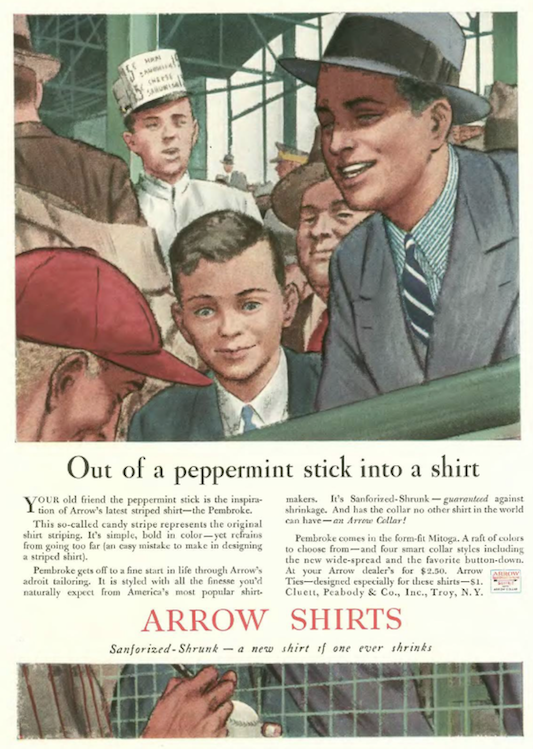
…what is notable about this Arrow Shirts ad is the formal attire of father and son at a baseball game, not at all unusual in 1935…
…Seagram’s continued its aggressive campaign to promote its lineup of seven “masterpieces”…

…Coca-Cola also had a substantial war chest, marketing its product for home consumption, which still seemed to be somewhat novel…

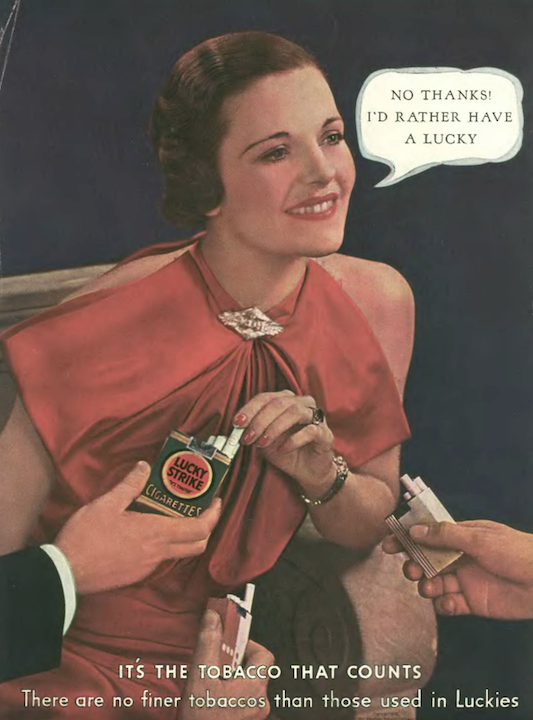
…the back page ad went to the makers of Lucky Strike, pursuing that growing market of women smokers…
Richard Decker drew up an ad for a more wholesome product…
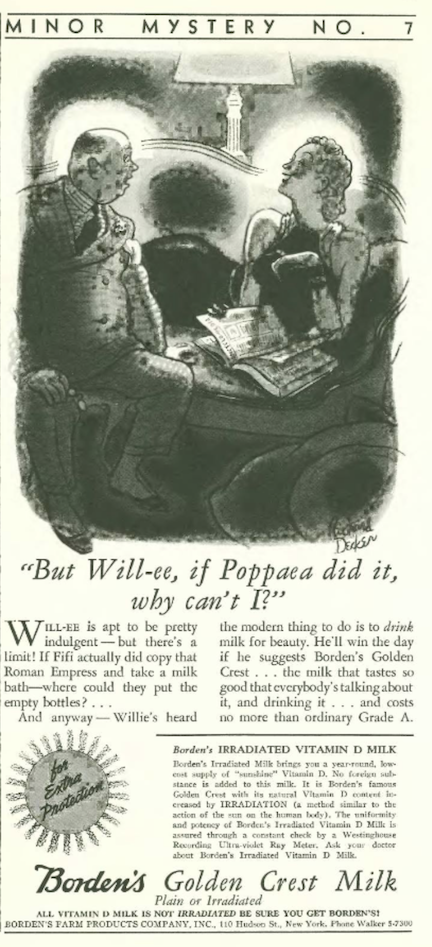
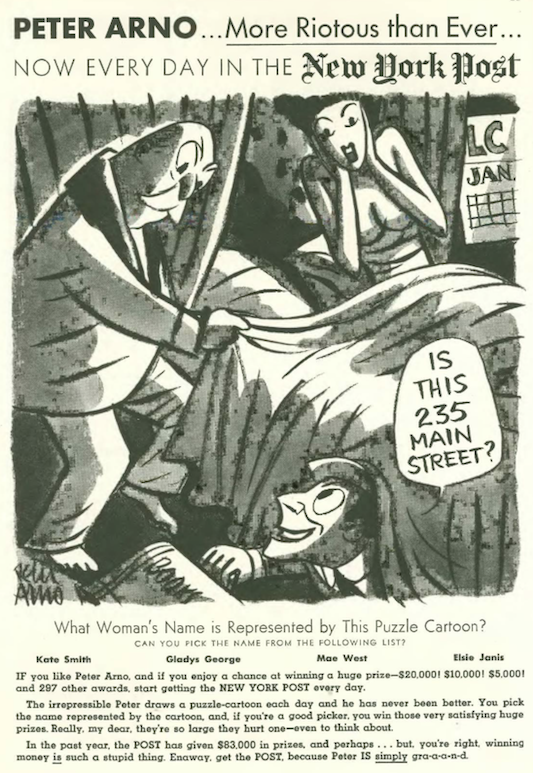
…while Peter Arno put pen to paper to promote his “puzzle-cartoons” in the New York Post

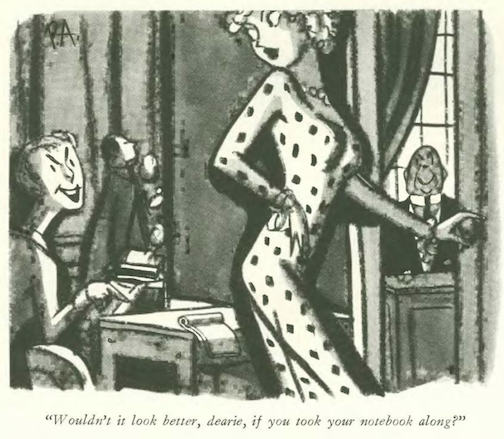
…which segues to our cartoon section, and Arno again with some office hijinks…
Christina Malman’s wonderfully unique spot art was making regular appearances in the magazine’s pages…
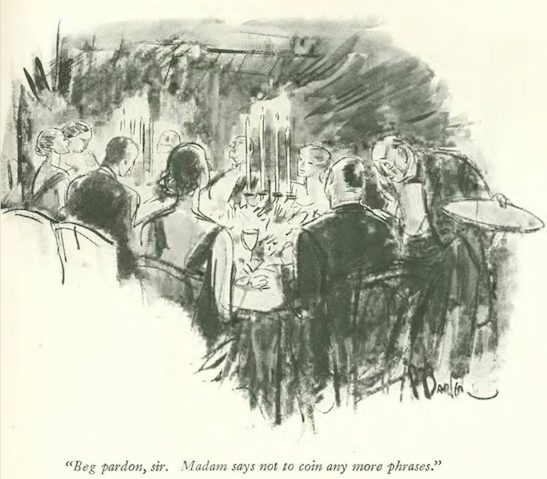
Perry Barlow served up some dinnertime etiquette…
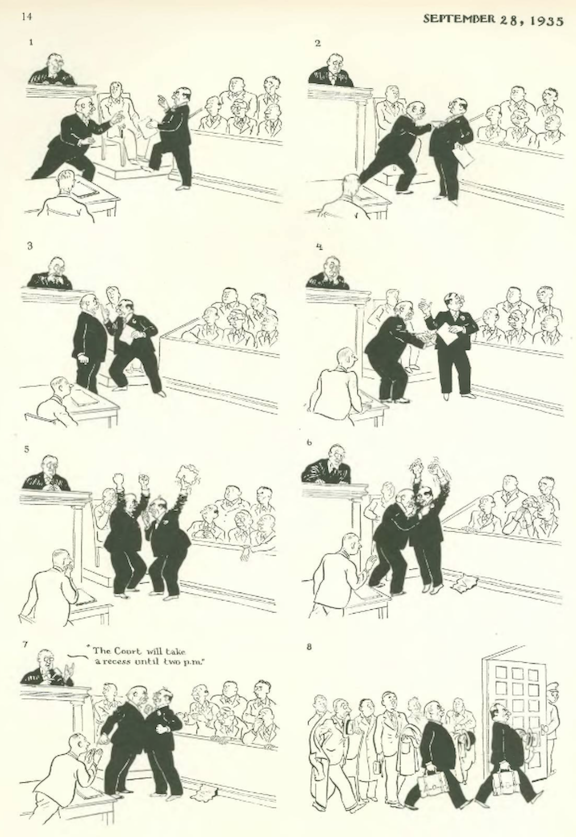
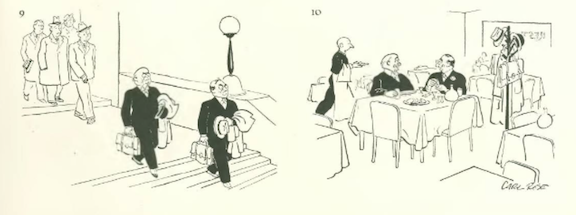
Carl Rose found order in the court…

James Thurber continued to mesmerize…

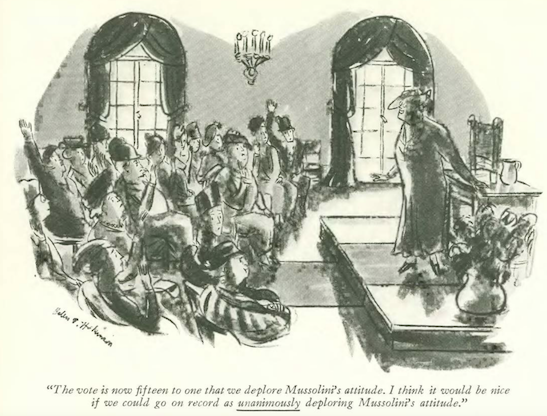
Helen Hokinson’s Ladies Club took a stand against fascism…
Alan Dunn looked in on a polite perp…

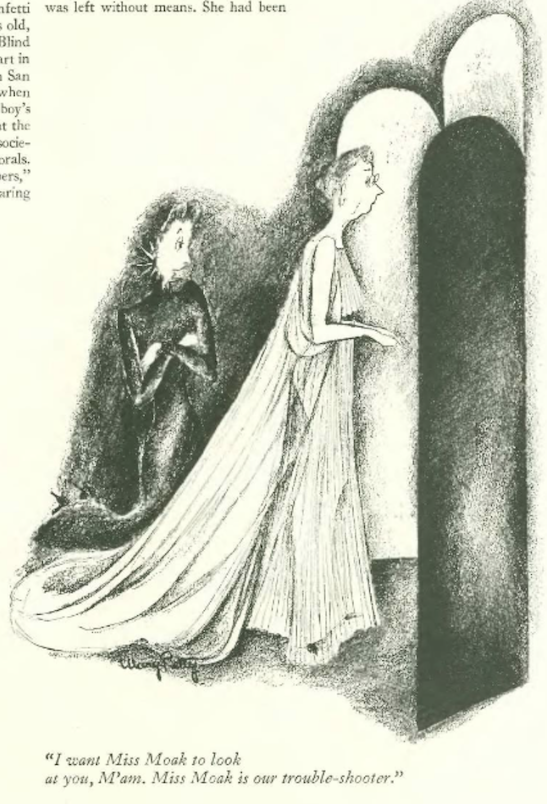
Mary Petty encountered a challenge in a dress shop…
Gilbert Bundy revealed an odd duck among the fox hunters…

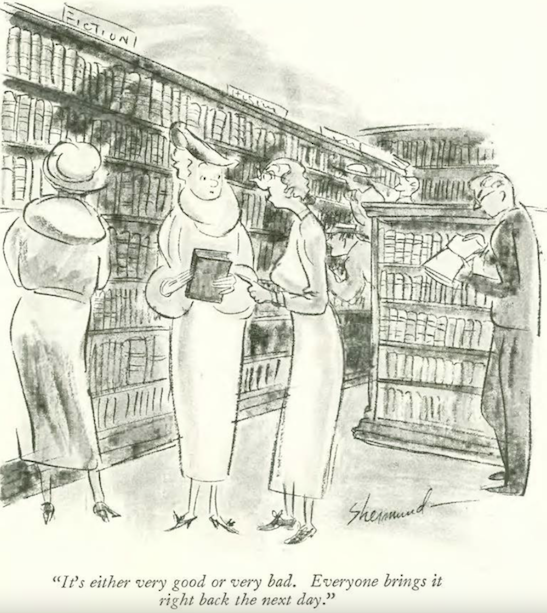
…and we close with Barbara Shermund, ready to curl up with a good (or bad) book…
Next Time: School Days…
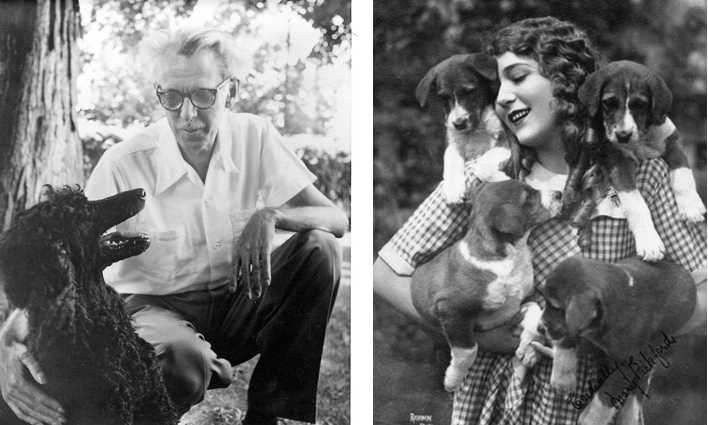
All Dogs Go To Heaven

Above: James Thurber with his beloved Christabel, circa 1950s, and Mary Pickford enjoying some puppy love, circa 1920. (The Thurber Estate/Pinterest)

James Thurber and silent film star Mary Pickford had one thing in common; they loved their dogs.

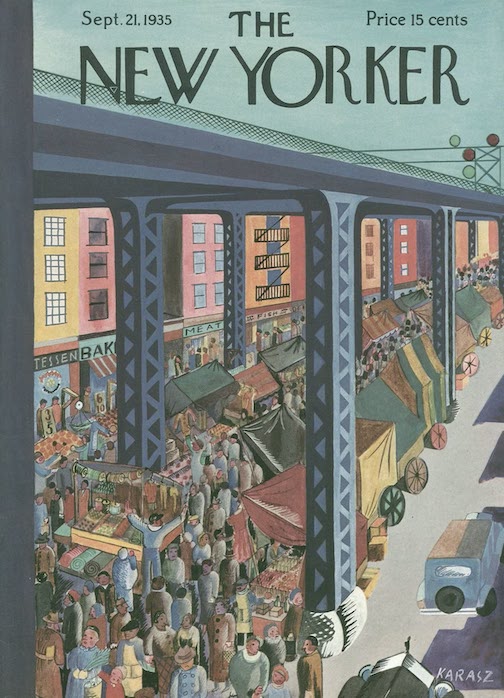
September 21, 1935 cover by Ilonka Karasz. Antiques magazine (March 8, 2018) described Karasz’s covers as “leafy modernism,” evolving from “dynamic modern depictions of urban life to enchanting, peaceful images of leisure activities…recording details like family picnics or the insects and flowers in her garden.” Many depict scenes around Brewster, New York, where she lived with husband, Willem Nyland, a Dutch-American chemist and pianist. Karasz contributed 186 covers across six decades, beginning with her first on April 4, 1925.

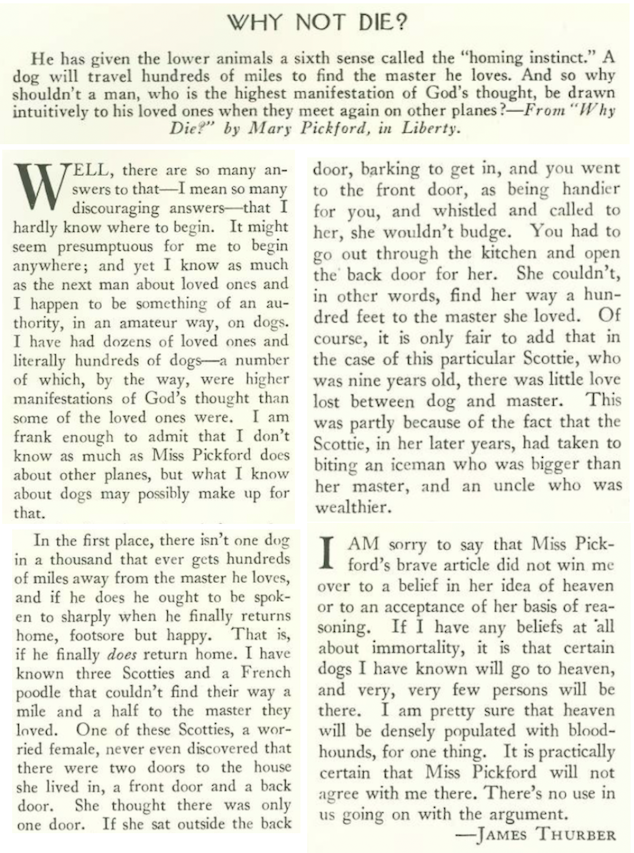
From that point of agreement, however, these contemporaries (Pickford was born in 1892; Thurber in 1894) diverged. Consider Thurber’s response (excerpted) to Pickford’s spiritual musings in a Liberty magazine article titled “Why Die?”

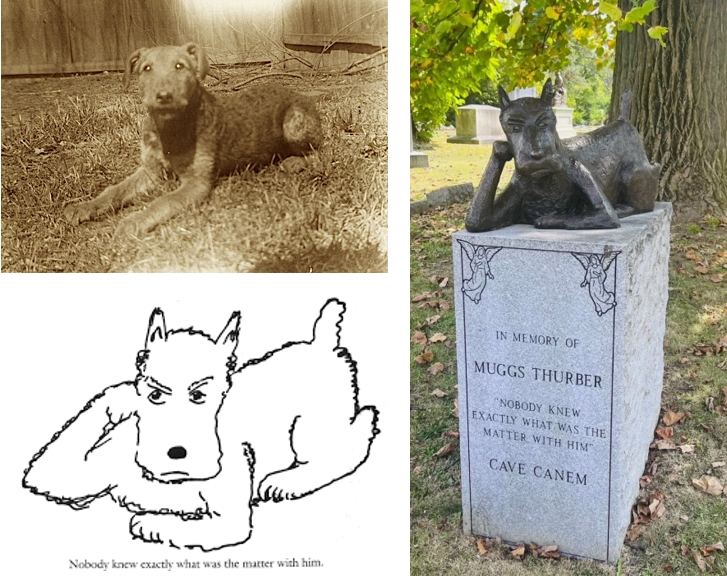
…Thurber contributed this spot drawing for his rebuttal…

ONE OF A KIND…James Thurber immortalized his Airdale, Muggs, in a 1933 story, “The Dog that Bit People.” Muggs, who died in 1928, has his own monument in Green Lawn Cemetery, Columbus, Ohio, installed in 2021. The inscription, taken from Thurber’s short story, reads, “Nobody knew exactly what was the matter with him.” (https://www.dispatch.com/Facebook)
AMERICA’S SWEETHEART was well-known as animal lover. At left, Mary Pickford in 1916; at right, with husband Douglas Fairbanks at their mansion, Pickfair, in the 1920s. (Wikipedia/Pinterest)
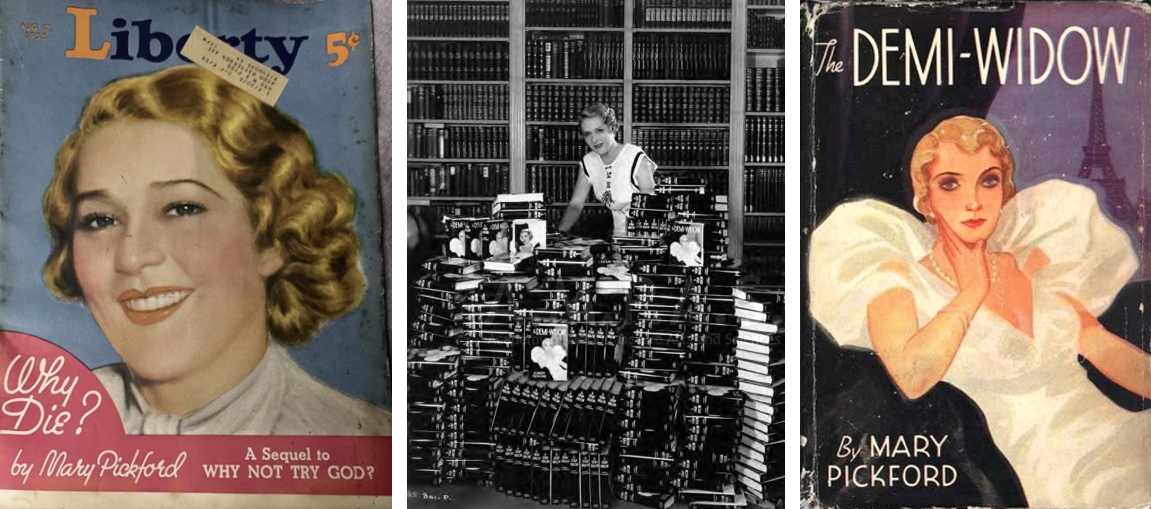
SECOND LIFE…Mary Pickford gave up acting in 1933 to pursue her writing career. In 1934 she penned the tract, Why Not Try God?, followed in 1935 by another spiritual bestseller, My Rendezvous with Life. That same year she also published a novel, The Demi-Widow. From left, cover of Liberty magazine with her essay, “Why Die?,” Aug. 18, 1935; Pickford posing with copies of The Demi-Widow, ca. 1935. Kirkus Reviews (Aug. 1, 1935) dubbed The Demi-Widow “Good hammock reading for hot days — light and not too dreadful froth…” (picclick.com.au/digitalcollections.oscars.org/Goodreads)

 * * *

Rumble Humbled

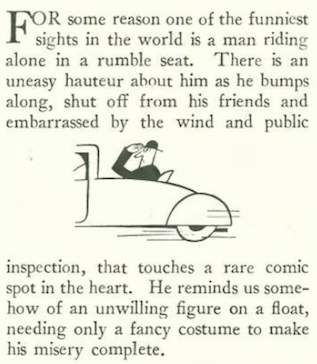
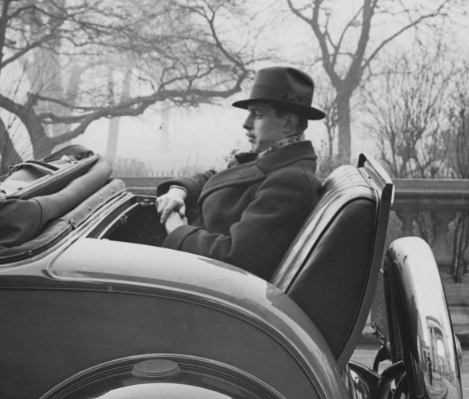
In his “Notes and Comment” E.B. White observed the absurdity of a grown man riding alone in a rumble seat. These seats were phased out by 1939 in American autos (the British, who called them “dickies,” abandoned them a decade later). Rumble seats were unsafe, to be sure, but it was also unpleasant to sit near the exhaust pipe and collect the dust, grit and bugs that would merrily dance around one’s eyes, nose and mouth.

BONE RATTLER…Detail from a photo of man riding in a rumble seat, 1935. (General Photographic Agency/Hulton Archive/Getty Images)

A Red By Any Other Name

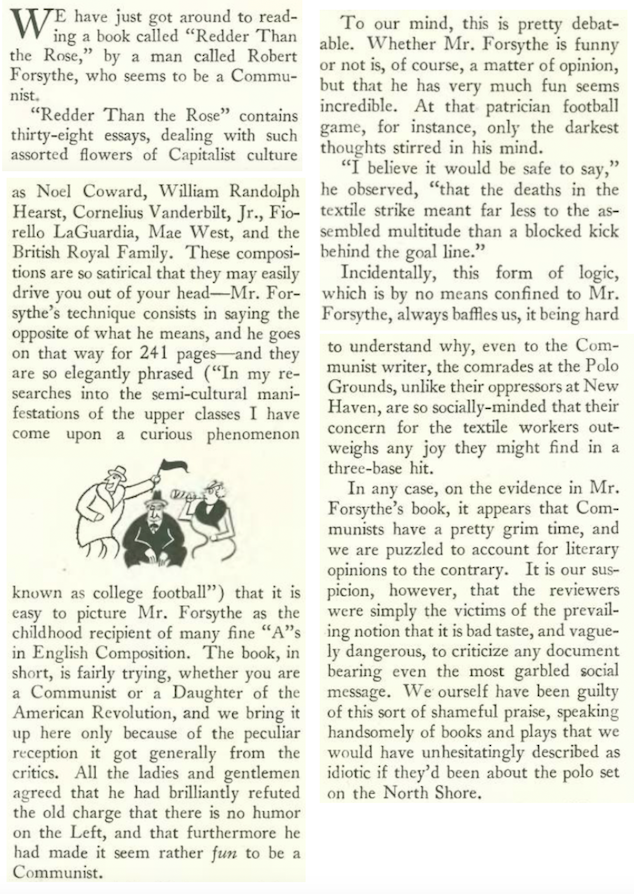
White also considered the intentions behind a new book by Robert Forsythe, Redder Than a Rose. Kyle Crichton (1896-1960) used the Forsythe nom de plume whenever he wrote for communist publications such as the Daily Worker. A former coal miner and steel worker, Crichton was also a writer and editor for Collier’s magazine.

 * * *

Fight Night

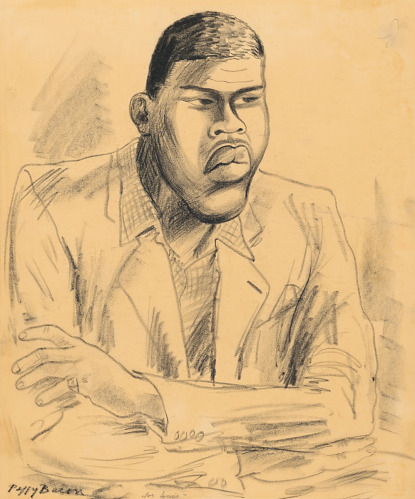
In anticipation of the boxing match between Joe Louis and Max Baer, The New Yorker featured a Peggy Bacon portrait of Louis at the bottom of its events section, which also contained a listing under “Sports” of the upcoming fight at Yankee Stadium. The caption below the Louis portrait was a quote attributed to Bacon: An out-size in juveniles, simple, unruffled, a shade sullen, practically expressionless, hoarding his energies with the inarticulate dignity and pride of some monster vegetable.–P.B.

a better view of Peggy Bacon’s portrait of Joe Louis

(Smithsonian National Portrait Gallery)

 * * *

At the Movies

Well, the fun couldn’t last forever, as critic John Mosher discovered with the latest batch of films to roll out of Tinseltown. Here he tried to make sense of The Big Broadcast of 1936, and gave a closing nod to Dorothy Parker.

A LITTLE OF THIS, A LITTLE OF THAT…Theatre card promoting the appearances of Gracie Allen and George Burns in The Big Broadcast of 1936. These films were essentially long promo pieces for Paramount’s stable of stars. (IMDB)

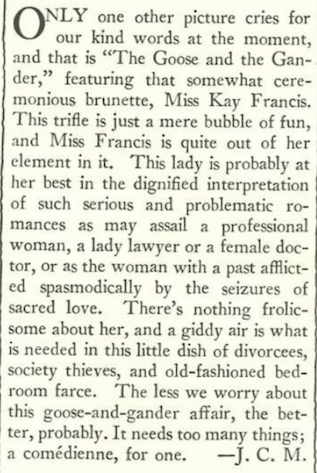
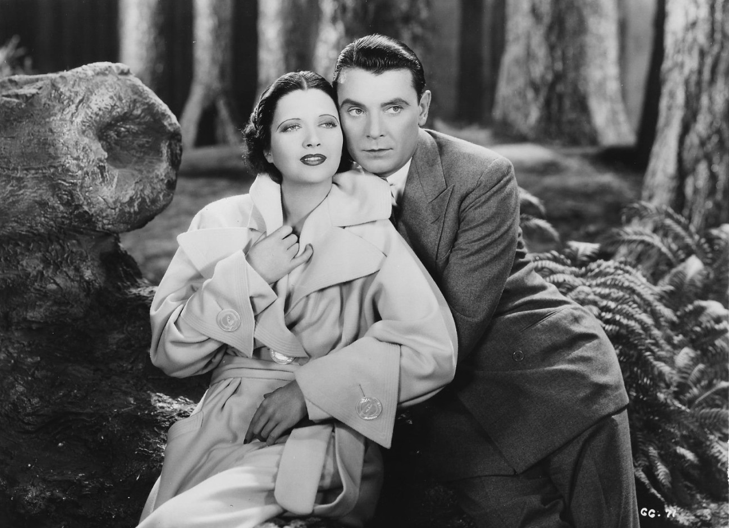
Mosher also took in The Goose and the Gander, featuring Kay Francis, one of Warner Brothers’ biggest stars and one of Hollywood’s highest-paid actors. Known for her roles as a long-suffering heroine and her lavish wardrobes, Mosher found Francis ill-suited to a comedic role.

NEEDED A BIT MORE GOOSE…Kay Francis and George Brent in The Goose and the Gander. (IMDB)

 * * *

From Our Advertisers

The 1920s and 30s saw a proliferation of all sorts of electric gadgets, one of them being the toaster, here serving as a centerpiece for a cocktail party…

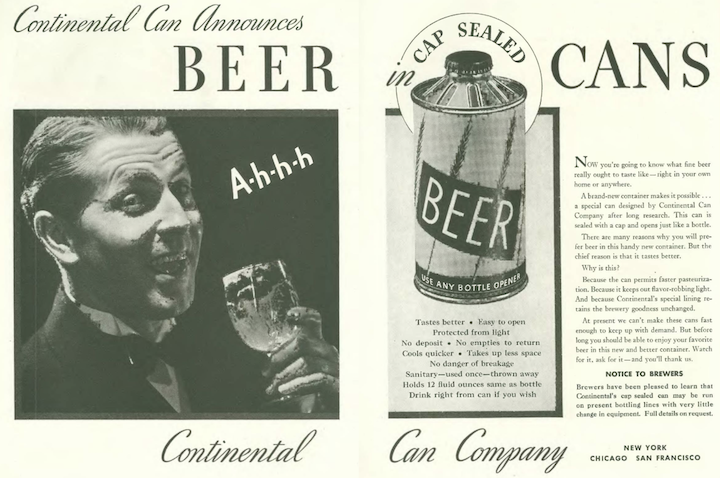
…before 1935 beer cans were not feasible because they couldn’t withstand the internal pressure of a carbonated liquid…it was the American Can Company (not Continental) that solved the problem by developing an internally-lined can that could contain the pressure…the lining also prevented the beer from tasting metallic…

…R.J. Reynolds continued to build its tobacco empire by lining up scads of famous athletes to endorse the health benefits of their Camel cigarettes…

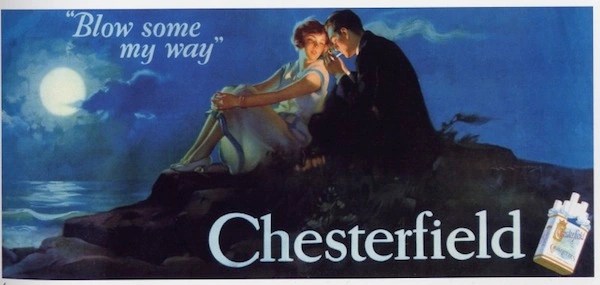
… Liggett & Myers, who in 1926 launched their “Blow some my way” advertising campaign to target women smokers, continued to employ images of young lovers in romantic settings to push their Chesterfields…

…for reference, a Chesterfield ad from 1931…

…on to our cartoons, we start with this spot from Perry Barlow

Alain looked in on a tender moment between father and son…

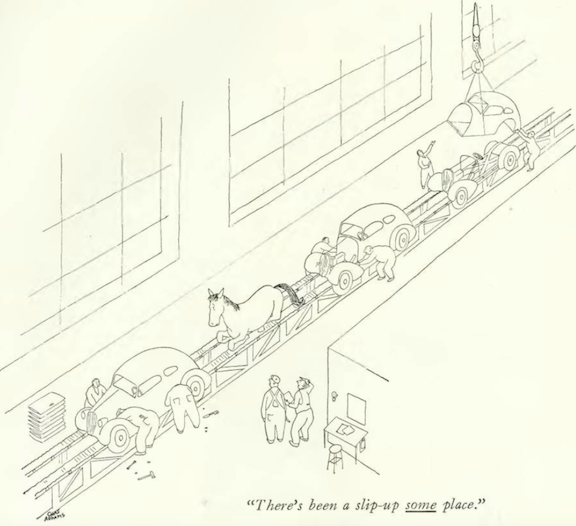
Charles Addams found a glitch on the assembly line…

Peter Arno drew up two old toffs looking for some adventure…

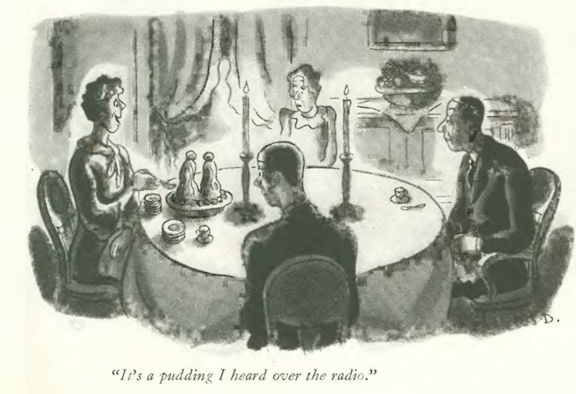
Robert Day offered up the latest twist in the culinary arts…

…and we close with Helen Hokinson, who was just passing the time…

Next Time: Notes and Comment…