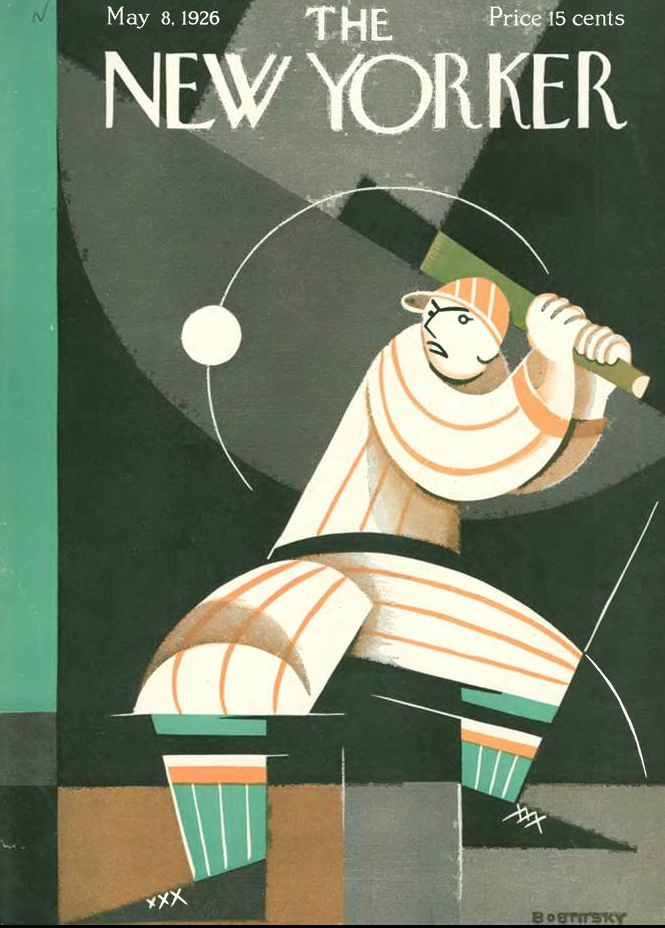
The cover of the May 8, 1926 issue featured this Bauhaus-style rendering of a baseball player by Victor Bobritsky in anticipation of the 1926 season:
May 8, 1926 cover by Victor Bobritsky.
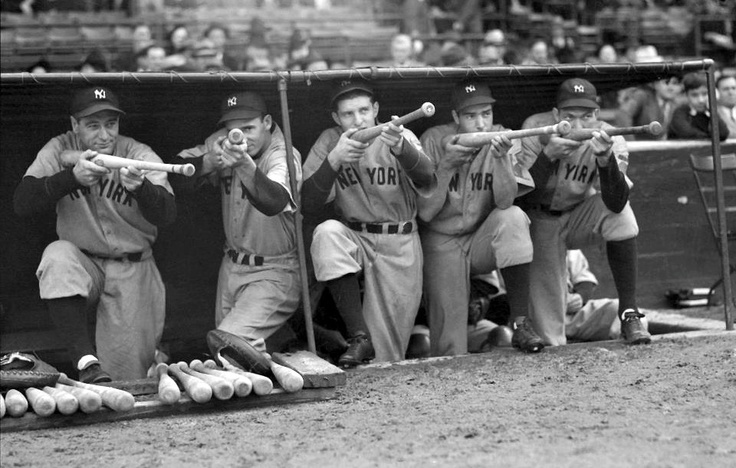
After a terrible 1925 season (and Babe Ruth’s infamous stomach ache), in 1926 the New York Yankees would begin to form a batting lineup that would become known as “Murderers’ Row.” They won the AL pennant in 1926 (losing to the St. Louis Cardinals in a seven-game World Series) and in 1927 they would go 110-44 and sweep the Pittsburgh Pirates in the World Series. More on that when we actually get to 1927.
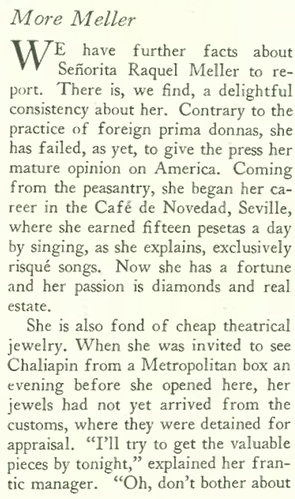
The May 8 issue offered more coverage of Spanish actress-singer Raquel Meller’s first-ever visit to America, which caused quite a sensation:
Raquel Meller
Meller arrived in New York via the SS Leviathan, on which she apparently attempted to book a deluxe suite for her five Pekingese. After New York she also visited Philadelphia, Chicago, Boston, Baltimore and Los Angeles, where she attracted the attention of Charlie Chaplin. Although Chaplin was unsuccessful in landing Meller as a co-star, he did incorporate the melody of her most famous song, La Violetera, as a major theme in his 1931 film City Lights.
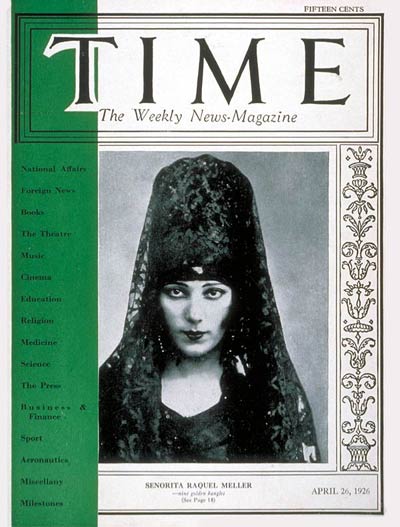
Meller’s visit landed her on the cover of the April 26, 1926 Time magazine. (Wikipedia)
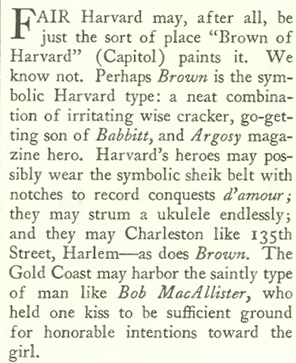
Theodore Shane reviewed the film Brown of Harvard and pondered the accuracy of this portrayal of Harvard student life:
(Wikipedia)
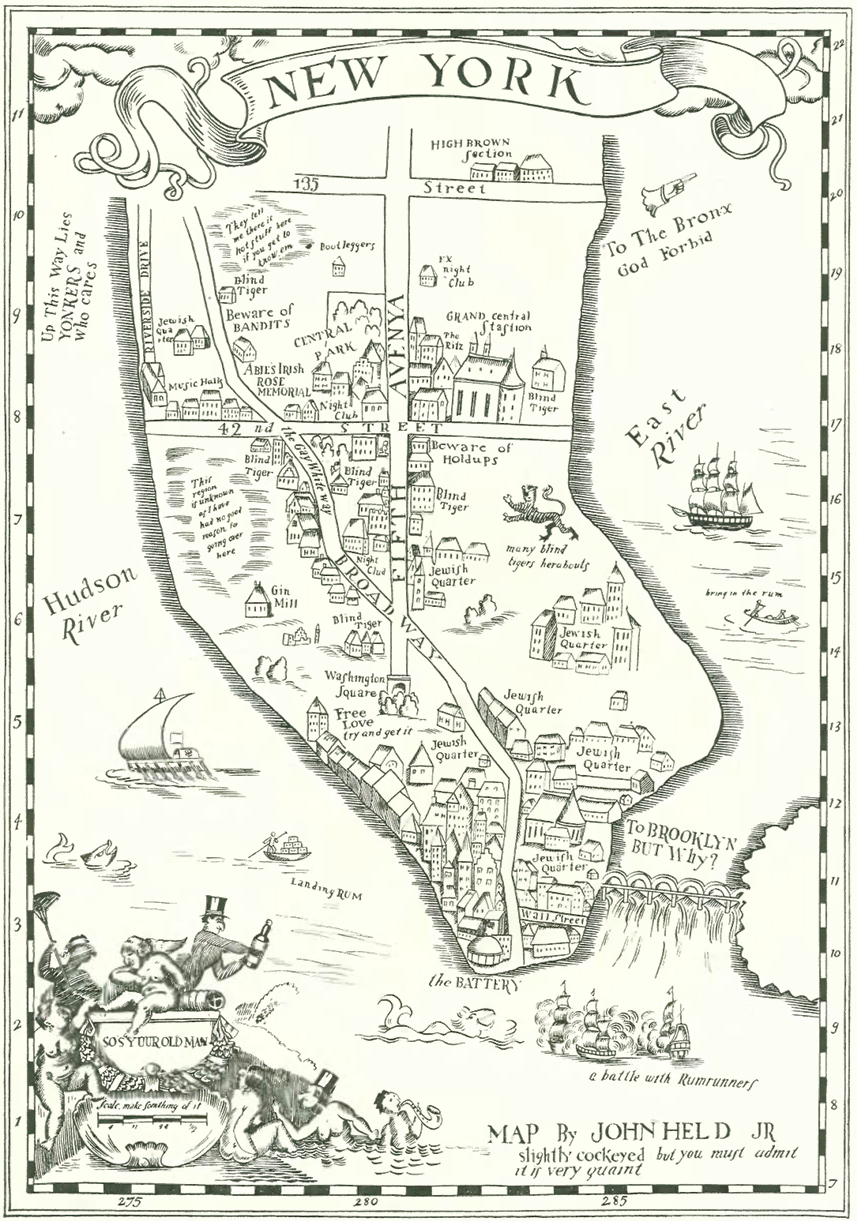
The issue also featured more unique mapmaking by John Held Jr:
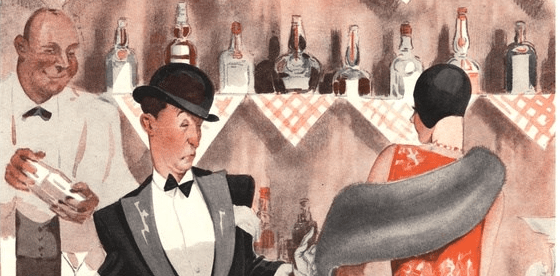
And this W.P. Trent cartoon with a common theme of early New Yorker issues: the comic imbalance of rich old men and their young mistresses:
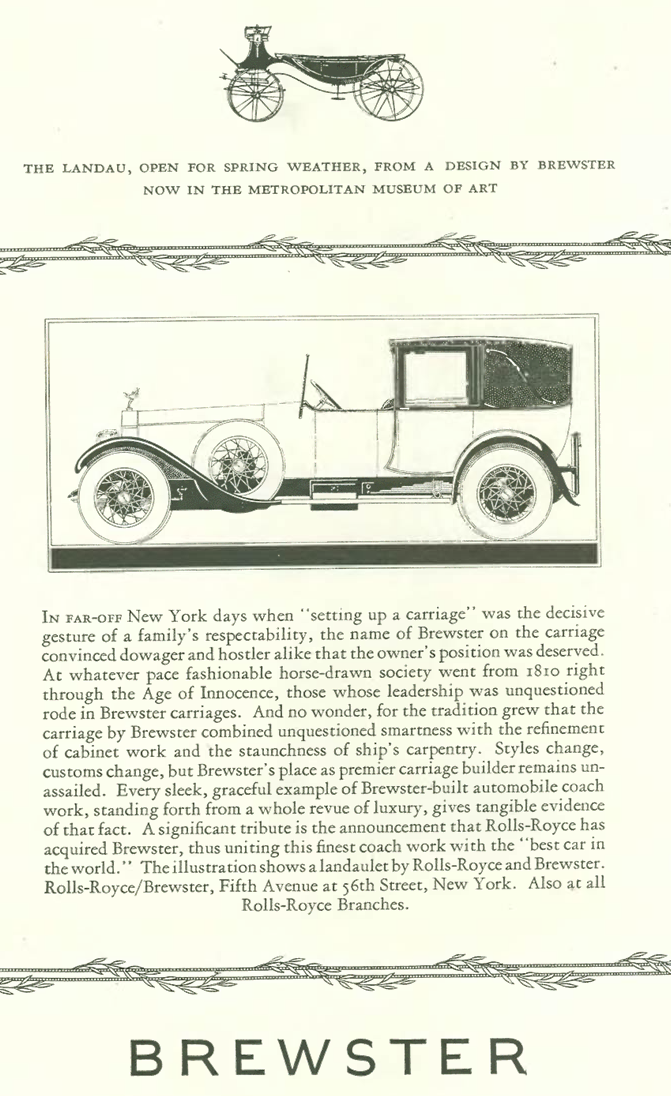
And finally, this advertisement in the May 8 issue caught my eye. Although cars crowded the streets of New York, they were still a recent enough invention to evoke the days of horse-drawn carriages. Even with all of the advances in automobiles in the late 20s, this landau-style Rolls Royce still exposed the driver to the weather, a design feature that signaled class, not practicality.
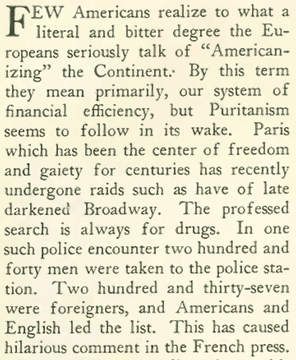
In her latest dispatch from Paris, correspondent Janet Flanner offered New Yorker readers a glimpse into the French mind, its fear of “Americanization” and its perception of America’s Puritanical attitudes behind Prohibition.
April 3, 1926 cover by Rea Irvin.
All the more reason the French were bemused by reports that American and English citizens led the lists of reported drug raids in the City of Light…
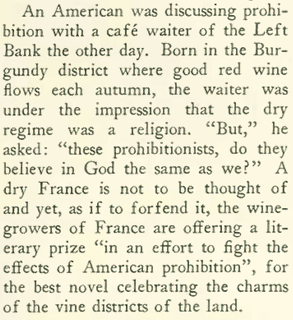
or that somehow Prohibition was a question of theological differences:
The April 3, 1926 issue also offered up some curious advertisements. Aiming square at the grasping Anglophilia of New Yorker readers, here’s a pitch for a used Rolls Royce:
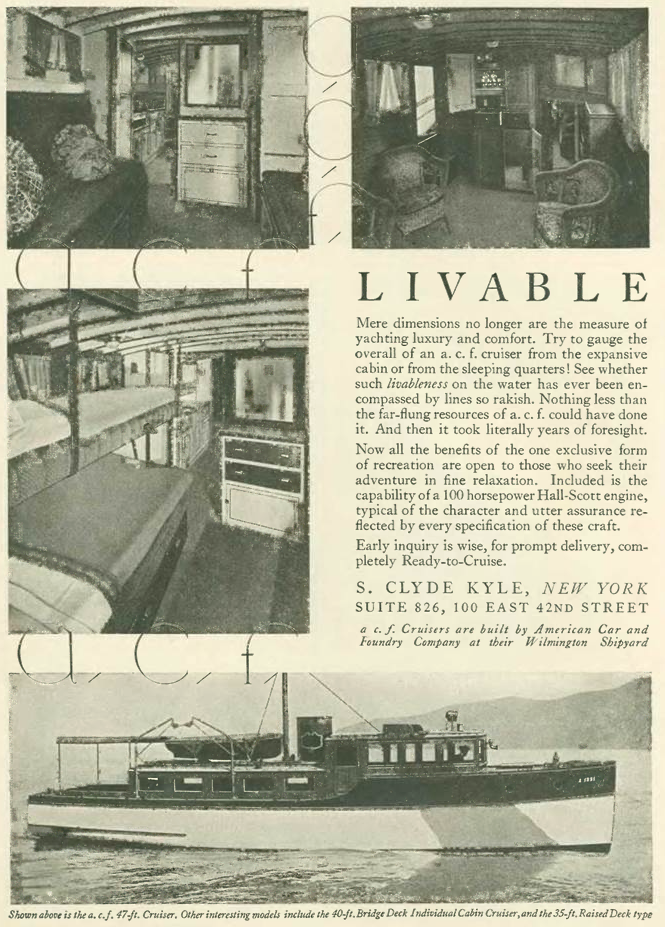
And with the money left over from your savings on the used Rolls, you could buy this 47-foot cruiser from the American Car and Foundry Company:
Moving along to the April 10, 1926 issue (cover designed by H.O. Hofman)…
April 10, 1926 cover by H.O. Hofman.
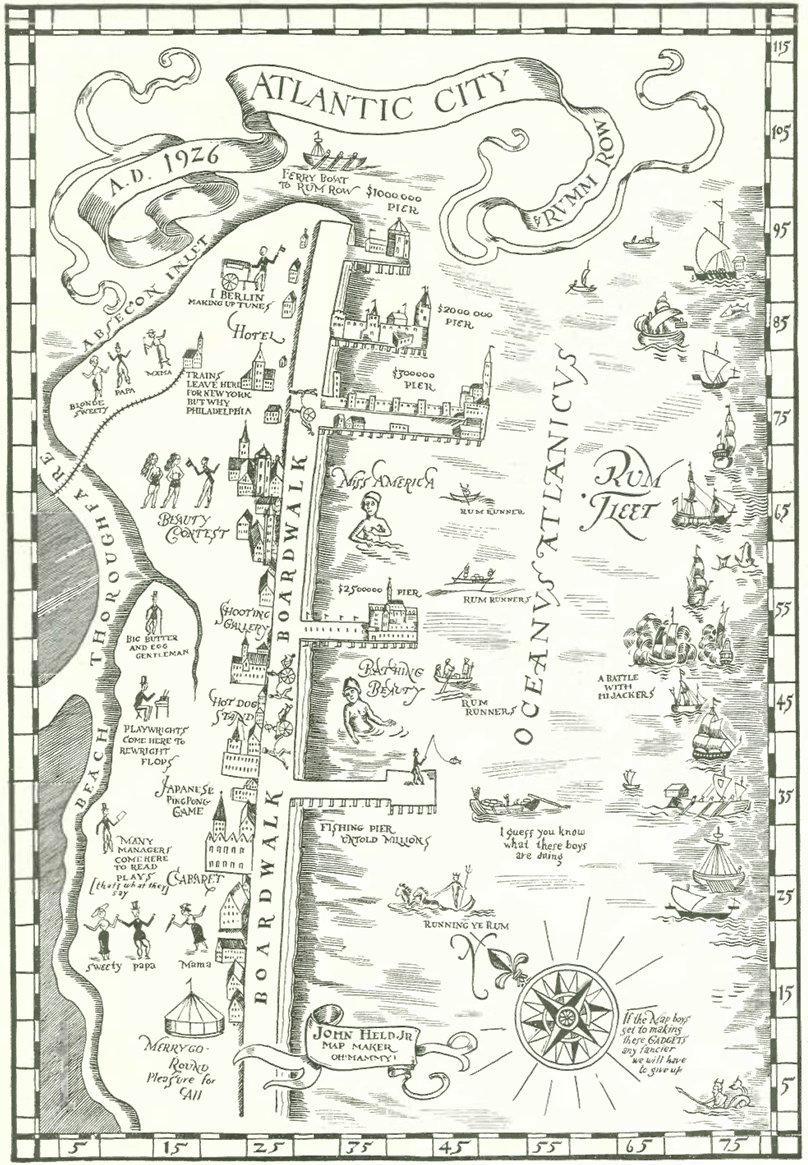
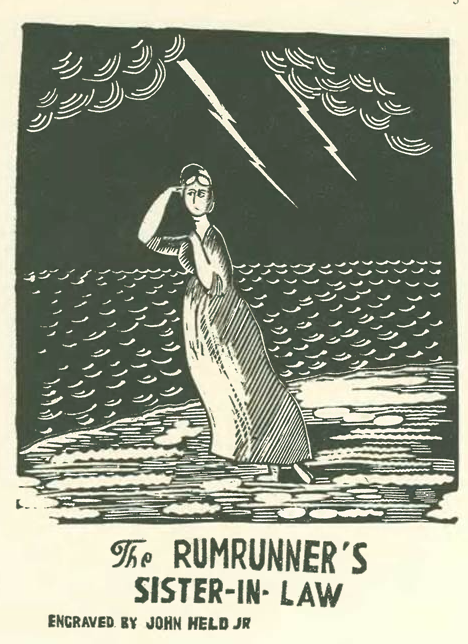
…I discovered this clever “map” by John Held Jr. For fans of “Boardwalk Empire” or other 1920s gangster-themed fare, Held’s map confirms it was no secret that Atlantic City was a major port for rum runners:
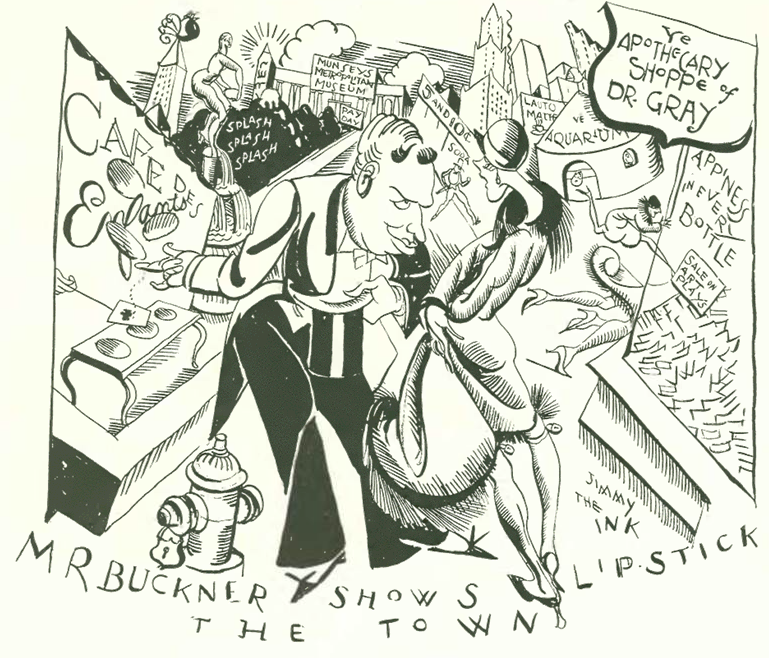
Also on the theme of Prohibition, cartoonist James Daugherty (Jimmy the Ink) had some fun with New Yorker colleague Lois Long (aka Lipstick) by pairing her with New York’s top Prohibition prosecutor Emory Buckner in this unlikely scenerio:
Note the lock on the fire hydrant. Padlocking restaurants and clubs suspected of selling alcohol was a favorite tactic of Buckner and his agents. Long famously took him task in her Oct. 31, 1925 “Tables for Two” column. You can read about it here in my previous post, “How Dry I Am.”
The April 11, 1925 issue of The New Yorker is a bit of a hodgepodge, which is true of most of the early issues that are pretty spotty in terms of content. Much of the writing is heavily embellished with cheeky asides, wordplay and the like.
I should note at this point that although I am reading every page of every issue, including ads, what I represent here is what catches my eye and appeals to my particular sensibilities. It is by no means a comprehensive survey. Nevertheless, I hope that my selections give you a good sense of the content of the magazine, and the context of the times and places where the action occurs.
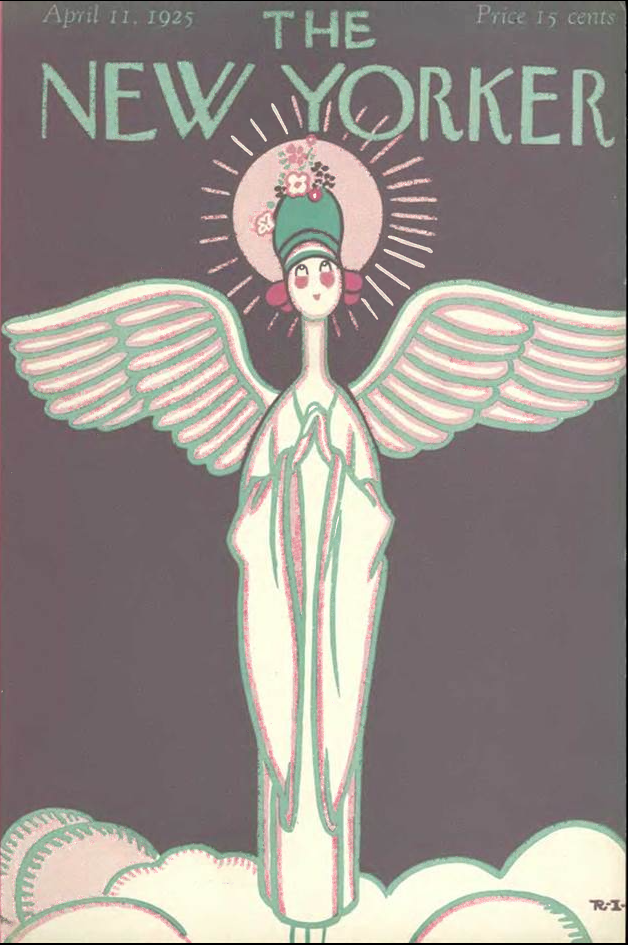
April 11, 1925 cover by Rea Irvin (New Yorker Digital Archive)
“Talk of Town” opened with rumors of a baby at the Coolidge White House, which proved unfounded. There was also a brief item noting that silent film star Gloria Swanson (who will be prominent in the early issues) was back in the states with her husband, the Marquis de la Falaise de la Coudraie (the marriage ended in 1931, when the Marquis married actress Constance Bennett).
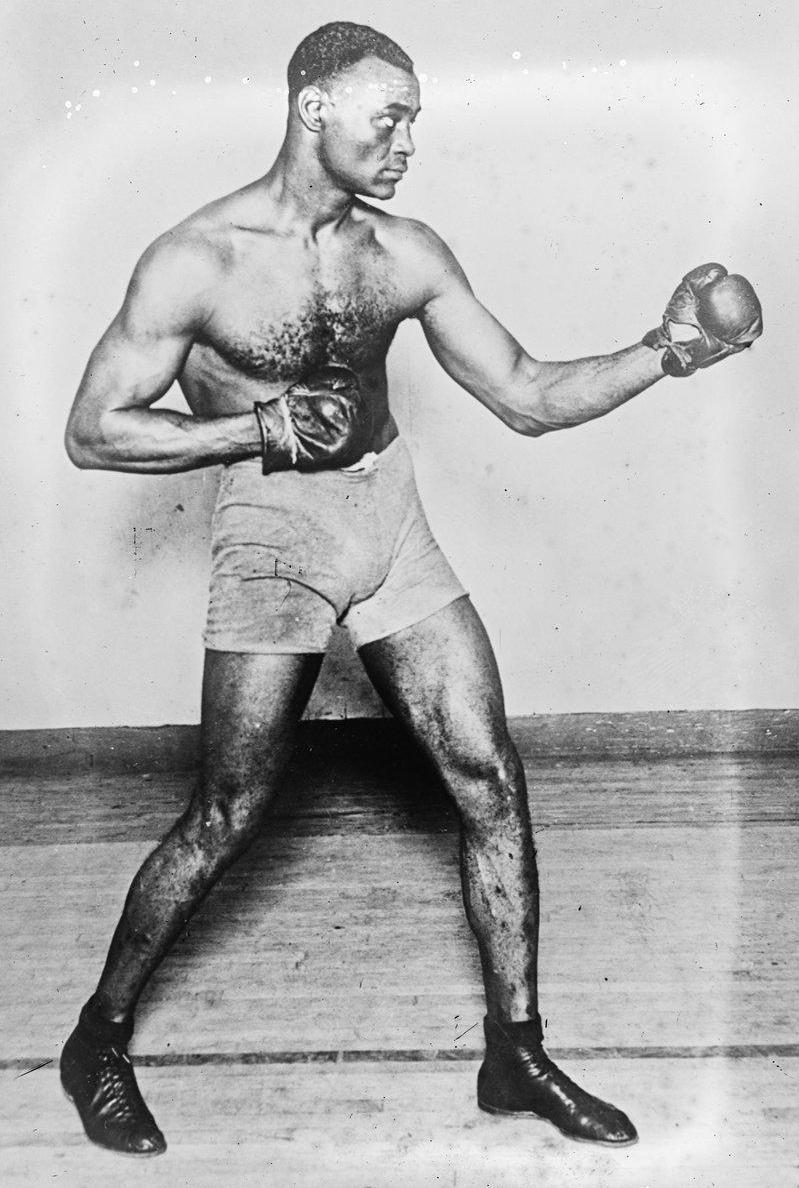
“Talk” also mentioned that a long anticipated boxing match between Harry Wills and Jack Dempsey had hit a snag with the state athletic commissioner.
Harry Wills in 1920 (Wikipedia)
Boxing historians consider Wills one of the most egregious victims of the “color line” drawn by white heavyweight champions. Wills fought for more than twenty years (1911–1932), was ranked a No. 1 challenger for the throne, but was denied the opportunity to vie for the title. He spent six years (1920–1926) trying to land a title fight with Dempsey, who was willing to fight Wills but backed out when he did not receive a $100,000 guarantee from a boxing promoter. Wills filed suit for breach of contract, leading the athletic commissioner to bar Dempsey from competing in the state (Dempsey would later lose in points to Gene Tunney in a Philadelphia bout).
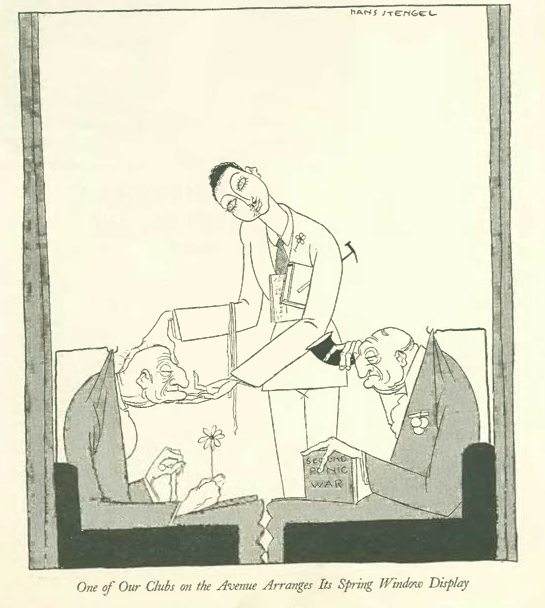
Cartoonist Hans Stengel’s take on upper crust society. The old guard will prove to be a frequent target of subtle jests from the brash young magazine. (New Yorker Digital Archive)
“Talk” offered a brief item on a “new religion” making the rounds, run by A. E. Orage. It noted that he was a disciple of Gurdjieff (and I should add both are offspring of Madame Blatavsky’s Theosophical Society) who “took New York by storm” the previous year. “Talk” said Orage offered classes “in which he intensifies the soul for $10 a month.”
John Held Jr. woodcut in the April 18, 1925 issue. Held was a high school classmate of New Yorker founder Harold Ross when both lived in Salt Lake City. (New Yorker Digital Archive)
The issue also marked the first appearance of darkly-themed woodcuts on various Victorian subjects by John Held Jr. He is perhaps even more famous for his variety of illustrations throughout the 1920s that captured the flapper era, and no doubt why he is still known for his work today.
John Held Jr. cover art for a 1922 short story collection by F. Scott Fitzgerald. (Wikipedia)
“Profile” featured famed birth control rights advocate Margaret Sanger in a piece titled “The Child Who Was Mother to a Woman.” Although “Profile” mentioned her great cause, it was largely focused on her defiance of authority, her championing of free speech (which she inherited from her father, a carver of tombstones), and of her ability as a small, timid woman to overcome the fear of speaking in public.
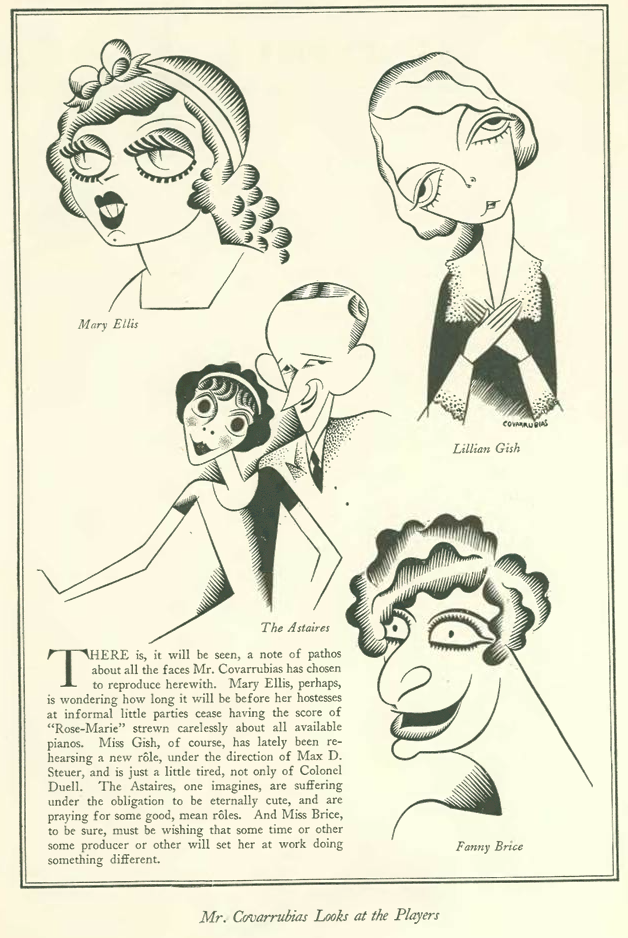
In this issue we are treated to Miguel Covarrubias drawings of contemporary celebrities:
(New Yorker Digital Archive)
The “Motion Pictures” section noted the following: “Texas Guinan, Hard Hearted Hannah and the gals of the El Fey Club (recently padlocked, see my entry “A Dry Manhattan”) moved over to the Famous Players Astoria studios the other day to lend the right color to Allan Dwan’s production, “Night Life in New York.”…unless the censors cut the scenes, Kansas, Iowa and other inland points can glimpse how Manhattan spends its evenings when it isn’t trying to get Havana or Oakland on the radio.”
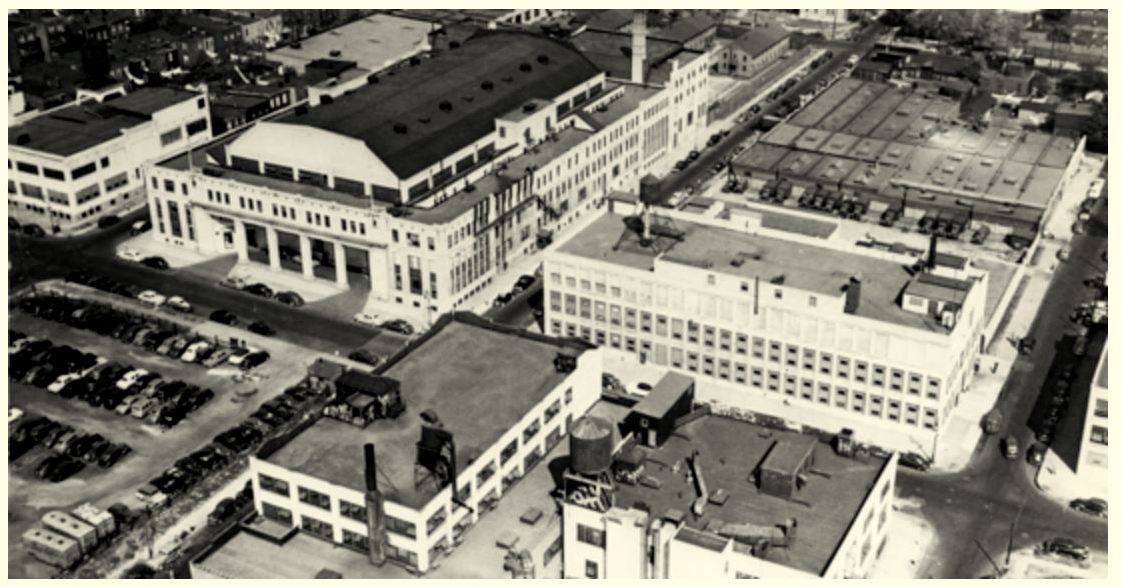
Famous Players Astoria studios (originally Famous Players-Lasky) was located near the Broadway theatre district. Two Marx Brothers films–The Cocoanuts (1929) and Animal Crackers (1930)–were filmed there. Although Lasky’s Paramount moved the studio operations to California in 1932, the Astoria location continued to thrive, used first by the U.S. Army (beginning in 1942) to make indoctrination films and later by other studios and networks to make everything from music videos, to films (Goodfellas) to television programs (Sesame Street).
The Lasky Players Studio in Astoria, now home to the Museum of the Moving Image. (Museum of the Moving Image)
The “Motion Pictures” section also mentioned that German director F. W. Murnau (perhaps most famous today for the original 1922 Nosferatu) was coming over to direct. The New Yorker observed that “he the most distinguished screen newcomer since Ernst Lubitsch came over.”
German actors and directors featured prominently in early New Yorker reviews. They were drawn to America by artistic opportunity, however. Later actors and directors (and other artists) would come over to flee Nazi persecution.
But then again, readers of the April 11, 1925 issue don’t know that yet.










 A New Yorker State of Mind