Ben Hur Bric-à-brac

Screen Shot 2015-09-25 at 9.48.36 AM
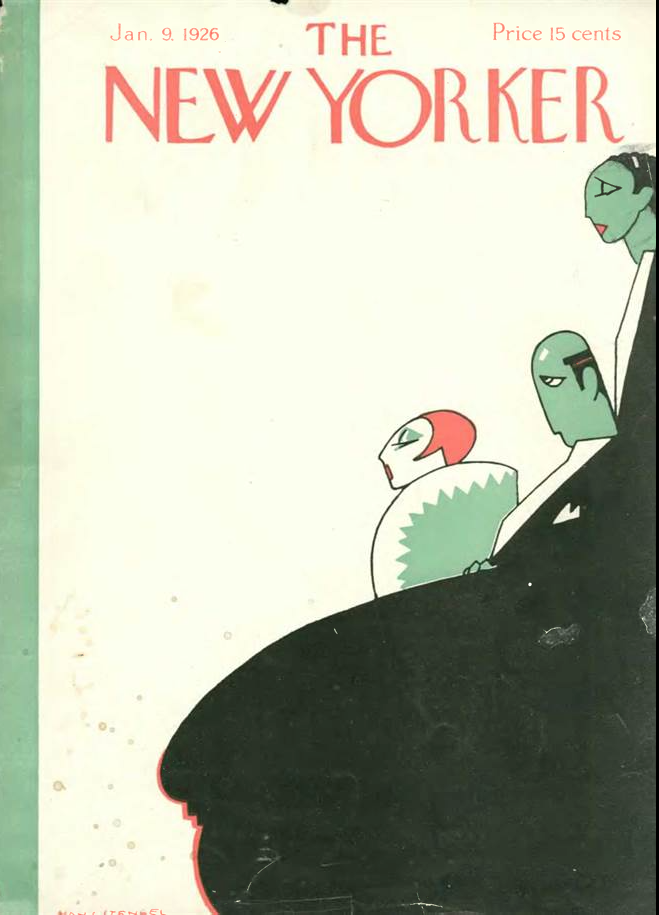
Jan. 9, 1925 cover by Hans Stengel.

MGM spent nearly $5 million (about $70 million today) to make the silent epic Ben-Hur, filming the movie on location in Egypt, Italy and the United States. The New Yorker’s film critic Theodore Shane was not impressed.

Shane wrote that $4,999,999.95 had been spent “on massive effects and the remaining $.05 on drama.”

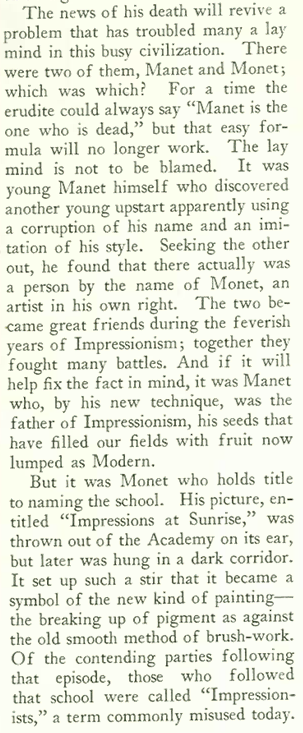
He noted, however, that the original story, an 1880 novel by Lew Wallace (who was a Union general in the Civil War, among other things), was pretty lacking in drama to begin with, just a “piece of bric-à-brac romance (that was) nothing more than a super Rover Boys story touched up with a Biblical background.” Here’s Shane’s entire review of the film, which was released by MGM on December 30, 1925:

Screen Shot 2015-09-28 at 3.49.54 PM

00239
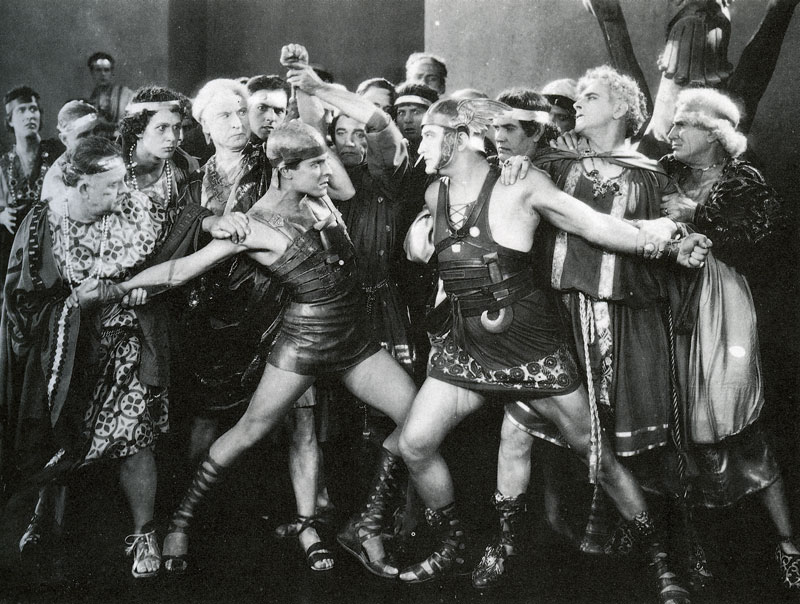
A Nickel’s Worth of Drama…Ramon Novarro (left) and Francis X. Bushman mix it up in Ben-Hur (1925) (Virtual History)

This was actually the second Ben Hur film. The first was made in 1907, a 15-minute silent costing $500 (and it really was made on the cheap; the producers stole some shots of a mock chariot race at a fireworks show at Sheepshead Bay, Brooklyn, and then added some interior shots to complete the picture).

For the 1925 Ben Hur, filming on location proved difficult from the start. Italy’s new leader, Benito Mussolini, was in an anti-American mood when production began, and labor disputes often delayed filming. By all accounts, conditions were miserable. Kevin Hagopian, in an essay for the New York State Writers Institute, observed “The worst agonies were reserved for the film’s climax, the chariot race. Legendary second unit director B. Reeves Eason’s nickname “Breezy” was certainly not earned by his work on the Ben-Hur set, for his merciless pace cost the lives of over a hundred horses. As [actor Francis X.] Bushman said sadly, “If it limped, they shot it.” A stunt man was killed in a chariot crash, and [actor Ramon] Navarro himself only narrowly escaped death.”

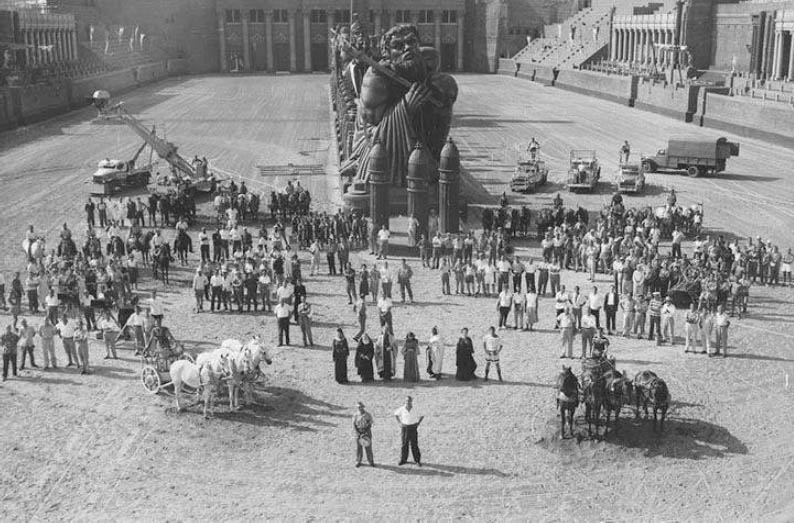
The troubled Italian set was eventually torn down and a new one built in Culver City, California. The crowd scenes and master shots for the race were done in a single day, with forty-two cameras covering the action.

The famed chariot race staged in Culver City, California, was shot with 42 cameras.

In “Profiles” Esther Carples looked at the life of Sergei Rachmaninoff, who was widely considered one of the great pianists of his day, and as a composer represented the last vestiges of Romanticism in Russian classical music. Carples painted a portrait of a brooding genius, a man with aristocratic bearing who lived in lonely exile from his native Russia.

Sergei_Rachmaninoff_cph.3a40575
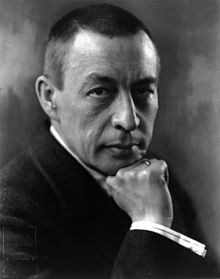
Sergei Rachmaninoff in 1921. (Library of Congress)

In 1921, Rachmaninoff bought a house on 33 Riverside Drive in New York City, where he lived until 1925. There he consciously recreated the atmosphere of Ivanovka (his beloved Russian summer house) entertaining Russian guests, employing Russian servants, and observing old Russian customs.

*****

Screen Shot 2015-09-28 at 4.33.35 PM
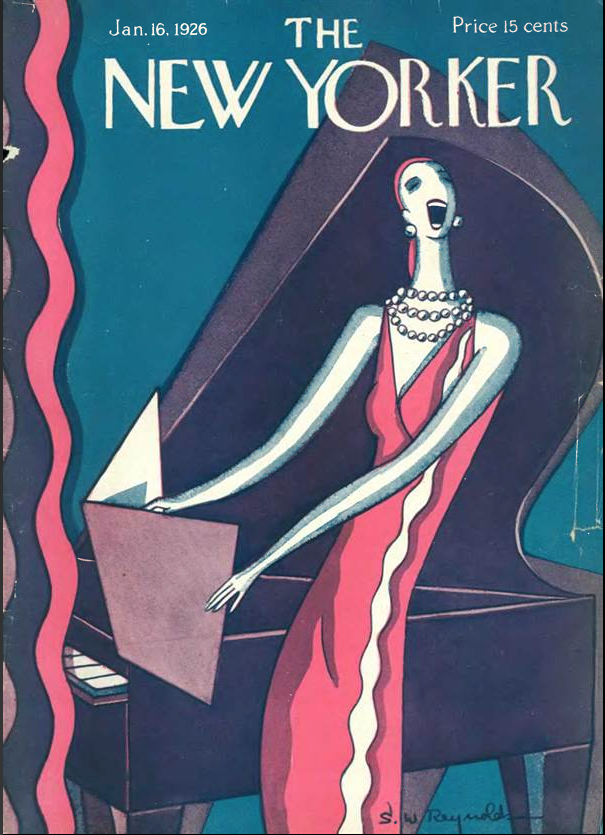
Jan. 16, 1926 cover by S.W. Reynolds.

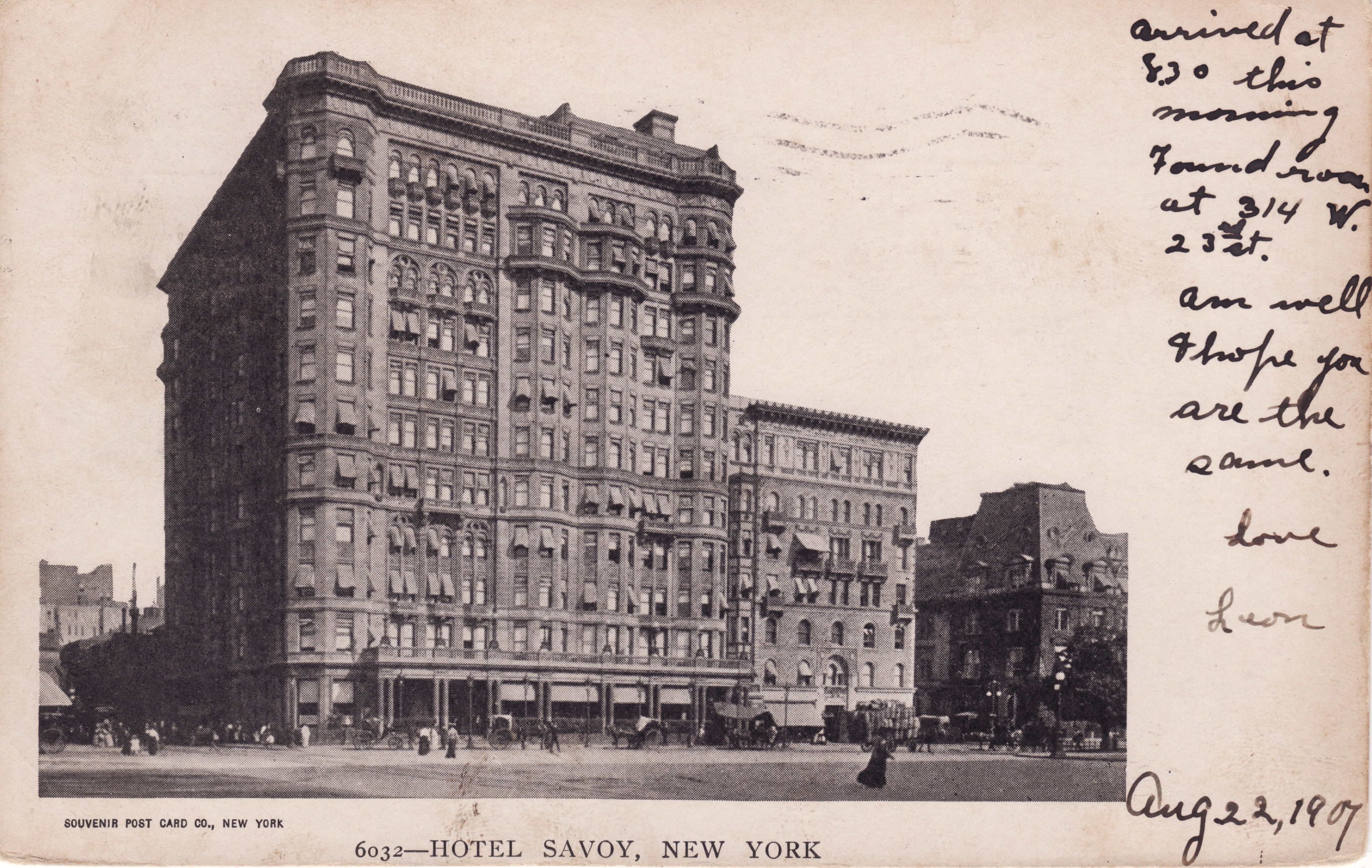
Let’s move on to the next issue, Jan. 16, 1926. “The Talk of the Town” noted another loss of a Fifth Avenue landmark with the Savoy Hotel was falling to the wrecking ball.

The Savoy, built in 1891-92, was slated to be replaced by The Savoy Plaza Hotel, which itself would be demolished in 1965-66 (amid significant public outcry and protest) to make way for the eastern headquarters building of General Motors.

It was observed that the new year would see a boon in construction of huge new buildings along the Avenue, and buildings only five years old (such as Heckscher Building) would be dwarfed by the new towers.

Hotel-Savoy-hres
Another One Bites The Dust…The Savoy Hotel (stuffnobodycaresabout.com)

The New Yorker continued to have fun with actress Gloria Swanson‘s pretensions to royalty (she was married to the Marquis de La Coudraye at the time). This time it came from the pen of Jimmie the Ink (James Daugherty), part of his series of drawings that coupled famous people of the day in comic situations:

Screen Shot 2015-09-29 at 9.32.55 AM

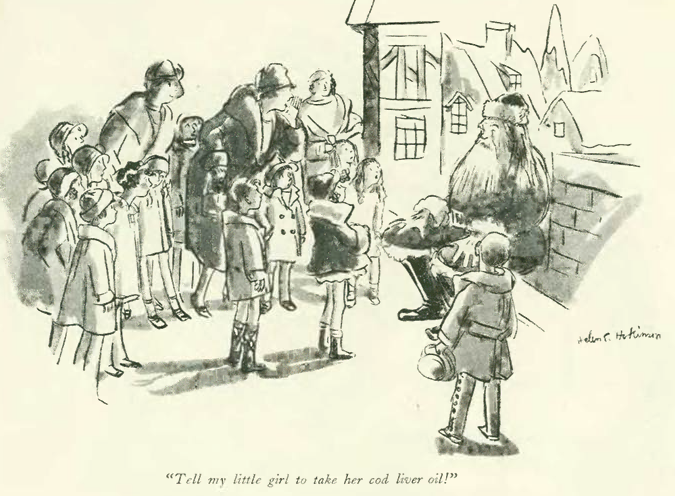
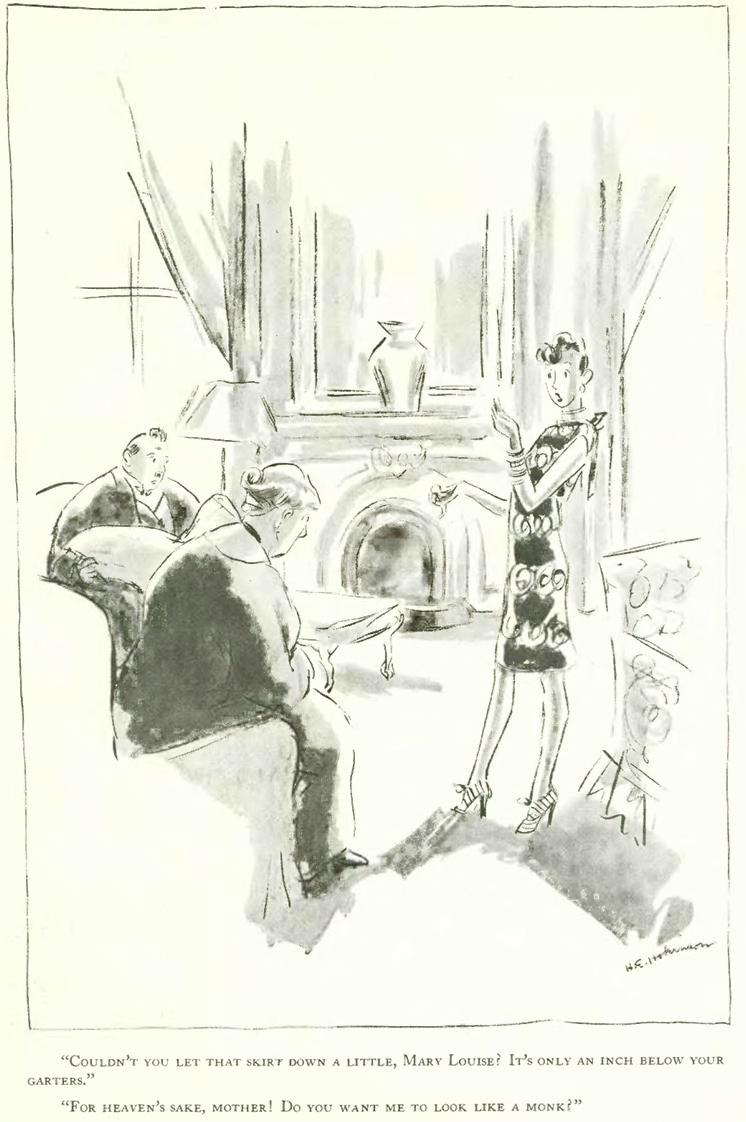
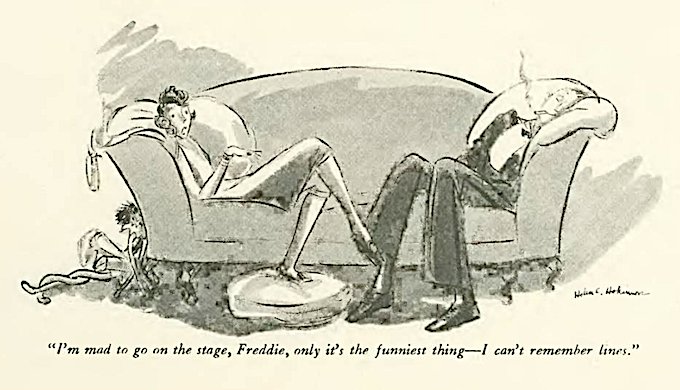
The issue also featured Helen Hokinson with a cartoon that seemed more in Barbara Shermund’s wheelhouse…

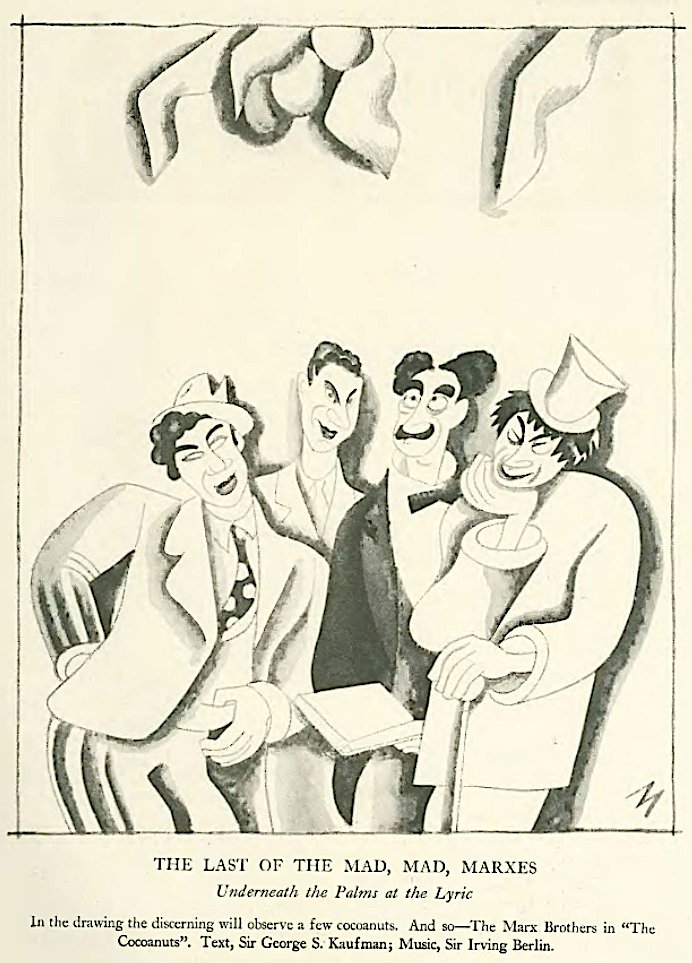
…a Julian de Miskey drawing for the theatre section…
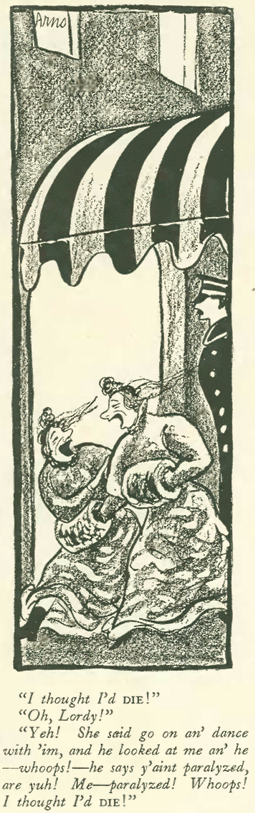
…and a Peter Arno illustration…

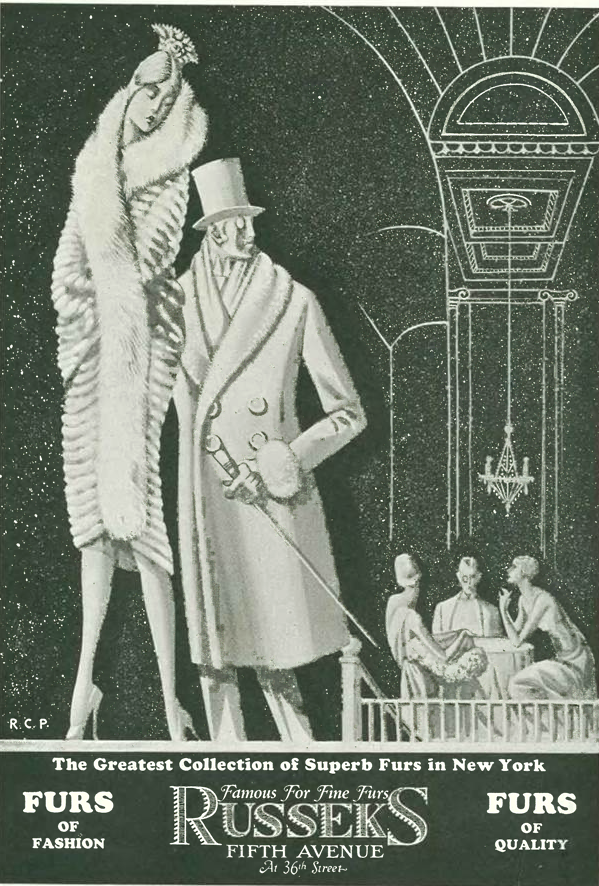
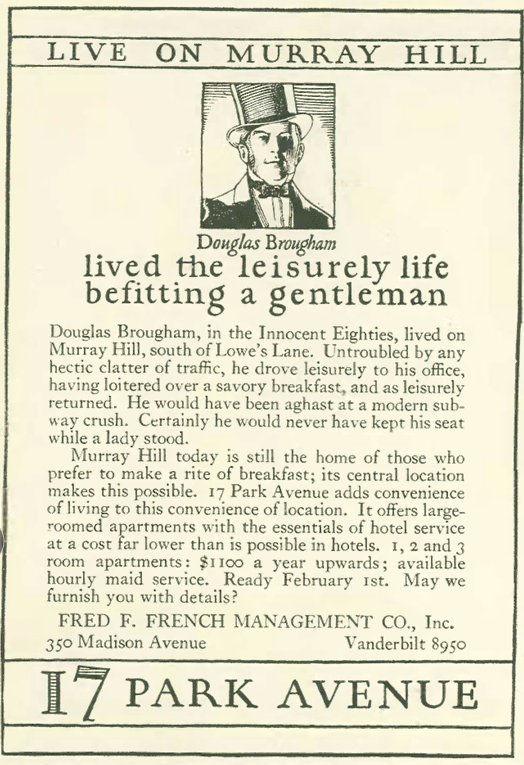
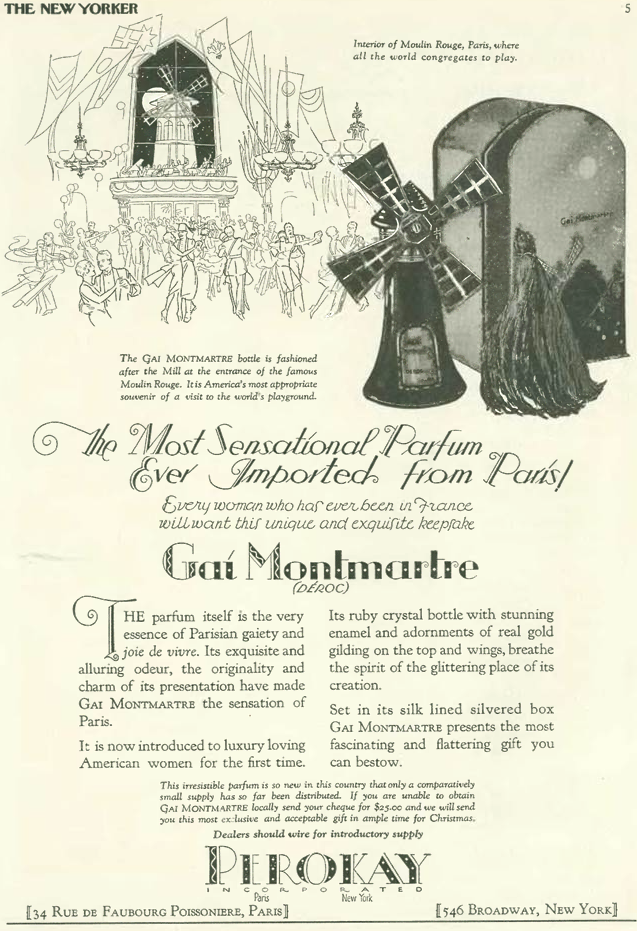
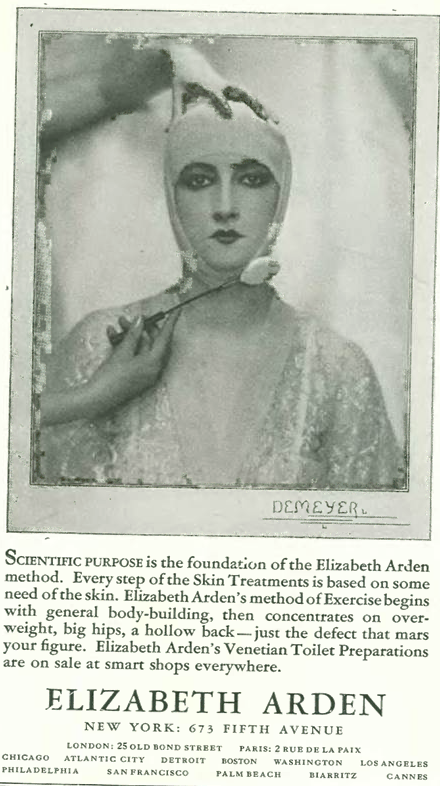
To close, two ads from the Jan. 16 issue, this one appealing to Anglophilic, aristocratic aspirations of certain readers…

Screen Shot 2015-09-29 at 9.34.08 AM

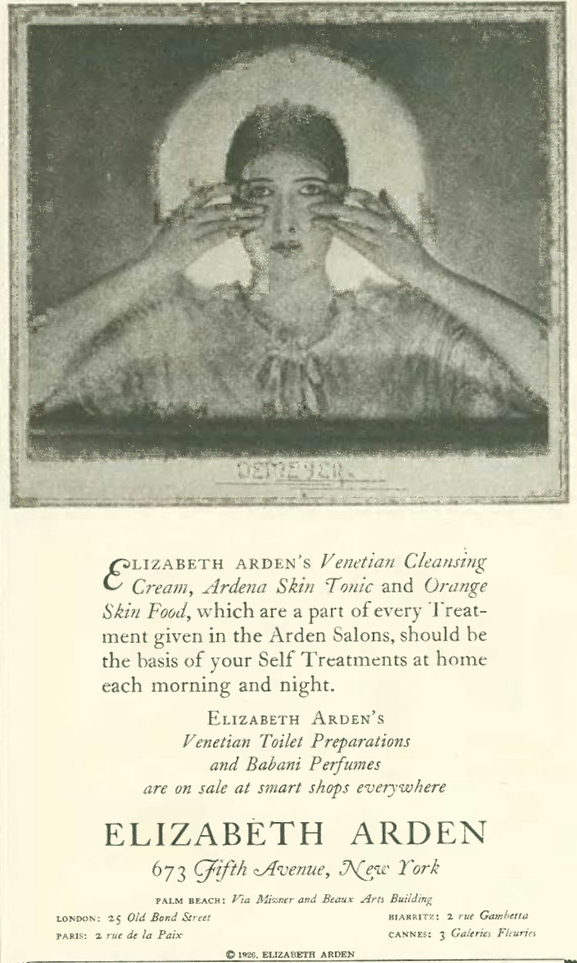
And this one from Elizabeth Arden, who will become a mainstay in the magazine with these ads featuring women with ghostly stares, usually with their heads wrapped tightly to combat sagging skin. Thanks to Hollywood, it was the age of the close-up, so wrinkles and blemishes be gone!

Screen Shot 2015-09-29 at 9.36.19 AM

Next Time: Lois Long Talks Cars…

Screen Shot 2015-09-28 at 4.36.32 PM


Fun in the Sun

Screen Shot 2015-09-09 at 12.47.57 PM
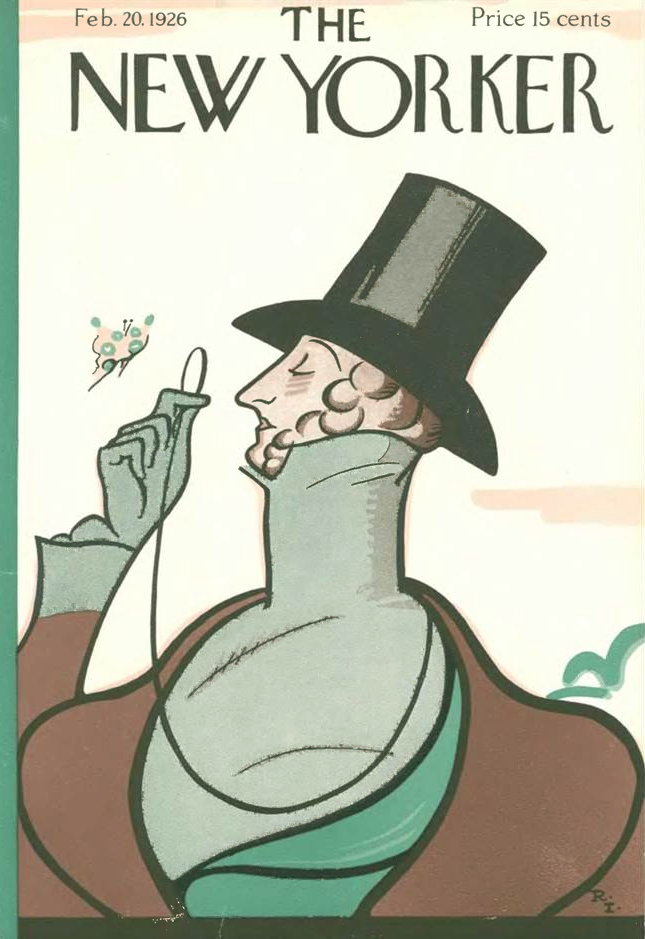
Cover of Jan. 2, 1926 issue by Rea Irvin.

As we begin a new year of The New Yorker, it strikes me how little things have changed in 90 years, at least when it comes to human nature–wars and rumors of wars, celebrity gossip, the latest fads in music and fashion, fights over politics and religion. It’s all still with us. And yet, a person from 2015 would be seem like an extraterrestrial in 1926.

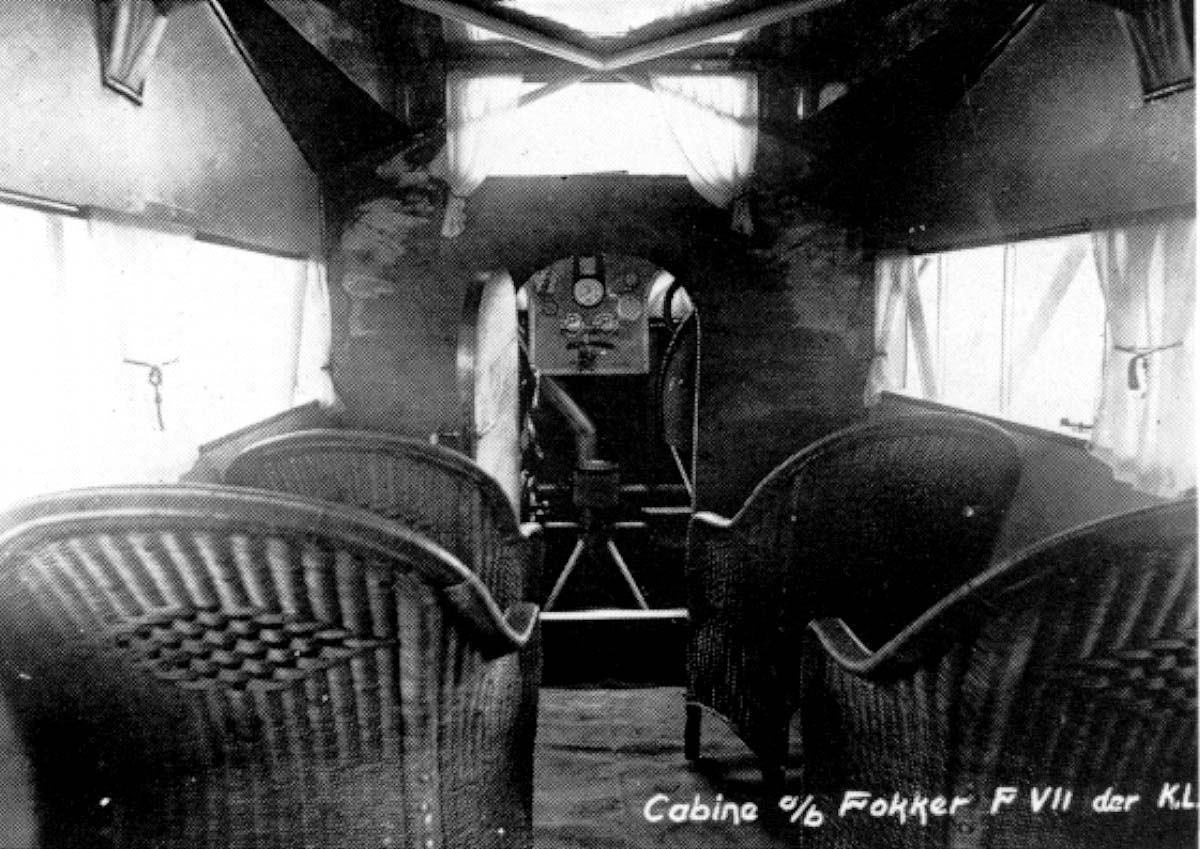
January 1926 was still a year and a half away from Charles Lindbergh’s Atlantic flight. Today we think so little of jumping on a plane that soars seven miles above the earth and whisks us anywhere in a matter of hours.

Fokker F7 cabin KLM
The Fokker F7. If you could even afford to fly in the mid-1920s, this is your ride. Buckle up! (Top, aviation history.com; bottom, dutchaviation.nl)

People in 1926 lived very differently, with far fewer distractions. No TV, only sporadic music on mono-tinny radios (or from mostly scratchy, hand-cranked records). Electric lights, but only if you lived in a city or town. The metropolis was noisy, but there was also silence. No cellphones or earphones, no CNN or ESPN blaring from every vertical surface. Your health? Forget it. Going to the dentist, regardless of your station in life, was a chamber of horrors. Ditto the doctor. Ever look at an antique doctor’s bag? Just some brown bottles, weird clamps and a saw. Penicillin wouldn’t be discovered until 1928, and for some reason lots of people died back then of peritonitis. It would claim both Rudolph Valentino and Harry Houdini in 1926. Finally, if you lived in 1926 you probably thought The War to End All Wars was just that. Only a few of the very sage saw the annihilation yet to come.

Anyway…

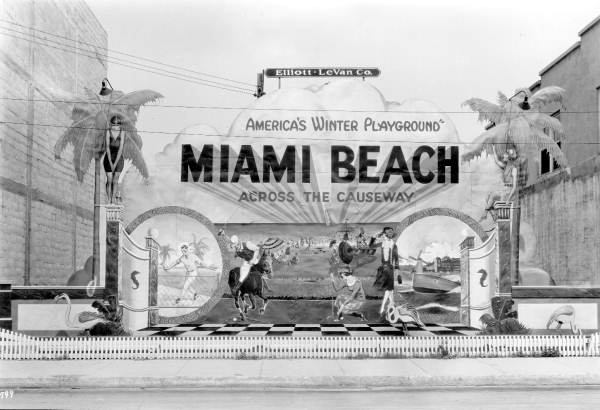
I titled this edition “Fun in the Sun” because the Jan. 2 issue opens with back-to-back ads enticing freezing New Yorkers to go south for the winter:

Screen Shot 2015-09-22 at 4.43.33 PM

Screen Shot 2015-09-22 at 4.43.42 PM

These were boom years for places like Miami Beach, formerly a quiet backwater but fast becoming a popular vacation getaway for New Yorkers and other Northeasterners. During the 1920s many wealthy industrialists from the north and Midwest also built their winter homes there.

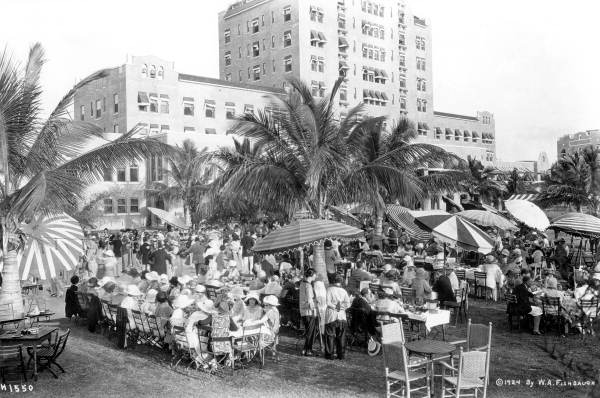
1923
Japanese tea garden at the Flamingo Hotel in 1923 – Miami Beach (State Archives of Florida, Florida Memory)
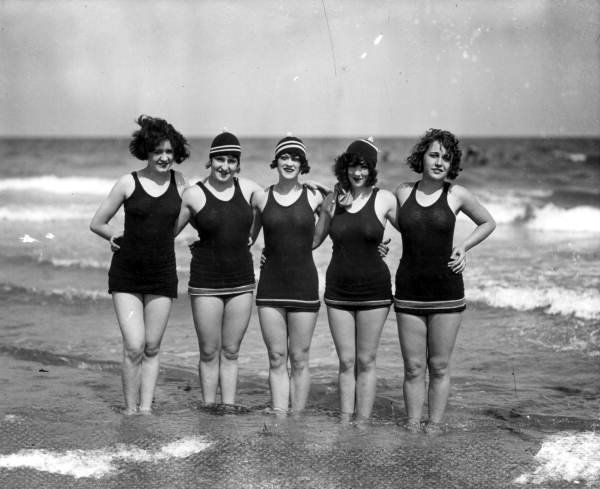
1925
Bathers on Miami Beach in 1925 (State Archives of Florida, Florida Memory)

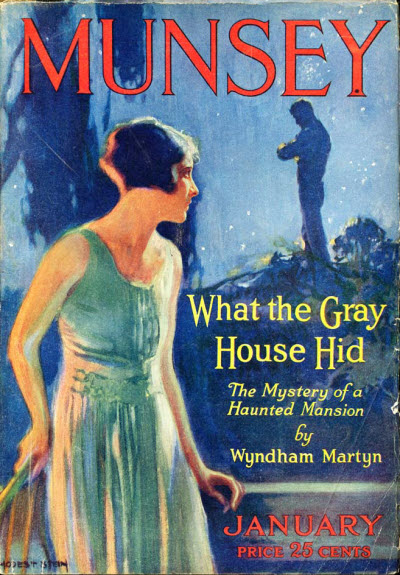
In other items, the “Reporter at Large” Morris Markey commented on the death of Frank Munsey, American newspaper and magazine publisher. Munsey had a reputation for extreme frugality and was widely disliked by employees who blamed him for their “shoddy recompense.” Munsey is credited with the idea of using new high-speed printing presses to print cheap, ragged pulp magazines, especially for working-class readers. Magazines such as Munsey and Argosy were filled with various genres of action and adventure fiction.

munsey_192501
Munsey’s Magazine January 1925 (philsp.com)

Markey wrote that Munsey would fire people on a whim for reasons that included being left-handed, too old, too young, or too fat. During his ownership of the New York Sun, Munsey gave “a peremptory order that all fat men, being inefficient and probably lazy, be expelled from the Sun staff.” Markey was no fan of Munsey as is clear in this excerpt:

Screen Shot 2015-09-25 at 9.29.26 AM

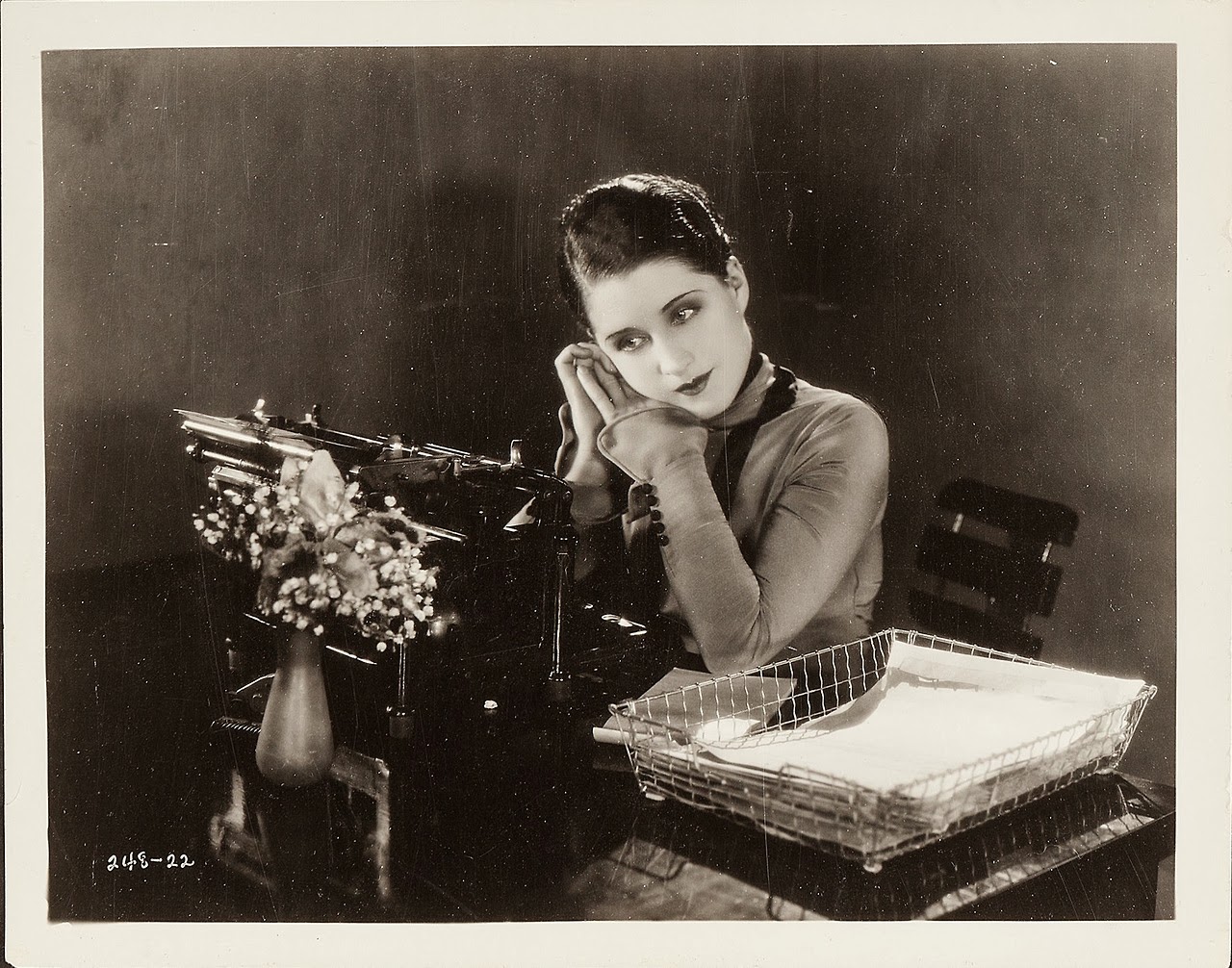
Theodore Shane continued to be disappointed with films coming out of Hollywood. He described Norma Shearer’s latest picture His Secretary as “poor.”

His Secretary - Hobart Henley - 1925
A stenographer, and a vamp! Norma Shearer in His Secretary, 1925 (silent beauties)

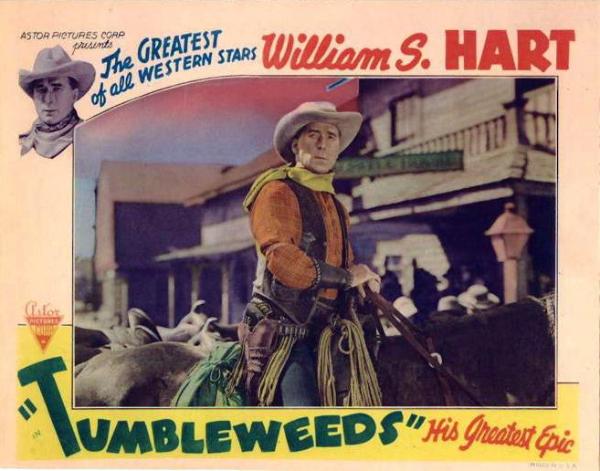
The film was about a humble stenographer who suddenly transforms into a ravishing sex symbol, a “Cinderella theme” that Shane believed had been thoroughly worn out by the actress. He was also underwhelmed by the return to the screen of William S. Hart, once a big star of the early silents.

Screen Shot 2015-09-25 at 9.45.41 AM

TUMBLEWEEDS_Silent_Western_Lobby_Card_1_William_S._Hart-600x471
The old cowboy isn’t done yet, durn it! (silenthollywood.com)

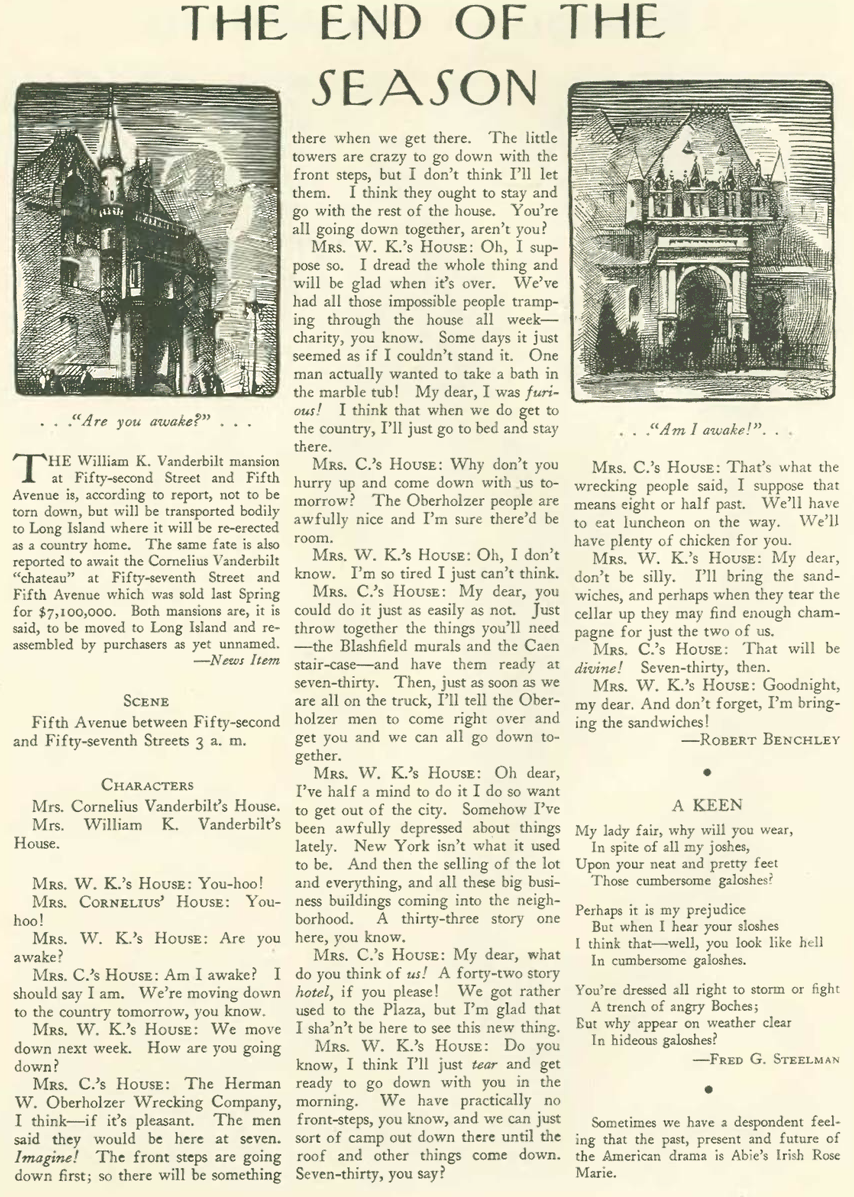
I have written several entries about the changing face of Fifth Avenue (the old mansions being destroyed, that is). Here is Robert Benchley’s take on the subject:

Screen Shot 2015-09-25 at 9.31.31 AM

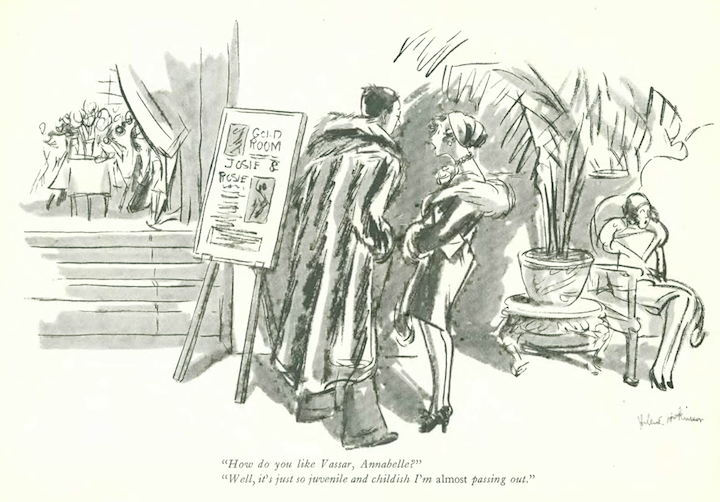
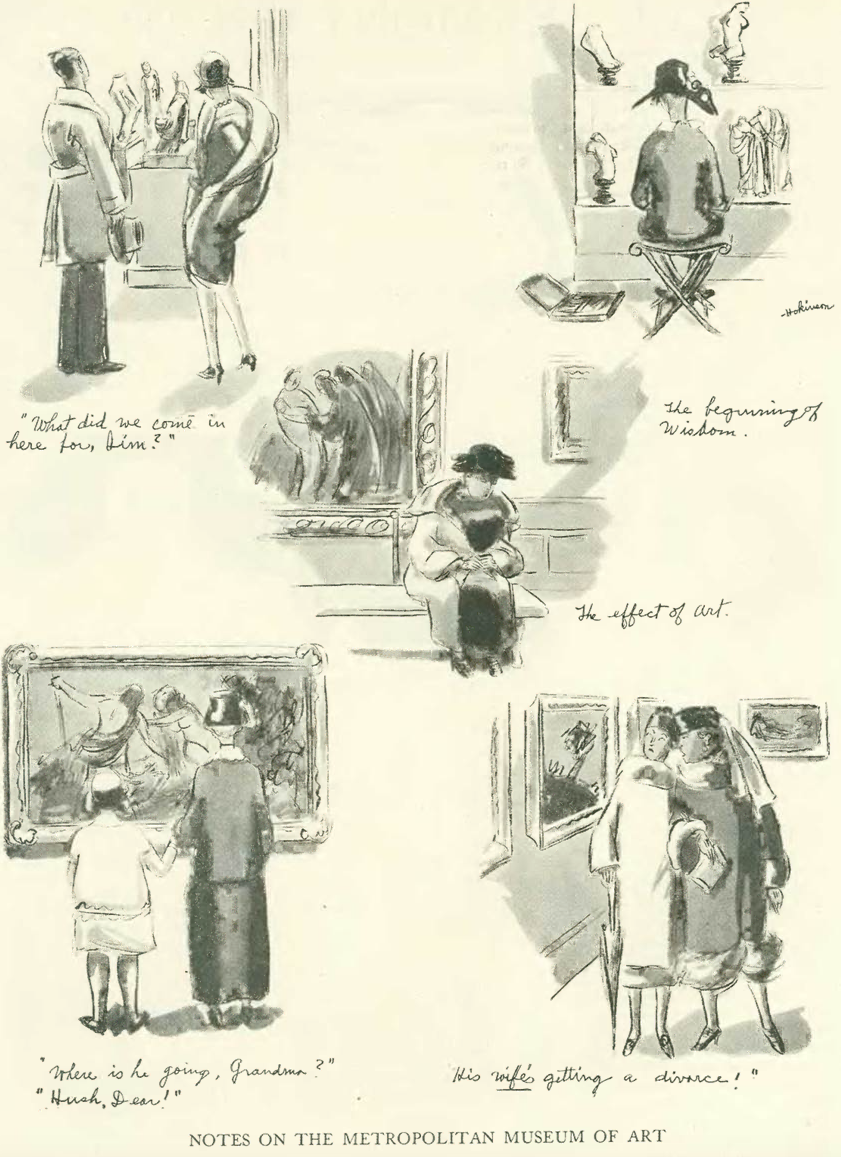
To close, an illustrated feature by Helen Hokinson, once again showing us how a college student of the 1920s looks (to my eyes anyway) as ancient and remote as a mastodon:

Screen Shot 2015-09-25 at 9.36.00 AM

Next time: Ben Hur Bric-à-brac

Screen Shot 2015-09-25 at 9.48.36 AM


Beloved Aunt Helen

Screen Shot 2015-08-13 at 1.28.18 PM
Dec. 12, 1925 cover by Rea Irvin

Last time we looked at one of The New Yorker’s most prolific artists, Peter Arno. Equally prolific was Helen E. Hokinson, who preceded Arno at the magazine by several months as one of the magazine’s first regular artists.

Hokinson’s signature cartoons of often plump society women engaged in their various activities–clubs, shopping, dining out and gardening–were hugely influential in giving The New Yorker a distinct look and style.

In all she contributed 68 covers to the magazine and more than 1,800 cartoons (including the one that heads this blog entry). So strong was Hokinson’s identity with the magazine, a number of her cartoons were published after her death in 1949.

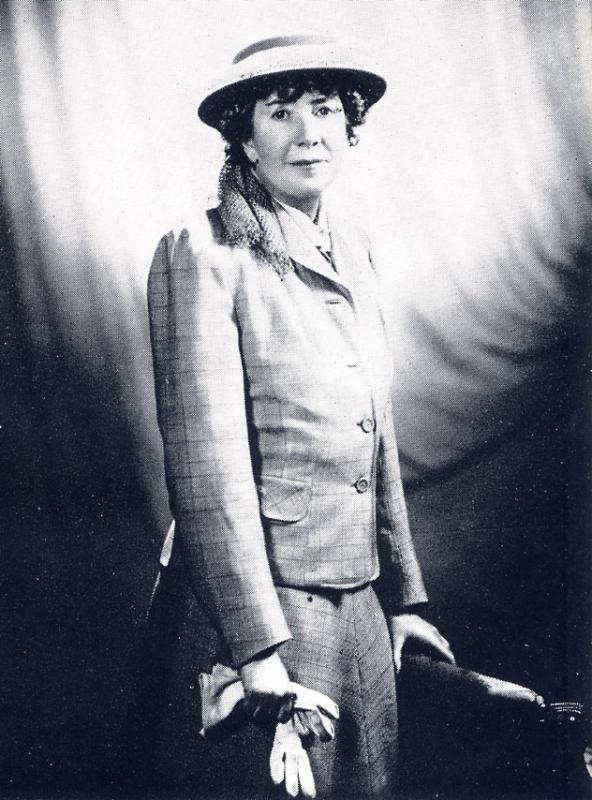
38159549.HelenHokinson
Helen Hokinson (pbase.com)

New Yorker artist Richard Merkin later wrote (The New Yorker, Feb. 14, 1994) that Hokinson was “something of a stay-at-home, preferring the rewards and routines of her work and of an apartment near Gramercy Park and a cottage in Connecticut.” He observed that it was a “dismal irony” when this homebody died in a plane crash en route to a speaking engagement in Washington, D.C.

But let us remember the joys she brought to so many through her work. Merkin wrote that Hokinson was “a beloved aunt among the family of New Yorker artists…(she) created a type that will forever bear her name–the Hokinson Woman.” Here is Hokinson’s contribution to the Dec. 12, 1925 issue:

Screen Shot 2015-08-24 at 5.17.25 PM

The reluctant debutante Ellin Mackay was back for the Dec. 12 issue with a follow-up piece, “The Declining Function: A Post-Debutante Rejoices.” It would be her final word on the topic. As I reported earlier, Mackay went on to marry famed songwriter Irving Berlin, but would continue writing, most notably a number of short stories for the Saturday Evening Post and other publications.

889666834-ellin-mackay-irving-berlin-atlantic-city-honeymoon-with-modern-concept-and-atlantic-city-honeymoon
FREE AT LAST…Newlyweds Ellin Mackay and Irving Berlin on their honeymoon in Atlantic City. They were married on Jan. 4, 1926. (www.kuaike.co)

In this her second and final New Yorker piece, Mackay drove the final nail into her past debutante life, writing that balls and other society events were “no longer a recognition of any kind of distinction.” She concluded:

People are bored, at least for a while, with being sheep; they are weary of filling their hours of ease with tiresome duties; they have learned to go where they want to go, not where they want to be seen.

* * *

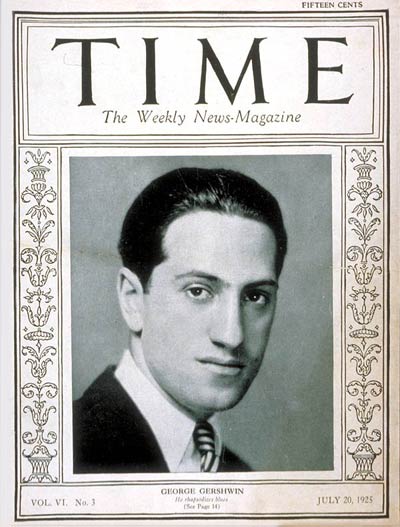
“The Talk of the Town “ reported on George Gershwin’s latest work of “ambitious jazz,” his Concerto in F, which premiered at Carnegie Hall with Walter Damrosch conducting.

1101250720_400
George Gershwin on the cover of the July 20, 1925, issue of Time magazine. (Time.com)

It was noted that Gershwin’s new work had the “beat of the Charleston stirring it.” Later in the “Critique” section, the work was applauded as an “advance on Rhapsody in Blue” and “sharply effective.”

“Profiles” featured Tex Rickard, proprietor of the new Madison Square Garden. The profile’s writer, W. O. McGeehan, suggested that Rickard had assumed the mantle of P. T. Barnum, and although he had given up his saloon-dealing days (promoting gambling and boxing) and now feigned “respectability and elegance,” his primary talent remained in rounding up the gullible masses for popular entertainments:

He will promote anything that will gather a sufficient number of Rubes for profit or for prestige…Behind his guileless exterior, there is a deep guile that is half benevolent and half Satanic…

1024px-Tex_Rickard
Tex Rickard (Library of Congress)

The following year (1926) Rickard would be awarded an NHL franchise to compete with the (now defunct) New York Americans hockey team. Rickard’s team would immediately be nicknamed ‘Tex’s Rangers,” a moniker that remains to this day.

Daybreak_by_Parrish_(1922)
Maxfield Parrish’s Daybreak (1922) is regarded as the most popular art print of the 20th century, based on number of prints made: one for every four American homes. The original sold in 2010 for $5.2 million. (artsycraftsy.com)

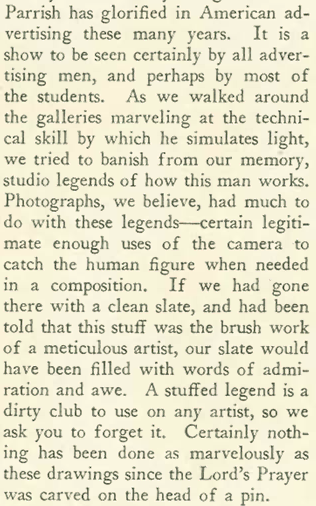
In “Art,” Murdock Pemberton wrote a dismissive critique of the young Maxfield Parrish’s work, which was on display at Scott & Fowles gallery. It was Parrish’s first exhibition. Pemberton took pains to point out that although the work had technical merit, it was by an artist largely glorified in American advertising and not in serious art circles:

Screen Shot 2015-08-24 at 9.58.20 AM

The Dec. 12 issue was filled with Christmas advertisements, including this one that suggests even “sophisticated” readers of the magazine had a taste for kitsch:

Screen Shot 2015-08-24 at 9.06.31 AM

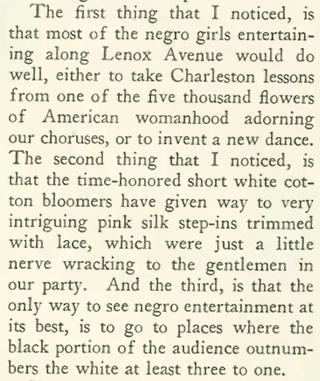
Included in the back pages was an extensive list of “Christmas Shopping Suggestions” compiled by Lois Long (who noted that the list was “not compiled for the benefit of the Old Lady from Dubuque”), while in “Tables for Two” she confessed something akin to horror that she had not yet visited Harlem in the fall season. Among her observations:

Screen Shot 2015-08-24 at 10.11.28 AM

And in the spirit of the season, the “Old Lady from Dubuque” made an appearance in the magazine courtesy of cartoonist Ralph Barton:

Screen Shot 2015-08-24 at 9.46.33 AM

Next Time: Social Errors…

Screen Shot 2015-08-24 at 10.15.29 AM


Oh Those French

Screenshot 2015-07-10 16.32.07
Oct. 24 cover by Max Ree.

Apparently even Parisians have fashion lapses from time to time. Janet Flanner (Genêt) reported with some alarm a “curious phenomenon” from Paris in the Oct. 24, 1925 issue of The New Yorker.

It seemed that the otherwise fashionable Parisians were slumming it a bit and had adopted a dowdy look previously associated with residents of the British Isles. (The un-dowdy image at the top of the page is French designer Sonia Delaunay and her matching Citroen in 1925).

Apparently such pedestrian tastes had also caused a shift from formerly fashionable travel destinations on the Atlantic coasts to Mediterranean destinations:

Screenshot 2015-07-14 10.25.03

And to top things off, the French were agog over the latest Charlie Chaplin film, The Gold Rush (another French favorite of American clown-dom, Jerry Lewis, would be born the following year):

Screenshot 2015-07-14 10.25.26

But then there was another new distraction in town, the Autumn Salon:

Screenshot 2015-07-14 10.26.17

6865003683_3b4a1952df
Pavel Tchelitchew, self-portrait, 1925 (Flickr)

Pavel Tchelitchew was known as a leader of “mystical surrealist” painting. He left his native Russia in 1920 and lived in Berlin before moving to Paris in 1923. There he became acquainted with Gertrude Stein and Edith Sitwell, the latter with whom he had a long-standing friendship.

The French were also on display in a comic piece by Theodore Shane, who also served as the magazine’s movie critic.

Shane wrote a piece titled “Fra~nce” in a style that suggested he was teaching children about France by dividing words into syllables (it was similar to a piece about Russia (“Rus~sia”) in the Aug. 29 issue, signed “Freudy”) Here’s a sample:

Screenshot 2015-07-13 16.18.19

A full-page ad on the Page 1 announced the “The Midnight Open” event at The 19th Hole Club in the Hotel Roosevelt, with an impressive lineup of golf professionals such as Walter Hagen and Gene Sarazen and even “prominent amateurs” including Bobby Jones.

41864_172_z
The Roosevelt Hotel, which opened in 1924 (Expedia)

I was surprised that the annual membership fee was advertised as only $10, which would roughly translate to $135 today—a bargain compared to what it costs today to join even the lowliest golf club.

Screenshot 2015-07-13 12.13.32

“Talk of the Town” welcomed news from Boston that “ladies are to be allowed to smoke in the open” in that city (drawing by Johan Bull):

Screenshot 2015-07-13 12.17.13

Screenshot 2015-07-13 12.17.05

In a feature “Our Collegiate Hilltop,” Elmer Davis wrote about the droves of college students who had taken over much of the available housing along Morningside, “a ghetto for the Nordic native-born.” Davis offered this lament about Columbia’s continued creep into the surrounding neighborhoods (with accompanying art by Helen Hokinson):

Screenshot 2015-07-13 12.27.15

Screenshot 2015-07-13 12.37.51

“Profiles” examined the life of “A Kind Man,” William Lyon Phelps. That title was not meant as a complement from writer Waldo Frank, but rather it was his “kindness” toward authors that caused him to praise books that were not worthy of praise and made him the personification of the “most American of disasters: the disaster of Good Intentions, when they are not fortified by intellectual hardness, when they are not drained of all sentimental juices.”

ethel-27
Ethel Barrymore in 1925 as Ophelia in Walter Hampden’s Production of Hamlet. (barrymorefamily.com)

In “The Theatre” Elsie Ferguson and Basil Rathbone were appearing in The Grand Duchess and the Waiter at the Lyceum (“an agreeable piece of work”), while Ethel Barrymore “wowed” critic Herman J. Mankiewicz with her performance as Ophelia in a revival of Hamlet at Walter Hampden’s Theatre.

Or at least I think she wowed him. Mankiewicz knew and worked with the Barrymore family, and I wonder if his over-the-top style here is a wink to the fact that a 45-year-old Ethel was playing the part of a young virgin. Here’s an excerpt from the review:

Screenshot 2015-07-14 15.05.43

I hate to jump ahead, but in the Nov. 14 issue, “Talk of the Town” offered this humorous anecdote from one of Barrymore’s performances:

Screen Shot 2015-07-22 at 4.48.09 PM

In sporting news, John R. Tunis continued his coverage of rivalry matches staged at Yankee Stadium, this time the fiercely competitive Notre Dame vs Army matchup. Despite Notre Dame’s renown under Knute Rockne, Army was a worthy foe in the 1920s and in this particular matchup the Cadets blanked the Irish 27-0. The matchup between these teams was so popular that it was played at Yankee Stadium until 1947.

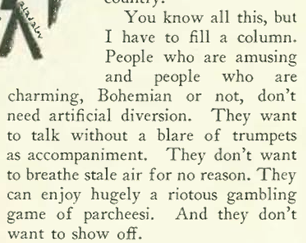
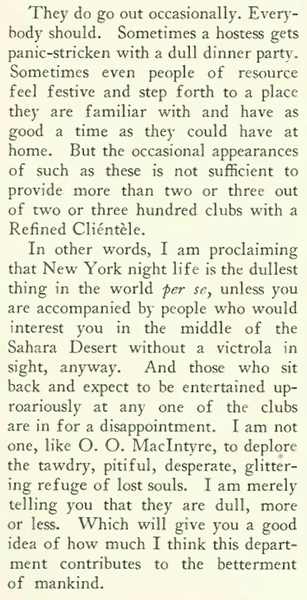
And finally, Lois Long sharpened her pencil and offered her thoughts on a dull dinner crowd at Pierre’s:

Screenshot 2015-07-14 10.21.39

A drawing by Peter Arno (who would marry Long in 1927) in another section of the magazine seemed to refer to Long’s lament:

Screenshot 2015-07-13 16.10.04

Long also offered some criticisms of a “new negro revue” that decidedly differed from the mainstream:

Screenshot 2015-07-14 10.20.34

A great illustration by Julian de Miskey of the Bellows exhibition at the Met:

Screenshot 2015-07-13 16.08.51

Next Time: Short-tempered about Temperance…

Screenshot 2015-07-14 10.28.30

Amateur Beauty

Screenshot 2015-06-24 16.52.50
Cover for Sept. 19 by Max Ree.

It was a busy week for the Sept. 19 issue of The New Yorker. “The Talk of the Town” reported that ‘amateur beauties” at the Atlantic City Beauty Pageant (known today as the Miss America Pageant) were “protesting against the presence of professional sisters in the contest.” Talk then posed this question:

“Is beauty, one wondered, ever amateur? Is it not the most professional of all professional matters? To a man it would seem so. But women may know better. And if there is a distinction—if we are to have amateur and professional beauties—why should not the Atlantic City promoters take a leaf from golf’s book and hold an open championship, wherein the two classes may meet?

Talk concluded:

The winner of last year’s beauty contest, Miss Ruth Malcomson, tells how she won it in a recent issue of Liberty; and from these writings we leap hastily to the conclusion that the very beautiful are also very very simple.

Miss America 1924 - Ruth Malcomson (1)
Ruth Malcomson, Miss America 1924. (Vintage Everyday)

“Talk” was right about Ruth Malcomson, who was just 18 when she won the title. A native of Philadelphia, she defeated 85 fellow contestants including incumbent Mary Campbell, who was seeking her third consecutive crown. At the time the contest was only in its fourth year, and the winner was called “The Golden Mermaid.”

Miss America 1924 - Ruth Malcomson (3)
Malcomson crowned “The Golden Mermaid,” Miss America 1924

Malcomson was among the critics of the “professional” contestants. According to her obituary in the Philadelphia Inquirer (May 28, 1988) Malcomson stated in 1925 that “The pageant now has become nothing but a commercial proposition to exploit the beauties who make their living from their good looks. What chance has an ordinary girl, untrained, to win a contest in which girls who have been trained to make the most of their beauty are competing?”

miss-america-e1410754333210
Ninety-one years later…Miss New York Kira Kazantsev crowned Miss America 2015. (The Blaze)

In her Liberty Magazine interview, she also blasted women’s groups for berating her involvement in the competition.

Malcomson hinted that the women’s groups were exploiting her, not the pageant (yes, there is nothing new under the sun…).

True to her word, Malcomson married an unassuming Carl Schaubel in 1931 and returned to a quiet, simple life in suburban Philadelphia.

Miss America 1924 - Ruth Malcomson (5)
Standing next to the Rickenbacker car she won as Miss America in 1924, Ruth Malcomson playfully spars with World Heavyweight Champion boxer Jack Dempsey. (Vintage Everyday)

In other “Talk” items, the “No Smoking” rule at the public library was challenged, and arguments were made for special smoking rooms that could be reserved for writers. The column also offered comment on the growing popularity of tennis as a professional spectator sport, rather than merely a side activity for a society weekend:

Screenshot 2015-06-26 13.45.06

“Profiles” turned its attention to bodybuilder and publisher Bernarr McFadden (featured in an earlier post in this blog). McFadden was always at the cutting-edge of scandal, whether for the nearly nude photos featured in his Physical Culture Magazine, or for the celebrity scandal and sensational crime reported in his Evening Graphic.

In his essay “Murder As Bad Art,” Waldo Frank pondered America’s high homicide rate, and suggested that murder is an expedient means toward an end for the impatient American. An excerpt, with artwork by Helen Hokinson:

Screenshot 2015-06-26 13.59.42

Screenshot 2015-06-26 13.59.13

Screenshot 2015-06-26 13.59.22

cather
Willa Cather (Nebraska History)

In “Books,” Harry Este Dounce offered a lengthy, thoughtful and positive review of Willa Cather’s latest novel, The Professor’s House, and likened its tone to an Ibsen play. Cather would continue to receive praise from New Yorker critics throughout the remainder of her career.

In “Sports Of The Week” John Tunis offered extensive coverage of the Davis Cup matches, and noted that American star Bill Tilden was hurt and was “far from the Tilden of old.” There were rumors that Tilden was determined to throw his match with French tennis champion Jean Borotra. Tunis wrote that he had his suspicions, but offered that perhaps Tilden was playing carelessly as he had done before “with other less celebrated opponents.”

And Lois Long offered her frank opinions on two New York hotspots, the 45th Street Yacht Club and the Owl Club at 125 East 45th:

new-york-city-yacht-club-jeffrey-erb1
The Yacht Club building today (erbology.com)

Screenshot 2015-06-26 14.32.35

And another ad courtesy of Raoul Fleischmann, with testimonials from a man and two women who credit Fleischmann yeast with curing them of boils, constipation and “bilous” attacks:

Screenshot 2015-06-26 14.36.08

Well, at least advertising revenue is up, but this ad seems out of place in a magazine like The New Yorker:

Screenshot 2015-06-26 14.37.04

Charles Culkin was a Tammany Hall politician who would serve as county sheriff from 1926 to 1929. He was later indicted for embezzling interest money from the sheriff’s office, part of the whole mess that brought down Mayor Jimmy Walker (we will explore that later, I am sure).

Now, for a couple of cartoons by Isadore Klein and Johann Bull, featured on facing pages, that illustrate two very different aspects of New York life in the 1920s:

Screenshot 2015-06-26 14.04.38

Screenshot 2015-06-26 14.04.55

Next time: Fall fashions!

Screenshot 2015-06-26 15.03.49


Logrolling on West 44th

Screenshot 2015-06-10 16.51.20
August 29, 1925 cover by Garrett Price.

In a previous post I briefly looked at the Algonquin Round Table–writers, critics, artists, some of them New Yorker contributors–who had been exchanging witticisms over lunch at the Algonquin Hotel since 1919.

Like so many things connected to The New Yorker, Alexander Woollcott was at the center of the famed table’s origin story. According to Wikipedia, the group that would become the Round Table began meeting as the result of a practical joke carried out by theatrical press agent John Peter Toohey, who was annoyed at Woollcott (a New York Times drama critic) for refusing to plug one of his clients (Eugene O’Neill) in his column. Toohey organized a luncheon supposedly to welcome Woollcott back from World War I, where he had been a correspondent for Stars and Stripes (and where Woollcott first met Harold Ross and Jane Grant). Instead Toohey used the occasion to poke fun at Woollcott on a number of fronts, including his long-winded war stories. Woollcott’s enjoyment of the joke and the success of the event prompted Toohey to suggest that the group meet every day at the Algonquin for lunch.

An illustrated feature by Ralph Barton in the August 29, 1925 issue (titled “The Enquiring Reporter”) thumbs its nose at critics of the Round Table who accused its members of “logrolling” (exchanging favorable plugs of one another’s works). Barton’s feature spoofs the man-on-the-street interviews that were popular in the 1920s. The persons chosen “at random” are none other than members of the Algonquin Round Table who take turns denying that any logrolling takes place at the famed gathering:

Screenshot 2015-06-15 15.16.27

In fact, there was quite a bit of logrolling taking place in this “Vicious Circle.” As Thomas Kunkel writes in Genius in Disguise, in addition to New Yorker contributors, the Algonquin Round Table variously included representatives of the New York Times, the New York Tribune, Vanity Fair, Harpers Bazaar and Life.

“The wits cross-pollinated feverishly. Shrugging off charges of logrolling, they quoted one another in their columns, reviewed one another’s shows, publicized one another’s books. To be fair many of the glowing notices were deserved—and in any case not all the notices were glowing.”

Screenshot 2015-06-16 15.31.56
The four writers featured in Barton’s fictitious “man on the street” feature. Clockwise, from top left: Alexander Woollcott, Heywood Broun, George Jean Nathan, and Franklin P. Adams. (reocities.com, Wikipedia, artsfuse.com, electronpencil.com)

Kunkel also observes, “By far the most powerful transmitter of Round Table wit was (Franklin) Adams (known to most as F.P.A.), whose column in the Tribune (and later the World), “The Conning Tower,” was scoured by tens of thousands of New Yorkers for its dollops of quippery and clever verse. Young writers conspired to break into the column, and the appearance of even a four-line snippet was regarded as a triumph…the Round Table supplied F.P.A. with a freshet of material, and he wasn’t bashful about using it. A particularly good line from Parker or Kaufman or Benchley might turn up in “The Conning Tower” within hours of its utterance.”

In other happenings, “The Talk of the Town” noted that the last meal served at Delmonico’s–which was fated for the wrecking ball–was less a cause for mourning and more one of scorn for the bad taste of the site’s owners:

Screenshot 2015-06-15 15.08.28

Delmonico Building
The New Yorker bids a bitter farewell to Delmonico’s.

Screenshot 2015-06-15 15.17.50Among other items, O.H.P. Garrett penned a “Profile” about flamboyant mayoral candidate Jimmie Walker that seemed to anticipate the raucous career that would follow after his election.

Garrett observed that “his life is constructed of minutes and seconds. He can be clocked with a stop watch,” and that Walker’s main concerns seemed to be Sunday baseball, boxing and the repeal of movie censorship.

Lois Long seemed a bit bored with the week’s diversions in her column, “When Nights Are Bold,” but did welcome the reappearance of Texas Guinan after yet another club was threatened with padlocks by the Prohibition Authority:

Screenshot 2015-06-15 15.40.23

TexasGuinan(1)
She just wants to have fun…Texas Guinan was well known to New Yorker writers and editors and was a frequent guest of the numerous parties hosted by Harold Ross and Jane Grant in the Hell’s Kitchen brownstone they shared with Alexander Woollcott and Hawley Truax. (texasguinan.blogspot)

On the advertising front, the back inside cover and back cover were graced with paid advertising. As with most ads in The New Yorker, the target audience had some money to spend on travel:

Screenshot 2015-06-15 15.41.31

And we end with these weekend scenes from the magazine’s center spread, drawn by Helen Hokinson:

Screenshot 2015-06-15 15.31.25

Screenshot 2015-06-15 15.31.35

Next time, tennis anyone?

Screenshot 2015-06-16 15.17.43


They Call It Burlesque

Screenshot 2015-06-09 14.01.58
August 22, 1925 cover by A.E. Wilson.

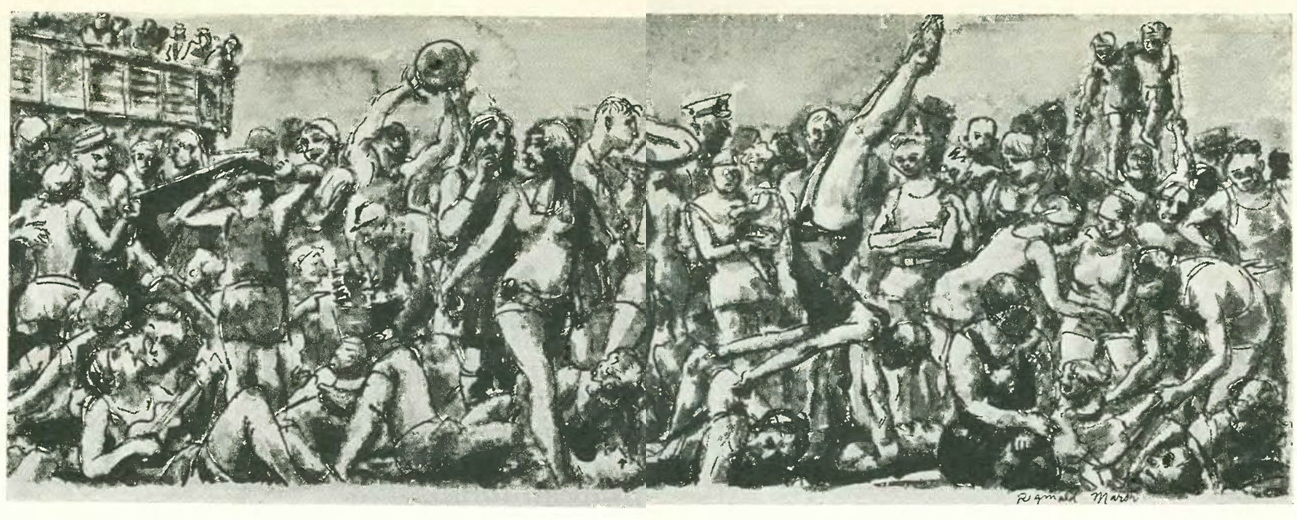
The critic Gilbert W. Gabriel was more than a bit appalled by the spectacle at the old Olympic Theatre, where a tired and “degenerated” cast of burlesque performers took turns shaking their ancient haunches in the direction of the former Julliard student.

Gilbert’s article in the August 22, 1925 New Yorker, “They Call It Burlesque,” described the performance at the Olympic on East Fourteenth Street as “on its last legs.” The once “honest animalistic, gorgeously orgiastic burlesque show of ten or twenty years ago” had “degenerated in decency,” he wrote.

Screenshot 2015-06-12 11.13.55
Illustration in The New Yorker of the Olympic Burlesque by Reginald Marsh.

As the performers wiggled up and down the runways, Gilbert noted:

Screenshot 2015-06-12 11.06.57

The audience was an equally sad lot:

Screenshot 2015-06-12 11.08.02

There is some relief expressed when two comedians appeared, but they offer an unimaginative routine:

Screenshot 2015-06-12 11.10.25

Screenshot 2015-06-12 11.10.33

And then back to the dancers:

Screenshot 2015-06-12 11.11.03

Screenshot 2015-06-12 11.11.26

And still more…

Screenshot 2015-06-12 11.11.56

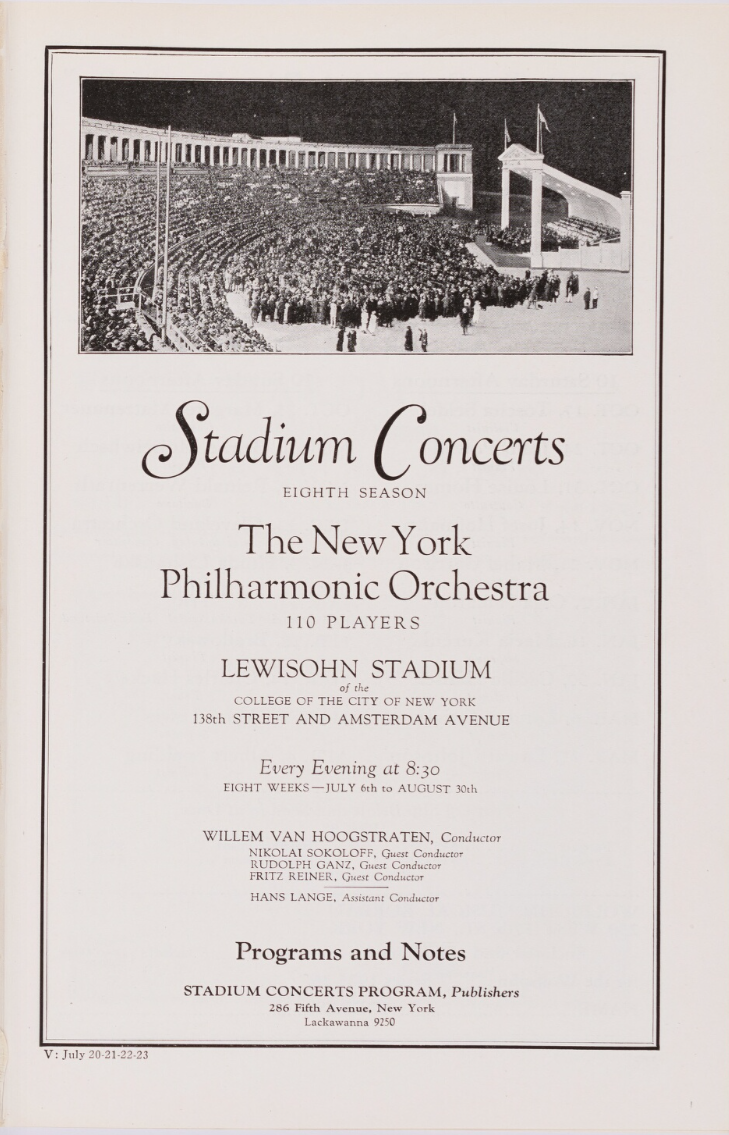
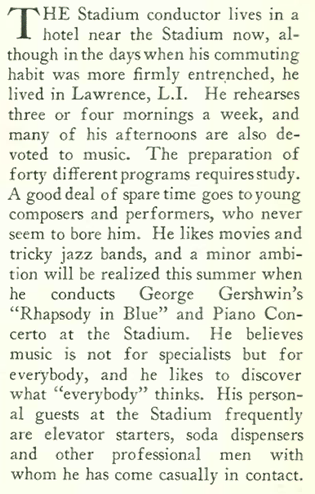
Happier news over in “The Talk of the Town,” where jazz was getting some respect: “Jazz, successor to the outcast ragtime, each day is becoming acceptable. It is the young brother of the musical family, irresponsible and at time highly irritating, but, nevertheless, acknowledged.”

It was reported that even famed violinist Jascha Heifetz “dabbled” in jazz as an amusement, and writers of jazz were “no longer those products of East Side dives,” but rather included the likes of Buddy de Sylva, lyrist to Al Jolson, and George Gershwin, “high priest of jazz,” who was besieged by symphony conductors for his “Symphony in Blue” (better known today as Rhapsody In Blue).

“Talk” continued its lament of the changing face of Fifth Avenue:

Screenshot 2015-06-12 14.20.34

And the Waldorf Astoria was being remodeled in order to add shops on the ground floor along with “125 bathrooms,” giving the famed hotel “a bath for almost every room.” In just four years the old Waldorf would be torn down and replaced by the Empire State Building.

017- Waldorf Astoria
The old Waldorf Astoria was getting an upgrade, but it would fall to a wrecking ball in only four years. (nycago.org)

“Talk” also noted the planting of Ginkgo trees in the city:

Johan BullScreenshot 2015-06-10 16.20.44

Screenshot 2015-06-10 16.20.33

Although prized today for their beauty and hardiness, not all New Yorkers are in love with the strong odor of its fruit. In the June 30, 2008 issue of The New Yorker, Lauren Collins examined the activities of the “Anti-Ginkgo Tolerance Group” in her article “Smelly Trees.”

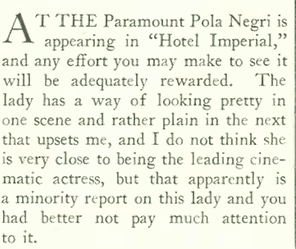
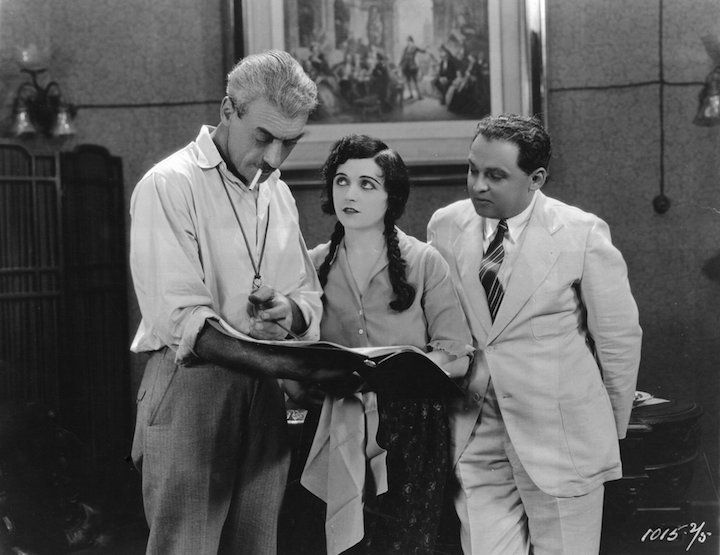
“Talk” also offered a brief glimpse into the latest adventures of Pola Negri, noting in its “This Week” section that the actress had paid “$57,000 customs dues in seized jewels…”

honey-kennedy-pola-negri-by-edward-steichen-vanity-fair-june-1925-02
Pola Negri liked nice things (Edward Steichen for Vanity Fair, 1925)

In other items, Helen Hokinson provided illustrations for an article on the horse races at Saratoga…

Screenshot 2015-06-12 14.24.41

John Tunis examined the life of tennis star Elizabeth “Bunny” Ryan in “Profiles” … and E.B. White and Alice Duer Miller offered their thoughts on why they liked New York:

Screenshot 2015-06-12 14.27.59

“Moving Pictures” featured a lengthy review of Charlie Chaplin’s The Gold Rush. Theodore Shane (“T.S.”) wrote that the film’s opening night at the Strand attracted such celebrities as Will Rogers and Constance Bennett.

Screenshot 2015-06-12 16.21.41
Cheer Up Charlie…Chaplin in The Gold Rush (1925) (United Artists)

Shane observed that this “dramatic comedy” was a “serviceable picture,” but perhaps Chaplin was getting “too metaphysical about his pathos” and could have used some old-fashioned pie-in-the-face slapstick.

As an example, in a scene in a typical Klondike town, Shane wrote that “one might be given to expect wonders of Gold Rush burlesque with the old Chaplin at the receiving end of the Klondike equivalent of a custard. But one is doomed to disappointment, for Chaplin has seen fit to turn on his onion juices in a Pierrot’s endeavor to draw your tears…We cannot help but recall with a tinge of sadness, the old days when custard was young.”

The_Lucky_Horseshoe_1925_Poster
(Wikipedia)

Shane went on to give short but favorable reviews to Rex Reach’s Winds of Chance (at the Piccadilly Theatre), the film’s chief props consisting of “string ties, wooden saloons, ½ dozen cold-blooded murders and the tenderfoot who conquers everything…Shane also noted that the “spiritual features” of Tom Mix in The Lucky Horseshoe (at the Rialto) lent themselves delightfully to “a lovely and sensitive drama of moyen age and modern machinations in the Fairbanks style.”

In “Books,” Harry Este Dounce (“Touchstone”) suggested readers take a look at Carl Van Vechten’s Firecrackers as a good introduction to the writer’s unique style, while J.D. Bereford’s The Monkey Puzzle was deemed only “partly good” but worth reading.

Screenshot 2015-06-12 16.35.08
Lois “Lipstick” Long and Herman J. Mankiewicz. (PBS/Wikipedia)

In her regular nightlife review (“When Nights Are Young”), Lois Long (“Lipstick”) playfully sparred with her New Yorker colleague, theater critic Herman J. Mankiewicz:

Screenshot 2015-06-12 14.58.10

Long was referencing this Mankiewicz review in a previous issue (Aug. 8):

Screenshot 2015-06-12 15.05.24

And it all started when Long offered this observation in her July 25 “When Nights Bold” column:

Screenshot 2015-06-12 15.11.51

I hope you are fully sated. As a palate cleanser, I offer yet another droll observation of the world of old money by Gardner Rea:

Screenshot 2015-06-12 14.30.06

Next time: The waning summer season…

Screenshot 2015-06-10 16.51.20

No More Monkey Business

Screenshot 2015-05-21 15.40.37
August 1, 1925 cover by Garrett Price.

For all of The New Yorker’s attention to the Scopes Monkey Trial, the August 1, 1925 issue had little to say about the trial’s outcome.

The State of Tennessee v. John Thomas Scopes was decided in the Criminal Court of Tennessee on July 21, 1925, with Scopes found guilty and fined $100 (equivalent to $1,345 in 2015), but the verdict was overturned on a technicality.

“The Talk of the Town” offered this brief observation under its weekly wrap-up column: “Mr. Scopes, found guilty, goes home to Paducah, Kentucky…”

And then this item toward the end of “Talk,” announcing the death of the Scopes Trial defense attorney (and one of the magazine’s favorite punching bags) William Jennings Bryan:

Screenshot 2015-05-22 13.06.22

“The Graphic Section” offered this cynical twist on the trial’s outcome:

Screenshot 2015-05-22 13.09.12
(New Yorker Digital Archive)

In a related item under “Of All Things,” Howard Brubaker wrote, “Representative Upshaw of Georgia will introduce an anti-evolution bill in Congress. Upshaw is never happy unless the Ship of State is making twenty thou-shalt-nots an hour.”

Clarence Darrow, a famous Chicago lawyer, and William Jennings Bryan, defender of Fundamentalism, have a friendly chat in a courtroom during the Scopes evolution trial. Darrow defended John T. Scopes, a biology teacher, who decided to test the new Tenessee law banning the teaching of evolution. Bryan took the stand for the prosecution as a bible expert. The trial in 1925 ended in conviction of Scopes. ca. 1925 Dayton, Tennessee, USA
Clarence Darrow and William Jennings Bryan have a friendly chat during the Scopes Monkey Trial. Following the trial Bryan traveled hundreds of miles, delivering speeches in multiple towns. On July 26, 1925, he returned from Chattanooga, Tennessee to his home in Dayton. After attending church services he ate a large meal, then died during a nap that afternoon, five days after the trial’s conclusion. When someone remarked to Darrow that Bryan died from a “broken heart”, Darrow responded, “Broken heart, hell, he died of a busted belly!” (Wikipedia)

Brubaker also quipped, “Tennessee is not the only State where there is arrested mental development, but it is the only one so far where it has been fined.”

Back to “The Talk of the Town,” the design for a memorial to Teddy Roosevelt was approved, to be erected as part of the east façade of the Museum of Natural History. It was noted that the design featured Ionic columns that Roosevelt “would have detested in favor of a “native expression of the arts…”

USA-NYC-American_Museum_of_Natural_History
The Museum of Natural History façade designed by John Russell Pope. (Wikimedia Commons)

“Talk” continued: “One recalls that Colonel Roosevelt wrote the American Institute of Architects deprecating the use of the lions which doze at the entrance to the Public Library, and advocating the placing there of bisons instead…The memorial to the man who insisted thus on American art, rather than imitation of foreign models, is to be a severely classic as the facade of –let us say—the First National Bank of Dubuque, Iowa.”

New_York_Public_Library_060622
Lion guards New York Public Library entrance. Teddy would have preferred the native bison. (Wikimedia Commons)

“Profiles” featured Walter L. Clark, a “genius who made art into business.” The movie reviews included Theodore Shane’s fumings on prudishness of American censors (Will Hays in particular) especially when compared to more liberal European productions by directors such as Ernst Lubitsch:

Screenshot 2015-05-22 15.46.17

In books, the magazine continued its admiration for the jottings of A.A. Milne:

Screenshot 2015-05-22 15.47.46
(New Yorker Digital Archive)

As for night life, The New Yorker lamented (“When Nights Are Bold) that the rooftop garden at the Biltmore “was the only bower worthy of the name left in town where quiet or startling simplicity reigns”:

Screenshot 2015-05-22 15.50.27

BiltmoreCascades
The Biltmore Cascades (Museum of the City of New York)
Screenshot 2015-05-22 15.51.01
Illustration of the Cascades by Helen Hokinson. (New Yorker Digital Archive)

And speaking of society pursuits, Philip Pratt offered this parody on falconry, while Hans Stengel took aim at the starving artists:

Screenshot 2015-05-22 15.41.45
(New Yorker Digital Archive)

And we end with a detail of summertime images (by Helen Hokinson) from the center spread of the August 1 issue:

Screenshot 2015-05-22 15.39.56
(New Yorker Digital Archive)

Next time: The dog days of summer.

Screenshot 2015-06-04 12.52.15