
Above: A bull terrier in the early 1900s. (Westminster Kennel Club)
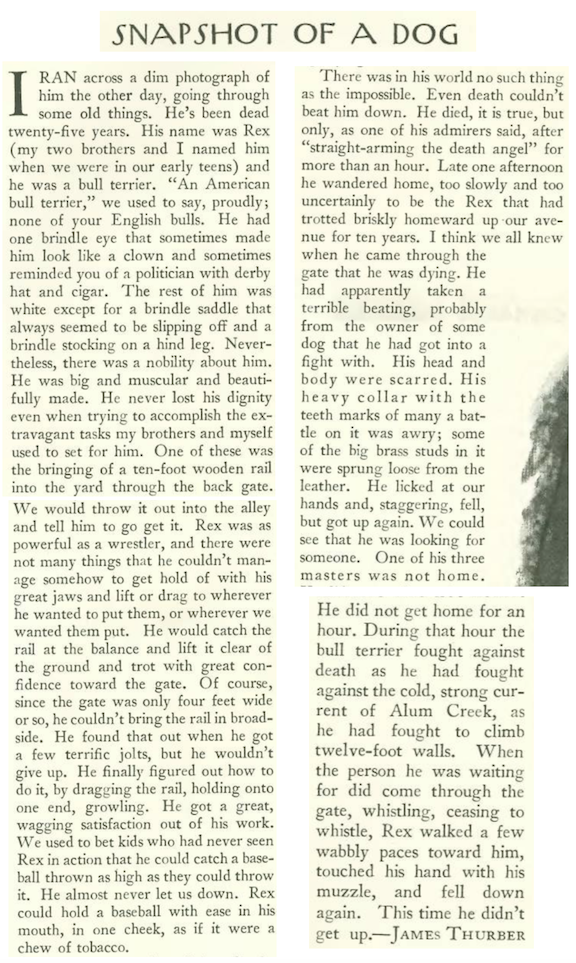
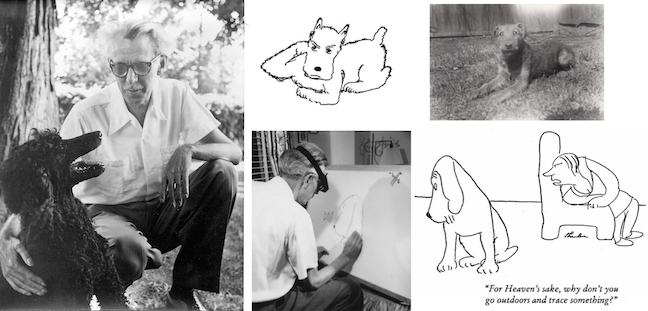
For dog lovers, or really for anyone with a heart, James Thurber’s “Snapshot of a Dog” is a moving tribute to a childhood pet, a bull terrier named Rex.
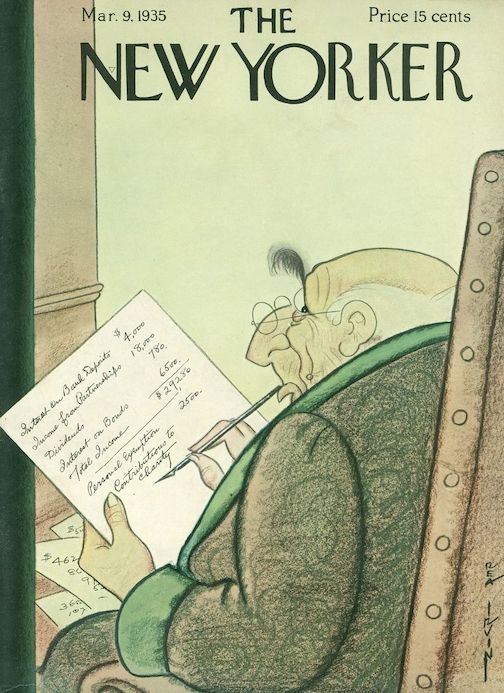
“Snapshot of a Dog” was reprinted almost two decades later in Our Dogs, A Magazine For Dog Lovers, which featured cover stories of various celebrities and their dogs. I recall reading “Snapshot” as a child in an anthology belonging to my parents; it affected me deeply then and still does today. Grab your hankies—here are excerpts from the first and last sections of the story:
* * *
Searching For the American Way
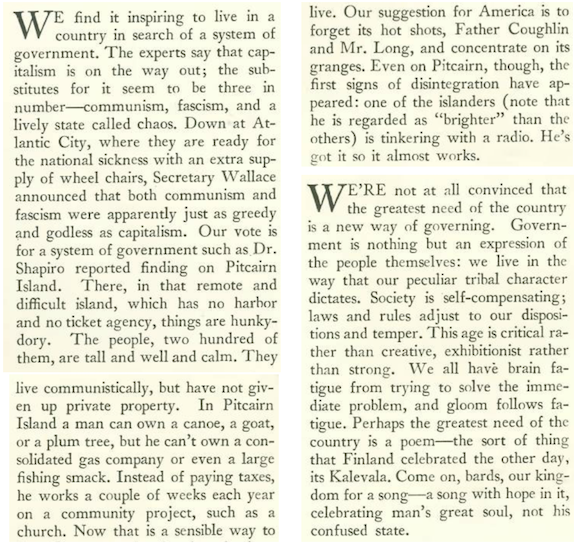
Ninety years ago E.B. White (in “Notes and Comment”) offered some thoughts on America’s system of government, and the country’s need for a song of hope…
…White also commented on a distasteful development at the old Round Table haunt, the Algonquin Hotel…


…In her column “Tables for Two,” Lois Long took issue with folks who were yapping about couvert charges, and offered a simple solution…
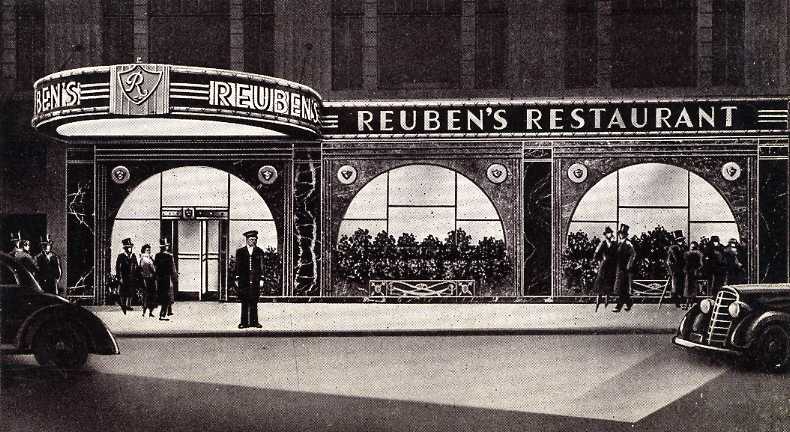
…following Long’s “On and Off the Avenue” column were several restaurant reviews signed “S.H.”…here the writer visited the home of the Reuben sandwich…
* * *
Getting Their Kicks
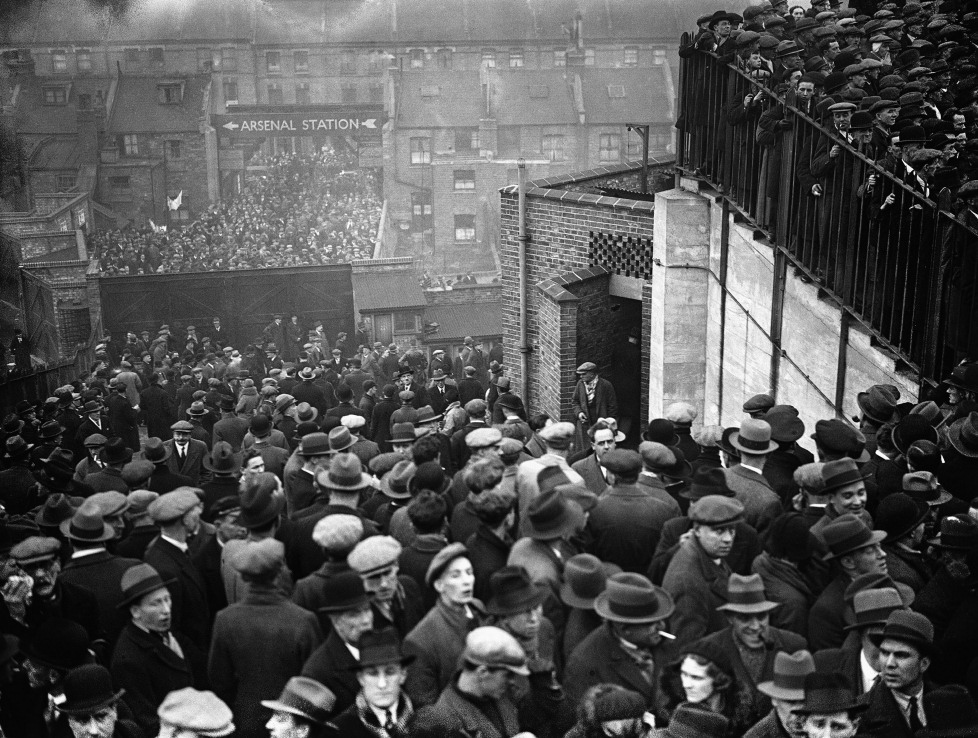
Professional football has been played in the UK since the 1870s, and by the early 20th century the sport drew massive crowds (the 1923 FA Cup final at Wembley Stadium drew an estimated 300,000). This excerpt from “London Letter” correspondent Samuel Jeake, Jr. (aka Conrad Aiken) offered a glimpse into the sport in 1935:

* * *
Endurance Test
Thomas Wolfe (1900-1938) published a number of novellas as well as plays and stories during his short life, but he only published two novels before his death in 1938 (others would be published posthumously). Wolfe’s second novel, the autobiographical Of Time and the River, would be well received by New Yorker critic Clifton Fadiman. Here is an excerpt from Fadiman’s lengthy review:


* * *
From Our Advertisers
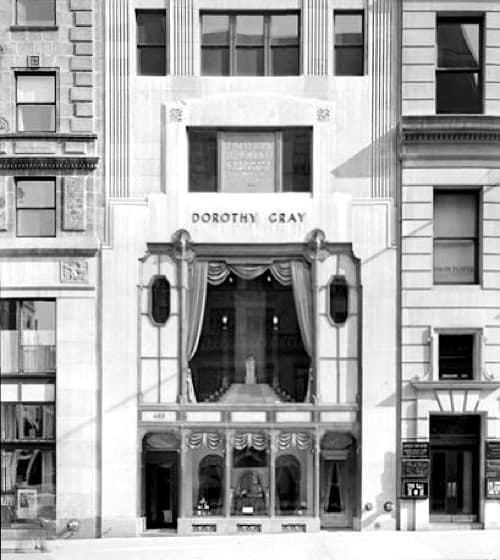
We begin with two pioneers in the cosmetics industry…Dorothy Gray salons set the springtime mood with this advertisement on the inside front cover…

…Dorothy Gray (1886-1968), a.k.a. Dorothy Cloudman, sold her business in 1927 to Lehn & Fink, a New York-based pharmaceutical company best known as the maker of Lysol. In 1929, the company opened a flagship salon and executive offices in the new Dorothy Gray Building at 683 Fifth Avenue…
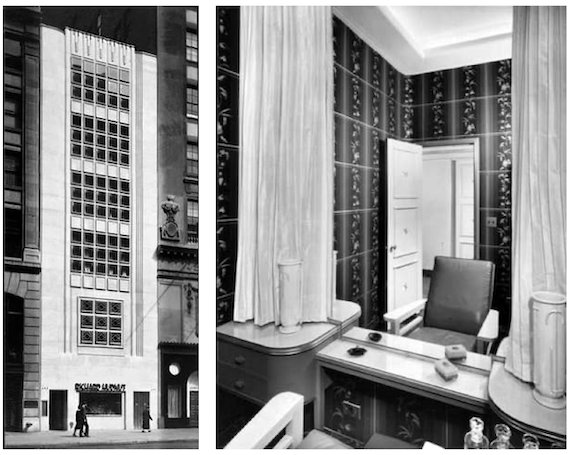
…Richard Hudnut (1855-1928) began working in his father’s drug store in 1873, and in 1899 opened his own pharmacy on Broadway. Hudnut, who promoted his perfumes and cosmetics by distributing booklets detailing his preparations, sold his company in 1916 to William R. Warner, which eventually became Pfizer…

Hudnut is recognized as the first American to achieve international success in cosmetics manufacturing. Part of that success was Du Barry, a premium perfume he created in 1902. It was used to scent a variety of products.
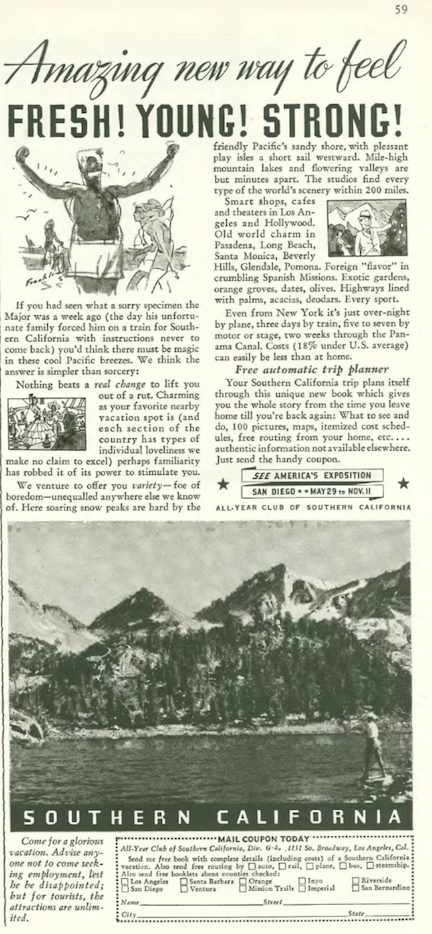
…if salon treatments weren’t your thing, you could revive by taking a trip to sunny Southern California…just look what it did for the old Major…
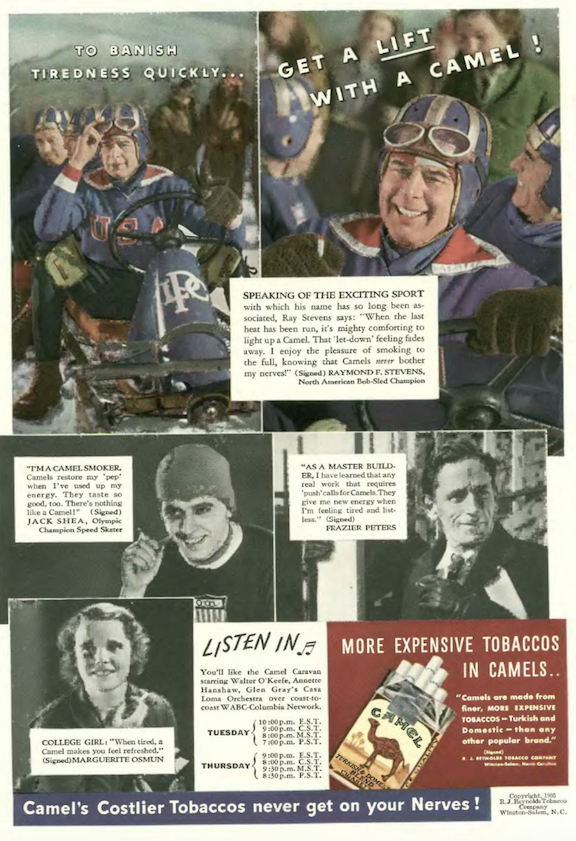
…the makers of Camel cigarettes offered an even quicker and cheaper way to feel invigorated…
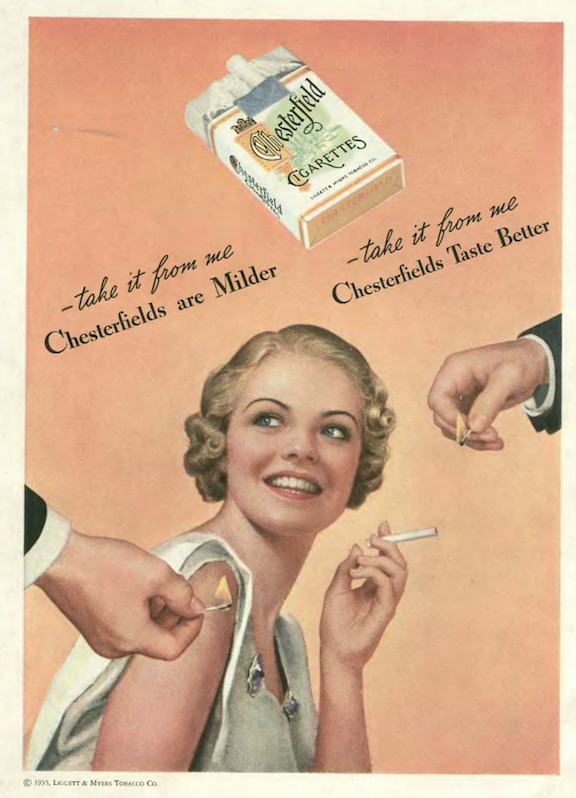
…the back cover continued to be dominated by tobacco companies targeting women smokers…this week Chesterfield got in on the act…
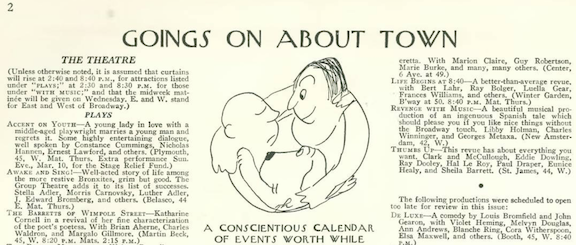
…on to our cartoonists, we begin with James Thurber at the top of page 2 to kick off “Goings On About Town”…
…and Thurber again, with the ultimate party pooper…

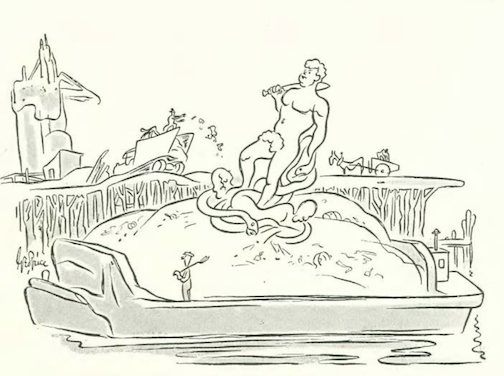
…George Price graced the bottom of “Goings On” on page 4 with this whimsy…
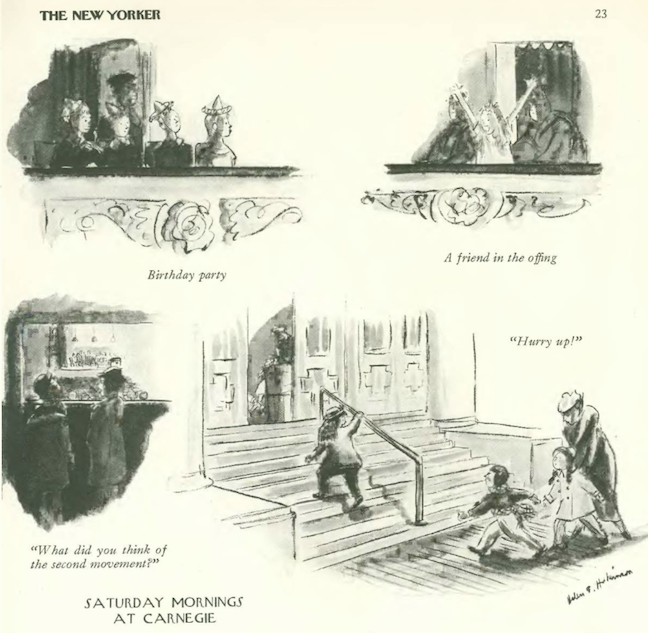
…Helen Hokinson looked in on a children’s concert…
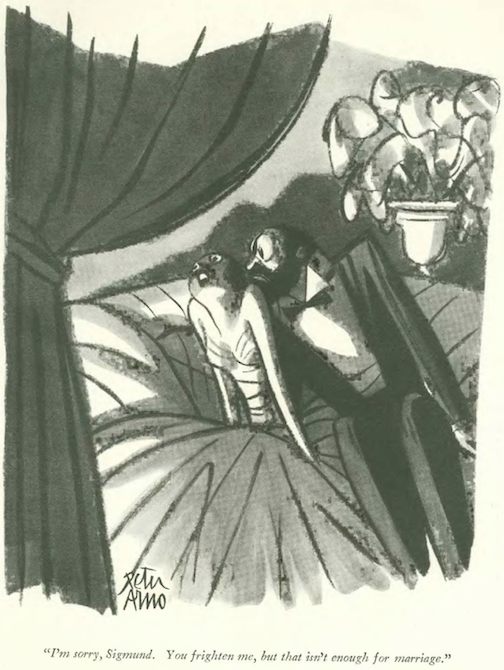
…there was another quarrel among lovers via Peter Arno…
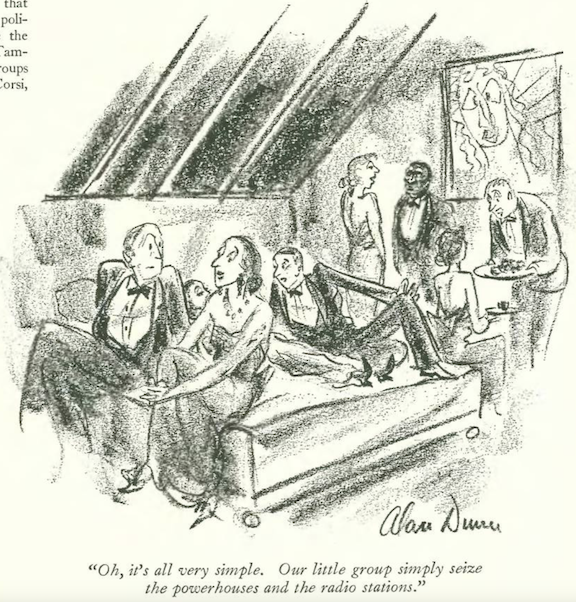
…revolution was in the air at Alan Dunn’s cocktail party…
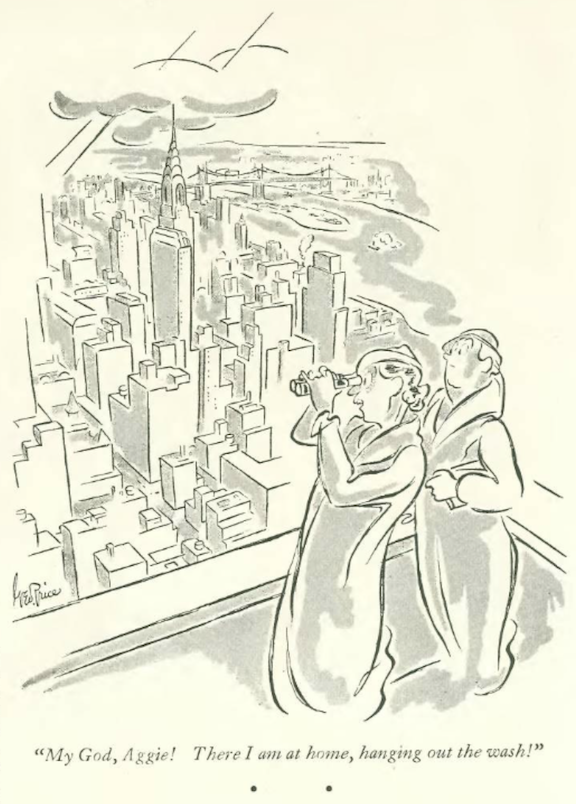
…George Price again, with two women who found a new perspective atop the Empire State Building…
…and we close with Syd Hoff, and an unexpected bundle of joy…

Next Time: Home Sweet Motohome…

 A New Yorker State of Mind