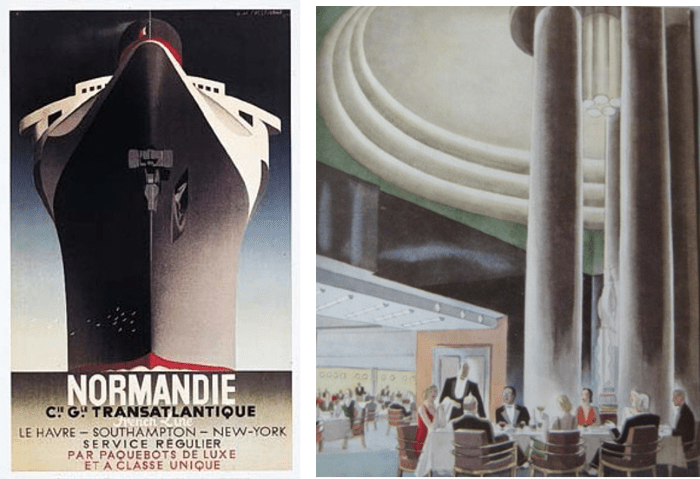
Vive La Normandie

Above: At left, Adolphe Cassandre's famed 1935 depiction of the S.S. Normandie; right, image from a 1935 promotional booklet published by the French Line.

When the S.S. Normandie entered service in 1935, she was the largest and fastest passenger ship afloat, crossing the Atlantic in a little over four days. The ship was so impressive that even the imperturbable Janet Flanner expressed enthusiasm over its launch.

May 25, 1935 cover by Constantin Alajalov.

As Paris correspondent, Flanner was giving New Yorker readers a preview of Normandies May 29 maiden voyage from Le Havre to New York City.
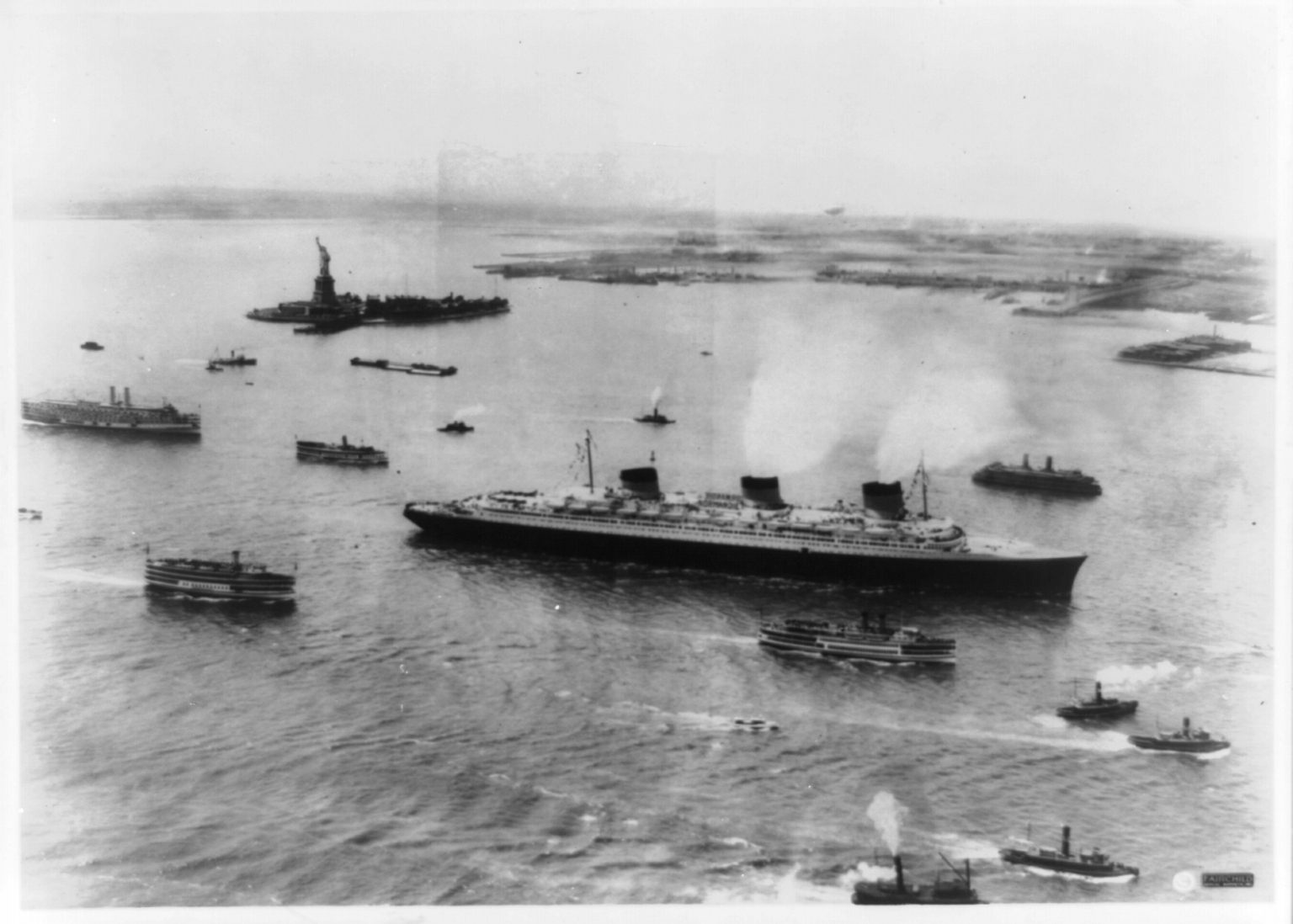
HER ENTOURAGE…The S.S. Normandie was welcomed into New York Harbor on June 3, 1935. (Wikipedia)
IMAGINE THAT…An S.S. Normandie promotional poster from 1935 depicts the ocean liner making an unlikely entrance into Manhattan. The sleek ship measured 1,029 feet (313.6m) in length and carried nearly 2,000 passengers plus 1,345 crew. It was the first ocean liner to exceed 1,000 feet in length. (Museum of the City of New York–MCNY)

To give New Yorkers some idea of the liner’s size, Flanner noted that the Normandie would stretch from 43rd to 47th Street, and if stood on her stern, would stand nearly 180 feet above the RCA Building at Rockefeller Center.

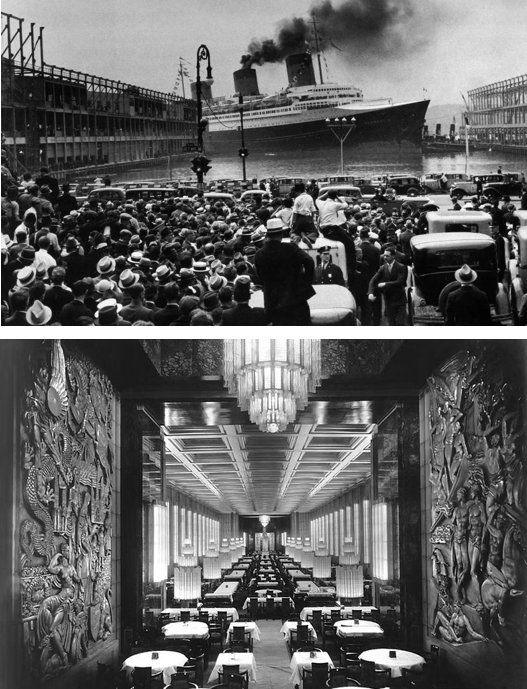
FRENCH TOAST…Top, a crowd cheers the S.S. Normandie as it arrives at New York’s Pier 88 on June 3, 1935; below, the first class dining hall was 305 feet long, 46 feet wide and three decks high. (drivingfordeco.com/MCNY)
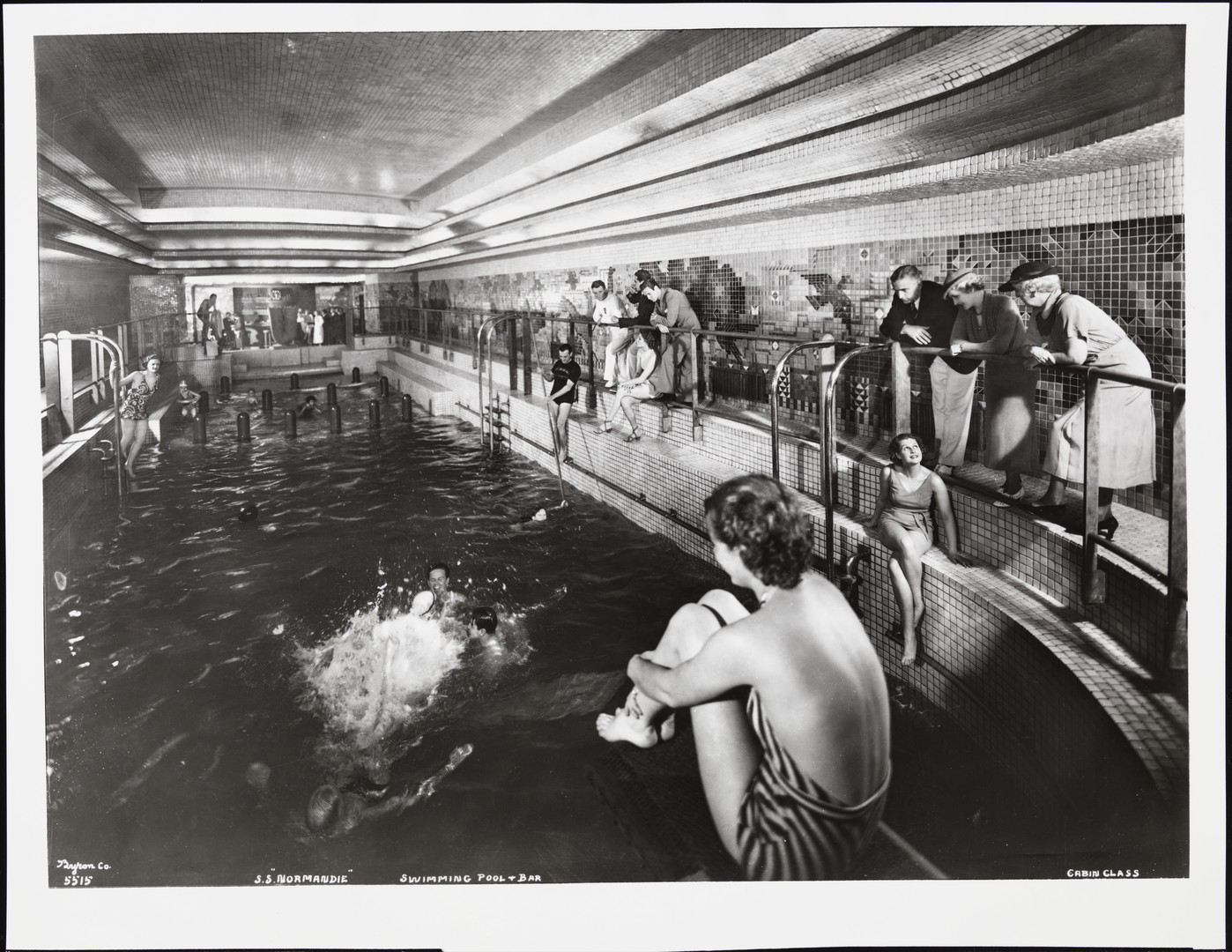
IN, AND ON THE WATER…Passengers take a plunge in the Normandie’s swimming pool, which included a bar at the far end. (MCNY)
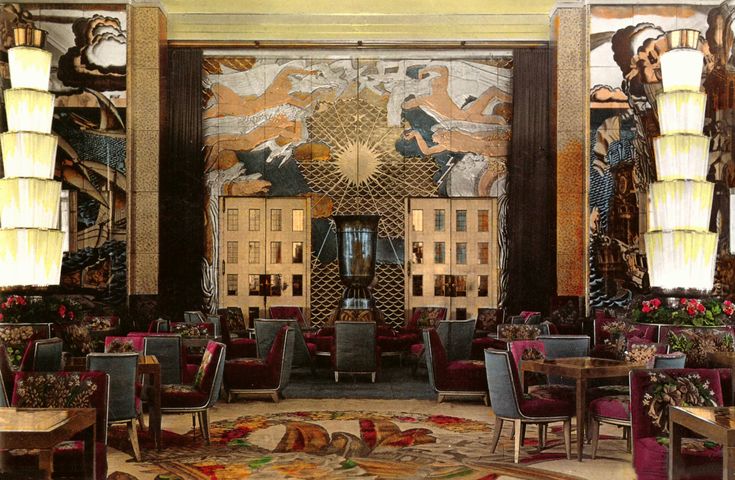
EYE-POPPING…Colorized image of the first-class lounge. (Pinterest)
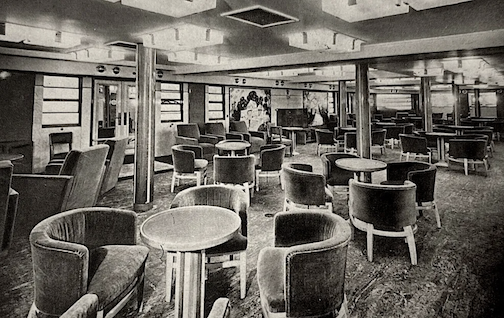
BARGAIN…Accommodations for weren’t too bad, either, for the other classes. Here is the 3rd class salon. (drivingfordeco.com)
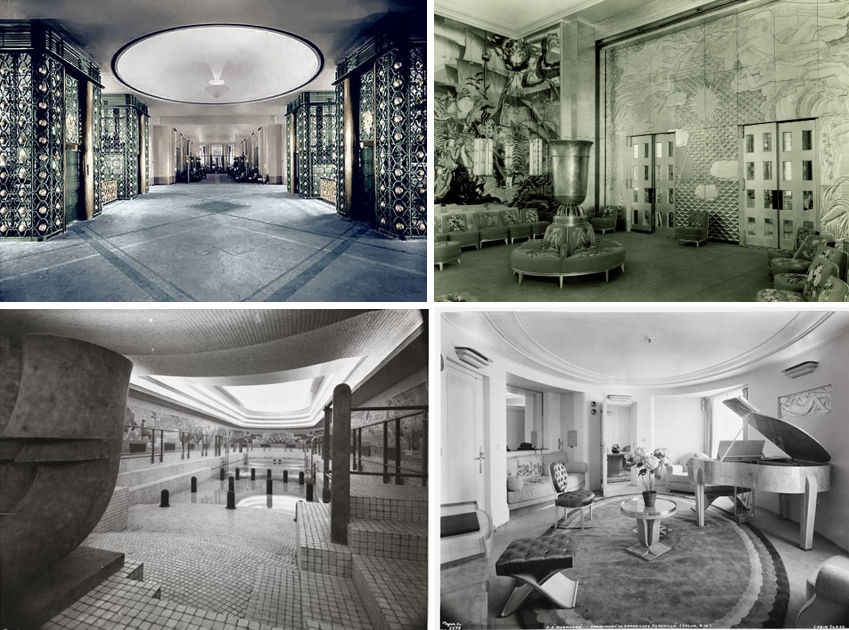
TAKE YOUR PICK…Clockwise from top left, elevators decorated in sea shells; the rear of the Grand Salon; a first class suite; view of the swimming pool. An incredible scale model of the S.S. Normandie is displayed on the Queen Mary, which is permanently docked at Long Beach, CA. (MCNY)

World War II would cut short the Normandie’s life. Seized in New York and renamed USS Lafayette in 1942, she was being converted to a troopship when she caught fire, capsized onto the port side, and came to rest half submerged on the bottom of the Hudson at Pier 88, the same pier where she was welcomed in 1935. She was scrapped in 1946.

THE WAGES OF STUPIDITY…The Normandie after a fire brought her glory days to an end. (Reddit)

 * * *

A Critic Is Born

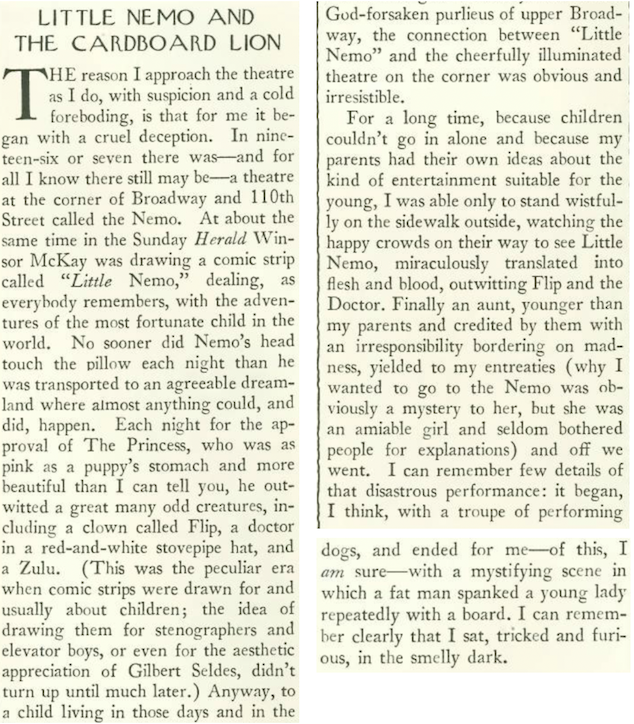
It turns out that Wolcott Gibbs (1902–1958) cut his teeth as The New Yorker’s theatre critic while he was still in short pants. Gibbs recalled his five-year-old self in an essay that described his first experience with the theatre—a play based on the New York Herald’s popular comic strip, Little Nemo in Slumberland, by Winsor McCay. In parallel with Gibbs’ childhood, the strip ran from 1905 to 1911.

As a child, Gibbs was wild about Little Nemo’s adventures, but the stage adaptation left the child disillusioned (and feeling “tricked and furious”). The New York Public Library’s Douglas Reside wrote (in 2015) that the producers, seeking to draw as wide an audience as possible, presented Little Nemo “as a bloated mixture of theatrical styles, including the minstrel show, pantomime, operetta, farce-comedy, vaudeville, revue, and ballet,” featuring three comedians “mostly superfluous to Nemo’s story.” The part of Nemo was played by a 25-year-old actor with dwarfism.
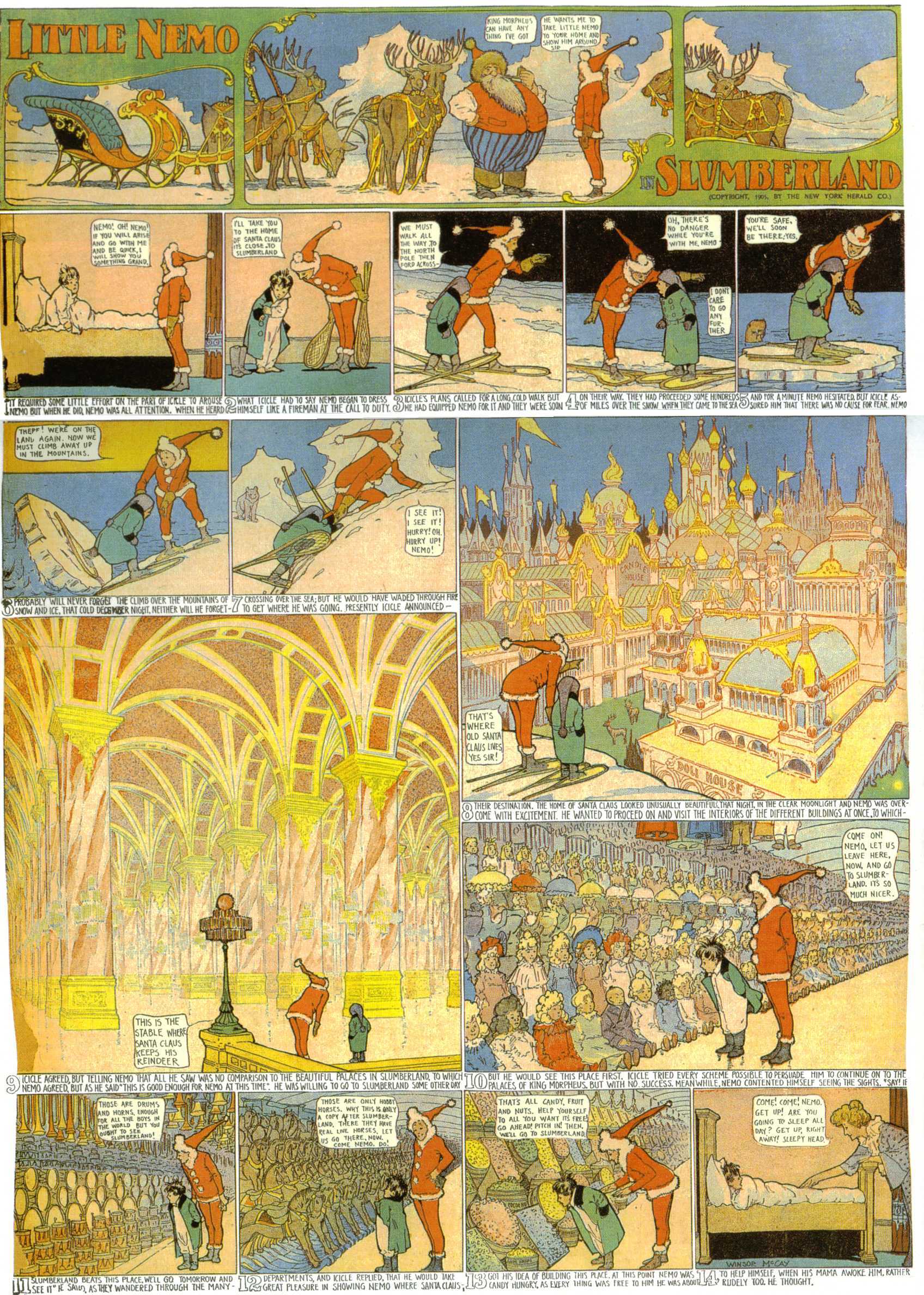
DREAMLAND…The Little Nemo strip from Dec. 17, 1905 depicted the boy’s dream of a visit to Santa’s magical city at the North Pole. (Wikipedia)
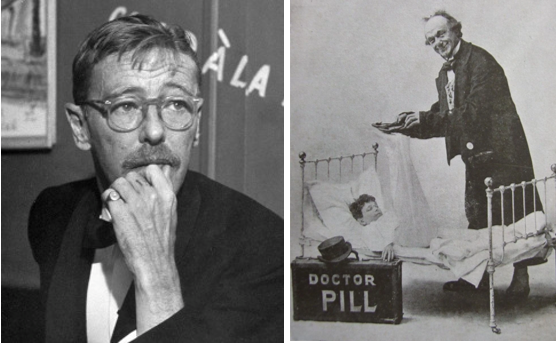
THAT’S SHOWBIZ…As a boy, Wolcott Gibbs (left) was disillusioned by a 1907 theatre adaptation of his favorite comic strip, Little Nemo in Slumberland. The play was dominated by three comedians including Joseph Cawthorn, right, who burlesqued German linguistic and cultural mannerisms for comic effect. He played Dr. Pill, the quack doctor of Slumberland’s royal court. The “boy” in the bed portraying Nemo was 25-year-old “Master” Gabriel Weigel. (Wikipedia/New York Public Library)

 * * *

Humorous Humors

Clarence Day, best known for his Life with Father stories, wrote humorously about his physical ailments and contributed a number of cartoons to The New Yorker that were accompanied by satirical poems. Day would be dead by December—after a bout with pneumonia—however, despite his ailments he would spend his last months arranging publication of his Life with Father book, which was published posthumously.

 * * *

Frankie Got Hitched

Film critic John Mosher still wasn’t finding much to rave about at the cinema, getting more chuckles from the monster mash-up of Boris Karloff and Elsa Lanchester in The Bride of Frankenstein than he did from the Dolores Del Rio vehicle Caliente.
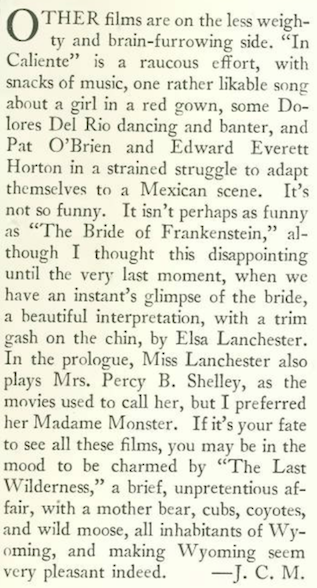
DATE NIGHT…Top, Elsa Lanchester and Boris Karloff let the sparks fly in The Bride of Frankenstein, while Dolores Del Rio danced and chatted her way through the unfunny musical comedy Caliente. (Wikipedia/TCM)

* * *

Other features in the May 25 issue included H. L. Mencken’s continuing exploration into the origins of American names…

…and The New Yorker published its first John Cheever story, “Brooklyn Rooming House.” Of Cheever’s 180 short stories, the magazine would publish 121 of them.

A NEW FACE…In spring 1935 The New Yorker bought two John Cheever stories, paying $90 for “The Brooklyn Rooming House” and $45 for “Buffalo.” Fiction editor Katharine White urged the purchase of the stories. Above, Walker Evan’s photo of Cheever, circa 1940s. (metmuseum.org)

 * * *

From Our Advertisers

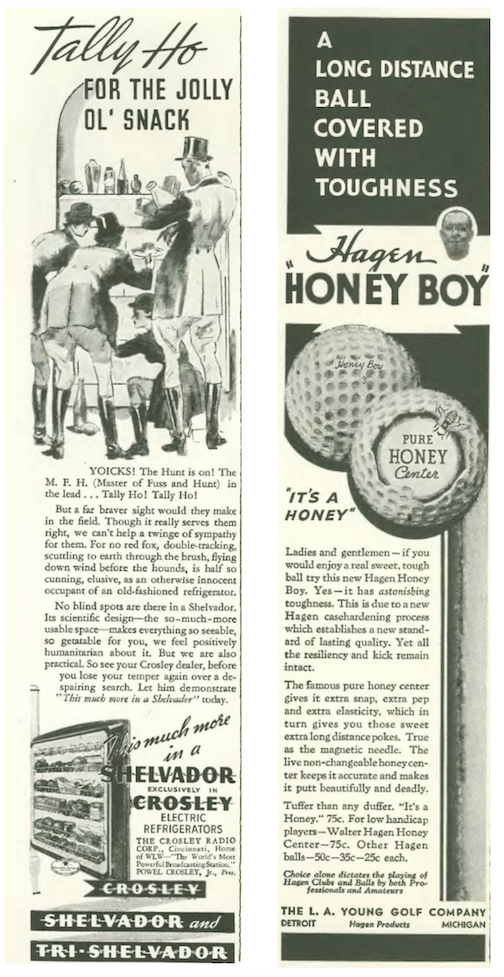
We start with some one-column gems from the back of the book including the latest innovation in electric refrigerators…a shelf in the door!…apparently Crosley was the first to invent this “Shelvador”…the ad to the right is interesting in that it advertises honey-filled golf balls…in the early 20th century some golf balls did contain real honey…apparently it was chosen for its consistent viscosity (or maybe for a quick snack on the ninth hole)…
…and from General Tire, we have another ominous warning from Dad as the teens head out for another night of crooning, or whatever they are dressed for…

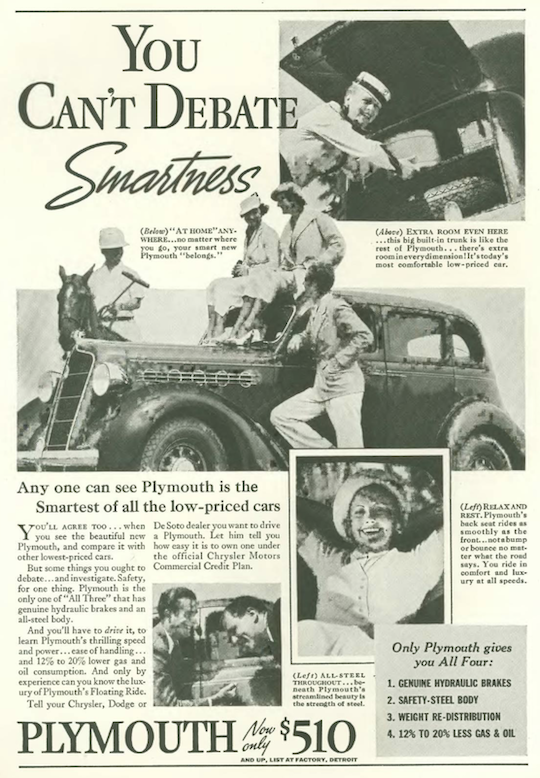
…last week Chrysler was offering its sedans for $745, and this week you could have one of their Plymouths for just 510 bucks…the message: you would be admired by your polo buddies for your smart, thrifty choice…
…where the above ad crammed every square inch with information, the folks at Pierce Arrow offered a restrained, minimal message (suggesting “we can afford to buy a full-page ad and leave much of it blank”)…another class signifier was the absence of a price tag (about $150k in today’s dollars)…but Chrysler-Plymouth would survive the Depression because it sold affordable cars, while Pierce Arrow was on its last legs…

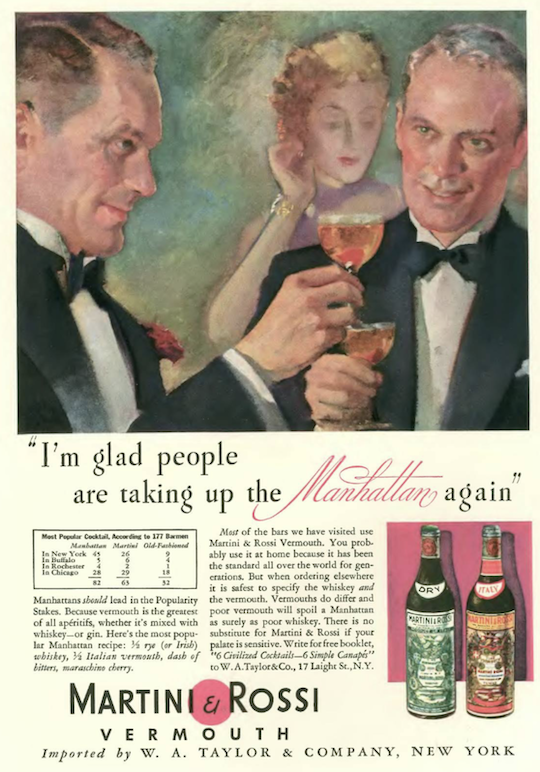
…here’s a couple of Pierce Arrow owners toasting the return of the Manhattan…
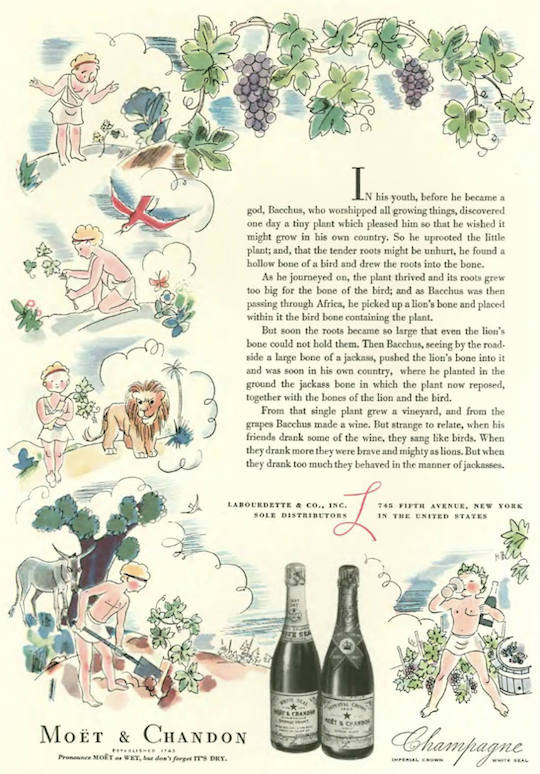
…Moët & Chandon offered up this whimsical tableau from the youth of Bacchus…
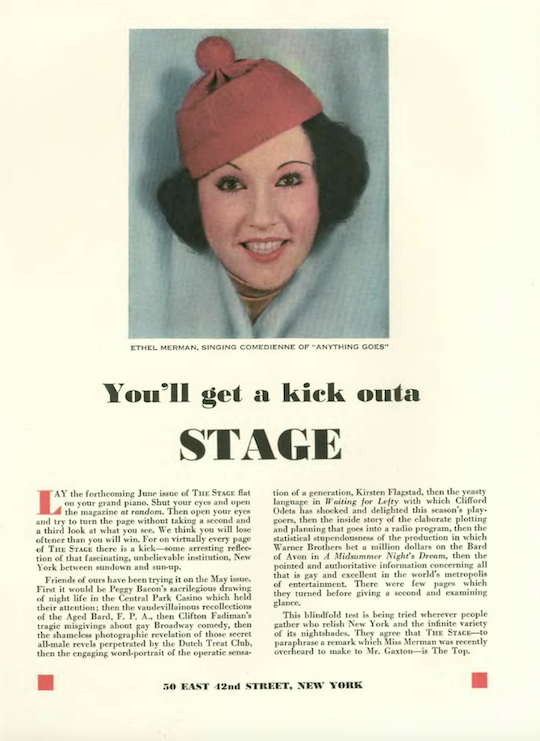
Ethel Merman popped through a curtain on the inside back cover to invite readers to subscribe to The Stage magazine…
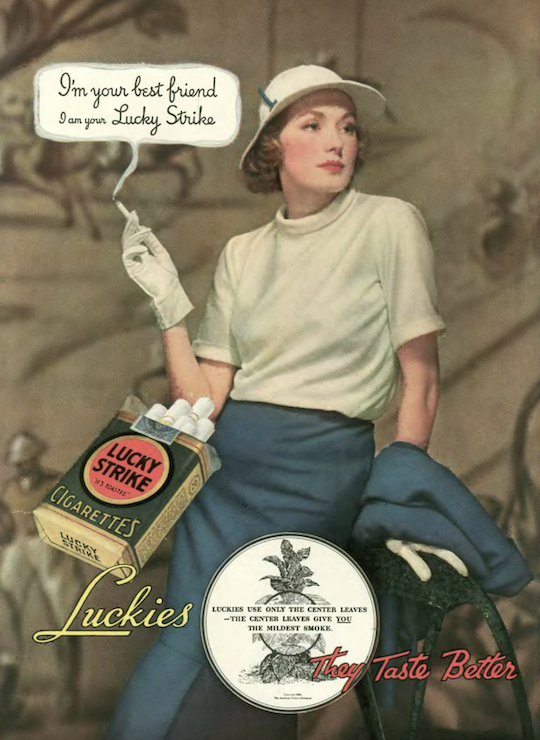
…and Lucky Strike claimed the back cover with another stylish woman and a talking cigarette bent on mind control…
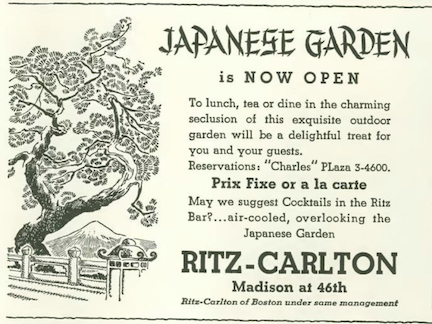
…the Ritz-Carlton announced the spring re-opening of its famed Japanese Garden…
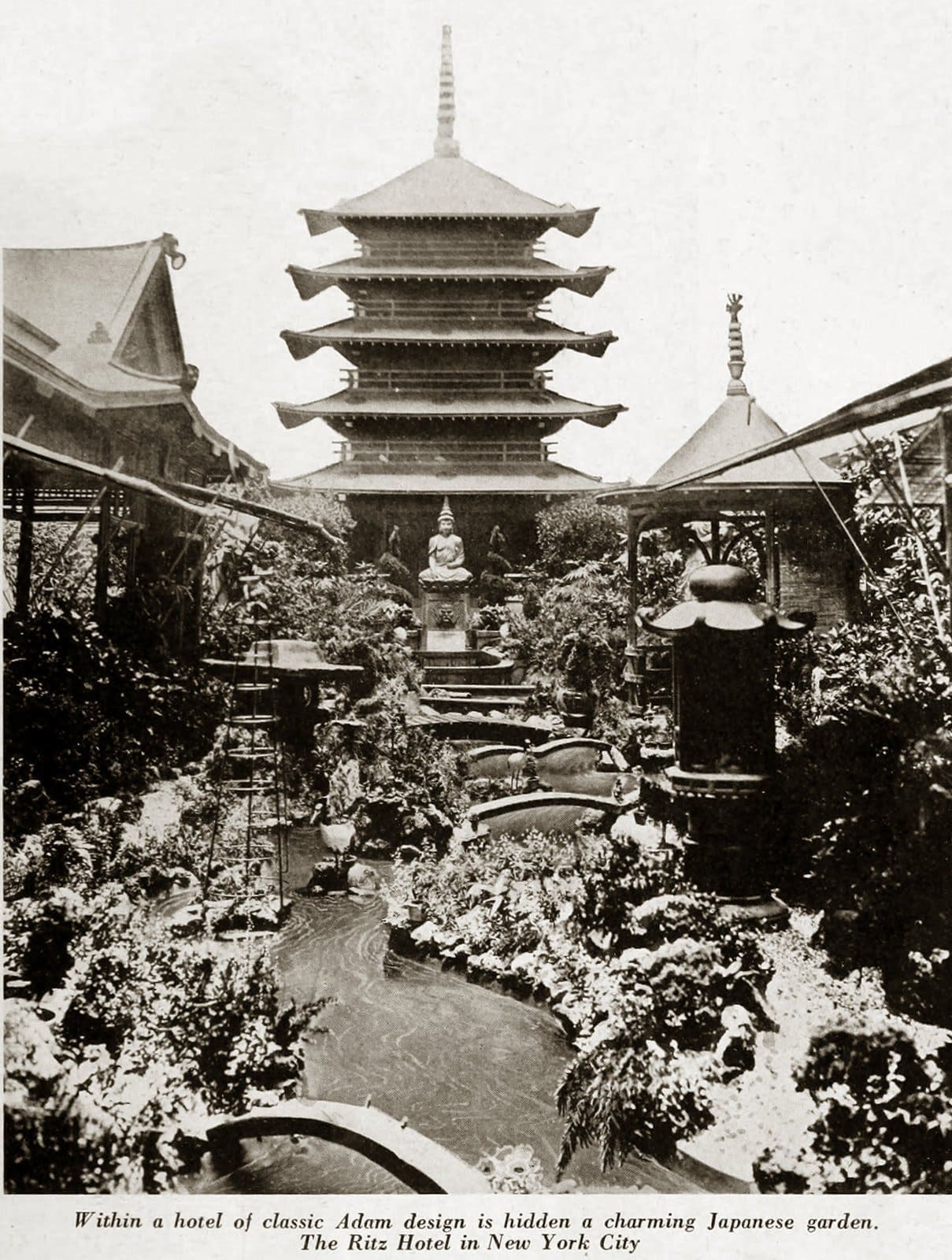
The Japanese Garden in 1924. (clickamericana)

…and we kick off our cartoonists with this “Goings On” topper by D. Krán

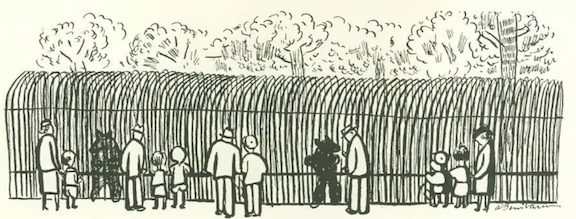
…followed by this visit to the zoo by Abe Birnbaum

James Thurber was up for some fashion criticism…

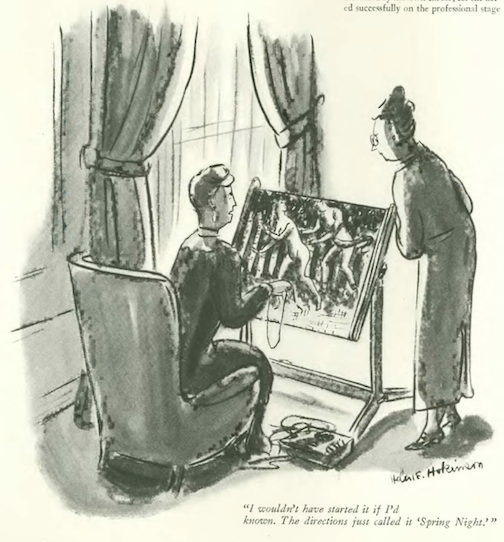
Helen Hokinson found a surprise in a paint-by-numbers kit..
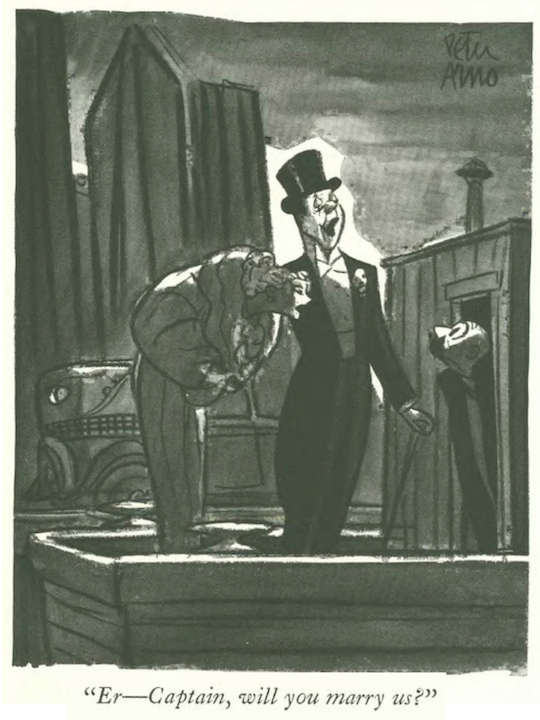
Peter Arno was up for some late night nuptials…
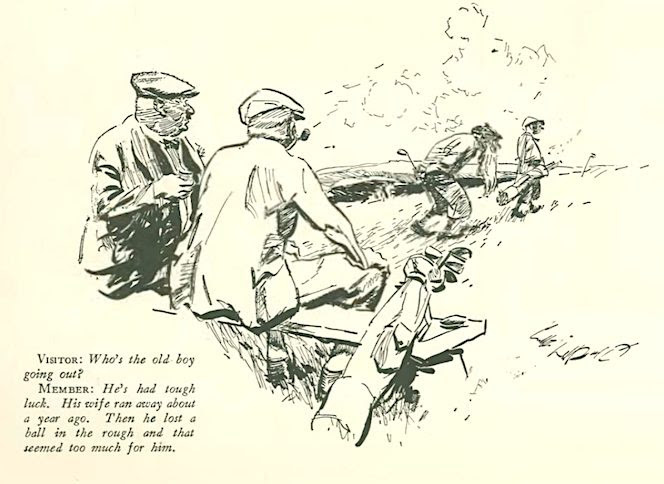
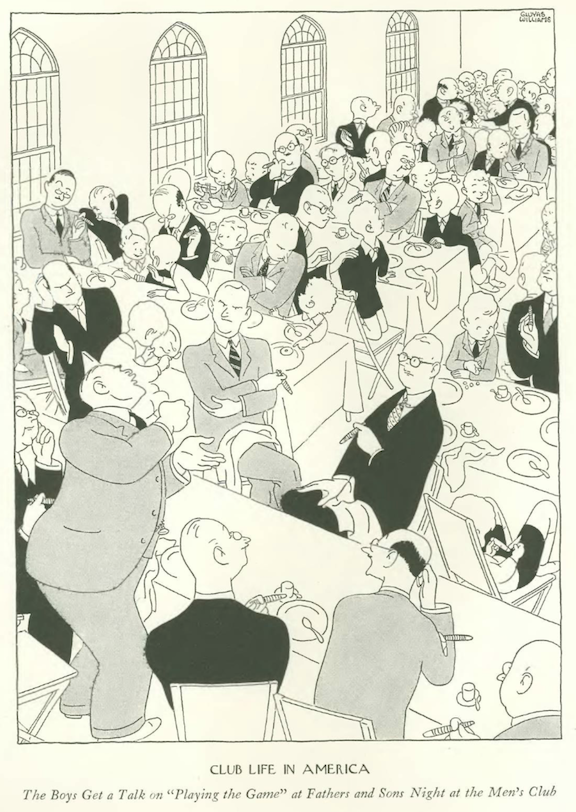
Gluyas Williams continued to examine club life…
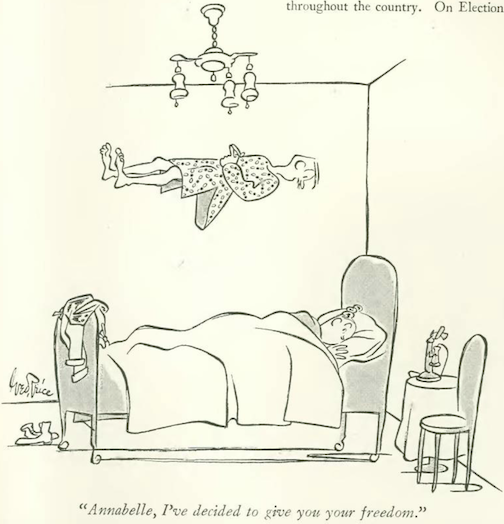
...George Price was back in the air…
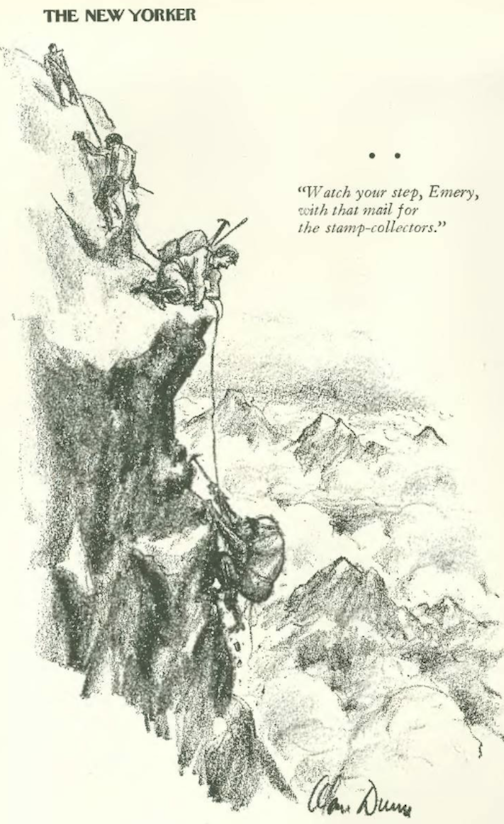
Alan Dunn gave us some men on a mission…
…and we close with Charles Addams, and some dam trouble…

Next Time: Wining and Dining…

 

The Ordeal of Michael Arlen

The March 28 “Talk of the Town” ponders “what sort of paces a visiting literary lion may be expected to put through.”

The “literary lion” in question was writer Michael Arlen, who was planning his escape from New York by reserving a cabin on the Olympic for its April 18 sailing: “It is expected that very few of his writing compatriots in London will venture America-wards after he reports on the ritual to which he was subjected.” The “ritual,” it seems, was Arlen’s constant exposure to various literary hangers-on and assorted socialites.

image
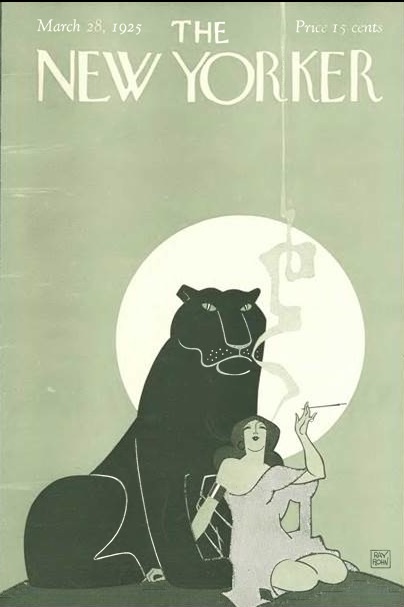
March 28, 1925 cover by Ray Rohn (New Yorker Digital Archive)

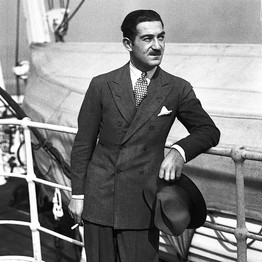
Arlen’s real name was Dikran Kouyoumdjian, an Armenian writer transplanted to England who was most famous for his satirical romances set in English smart society. He also wrote psychological thrillers, including The Gentleman from America, filmed in 1956 (the year Arlen died) as a television episode for Alfred Hitchcock Presents. He was well known in New York and London society, a dandy who resembled many of the characters he portrayed in his novels.

RV-AA996_ARLEN_DV_20101210165837
Arlen in 1925 (Wall Street Journal)

Returning to the “ritual,” Arlen received “the reasonably constant chaperonage, at tea time, of John Farrar” (editor of the literary magazine The Bookman) who took it upon himself to add Arlen’s publishing interests to his duties (Farrar would go on to found the publishing house of Farrar & Rinehart, and later Farrar, Straus and Giroux).

“Talk” also noted that Arlen was “admitted into the game known as meeting Miss Elsie de Wolfe.”

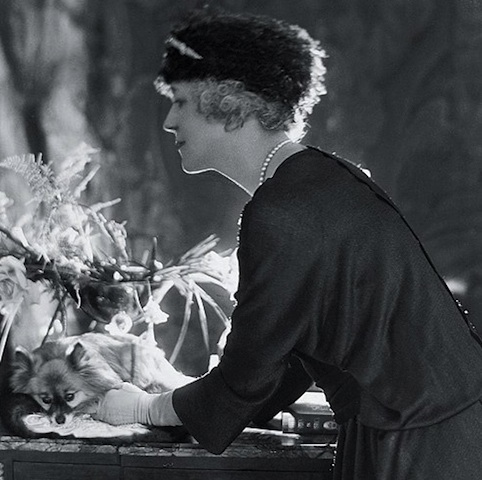
A bit more about Miss de Wolfe: In the September 14, 2009 issue of The New Yorker, Dana Goodyear observed that “Interior design as a profession was invented by Elsie de Wolfe.” A prominent figure in New York, Paris, and London society, de Wolfe was also an American stage actress and author of the bestselling 1913 book, The House in Good Taste.

elsie-de-wolfe-1925-20th-century-interior-designer-innovative-female-interior-designer-pioneer-women-interior-designers-style-blog-interiors-blog-alison-cosier-www.greychic-grey-chic
Elsie de Wolfe in 1925 (Architectural Digest)

During Arlen’s first two weeks in America, de Wolfe arranged no less than three formal gatherings, each with the purpose of introducing the author to herself. “Talk” also reported that Arlen was invited to a costume party given by Mrs. William Randolph Hearst, for which Paramount Studios producer Jesse Lasky “gracefully supplied (Arlen) with a gypsy costume.” It was noted that Lasky was there to arrange some movie work with Arlen to occur later in the fall, when the author would return to New York to attend the opening of the Broadway play The Green Hat, based on the 1924 book that made him famous.

image
Pola Negri in the 1920s 

Arlen was then to depart for Hollywood to “adjust his ideas into adequate scenario form for Miss Pola Negri.” Negri was a Polish stage and screen star world famous for her roles as a femme fatale. Her personal life often made headlines in the gossip magazines of the day, fueled by a series of love affairs that included Charlie Chaplin and Rudolph Valentino. Negri would not land the female lead for The Green Hat; it would eventually go to Greta Garbo in a 1928 film titled A Woman of Affairs.

5230312_orig
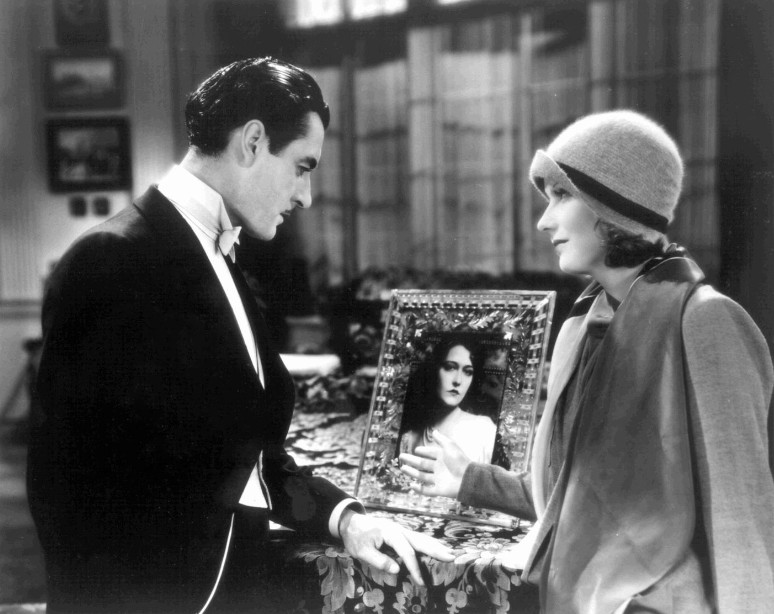
Greta Garbo and John Gilbert in A Woman of Affairs (1928), a silent film based on The Green Hat. (ggarbo.weebly.com)

“Talk” reported that “Mr. Arlen, early in his American visit learned a piece of social usage that has stood him in good stead. This has involved, upon introduction to any stranger, his saying rapidly “Didn’t I meet you at tea?” whereupon the gratified stranger murmurs yes and has become a friend for life. This stratagem is said to have suggested itself to Mr. Arlen when he noticed that the average number of guests at teas in his honor was around two hundred.” The columnist noted that “that this business of becoming a friend for life” was a bit of literary exaggeration, and in reality the magazine:

has seldom seen such atrocious behavior and lack of fundamental good manners as has characterized a large proportion of the people who have been brought forward to met Mr. Arlen. Seemingly ignoring the fact that there was no law compelling their attendance at a function in Mr. Arlen’s honor, ever so many persons have come to his parties with an axe rather awkwardly concealed behind them.

image
John McGraw (howstuffworks)

The “Profile” in issue featured John McGraw and proclaimed that he “is baseball…the incarnation of the national sport.” The piece was titled “Mr. Muggsy,” a nickname reportedly detested by McGraw because, as the magazine observed, “it is so perfectly descriptive.”

At the time of the writing, McGraw was manager and part-owner of the New York (baseball) Giants. He still holds the record for the most wins of a manager in the National League.

The issue also featured a humorous column by Frank Sullivan, which took aim at the complexity (and likely graft) of taxicab fares. The caption reads: The Taxicab System is Simple to Any Man with a Master’s Degree.

image

The April 4 Issue, the “gypsy-themed party” continues…

image
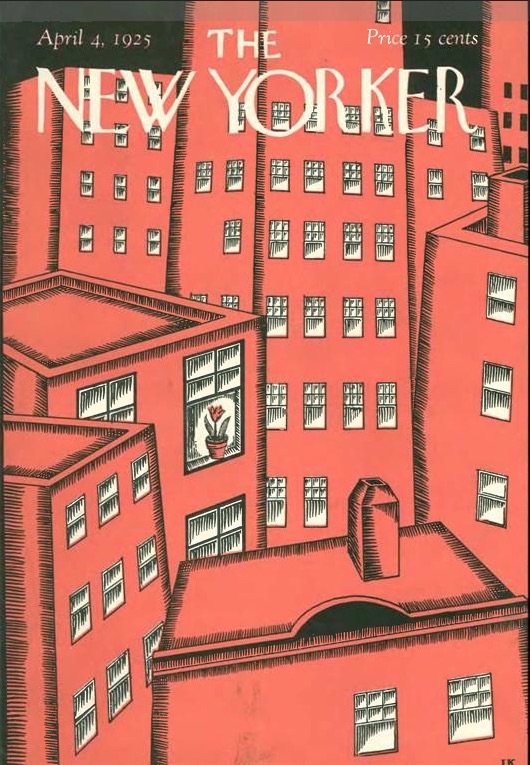
April 4, 1925, cover by Ilonka Karasz (New Yorker Digital Archive)

The following week’s issue of “The Talk of Town” (April 4) offered more details regarding the “gypsy-themed costume party” given by Mrs. William Randolph Hearst at the Hotel Ritz-Carlton and attended by Michael Arlen.

The party was in honor of Ambassador Alexander Pollock Moore’s departure to his Spanish post (he left the post later that year and served as ambassador to Peru in 1928-29. He died at age 63 in 1930).

The item noted that the widower Moore (his wife, famed stage actress Lillian Russell, died in 1922) during an earlier Condé Nast event for the “theatrical and literary world,” never rose from his chair without scattering to the winds a dozen or more ingénues who had been draping themselves around him…”

Screenshot 2015-03-24 09.05.56
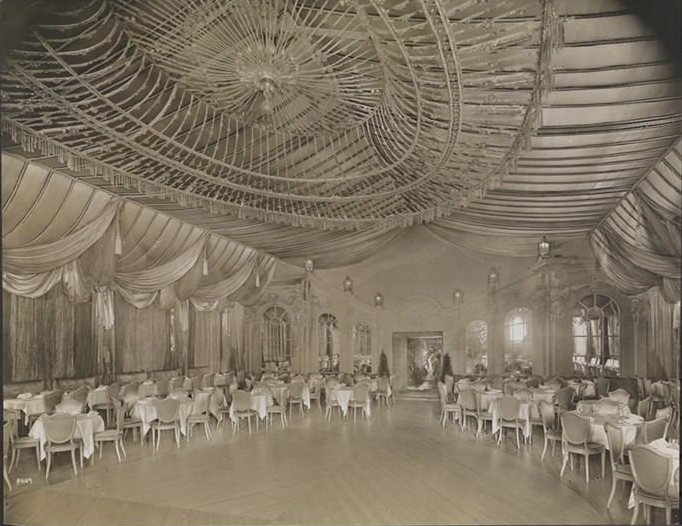
The tented ceiling and glittering chandeliers of the Ritz-Carlton’s Crystal Room. The hotel at 46th and Madison opened in 1911 and was torn down just 40 years later, in 1951.

“Talk” shared accounts from the New York American and the New York Mirror that described the Ritz’s famous Crystal Room as decorated to resemble a “gypsy camp,” complete with organ grinder and monkey wandering through the crowd.

image
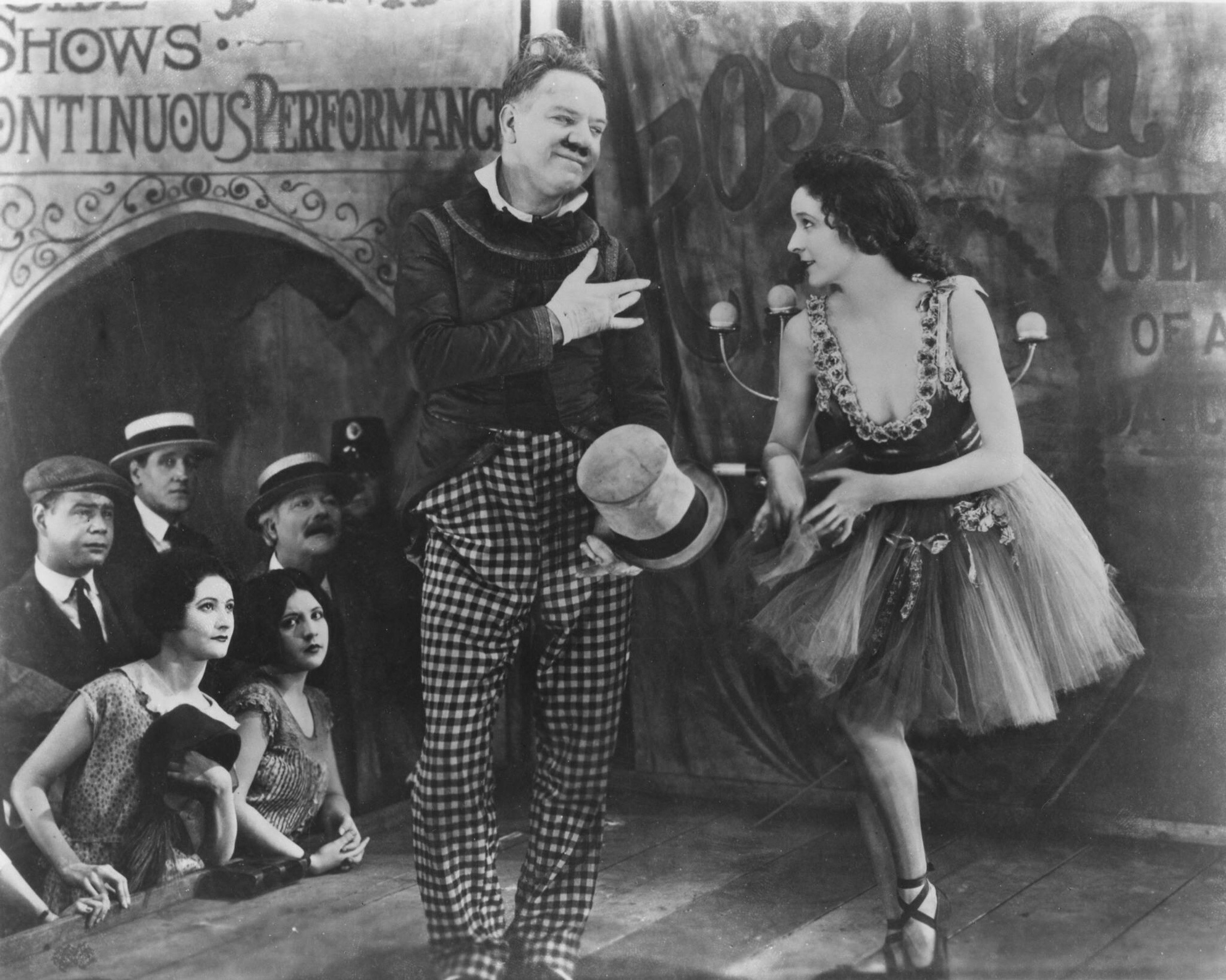
A much thinner W.C. Fields of the vaudeville circuit, here in a still from the movie Sally of the Sawdust (1925) (Film Forum)

Entertainment at the event featured a cabaret with vaudevillian W.C. Fields, who apparently “gazed at his distinguished audience and allowed his thoughts to play with the wealth of juggleable material that confronted him.”

Finally, “Of All Things” noted that “The Turks are said to be mobilizing a hundred thousand men in an effort to affect the Mosul boundary decision but, despite this display of force, we have every confidence that right and justice and Christian civilization will prevail and the British will get their oil.”

The League of Nations awarded Mosul to Iraq, and to the British a 25-year mandate over Iraq (at this writing Mosul is firmly under the control of the Islamic State).

“Books” looked at Somerset Maugham’s The Painted Veil and suggested that it is not “A-One Maugham.” It also mentioned the New Yorker’s own Alexander Woollcott and his The Story of Irving Berlin, described as “uncommonly pleasant reading.”

In cartoons, Gilbert Wilkinson published the first of four cartoons he would contribute to The New Yorker in 1929, still very much in the style of Judge or Punch humor magazines.

Next Time: Slices of 1920s New York…