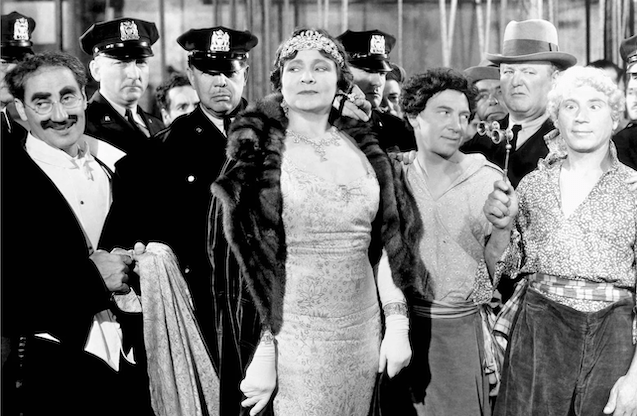
Marxist Mayhem

Above: Margaret Dumont with Groucho, Chico and Harpo Marx in A Night at the Opera. A trained operatic singer, Dumont portrayed wealthy, regal women as comic foils to the Marx Brothers in seven of their films. Groucho once referred to her as "the fifth Marx brother." (Britannica.com)

If you were looking for a break from the doldrums of winter or the mad rush of the holidays, a ticket to the Marx BrothersA Night at the Opera could fit your bill.

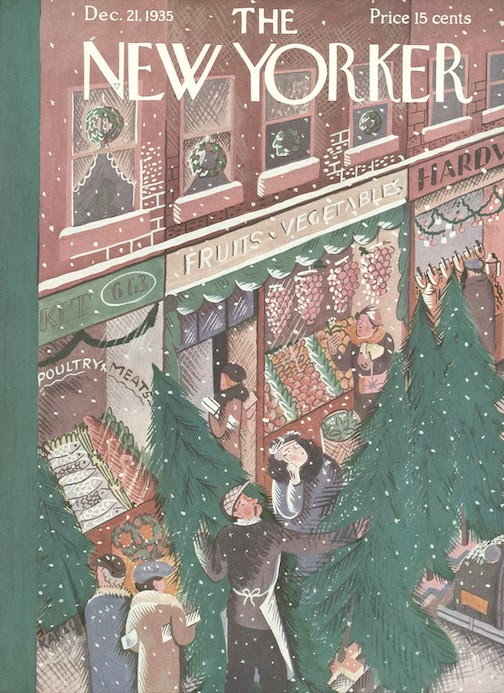
December 14, 1935 cover by William Crawford Galbraith. A New Yorker contributor from 1929 to 1940, Galbraith (1894–1978), illustrated 151 drawings and seven covers for the magazine.

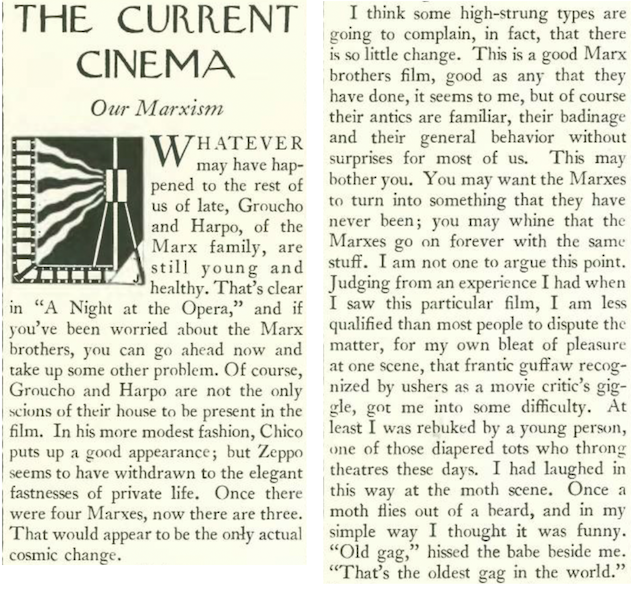
With their move from Paramount to MGM, Groucho, Chico and Harpo Marx launched a new style of comedy with A Night at the Opera, one of 1935’s biggest hits. Critic John Mosher was pleased to see the trio’s familiar antics on the screen, but with more story structure than their previous films.
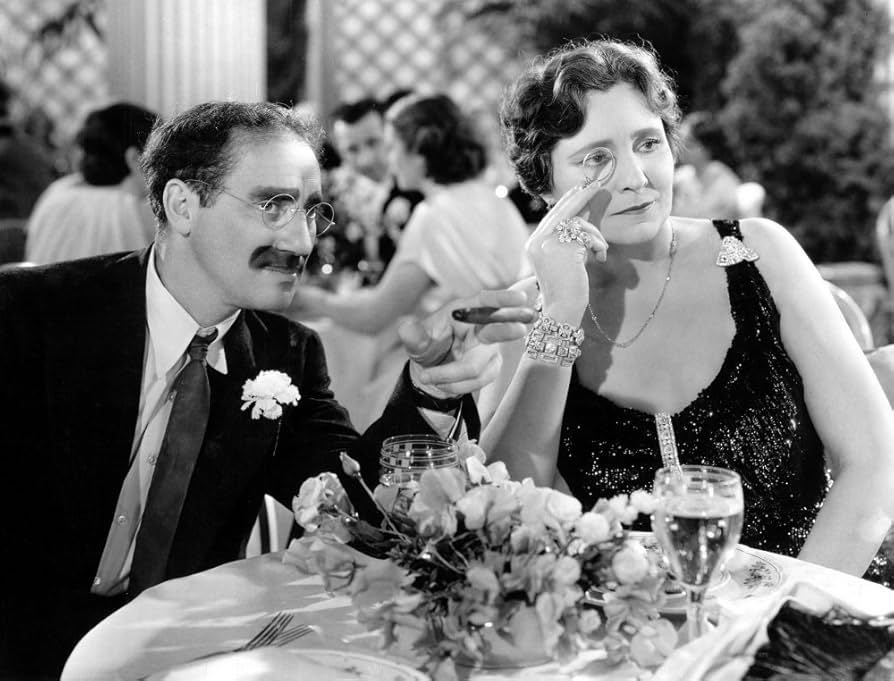
SWEET TALKER…In Night at the Opera, Groucho Marx (as Otis B. Driftwood) advises Margaret Dumont (as Mrs. Claypool) on how to be inducted into high society—Driftwood: “I have arranged for you to invest $200,000 in the New York Opera Company. You’ll be a patron…Then you can marry me and they’ll kick you out of society and all you’ve lost is $200,000.” (amazon.com)

Sure, there were some old gags, as one “youngster”—seated next to Mosher—noted, but even this newbie pronounced the film “excellent.” As Mosher observed, “It may not be new or surprising, but it’s quick and funny.”

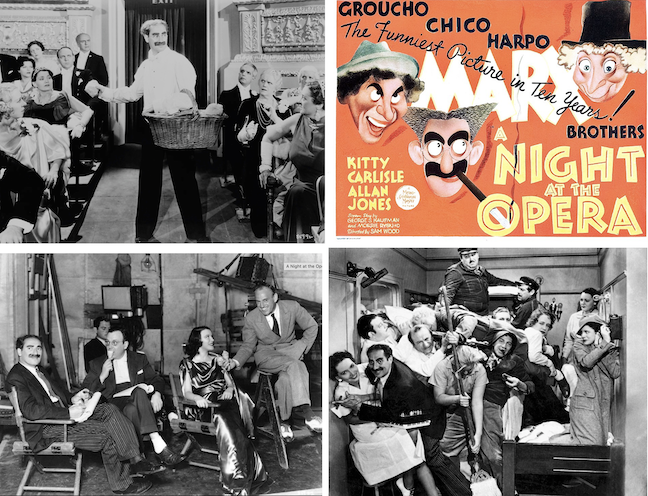
OH WHAT A NIGHT…Clockwise, from top left, during the overture to Verdi’s Il Trovatore, the sheet music is switched to “Take Me Out to the Ballgame,” and Otis B. Driftwood (Groucho Marx) responds by hawking peanuts to the startled audience; lobby card for the film; the famous “Stateroom Scene,” written by gag man Al Boasberg; taking a break on the set are, from left, Groucho, Boasberg, Kitty Carlisle, and director Sam Wood. (onset.shotonwhat.com)

Mosher also reviewed the underworld thriller Show Them No Mercy!, which displayed some of the effects of the Hays Code…

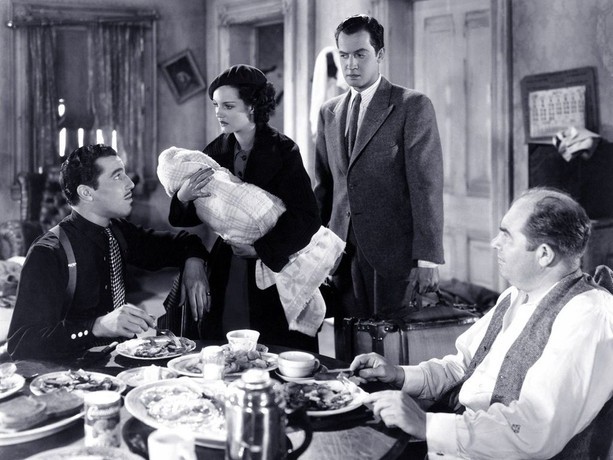
TONE IT DOWN, WOULD YA?…From left, Cesar Romero, Rochelle Hudson, Bruce Cabot, and Edward Brophy in Show Them No Mercy! (rotten tomatoes.com))

 * * *

Fond Memories

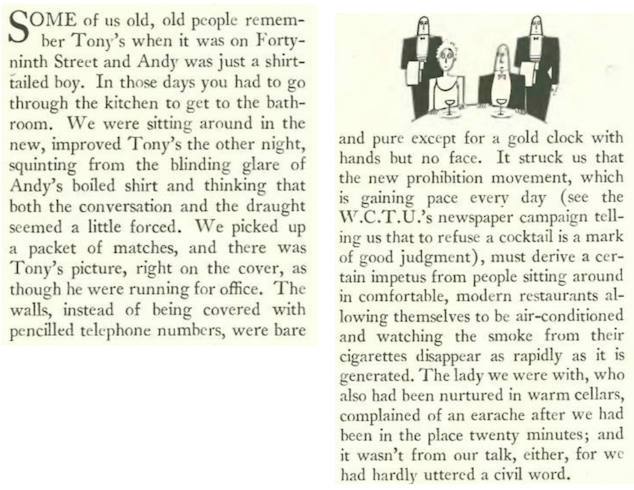
In his “Notes and Comment,” E.B. White recalled the good old days at a place called Tony’s on 49th Street. I couldn’t find any record of the place (or images), but apparently the new Tony’s lacked the smoke-filled charm of the original. Not to mention that the air-conditioning gave an earache to one of White’s acquaintances:
 * * *

Gun Shy

James Thurber was also facing the challenges of the modern world, being the unlikely owner of a very old derringer and hoping to possibly get it repaired. He stopped in at Stoeger’s gun store on Fifth Avenue, where a salesman tried to sell him a newer model. Instead, Thurber opted for a copy of the catalog (which he found fascinating), and pondered the store’s various game calls, which he thought might make suitable holiday gifts. Some brief excerpts:
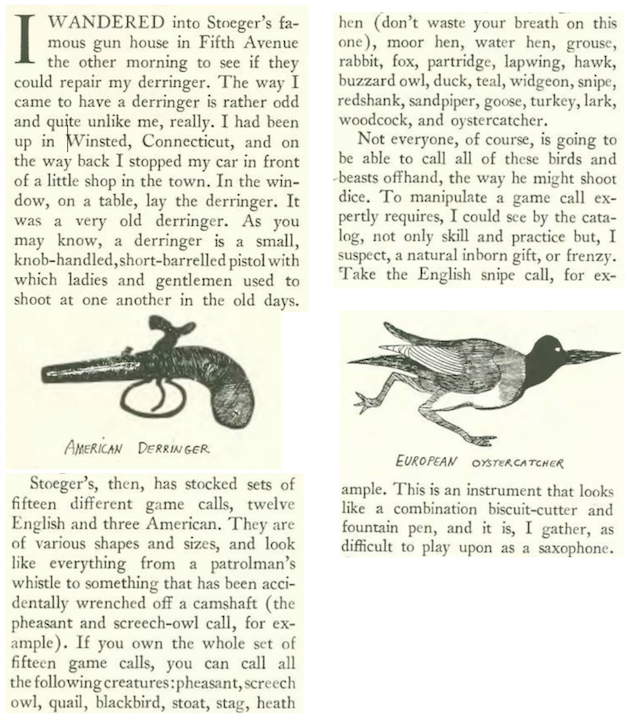
GUNS ON FASHION ROW…View from inside Stoeger’s Fifth Avenue gun store with manager John T. Meechan, undated; cover of the store’s 1936 catalog. (Facebook/ebay.com)

 * * *

Hello Dolly

Dolls of all sorts—ranging from Popeye to the Dionne quintuplets—were all the rage for the holidays, according to the magazine’s third installment of its exhaustive Christmas lists.

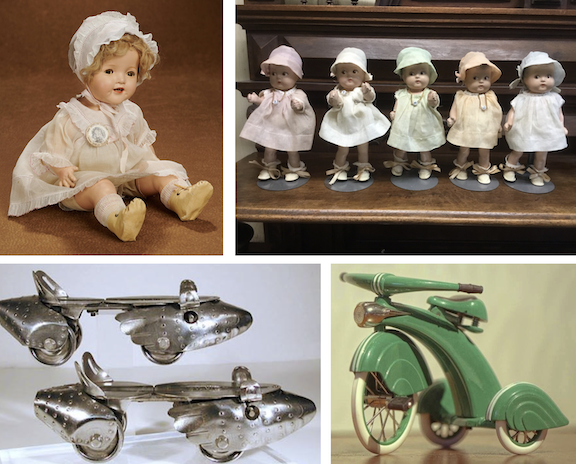
RARE COLLECTIBLES TODAY, toys popular at New York’s department stores in 1935 included, clockwise, from top left, Ideal’s Shirley Temple baby doll, fashioned after a photo of the young actress at age six months; the Dionne Quintuplets craze continued with the growing quints now standing up; a Skippy velocipede; Buck Rogers Rocket Skates. (theriaults.com/ebay.com/MidwestModern via X/grandoldtoys.com)

 * * *

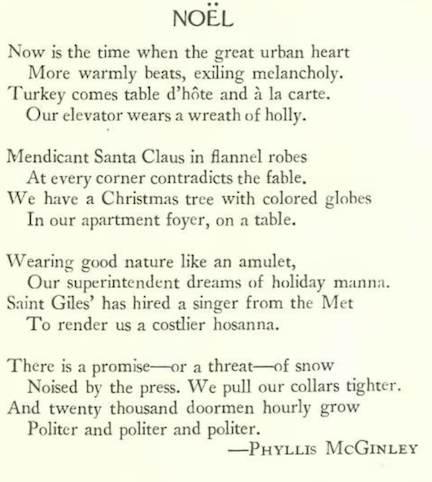
Some Light Holiday Verse

This poem comes courtesy of Phyllis McKinley (1905–1978), a children’s author and poet who lovingly satirized her suburban life, publishing in both popular as well as literary magazines, including The New Yorker.
* * *

From Our Advertisers

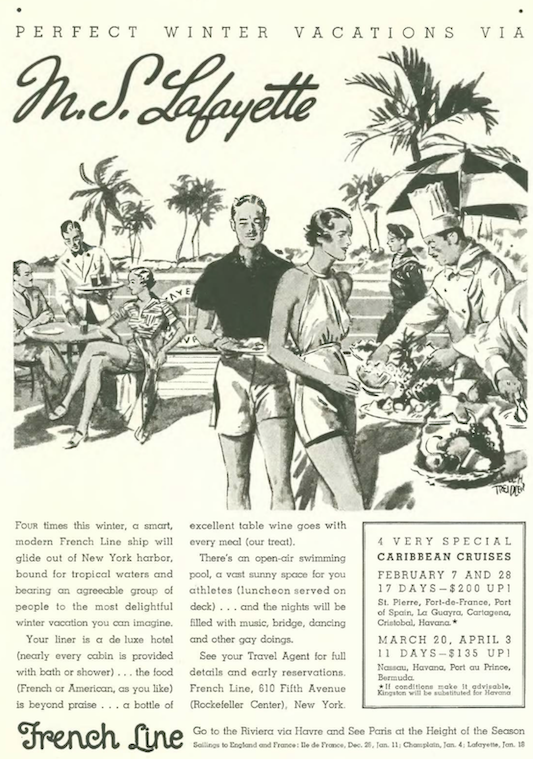
Mixed in with the advertisements for last-minute Christmas gifts were a slew of ads beckoning those with wealth and leisure time to head south for the winter…

…Forstmann Woolens switched gears, replacing their lovely seasonal ads (featuring fall and winter fashions) with the latest in tropical togs…
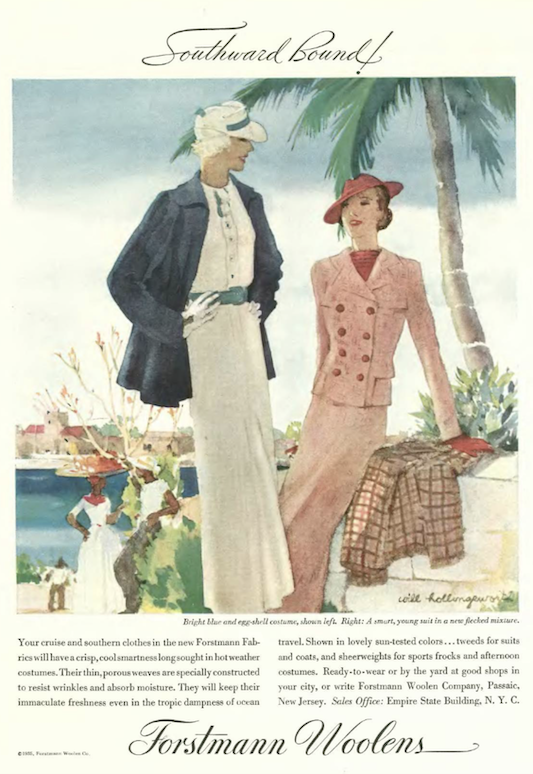
…Bermuda beckoned to those fashionable folks…

…as did the cruise lines heading south…
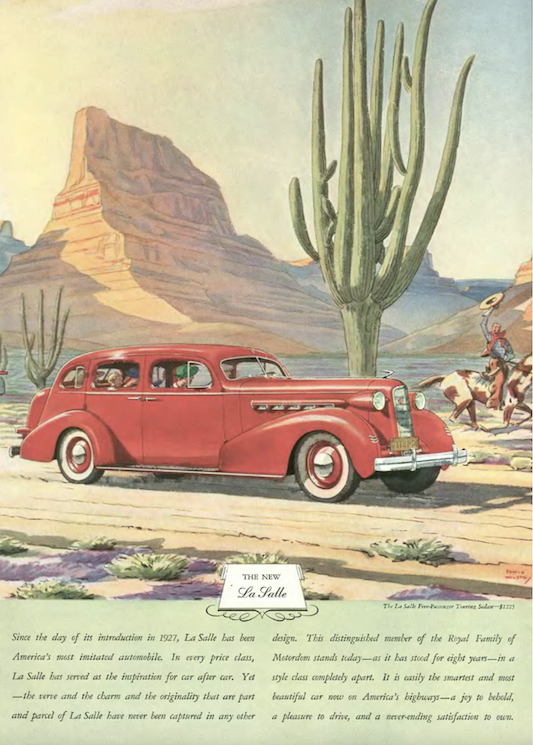
…even the makers of the La Salle (Cadillac) were feeling the warmth with this image of the sunny Southwest (this was the left panel of a two-page spread)…
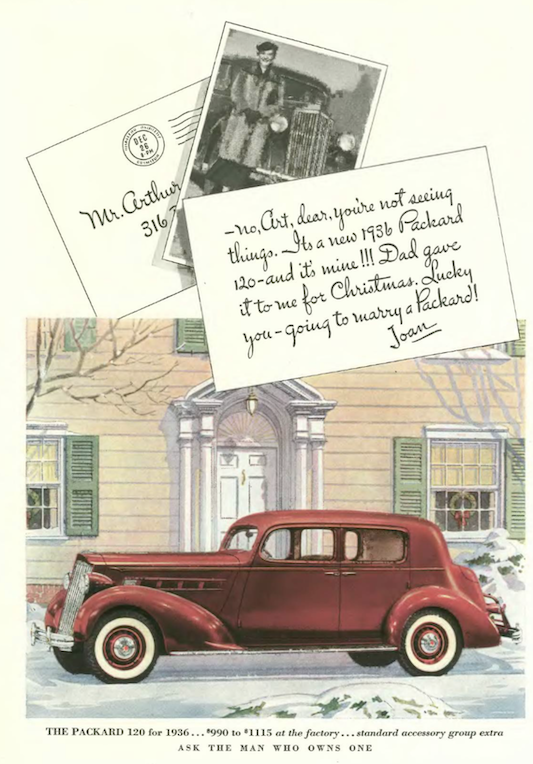
…Packard could sweeten a woman’s dowry, according to this holiday message…
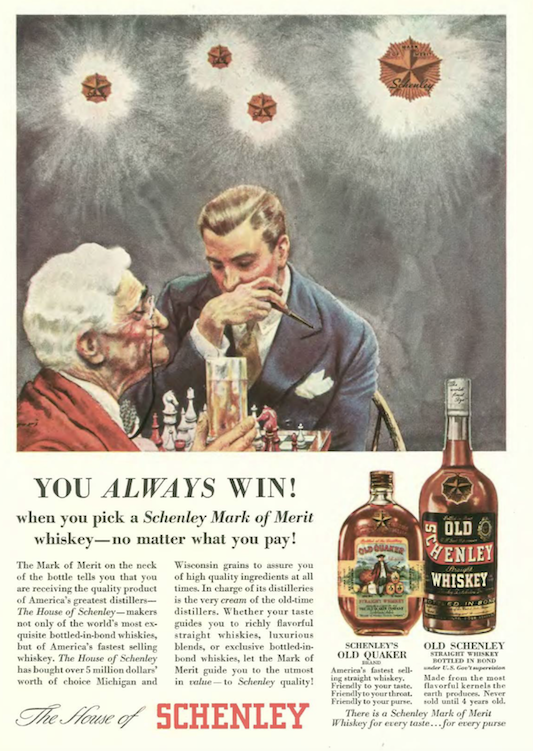
…it looked like Grandpa had a bit too much of the Old Schenley…
…according to this Heinz ad, modernism should play a “minor role” on Christmas, so for a real “olden time” treat, you could enjoy some of their figgy pudding…out of a can…

…and leave it to good old St. Nick to push his bagful of cigarrettes…

…Old Gold also employed Santa for this George Petty-illustrated ad…

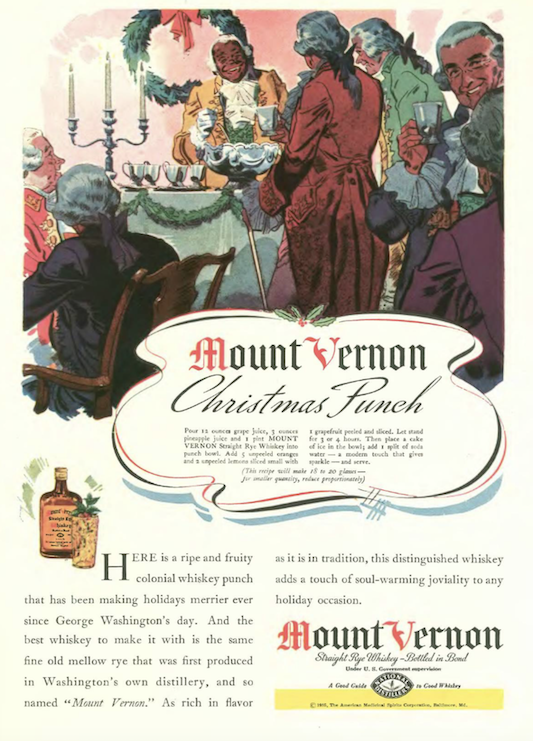
…Mount Vernon continued its series of ads that idealized the days before Emancipation…
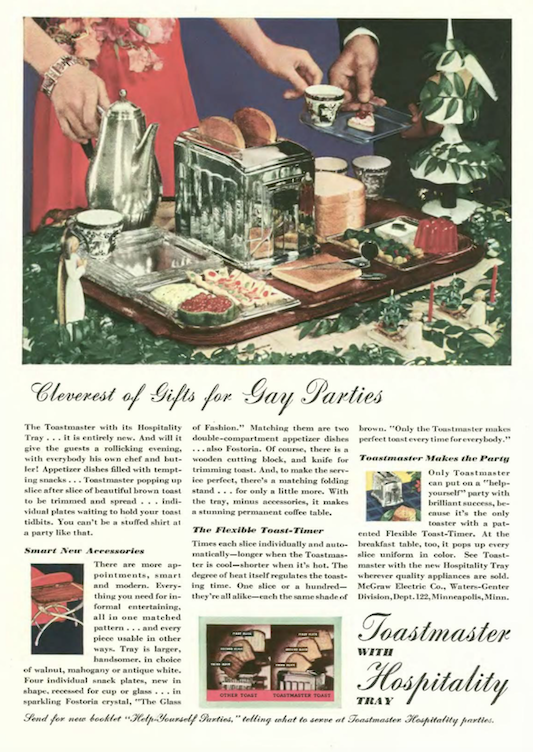
…the automatic toaster, still something of a novelty, was front and center at this holiday gathering…
Stage magazine touted Broadway’s hit-filled season…

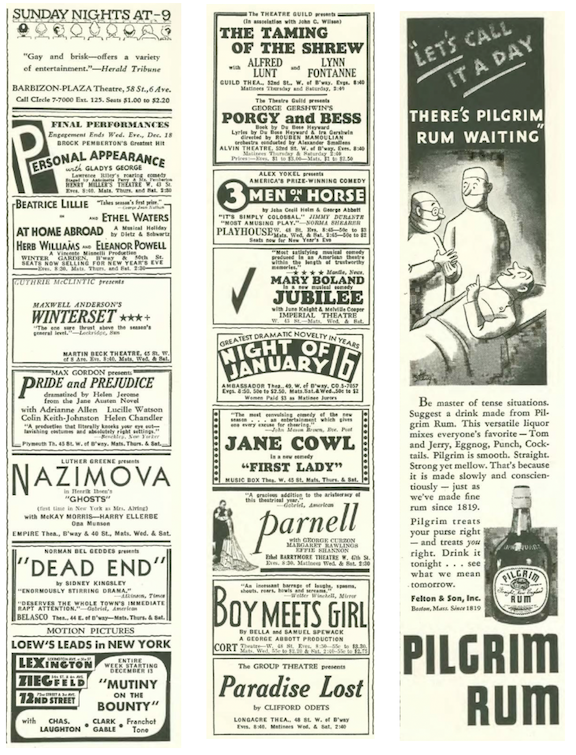
…back of the book, single-column ads featured  delights of the stage and screen and an appeal for Pilgrim Rum aided by the talents of William Steig

Nikita Balieff’s La Chauve-Souris had seen better days when it showed up at the Continental Room…
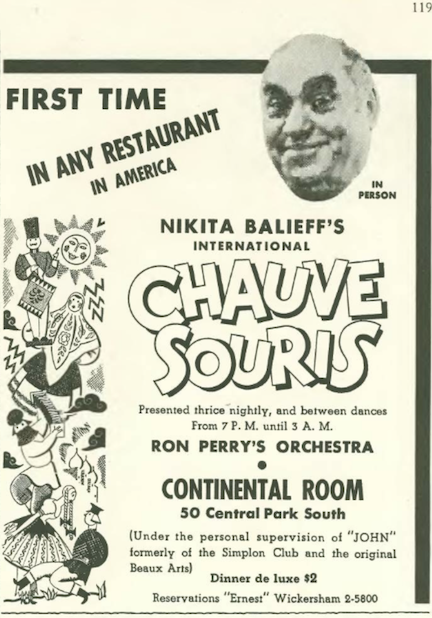
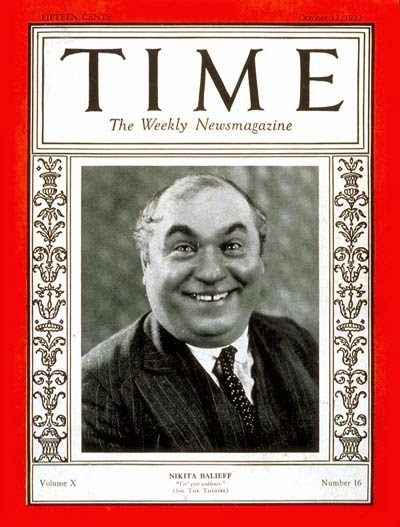
…Balieff (1877–1936) was a Russian Armenian performer best known as the creator and master of ceremonies of the theatre group La Chauve-Souris. The company toured the U.S. six times from 1922–1929—including appearances on Broadway—presenting a variety of songs, dances and sketches based on Russian stories and legends. The troupe’s popularity even landed Balieff on the cover of Time (Oct. 17, 1927)…
The New Yorker’s Ralph Barton designed a curtain for the 1922 Chauve-Souris, and Alexander Woollcott heaped praise on the performances. However, his fellow Algonquin Round Table wit, Dorothy Parker, was not impressed: it has come to the stage where these poor nerves jangle nastily every time the local cognoscenti hail as incomparable art any bit of literature, play, writing or stagecraft that comes out of Russia. ….. what I don’t really grasp is just why “Russian” and “great” should have come to be looked upon as synonyms…
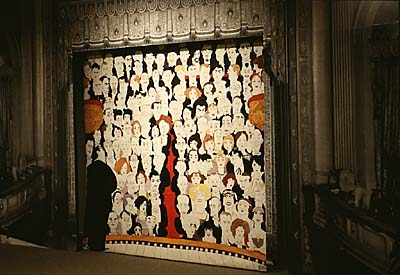
Ralph Barton painted this celebrity curtain in 1922 for Chauve-Souris. (National Portrait Gallery)

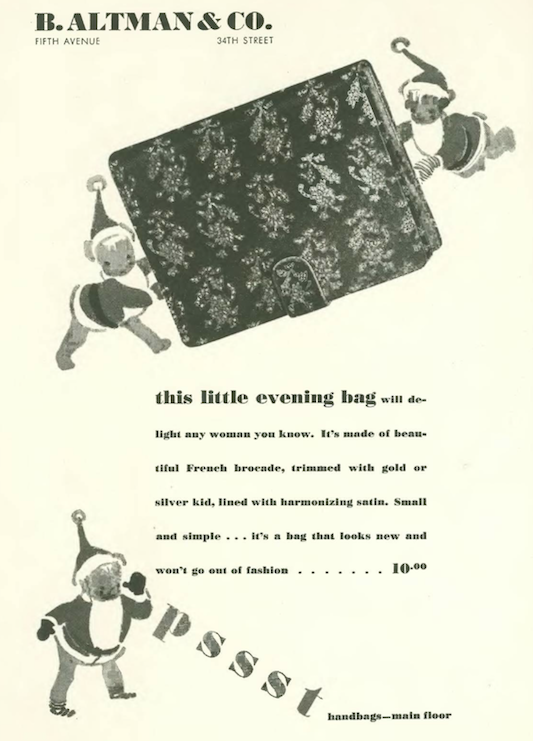
…back to our ads…B. Altman had a suggestion for the last-minute shopper…
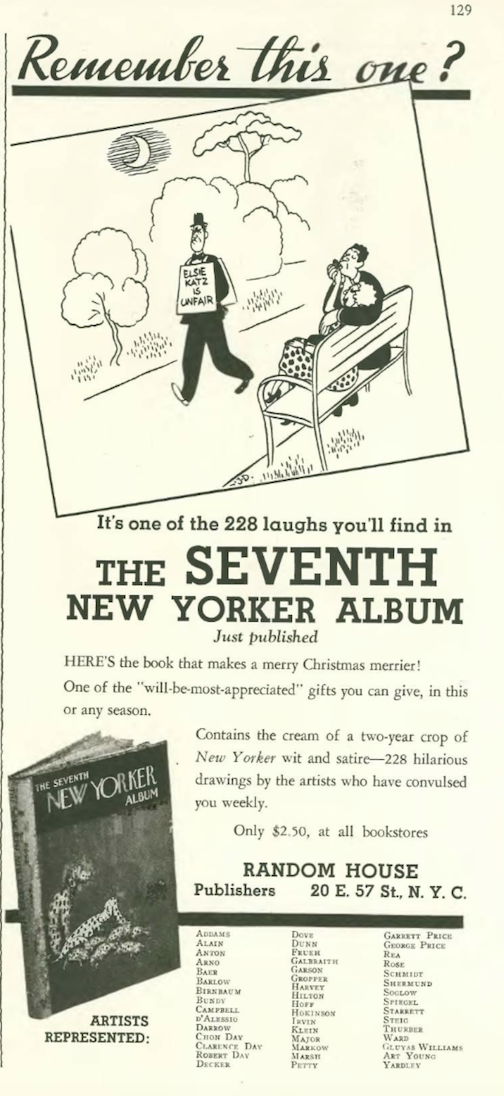
…a Robert Day cartoon was employed to advertise the latest New Yorker Album

Thomas Eastwood opens up our cartoon section…

Maurice Freed tossed in this spot drawing…
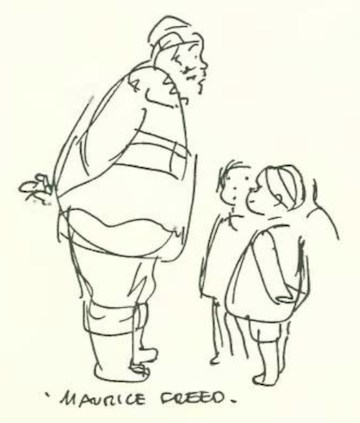
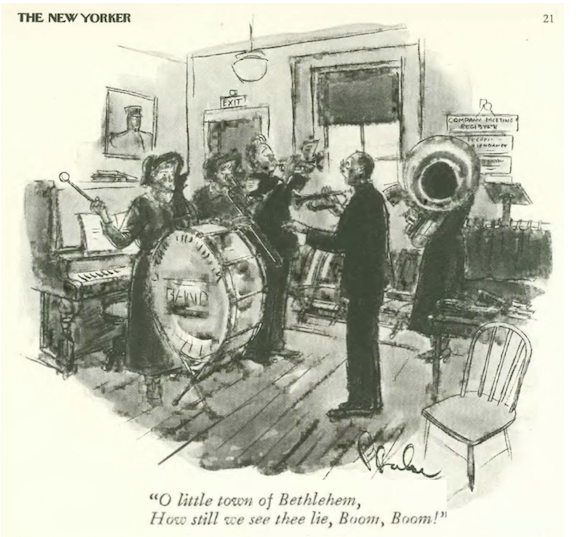
Perry Barlow got into the rhythm with the Salvation Army…
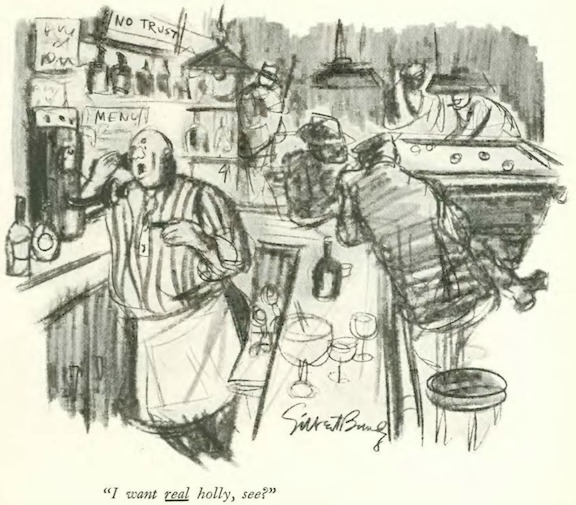
Gilbert Bundy looked for some holiday cheer at a neighborhood tavern…
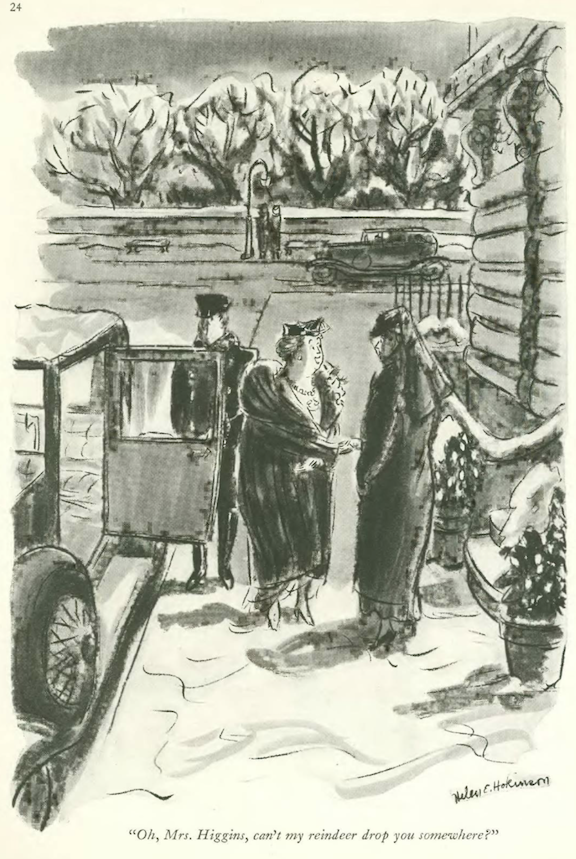
Helen Hokinson gave us a generous spirit…
Walter Lippmann’s column raised eyebrows at George Price’s breakfast table…

…Price again, on an urgent request…

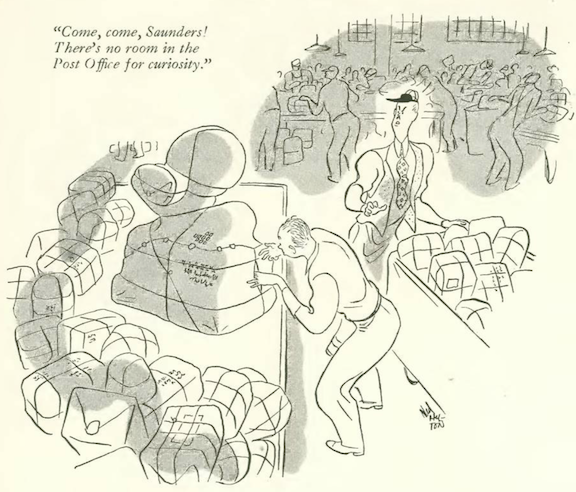
Ned Hilton did some peeking…

Fritz Wilkerson showed us a couple in need of a dog whisperer…
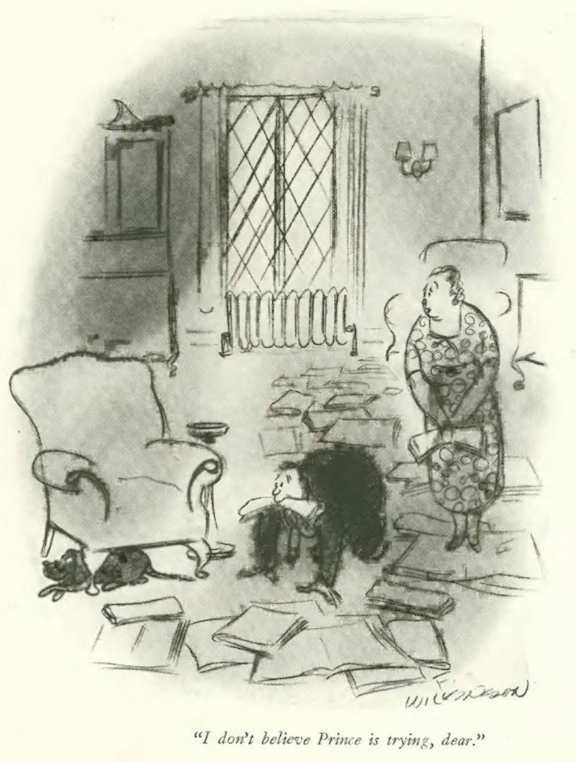
Carl Rose unmasked an imposter…

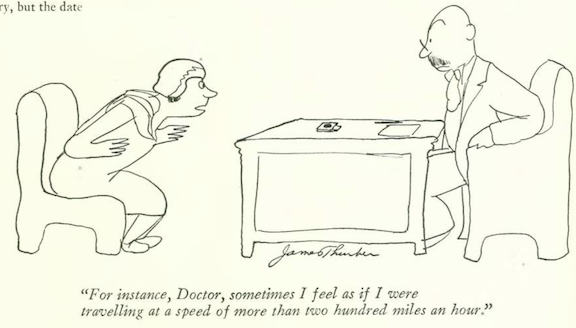
…and James Thurber presented a medical challenge…
…and before we go, another word on our cover artist, William Crawford Galbraith, who also created posters for MGM from the 1920s to the 1940s and drew cartoons for Harper’s Bazaar, Redbook, Vanity Fair, the Saturday Evening Post, and Cosmopolitan. He took over the nationally syndicated “Side Glances” comic panel from George Clark in 1939 and worked on it for two decades.
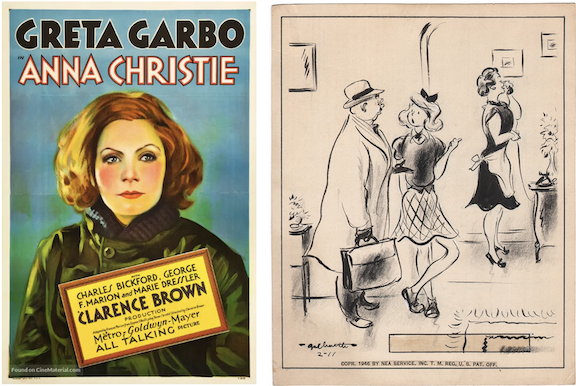
At left, Galbraith’s poster for Anna Christie, 1930; right, a 1946 Side Glances comic panel. The caption reads: “No, I’m not curious – I just like to hear Mom on the phone because her voice sounds so mellow compared to when she’s talking to us around the house!” (IMDB/comicartfans.com)

Next Time: Picking on Pickford…
Some Holiday Shopping

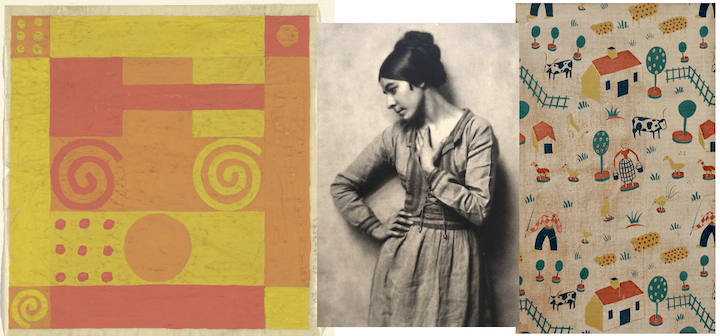
Above: Ilonka Karasz designed six children's rooms for a holiday display at Saks Fifth Avenue, featuring colorful rugs (left) and nursery screens (detail at right) among other items. In a House and Garden article, Karasz wrote: "Through new theories of design, production and distribution, [these rooms] have more vision than the manufacturer who still insists upon Little Bo-Peep." (MoMA.org/1stdibs.com)

In the Days of Yore, Christmas celebrations were largely adult- or family-centered affairs, that is until the Industrial Age enabled the mass production of toys and other goodies. Beginning in the 1870s, Macy’s began offering impressive toy displays, and even children in the hinterlands could get in on the action with a Sears catalog, the company raising its game in 1933 with the introduction its Wish Book.

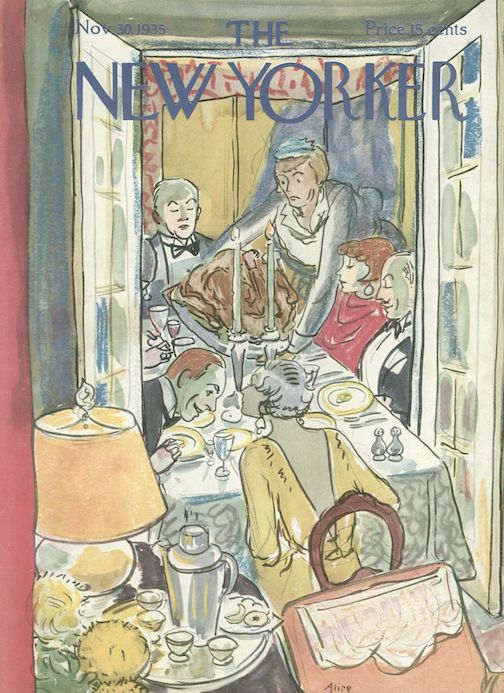
November 30, 1935 cover by Alice Harvey. From 1925 to 1943, Harvey (1894–1983) contributed three covers and more than 160 drawings to The New Yorker. I highly recommend Liza Donnelly’s Very Funny Ladies for more about Harvey and other women cartoonists.
Alice Harvey came to New York from Chicago with her friend Helen Hokinson in the early 1920s, finding early success submitting to Life, Judge and other publications before she and Hokinson joined the fledgling New Yorker in 1925. (Photo from Michael Maslin’s essential Ink Spill).

 *

The New Yorker was no exception when it came to toy shopping, featuring exhaustive lists of toys, games and other items for children available at the city’s major retailers.

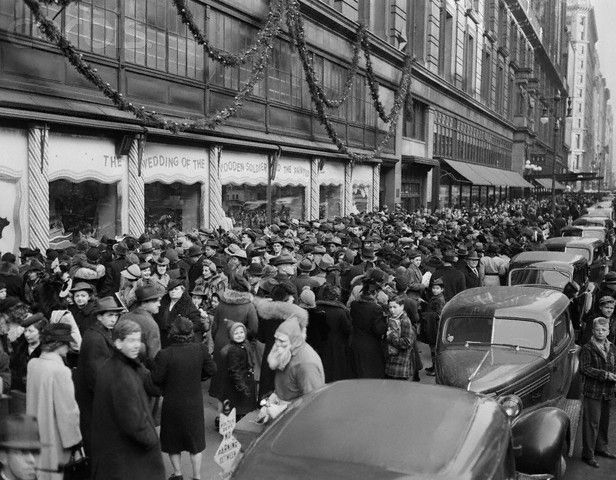
BEFORE ONLINE SHOPPING…A crowd of holiday shoppers outside New York’s Macy’s department store, 1939. (Vintage.es)

These lists were in the back of the book, following Lois Long’s “On and Off the Avenue” fashion column. Here are some excerpts:

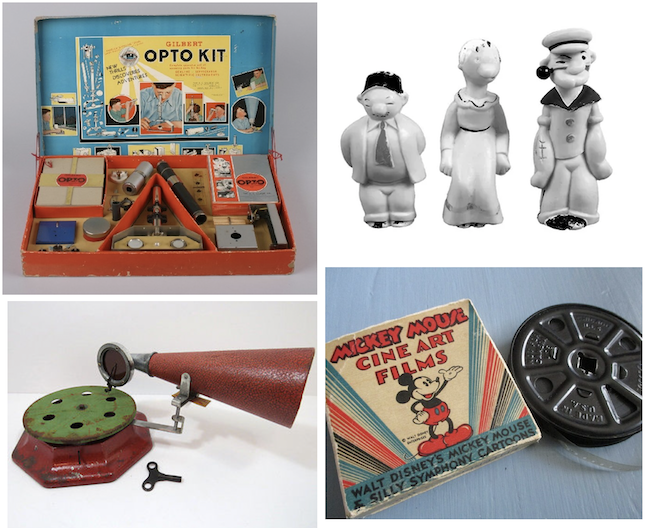
KEEP THE KIDDOS BUSY…Clockwise, from top left: Bloomingdale’s offered an Optics Set, while Macy’s featured Lester Gaba’s soap sculptures (including Popeye, Olive Oyl and Wimpy), 8mm Mickey Mouse and Silly Symphony cartoons, and “Jack & Jill” portable children’s record players. (scrappyland.com/acghs.org/etsy.com/worthpoint.com)

Of course it wouldn’t be Christmas in New York without F.A.O. Schwarz, and if you shopped at Saks you could be dazzled by children’s rooms designed by Ilonka Karasz.

GIFTS FOR THE MODERN KID…At F.A.O. Schwarz you could find Foxblox and Buck Rogers costumes, while Saks featured children’s rooms and furnishings designed by Ilonka Karasz, including a colorful nursery screen. (Pinterest/invaluable.com/worthpoint.com/cooperhewitt.org/reddit.com)

 * * *

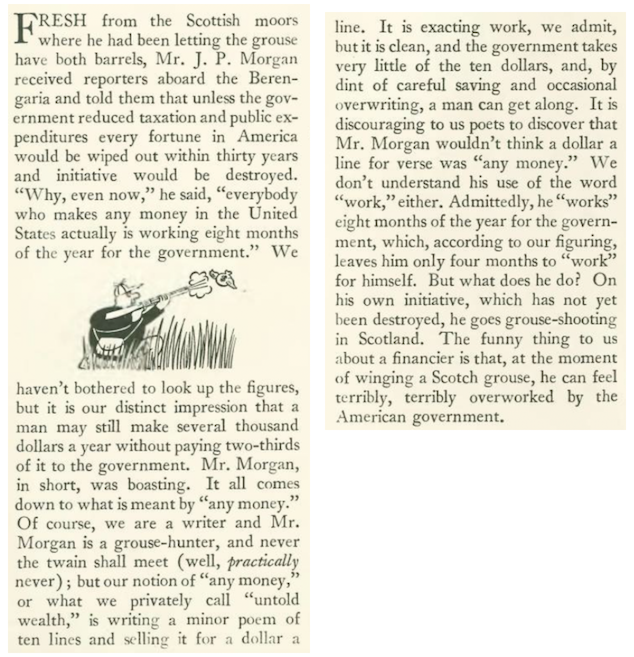
Pouting Plutocrat

In his “Notes and Comment,” E.B. White took issue with J.P. Morgan’s gripes about taxation while grouse hunting in Scotland.

 * * *

A City Resurrected

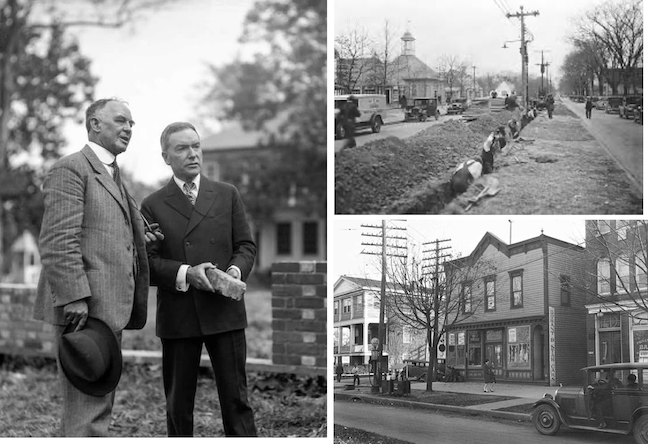
Founded in 1632, Williamsburg, Virginia played an important role in colonial and revolutionary America, but by the 20th century it had become a quiet and rather neglected little town. Then in 1924 the town’s rector, Rev. W.A.R. Goodwin—bolstered by the successful restoration of his parish church—approached oil tycoon John D. Rockefeller Jr. for funds to restore the entire colonial capital. As John Peale Bishop noted in these excerpts from “Onward & Upward With The Arts,” the project left some residents scratching their heads.

MY VISION, YOUR MONEY…The Rev. W.A.R. Goodwin (left), rector of Bruton Parish Church, shared his vision for Williamsburg with philanthropist John D. Rockefeller Jr; top photo, paved streets and modern utility lines were removed as part of the restoration, circa 1930; bottom photo, pre-restoration photo of Duke of Gloucester Street—all businesses located on Market Square, including these, were demolished during the restoration. (colonialwilliamsburg.org)
RENEWED OR REMOVED…Clockwise, from top left, the 18th-century John Crump House was in a sad state in this 1895 photograph; the Crump House after its 1941-42 restoration; workers examine the old foundation walls of the Governor’s Palace; Williamsburg High School was demolished to make way for the Governor’s Palace reconstruction, seen in the background.(yourhistorichouse.com/colonialwilliamsburg.org)

 * * *

At the Movies

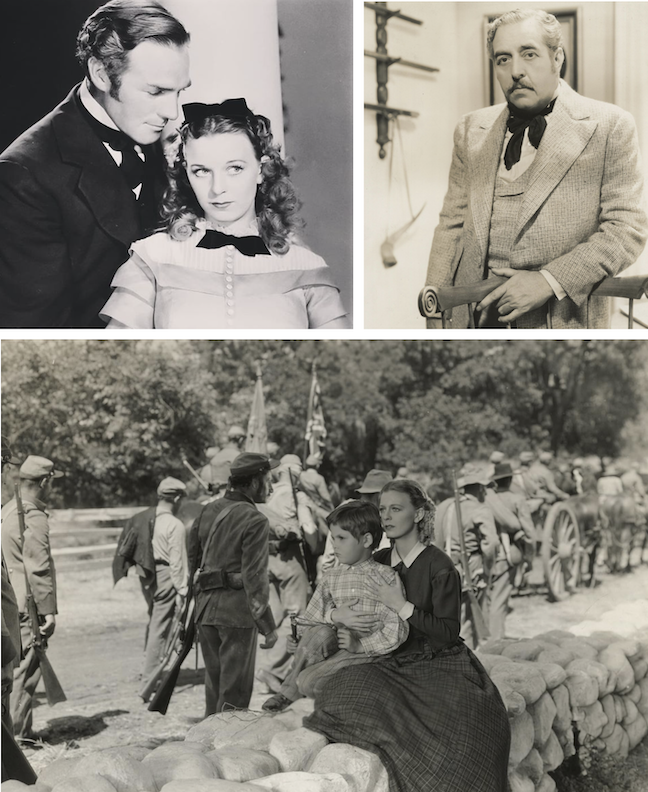
John Mosher had high praise for King Vidor’s Civil War romance, So Red the Rose. Although it did not have the epic sweep (or epic length) of 1939’s Gone With The Wind, Mosher and other critics praised the film’s human qualities. It did not, however, do well at the box office.

FRANKLY, MY DEAR…a line that would have to wait for another Civil War romance…clockwise, from top left: Randolph Scott and Margaret Sullavan play kissing cousins in So Red the Rose; Mosher singled out Walter Connolly for his performance as the family patriarch; child star Dickie Moore and Sullavan in a scene from the film. (IMDB/Letterboxd.com)
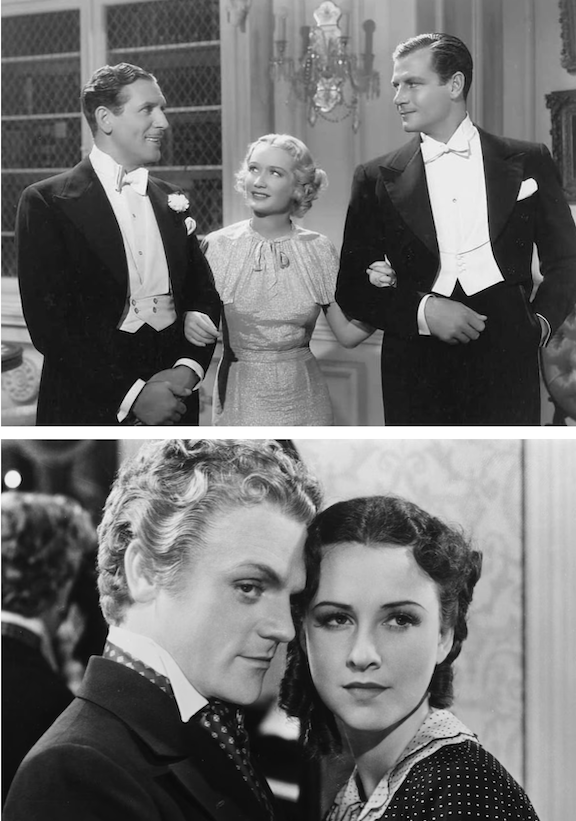
HIDDEN TALENTS…In two other films, Mosher found the performances of the lead actors to either be upstaged or muffled in period costume. Top, Paul Cavanagh, Miriam Hopkins, and Joel McCrea in Splendor. Below, James Cagney and Margaret Lindsay in Frisco Kid. (IMDB/TCM)

 * * *

From Our Advertisers

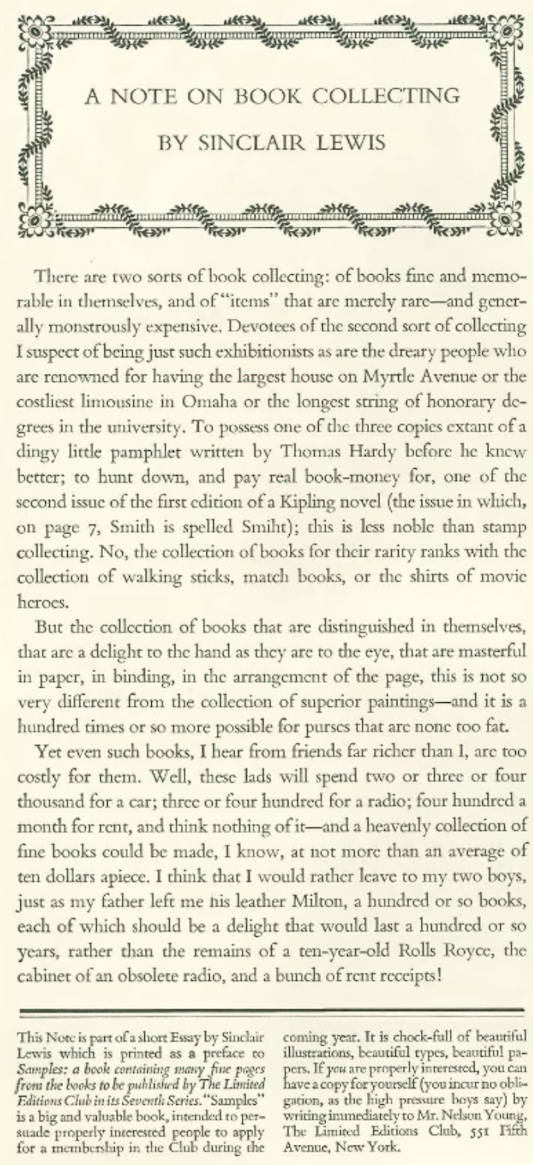
We start with this advertisement from The Limited Editions Club, founded in New York by George Macy in 1929. The 29-year-old Macy, determined to make his living from books, focused on publishing beautifully illustrated classic titles in limited quantities, available to subscription-paying members. Illustrators of the editions have included Pablo Picasso, Henri Matisse, Reginald Marsh, Norman Rockwell and many other noted artists. The ad below includes an excerpt from a Sinclair Lewis essay that extolled the virtues of investing in fine books.

Above, frontispiece from The Limited Editions Club’s 1930 publication of Thomas De Quincey’s Confessions of an English Opium-Eater, illustrated by Zhenya Gay. (librarything.com)

…as the holidays grew near the automobile ads grew more luxurious…this Cadillac spot featured an illustration of posh tots driven by their chauffeur…

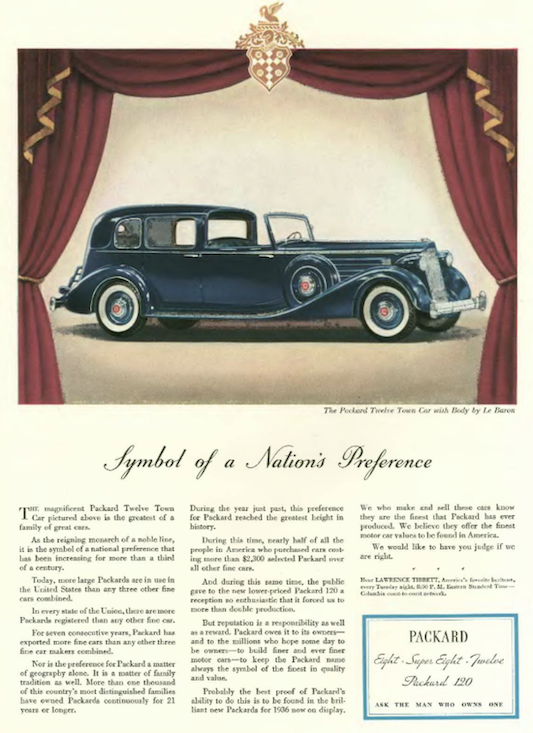
…and from Packard, an automobile designed with the assumption that you already had a liveried driver…

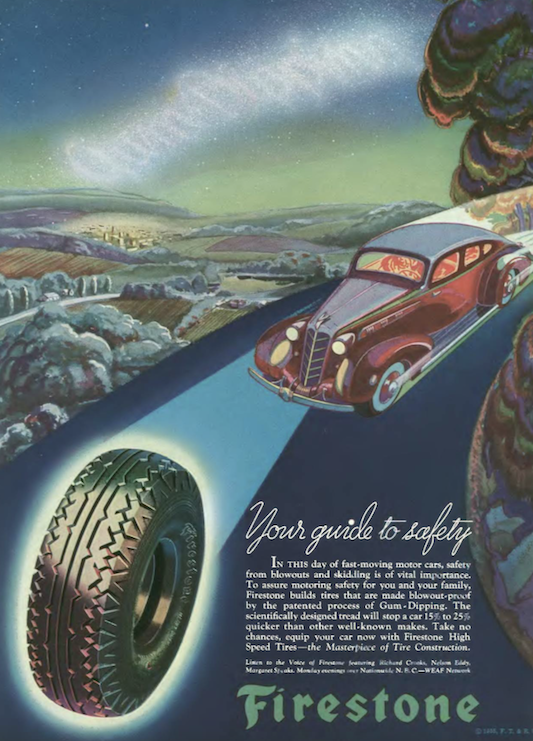
…colorful ads also came our way from Firestone…

…and Goodyear…these two companies were the largest suppliers of automotive tires in North America for more than 75 years…

…World Peaceways continued their series of provocative anti-war advertisements…

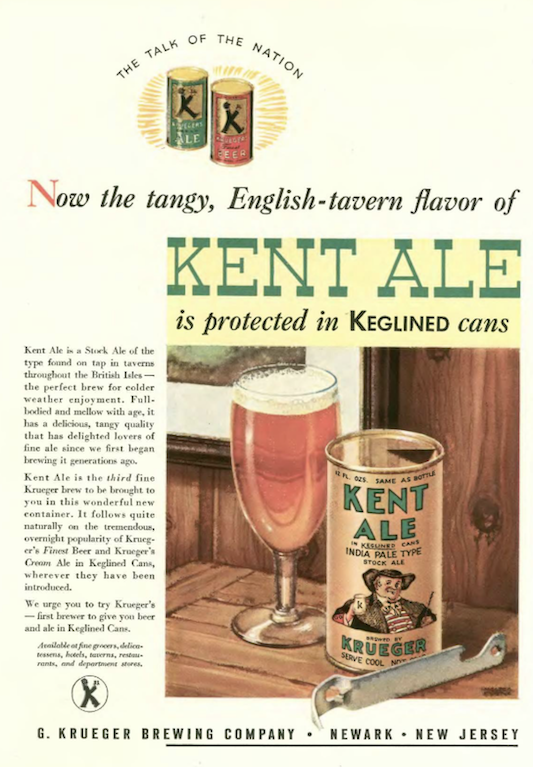
…Kent Ale was produced by Krueger Brewing Company, one of the first breweries to use cans that were coated with some substance referred to as “Keglined”…

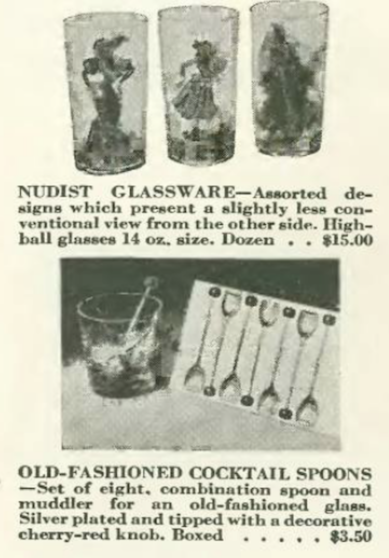
…a detail from an Abercrombie & Fitch advertisement, which suggested “Nudist Glassware” as a unique gift idea for the holidays…

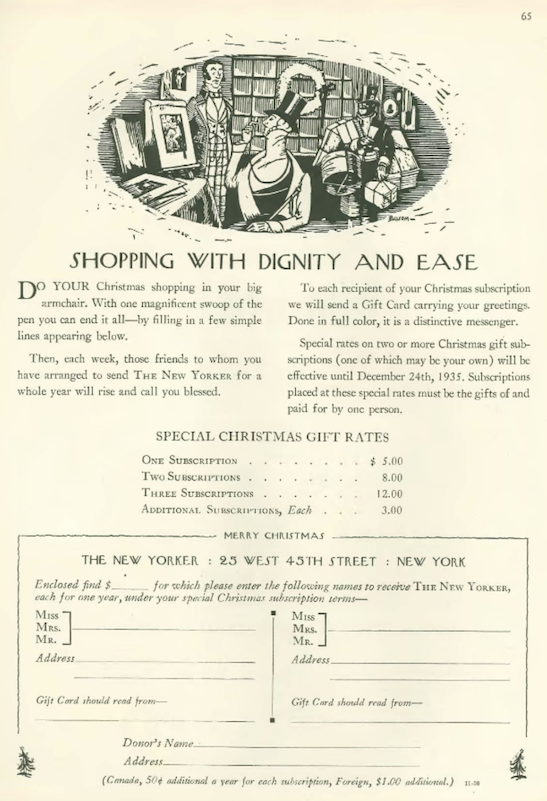
…while The New Yorker suggested a subscription (or three) as a gift that keeps on giving…curiously, the magazine used the talents of artist Lowell Leroy Balcom (1887-1938) to render this woodcut illustration of Eustace Tilley…

James Thurber kicked off our cartoons with a familiar theme…

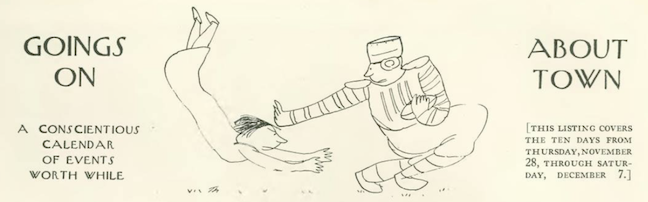
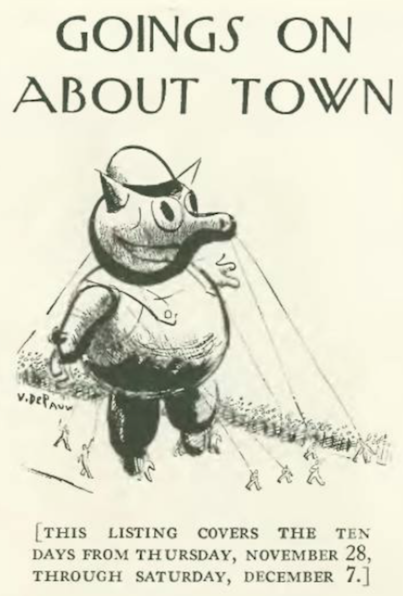
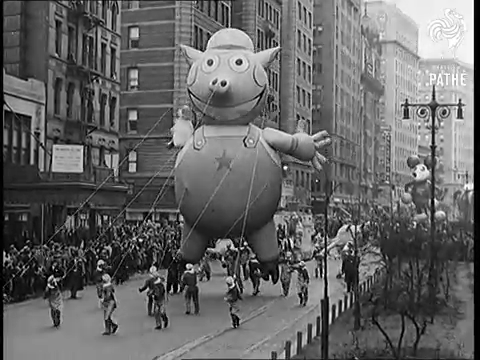
…and Victor de Pauw offered up this Macy’s Thanksgiving Day parade image to calendar section…

…what de Pauw illustrated…
To promote his Silly Symphonies animated short, “The Three Little Pigs”, Walt Disney designed a balloon based on Practical Pig (the one with the brick house). The balloon was featured in the 1934 and 1935 Macy’s Thanksgiving Day parades. (YouTube)

William Steig stepped in for Al Frueh in providing the illustration for the “Theatre” section…
…and Steig again…

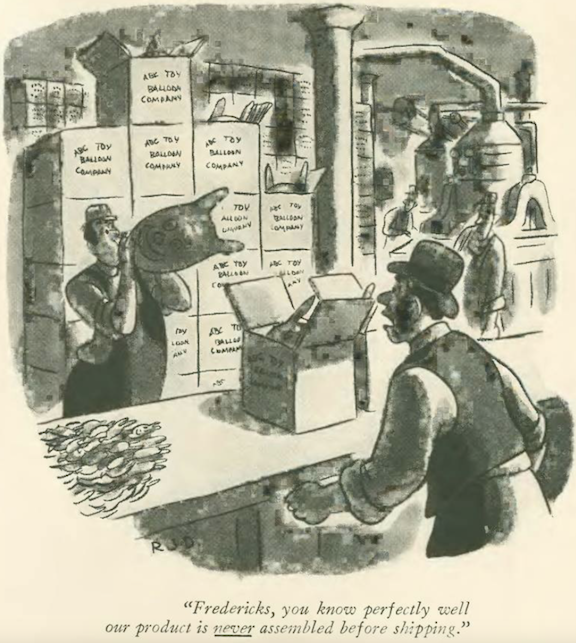
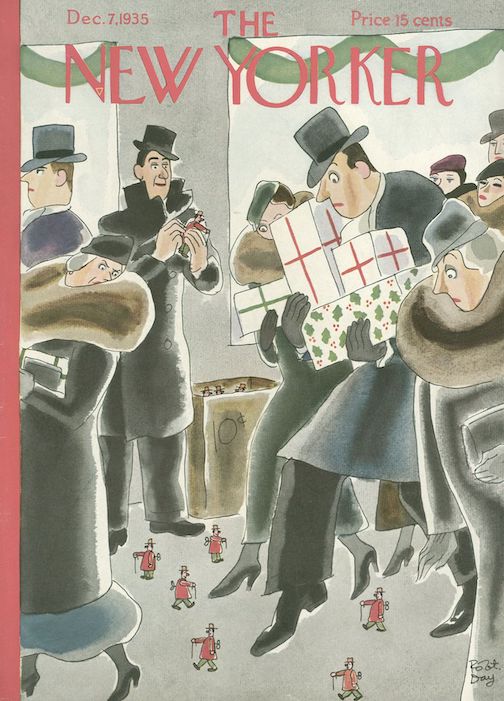
Robert Day gave us an airhead at a balloon factory…

…Day again, with some evicted ghosts…

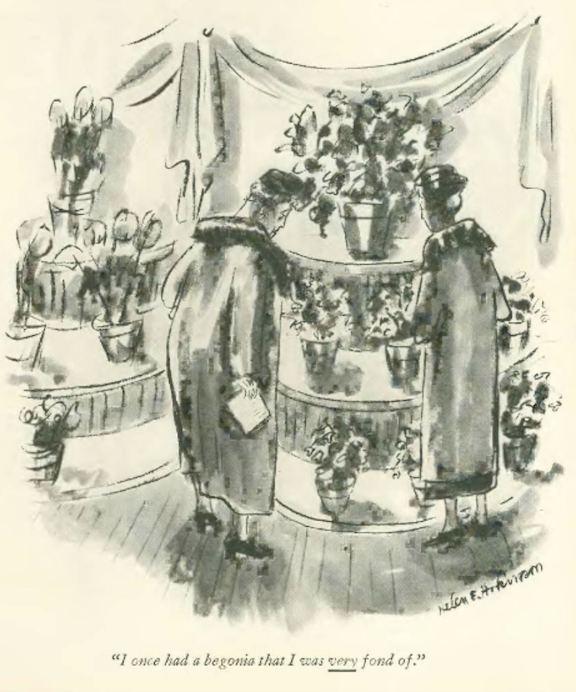
Helen Hokinson went plant shopping…

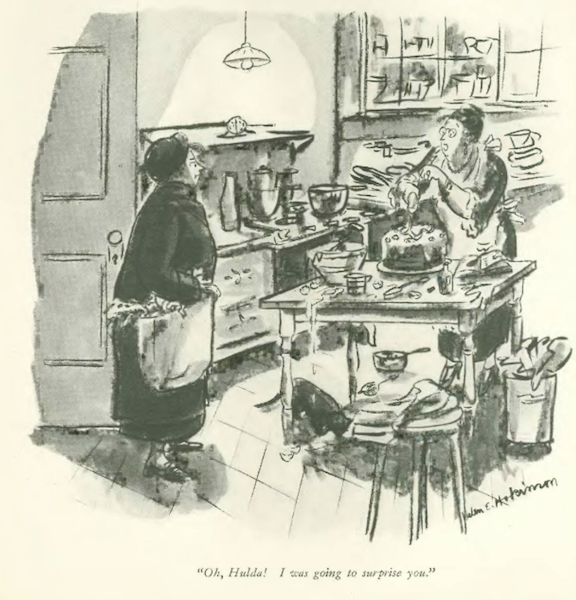
…and found a surprise in the kitchen…

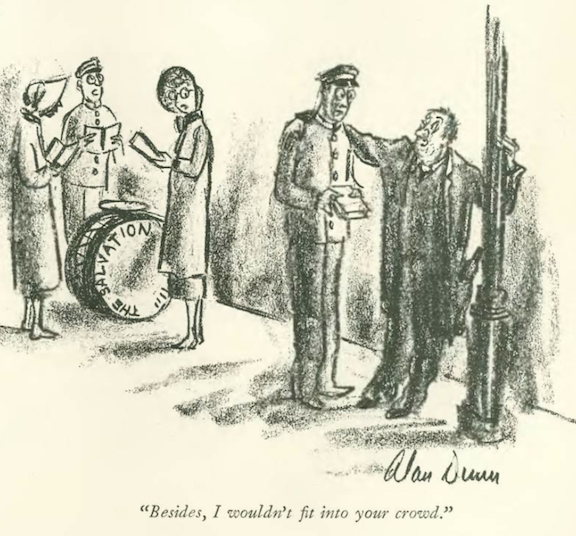
Alan Dunn offered a challenge to the Salvation Army…

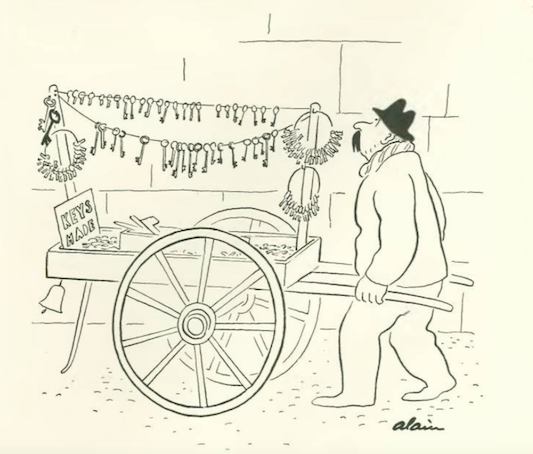
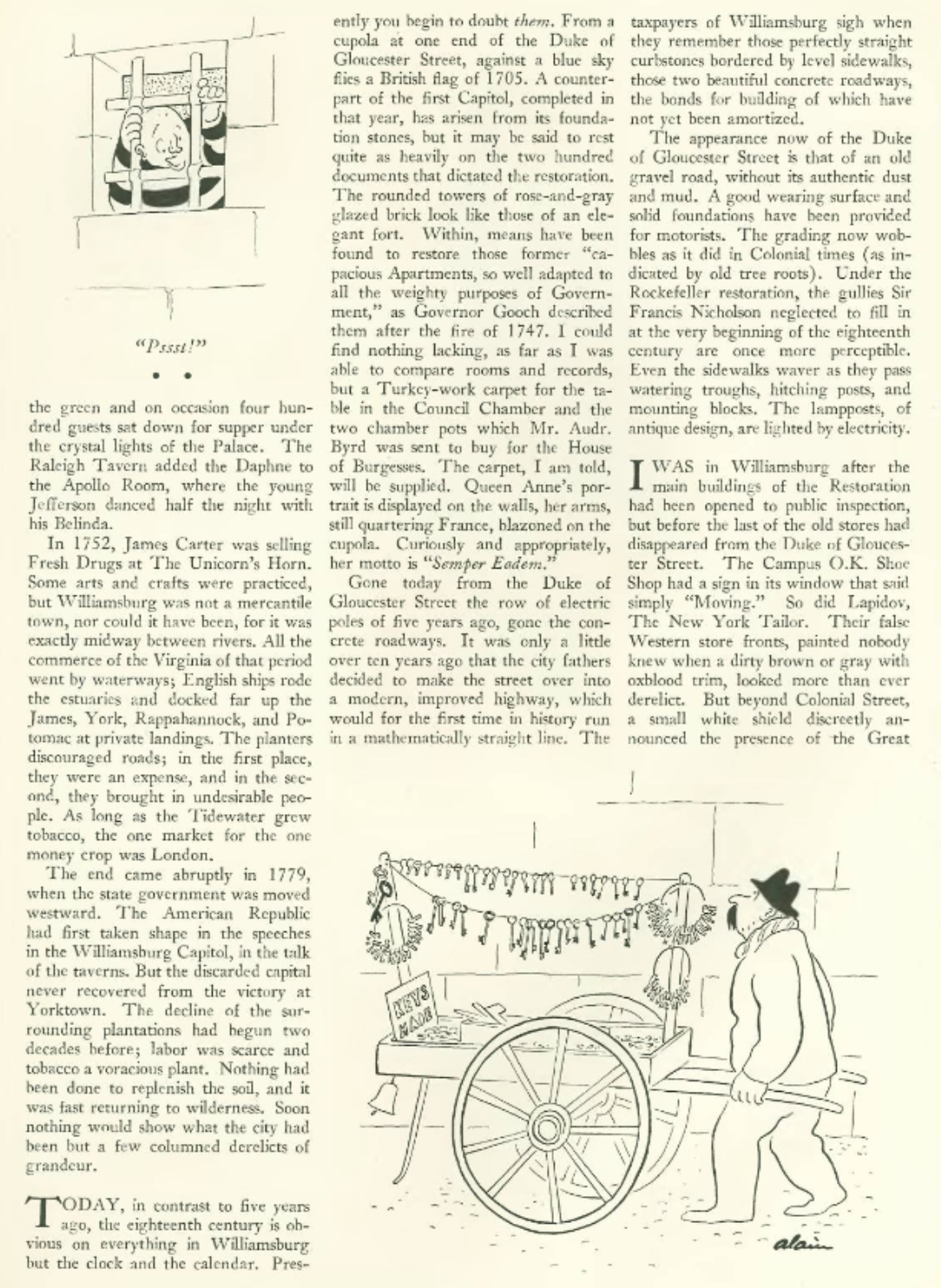
Alain received a special layout for this cartoon…

…which was arranged thusly…

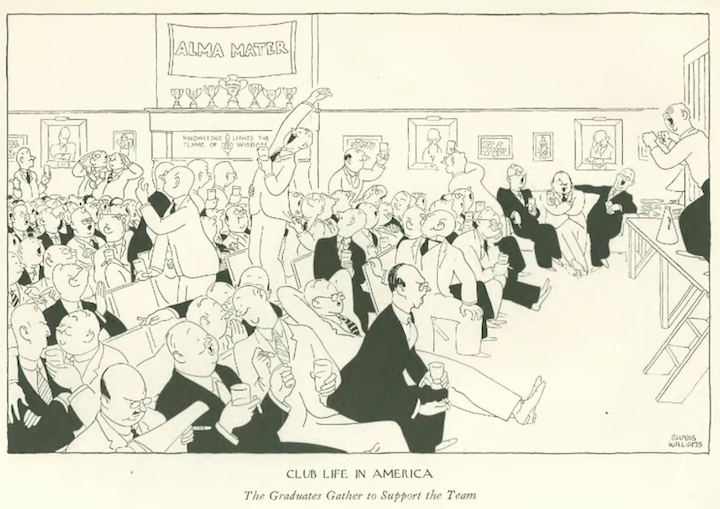
Gluyas Williams was back with his look at club life…

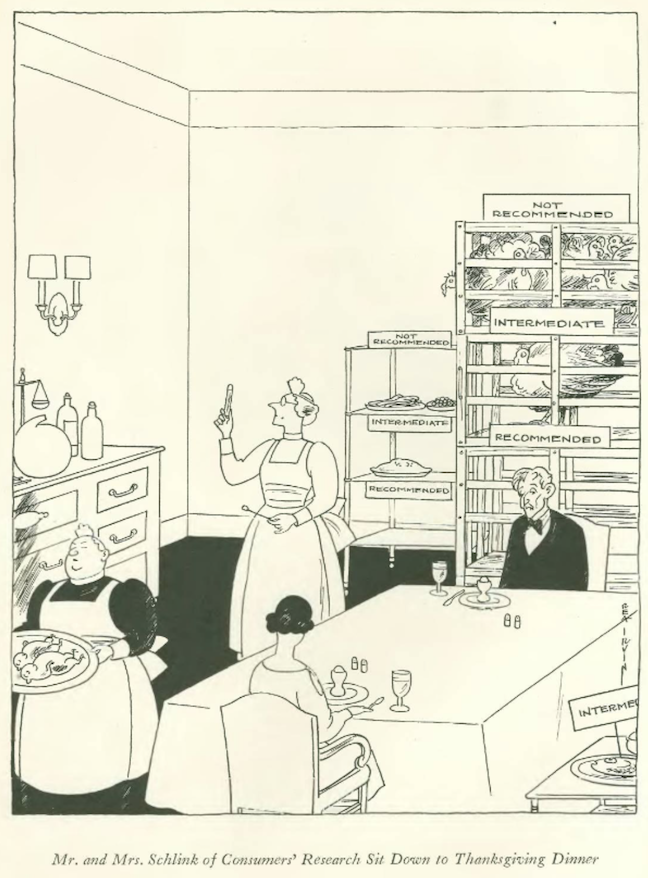
…and we close with Rea Irvin, and the science behind a holiday feast…

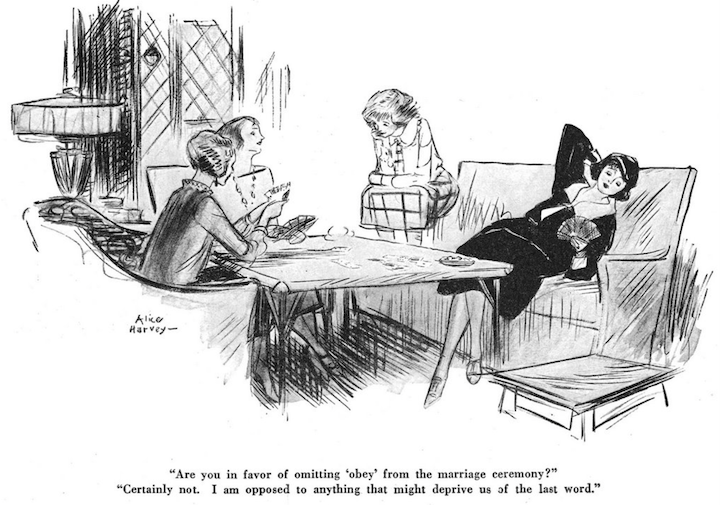
…and before we go, our cover artist, Alice Harvey, was publishing New Yorker-style cartoons in Life magazine at least three years before the New Yorker got off the ground. Here is an example of her early work, published 103 years ago on December 28, 1922:

Next Time: Two Nights at the Opera…