Something Frivolous

And what can be more frivolous than a Busby Berkeley musical, with scores of leggy showgirls tap-dancing in perfect rhythm, or dressed in identical white gowns while playing flying pianos. Make sense? No, and that was the whole point.

March 23, 1935 cover by Peter Arno. The color, contrast and composition are striking; it looks more like a cover from the 50s or 60s.

“In an era of breadlines, depression and wars, I tried to help people get away from all the misery…” Berkeley once remarked. “I wanted to make people happy, if only for an hour.” Gold Diggers of 1935 was Berkeley’s second “Gold Digger” picture (he choreographed or directed four; there were six in all, including one silent), and it was the first in which he served as sole director. Critic John Mosher didn’t know what to make of the film, likening it more to an earthquake than an entertainment.

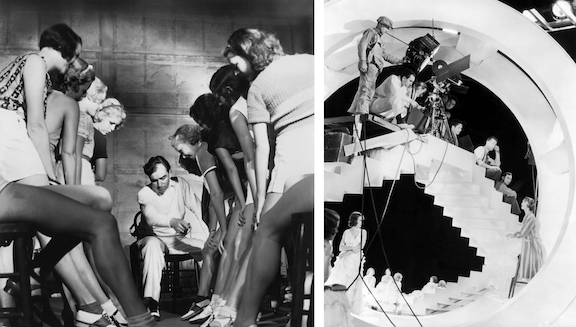
SOMEONE HAS TO DO IT…Busby Berkeley (1895-1976) works with dancers (left) during the production of 1933’s 42nd Street; right, at work on one of his lavish sets, circa 1930s. (IMDB)

The “harmless jingle” Mosher referred to, Harry Warren and Al Dubin’s “Lullaby of Broadway,” received an Oscar for Best Original Song (it also gave me an earworm for a week).
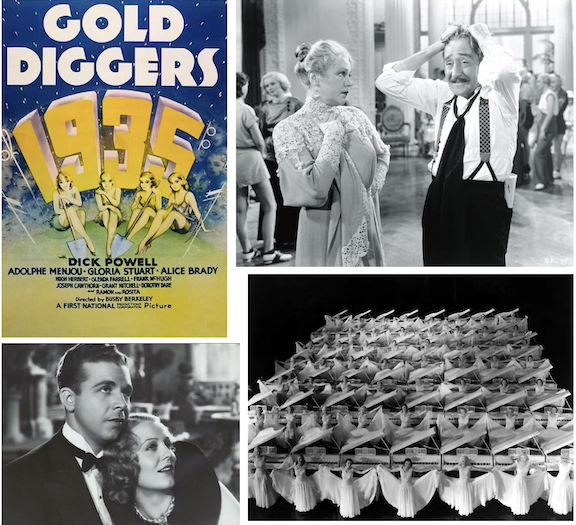
GOLDEN GIRLS…Clockwise, from top left, Alice Brady as the parsimonious Matilda Prentiss and Adolphe Menjou as the conniving Russian dance director Nicolai Nicoleff in Gold Diggers of 1935; a scene from the dancing pianos sequence; Dick Powell and Gloria Stuart as the film’s sweethearts. (Wikipedia/YouTube/IMDB)

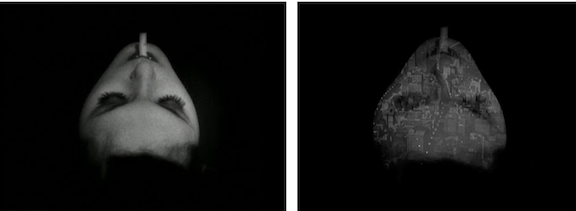
Amid the frivolity, Mosher noted the juxtaposition of the jingly “Lullaby of Broadway” with the haunting, two-minute sequence of Wini Shaw singing “Lullaby” as her disembodied face emerges from the blackness toward the viewer.

The scene continues as the woman (Shaw) turns onto her back, her head slowly dissolving into the nighttime city…after a raucous, mass tap-dancing scene, she falls to her death, and the sequence is reversed, her face disappearing into the blackness. The blog Acidemic gives an interesting take on this part of the film, which is more reminiscent of a German avant-garde film than Berkeley’s usual fare…
(YouTube)

…Mosher found the scene “terrifying.” Perhaps Shirley Temple helped calm his nerves with her precocious antics in The Little Colonel

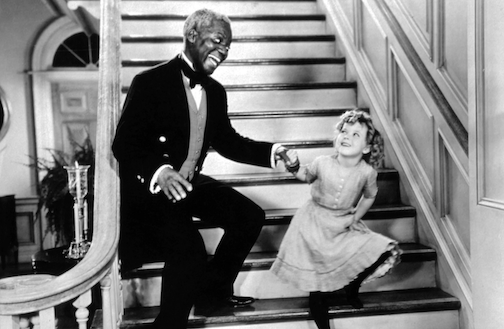
NO FLOATING HEADS HERE…Shirley Temple and Bill Robinson doing the famous staircase dance in The Little Colonel (1935). (TCM)

 * * *

Up In Smoke

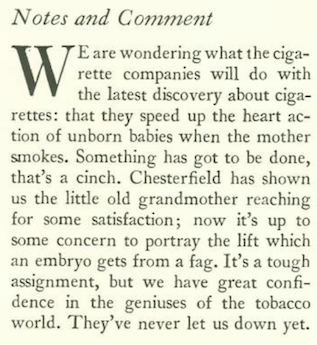
In “Notes and Comment” E.B. White considered the possibility that cigarette smoking might be harmful to unborn babies, and wryly suggested that embryos could replace grandmothers as a new growth market for big tobacco:
…White referred to the advertisement below, which appeared in the Feb. 9, 1935 issue of The New Yorker:

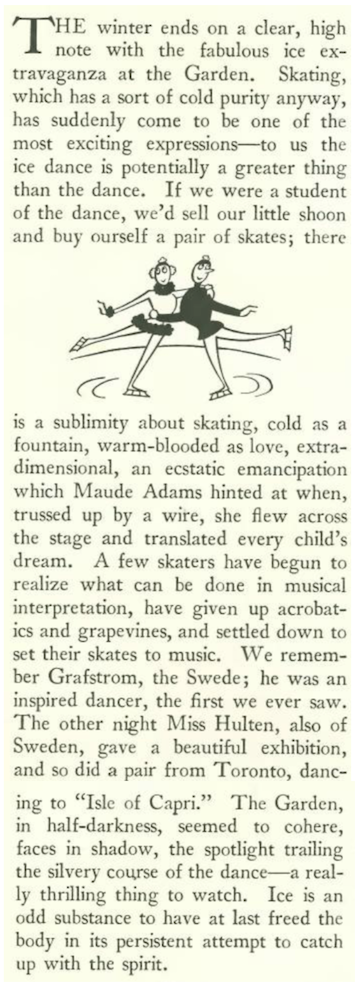
…White also commented on his recent visit to Madison Square Garden’s winter skating carnival…
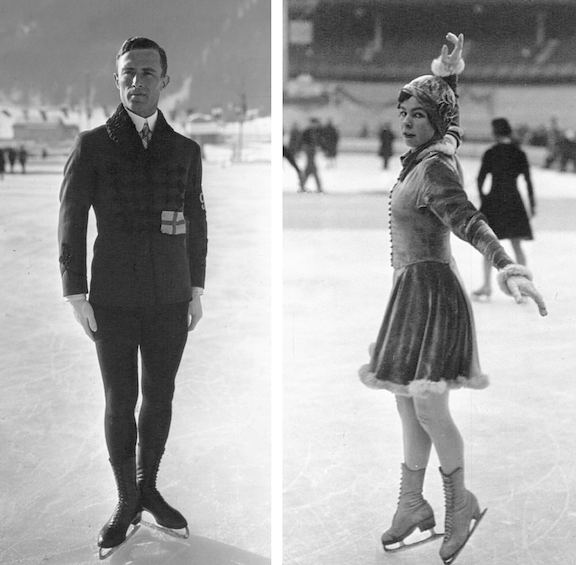
THE DOUBLE AXEL was still thirteen years in the future when Swedish skaters Gillis Emanuel Grafström (left) and Vivi-Anne Hultén delighted E.B. White at Madison Square Garden. Photos are from 1924 and 1932, respectively. (Wikipedia)

 * * *

Prescience of Mind

We have more from E.B. White, this time in a humorous piece titled “The Dove’s Nest,” in which White took a poke at the most influential newspaper editor in the country, Arthur Brisbane. A close friend of William Randolph Hearst, Brisbane essentially ran Hearst’s newspaper empire. The New Yorker often ridiculed Hearst’s (and Brisbane’s) jingoistic approach to the news that included giant headlines warning of war. Excerpts:

William A. Swanberg, author of the 1961 biography Citizen Hearst, described Brisbane as “a one-time socialist who had drifted pleasantly into the profit system…in some respects a vest-pocket Hearst–a personal enigma, a workhorse, a madman for circulation, a liberal who had grown conservative, an investor.”
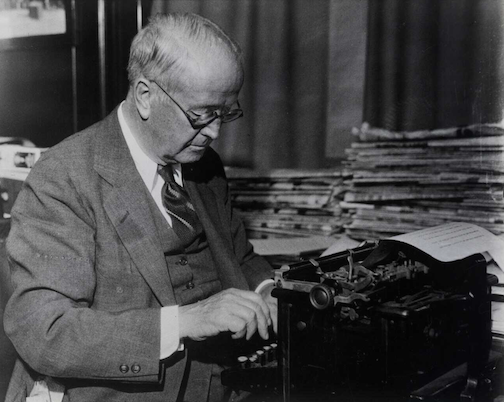
DAMN THOSE TORPEDOES…Arthur Brisbane in 1933. His grandson, Arthur S. Brisbane, now retired, served as public editor of The New York Times from 2010 to 2012. (credo.library.umass.edu)

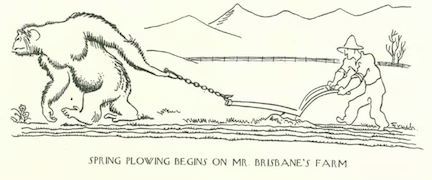
The New Yorker continued to take jabs at Brisbane in the following issue (March 30). Brisbane owned a large estate (including a horse farm) in New Jersey that he made available to New Deal work programs during the Depression. I suppose this Al Frueh cartoon was some kind of reference to that…
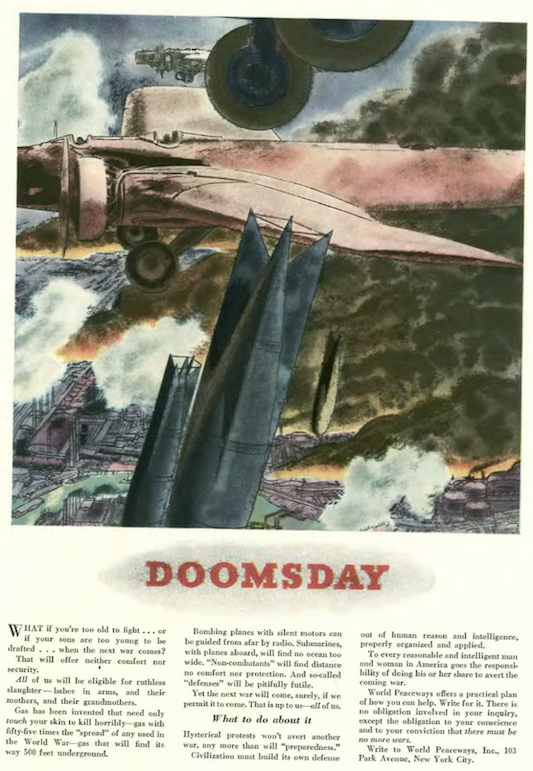
…also in the March 30 issue was this ad from World Peaceways, which raised alarms about possible war and bombs raining down from the sky…
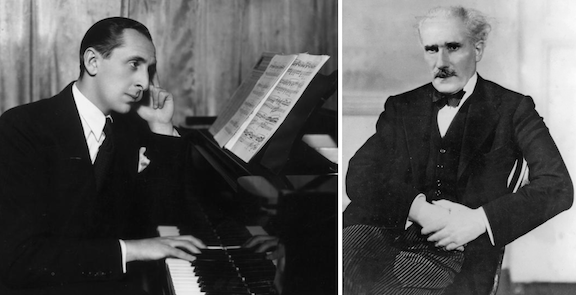
…back to the March 23 issue, where we find the calming strains of a Brahms concerto at Carnegie Hall, conducted by Arturo Toscanini with some support from his son-in-law, Vladimir Horowitz

MAY I CALL YOU DAD?…Not likely something said by young Vladimir Horowitz, left, to father-in-law Arturo Toscanini. (WQXR/Britannica)

 * * *

From Our Advertisers

Beginning in 1934 the makers of Old Gold cigarettes hired pin-up artist George Petty to create a series of ads featuring a homely, clueless sugar daddy and his leggy mistress…here he turns the tables, introducing a “Pudgy Wudgy” matron putting the moves on a handsome hosiery salesman…
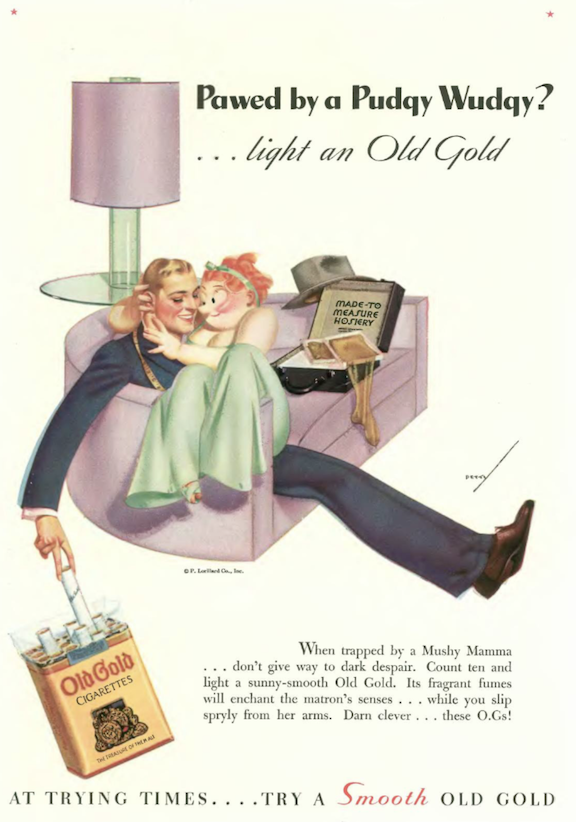
…this Petty ad appeared in the Feb. 9, 1935 issue of The New Yorker

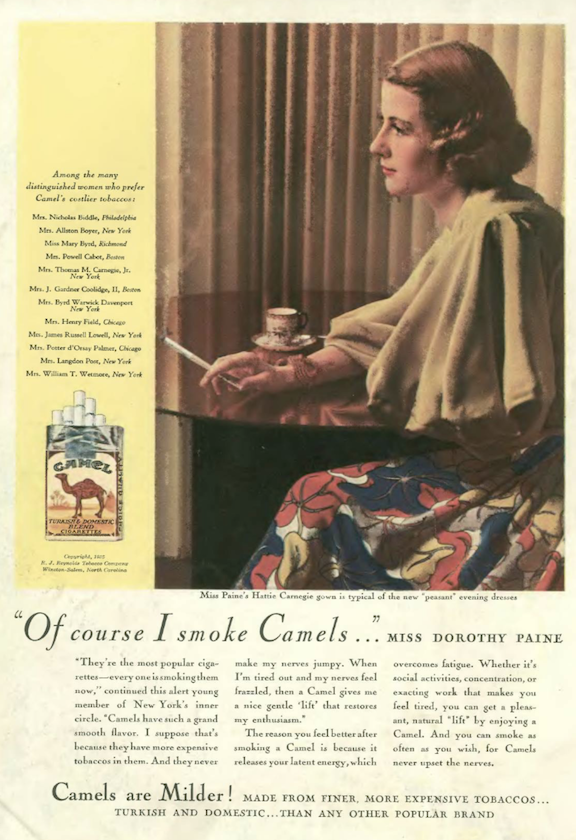
…the makers of Camels continued their campaign of “distinguished women” who enjoyed their product…here we have a former debutante, Dorothy Paine, an “alert young member of New York’s inner circle.” Not much of a record of Dorothy, who married a man named Walter H. Sterling in 1935…apparently they moved to Phoenix and bought up property in the Southwest…
…the makers of General Tire offered this grim assessment of tire safety…the lad seems to be a mere investment of time…

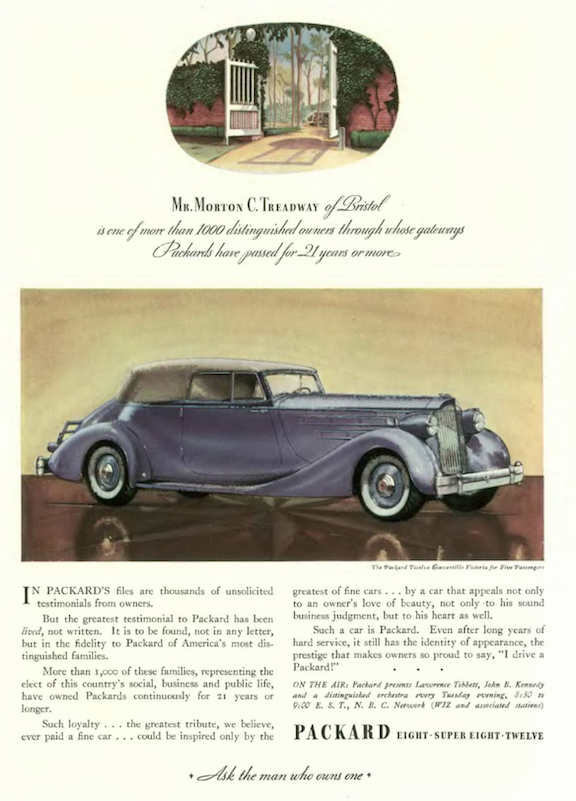
…although prestige brands suffered mightily during the Depression, the folks at Packard were doubling down on the elite status of their automobile…
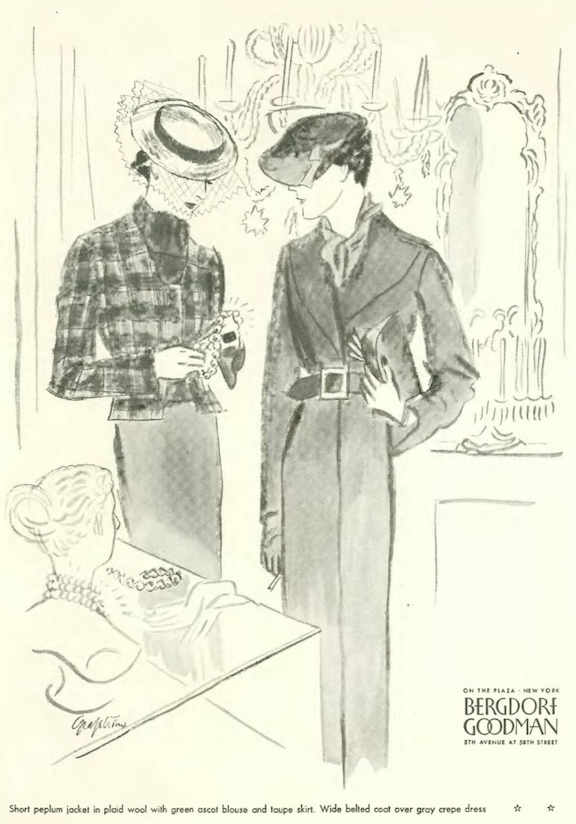
…we’ve seen the work of fashion illustrator Ruth Sigrid Grafstrom before in ads for Spud cigarettes…here she contributes some elegant lines to a spot for Bergdorf Goodman (is the woman on the right smoking a Spud?)…
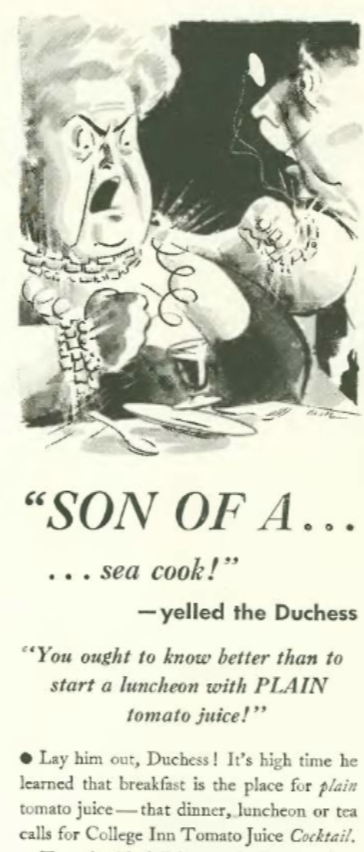
…here’s the Duchess again, still blowing her top over College Inn tomato juice…just look at her clenched fists…that fop with a monocle looks like he just took a left hook to the chops…
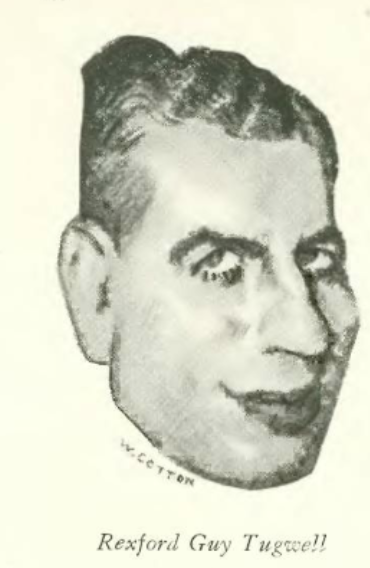
…on to our illustrators, William Cotton created this caricature of Rexford Guy Tugwell for Russell Lord’s two-part profile…Tugwell and President Franklin D. Roosevelt created the Resettlement Administration, which relocated rural unemployed to “Greenbelt Cities” near urban job markets. Critics called him “Rex the Red” for his social engineering experiments, and after he was forced out of federal government, Tugwell was appointed in 1938 as the first director of the NYC Planning Commission. Naturally, he would butt heads with Robert Moses…
…illustrator and painter Maurice Freed kicked off the calendar section…
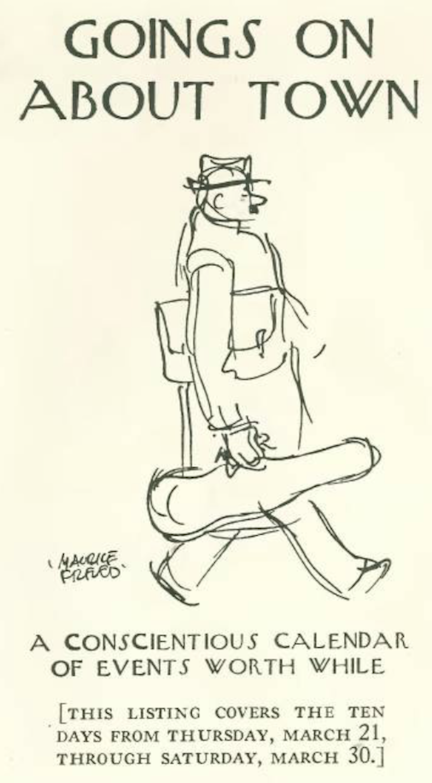
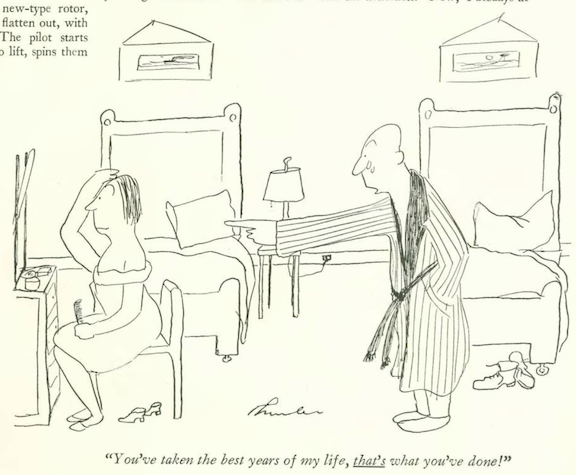
…bookended on the bottom of page 4 by one of James Thurber’s most recognized drawings…

…Thurber again, and more woes between the sexes…
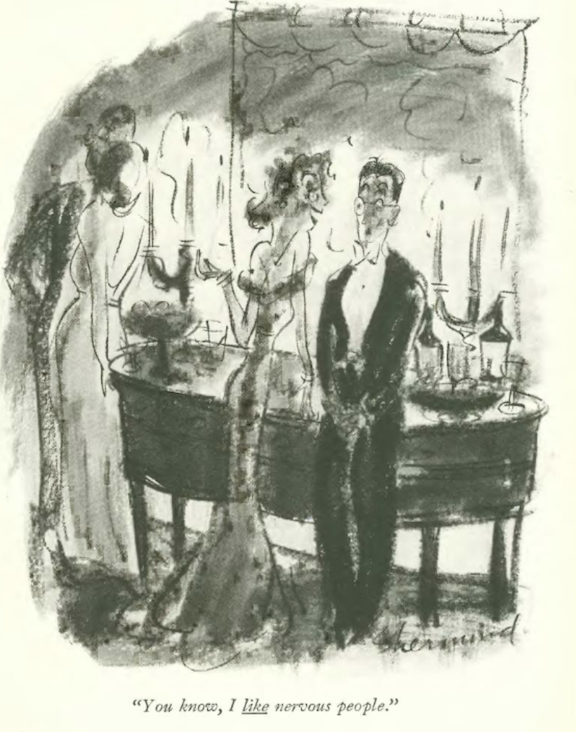
…we continue with our cartoonists by looking in on Barbara Shermund

George Price found a new wrinkle for his recurring floating man cartoon…

Helen Hokinson graced page 19 with scenes from the opera…
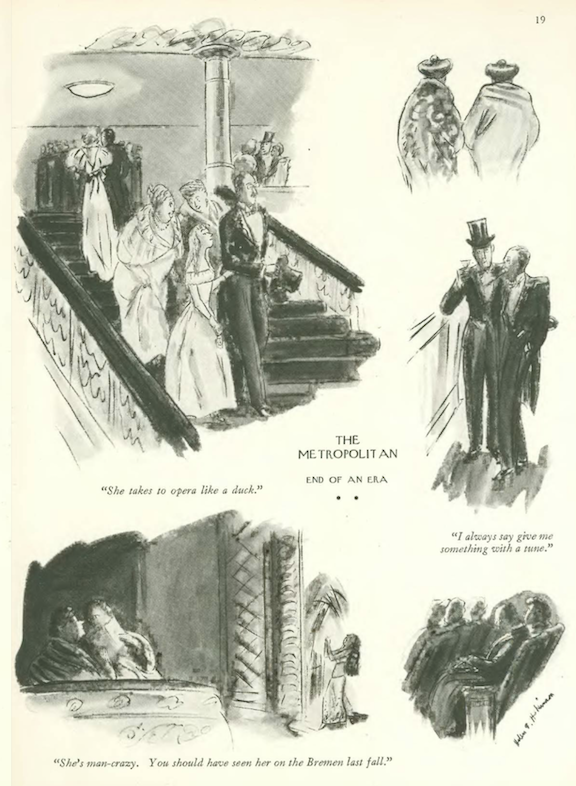
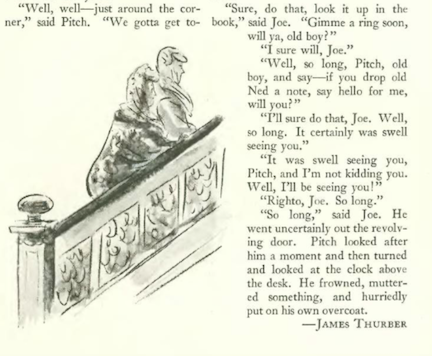
…leaving an extra drawing stranded on page 18…
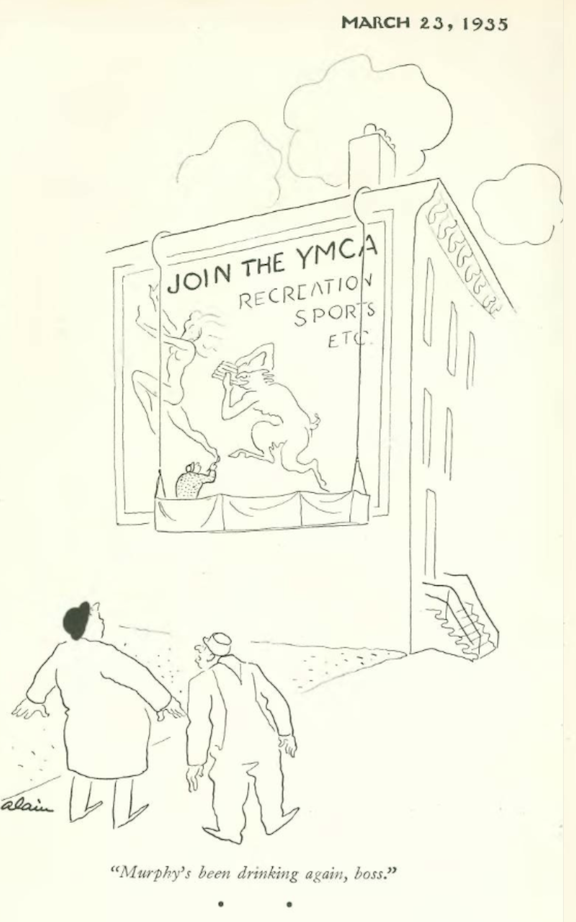
Alain offered a new twist on the promotion of physical fitness…
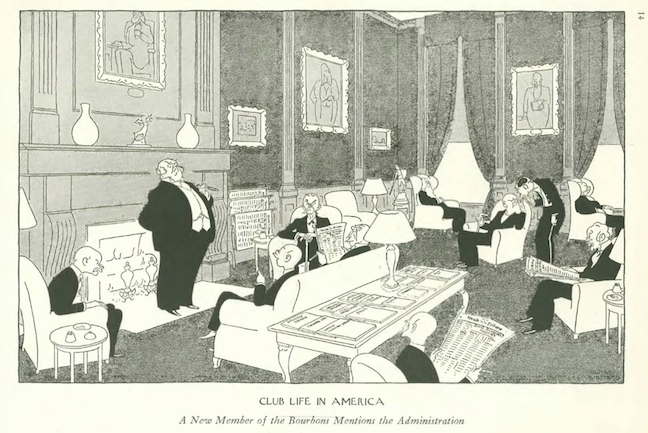
Gluyas Williams brought us to the stuffy confines of club life (the cartoon was originally featured vertically)…
…and we close with Richard Decker, and a lucky draw at the IRS…

Next Time: The Lighter Side of George Grosz…

Bojangles

Above: Bill "Bojangles" Robinson demonstrating his famous stair dance, which involved a different rhythm and pitch for each step. At left, Robinson in Broadway's Blackbirds of 1928; at right, publicity photo circa 1920s. (Vandamm collection, New York Public Library/bet.com)

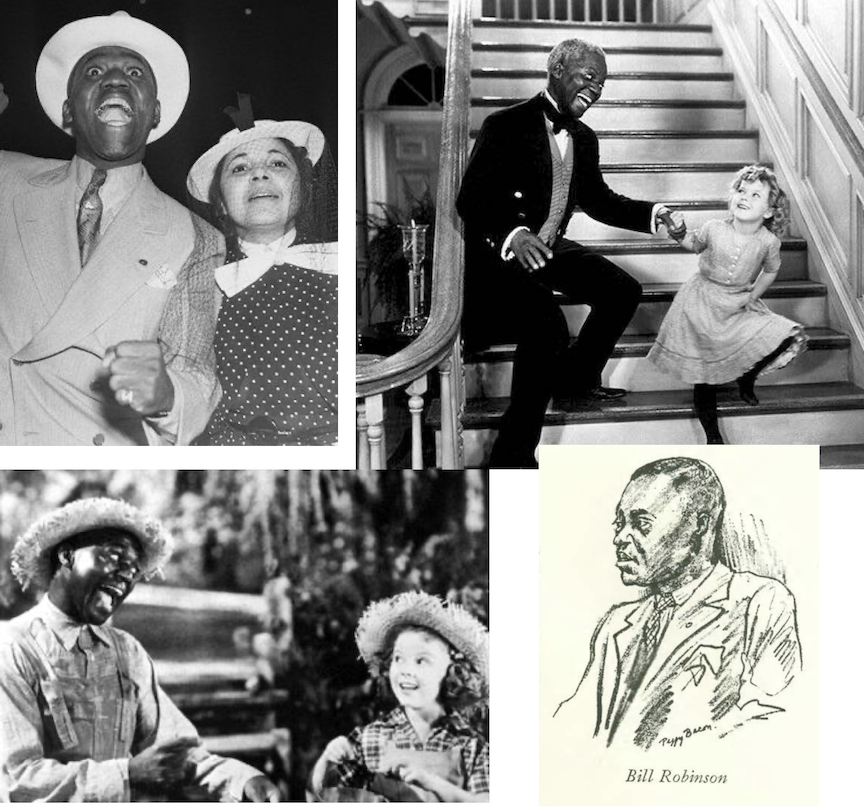
Bill “Bojangles” Robinson (1878–1949) is considered one of the greatest tap dancers of all time, introducing a style of remarkable lightness and complexity that was perhaps best represented by his famous stair dance.

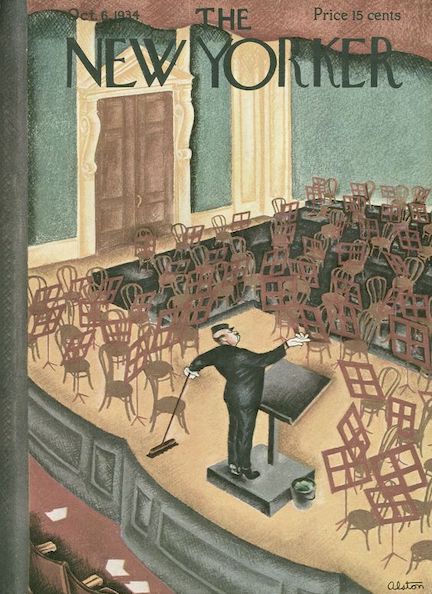
Oct. 6, 1934 cover by Charles Alston. This was Alston’s only New Yorker cover. Active in the Harlem Renaissance, Alston was also a painter, sculptor and muralist (see more on Alston at the conclusion of this post).

St. Clair McElway wrote about the 57-year-old Robinson in a two-part profile that examined his personal life and habits, including his propensity for getting shot. Two brief excerpts:

The New Yorker profile coincided with Robinson’s rising career in films, including four he made with Shirley Temple. For the 1935 film The Little Colonel, Robinson taught the stair dance to the child star, modifying his routine to mimic her movements. Robinson and Temple became the first interracial dance partners in Hollywood history (however, the step dance scene was cut from the film shown to Southern audiences). Temple and Robinson, who became lifelong friends, also appeared together in 1935’s The Littlest Rebel, 1938’s Rebecca of Sunnybrook Farm and 1938’s Just Around the Corner. 

DANCING WITH THE STAIRS…Bill Robinson was also known as Bojangles, a nickname from his childhood in Richmond, Virginia. Clockwise, from top left, with his second wife Fannie Clay in 1933; performing the stair dance with Shirley Temple in The Little Colonel (1935); profile illustration by Peggy Bacon; Robinson with Temple in 1938’s Rebecca of Sunnybrook Farm. (blackpast.org/Wikipedia)

Robinson is remembered for his generous support of fellow dancers including Fred Astaire, Eleanor Powell, Lena Horne, Sammy Davis Jr and Ann Miller, as well as his support for the career of 1936 Olympics star Jesse Owens.

FAST IN BOTH DIRECTIONS…Robinson befriended Jesse Owens (left) after the track & field great returned from the 1936 Olympics (where Owens won four golds). Known for his generosity to his friends, Robinson helped Owens establish a successful post-Olympics career. Robinson himself was also something of a runner, having set the world record for running backward in 1922 (100 yards in 13.5 seconds). (Public domain image)

Although Robinson was the highest paid black performer of his time, his generosity with friends as well as his gambling habits left him penniless at his death from heart failure in 1949. Longtime friend Ed Sullivan paid for Robinson’s funeral, and more than 30,000 filed past his casket to pay their respects.

I’VE STILL GOT IT…Bill Robinson with Lena Horne in 1943’s Stormy Weather, a film loosely based on Robinson’s own life. (MoMA)

 * * *

In a Romantic Mood

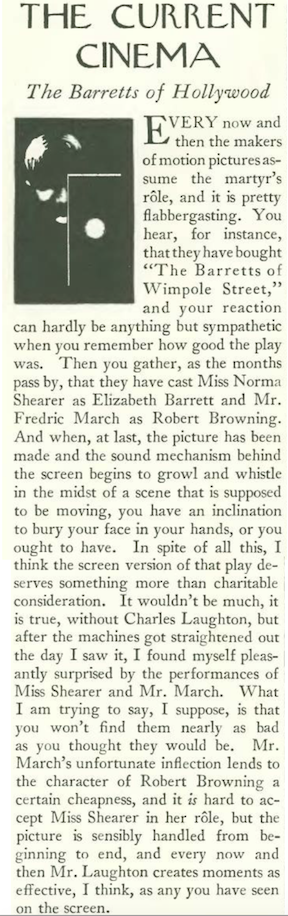
That is how St. Clair McKelway found Hollywood in two of its latest offerings, The Barretts of Wimple Street and Caravan. To his relief, he found the Hollywood version of Barretts quite “sensible”…

LET’S BE SENSIBLE…The Barretts of Wimpole Street (1934) starred Fredric March and Norma Shearer in the lead roles. (TCM)

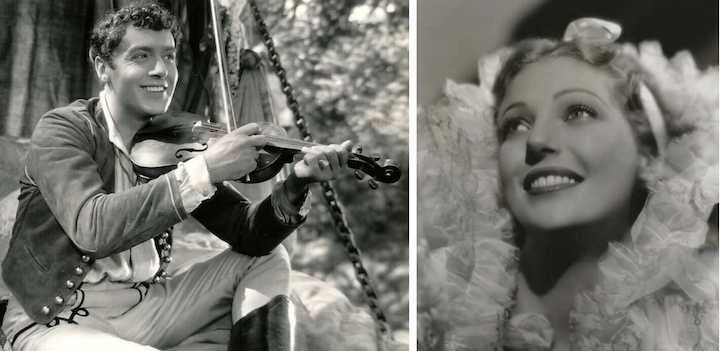
…as for Caravan, McKelway wrote that he’d “never seen a picture with so much grinning in it.” He found the “peculiar, unreal gleam” of the actors’ teeth a real distraction in closeup shots.

THAT PEPSODENT SMILE…Charles Boyer and Loretta Young showed off their pearly whites in 1934’s Caravan. (IMDB/TCM)

 * * *

From Our Advertisers

The Oct. 6 issue opened with a study in contrasts: an image of two Civil War veterans swapping stories over whiskey on the inside front cover, paired with an illustration of a lithe model sheathed in the latest fashion from Bergdorf…

…the folks at Campbell’s continued to suggest that their canned soup was a delight of the elite…

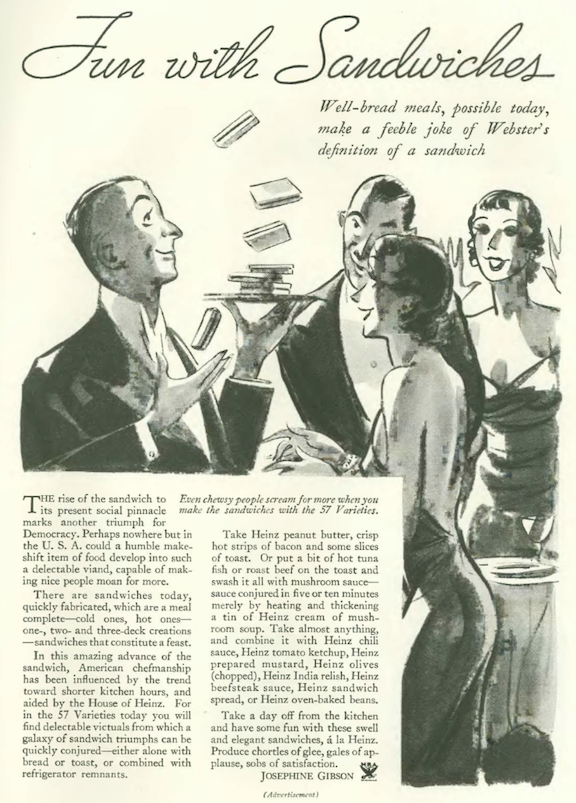
…Heinz took a similar tack, showing the smart set having fun with their sandwich spreads…

…Lord & Taylor touted its “tomorrow look” in furniture…

…R.J. Reynolds continued its series of “distinguished women who preferred Camel’s “costlier tobaccos,” adding to their growing list a the “charming debutante” Evelyn Cameron Watts, who later became Evelyn Watts Fiske (1915–1976)…

…in contrast to Camel’s fashionable ads, the upstart menthol brand Kool offered a series of cheap, back-page ads featuring a smoking penguin, here in the Halloween spirit (detail)…

…another recurring back page ad was this weird spot from Satinmesh, a product that apparently helped close a woman’s “gaping pores”…those pores apparently prompted one man to ponder the eternal why

…on to our cartoonists, we begin with a two-page spot by Carl Rose

James Thurber spiced up a game of ping-pong…

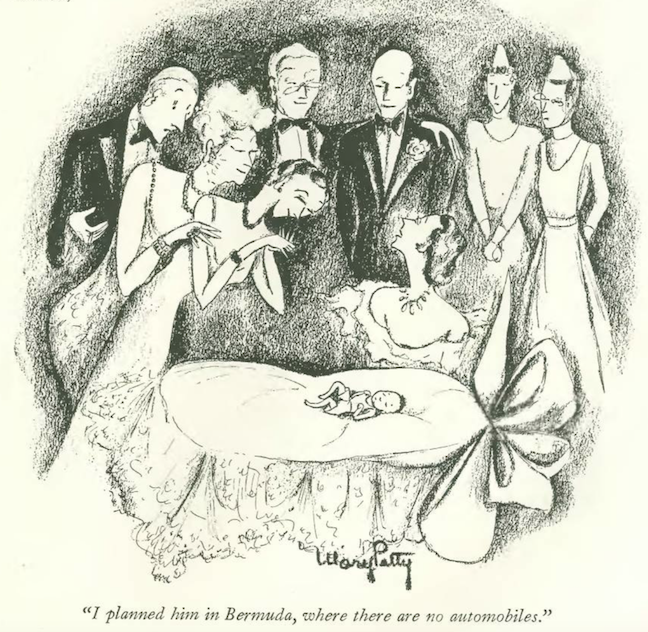
Mary Petty explored the miracle of birth…

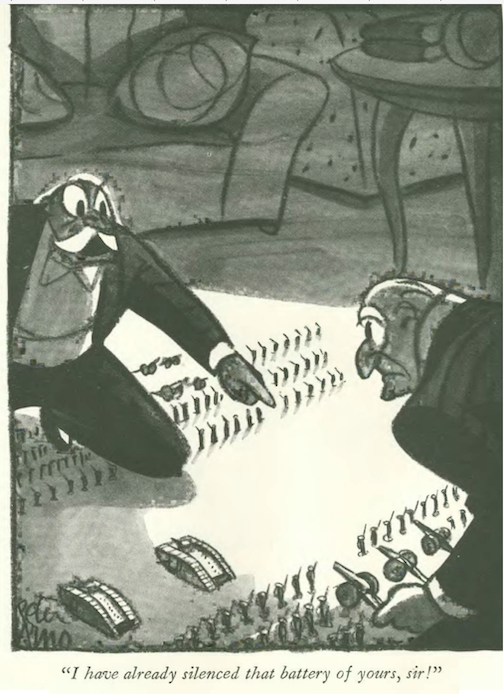
Peter Arno discovered you’re never too old to play with toys…

Garrett Price offered a young man’s perspective on a father’s avocation…

Alain (Daniel Brustlein) gave us a disappointed plutocrat on vacation in Mexico…

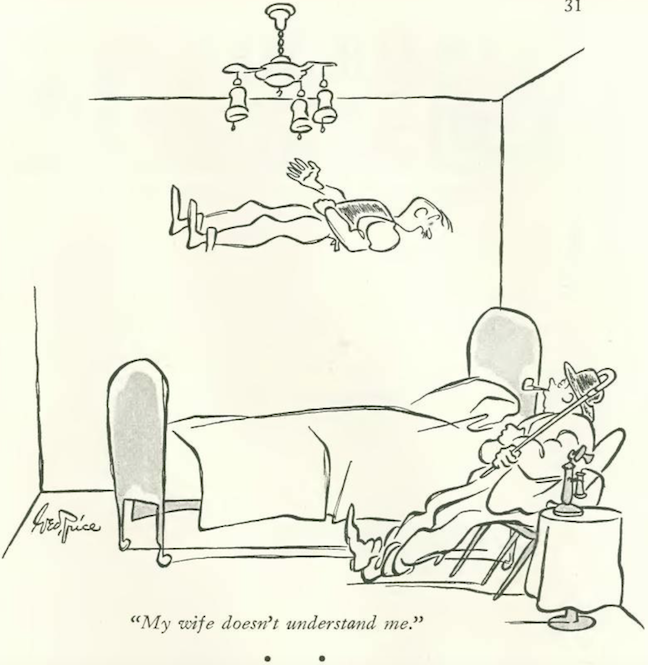
George Price continued to mine the humor of his “floating man” series…

…and contributed a second cartoon that featured some office hijinks…

…and Otto Soglow returned without The Little King, offering in its stead the closest thing to royalty in America…

Before we sign off, a note on the Oct. 6 cover artist, Charles Henry Alston (1907–1977). A Harlem-based painter, sculptor, illustrator, muralist and teacher, Alston was active in the Harlem Renaissance and was the first Black supervisor for the Works Progress Administration’s Federal Art Project. In 1990, Alston’s bust of Martin Luther King Jr. became the first image of an African American displayed at the White House.

Clockwise, from top left, Charles Henry Alston’s 1970 bust of Martin Luther King Jr; Walking 1958; Andrew Herman photo of Alston, 1939; Midnight Vigil, 1936. (Smithsonian/Wikipedia/Columbia.edu)

For more on Charles Alston, read “The Painter Who Wouldn’t Be Pigeonholed” in Columbia College Today.

Next Time: The Age of Giants…