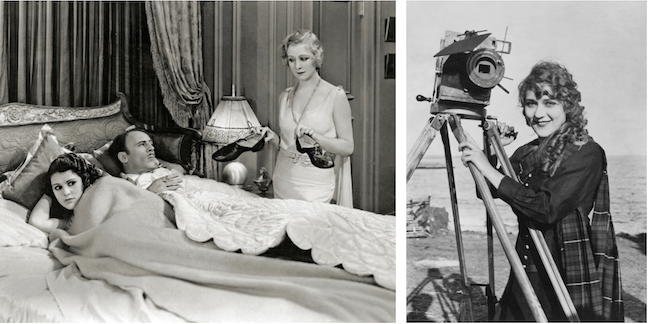
Above: Mary Pickford (right, from 1916) spoke out against salacious content in films, such as this scene from 1930's Madam Satan. (Wikipedia/mainemedia.edu)
James Thurber seemed to enjoy teasing silent film legend Mary Pickford in her new career as social commentator and author of spiritual articles and books. Having retired from acting in 1933, Pickford was also using her powerful position as a co-founder of United Artists to focus on the moral direction of the film industry.
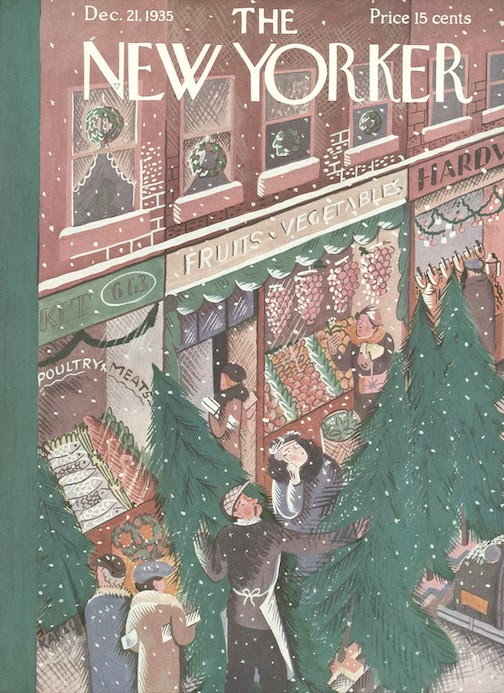
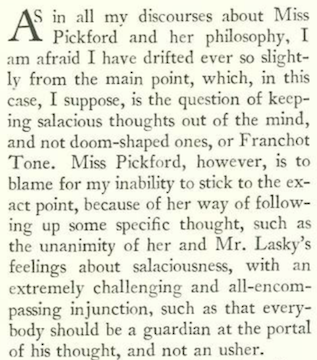
Back in the Sept. 21 issue of The New Yorker, Thurber took a humorous poke at Pickford’s Liberty magazine article on the afterlife, and found more fodder after Pickford, in an interview with the World-Telegram, criticized “salacious” films. “Be a guardian, not an usher, at the portal of your thought,” she advised. Thurber took the bait. Excerpts:
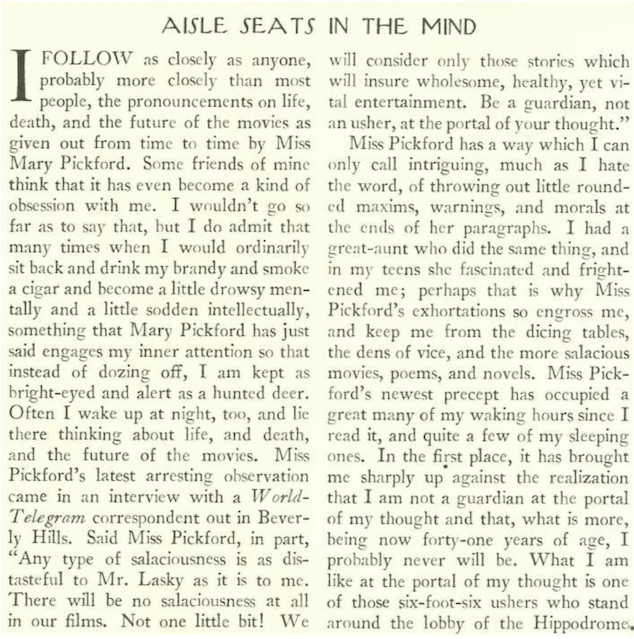
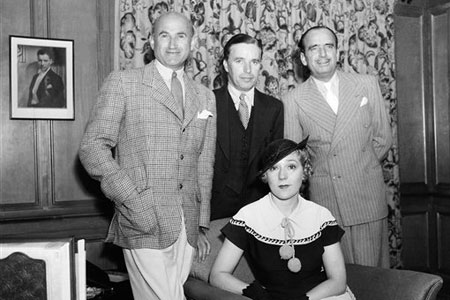
Thurber took particular pleasure in Pickford’s comments regarding the control of one’s dirty thoughts:
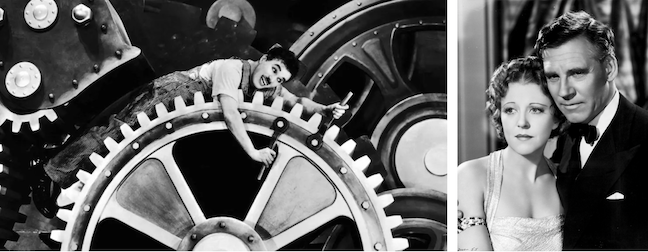
Pickford had a strong ally in the Hays Code, a set of self-imposed censorship guidelines that would keep mainstream studio films relatively free of salacious content for the next thirty years.
* * *
A White Christmas
E.B. White offered holiday greetings to everyone from drinkers of blended whiskey to the makers of red tape (plus a plug for New Yorker subscriptions)…
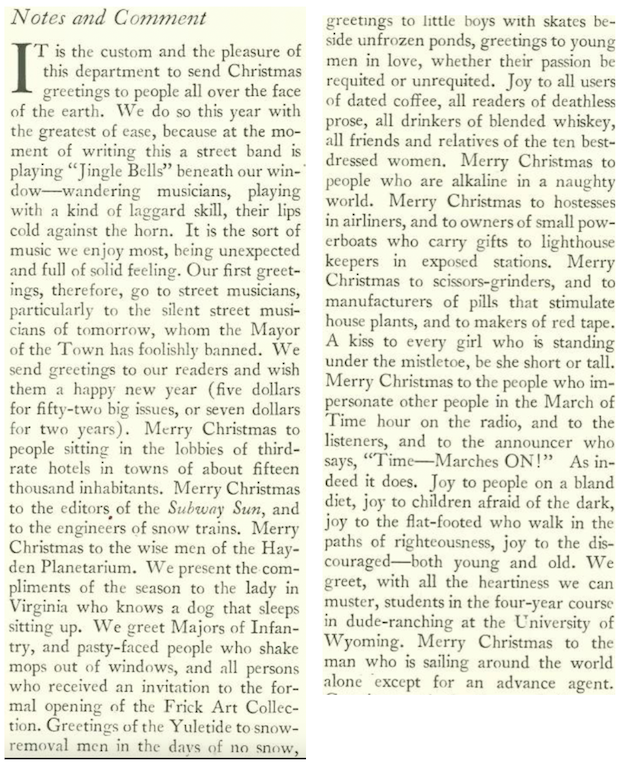

…and concluded with these words…

…Otto Soglow added this bit of spot art to the bottom of White’s “Notes and Comment”…

* * *
A Holiday Tradition
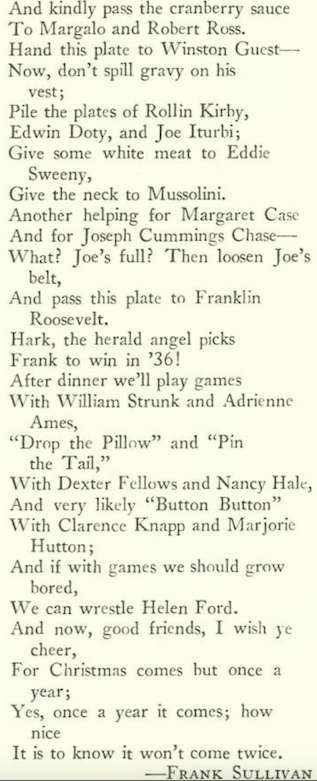
Page 21 featured Frank Sullivan’s annual Christmas poem (he wrote forty-two of them from 1932 to 1974)…
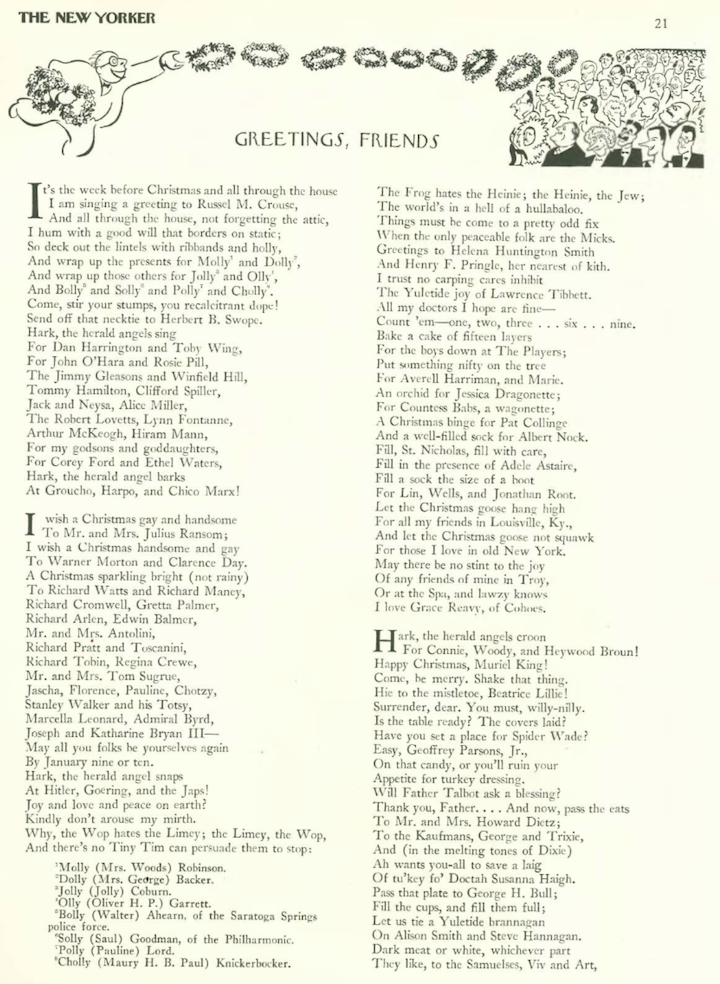
…which continued on page 22…
* * *
Lost In Paradise
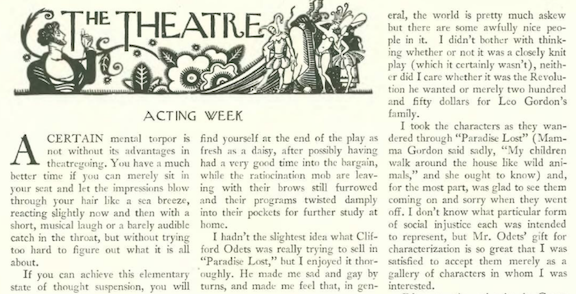
Robert Benchley did the honors as theatre critic for the Dec. 21 issue, enjoying an evening at Longacre Theatre with the richly endowed characters featured in Clifford Odets’ Paradise Lost.
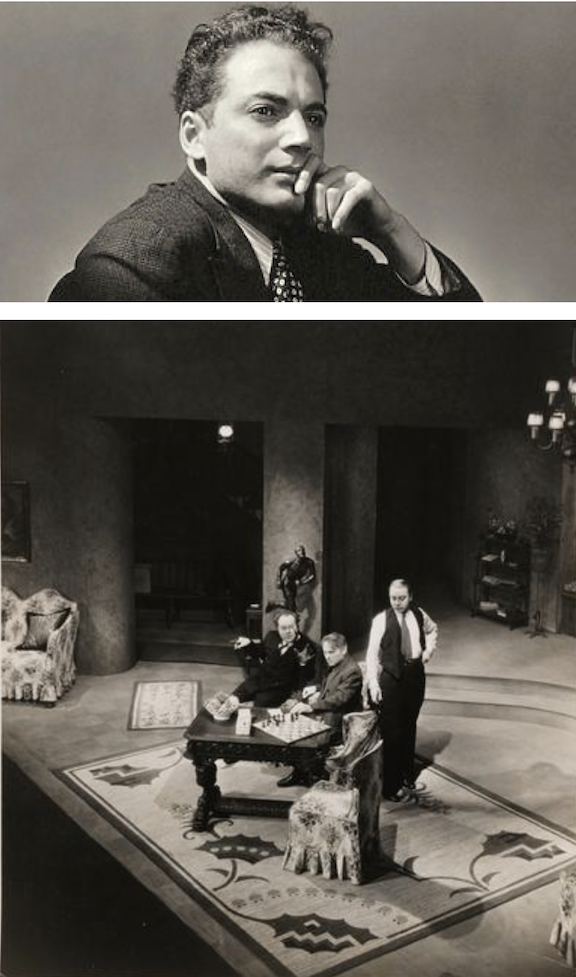
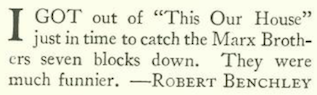
Apparently the rest of the Broadway fare was not so great, as Benchley fled Cort’s Theatre (it featured This Our House, which closed after just two performances) to catch A Night at the Opera with the Marx Brothers.
* * *
At the Movies
Benchley wasn’t the only one enjoying a night at the movies. Critic John Mosher found favor with German actor Emil Jannings’ latest flick, The Making of a King (Der alte und der junge König), calling the film “a sensible picture of the old bully,” namely the father of Frederick the Great.


Mosher found bright moments in Ginger Rogers’ latest film, but would have preferred another pairing with her fellow hoofer, Fred Astaire.
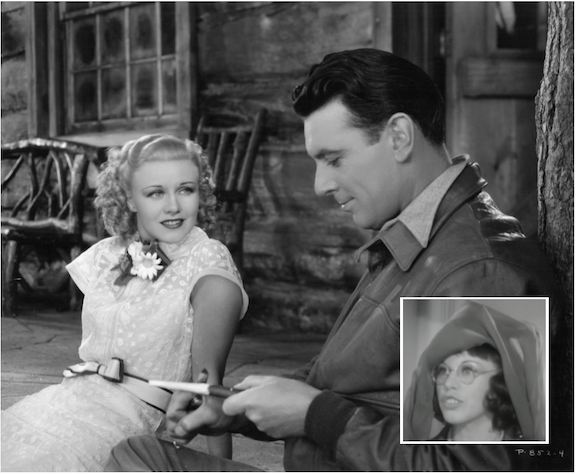
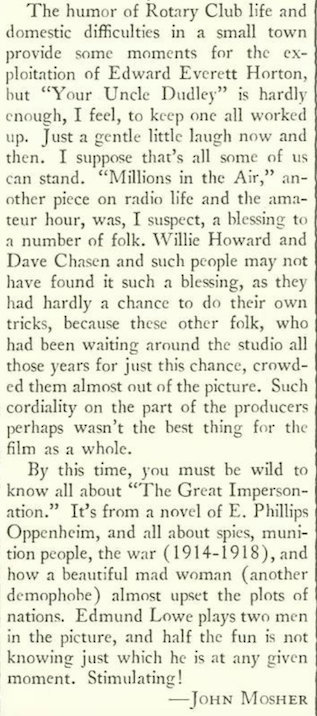
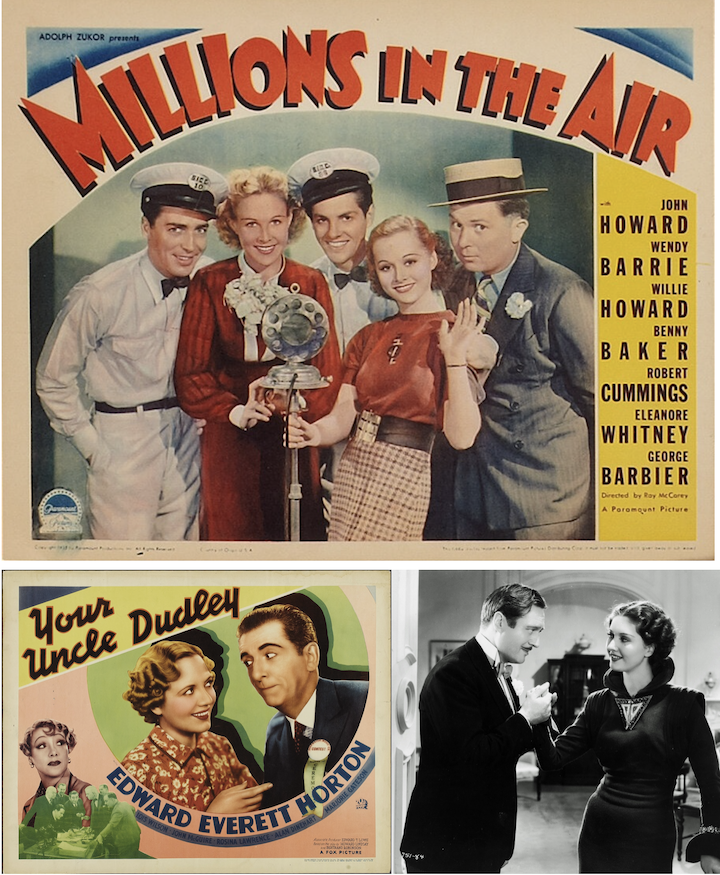
Mosher was stimulated by The Great Impersonation, however, the “cordial” films about small town life and happy radio folk left him less than enthused.
* * *
From Our Advertisers
After touring France in the late 1870s, a New York drugstore owner named Richard Hudnut returned to the States determined to introduce French-style perfumes and cosmetics to American women. He soon transformed his drugstore into an elegant showroom, and in time became the first American to achieve international success in cosmetics…
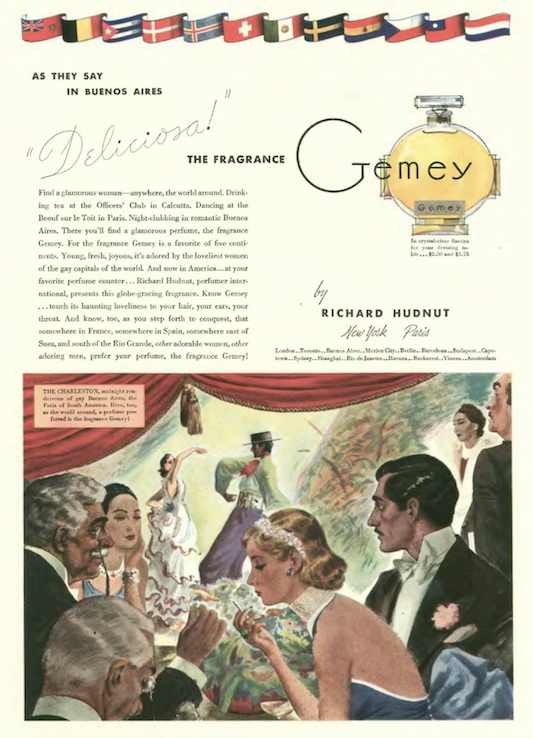
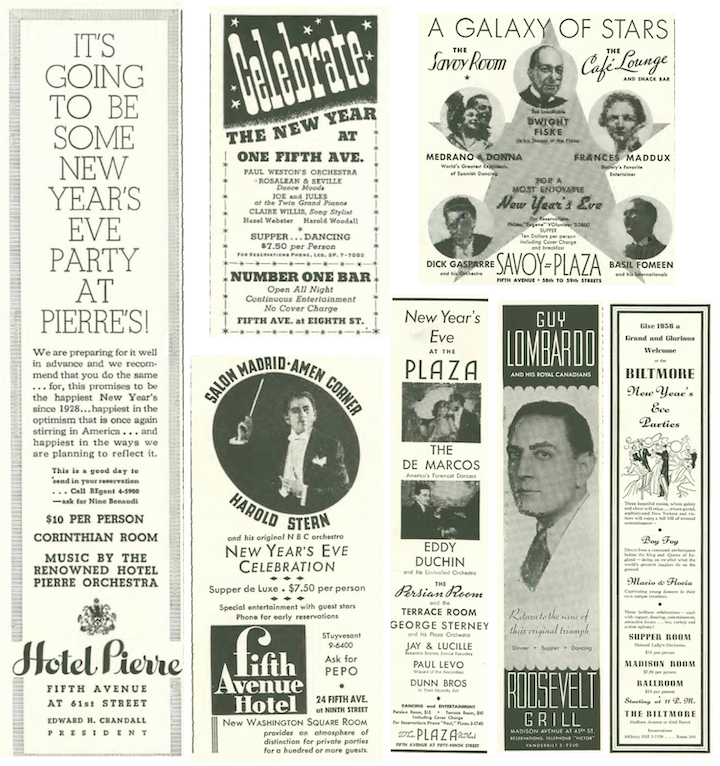
…advertisements for Christmas gifts mostly dropped out of the magazine, and the back of the book was filled with spots touting various New Year’s Eve entertainments…
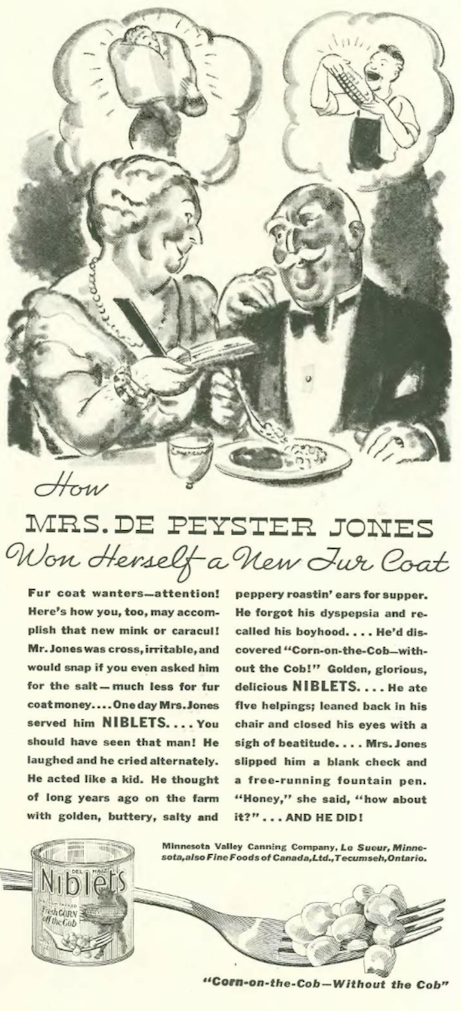
…in this ad from the Minnesota Valley Canning Company (renamed Green Giant in 1950), a robber baron’s humble roots, and his checkbook, are triggered by a can of corn…
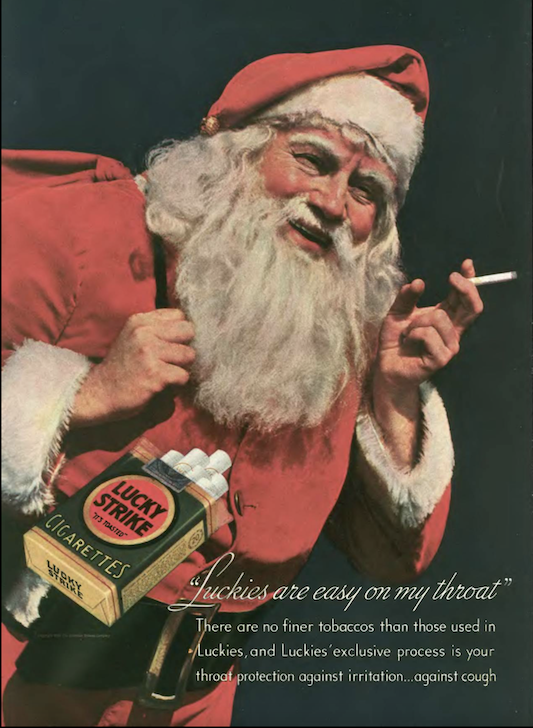
…thanks to the makers of Luckies, Jolly Old St. Nick was dropping more than soot down your chimney on Christmas Eve…
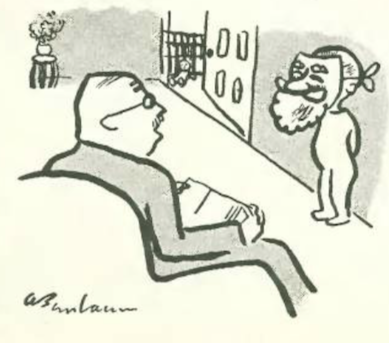
…we kick off our cartoons with this spot illustration by Abe Birnbaum…
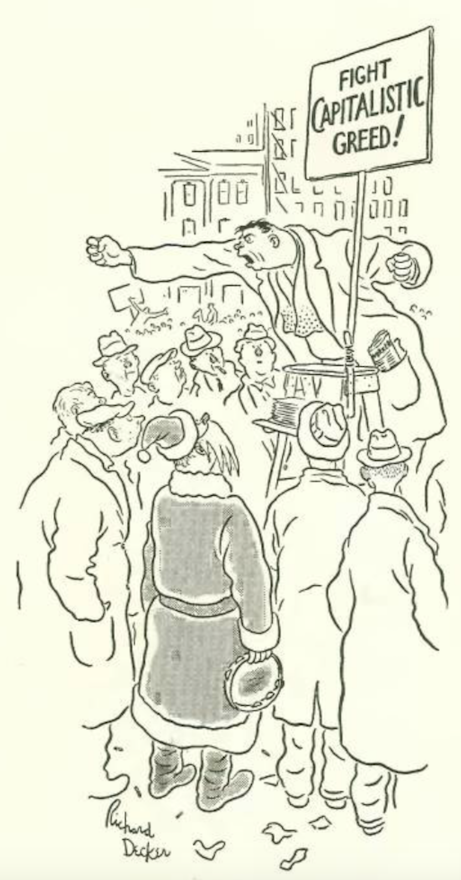
...Richard Decker gave us this caption-less appeal to the masses…
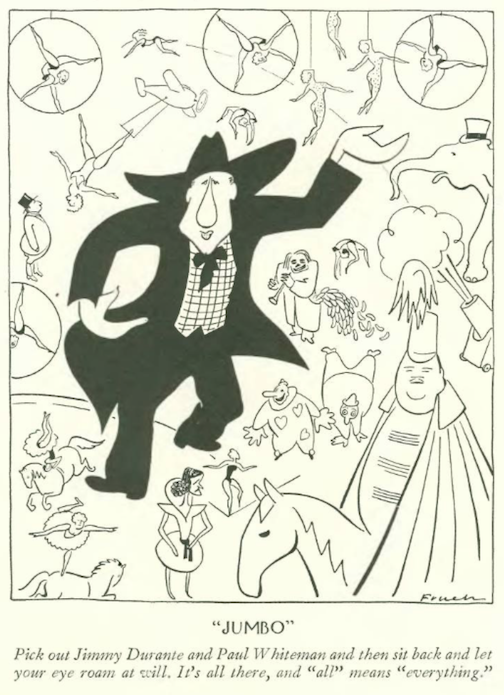
…Al Frueh brightened up the “Theatre” section…
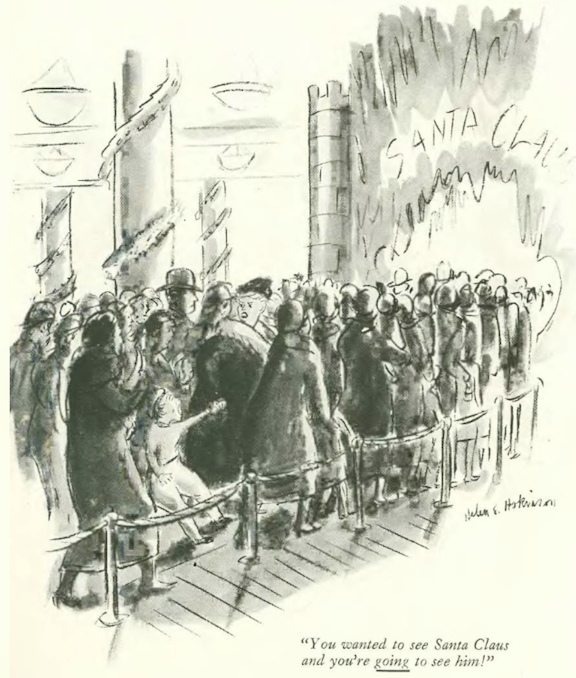
…Helen Hokinson got in line at Macy’s…
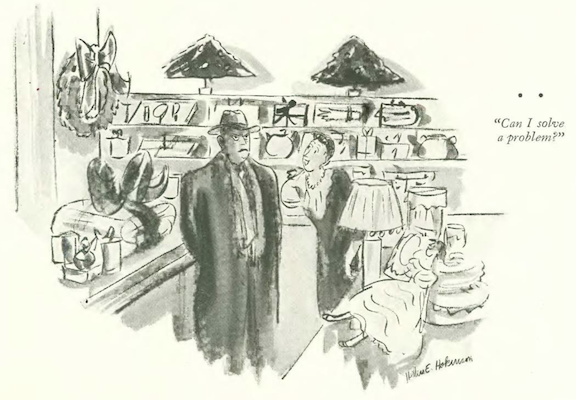
…and found a challenge in the housewares department…(see Summer Pierre’s wonderful tribute to Hokinson and her observational forays into the city with James Reid Parker)…
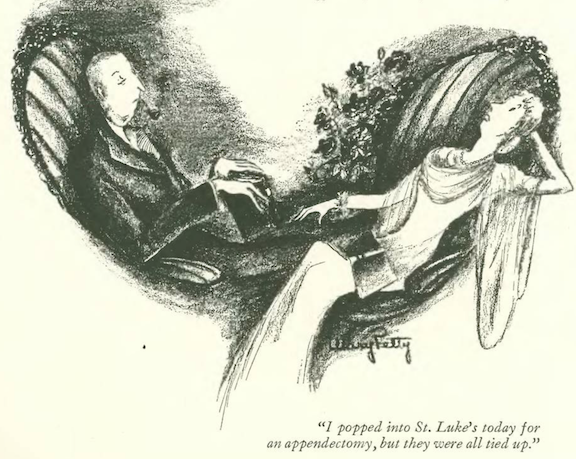
…Mary Petty took the laid-back approach to a medical emergency…
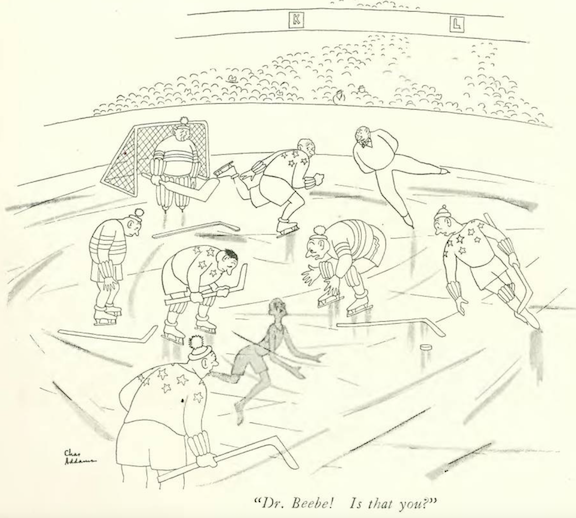
…Charles Addams placed undersea explorer William Beebe in a precarious situation…
…Alan Dunn diagnosed a bad a ticker at a watch shop…

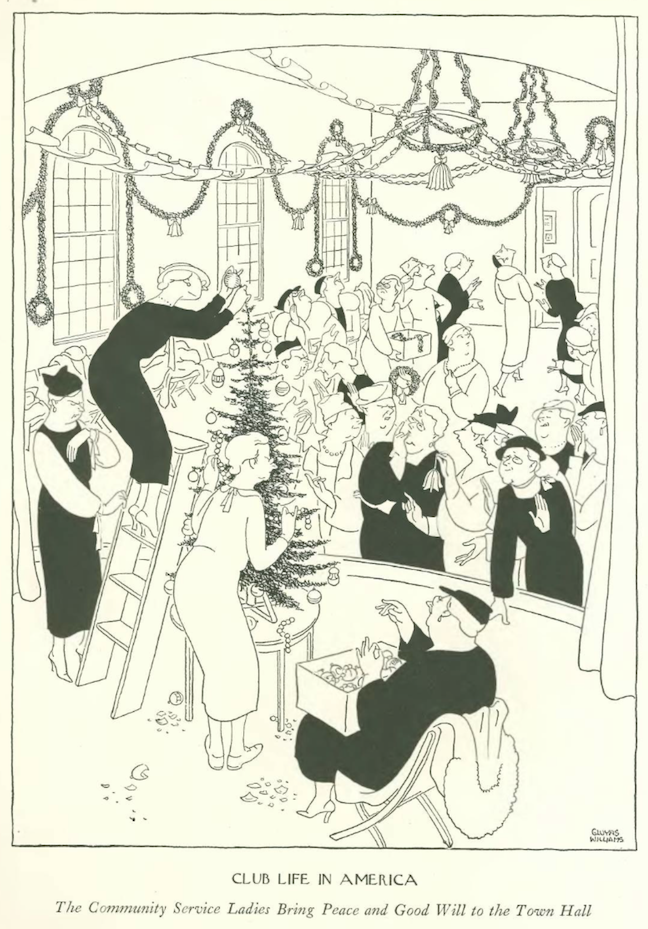
…Gluyas Williams was back with another look at club life…
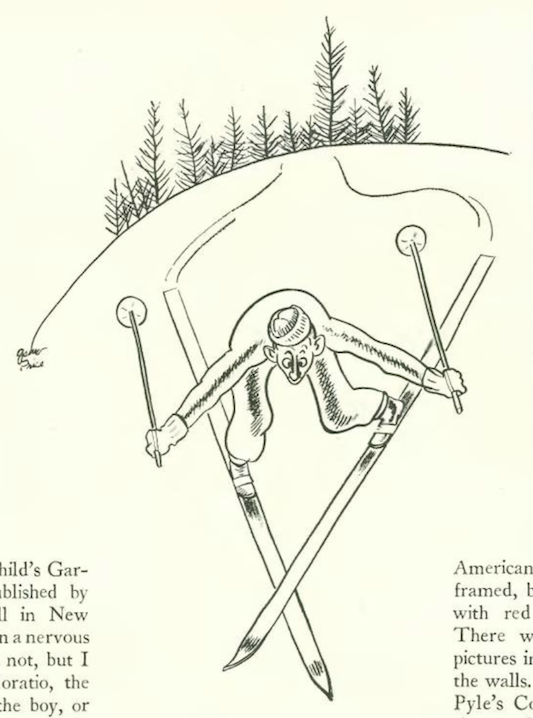
…Garrett Price snowplowed his way onto the page…
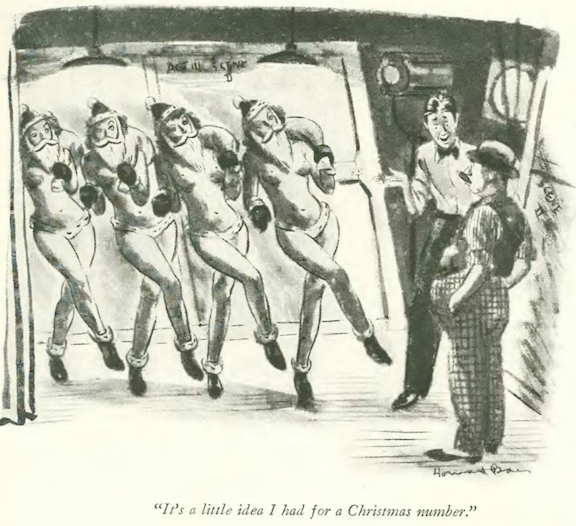
…it seems Howard Baer channeled Peter Arno for this one…
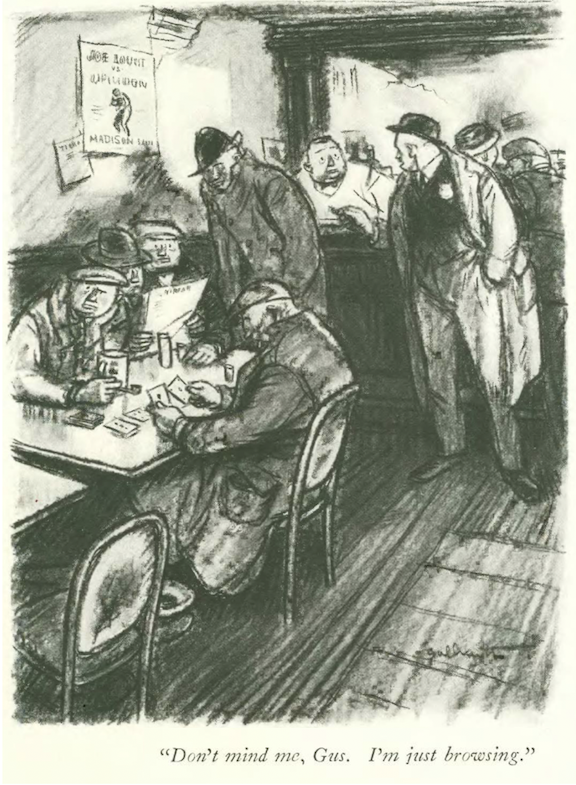
…and we close with William Crawford Galbraith, just doing a little browsing…
Next Time: Fracking the Frick…

 A New Yorker State of Mind
One thought on “Picking on Pickford”