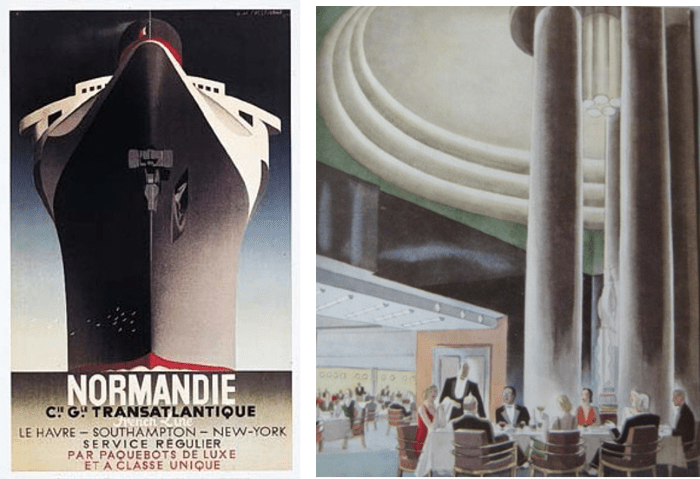
Above: At left, Adolphe Cassandre's famed 1935 depiction of the S.S. Normandie; right, image from a 1935 promotional booklet published by the French Line.
When the S.S. Normandie entered service in 1935, she was the largest and fastest passenger ship afloat, crossing the Atlantic in a little over four days. The ship was so impressive that even the imperturbable Janet Flanner expressed enthusiasm over its launch.

As Paris correspondent, Flanner was giving New Yorker readers a preview of Normandie‘s May 29 maiden voyage from Le Havre to New York City.
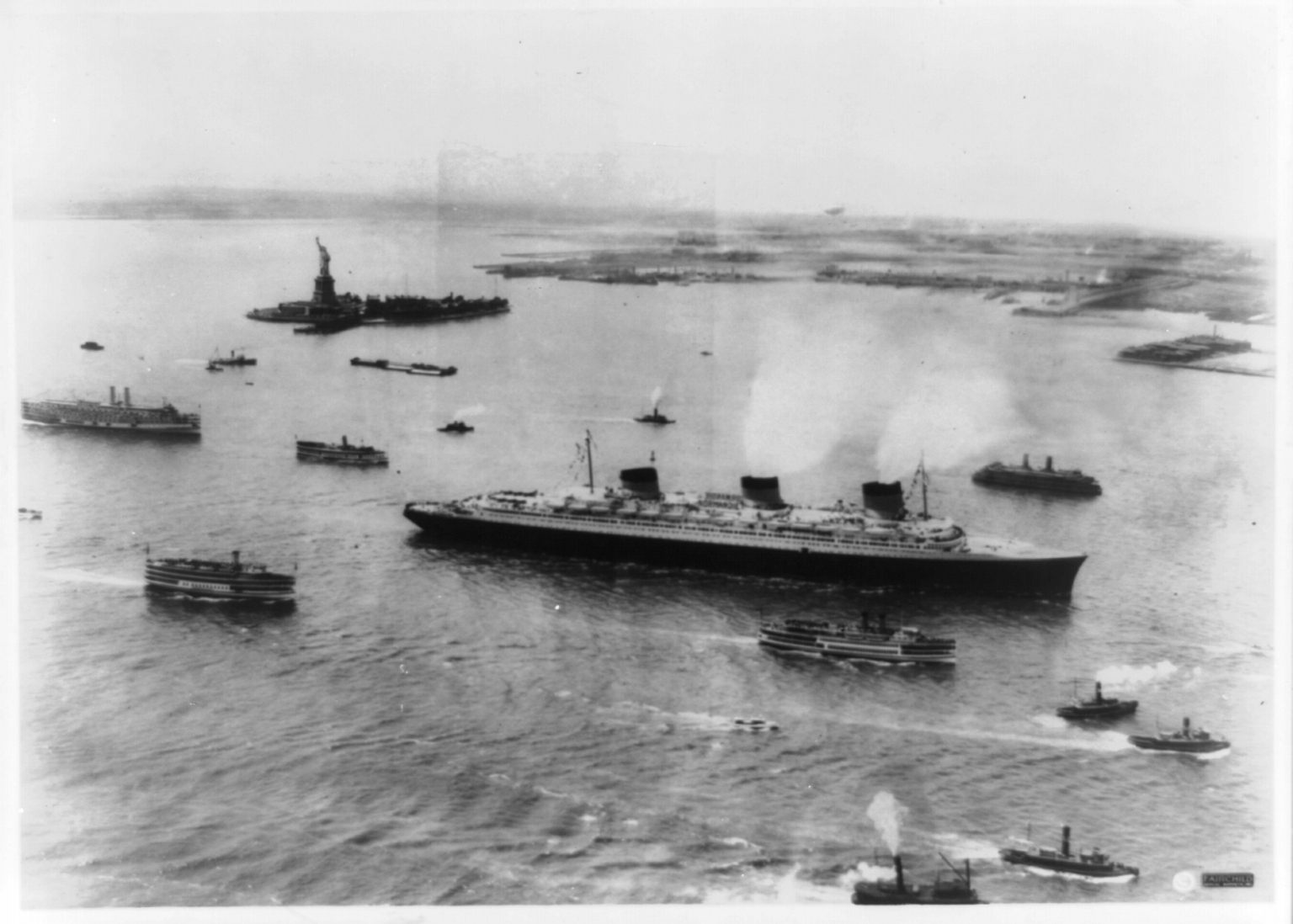

To give New Yorkers some idea of the liner’s size, Flanner noted that the Normandie would stretch from 43rd to 47th Street, and if stood on her stern, would stand nearly 180 feet above the RCA Building at Rockefeller Center.

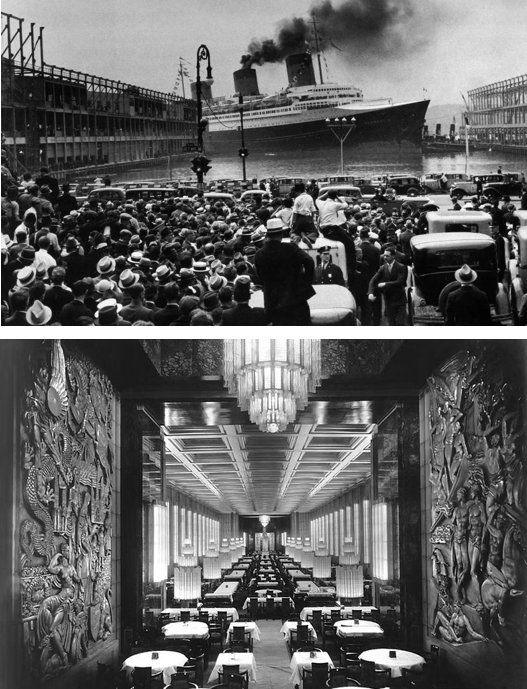
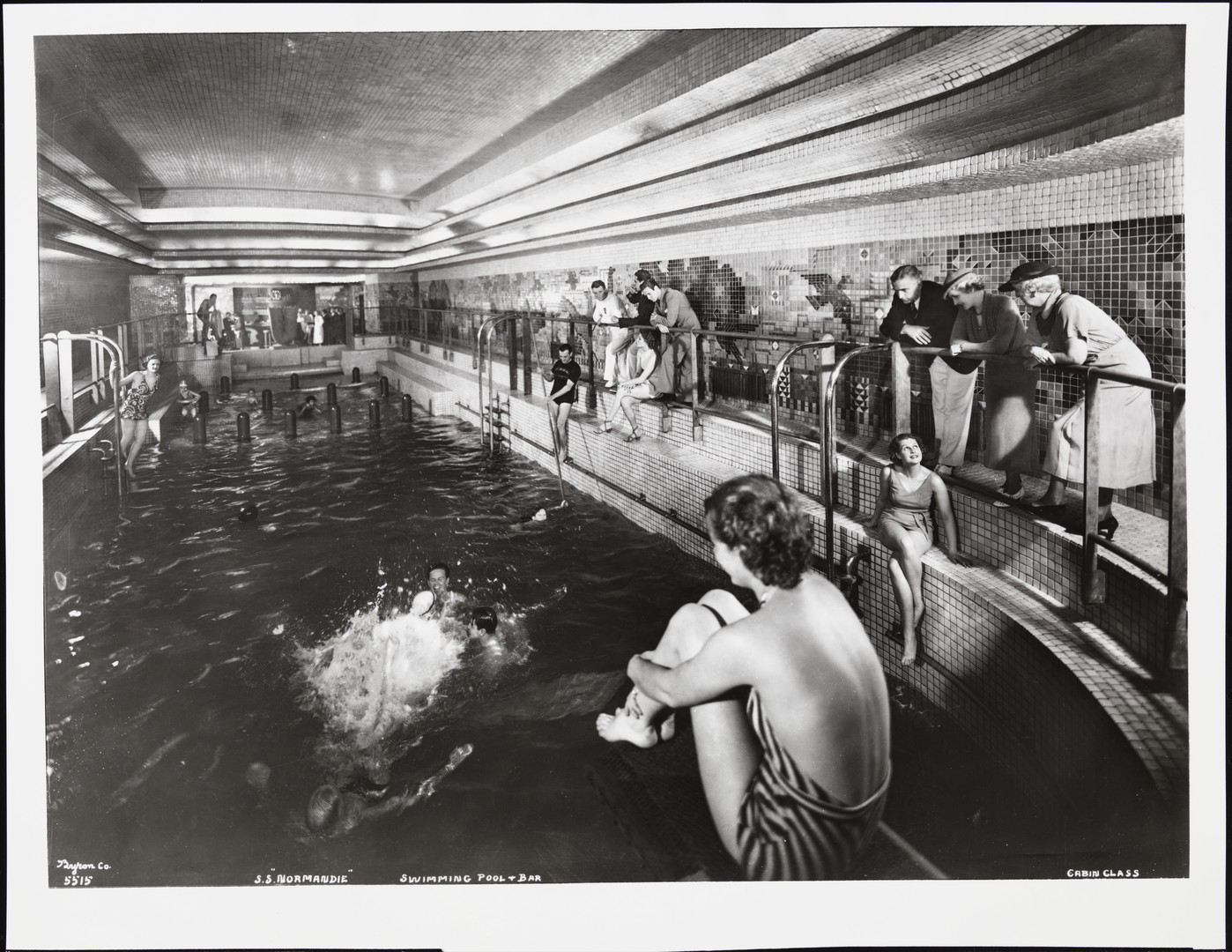
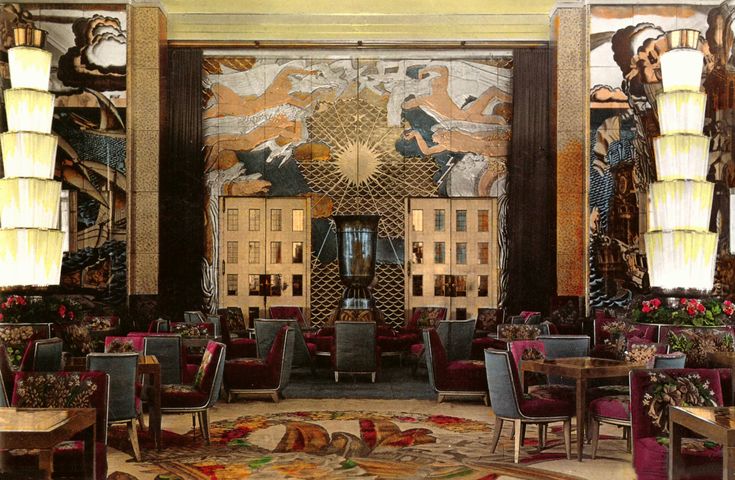
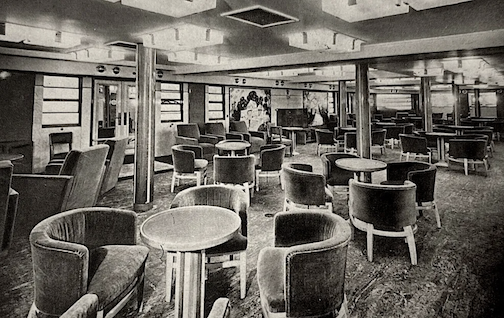
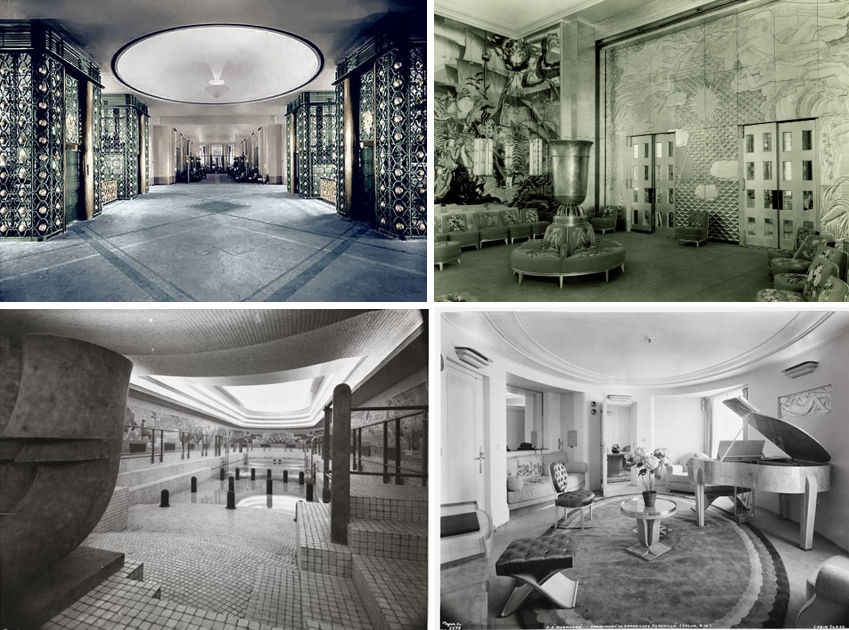
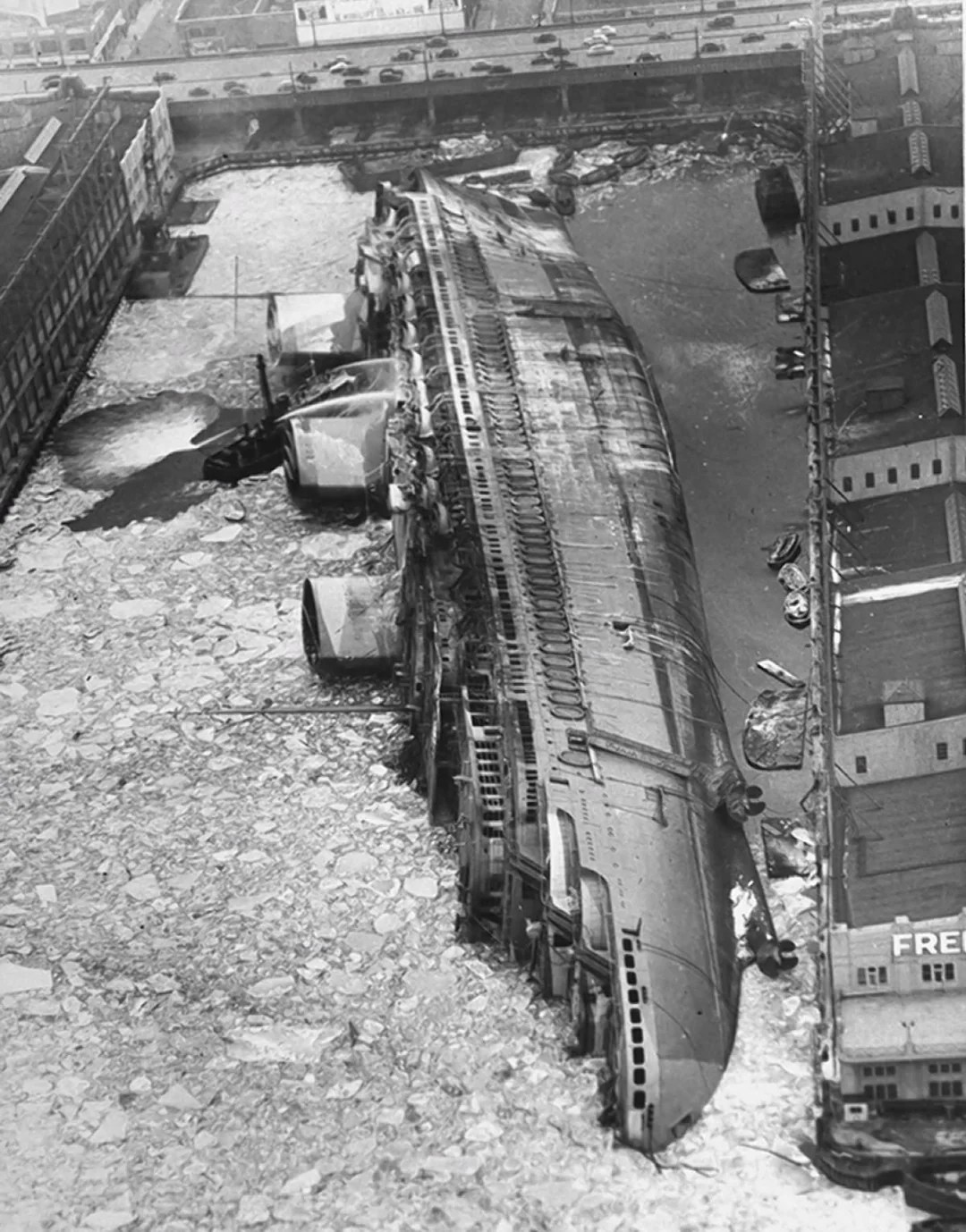
World War II would cut short the Normandie’s life. Seized in New York and renamed USS Lafayette in 1942, she was being converted to a troopship when she caught fire, capsized onto the port side, and came to rest half submerged on the bottom of the Hudson at Pier 88, the same pier where she was welcomed in 1935. She was scrapped in 1946.
* * *
A Critic Is Born
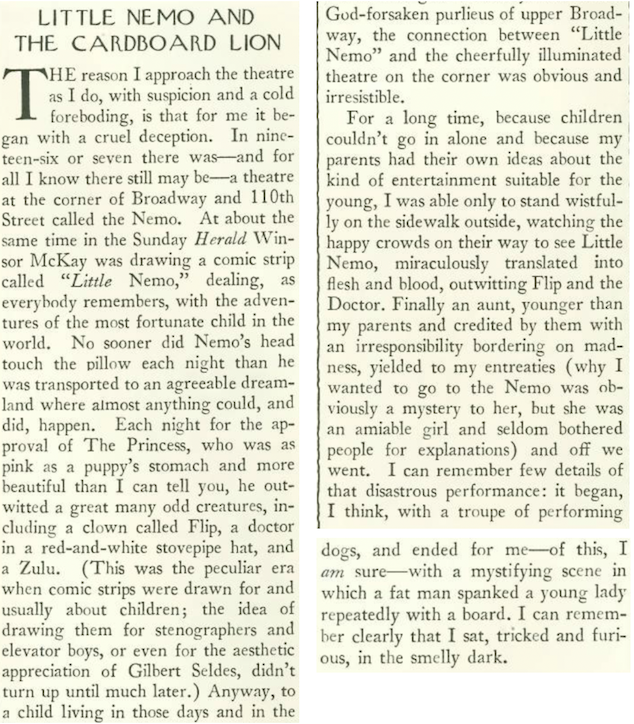
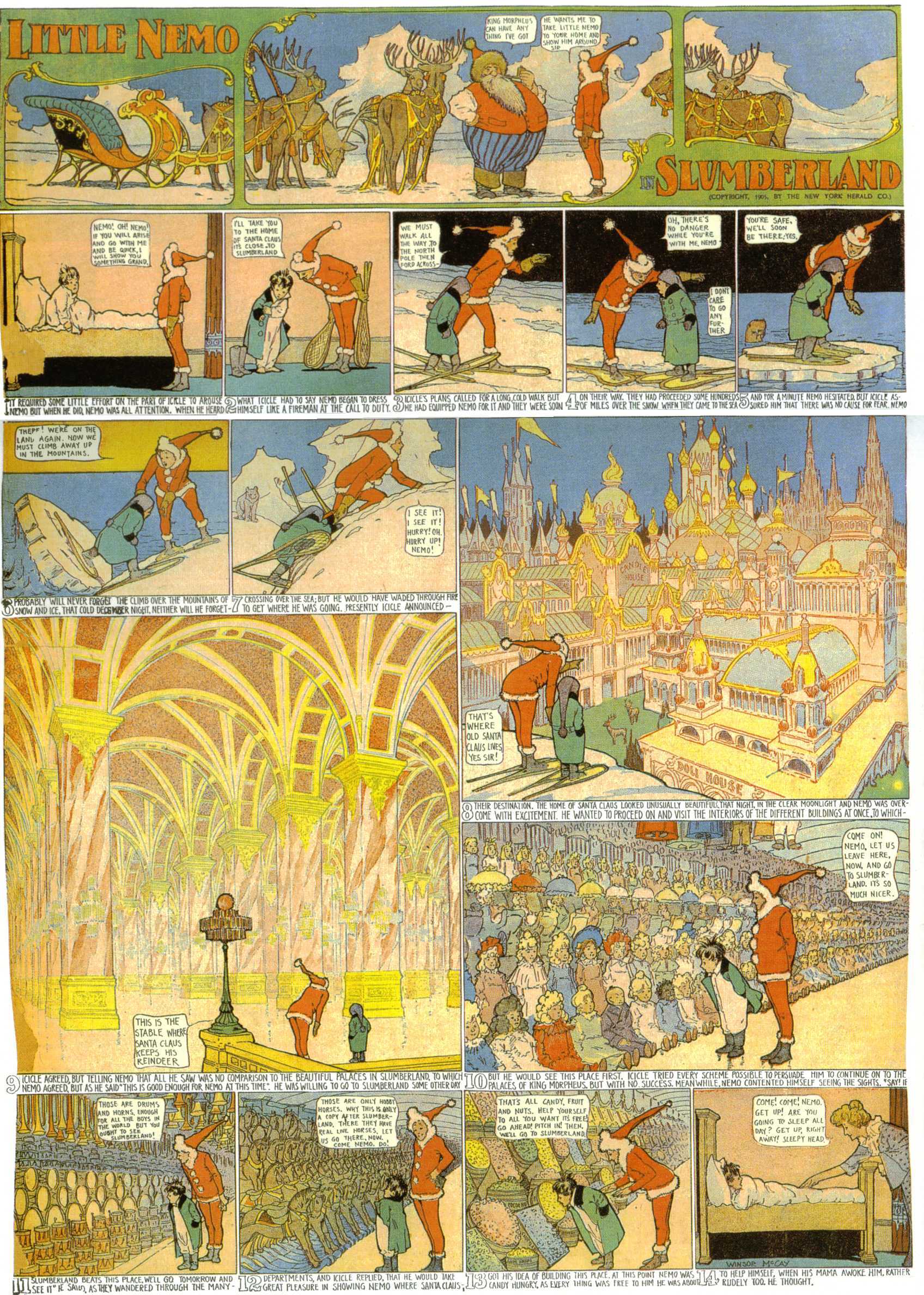
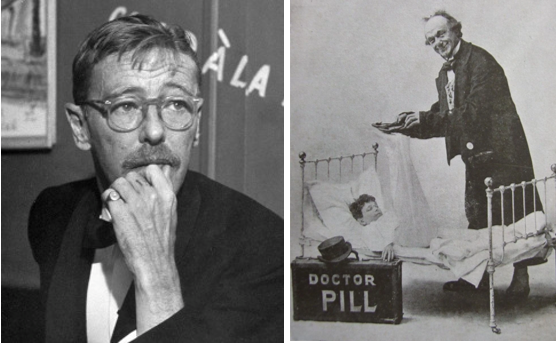
It turns out that Wolcott Gibbs (1902–1958) cut his teeth as The New Yorker’s theatre critic while he was still in short pants. Gibbs recalled his five-year-old self in an essay that described his first experience with the theatre—a play based on the New York Herald’s popular comic strip, Little Nemo in Slumberland, by Winsor McCay. In parallel with Gibbs’ childhood, the strip ran from 1905 to 1911.
As a child, Gibbs was wild about Little Nemo’s adventures, but the stage adaptation left the child disillusioned (and feeling “tricked and furious”). The New York Public Library’s Douglas Reside wrote (in 2015) that the producers, seeking to draw as wide an audience as possible, presented Little Nemo “as a bloated mixture of theatrical styles, including the minstrel show, pantomime, operetta, farce-comedy, vaudeville, revue, and ballet,” featuring three comedians “mostly superfluous to Nemo’s story.” The part of Nemo was played by a 25-year-old actor with dwarfism.
* * *
Humorous Humors
Clarence Day, best known for his Life with Father stories, wrote humorously about his physical ailments and contributed a number of cartoons to The New Yorker that were accompanied by satirical poems. Day would be dead by December—after a bout with pneumonia—however, despite his ailments he would spend his last months arranging publication of his Life with Father book, which was published posthumously.

* * *
Frankie Got Hitched
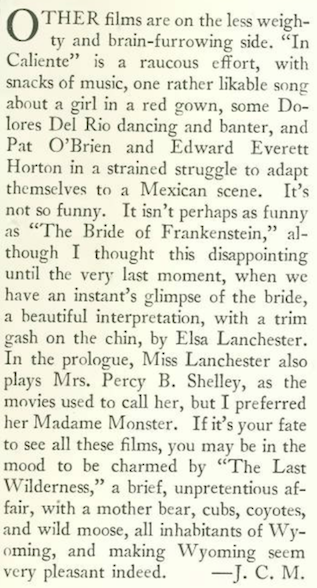
Film critic John Mosher still wasn’t finding much to rave about at the cinema, getting more chuckles from the monster mash-up of Boris Karloff and Elsa Lanchester in The Bride of Frankenstein than he did from the Dolores Del Rio vehicle Caliente.

* * *
Other features in the May 25 issue included H. L. Mencken’s continuing exploration into the origins of American names…

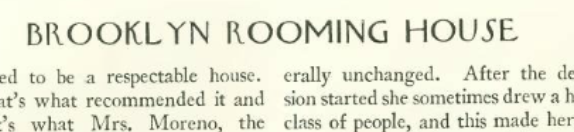
…and The New Yorker published its first John Cheever story, “Brooklyn Rooming House.” Of Cheever’s 180 short stories, the magazine would publish 121 of them.

* * *
From Our Advertisers
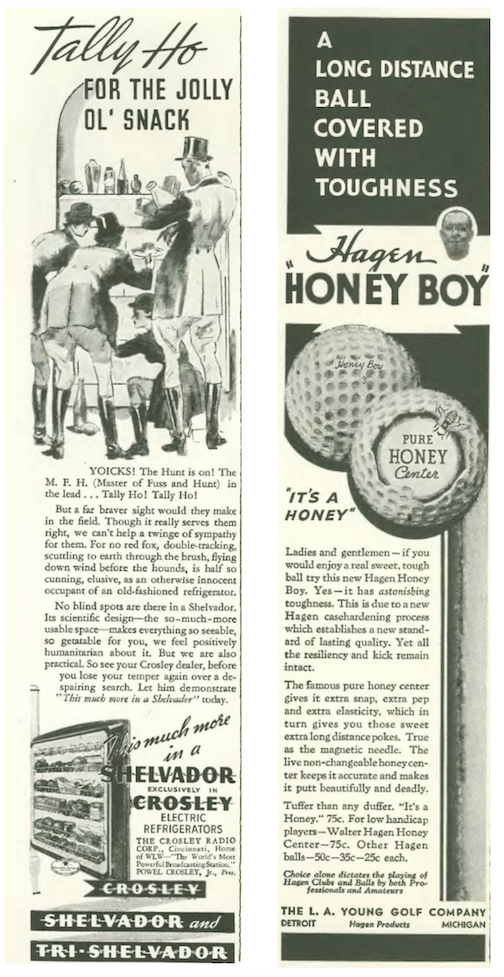
We start with some one-column gems from the back of the book including the latest innovation in electric refrigerators…a shelf in the door!…apparently Crosley was the first to invent this “Shelvador”…the ad to the right is interesting in that it advertises honey-filled golf balls…in the early 20th century some golf balls did contain real honey…apparently it was chosen for its consistent viscosity (or maybe for a quick snack on the ninth hole)…
…and from General Tire, we have another ominous warning from Dad as the teens head out for another night of crooning, or whatever they are dressed for…

…last week Chrysler was offering its sedans for $745, and this week you could have one of their Plymouths for just 510 bucks…the message: you would be admired by your polo buddies for your smart, thrifty choice…
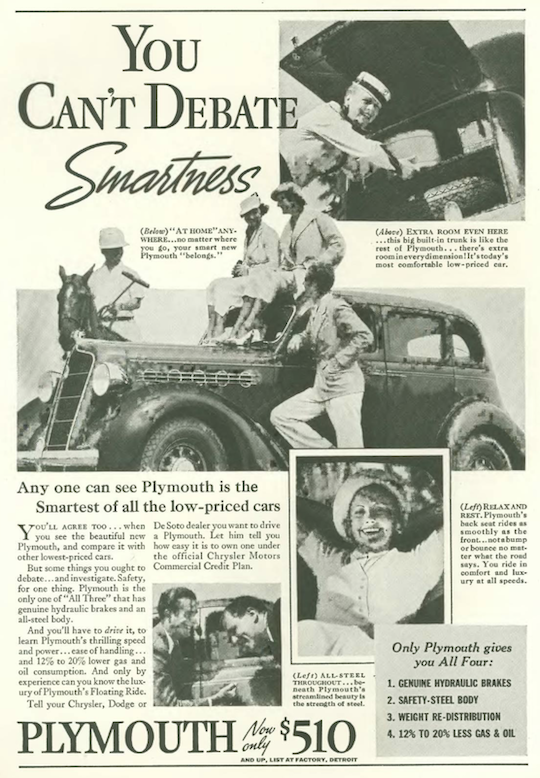
…where the above ad crammed every square inch with information, the folks at Pierce Arrow offered a restrained, minimal message (suggesting “we can afford to buy a full-page ad and leave much of it blank”)…another class signifier was the absence of a price tag (about $150k in today’s dollars)…but Chrysler-Plymouth would survive the Depression because it sold affordable cars, while Pierce Arrow was on its last legs…

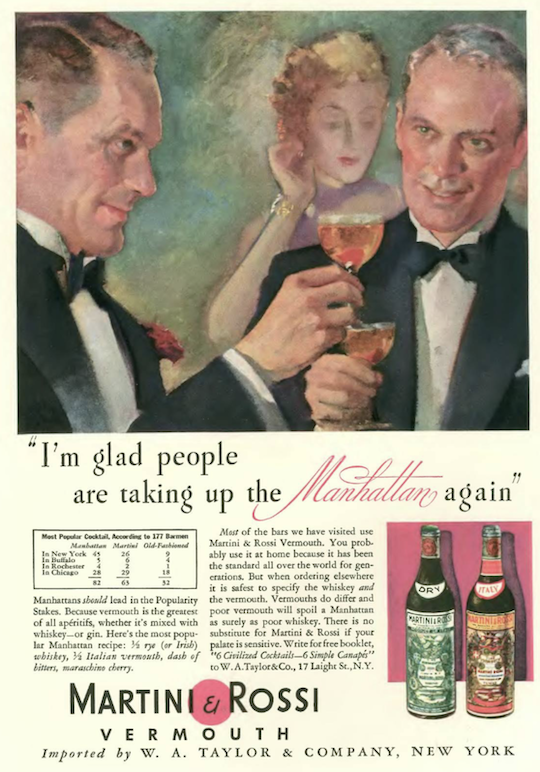
…here’s a couple of Pierce Arrow owners toasting the return of the Manhattan…
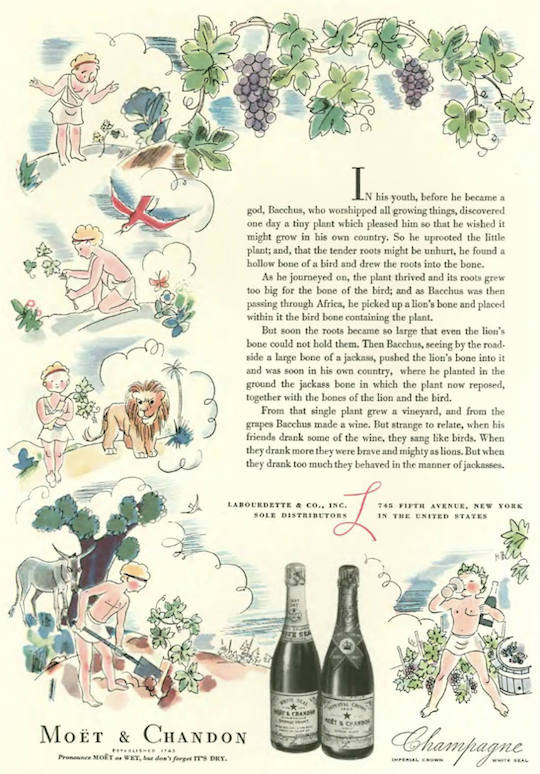
…Moët & Chandon offered up this whimsical tableau from the youth of Bacchus…
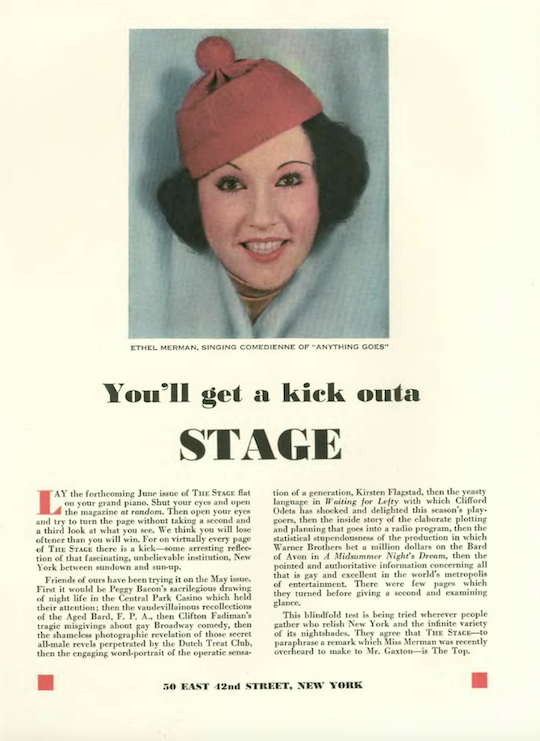
…Ethel Merman popped through a curtain on the inside back cover to invite readers to subscribe to The Stage magazine…
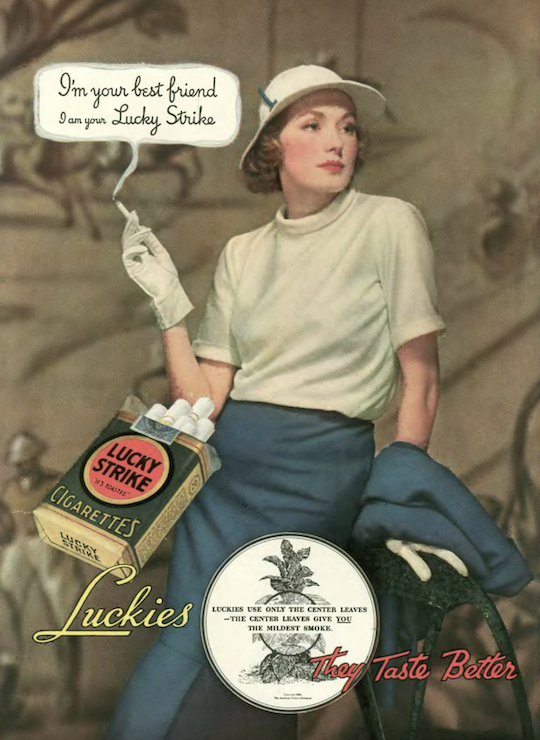
…and Lucky Strike claimed the back cover with another stylish woman and a talking cigarette bent on mind control…
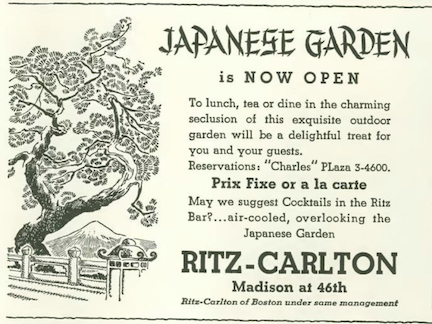
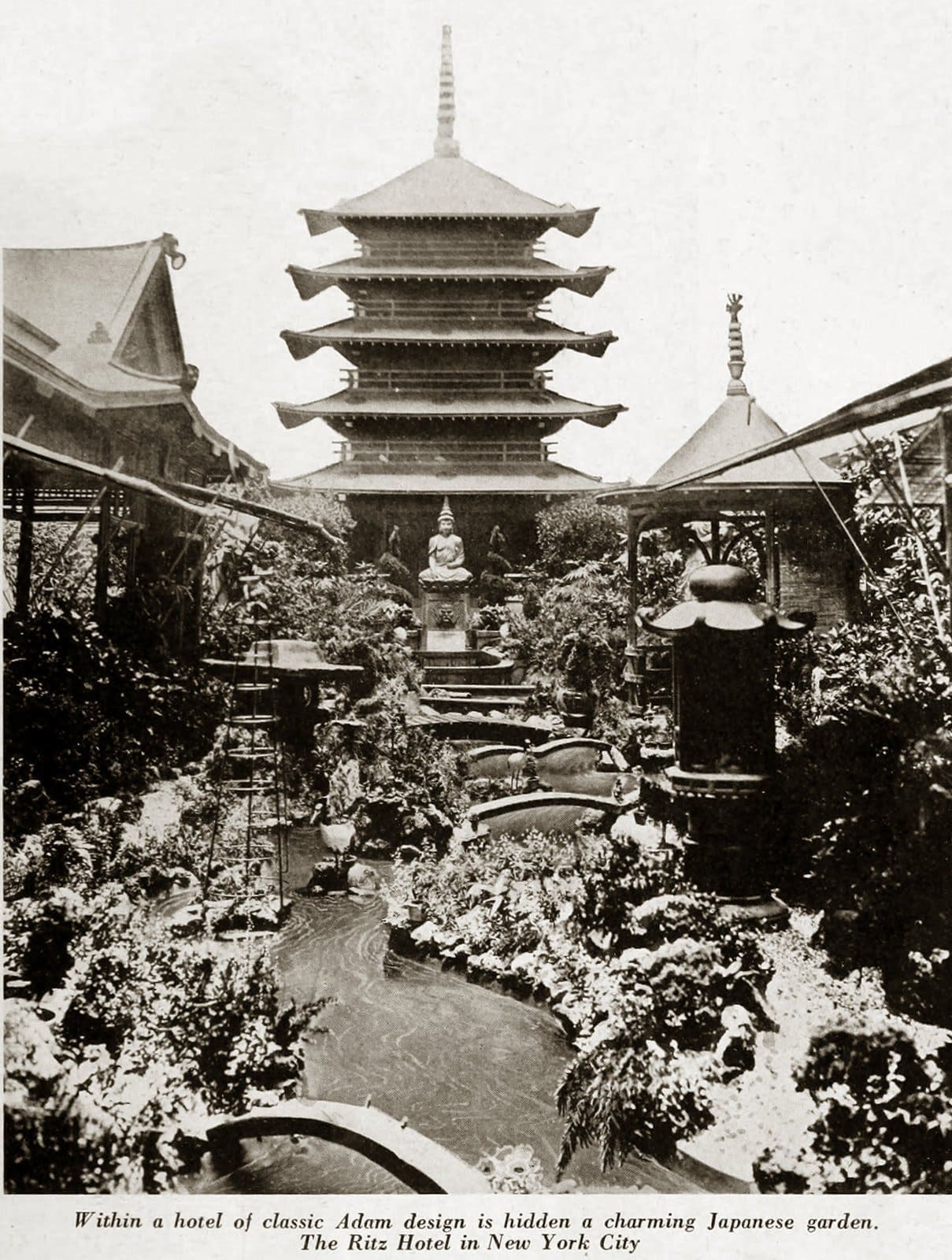
…the Ritz-Carlton announced the spring re-opening of its famed Japanese Garden…
…and we kick off our cartoonists with this “Goings On” topper by D. Krán…

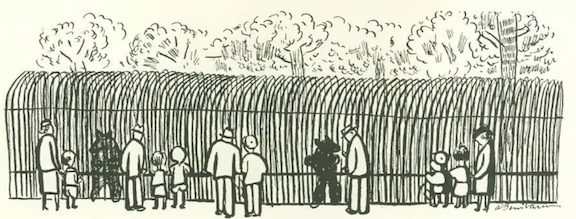
…followed by this visit to the zoo by Abe Birnbaum…
…James Thurber was up for some fashion criticism…

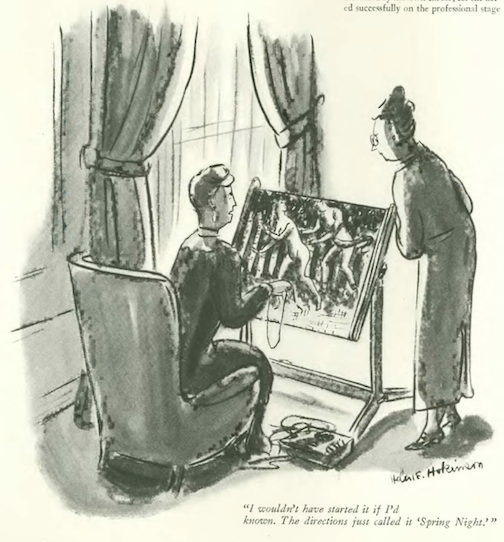
…Helen Hokinson found a surprise in a paint-by-numbers kit..
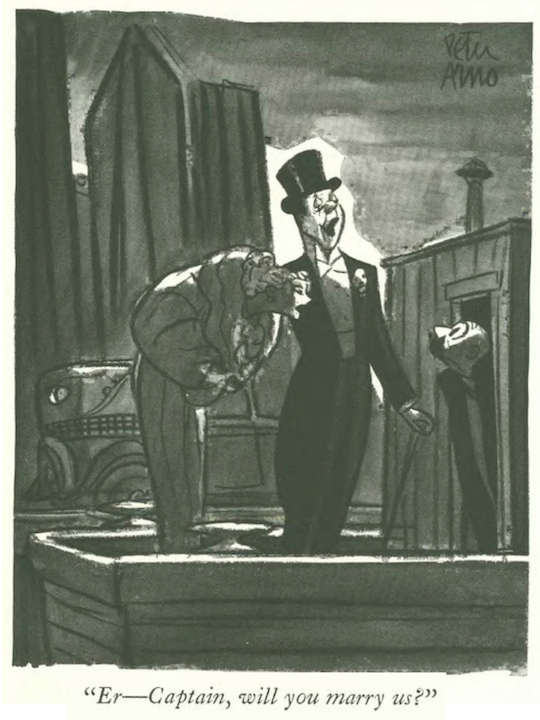
…Peter Arno was up for some late night nuptials…
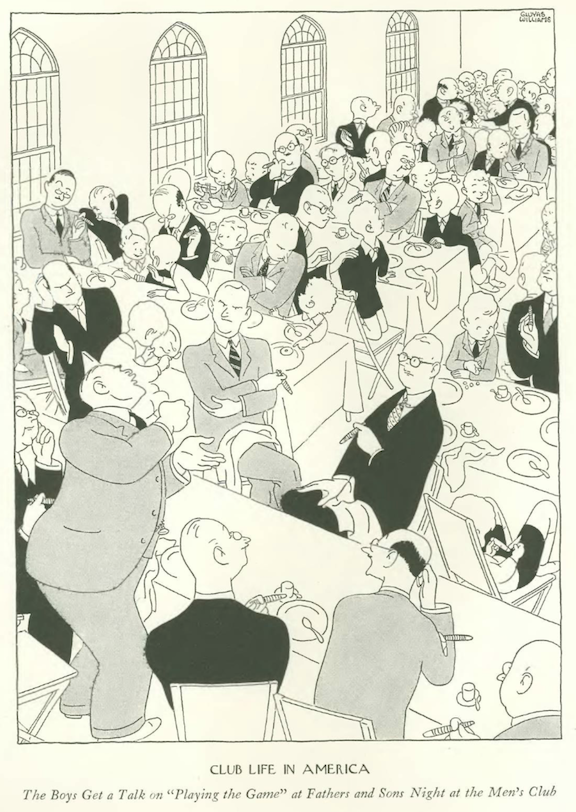
…Gluyas Williams continued to examine club life…
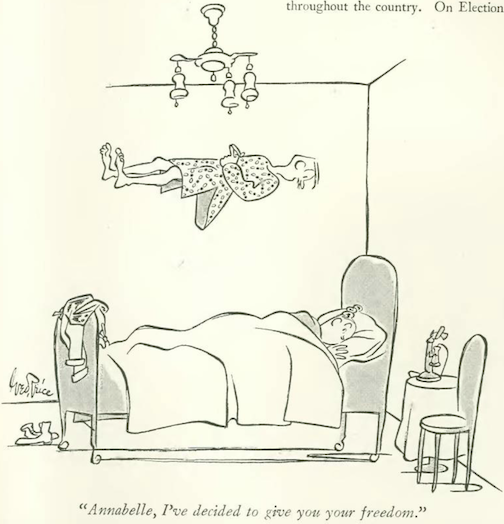
...George Price was back in the air…
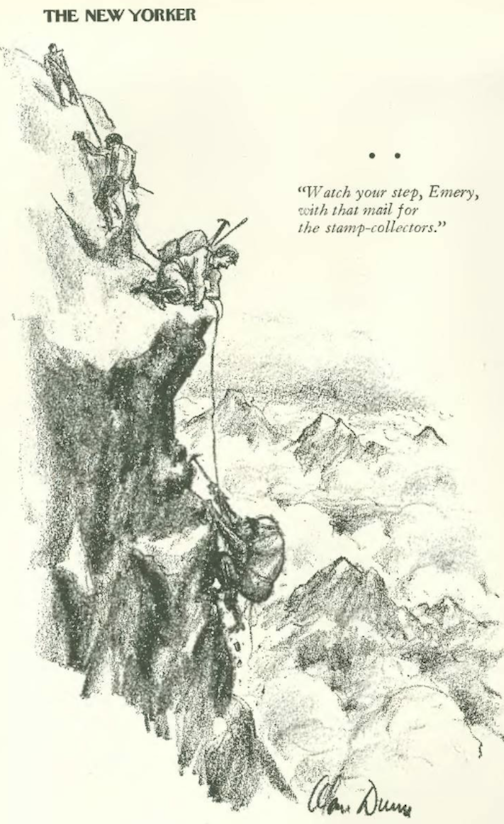
…Alan Dunn gave us some men on a mission…
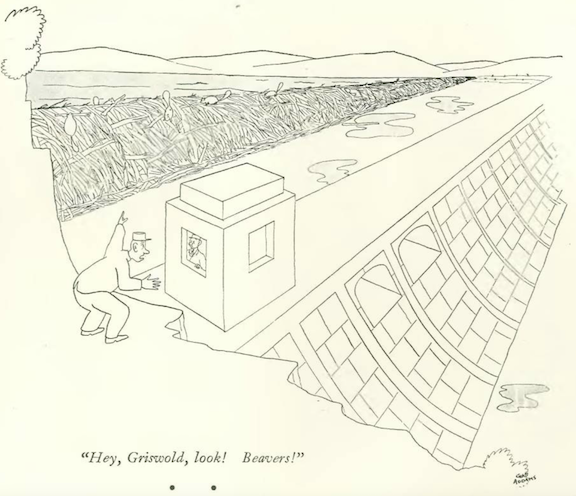
…and we close with Charles Addams, and some dam trouble…
Next Time: Wining and Dining…


 A New Yorker State of Mind