
McSorley’s Old Ale House is probably best known to New Yorker readers through the work of Joseph Mitchell, who was noted for his distinctive character studies in The New Yorker and who in 1943 published McSorley’s Wonderful Saloon, which was later included in a 1992 collection of Mitchell’s works, Up In the Old Hotel.

Among New York’s oldest saloons, McSorley’s was one of the last of the “Men Only” pubs, finally admitting women in 1970 after the state required the saloon to comply with the U.S. Constitution’s Equal Protection Clause. McSorley’s was visited by many famous patrons in its long history, a mixed bunch that included Abraham Lincoln, Teddy Roosevelt, Harry Houdini and John Lennon. Nine years before Mitchell would pen his account of the saloon, “The Talk of the Town” took a look.


* * *
Of the People
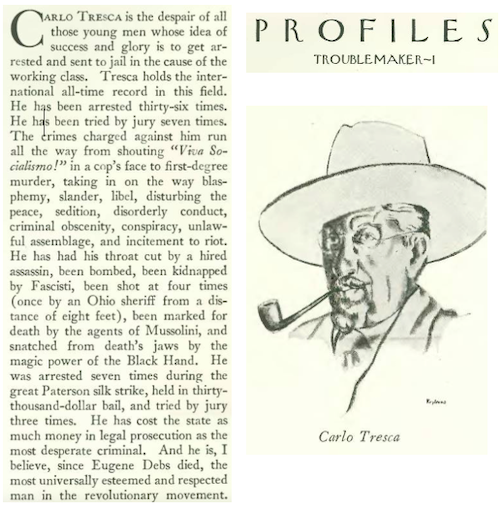
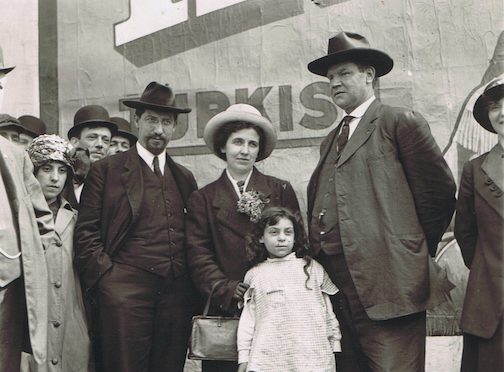
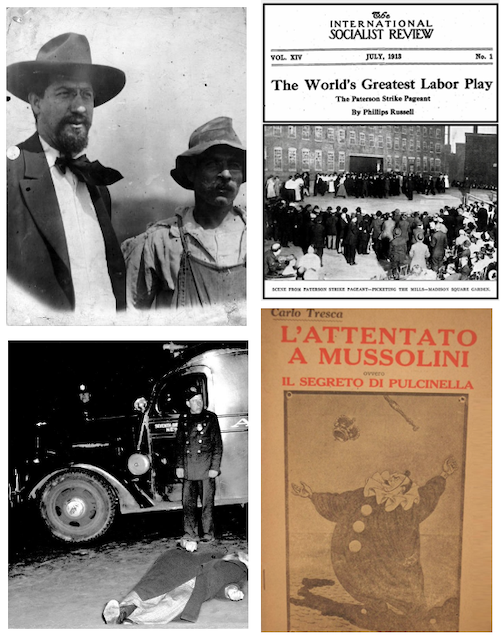
The Italian-American labor organizer Carlo Tresca was a gifted orator and outspoken critic of anyone who stood in his way in his quest for workers’ rights. As political activist and writer Max Eastman pointed out in the lead paragraph of a two-part profile, speaking truth to power also prompted a number of deadly assaults on Tresca (1879–1943), whose campaign for justice was ultimately cut short by an assassin’s bullet in 1943. A brief excerpt:
* * *
Up In Smoke
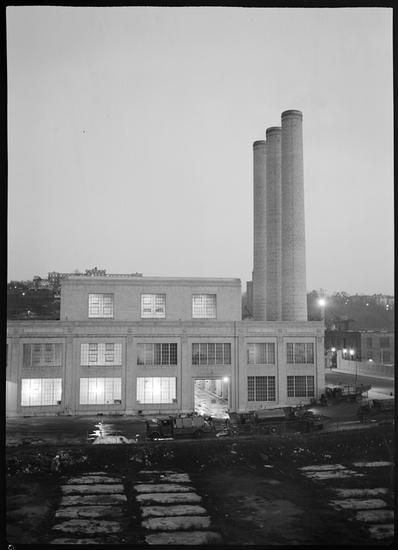
Lewis Mumford sniffed at much of the new architecture popping up around his city, but he took an especially big whiff of the new incinerator that rose above the neighborhoods at 215th Street and Ninth Avenue. When the incinerator opened in 1934 the city stopped dumping its garbage into the sea (it was fouling the beaches) and began burning the stuff around the clock in Harlem, where residents had put up with the smoke and cinders that were emitted from the supposedly “odorless” plant. Cole Thompson’s website My Inwood is a great place to read more about it.
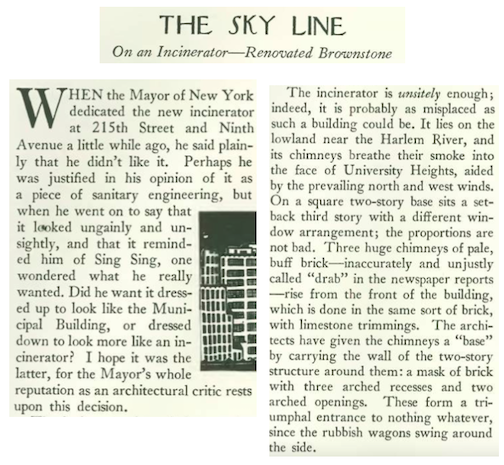
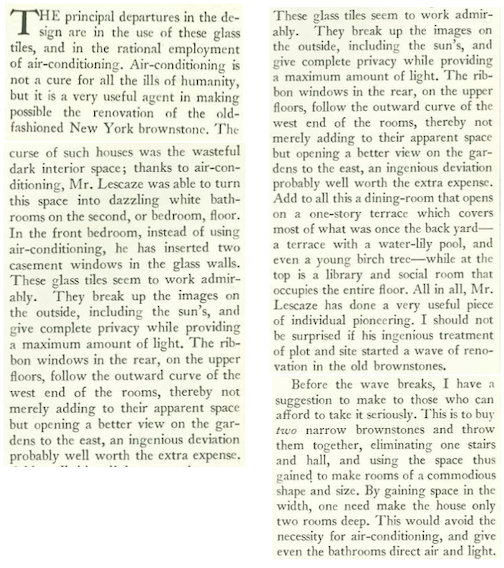
Mumford brightened, however, at another development in the Turtle Bay neighborhood, where architect William Lescaze (1896–1969) had slipped a bright, modernist house in between two dusky brownstones on East 48th Street. The house featured extensive use of glass block in its construction, an architectural first in the city.


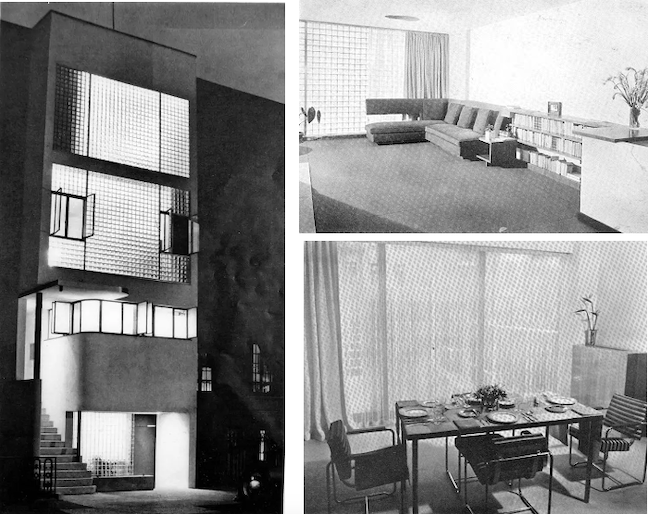

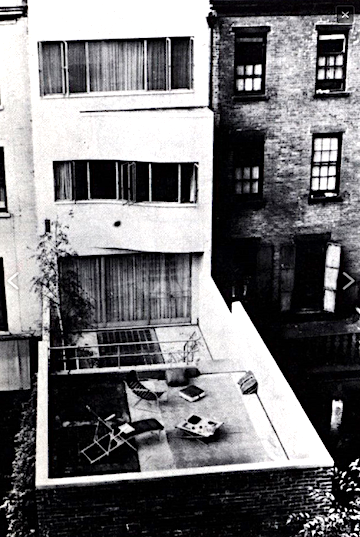
Mumford noted that the recent invention of home air-conditioning systems made it possible for Lescaze to bring light deep into the central core of the building…

* * *
Poser
The novelist and poet Raymond Holden (1894–1972) was a regular contributor to The New Yorker from 1929 to 1943. For the Sept.15 issue he assumed the guise of an economist to pen this cheeky letter to the editors: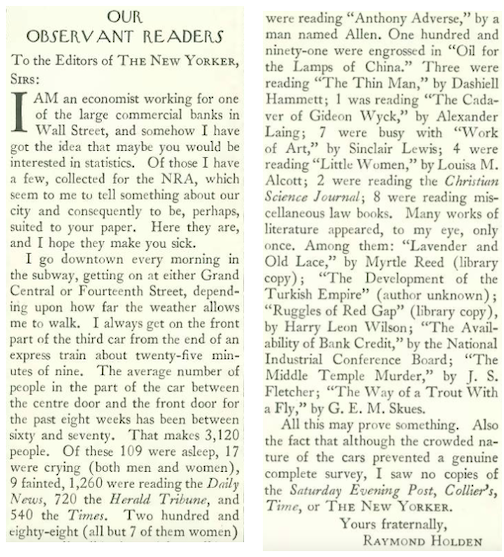
* * *
Head in the Clouds
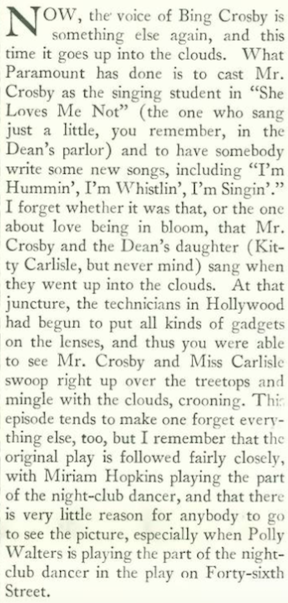
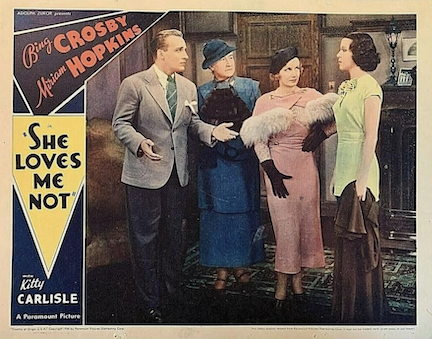
Film critic John Mosher thought Bing Crosby was a fine singer, but he couldn’t quite fathom why the movie-makers at Paramount thought the singer would be even more attractive if he was sent aloft using various camera tricks.
* * *
From Our Advertisers
The advertising department must have been thrilled with the flurry of ads that announced the fall and winter fashions…here are three examples, the first two focused on styles supposedly designed attract the opposite sex…the International Silk Guild promised that the “swish” of silk would turn any man’s head…
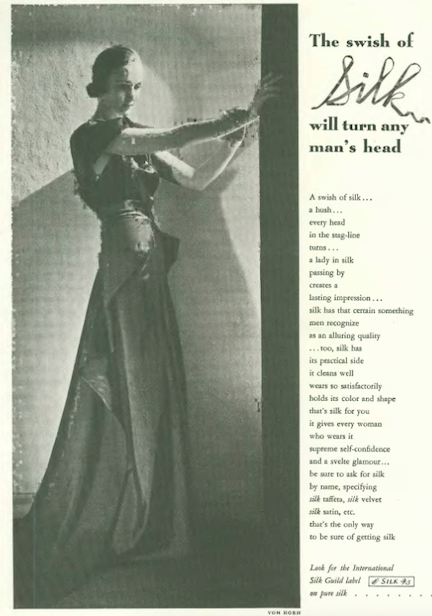
…while B. Altman’s “Young Colony Shop” claimed you could get your man with the “swish and billow” of taffeta…
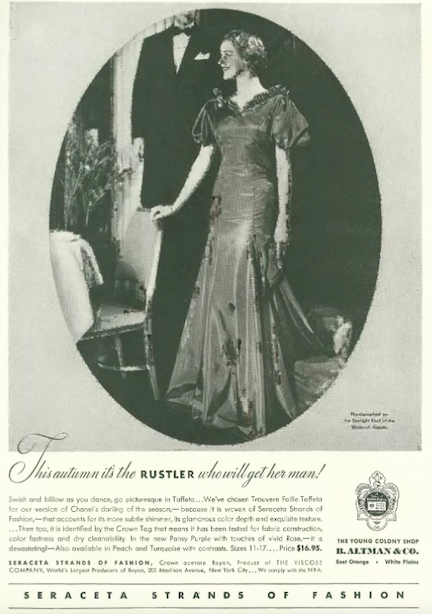
…B. Altman ran a second full-page ad to catch a bit older demographic, less concerned with landing a man and more concerned with sending the proper signals to fellow Anglophiles…

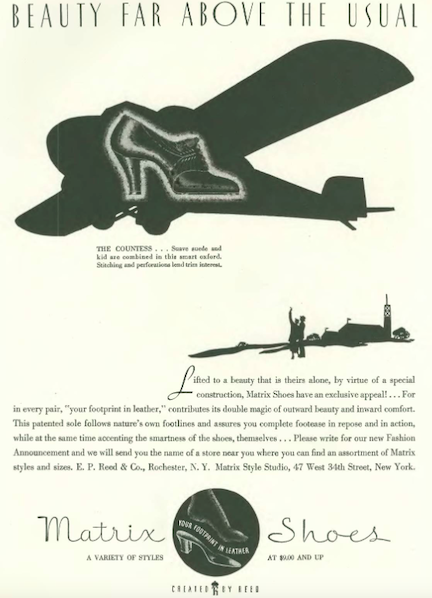
…the folks at Matrix shoes were looking for a way to associate their “Countess” model with modern living, but what they got was an image of people waving farewell to some flying footwear…
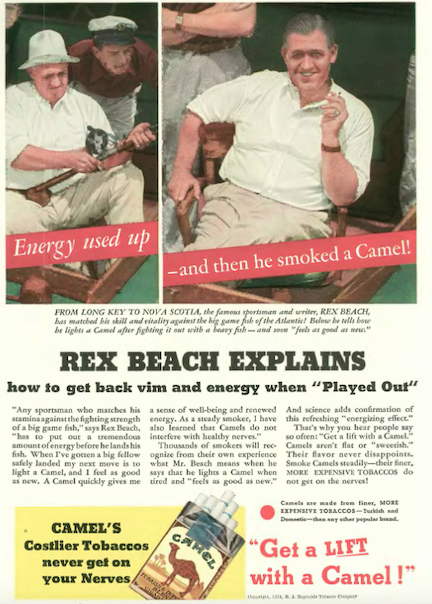
…and here is another in a continuing series of ads from R.J. Reynolds that claimed “science” had confirmed the refreshing, energizing effect of its Camel cigarettes…
…we clear the air with this attractive ad beckoning New Yorkers to sun-kissed Bermuda…

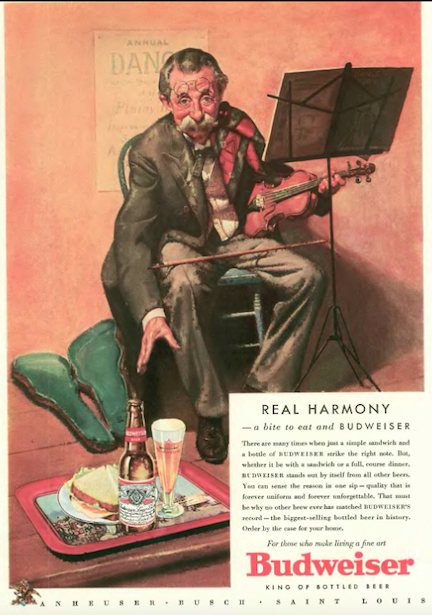
…Budweiser continued its series of Rockwellesque portraits of old men enjoying its product…
…and this two-page spread from Fisher—maker of car bodies for General Motors—shows us how young tots travelled in the days before plastic car seats and other restraining devices…

…on to our cartoonists we begin with a couple examples of spot illustrations from the opening pages…


…on to Peter Arno…the caption reads, “I adore driving at night. Once I caught my foot in a bear trap, though”…the humor is lost on me…I suppose she is referring to a speed trap, perhaps set by an amorous cop…

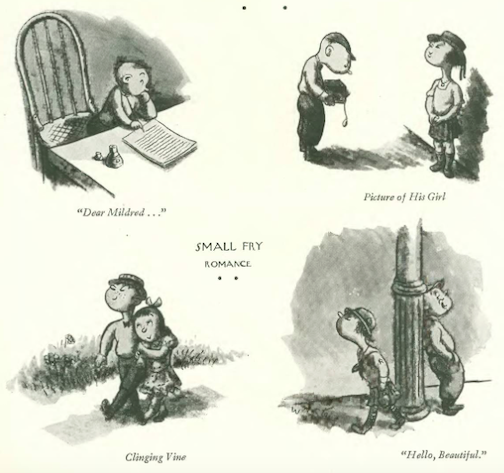
…speaking of amorous, William Steig explored the subject amongst his “Small Fry”…
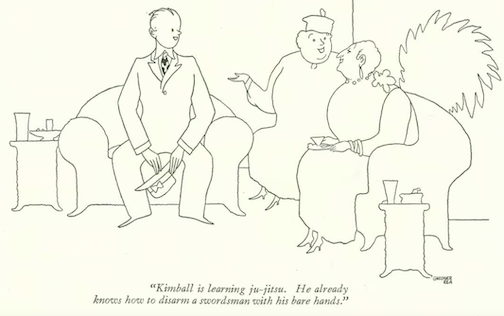
…Gardner Rea sat in on an unlikely boast…
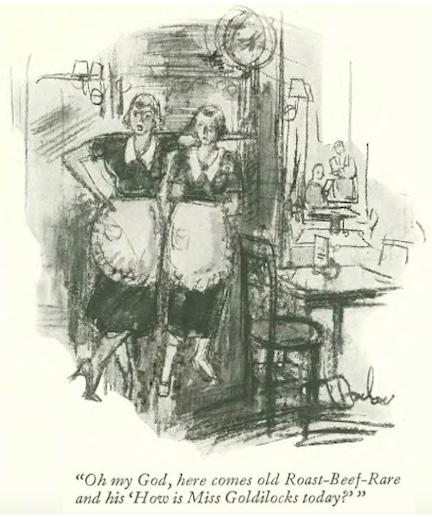
…Perry Barlow illustrated the doldrums associated with waitressing…
…Garrett Price checked in on the latest developments in deep sea exploration…
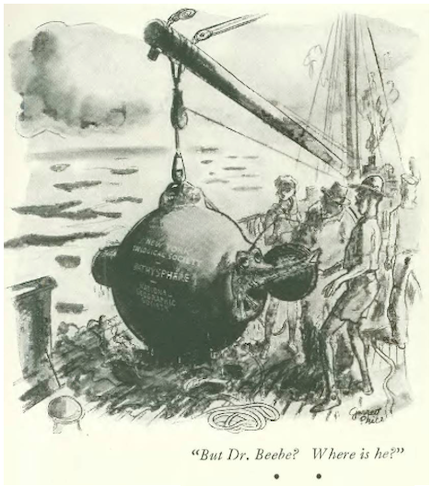
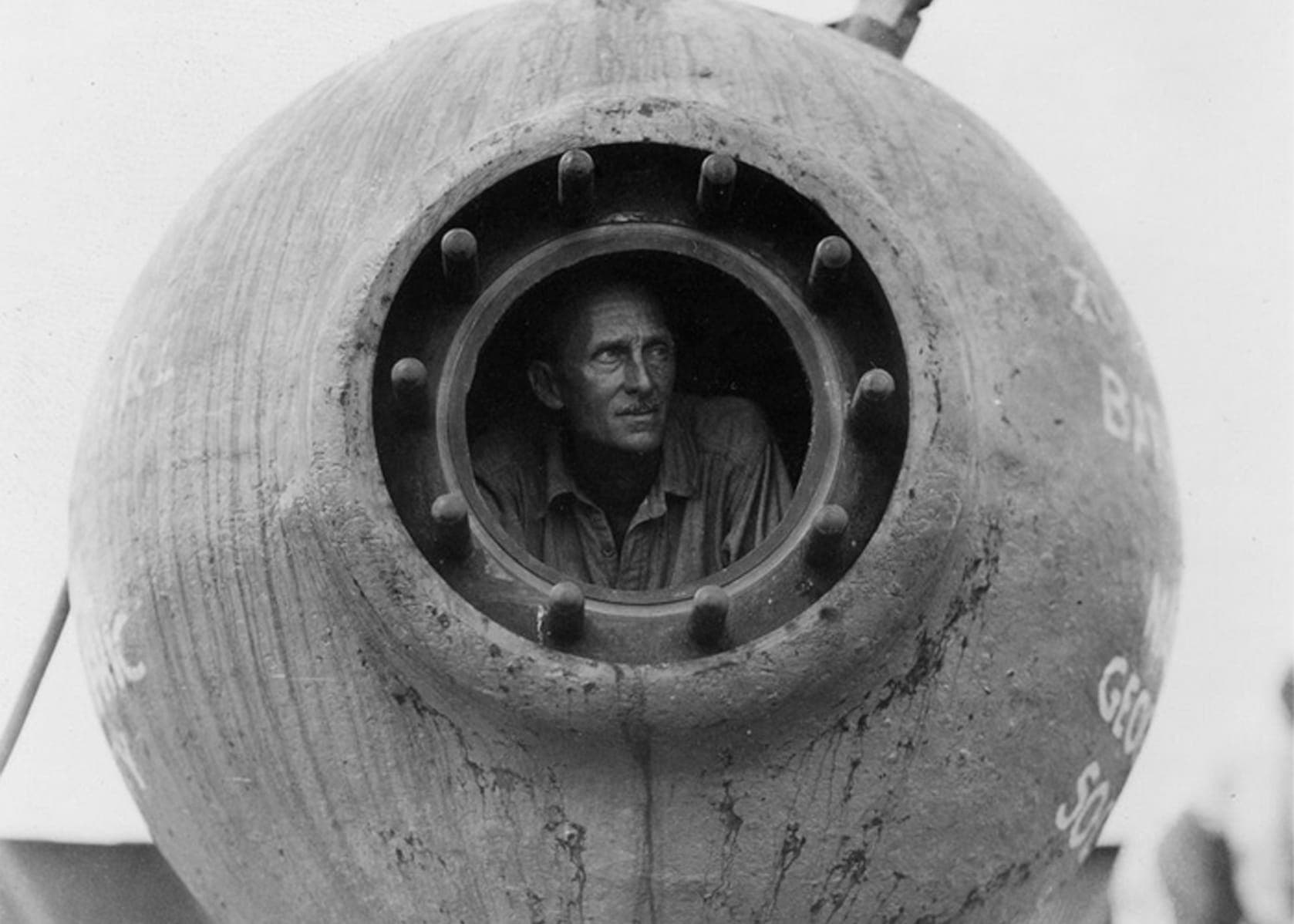
…the cartoon refers to the explorations of William Beebe, who along with engineer Otis Barton descended in a bathysphere to a record 3,028 feet (923 m) on Aug. 15, 1934…
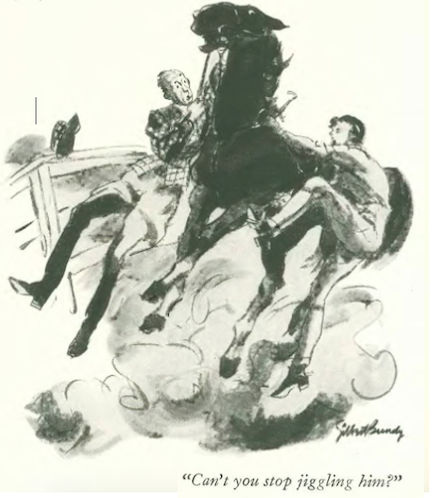
…and we close with Gilbert Bundy, and a couple of horse wranglers…
Next Time: Reel News…

 A New Yorker State of Mind