
During the roughly thirteen years of Prohibition, many Americans had forgotten how to mix a decent cocktail; the concoctions they devised during those dry years were often created to mask the taste of bootleg liquor—sales of Coca-Cola steadily increased throughout the 1920s in part because it made ardent spirits such as rum and whisky a bit more palatable.
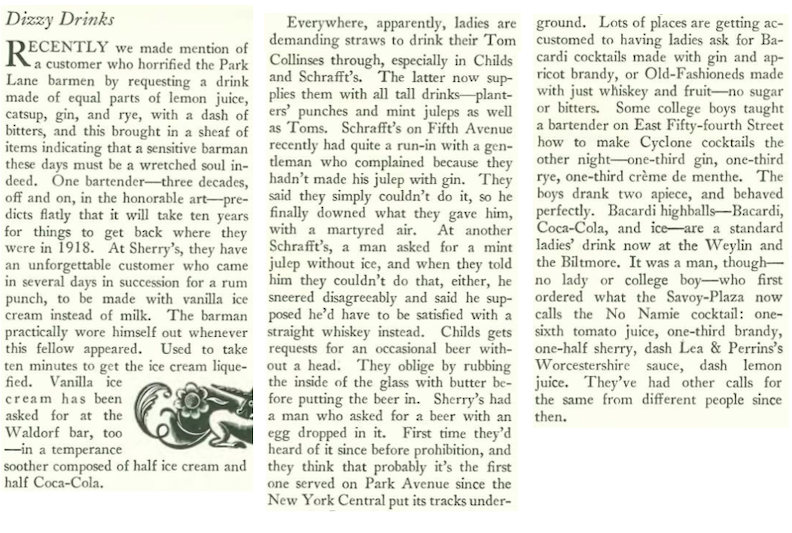
Donald Barr Chidsey examined the phenomenon in “The Talk of the Town,” visiting with traumatized bartenders around Manhattan:


* * *
From Our Advertisers
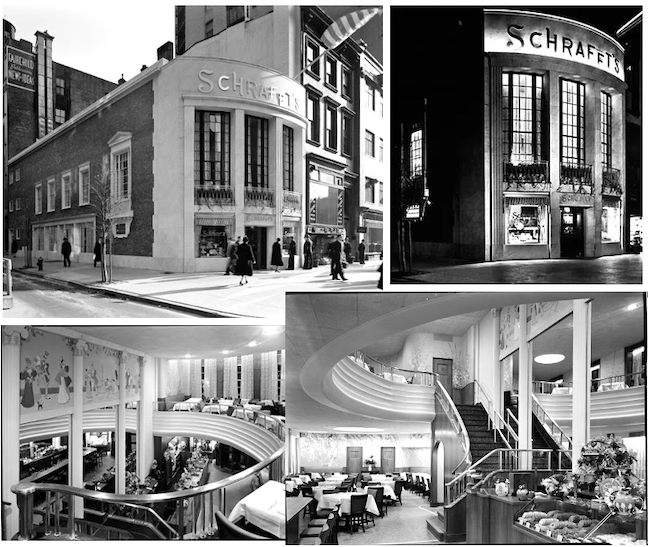
Speaking of Schrafft’s, here is their advertisement from the Aug. 18 issue, offering breakfasts ranging from 35 to 75 cents that apparently were the stuff of O. Henry’s dreams…

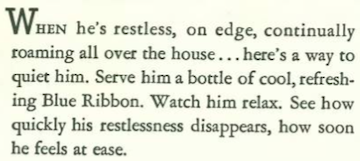
…what is a woman to do with a restless husband?…drawing on the wisdom of the ages, she hands him a beer and coaxes him into his easy chair…this ad encouraged women to “always keep a few bottles in your refrigerator”…in other words, keep ’em coming until he settles into a manageable stupor…

…and see just how easily he slips away, leaving you with a few moments to yourself…
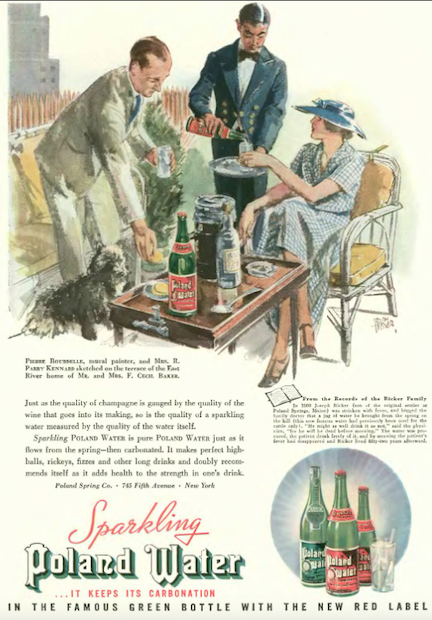
…if highballs were more to your taste, the folks at Poland Water stood ready to help…
…R.J. Reynolds claimed their Camels could solve all sorts of life challenges…we’ve seen ads claiming that Camels soothed “jangled nerves” and helped one relax, but apparently they also could give you energy and pep, at least that is what tennis star Ellsworth Vines, Jr claimed…

…lots of color in the ads for the Aug. 18 issue…here the folks at Buick featured a woman in a red dress serving as an exclamation point to their automobile, which was no ordinary motorcar, but rather a “congenial companion, alive with good-natured personality”…

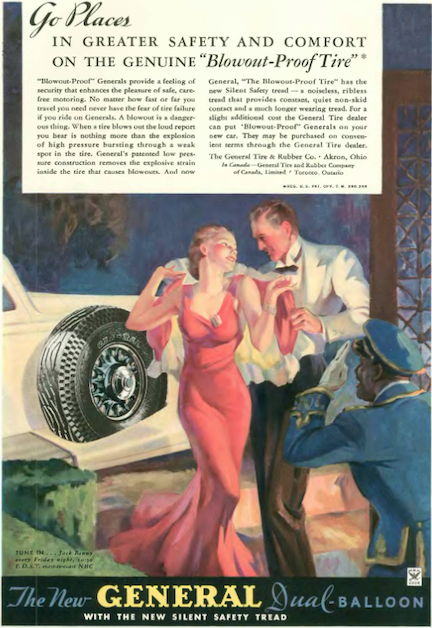
…the folks at General Tire went one better, making their tires the star attraction…those tires look so attractive it seems almost a shame to dirty them on the road…
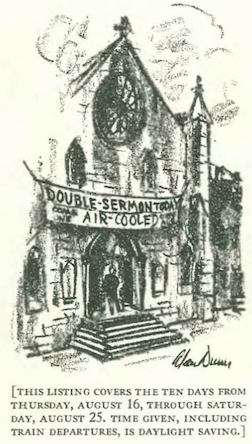
…on to our cartoons, we cool off with this spot in the opening pages by Alan Dunn…
…William Cotton contributed this caricature of New Deal Administrator Hugh Samuel Johnson that accompanied a three-part profile…

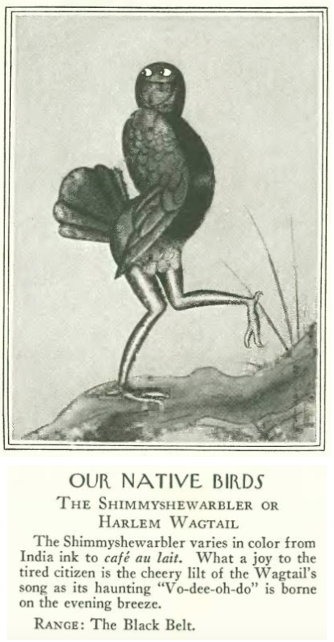
…Rea Irvin offered up a bird of a different feather…
…Robert Day gave us this master of understatement…

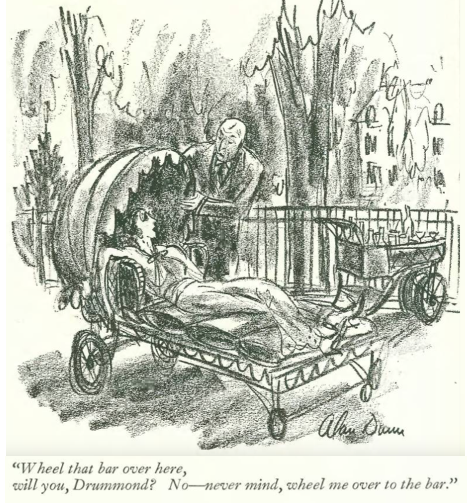
…Alan Dunn again, examining the trials and tribulations of the leisure classes…
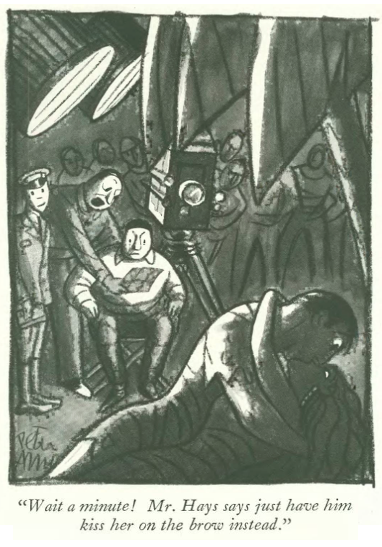
…Peter Arno offered this take on the Hays Code (after politician Will Hays), which was going into effect after the brief “Pre-Code” period (roughly 1930 to 1934) during which filmmakers felt freer to explore themes featuring sex and violence…
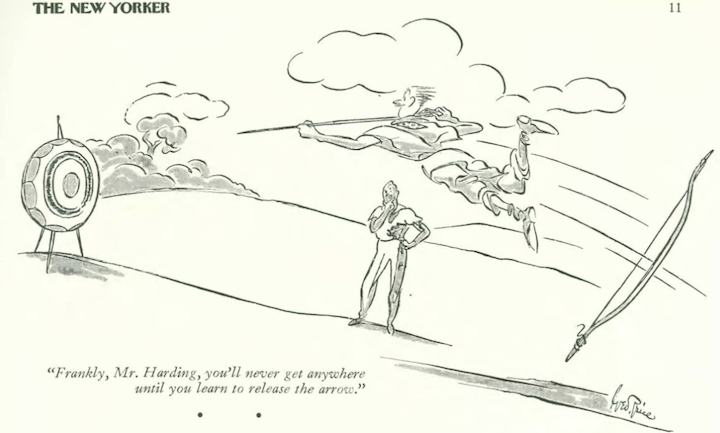
…George Price gave us a man have trouble hitting his mark…
…Alain (Daniel Brustlein) contributed a cartoon with a talking animal, common today but rare in the early New Yorker…

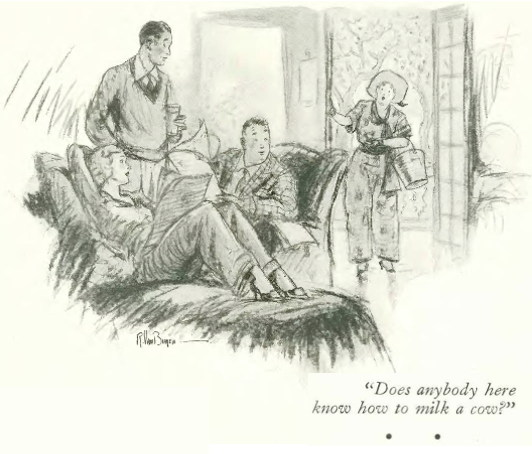
…Raeburn Van Buren was also down on the farm…I think we know the answer to this woman’s query…
…and we close with James Thurber, where mixed doubles were naturally fraught with peril…

Next Time: Cleo’s Allure…

 A New Yorker State of Mind