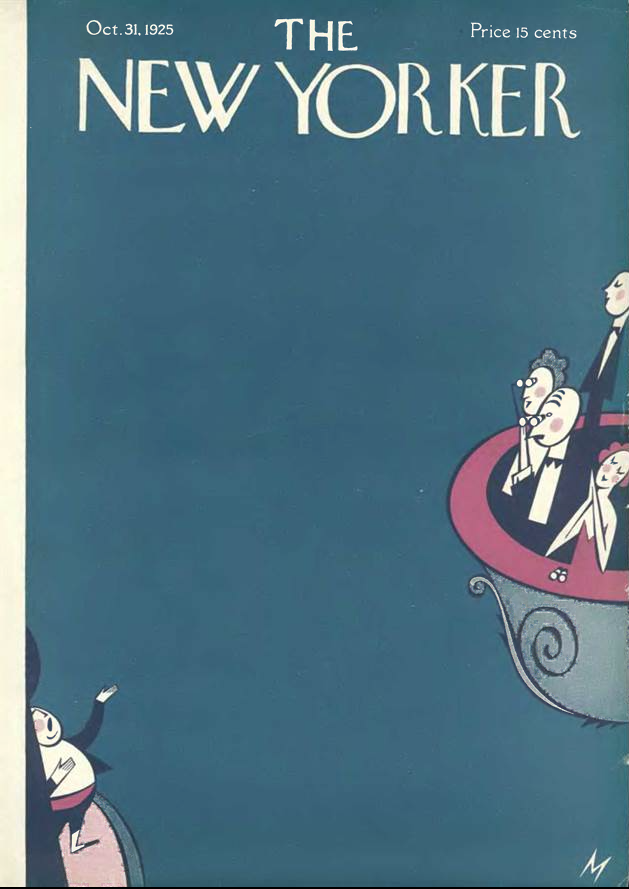
How Dry I Am

Screenshot 2015-07-14 10.28.30
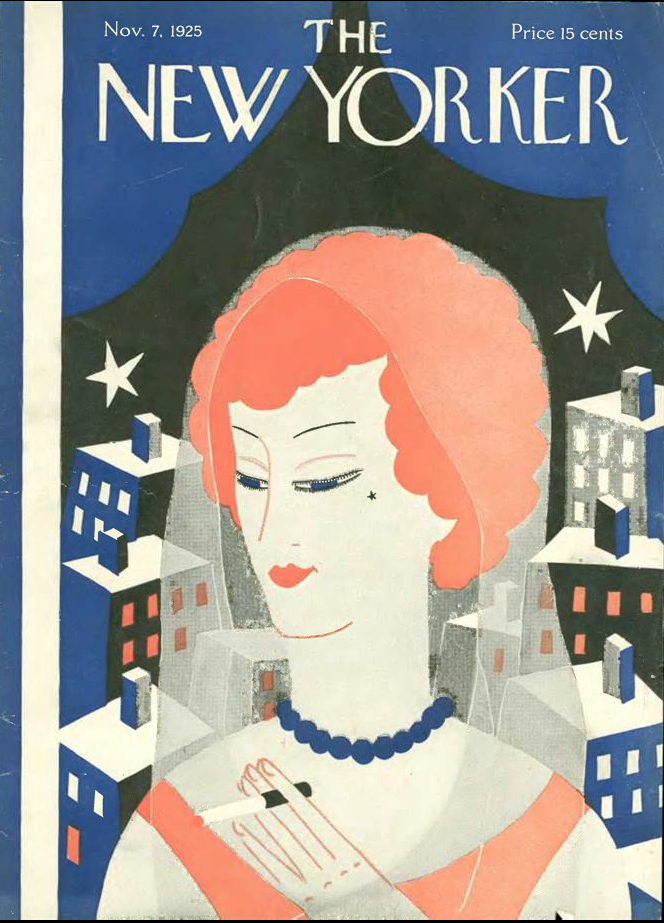
Oct. 31 cover,  Julian de Miskey.

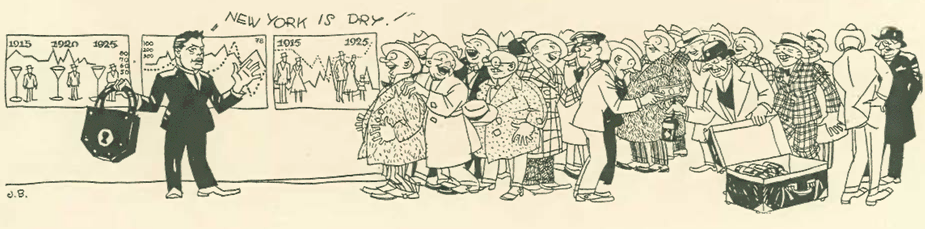
The woes of Prohibition were acutely felt by the readership of The New Yorker. The magazine responded in kind with its continued criticism of the law’s enforcement and particularly the tactics of Manhattan District Attorney Emory C. Buckner, whose agents continued to padlock restaurants and clubs suspected of selling alcohol.

The New Yorker previously called the padlocking tactic a “promotional stunt” that would ultimately backfire (I wrote about this in a previous blog post last March).

Both the “The Talk of the Town” and “Tables for Two” took aim at Buckner this time around. “Talk” led with this item, accompanied by the art of Johan Bull:
Screenshot 2015-07-17 10.15.48

Screenshot 2015-07-17 10.14.34

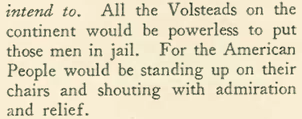
“Talk” also made a call to action by “men of virtue:”

Screenshot 2015-07-17 10.15.08

Screenshot 2015-07-17 10.15.16

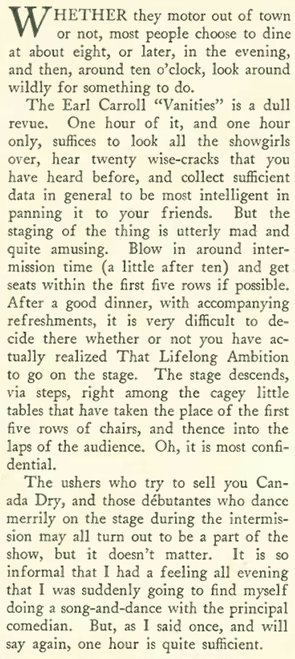
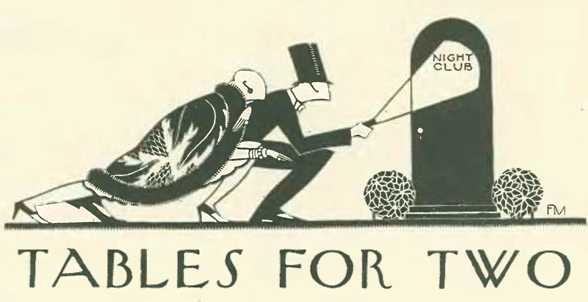
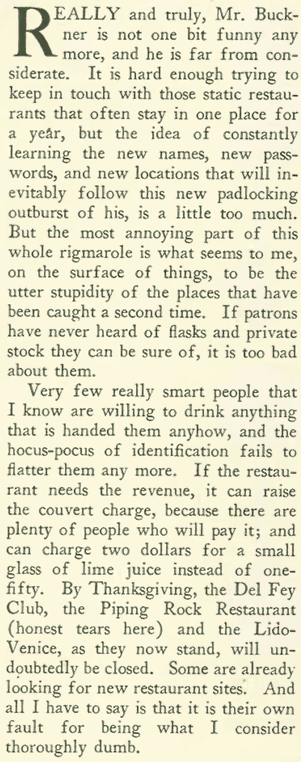
Heck with statements. Lois Long just wanted to have some fun, and led her column, “Tables for Two,” with her own attack on Buckner and on the “stupidity” of establishments that were closed by Buckner’s agents (I include art that accompanied the column by Frank McIntosh—at least that is what I think the “FM” stands for; if I am in error, someone please correct me!):
Screenshot 2015-07-17 11.23.28

Screenshot 2015-07-17 11.23.45

In a previous column (Oct. 17), Long pondered the popularity of a new dance, the “Charleston.” She closed her Oct. 31 column with “telegrams” from exemplary colleges in answer to the query: “Is the Charleston being done at college dances?”

Screenshot 2015-07-17 11.24.53

W.J. Henderson wrote a lengthy article about the upcoming opera season at the Metropolitan Opera (it was opening with La Gioconda), and recalled the days after World War I when the once-popular German singers suddenly grew scarce on the American stage.

1920px-Metropolitan_Opera_House,_a_concert_by_pianist_Josef_Hofmann_-_NARA_541890_-_Edit
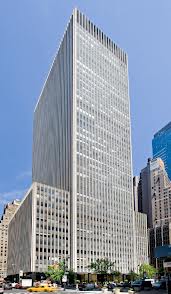
The old Metropolitan Opera House at 1411 Broadway. The “Old Met” opened in 1883 and was rebuilt after a fire in 1892. The interior, shown here, was redesigned in 1903. This photo depicts a recital by pianist Josef Hofmann on November 28, 1937. The old Met was torn down in 1967 and replaced by a 40-story office tower. (Wikipedia)
World-Apparel-Center-1411-Broadway-NY
Site of the old Metropolitan Opera House today.

According to Henderson, this led to a general falling off of quality in the performances, a situation made even worse by the absence of the late, great Enrico Caruso on the Metropolitan’s stage.

In other items, John Tunis wrote about Illinois All-American halfback Red Grange in “Profiles,” calling him “a presentable youth of twenty-two…well-groomed, he would pass anywhere—even in the movies—for a clean type of American manhood.”

Tunis also noted that Grange had been offered a “half a million” to star in movies, and that professional football was ready to offer him a sum “that would cause even the once-mighty Ruth to blanch.” Grange, known as “The Galloping Ghost,” would later join the Chicago Bears and help to legitimize the National Football League (NFL).

5851492109_857e5ac401
Howard (Real Photograph)

The young actor Leslie Howard, who was appearing on Broadway in Michael Arlen’s The Green Hat, wrote a humorous account of theatre life in “The Intimate Diary of An Opening Night.”

It was one of seven articles on the acting life that Howard (perhaps best known for his role as Ashley Wilkes in Gone With the Wind) would write for The New Yorker between 1925 and 1927.

For the record, I include Howard’s first New Yorker article here (with Carl Rose cartoon):

Screenshot 2015-07-17 10.54.36

Screenshot 2015-07-17 10.54.51

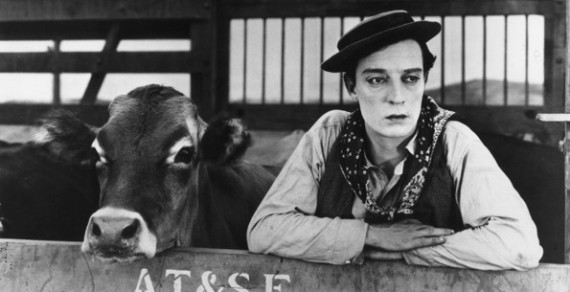
“Motion Pictures” looked at Buster Keaton’s new film, Go West

keaton-cow
Cow and Keaton in Go West (1925) (silentology.com)

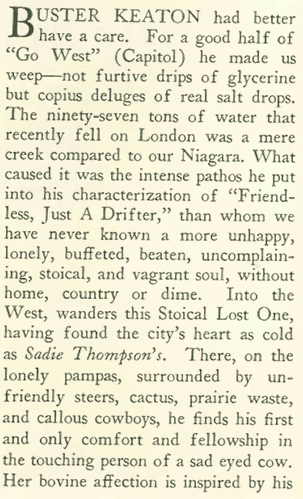
Theodore Shane wrote that what at first seemed to be a real weeper…
Screenshot 2015-07-17 11.05.38

…turned into a comic romp thanks to the introduction of the “sad-eyed cow…”

Screenshot 2015-07-17 11.06.04

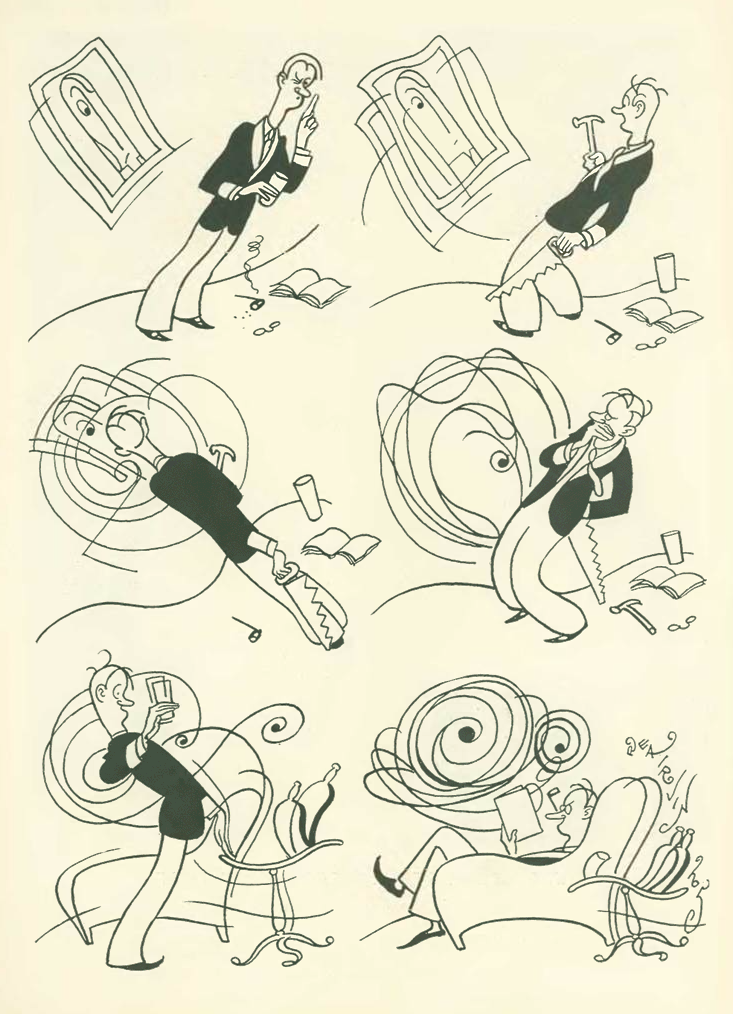
And finally, in keeping with the Prohibition theme, here is a center-spread cartoon by Rea Irvin that seemed to depict the results of consuming too much bootleg booze:

Screenshot 2015-07-17 10.55.20

Screenshot 2015-07-17 10.55.29

Next Time: Oh Behave…
Screenshot 2015-07-17 11.26.37

The Eyes of Lois Long

Screenshot 2015-06-30 12.24.30
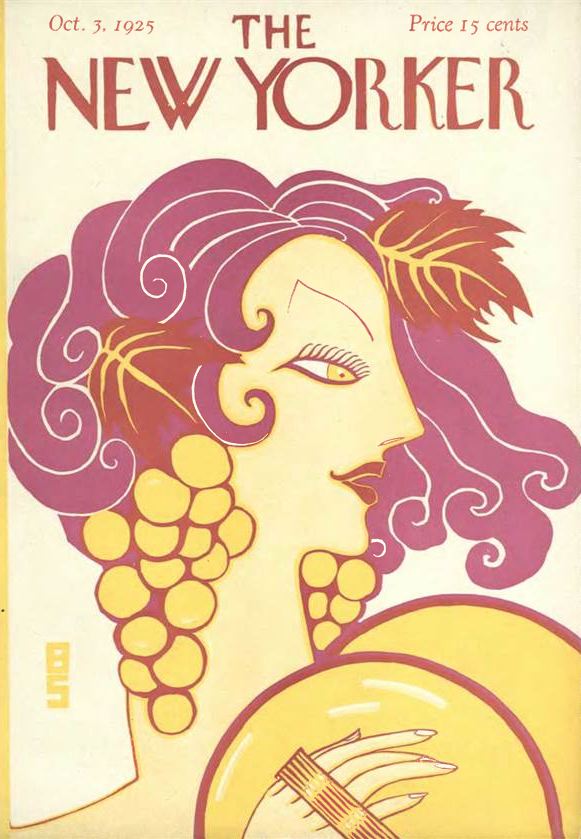
Oct. 3 cover by Barbara Shermund.

At an age when most students are barely out of college (23), Lois Long was emerging as one of The New Yorker’s most prolific contributors and a prominent voice of Roaring Twenties New York.

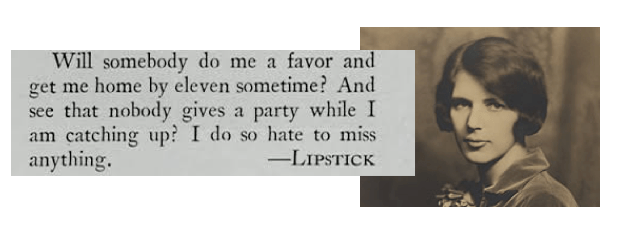
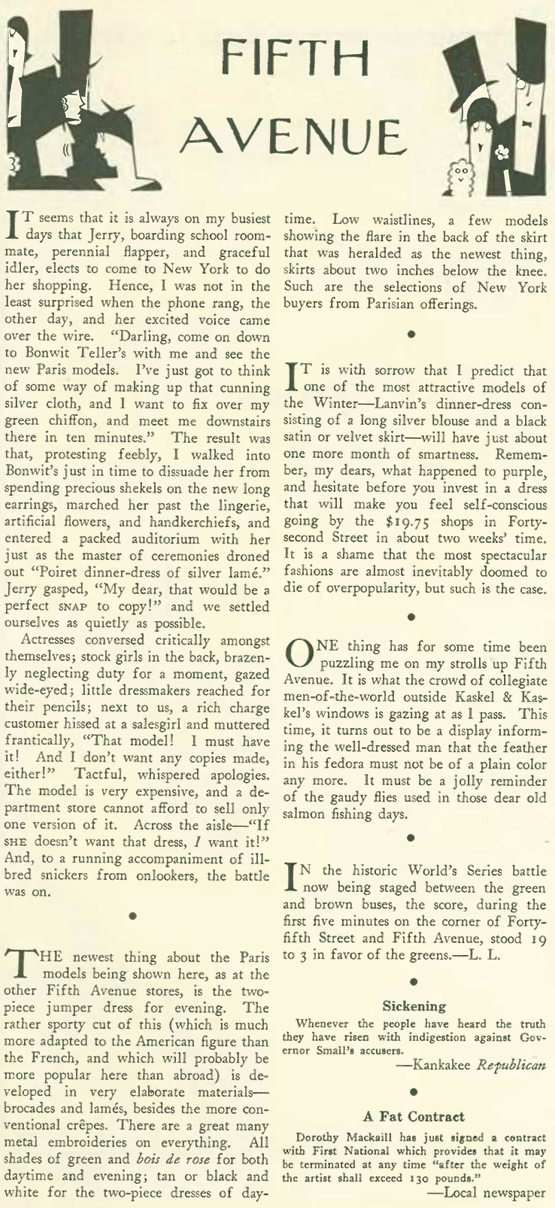
The Oct. 3, 1925 issue not only saw her continuing coverage of night life in “Tables for Two” (which she signed under the pen name “Lipstick”), but also the introduction of her column, “Fifth Avenue” (which she signed L.L.), that would further define her voice at the magazine for years to come.

And The New Yorker wasn’t even her first professional stint as a writer.

Beginning in 1922, Long wrote for both Vanity Fair and Vogue before she caught the eye of New Yorker editor Harold Ross, who hired her to take over the “When Nights Are Bold” column from Charles Baskerville. She later made it her own by changing the name to “Tables for Two.”

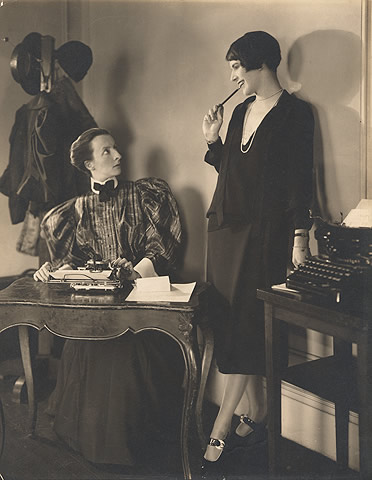
S4772-lg
Lois Long in the 1920s. Photo from Andrea Long Bush. (Wikipedia)

With the Oct. 3 issue she doubled her workload as both an observer of night life and the fashion scene.

According to Judith Yaross Lee’s Defining New Yorker Humor, the “Fifth Avenue” column took a very different tack from the magazine’s original “Where to Shop” listings that were merely classified ads.

Yaross writes that Long’s first “Fifth Avenue” column relied on “the conceit of her friend Jerry, ‘boarding school roommate, perennial flapper, and graceful idler’ (evidently the department’s target reader)…”

The column would soon be renamed “On and Off the Avenue,” and Long would officially assume the title of fashion editor in 1927.

Her obituary in The New York Times (p. 36, July 31, 1974) quoted New Yorker editor William Shawn, who declared that “Lois Long invented fashion criticism,” and that Long “was the first American fashion critic to approach fashion as an art and to criticize women’s clothes with independence, intelligence, humor and literary style.” The article noted that her task was particularly challenging since The New Yorker did not publish photographs “and more than other writers she had to turn to words alone to describe clothes in detail.”

You can read Long’s first “Fifth Avenue” column, featuring her friend, “Jerry,” here in its entirety:

Screenshot 2015-07-06 17.00.55

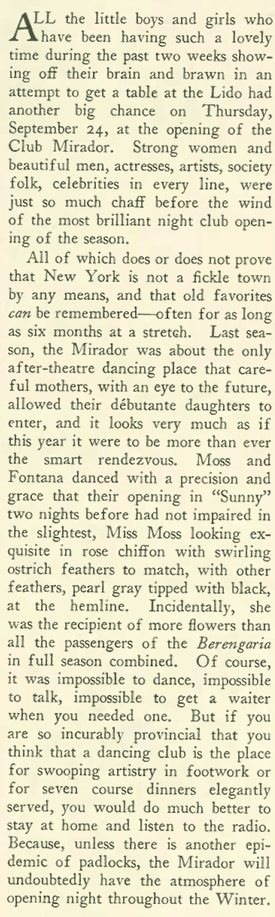
In the same issue, just three pages back, in “Tables for Two,” Long shared these insights on the opening of the Club Mirador:

Screenshot 2015-07-06 16.59.36

And she pulled no punches in this erratum item that appeared below this Johan Bull illustration:

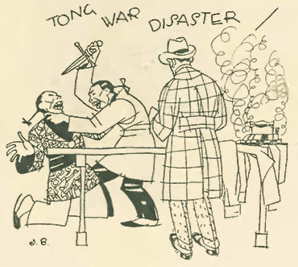
Screenshot 2015-07-06 16.59.52And in “The Talk of the Town,” Bull provided this illustration depicting the flare-up of Tong Wars among New York’s Chinese immigrant population. The main consequence of murderous assault seems to be a patron’s ruined shirt:

Screenshot 2015-07-06 11.44.43

“Profiles” featured Reinald Werrenrath, “A New Yorker Who Sings.” Described by writer Clare Peeler as someone who “looks New York,” the baritone opera singer also recorded popular songs and was a regular on early radio broadcasts.

In “Critique” George S. Kaufman’s The Butter and Egg Man received a positive review by Herman J. Mankiewicz, who wrote that the play was “not for the artistically inclined,” but adds:

Screenshot 2015-07-06 16.49.37

M3Y11255
Gregory Kelly as Peter Jones in The Butter and Egg Man (1925). The Broadway play was a resounding success. Sadly, the beloved Kelly would die of a heart attack in 1927 (at age 36) while on tour with the play. (Museum of the City of New York)

By the way, the queen of New York nightlife, Texas Guinan, has been attributed as the source of the term “Butter and Egg Man” to generally describe generous souls (according to a “Talk” item in the Oct. 31 issue). At the movies, Theodore Shane found little to amuse as he panned The Tower of Lies (“colorless and loose-jointed”). Rather than capturing a Scandanavian setting, Shane wrote that the film “reeks of the studio scenario shops and the pleasant fields of Long Island.”

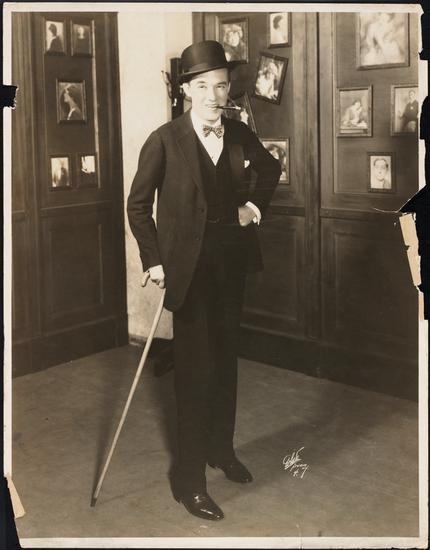
syd_chaplin1
LITTLE TRAMP’S BIG BROTHER Sydney Chaplin performed in 37 films, including The Man on the Box (1925) with actress Alice Calhoun (above). He was Charlie Chaplin’s older brother and business manager. (Ohio State University)

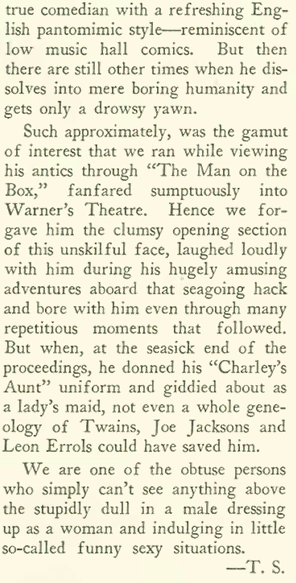
He also took Sydney Chaplin’s attempts at humor to task in the film, The Man on the Box, including his tired “male dressing up as a woman” gag.

Screenshot 2015-07-06 16.56.13

Screenshot 2015-07-06 16.56.19

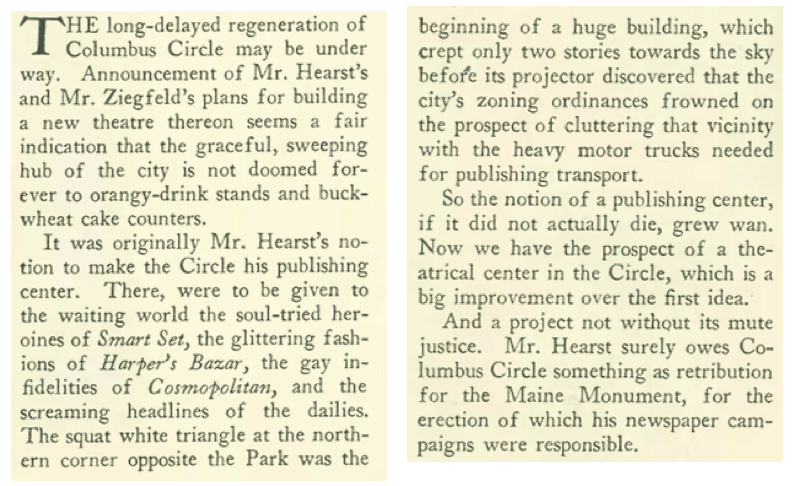
“Talk” also commented on changing face of New York City, including plans for a new Ziegfeld theatre as part of a “regeneration” of Columbus Circle:

Screenshot 2015-07-06 16.43.32

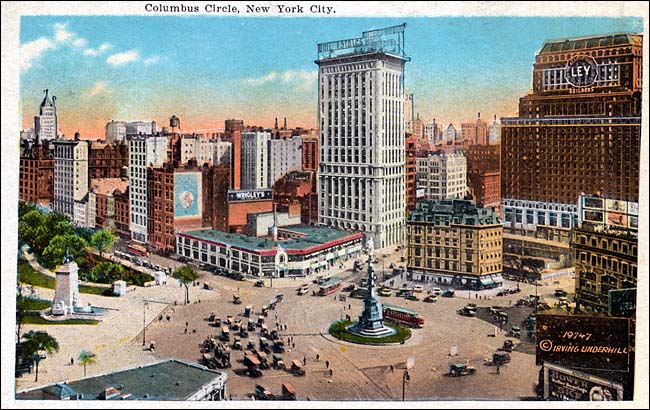
According to performingartsarchive.com, Florenz Ziegfeld took over Columbus Circle’s Cosmopolitan theatre in 1925 and updated the interior. The building originally opened in 1903 as the Majestic (where the first musical stage version of The Wizard of Oz and the play Pygmallian debuted). It was briefly a burlesque house in the early 1920s (Minksy’s Park Music Hall) until William Randolph Hearst acquired it as a main venue for his Cosmopolitan Pictures company.

04blocks2_lg
Postcard image of Columbus Circle, circa 1925. The Cosmopolitan is at far lower right. (NYC Architecture)

Under Ziegfeld, the Cosmopolitan returned to “legitimate” theater, but in 1926 he gave it up to focus on the construction of his self-named theatre at Sixth Avenue and 54th Street. The Cosmopolitan (renamed the International in 1944) would continue to serve both as a venue for movies and live performances until 1949, when it was acquired by NBC as a television studio for the TV program Your Show of Shows, featuring Sid Caesar and Imogene Coca. NBC left the International in 1954, and not long afterwards, the former theatre, along with most of its neighbors on Columbus Circle, was razed to make way for the New York Convention Center.

International-Theatre_NYC2-1
The long-gone Majestic, later Cosmopolitan theatre on Columbus Circle. (performingartsarchive.com)

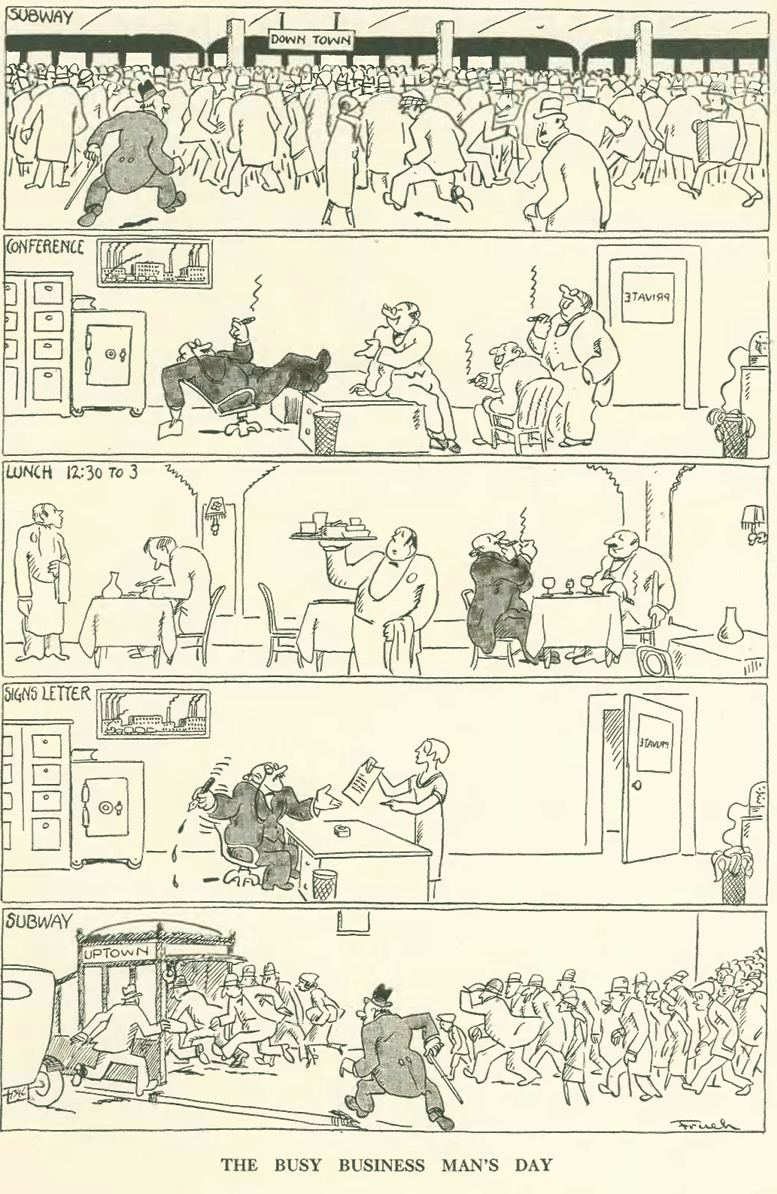
Also from this issue, Al Frueh’s take on a “Busy Business Man’s Day:”

Screenshot 2015-07-06 12.31.39

Hans Stengel delivered “Sermons on Sin”…

Screenshot 2015-07-06 12.24.52

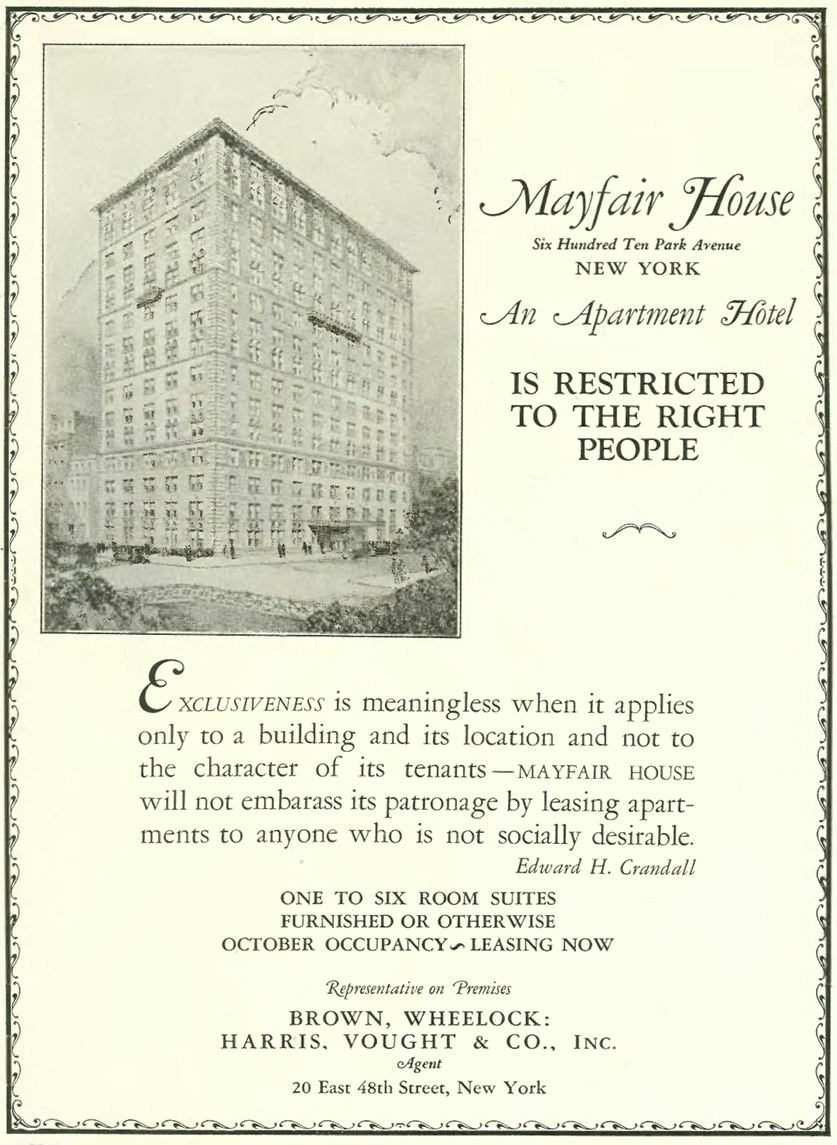
And lest we doubt the snob appeal of our fledgling magazine, check out this advertisement from the Mayfair House assuring that tenants will be kept a safe distance from the proles and other undesirables…

Screenshot 2015-07-06 17.01.14

And to close, a back page ad for the Restaurant Crillon, featuring the unmistakable graphic innovation of Winold Reiss:

Screenshot 2015-07-06 17.01.46

Next time: A Letter From Genêt…

Screenshot 2015-07-06 16.39.29


The Maddest Week

Screenshot 2015-06-26 15.03.49
Sept. 26 cover by Rea Irvin.

“The maddest week any of us remembers in the theatre,” observed “The Talk of the Town” for Sept. 26, 1925, as The Green Hat (the play based on Michael Arlen’s popular novel) was creating a riotous rush for tickets on The Great White Way.

Talk described The Green Hat as “a play so eagerly sought after that even in a week providing 12 openings, speculators were offering five hundred dollars for twenty tickets” ($500 then is roughly equivalent to $6,800 today).

It was noted that despite the openings of such plays as The Vortex and No, No Nanette, The Green Hat was consuming most of the attention, with the opening attracting “every bigwig of Broadway” including Irving Berlin.

RV-AA996_ARLEN_DV_20101210165837
Michael Arlen in 1925 (Wall Street Journal)

One notable guest, however, did not arrive until after the second act: Michael Arlen himself. It was said that Arlen had never seen a complete performance of his play, due to “nervousness.”

Perhaps there was a good reason for his butterflies.

Later in the “Critique” section, Herman J. Mankiewicz (H.J.M.) pronounced The Green Hat as “unreal and consequently uninteresting…a grand sentimental debauch for the romantically inclined. It has no place at all in the discussion of the Higher Theatre…”

Mankiewicz observed that the acting itself was passable, with Katherine Cornell delivering an “excellent, though scarcely ideal portrayal of Iris March,” but she was “showing the strains of playing a role that has no more grasp on life than a little boy’s daydream that the Giants will, after all, snatch the pennant from Pittsburgh.”

A publicity photo from the play:

tumblr_lzh0jmptsi1qg8r34o1_1280
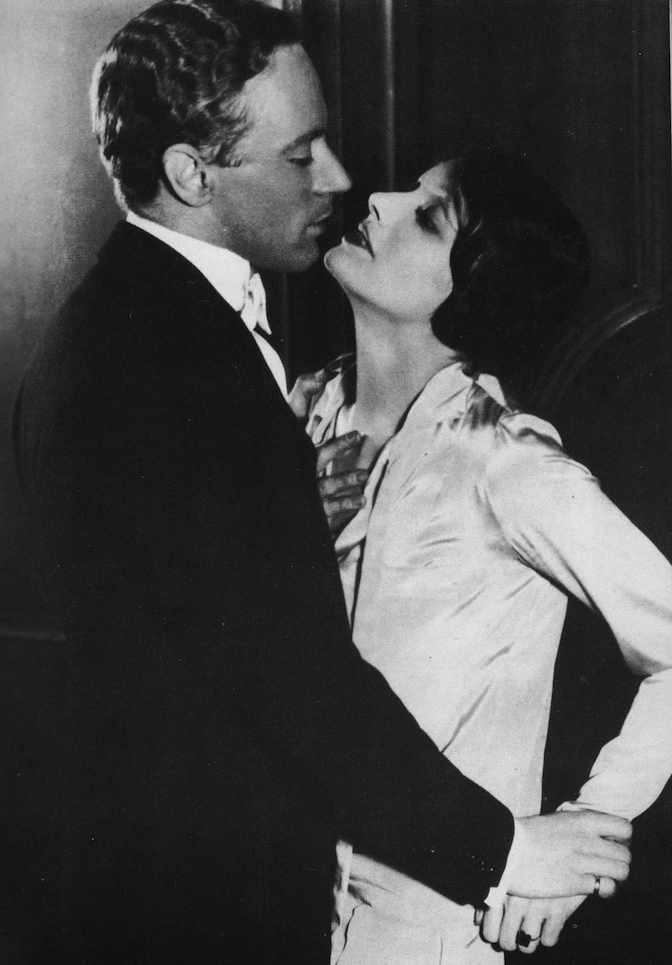
Broadway newcomer Leslie Howard embraces Katherine Cornell in this publicity photo from The Green Hat. (inafferrabileleslie)

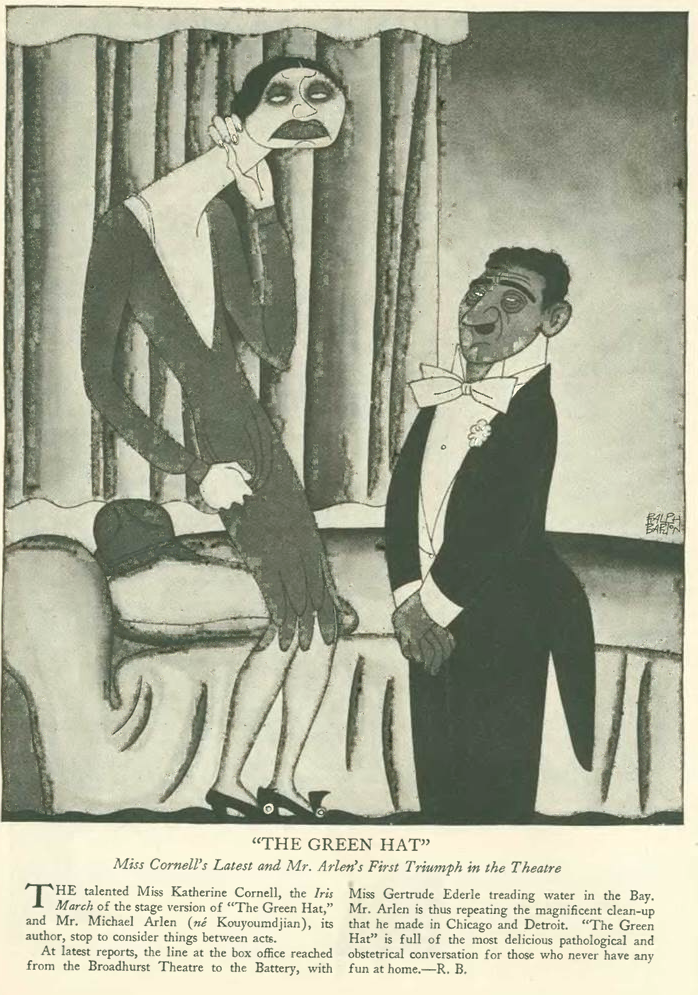
And Ralph Barton’s unique take on the whole thing:

Screenshot 2015-06-30 10.53.40

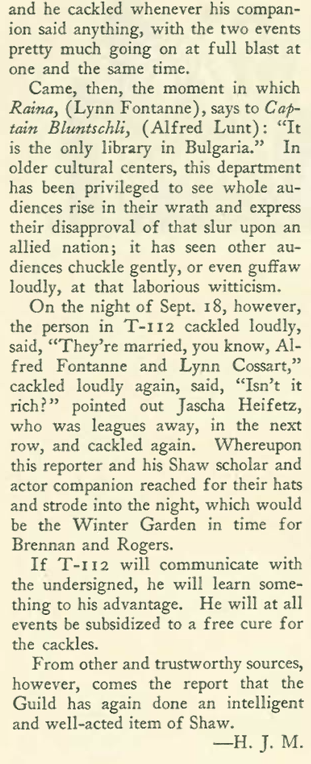
Mankiewicz also reviewed the play, Arms and the Man, but his focus was not the play but rather an annoying patron in seat T-112:

Screenshot 2015-06-30 11.02.48

Screenshot 2015-06-30 11.03.17

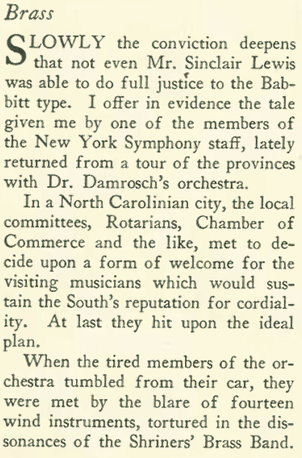
Although the Scopes Trial was long over, The New Yorker still found opportunities to take potshots at the backwardness and Babbittry of folks in the hinterlands:

Screenshot 2015-06-30 09.53.38

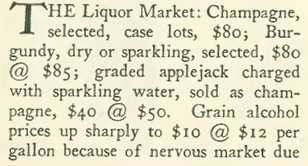
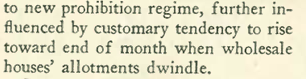
Talk also continued to help its readers with regular updates on the bootleg liquor trade:

Screenshot 2015-06-30 09.53.07

Screenshot 2015-06-30 09.53.18

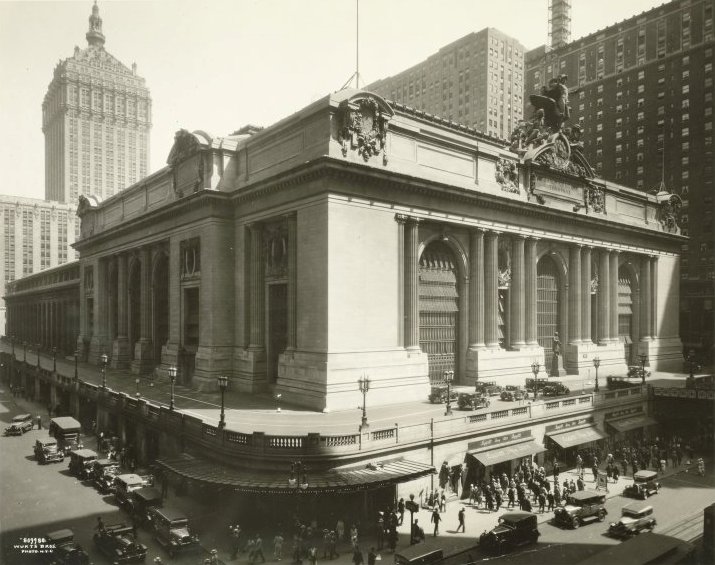
An article titled “Mid-Town” celebrated the 100th anniversary of 42nd Street. Henry Collins Brown wrote that 100 years had changed the street “from a dusty country lane to a self-contained metropolis. The brownstone of its middle age has given way to granite and marble. It has seen a railroad dynasty rise and has written its epitaph on a narrow, short avenue.”

17
A 42nd Street landmark: Grand Central Station in the 1920s. (wirednewyork)

Then Brown concluded with these prescient thoughts:

Screenshot 2015-06-30 10.10.01

An illustrated tribute (by Rea Irvin) to 42nd Street appeared in the “Talk” section:

Screenshot 2015-06-30 09.51.38

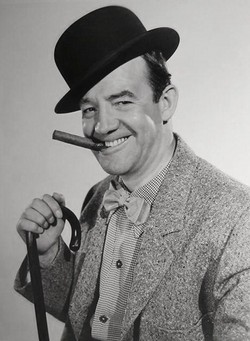
In “Profiles,” Jo Swerling looked at the life of comedian Louis Josephs, known to all as Joe Frisco, a mainstay on the vaudeville circuit in the 1920s and 1930s.

Swerling wrote admiringly that Frisco—who was from Dubuque, Iowa, of all places—was “the comedian’s comic.”

7915_125375025410
Joe Frisco (findagrave.com)

Considered one of the fastest wits in the history of comedy, Frisco was a famous stutterer but could recite his scripted dialogue unimpaired. According to Wikipedia, he was first known for his popular jazz dance act–called by some the “Jewish Charleston”– which was a choreographed series of shuffles, camel walks and turns. He usually danced in a derby hat with a king-sized cigar in his mouth, often performing in front of beautiful women “smoking” prop cigars.

His most famous line was uttered while in a New York hotel. A clerk learned that Frisco had a guest in a room that was only reserved for one occupant, so he called up to the room and said, “Mr. Frisco, we understand you have a young lady in your room.” Frisco replied, “T-t-t-then send up another G-g-gideon B-b-bible, please.”

With vaudeville in decline, in the 1940s Frisco moved to Hollywood and appeared in several low-budget movies. A compulsive gambler who was constantly in debt, he died penniless in Los Angeles in 1958.

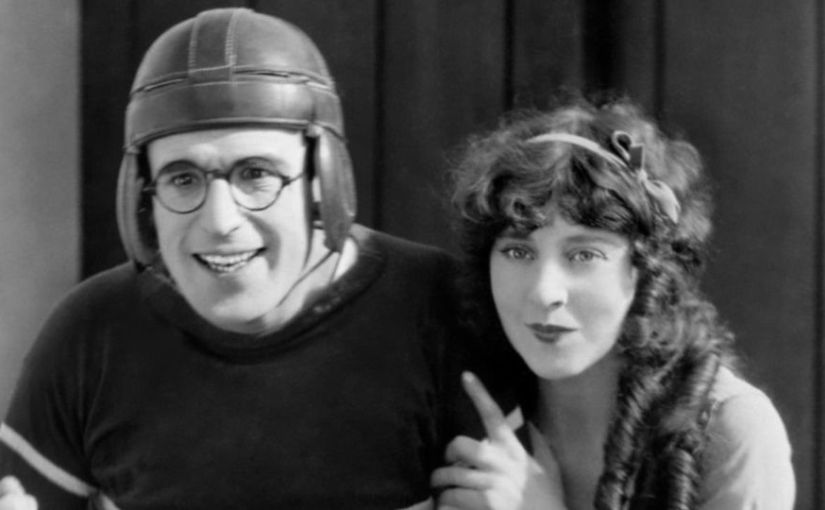
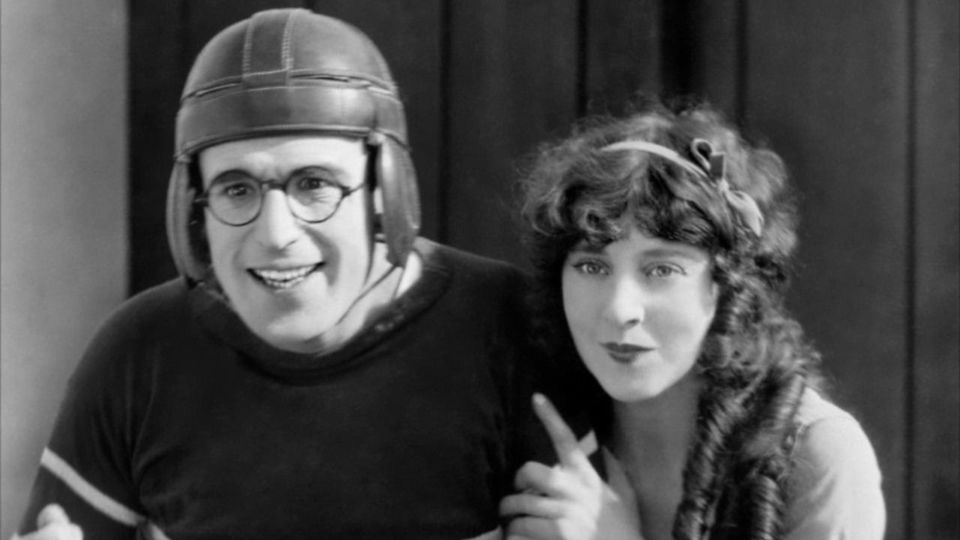
In “Motion Pictures,” Harold Lloyd’s “college comedy,” The Freshman, which Theodore Shane wrote was filled with “glorious laughter.” Shane also noted that another Rin Tin Tin picture was appearing at Warner’s Theatre (Below the Line), and “as usual our hound hero is enlisted on the side of virtue.”

FOLLIES OF YOUTH…Harold Lloyd and Jobyna Ralston in The Freshman. (avclub.com)

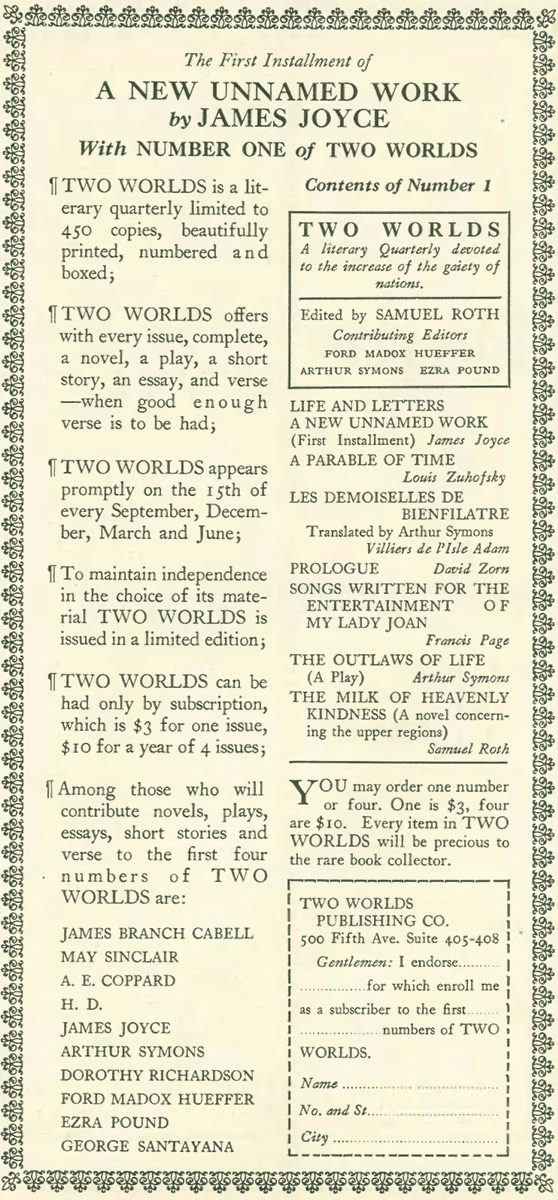
An interesting ad near the back of the magazine (and the book reviews) offered readers an opportunity to sample a new, unnamed work by James Joyce:

Screenshot 2015-06-30 11.13.05

What this ad described was an avant-garde work by Joyce that would appear in serialized form until it was finally published in its entirety in 1939 as Finnegans Wake.

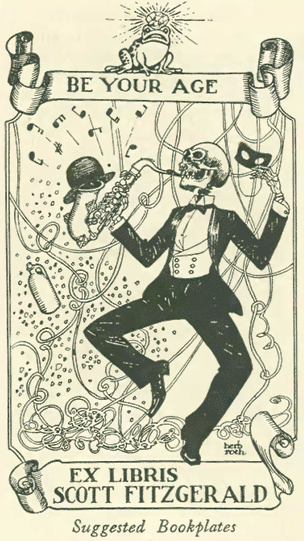
In other book-related matters, this illustration by Herb Roth appeared in the pages of the “Critique” section:

Screenshot 2015-06-30 11.03.28

Anne Margaret Daniel wrote about this “Suggested Bookplate” in her May 1, 2013 blog for the Huffington Post, and made this observation:

“Be Your Age” shows how fully the magazine at the pulse of the Jazz Age registered both Fitzgerald’s personification of the decade, in many readers’ eyes, as well as the dangers he had foretold in The Beautiful and Damned, and again in Gatsby of decadence and of the coming Crash. It’s a very double-edged image of festivity and fatality, just like so many of the images of people at parties that end in disasters in Fitzgerald’s best-known, and best-loved, novel.

Charles Baskerville (Top Hat) continued to report from the City of Lights in his “Paris Letter,” mainly focusing on the doings of American tourists. No offense to the urbane and talented Baskerville (also a great illustrator), but I am looking forward to Janet Flanner’s (a.k.a. Genêt) take on Paris in future issues (Does anyone out there know if she wrote the unsigned “Paris Letter” in the Sept. 5 issue?).

The issue featured a rather faded-looking movie ad for the back cover:

Screenshot 2015-06-30 11.19.19

And a still from the film on which the drawing is no doubt based:

greta-nissen-the-wanderer-1925-sad-hill-archive
Tyrone Power Sr. and Greta Nissen in The Wanderer (1925) (Sad Hill Archive)

Next Time: Lois Long’s Fifth Avenue…
Screenshot 2015-06-30 12.24.30


Lighter Than Air

The New Yorker was launched as a sophisticated, funny, urbane weekly, so it’s always interesting to see how the magazine will respond to a national tragedy.

Screenshot 2015-06-19 15.47.00
Sept. 12, 1925 cover by Rea Irvin, depicting plutocrats on a Merry-Go-Round.

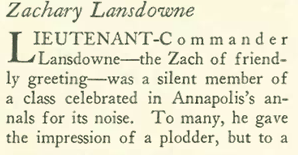
For example, the Sept. 12, 1925 “Talk of the Town” featured a brief item titled “Zachary Lansdowne.” It opens with a paragraph describing the lieutenant commander’s demeanor and character:

Screenshot 2015-06-24 14.49.58

Screenshot 2015-06-24 14.50.16

Then it becomes apparent that this is a eulogy of sorts, since Lansdowne was the pilot of the American dirigible S.S. Shenandoah:

Screenshot 2015-06-24 14.52.40

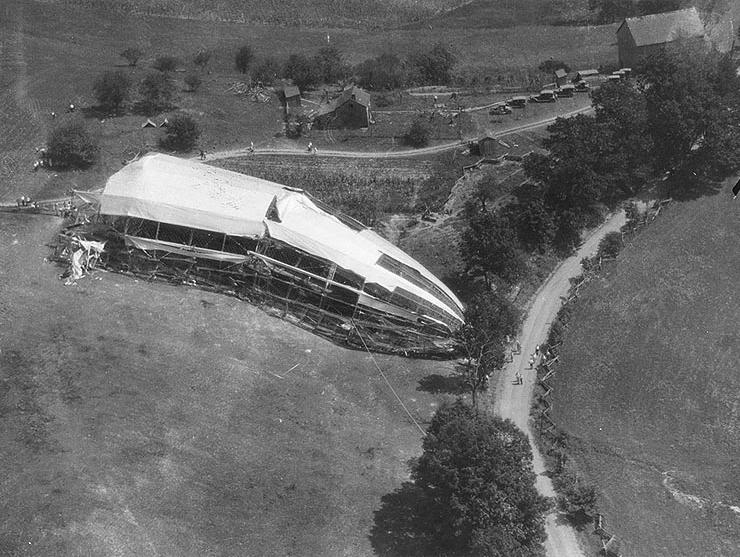
Built in 1922, the S.S. Shenandoah was the first of four U.S. Navy airships. On Sept. 2, 1925, it departed on a promotional flight that would include flyovers of 40 cities and visits to state fairs. While passing through thunderstorms over Ohio on the morning of September 3, the Shenandoah was caught in a violent updraft that carried it beyond the pressure limits of its helium gas bags. It was torn apart in the turbulence and crashed in several pieces. Fourteen of Shenandoah‍ ’s crew, including Commander Lansdowne, were killed. Amazingly, there were 29 survivors who succeeded in riding three sections of the airship to earth.

USS_Shenandoah_Wrack
Wreck of the Shenandoah. The front section rests in a field near Caldwell, Ohio. (Wikipedia)

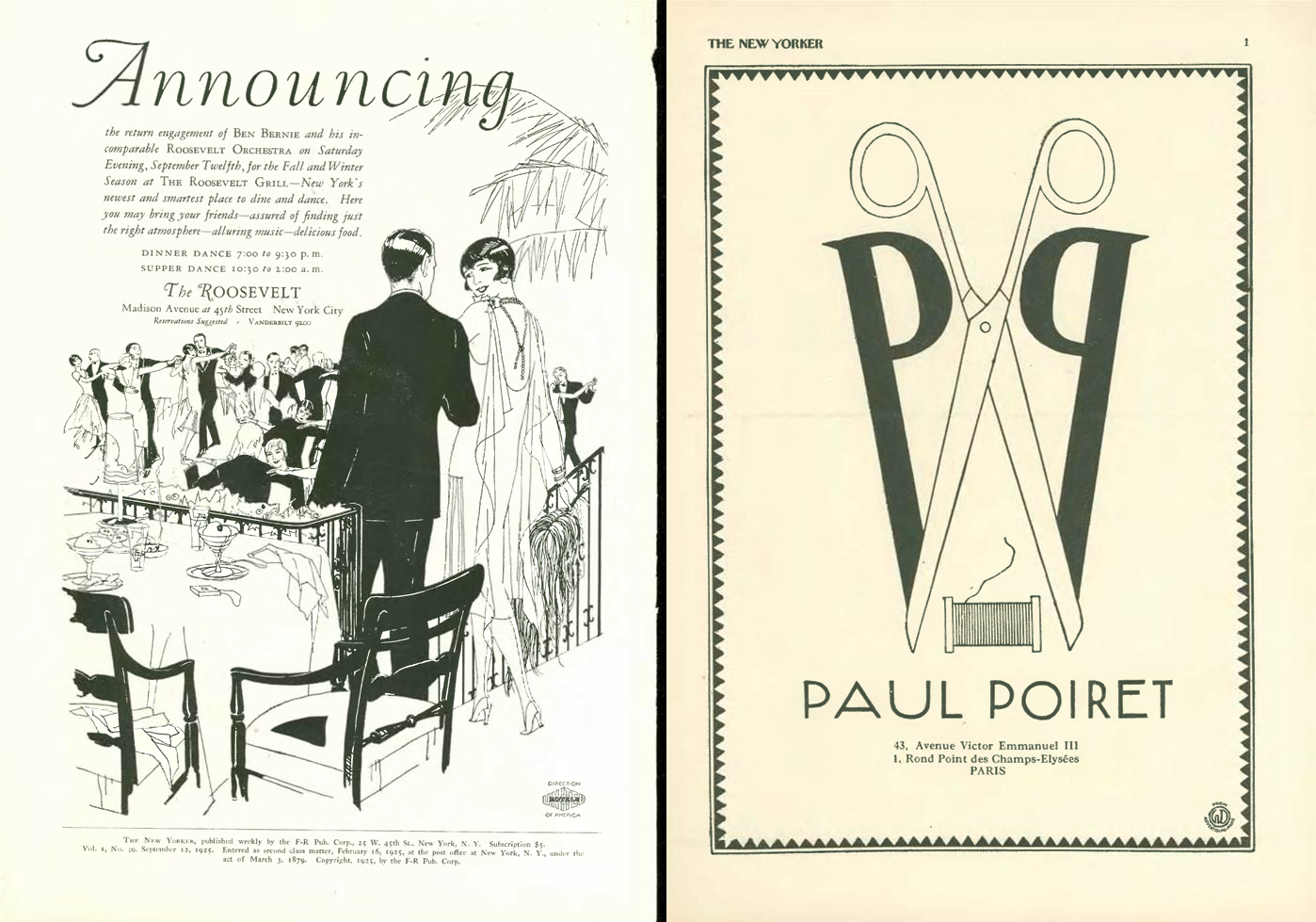
After a lean summer, advertising in The New Yorker picked up dramatically, with the opening spread for the Sept. 12 issue featuring full-page ads by The Roosevelt Hotel and the French fashion house Paul Poiret:

Screenshot 2015-06-24 09.29.00

This infusion of advertising was largely the result of a big promotional push orchestrated by John Hanrahan, considered one of the most gifted writers of publisher promotions. The magazine’s major (and really only) investor, Raoul Fleischmann, brought Hanrahan on board to address the magazine’s dearth of advertising, a move that was much to the dislike of the acerbic Harold Ross.

The trials of starting a new magazine were not lost on Ross, as was evidenced in this Newsbreak on page 13:

Screenshot 2015-06-24 15.15.07

But Ross knew that the ad push helped the bottom line, and he did his part to draw new talent to the magazine and improve its overall quality.

Screenshot 2015-06-24 16.12.10
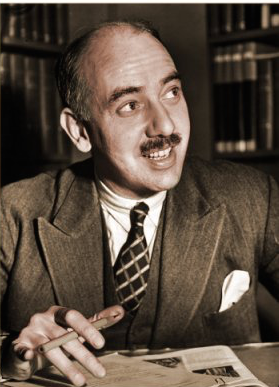
Ralph Ingersoll in the 1940s (baseball-fever.com)

New talent included Ralph Ingersoll, who joined the magazine as managing editor in the summer of 1925. Ingersoll went to work giving the magazine a “voice,” especially in the rather weak and unfocused “Talk of the Town” section.

After suffering Ross-induced burnout in 1930, Ingersoll would go on to serve as a managing editor of Time-Life Publications, and would later found the short-lived, left-wing daily newspaper, PM.

That summer Ross also brought on Katharine Angell (later Katharine White) as a part-time reader of manuscripts, but almost immediately she became a full-time employee and was soon involved in every aspect of the magazine.

220px-Katharine_Sergeant_Angell_White
Katherine Angell (Wikipedia)

She is often credited with the magazine’s maturity and its sophisticated taste and style. It was through Angell that Ross would meet and hire both E.B. White (who would later marry Angell) and James Thurber.

In the “Profiles’ Section, Murdock Pemberton took a look at the challenges facing Richard Bach in his attempts to promote the arts to business-minded New Yorkers. Bach was an “Associate in Industrial Arts” at the Metropolitan Museum of Art. Today, merchandise based on art museum collections is a ubiquitous practice, but in 1925 Bach’s job was viewed as somewhat distasteful:

Screenshot 2015-06-24 15.25.24

Screenshot 2015-06-24 15.25.33

Morris Markey (“In The News”) tried to make sense of the continued enforcement of Prohibition, and seemed to conclude that it originated in Puritan resentment in the Midwest, and would continue to be enforced according to regional customs and strictures:

Screenshot 2015-06-24 15.29.51

Screenshot 2015-06-24 15.31.24

Screenshot 2015-06-24 15.31.35

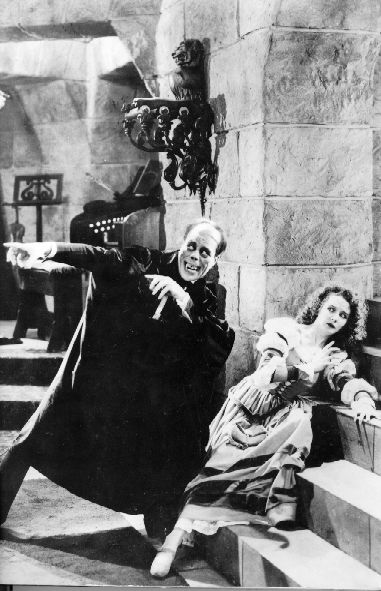
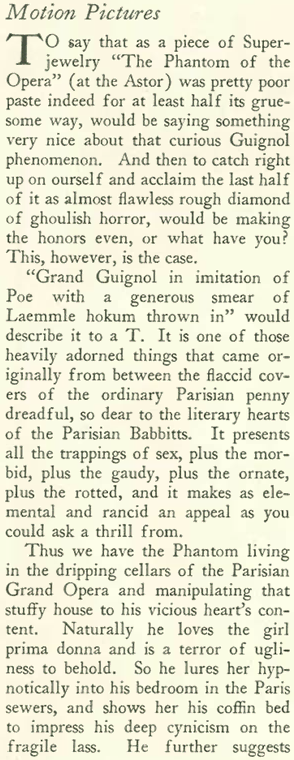
And true to form, New Yorker film critic Theodore Shane panned a movie that today is considered a classic of the silent era:

PhantomOp
UM, AWKWARD…Theodore Shane called Phantom of the Opera “Grand Guignol in imitation of Poe with a generous smear of Laemmle hokum”…in this scene, Erik, The Phantom (Lon Chaney) woos Christine Daaé (Mary Philbin) (Wikipedia)

Screenshot 2015-06-24 15.41.27

Screenshot 2015-06-24 15.41.36

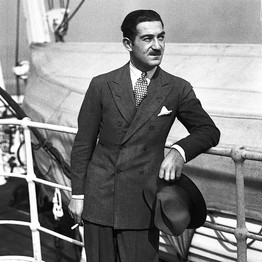
With this issue Lois Long retired “When Nights Are Bold” (a column on local nightlife she inherited from Charles Baskerville) and introduced us to a renamed column, “Tables For Two.” She opened with a description of a police raid on a on old barroom where she had been apparently enjoying a nice beefsteak. She then abandoned the “slums” for the Plaza Hotel, where she spied none other than actors Charlie Chaplin and Adolph Menjou:

Screenshot 2015-06-24 15.51.15

Ads return to the back cover, an indication that things are picking up:

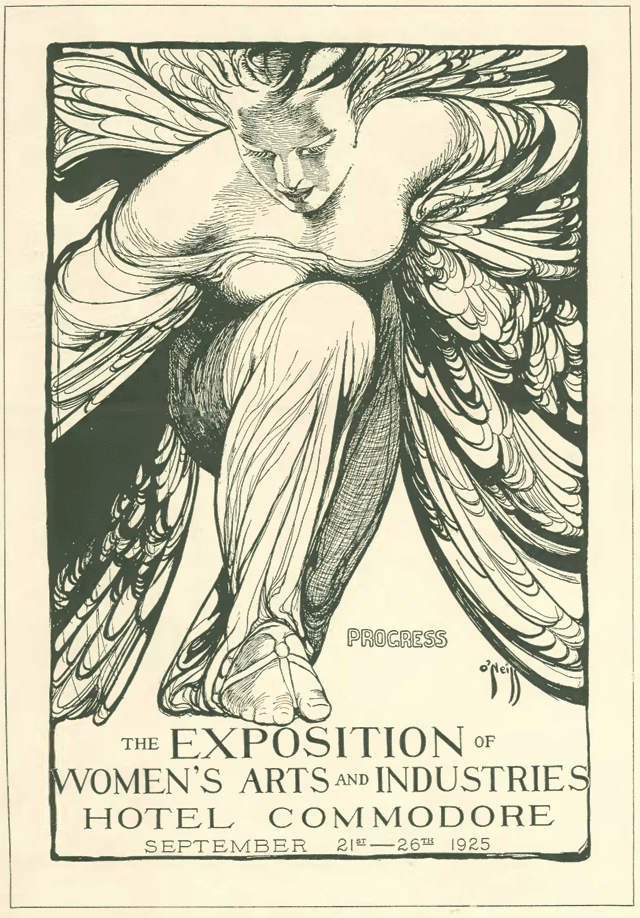
Screenshot 2015-06-24 15.59.42

The poster above was created by American illustrator Rose O’Neill, who is best known as the creator of the popular Kewpie comic characters in 1909. The wildly popular Kewpies were later produced as dolls, and became one of the first mass-marketed toys in America. Raised in rural Nebraska, O’Neill was active in the women’s suffrage movement and at one point was the highest-paid female illustrator in the world.

Screenshot 2015-06-25 09.48.56
Rose O’Neill in 1907, and her famous creation (Wikipedia)

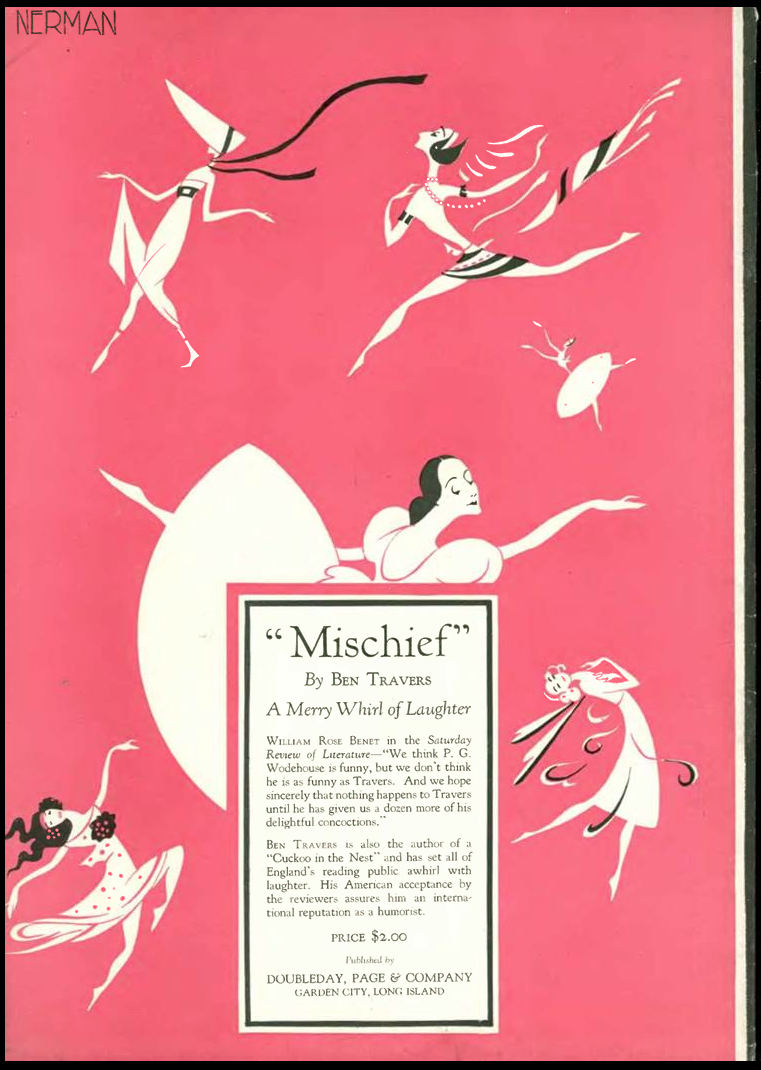
On the back cover, we are treated to some more great illustrations by artist Einar Nerman in this ad from Doubleday:

Screenshot 2015-06-24 15.59.53

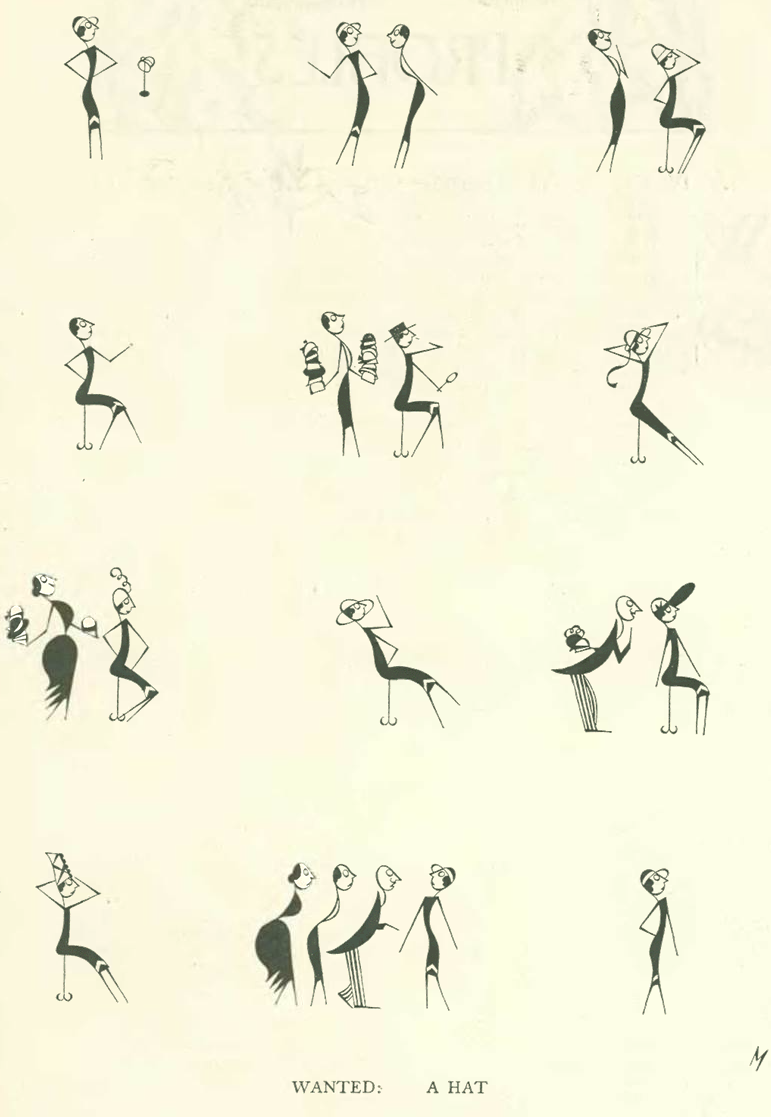
And a whimsey from Julian de Miskey:

Screenshot 2015-06-24 15.13.00

Next time: Signs of Autumn…

Screenshot 2015-06-24 16.52.50

They Call It Burlesque

Screenshot 2015-06-09 14.01.58
August 22, 1925 cover by A.E. Wilson.

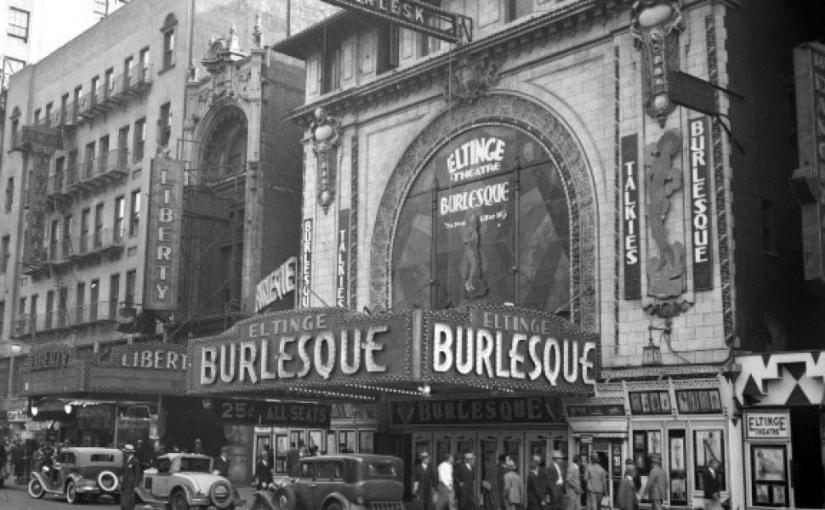
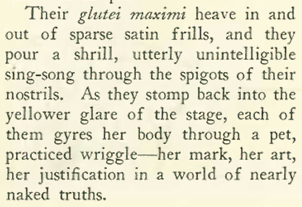
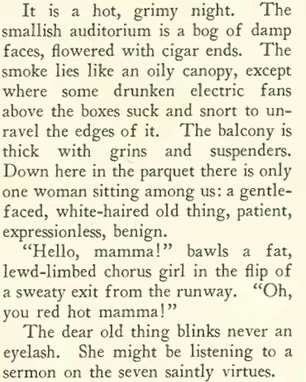
The critic Gilbert W. Gabriel was more than a bit appalled by the spectacle at the old Olympic Theatre, where a tired and “degenerated” cast of burlesque performers took turns shaking their ancient haunches in the direction of the former Julliard student.

Gilbert’s article in the August 22, 1925 New Yorker, “They Call It Burlesque,” described the performance at the Olympic on East Fourteenth Street as “on its last legs.” The once “honest animalistic, gorgeously orgiastic burlesque show of ten or twenty years ago” had “degenerated in decency,” he wrote.

Screenshot 2015-06-12 11.13.55
Illustration in The New Yorker of the Olympic Burlesque by Reginald Marsh.

As the performers wiggled up and down the runways, Gilbert noted:

Screenshot 2015-06-12 11.06.57

The audience was an equally sad lot:

Screenshot 2015-06-12 11.08.02

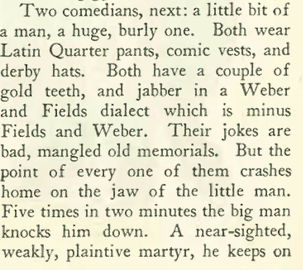
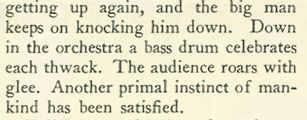
There is some relief expressed when two comedians appeared, but they offer an unimaginative routine:

Screenshot 2015-06-12 11.10.25

Screenshot 2015-06-12 11.10.33

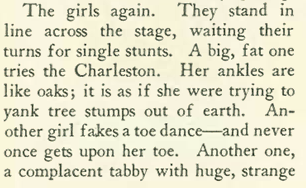
And then back to the dancers:

Screenshot 2015-06-12 11.11.03

Screenshot 2015-06-12 11.11.26

And still more…

Screenshot 2015-06-12 11.11.56

Happier news over in “The Talk of the Town,” where jazz was getting some respect: “Jazz, successor to the outcast ragtime, each day is becoming acceptable. It is the young brother of the musical family, irresponsible and at time highly irritating, but, nevertheless, acknowledged.”

It was reported that even famed violinist Jascha Heifetz “dabbled” in jazz as an amusement, and writers of jazz were “no longer those products of East Side dives,” but rather included the likes of Buddy de Sylva, lyrist to Al Jolson, and George Gershwin, “high priest of jazz,” who was besieged by symphony conductors for his “Symphony in Blue” (better known today as Rhapsody In Blue).

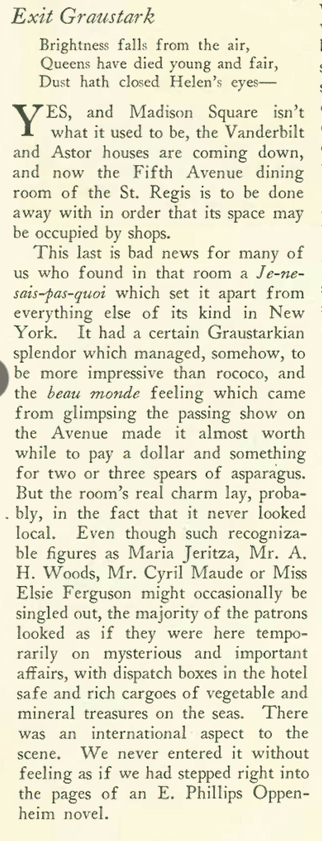
“Talk” continued its lament of the changing face of Fifth Avenue:

Screenshot 2015-06-12 14.20.34

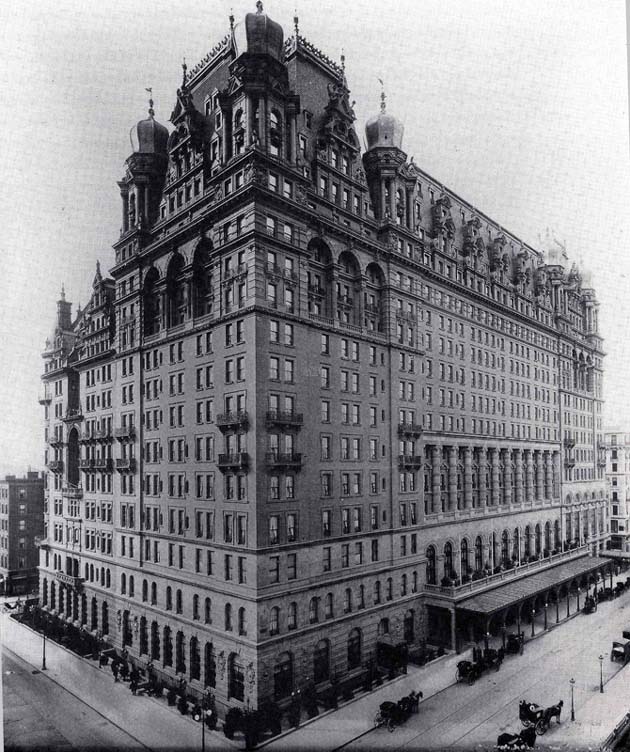
And the Waldorf Astoria was being remodeled in order to add shops on the ground floor along with “125 bathrooms,” giving the famed hotel “a bath for almost every room.” In just four years the old Waldorf would be torn down and replaced by the Empire State Building.

017- Waldorf Astoria
The old Waldorf Astoria was getting an upgrade, but it would fall to a wrecking ball in only four years. (nycago.org)

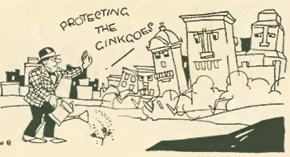
“Talk” also noted the planting of Ginkgo trees in the city:

Johan BullScreenshot 2015-06-10 16.20.44

Screenshot 2015-06-10 16.20.33

Although prized today for their beauty and hardiness, not all New Yorkers are in love with the strong odor of its fruit. In the June 30, 2008 issue of The New Yorker, Lauren Collins examined the activities of the “Anti-Ginkgo Tolerance Group” in her article “Smelly Trees.”

“Talk” also offered a brief glimpse into the latest adventures of Pola Negri, noting in its “This Week” section that the actress had paid “$57,000 customs dues in seized jewels…”

honey-kennedy-pola-negri-by-edward-steichen-vanity-fair-june-1925-02
Pola Negri liked nice things (Edward Steichen for Vanity Fair, 1925)

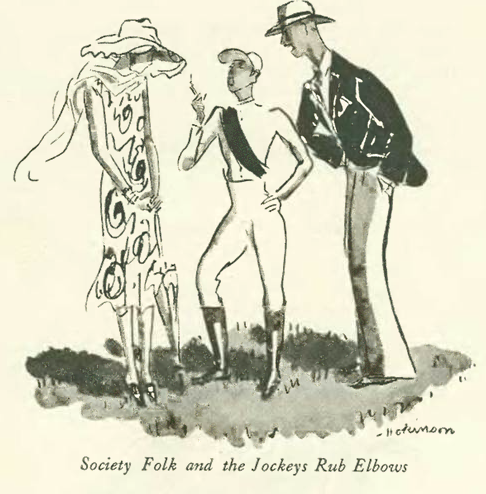
In other items, Helen Hokinson provided illustrations for an article on the horse races at Saratoga…

Screenshot 2015-06-12 14.24.41

John Tunis examined the life of tennis star Elizabeth “Bunny” Ryan in “Profiles” … and E.B. White and Alice Duer Miller offered their thoughts on why they liked New York:

Screenshot 2015-06-12 14.27.59

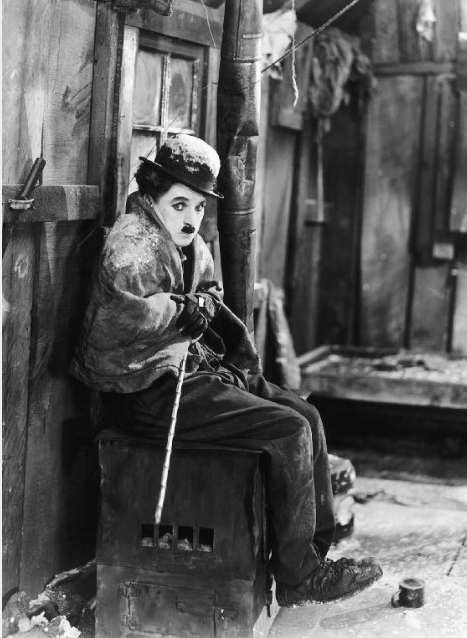
“Moving Pictures” featured a lengthy review of Charlie Chaplin’s The Gold Rush. Theodore Shane (“T.S.”) wrote that the film’s opening night at the Strand attracted such celebrities as Will Rogers and Constance Bennett.

Screenshot 2015-06-12 16.21.41
Cheer Up Charlie…Chaplin in The Gold Rush (1925) (United Artists)

Shane observed that this “dramatic comedy” was a “serviceable picture,” but perhaps Chaplin was getting “too metaphysical about his pathos” and could have used some old-fashioned pie-in-the-face slapstick.

As an example, in a scene in a typical Klondike town, Shane wrote that “one might be given to expect wonders of Gold Rush burlesque with the old Chaplin at the receiving end of the Klondike equivalent of a custard. But one is doomed to disappointment, for Chaplin has seen fit to turn on his onion juices in a Pierrot’s endeavor to draw your tears…We cannot help but recall with a tinge of sadness, the old days when custard was young.”

The_Lucky_Horseshoe_1925_Poster
(Wikipedia)

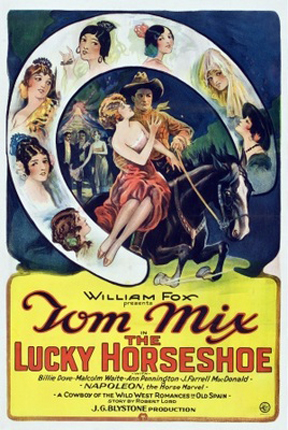
Shane went on to give short but favorable reviews to Rex Reach’s Winds of Chance (at the Piccadilly Theatre), the film’s chief props consisting of “string ties, wooden saloons, ½ dozen cold-blooded murders and the tenderfoot who conquers everything…Shane also noted that the “spiritual features” of Tom Mix in The Lucky Horseshoe (at the Rialto) lent themselves delightfully to “a lovely and sensitive drama of moyen age and modern machinations in the Fairbanks style.”

In “Books,” Harry Este Dounce (“Touchstone”) suggested readers take a look at Carl Van Vechten’s Firecrackers as a good introduction to the writer’s unique style, while J.D. Bereford’s The Monkey Puzzle was deemed only “partly good” but worth reading.

Screenshot 2015-06-12 16.35.08
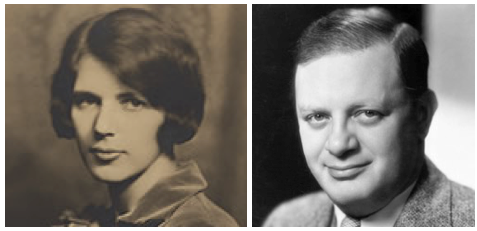
Lois “Lipstick” Long and Herman J. Mankiewicz. (PBS/Wikipedia)

In her regular nightlife review (“When Nights Are Young”), Lois Long (“Lipstick”) playfully sparred with her New Yorker colleague, theater critic Herman J. Mankiewicz:

Screenshot 2015-06-12 14.58.10

Long was referencing this Mankiewicz review in a previous issue (Aug. 8):

Screenshot 2015-06-12 15.05.24

And it all started when Long offered this observation in her July 25 “When Nights Bold” column:

Screenshot 2015-06-12 15.11.51

I hope you are fully sated. As a palate cleanser, I offer yet another droll observation of the world of old money by Gardner Rea:

Screenshot 2015-06-12 14.30.06

Next time: The waning summer season…

Screenshot 2015-06-10 16.51.20