The sad world of “taxi dancers” was explored by Maxwell Bodenheim in the June 12, 1926 edition of The New Yorker.
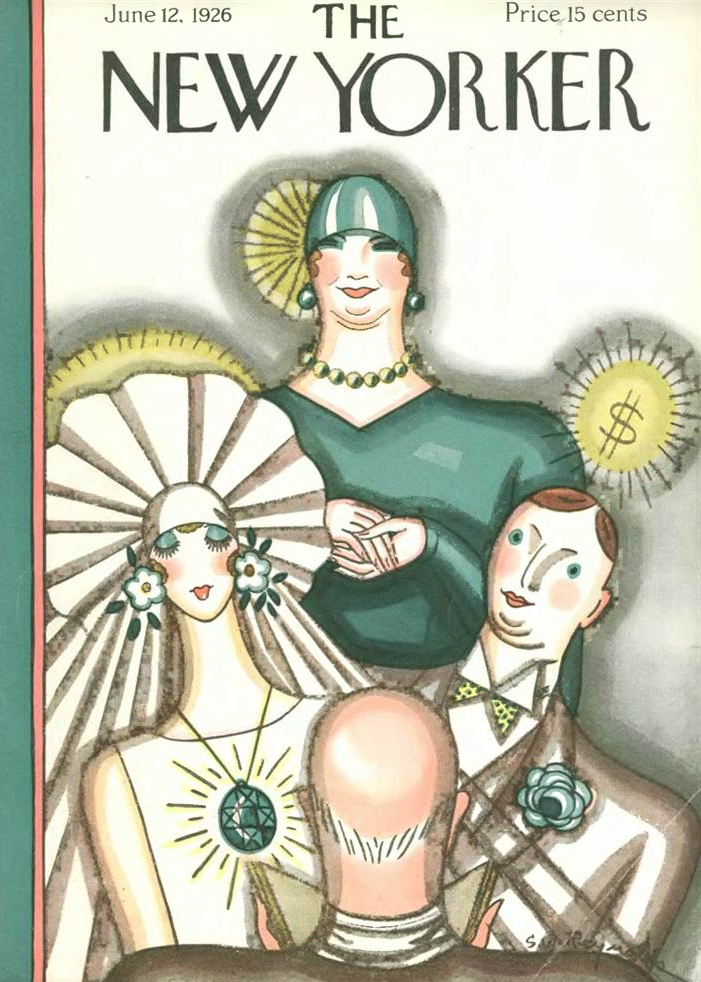
June 12, 1926 cover by S.W. Reynolds.
Bodenheim visited a “cheap Broadway dance hall” populated by taxi-dancers and their patrons. It worked something like this: A male patron would buy dance tickets for ten cents apiece, and for each ticket a chosen “hostess-partner” would dance with him for the length of a single song.
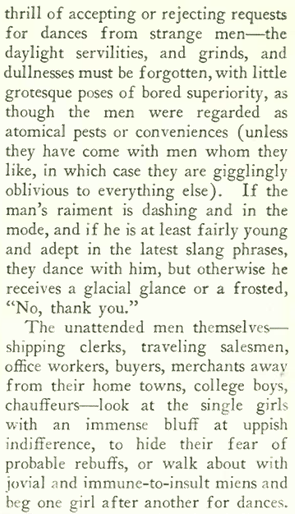
He also described the pathetic strutting and preening rituals of both dancers and patrons:
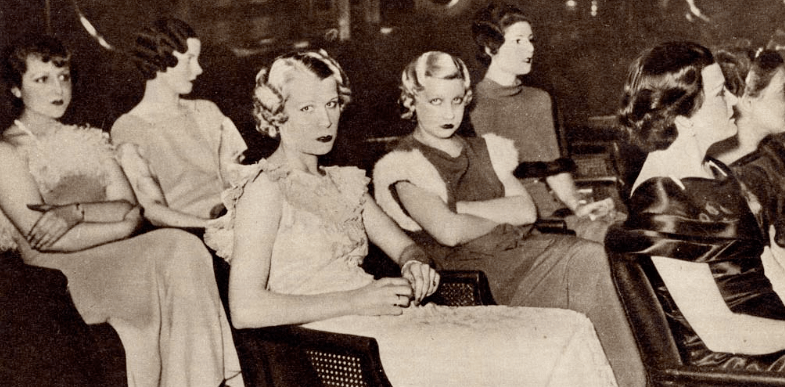
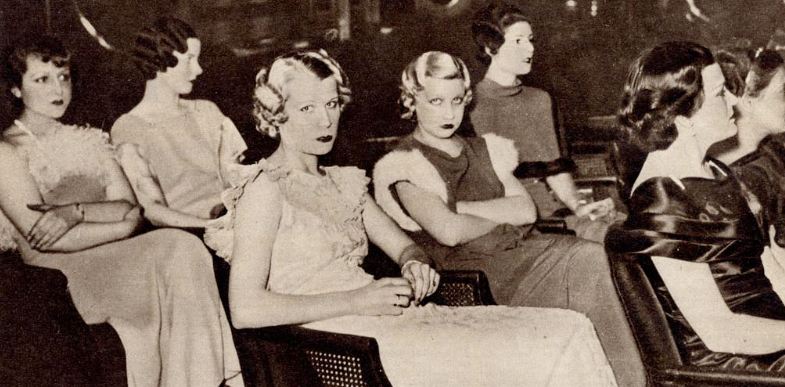
“TAXI-DANCERS” waiting for customers at a Broadway dance hall in the early 1930s. The image was scanned from an article in Weekly Illustrated (Oct. 6, 1934) that described new regulations banning the vocation.
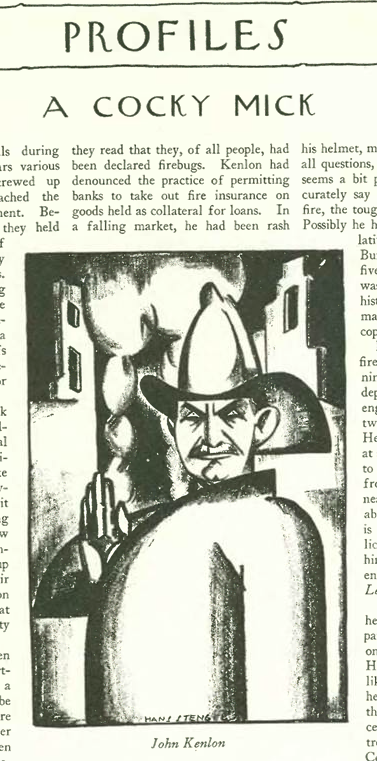
A couple of other bits from the issue: An interesting headline for the profile of NYC Fire Chief John Kenlon…
…and this advertisement for apartments at 1035 Fifth Avenue. I thought the ad was interesting because children are rarely featured in The New Yorker. In case you are wondering about their social class, these are children living on posh Fifth Avenue, and that’s a nurse-maid, not mother, chasing behind them in nearby Central Park.
On to the June 19th issue, and a couple more items of interest…
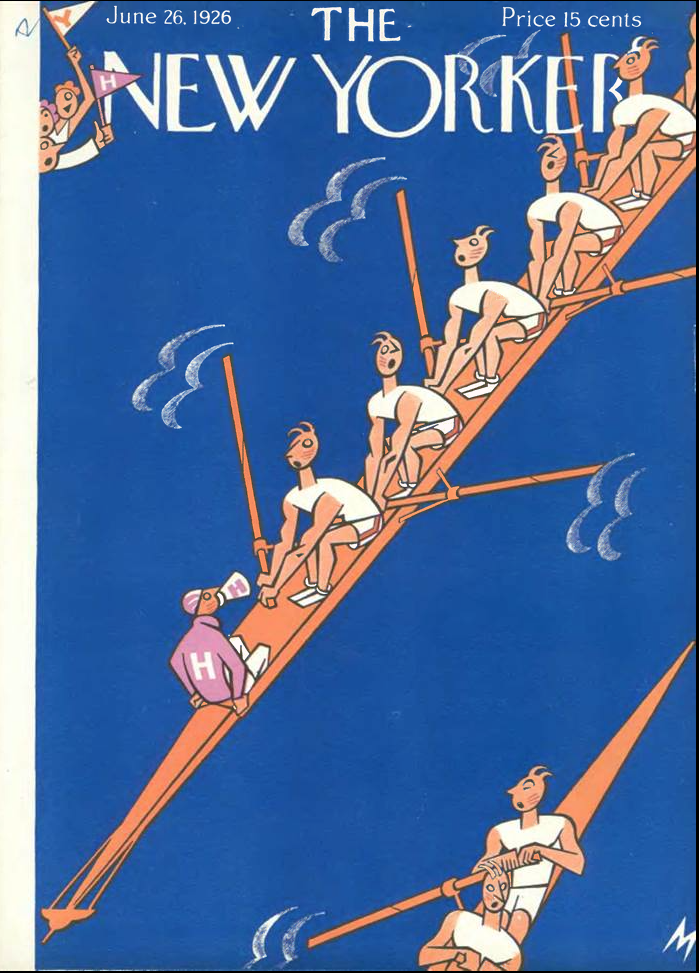
June 19, 1926 cover by Carl Rose.
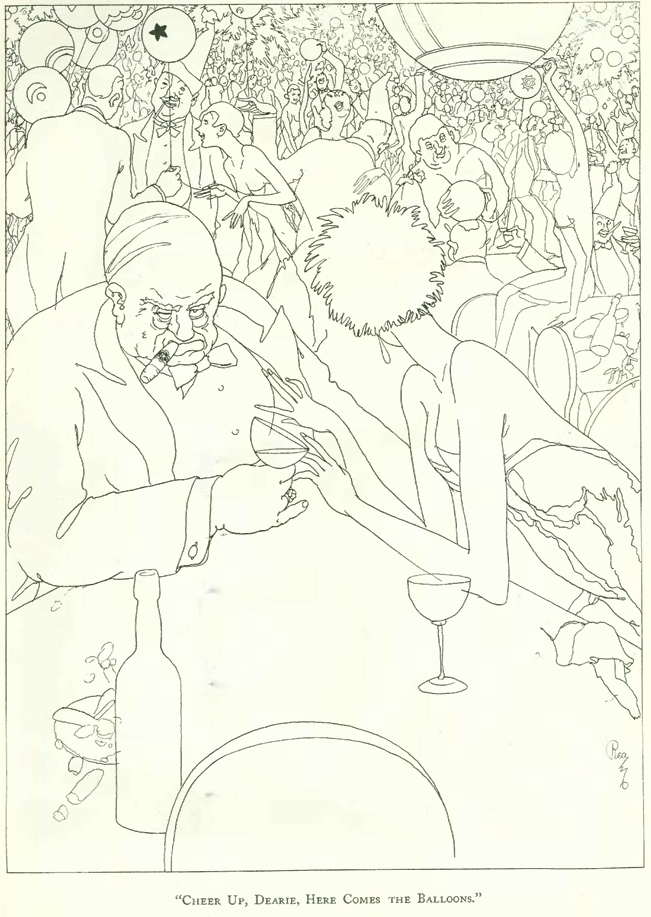
As noted previously, a common theme of the early New Yorker’s cartoons was the comic imbalance of rich old men and their young mistresses. This time Rea Irvin explores the subject with this terrific illustration:
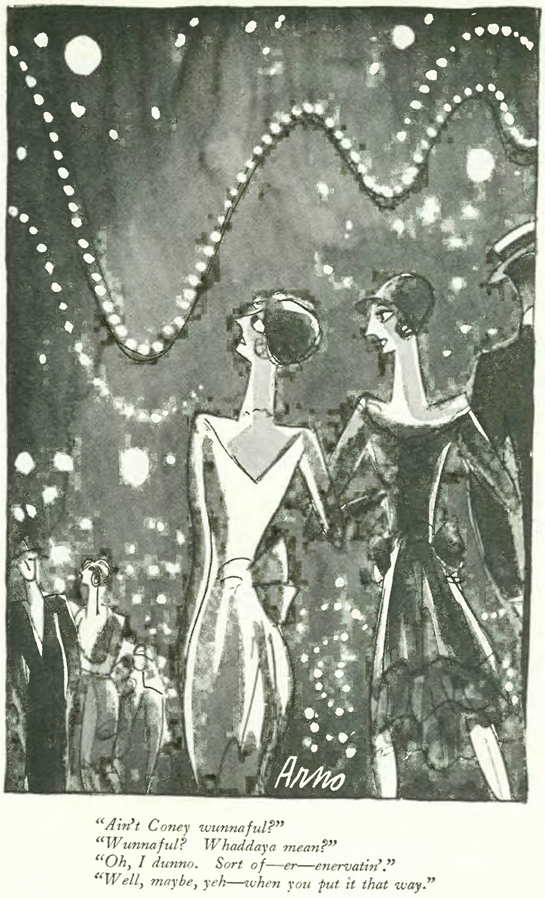
And we close with Peter Arno, and his observations of Coney Island.
The “King of Greenwich Village Bohemians,” Maxwell “Bogie” Bodenheim, was a leading (and notorious) American poet and novelist when “The Talk of the Town” (July 25, 1925) reported on the controversy surrounding his latest novel, Replenishing Jessica, sometimes referred to as one of the infamous “lost” bohemian novels of the 1920s.
Although few consider the book to be great literature (or by today’s standards, scandalous), Replenishing Jessica’s frank portrayal of a woman’s many sexual liaisons was enough to draw the ire of censors.
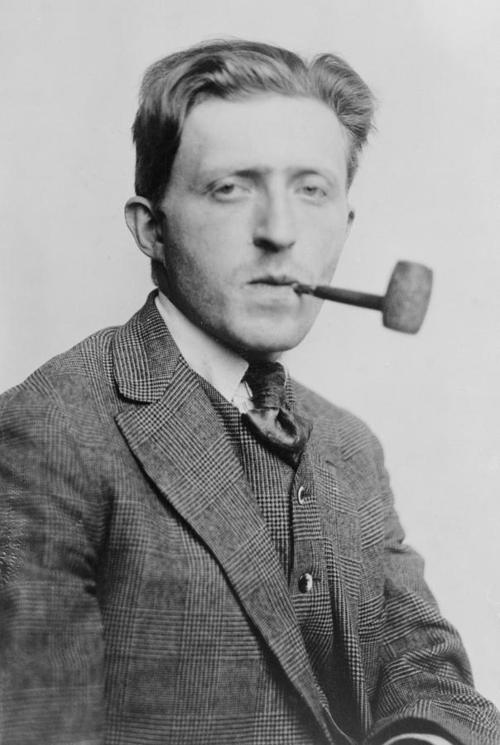
Maxwell “Bogie” Bodenheim (The Chiseler)
Bodenheim’s publisher, Horace Liverwright, even found himself the subject of a grand jury investigation, which had declared the book obscene, although he was never prosecuted (Liverwright’s defense attorney was none other than Arthur Hayes, who would also serve on Clarence Darrow’s defense team in the Scopes Monkey Trial).
The New Yorker reported that Bodenheim was “present under a $2,500 bond” following publication of Replenishing Jessica, and called him “one of our few sincerely colorful literati.” It was also suggested that Bodenheim suffered from a “the same persecution complex which tortured Lafcadio Hearn; in his mind, editors meet to plot means to keep him out of print” (Hearn was a late 19th century writer known for his stories based on Japanese legends).
“Talk” described Bodenheim as “ragged and unkempt,”
his pipe “a burnt corn-cob, wedged in his broken front teeth…Eccentric, erratic, is Mr. Bodenheim, careless of the world’s criticism outside of his work, but there is an air of sincerity about him, cynical sincerity, a brittle sparkle to his conversation, that fascination of exotic, social lawlessness.
There is an interesting New Yorker connection to Bodenheim, who met writer Ben Hecht in Chicago in 1912 and with him co-founded the short-lived Chicago Literary Times, which featured such poets and writers as Carl Sanburg, Theodore Dreiser and Sherwood Anderson.
After his success as a leading American author in the 1920s and 1930s, Bodenheim became a panhandler and was arrested and hospitalized a number of times for vagrancy and drunkenness. In an article for The Chiseler, critic John Strausbaugh wrote that Bodenheim had “a real talent for scandal, easy enough to generate during Greenwich Village’s prolonged drunken orgy in the Prohibition years.”
Maxwell Bodenheim and Ruth Fagin sharing a breakfast of tomato juice and sandwiches as they await eviction from their Bleecker Street apartment, circa 1952. (The Chiseler)
In 1952 the 60-year-old Bodenheim married his third wife, Ruth Fagin, who was 28 years his junior. Strausbaugh takes it from there:
In 1953, Ruth took up with a violent, mentally unstable dishwasher named Harold Weinberg. One night in the winter of 1954 the three of them wound up in Weinberg’s room off the Bowery. Bodenheim roused himself from a drunken stupor to see Ruth and Weinberg having sex. He attacked Weinberg, who pulled out a .22 and shot him through the heart. Then Weinberg stabbed Ruth in the chest. The last photos of Bodenheim show him and Ruth lying dead in the squalid room.
Weinberg confessed to the double homicide, was judged insane and sent to a mental institution.
Now on a happier note…
This issue was also replete with various equine diversions. A feature titled “Au Gallop!” looked at groups of New Yorkers who plied the bridal paths of Central Park.
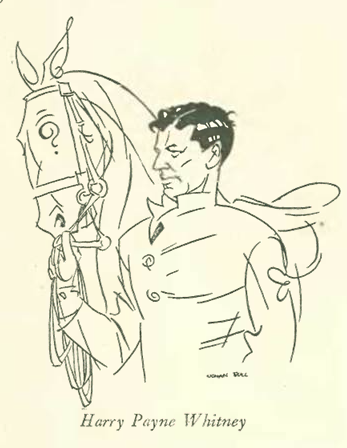
In “Profiles,” Jack Frost wrote admiringly about Harry Payne Whitney (accompanied by an heroic pen-and-ink portrait by Johan Bull). Whitney was a wealthy American businessman, thoroughbred horse breeder, and according to Frost, a “restless impatient force” who “concentrates on success.”
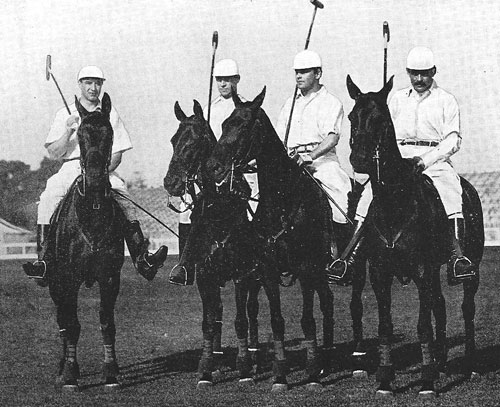
The victorious American team at the 1911 Westchester Cup. Harry Payne Whitney is second from left. (westchestercup.org/archives)
Among other things, The New Yorker credited Whitney with the creation of international-level polo competition in America and considered him the country’s best hope to win the Westchester Cup from England (Whitney was on the 1909, 1911 and 1913 winning American teams). Frost wrote that thanks to Whitney, “we have Homeric contests at Meadow Brook, as blood-stirring as the most epic battles of a Griffith film…”
There was no coverage of the Scopes Monkey Trial in Dayton, Tennessee, but cartoonist Al Frueh provided this reminder:
(New Yorker Digital Archive)
“Of All Things” noted that the population of New York City stood at 6,103,384, the 384 representing “those who have never had ferry-boats named after them” (The current population of the city is about 8.5 million).
View of midtown Manhattan looking southeast from Central Park, May 1925, when the population stood at 6,103,384. (Fairchild Aerial Surveys)
The column also offered this quip about the difference between France and England: “Another difference between the two countries is that England is working on the isolation of germs while France is still concerned with the isolation of Germany.”
Will Rogers was a popular draw as part of the “Follies” cast. (Will Rogers Memorial Museums)
The “Critique” section urged readers to see select Broadway shows before the new fall season. Recommended plays included What Price Glory, They Knew What They Wanted, Desire Under the Elms, Is Zat So?, the Ziegfeld Follies, Artists and Models, Lady Be Good and Rose-Marie.
The “Music’ section praised a new talent, Abram Chasins. “This young man is going to be something. In fifty years you may pat your granddaughter’s hair (if she has any) and tell her that you saw it in THE NEW YORKER first.” Chasins would have a long career as a pianist and composer, and later as a broadcaster and radio executive. He is perhaps best known for his Three Chinese Pieces composition.
The “Moving Pictures” section looked at Lightnin (“all our sentimental friends will find it a charming American epic”), and Rugged Water, starring Wallace Beery, who played a cowardly coast guard captain. Wrote the reviewer: “(Beery) does not seem to know what it is about and funks badly indeed. As for the rest of the picture, a good performance is given by the ocean.”
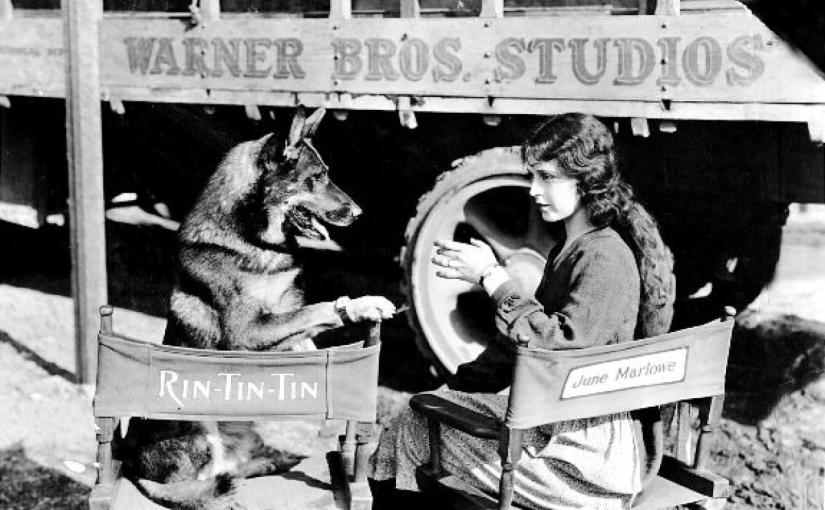
June Marlowe and Rin Tin Tin in a scene from Tracked in the Snow Country. (1925) (Warner Bros.)Rin Tin Tin and June Marlowe appear in an advertisement for wristwatches. They made four films together in 1925-26 (Warner Bros.)
In reviewing the dog superstar Rin Tin Tin’s latest movie, Tracked in Snow Country,Theodore Shane (“TS”) mused “It is questionable as to what a dog would say were he able to appraise the virtue that he defends on the screen. Would he find that gold mine worth fighting for or that gal’s innocence worth saving or that villain’s throat worth chawing?…He is a handsome animal to look on and appealing in every foot of the film he plays, but we wish that all that beauty would get cynical for a change.”
Susan Orlean wrote a terrific article about Rin Tin Tin in the August 29, 2011 issue of The New Yorker titled “The Dog Star: Rin Tin Tin and the making of Warner Bros.” She also published a book, Rin Tin Tin: The Life and the Legend that same year. Highly recommended.
In her column “When Nights Are Bold,” Lois Long offered readers cool escapes from the summer heat at various themed entertainment venues:
(New Yorker Digital Archive)
While advertisers continued to shill exclusive getaways for “carefully selected clientele”…
(New Yorker Digital Archive)
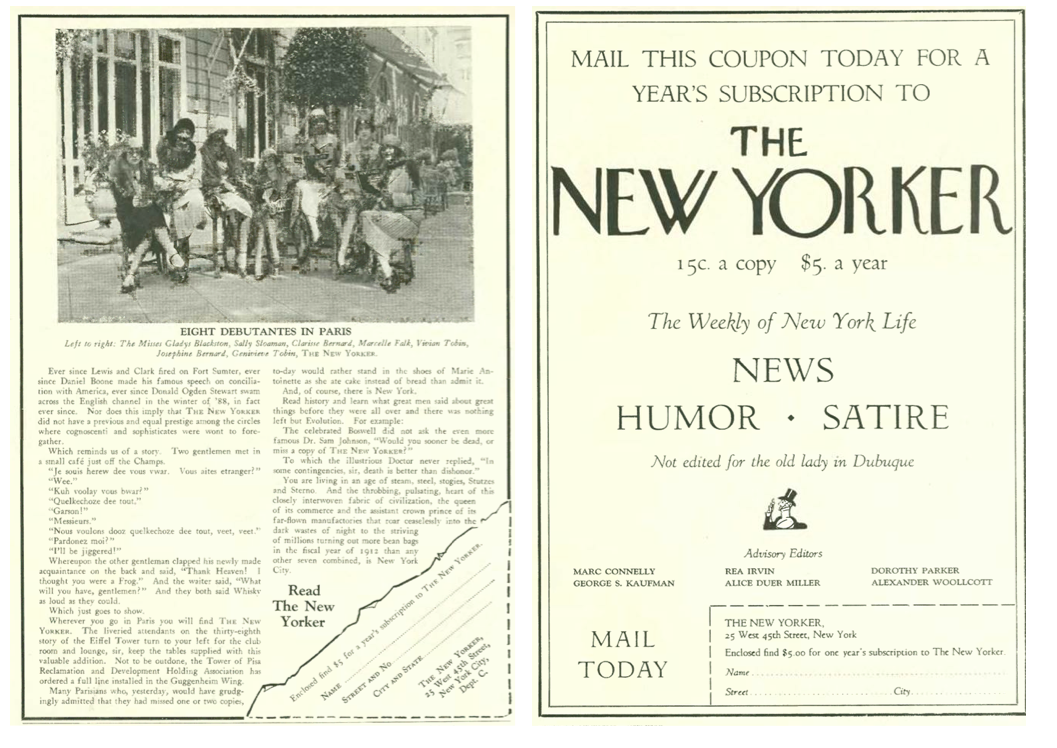
At this point the magazine itself seems to be hanging on by a thread. There is scant advertising in this thin issue (24 pages plus cover). The full-page ads on both the inside front and back covers are in-house ads promoting subscriptions to The New Yorker:
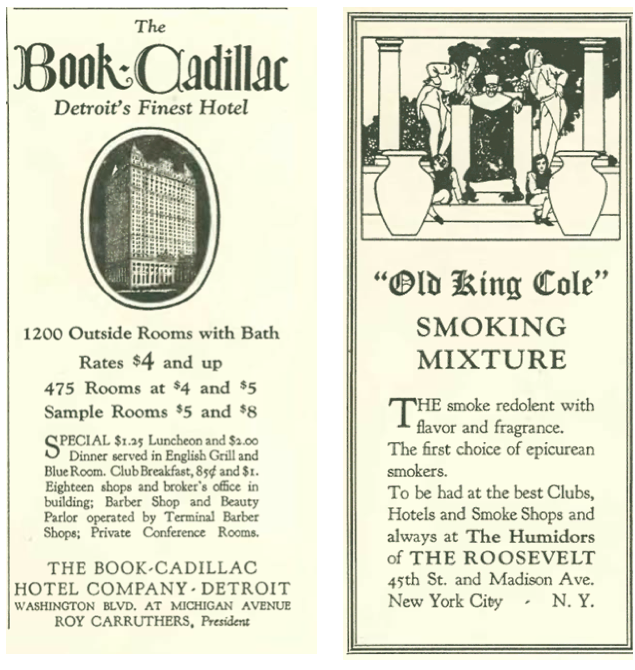
And here are two 1/6 page ads featured in the sports section, one from a Detroit hotel no less:
(New Yorker Digital Archive)
In a final note, I feature a rare non-NYC item. After falling into decay over several decades, Detroit’s Book Cadillac Hotel (advertised above) was restored in 2008 and reopened as a Westin hotel:
Before restoration (NBC News)The same room today after restoration (above), and the hotel’s exterior (Westin/Wikipedia)














 A New Yorker State of Mind