Social Errors

Screen Shot 2015-08-24 at 10.15.29 AM
Dec. 19, 1925 cover by Julian de Miskey

In my previous post, I hinted that “social errors” would be the topic of this entry, and in a sense that title describes the stance New Yorker editors were taking toward the continued demolition and remodeling of old city landmarks.

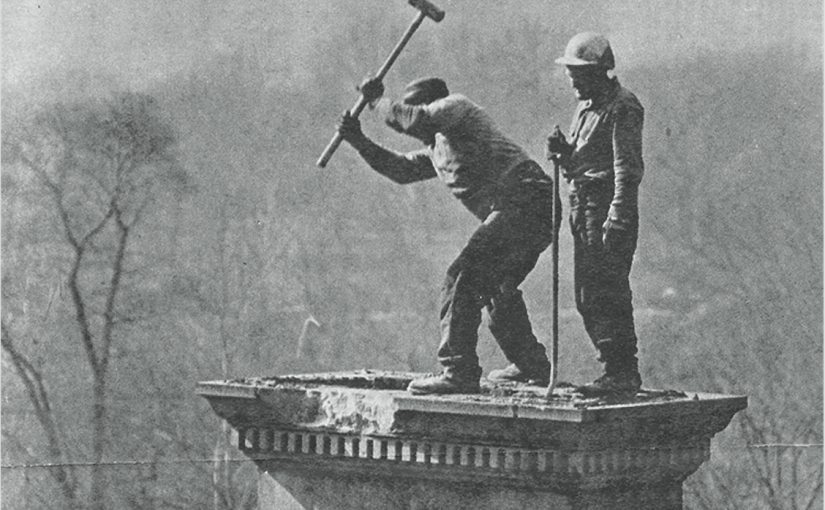
“The Talk of the Town” reported that two more Fifth Avenue mansions on “Millionaries Row” were soon to be demolished: the Brokaw and Yerkes mansions (the photo at the top of this entry depicts workmen taking a sledgehammer to a chimney atop the Brokaw house–not in 1925, but in 1965–more on that later).

Screen Shot 2015-09-02 at 4.51.25 PM

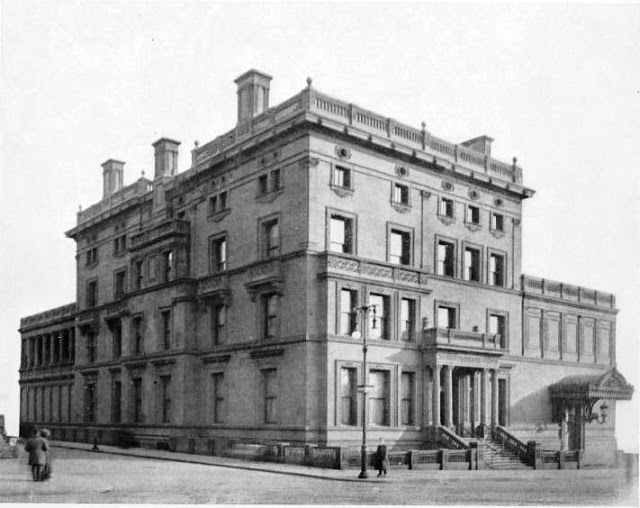
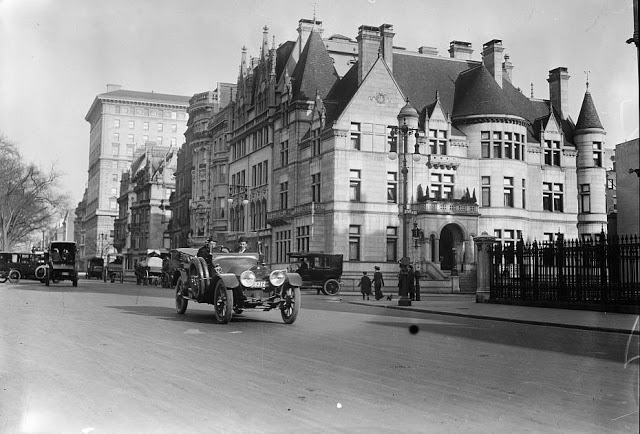
brokaw mansion 79th and 5th avenue
The Isaac Brokaw mansion at 79th and 5th Avenue, completed in 1890. Behind the mansion are the twin residences of two Brokaw sons, Howard and Irving. Daughter Elvira would also erect a residence next door. Although the Dec. 19, 1925 edition of The New Yorker lamented the imminent destruction of the house, it would actually stand another 40 years. (Library of Congress)
yerkes mansion - catalogue
The Yerkes Mansion, erected in 1896, would not be so fortunate…it would fall to the wrecking ball in 1926. (Collection of Charles T. Yerkes)

In his excellent blog site, Dayton in Manhattan, Tom Miller writes that the Isaac Brokaw mansion first faced the wrecking ball after Isaac’s eldest son, George, moved out in 1925. George “intensely disliked the house” because of its size and maintenance costs, and petitioned the courts to allow him to mortgage the property for $800,000 and use the money to demolish the mansion and erect a modern apartment house.

His brother, Howard, blocked the move. Three years later, the court ruled that the house could not be sold nor razed without the mutual agreement of all the Brokaw siblings, so George moved back in.

George died seven years later of a heart attack. His wife, Frances Ford Seymour would marry Henry Fonda a year later and have two children, Jane and Peter (George was married twice, the first time to Clare Boothe, who would later become Clare Boothe Luce).

The mansion was then occupied as offices for the Institute of Radio Engineers. When it was announced in 1965 that the mansion (and the adjacent mansions of the Brokaw children) were to be demolished to make way for a high-rise apartment building, there was an outcry from members of the city’s nascent Landmarks Preservation Commission, still stinging from the destruction of Penn Station. Miller writes that demolition workers were paid overtime to begin immediate destruction of the mansions in order to preclude the possibility of a court order to stop the work.

The Yerkes mansion, on the other hand, disappeared rather unceremoniously. According to Miller, a neighbor, Thomas Fortune Ryan, bought the house in 1925 and tore it down in order to enlarge his flower garden. In 1937 an apartment building was erected on the site. I recommend that you check out Miller’s entertaining and informative posts on both the Brokaw and Yerkes mansions.

The Dec. 19 issue also featured a column by Gilbert Seldes titled “Complaint.” Seldes bemoaned the remodeling of “sober, decent” brownstones at Fiftieth Street and beyond (Beekman Place) into overly ornamented facades favored by the Babbitt set:

Screen Shot 2015-09-02 at 5.09.44 PM

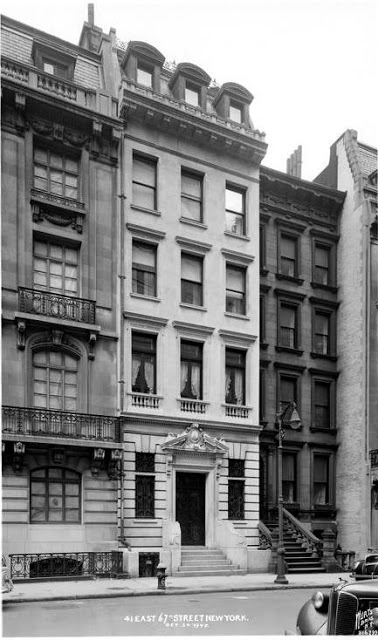
41 E 67th 1945
A remodeled brownstone at No. 41 E. 67th Street. Note the original brownstone next door. (Museum of the City of New York)

With the much-publicized signing of famed halfback Red Grange to the Chicago Bears (a $100,000 annual contract), the professionalization of football and the money attached to it were frequent topics in the magazine. Howard Brubaker, in “Of All Things,” noted:
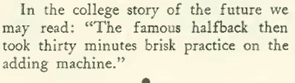
Screen Shot 2015-09-04 at 4.43.31 PM

And in this illustration by Johan Bull, Grange is depicted carrying a large money bag at New York’s annual Christmas Bazaar:
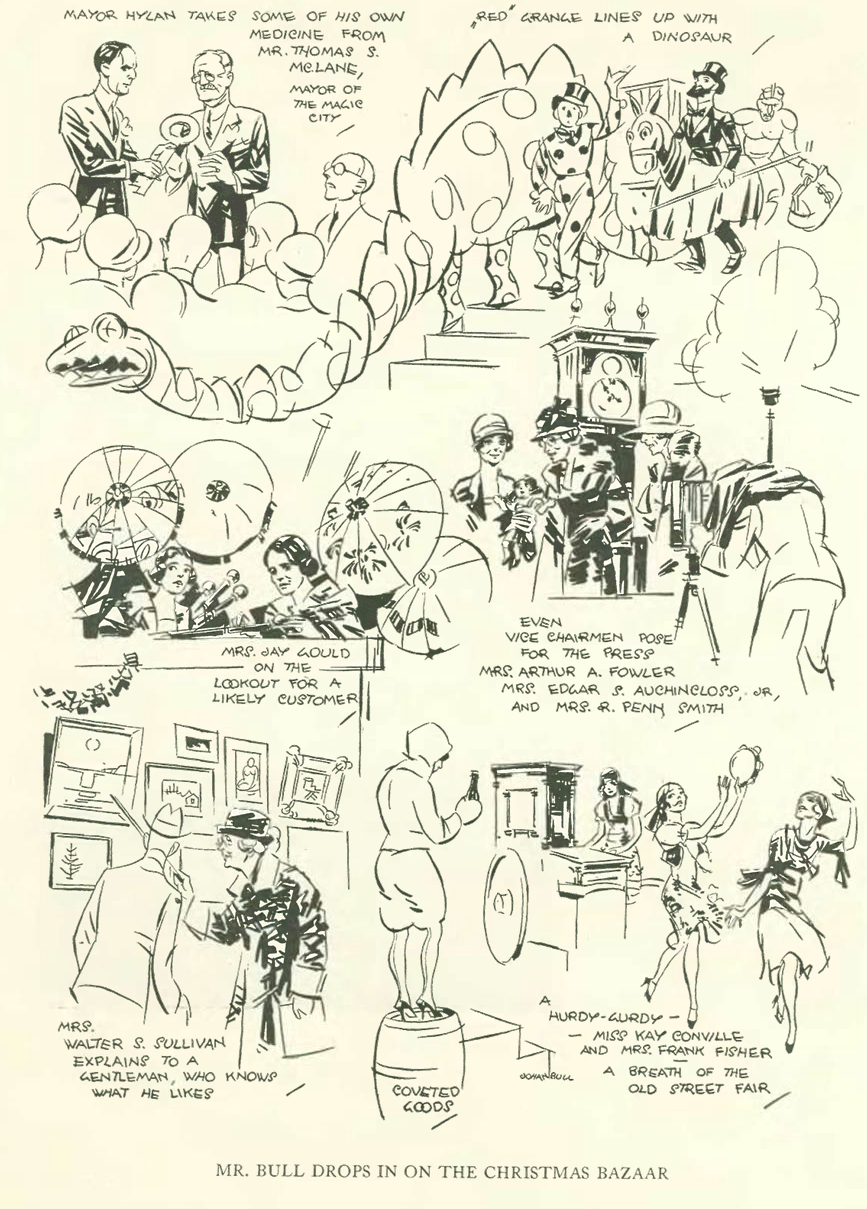
Screen Shot 2015-09-04 at 4.43.45 PM

“Profiles” looked at the life of pianist and composer Leo Ornstein, noted for performing and composing avant-garde works. Ornstein would have a long career, completing his eighth and final piano sonata at the age of 97. He died in 2002 at age 108.

The Marx Brothers’s broadway musical The Cocoanuts wowed audiences (and New Yorker theatre critic Herman J. Mankiewicz) at the Lyric Theatre:

Screen Shot 2015-09-04 at 4.45.10 PM

In her Paris Letter, Janet Flanner announced the deaths of “two great servers of the French palate”—Emile Pruinier (famed for his Portuguese oysters) and Mother Soret of Lyons, who “died with a knife in her hand” and whose death was “solemnly listed in Comoedia as that of an artist.”

And to stay in the spirit of the holidays, this Christmas advertisement from the back cover:

Screen Shot 2015-09-04 at 4.59.54 PM

Next Time: We Ring Out the Year…

Screen Shot 2015-09-06 at 12.02.47 PM

Party With Gentleman Jimmy

Screen Shot 2015-07-23 at 12.08.59 PM
Nov. 21, 1925 cover by Stanley W. Reynolds.

Mayor Jimmy Walker wasn’t known for being cerebral. But as the voters’ choice to lead the City of New York, he could not have been more well-suited (pun intended) to the zeitgeist of the final, dizzying, roaring years of The Jazz Age.

Walker was a flamboyant man-about-town, a clothes horse who was no stranger to speakeasies or the backroom politics of Tammany Hall.

As Jonathan Mahler wrote in New York magazine (April 1, 2012), Gentleman Jimmy “perfectly embodied that moment of indulgence: the public servant who favored short workdays and long afternoons at Yankee Stadium, who was loath to miss a big prizefight or Broadway premiere, who left his wife and Greenwich Village apartment for a chorus girl and a suite at the Ritz-Carlton.”

Not that there weren’t some concerns. “The Talk of the Town” offered this early observation of the incoming mayor:

Screen Shot 2015-07-24 at 9.38.52 AM

Screen Shot 2015-07-24 at 1.01.10 PM
New York City Mayor Jimmy Walker during a visit to Boston. (Boston Public Library)

Mahler quoted a columnist from Walker’s time, who noted that “No man could hold life so carelessly without falling down a manhole before he is done.” And Walker would fall to scandal by 1932. But we will get to that. For now, it’s party time in Gotham.

The New Yorker continued to have fun with President Calvin Coolidge, publishing this cartoon by Isadore Klein that took a poke at Coolidge’s Thanksgiving Day Proclamation, in which Coolidge spoke at length about the nation’s abundance:

Screen Shot 2015-07-24 at 9.51.44 AM

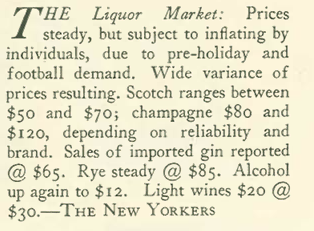
Talk also reported the latest bootleg prices in “The Liquor Market…”

Screen Shot 2015-07-24 at 9.52.59 AM

“Profiles” examined the life of New York Times owner Adolph Ochs. The writer Elmer Davis observed that “More than any other newspaper owner, he is his paper, and his paper is himself…”

Screen Shot 2015-07-24 at 12.23.11 PM
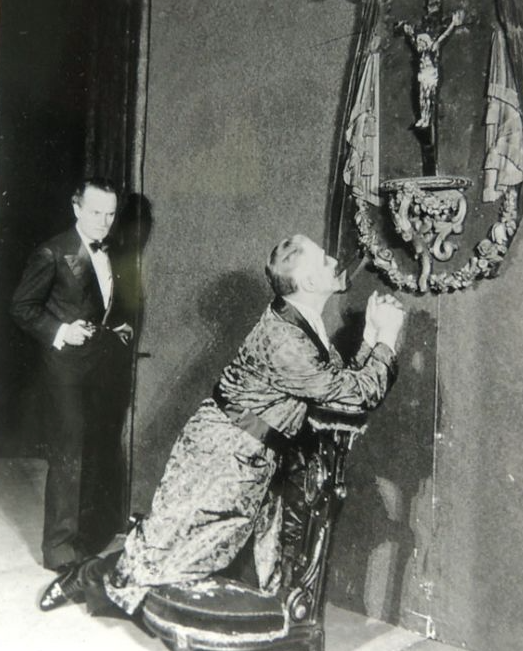
Detail from a lantern slide depicting Basil Sydney as Hamlet and Charles Waldron as Claudius in the Booth Theatre’s 1925 production of Hamlet in “modern dress.” (Graphic Arts Collection, Princeton)

In “The Theatre,” critic Herman J. Mankiewicz addressed criticisms of the Booth Theatre’s new approach to Hamlet, which was presented “in modern dress.” Mankiewicz wrote that the departure from traditional Elizabethan costumes had brought the play “into the open,” and that Basil Sydney was a “splendid” Hamlet.

In “Books,” reviewer Harry Este Dounce recommended Ford Madox Ford’s No More Parades (“a fine display of virtuoso writing”) and Arthur Schnitzler’s Fraulein Else (“a scintillant little firework”).

tumblr_mqej7s8XOl1qzx4bjo1_1280
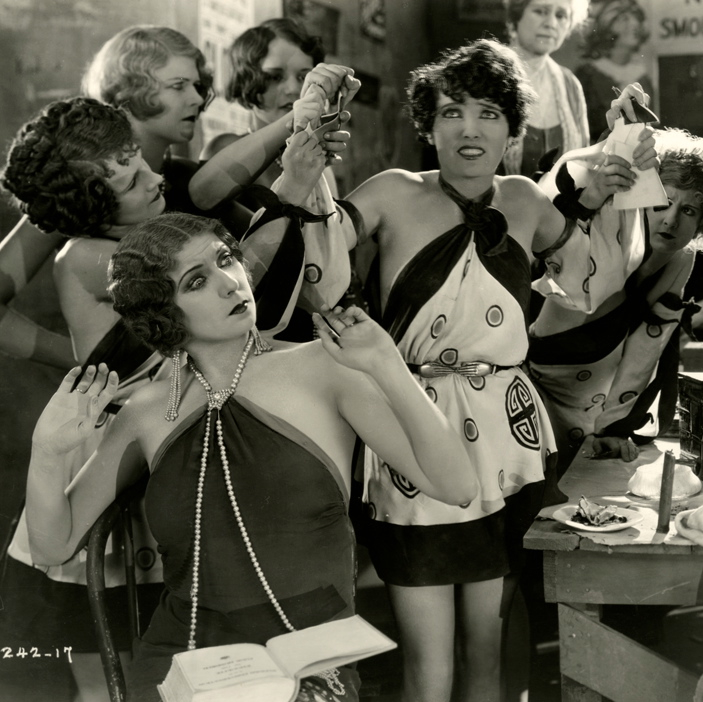
Lilyan Tashman, left, and Pauline Starke in Robert Z. Leonard’s Bright Lights, 1925 (Tumblr)

In “Motion Pictures,” Theodore Shane panned the movie Lord Jim (based on the Joseph Conrad novel), but he enjoyed the “simple hokum tale” of Bright Lights and the “restrained” performance of Pauline Starke, “a perfect miniature Gloria Swanson.”

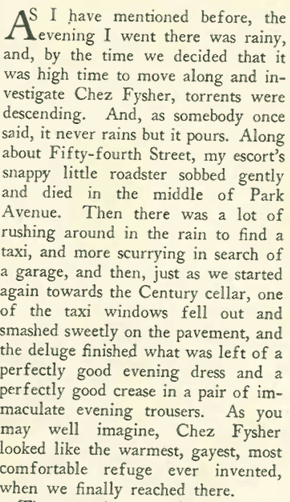
In “Tables for Two,” Lois Long despaired of finding a decent “swank dinner” on a rainy autumn evening, and finally headed to a Viennese restaurant (Frau Greta’s) for some German comfort food. The rain turned to torrents as she then headed out for some nightlife:

Screen Shot 2015-07-24 at 10.19.47 AM

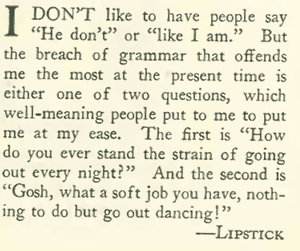
Long concluded her “Tables” column with this peevish note on “grammar:”

Screen Shot 2015-07-24 at 10.21.43 AM

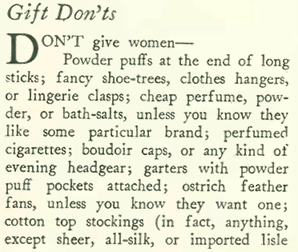
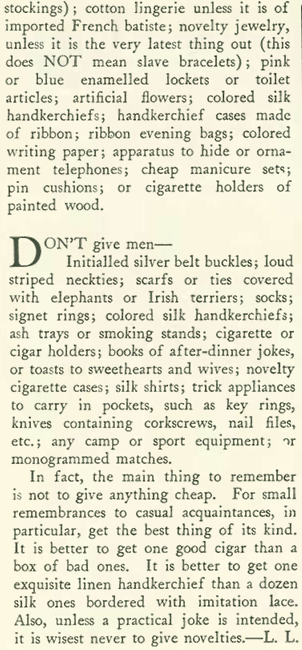
In her other column, “On And Off The Avenue,” Long wrote about the increasing popularity of New Yorkers traveling to Florida for the winter, and in anticipation of the Christmas holiday, offered this advice on what not to give as gifts:

Screen Shot 2015-07-24 at 10.27.34 AM

Screen Shot 2015-07-24 at 10.27.47 AM

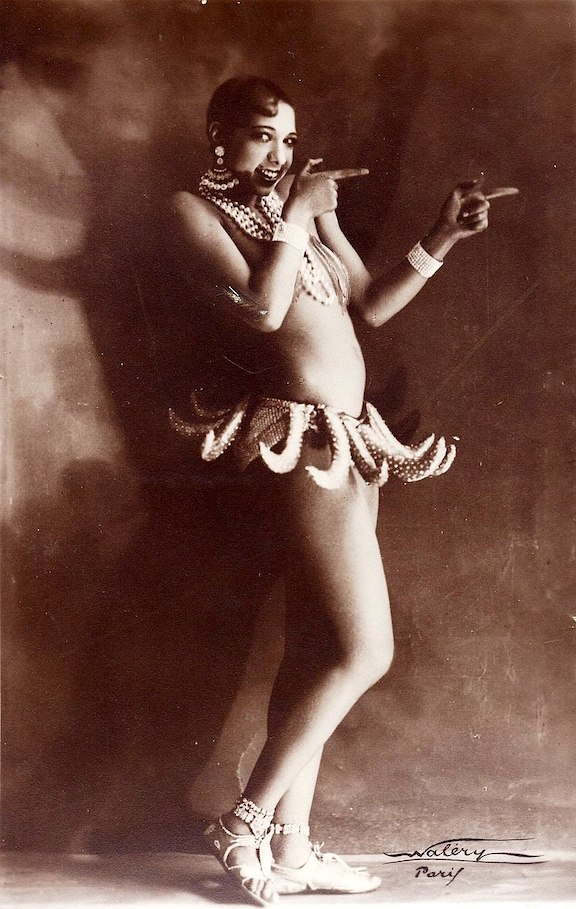
In her report from Paris, Janet Flanner commented on the popularity of Josephine Baker at the Champs Elysees Theater:

Screen Shot 2015-07-24 at 12.09.00 PM

Josephine Baker in 1927. (Wikimedia Commons)

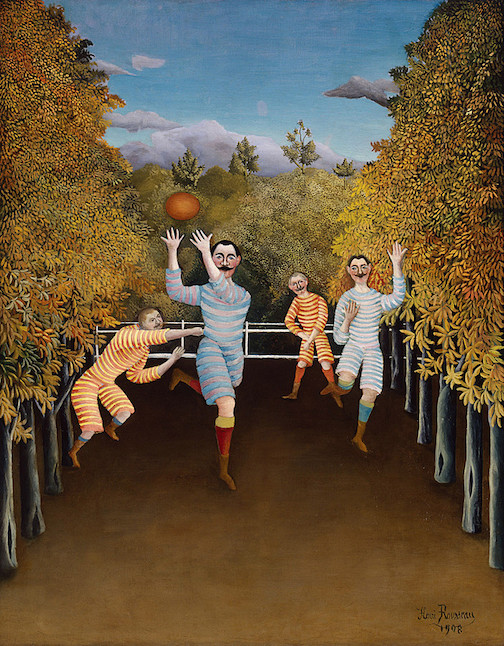
Flanner also commented on the growing appreciation of paintings by Henri Rousseau, who just a decade or so earlier was considered something of a joke among art circles:

Screen Shot 2015-07-24 at 12.09.43 PM

60.1583
Henri Rousseau’s The Football Players, 1908. Today even Rosseau’s lesser-known works are valued in the millions (Wikimedia)

And finally, Julian de Miskey’s take on The Big Game:

Screen Shot 2015-07-24 at 9.58.04 AM

Next Time: A Debutante’s Diatribe…

Screen Shot 2015-07-24 at 9.36.48 AM


Gloria Swanson, Close Up

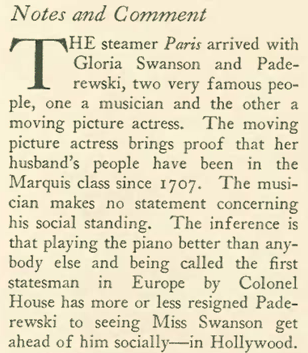
Silent film star (and sometime French “noble”) Gloria Swanson was back in the States after a summer sojourn at her Paris residence.

Screenshot 2015-07-20 10.04.52
Nov. 14, 1925 cover by Joseph Fannel.

“The Talk of the Town” reported that she had arrived on the steamer Paris, with the great Polish pianist and statesman Jan Paderewski in tow…

Screen Shot 2015-07-22 at 4.30.41 PM

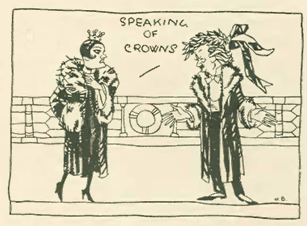
Johan Bull’s take on Swanson’s grand arrival with Paderewski, who was much decorated as both a statesman and artist:

Screen Shot 2015-07-22 at 4.31.01 PM

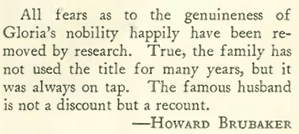
The New Yorker made light of the fact that Swanson assumed a rather regal bearing not only as a famous film star but also as the new wife of French aristocrat Henri, Marquis de la Falaise de la Coudraye, her third husband. In his column, “Of All Things,” Howard Brubaker added this swipe at the Swanson’s pretensions to royalty:

Screen Shot 2015-07-22 at 4.53.24 PM

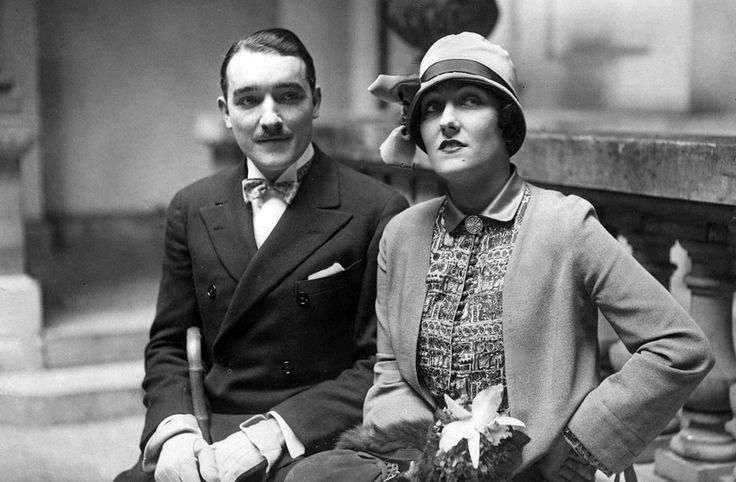
Although a marquis and member of the famous Hennessy Cognac family, Henri was not wealthy and worked for a living. He met Swanson when he was hired to be her assistant and interpreter during the filming of Madame Sans-Gêne (1925) in France. The match of a Hollywood star with European nobility made the marriage a global sensation.

d7792609c7f1a3818a0d048e33fa0fd3
MON CHÉRI…Photo taken around the time of the wedding of Marquis Henri de la Falaise and Gloria Swanson, January 1925. (indypendent-thinking.tumblr.com)

The marriage ended in divorce in 1930. According to Wikipedia, (citing two books on the subject), Swanson had an affair with Joseph P. Kennedy Sr. for several years during her marriage to Henri:

Henri became a film executive representing Pathé (USA) in France through Joseph P. Kennedy, Sr., who was running the studio. Many now assume he was given the position, which kept him in France for ten months a year, to simply keep him (Henri) out of the way…(Kennedy) became her business partner and their relationship was an open secret in Hollywood. He took over all of her personal and business affairs and was supposed to make her millions. Unfortunately, Kennedy left her after the disastrous “Queen Kelly” and her finances were in worse shape than when he came into her life.

New_York_City's_Sixth_Avenue_elevated_railway_and_the_crowded_street_below,_ca._1940_-_NARA_-_535709.tif
GOOD OLD DAYS…Life beneath the Sixth Avenue El (Wikipedia)

In another Talk item, the Sixth Avenue Elevated rail line continued to serve as a “blot” upon the city of New York (Johan Bull illustration):

Screen Shot 2015-07-22 at 4.34.17 PM

Screen Shot 2015-07-22 at 4.34.09 PM

According to a Wikipedia, the old Sixth Avenue El (constructed during the 1870s) was notoriously noisy, made buildings shake, and bombarded pedestrians underneath with dropping ash, oil, and cinders. Eventually, a coalition of commercial establishments and building owners would stage a successful campaign to have the El removed because it was hurting business and property values. It would be razed in 1939 and replaced by the underground IND Sixth Avenue Line.

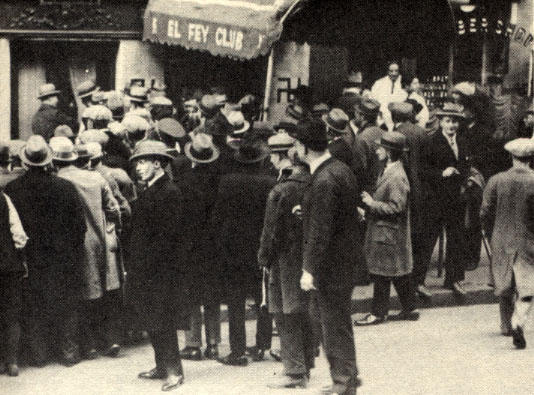
1924_El_Fey_107_W45
SPOIL SPORTS…Buckner’s agents padlock New York’s El Fey Club in 1925 before a gathering crowd.

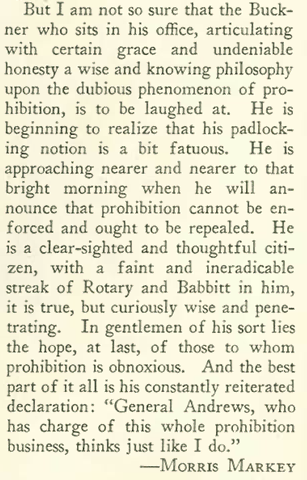
The New Yorker also featured a lengthy interview with Emory Buckner (conducted by Morris Markey), in which the New York District Attorney discussed his approach to Prohibition enforcement, including the padlocking of restaurants and clubs found to be serving alcohol. In a surprisingly frank interview, Buckner said his zealous crusade had nothing to do with moral conviction:

Screen Shot 2015-07-23 at 9.37.19 AM

Buckner also admitted that the government wasn’t making a serious effort to enforce Prohibition (e.g. low salaries for agents), and if it wasn’t going to make the effort then the law should be repealed. Markey concluded his article with words of surprising admiration for a man who had been so thoroughly excoriated in previous issues of The New Yorker.

Screen Shot 2015-07-23 at 9.48.47 AM

In other items, theatre critic Herman J. Mankiewicz stepped out of the “Critique” section to write about his experience travelling by train to a football game. He found the whole spectacle (especially the coonskin coat-clad fans) wanting.

Screen Shot 2015-07-23 at 12.03.19 PM
No doubt Mankiewicz’s fellow travellers were clad in something similar to this. The ad appeared in the same issue as Mankiewicz’s article.

Waldo Frank contributed a profile of the popular poet Carl Sandburg, whom he described as moving “through the Machine of our world” with “a peasant’s mind.” Frank used the term not necessarily as a criticism but as a way to describe Sandburg’s Midwestern simplicity. However, a drawing by James House Jr. that accompanied the article depicted Sandburg not as a man of letters, but more like some dim-witted forebear of Homer Simpson:

Screen Shot 2015-07-23 at 11.35.54 AM

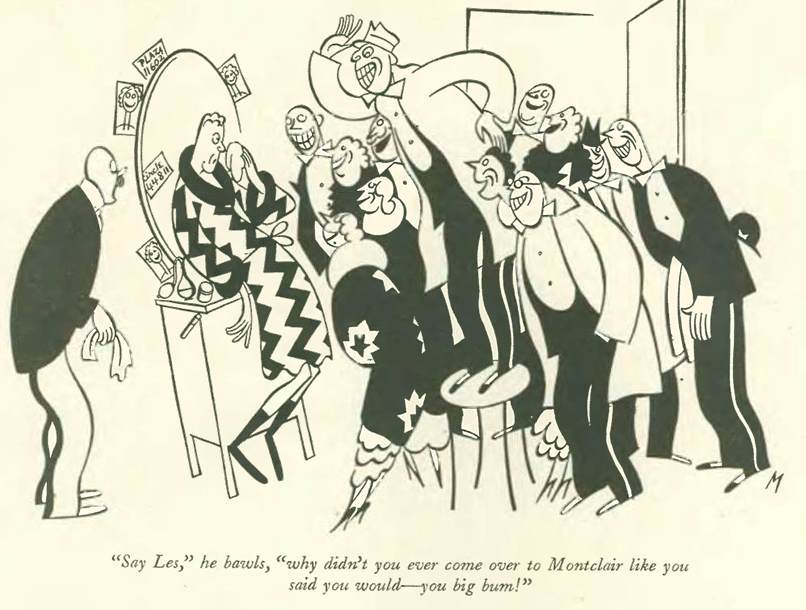
The actor Leslie Howard contributed another humorous piece to The New Yorker titled “Such is Fame,” accompanied by this Julian de Miskey illustration:

Screen Shot 2015-07-23 at 11.42.17 AM

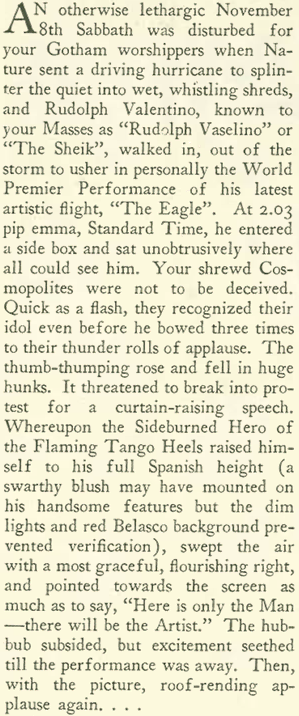
Theodore Shane reported in “Motion Pictures” that Rudolph Valentino appeared in person at the opening of his new film, The Eagle. Known for his aversion to public appearances, Valentino handled the occasion with a silent flourish:

Screen Shot 2015-07-23 at 11.55.04 AM

bk33r31cushf3krh
Vilma Bánky and Rudolph Valentino in The Eagle. (Wikimedia Commons)

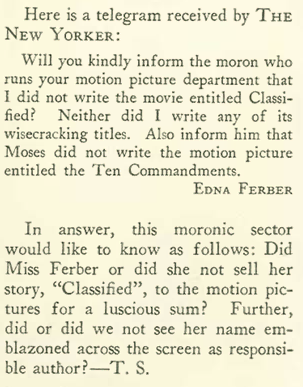
At the end of his column Shane included this exchange with novelist and playwright Edna Ferber, who was also one of the regular wits at the Algonquin Round Table:

Screen Shot 2015-07-23 at 11.56.40 AM

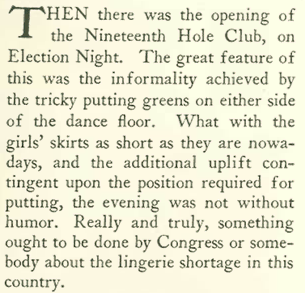
In “Tables for Two,” Lois Long wrote about the opening of the Nineteenth Hole Club at the Roosevelt Hotel, and noted that the putting greens on either side of the dance floor offered “additional uplift” to short skirts worn by some female patrons:

Screen Shot 2015-07-23 at 12.01.29 PM

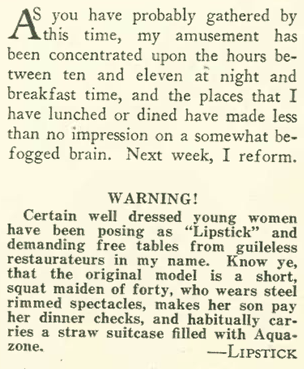
She closed her column with this observation and a “warning” about “Lipstick” imposters:

Screen Shot 2015-07-23 at 12.02.30 PM

This was a familiar jest by Long in her “Tables for Two” column–describing herself as short and squat–since most readers did not know her true identity or appearance, which was quite the opposite.

In Long’s other column, “On And Off The Avenue,” she offered this advice to women who were fashion-conscious but also thrifty:

Screen Shot 2015-07-23 at 12.06.36 PM

Next Time: Getting The Holiday Spirit…

Screen Shot 2015-07-23 at 12.08.59 PM

How Dry I Am

Screenshot 2015-07-14 10.28.30
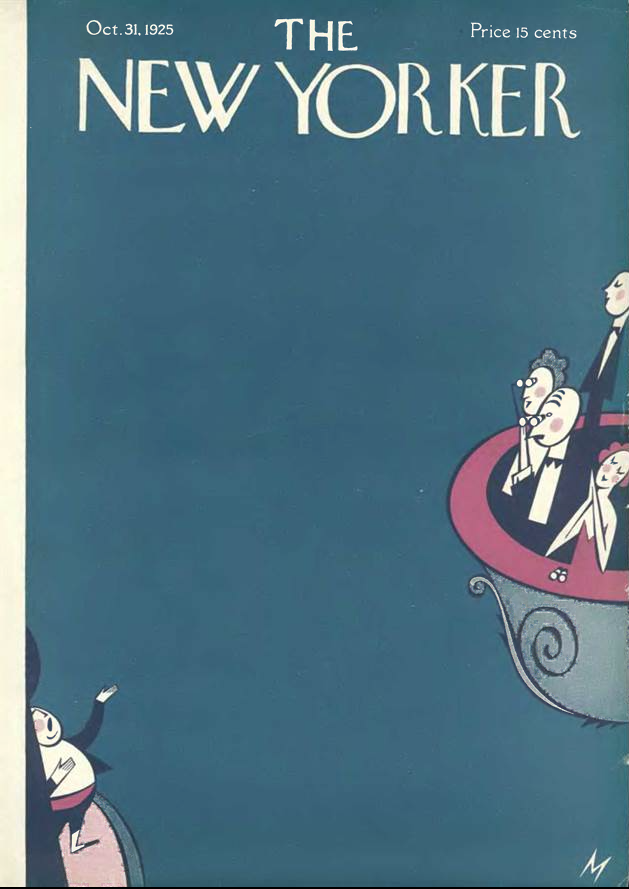
Oct. 31 cover,  Julian de Miskey.

The woes of Prohibition were acutely felt by the readership of The New Yorker. The magazine responded in kind with its continued criticism of the law’s enforcement and particularly the tactics of Manhattan District Attorney Emory C. Buckner, whose agents continued to padlock restaurants and clubs suspected of selling alcohol.

The New Yorker previously called the padlocking tactic a “promotional stunt” that would ultimately backfire (I wrote about this in a previous blog post last March).

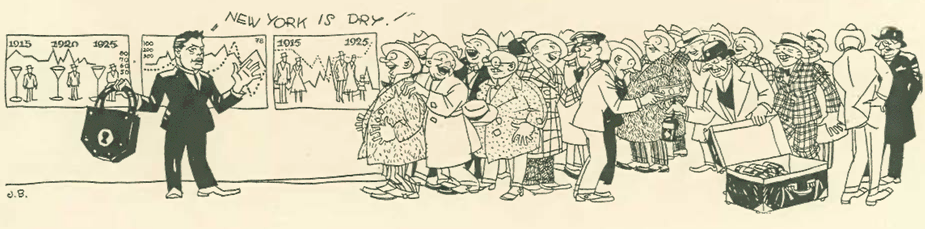
Both the “The Talk of the Town” and “Tables for Two” took aim at Buckner this time around. “Talk” led with this item, accompanied by the art of Johan Bull:

Screenshot 2015-07-17 10.15.48

Screenshot 2015-07-17 10.14.34

“Talk” also made a call to action by “men of virtue:”

Screenshot 2015-07-17 10.15.08

Screenshot 2015-07-17 10.15.16

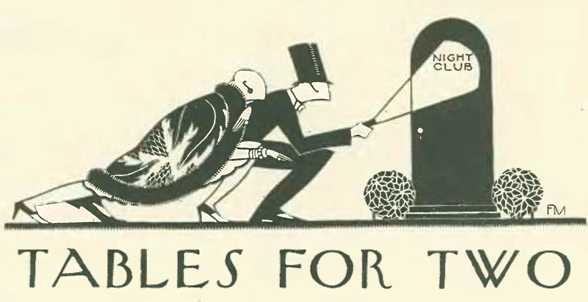
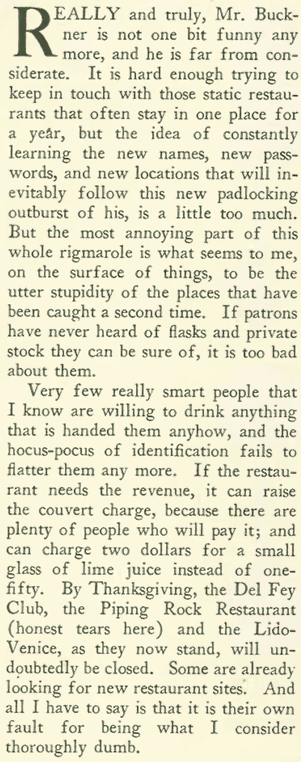
Heck with statements. Lois Long just wanted to have some fun, and led her column, “Tables for Two,” with her own attack on Buckner and on the “stupidity” of establishments that were closed by Buckner’s agents (I include art that accompanied the column by Frank McIntosh—at least that is what I think the “FM” stands for; if I am in error, someone please correct me!):

Screenshot 2015-07-17 11.23.28

Screenshot 2015-07-17 11.23.45

In a previous column (Oct. 17), Long pondered the popularity of a new dance, the “Charleston.” She closed her Oct. 31 column with “telegrams” from exemplary colleges in answer to the query: “Is the Charleston being done at college dances?”

Screenshot 2015-07-17 11.24.53

W.J. Henderson wrote a lengthy article about the upcoming opera season at the Metropolitan Opera (it was opening with La Gioconda), and recalled the days after World War I when the once-popular German singers suddenly grew scarce on the American stage.

1920px-Metropolitan_Opera_House,_a_concert_by_pianist_Josef_Hofmann_-_NARA_541890_-_Edit
The old Metropolitan Opera House at 1411 Broadway. The “Old Met” opened in 1883 and was rebuilt after a fire in 1892. The interior, shown here, was redesigned in 1903. This photo depicts a recital by pianist Josef Hofmann on November 28, 1937. The old Met was torn down in 1967 and replaced by a 40-story office tower. (Wikipedia)
World-Apparel-Center-1411-Broadway-NY
Site of the old Metropolitan Opera House today.

According to Henderson, this led to a general falling off of quality in the performances, a situation made even worse by the absence of the late, great Enrico Caruso on the Metropolitan’s stage.

In other items, John Tunis wrote about Illinois All-American halfback Red Grange in “Profiles,” calling him “a presentable youth of twenty-two…well-groomed, he would pass anywhere—even in the movies—for a clean type of American manhood.”

Tunis also noted that Grange had been offered a “half a million” to star in movies, and that professional football was ready to offer him a sum “that would cause even the once-mighty Ruth to blanch.” Grange, known as “The Galloping Ghost,” would later join the Chicago Bears and help to legitimize the National Football League (NFL).

5851492109_857e5ac401
Howard (Real Photograph)

The young actor Leslie Howard, who was appearing on Broadway in Michael Arlen’s The Green Hat, wrote a humorous account of theatre life in “The Intimate Diary of An Opening Night.”

It was one of seven articles on the acting life that Howard (perhaps best known for his role as Ashley Wilkes in Gone With the Wind) would write for The New Yorker between 1925 and 1927.

For the record, I include Howard’s first New Yorker article here (with Carl Rose cartoon):

Screenshot 2015-07-17 10.54.36

Screenshot 2015-07-17 10.54.51

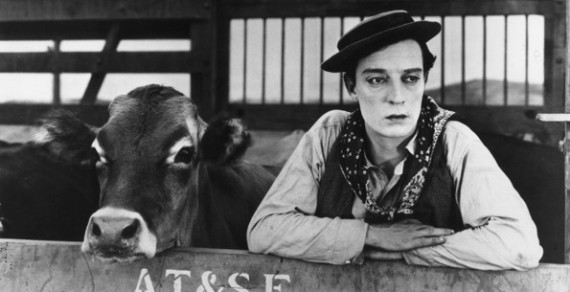
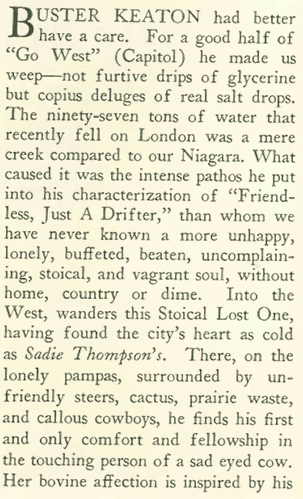
“Motion Pictures” looked at Buster Keaton’s new film, Go West

keaton-cow
Cow and Keaton in Go West (1925) (silentology.com)

Theodore Shane wrote that what at first seemed to be a real weeper…
Screenshot 2015-07-17 11.05.38

…turned into a comic romp thanks to the introduction of the “sad-eyed cow…”

Screenshot 2015-07-17 11.06.04

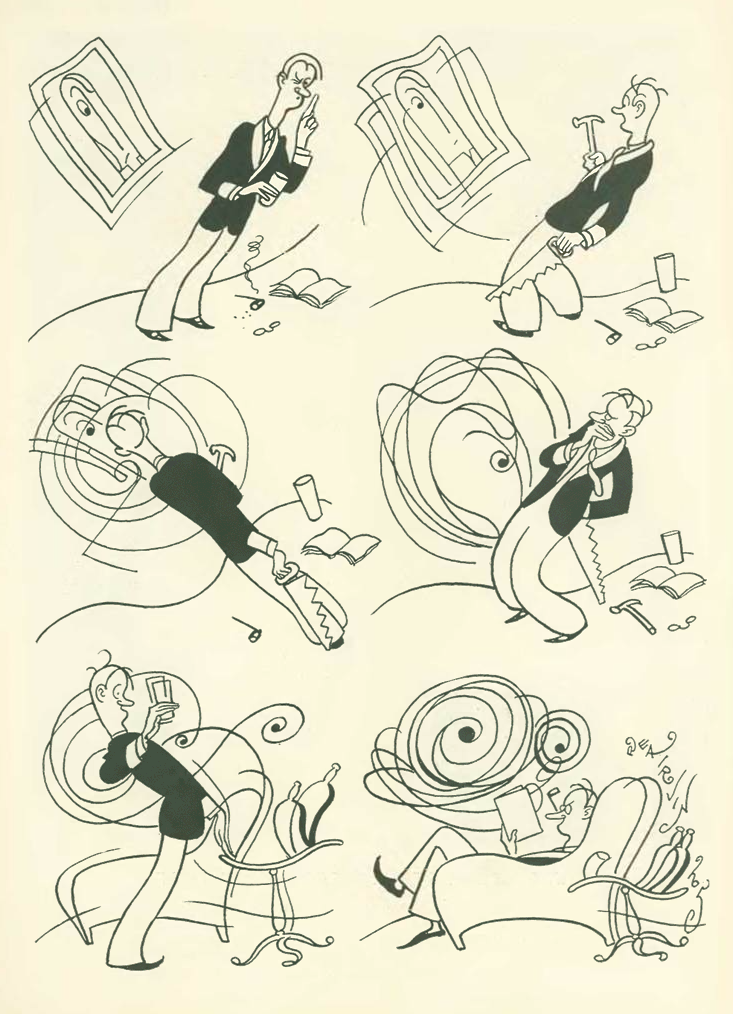
And finally, in keeping with the Prohibition theme, here is a center-spread cartoon by Rea Irvin that seemed to depict the results of consuming too much bootleg booze:

Screenshot 2015-07-17 10.55.20

Screenshot 2015-07-17 10.55.29

Next Time: Oh Behave…
Screenshot 2015-07-17 11.26.37

Oh Those French

Screenshot 2015-07-10 16.32.07
Oct. 24 cover by Max Ree.

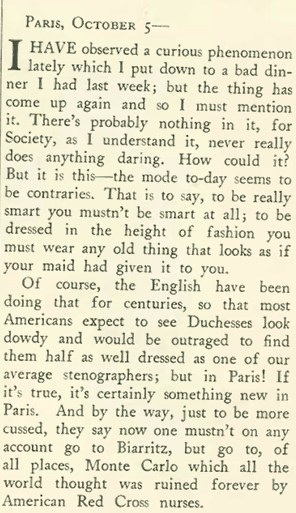
Apparently even Parisians have fashion lapses from time to time. Janet Flanner (Genêt) reported with some alarm a “curious phenomenon” from Paris in the Oct. 24, 1925 issue of The New Yorker.

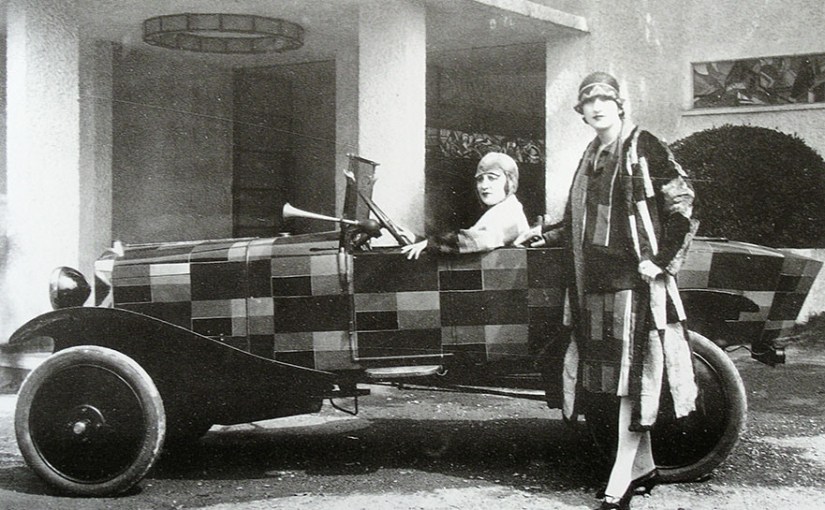
It seemed that the otherwise fashionable Parisians were slumming it a bit and had adopted a dowdy look previously associated with residents of the British Isles. (The un-dowdy image at the top of the page is French designer Sonia Delaunay and her matching Citroen in 1925).

Apparently such pedestrian tastes had also caused a shift from formerly fashionable travel destinations on the Atlantic coasts to Mediterranean destinations:

Screenshot 2015-07-14 10.25.03

And to top things off, the French were agog over the latest Charlie Chaplin film, The Gold Rush (another French favorite of American clown-dom, Jerry Lewis, would be born the following year):

Screenshot 2015-07-14 10.25.26

But then there was another new distraction in town, the Autumn Salon:

Screenshot 2015-07-14 10.26.17

6865003683_3b4a1952df
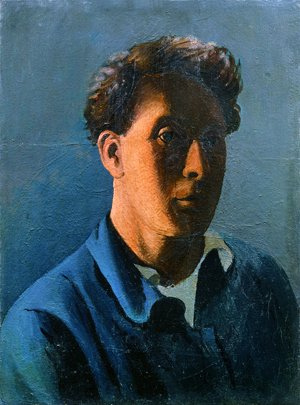
Pavel Tchelitchew, self-portrait, 1925 (Flickr)

Pavel Tchelitchew was known as a leader of “mystical surrealist” painting. He left his native Russia in 1920 and lived in Berlin before moving to Paris in 1923. There he became acquainted with Gertrude Stein and Edith Sitwell, the latter with whom he had a long-standing friendship.

The French were also on display in a comic piece by Theodore Shane, who also served as the magazine’s movie critic.

Shane wrote a piece titled “Fra~nce” in a style that suggested he was teaching children about France by dividing words into syllables (it was similar to a piece about Russia (“Rus~sia”) in the Aug. 29 issue, signed “Freudy”) Here’s a sample:

Screenshot 2015-07-13 16.18.19

A full-page ad on the Page 1 announced the “The Midnight Open” event at The 19th Hole Club in the Hotel Roosevelt, with an impressive lineup of golf professionals such as Walter Hagen and Gene Sarazen and even “prominent amateurs” including Bobby Jones.

41864_172_z
The Roosevelt Hotel, which opened in 1924 (Expedia)

I was surprised that the annual membership fee was advertised as only $10, which would roughly translate to $135 today—a bargain compared to what it costs today to join even the lowliest golf club.

Screenshot 2015-07-13 12.13.32

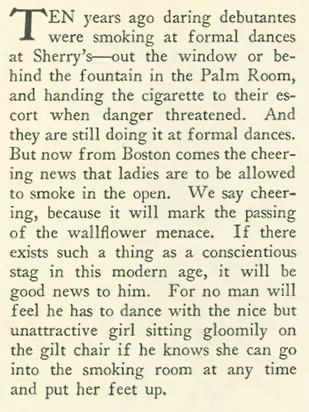
“Talk of the Town” welcomed news from Boston that “ladies are to be allowed to smoke in the open” in that city (drawing by Johan Bull):

Screenshot 2015-07-13 12.17.13

Screenshot 2015-07-13 12.17.05

In a feature “Our Collegiate Hilltop,” Elmer Davis wrote about the droves of college students who had taken over much of the available housing along Morningside, “a ghetto for the Nordic native-born.” Davis offered this lament about Columbia’s continued creep into the surrounding neighborhoods (with accompanying art by Helen Hokinson):

Screenshot 2015-07-13 12.27.15

Screenshot 2015-07-13 12.37.51

“Profiles” examined the life of “A Kind Man,” William Lyon Phelps. That title was not meant as a complement from writer Waldo Frank, but rather it was his “kindness” toward authors that caused him to praise books that were not worthy of praise and made him the personification of the “most American of disasters: the disaster of Good Intentions, when they are not fortified by intellectual hardness, when they are not drained of all sentimental juices.”

ethel-27
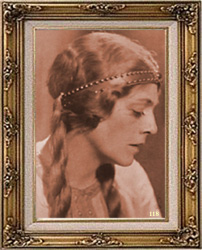
Ethel Barrymore in 1925 as Ophelia in Walter Hampden’s Production of Hamlet. (barrymorefamily.com)

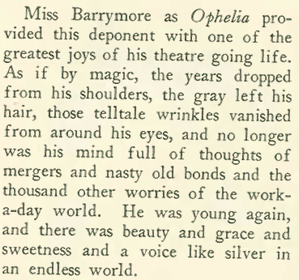
In “The Theatre” Elsie Ferguson and Basil Rathbone were appearing in The Grand Duchess and the Waiter at the Lyceum (“an agreeable piece of work”), while Ethel Barrymore “wowed” critic Herman J. Mankiewicz with her performance as Ophelia in a revival of Hamlet at Walter Hampden’s Theatre.

Or at least I think she wowed him. Mankiewicz knew and worked with the Barrymore family, and I wonder if his over-the-top style here is a wink to the fact that a 45-year-old Ethel was playing the part of a young virgin. Here’s an excerpt from the review:

Screenshot 2015-07-14 15.05.43

I hate to jump ahead, but in the Nov. 14 issue, “Talk of the Town” offered this humorous anecdote from one of Barrymore’s performances:

Screen Shot 2015-07-22 at 4.48.09 PM

In sporting news, John R. Tunis continued his coverage of rivalry matches staged at Yankee Stadium, this time the fiercely competitive Notre Dame vs Army matchup. Despite Notre Dame’s renown under Knute Rockne, Army was a worthy foe in the 1920s and in this particular matchup the Cadets blanked the Irish 27-0. The matchup between these teams was so popular that it was played at Yankee Stadium until 1947.

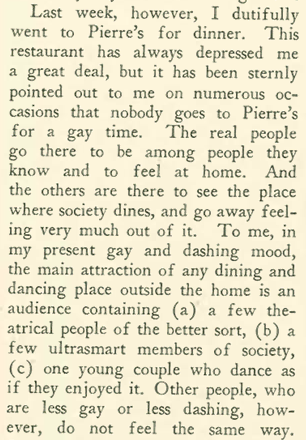
And finally, Lois Long sharpened her pencil and offered her thoughts on a dull dinner crowd at Pierre’s:

Screenshot 2015-07-14 10.21.39

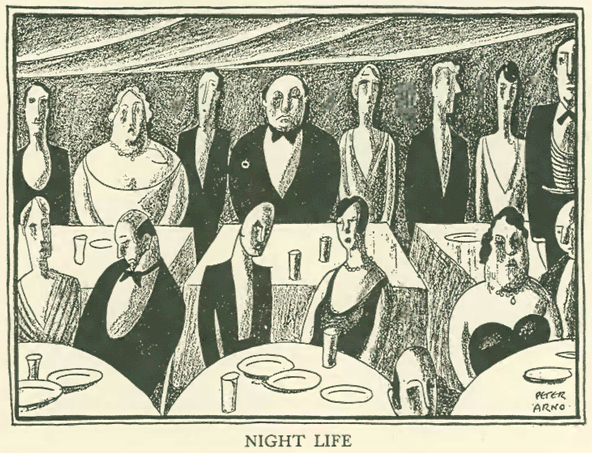
A drawing by Peter Arno (who would marry Long in 1927) in another section of the magazine seemed to refer to Long’s lament:

Screenshot 2015-07-13 16.10.04

Long also offered some criticisms of a “new negro revue” that decidedly differed from the mainstream:

Screenshot 2015-07-14 10.20.34

A great illustration by Julian de Miskey of the Bellows exhibition at the Met:

Screenshot 2015-07-13 16.08.51

Next Time: Short-tempered about Temperance…

Screenshot 2015-07-14 10.28.30

Lighter Than Air

The New Yorker was launched as a sophisticated, funny, urbane weekly, so it’s always interesting to see how the magazine will respond to a national tragedy.

Screenshot 2015-06-19 15.47.00
Sept. 12, 1925 cover by Rea Irvin, depicting plutocrats on a Merry-Go-Round.

For example, the Sept. 12, 1925 “Talk of the Town” featured a brief item titled “Zachary Lansdowne.” It opens with a paragraph describing the lieutenant commander’s demeanor and character:

Screenshot 2015-06-24 14.49.58

Screenshot 2015-06-24 14.50.16

Then it becomes apparent that this is a eulogy of sorts, since Lansdowne was the pilot of the American dirigible S.S. Shenandoah:

Screenshot 2015-06-24 14.52.40

Built in 1922, the S.S. Shenandoah was the first of four U.S. Navy airships. On Sept. 2, 1925, it departed on a promotional flight that would include flyovers of 40 cities and visits to state fairs. While passing through thunderstorms over Ohio on the morning of September 3, the Shenandoah was caught in a violent updraft that carried it beyond the pressure limits of its helium gas bags. It was torn apart in the turbulence and crashed in several pieces. Fourteen of Shenandoah‍ ’s crew, including Commander Lansdowne, were killed. Amazingly, there were 29 survivors who succeeded in riding three sections of the airship to earth.

USS_Shenandoah_Wrack
Wreck of the Shenandoah. The front section rests in a field near Caldwell, Ohio. (Wikipedia)

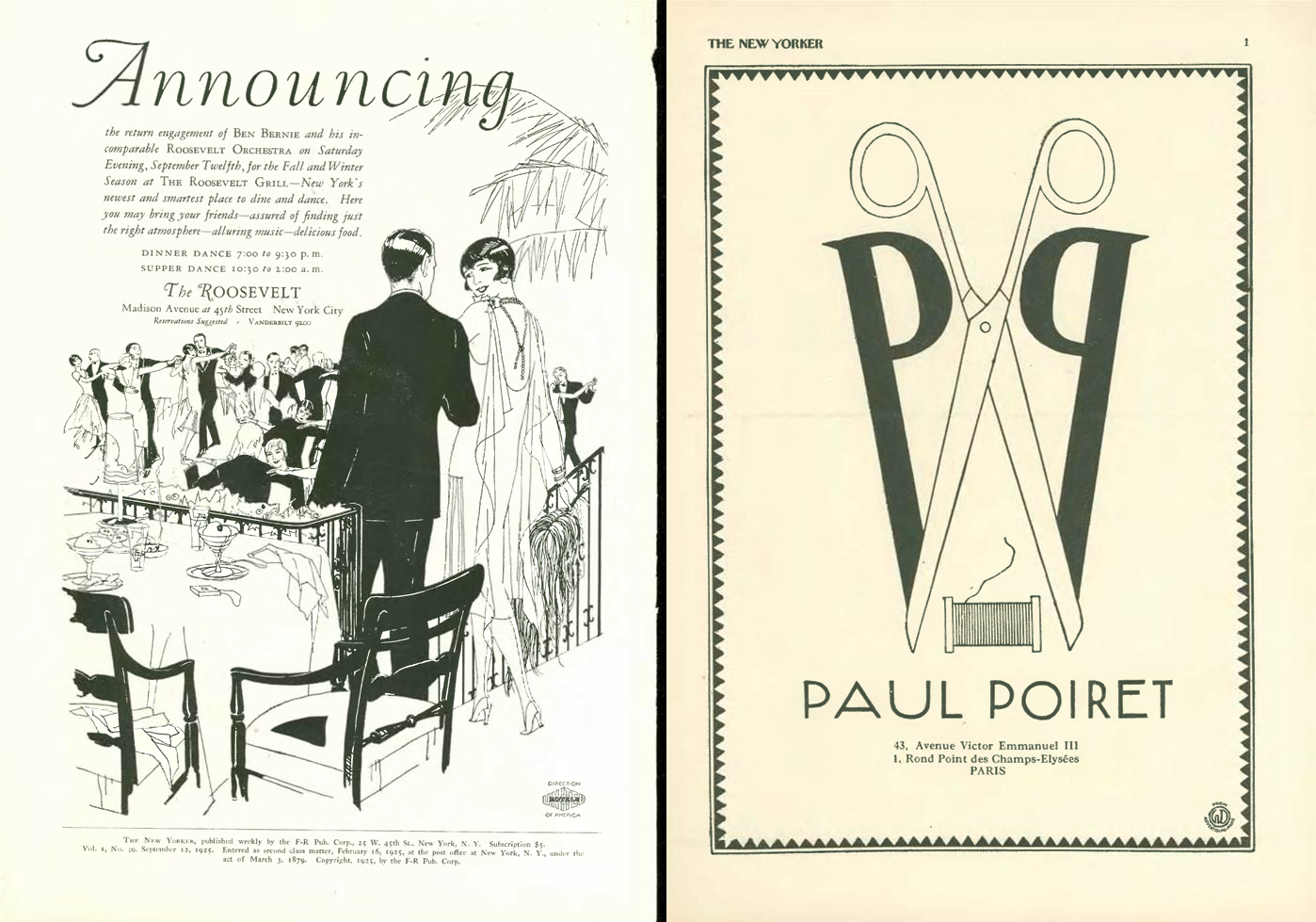
After a lean summer, advertising in The New Yorker picked up dramatically, with the opening spread for the Sept. 12 issue featuring full-page ads by The Roosevelt Hotel and the French fashion house Paul Poiret:

Screenshot 2015-06-24 09.29.00

This infusion of advertising was largely the result of a big promotional push orchestrated by John Hanrahan, considered one of the most gifted writers of publisher promotions. The magazine’s major (and really only) investor, Raoul Fleischmann, brought Hanrahan on board to address the magazine’s dearth of advertising, a move that was much to the dislike of the acerbic Harold Ross.

The trials of starting a new magazine were not lost on Ross, as was evidenced in this Newsbreak on page 13:

Screenshot 2015-06-24 15.15.07

But Ross knew that the ad push helped the bottom line, and he did his part to draw new talent to the magazine and improve its overall quality.

Screenshot 2015-06-24 16.12.10
Ralph Ingersoll in the 1940s (baseball-fever.com)

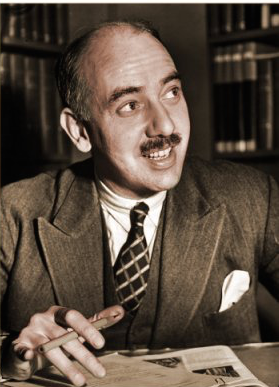
New talent included Ralph Ingersoll, who joined the magazine as managing editor in the summer of 1925. Ingersoll went to work giving the magazine a “voice,” especially in the rather weak and unfocused “Talk of the Town” section.

After suffering Ross-induced burnout in 1930, Ingersoll would go on to serve as a managing editor of Time-Life Publications, and would later found the short-lived, left-wing daily newspaper, PM.

That summer Ross also brought on Katharine Angell (later Katharine White) as a part-time reader of manuscripts, but almost immediately she became a full-time employee and was soon involved in every aspect of the magazine.

220px-Katharine_Sergeant_Angell_White
Katherine Angell (Wikipedia)

She is often credited with the magazine’s maturity and its sophisticated taste and style. It was through Angell that Ross would meet and hire both E.B. White (who would later marry Angell) and James Thurber.

In the “Profiles’ Section, Murdock Pemberton took a look at the challenges facing Richard Bach in his attempts to promote the arts to business-minded New Yorkers. Bach was an “Associate in Industrial Arts” at the Metropolitan Museum of Art. Today, merchandise based on art museum collections is a ubiquitous practice, but in 1925 Bach’s job was viewed as somewhat distasteful:

Screenshot 2015-06-24 15.25.24

Screenshot 2015-06-24 15.25.33

Morris Markey (“In The News”) tried to make sense of the continued enforcement of Prohibition, and seemed to conclude that it originated in Puritan resentment in the Midwest, and would continue to be enforced according to regional customs and strictures:

Screenshot 2015-06-24 15.29.51

Screenshot 2015-06-24 15.31.24

Screenshot 2015-06-24 15.31.35

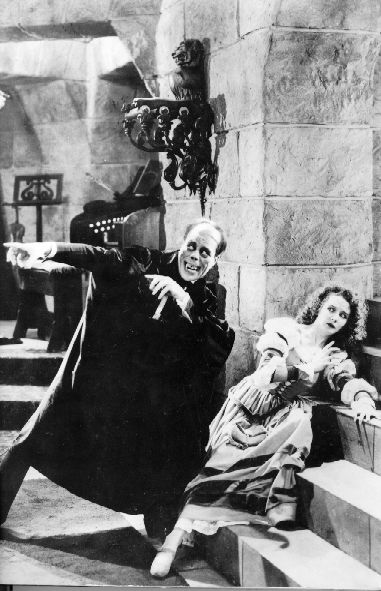
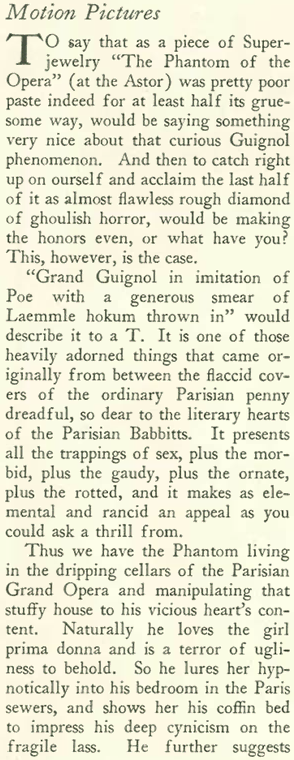
And true to form, New Yorker film critic Theodore Shane panned a movie that today is considered a classic of the silent era:

PhantomOp
UM, AWKWARD…Theodore Shane called Phantom of the Opera “Grand Guignol in imitation of Poe with a generous smear of Laemmle hokum”…in this scene, Erik, The Phantom (Lon Chaney) woos Christine Daaé (Mary Philbin) (Wikipedia)

Screenshot 2015-06-24 15.41.27

Screenshot 2015-06-24 15.41.36

With this issue Lois Long retired “When Nights Are Bold” (a column on local nightlife she inherited from Charles Baskerville) and introduced us to a renamed column, “Tables For Two.” She opened with a description of a police raid on a on old barroom where she had been apparently enjoying a nice beefsteak. She then abandoned the “slums” for the Plaza Hotel, where she spied none other than actors Charlie Chaplin and Adolph Menjou:

Screenshot 2015-06-24 15.51.15

Ads return to the back cover, an indication that things are picking up:

Screenshot 2015-06-24 15.59.42

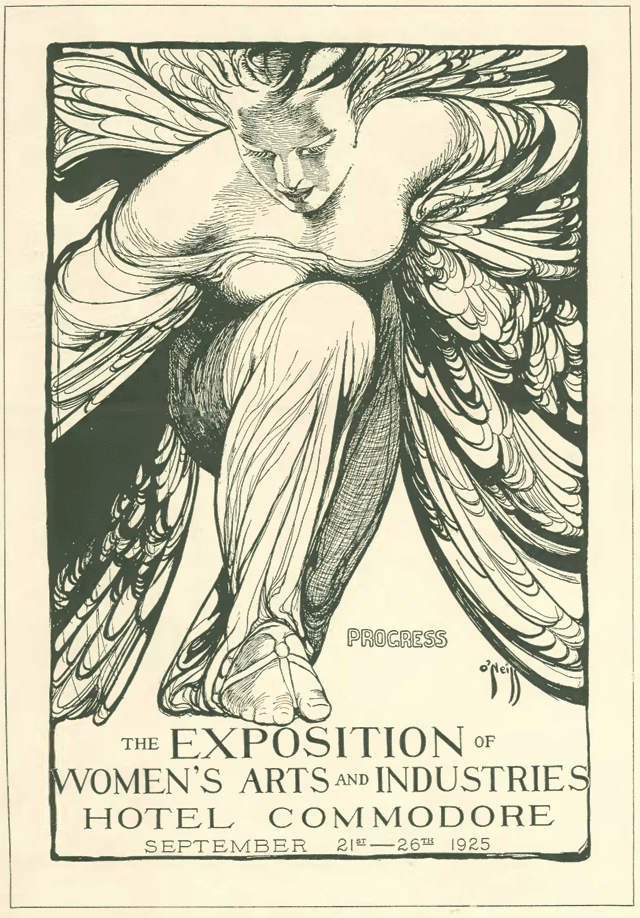
The poster above was created by American illustrator Rose O’Neill, who is best known as the creator of the popular Kewpie comic characters in 1909. The wildly popular Kewpies were later produced as dolls, and became one of the first mass-marketed toys in America. Raised in rural Nebraska, O’Neill was active in the women’s suffrage movement and at one point was the highest-paid female illustrator in the world.

Screenshot 2015-06-25 09.48.56
Rose O’Neill in 1907, and her famous creation (Wikipedia)

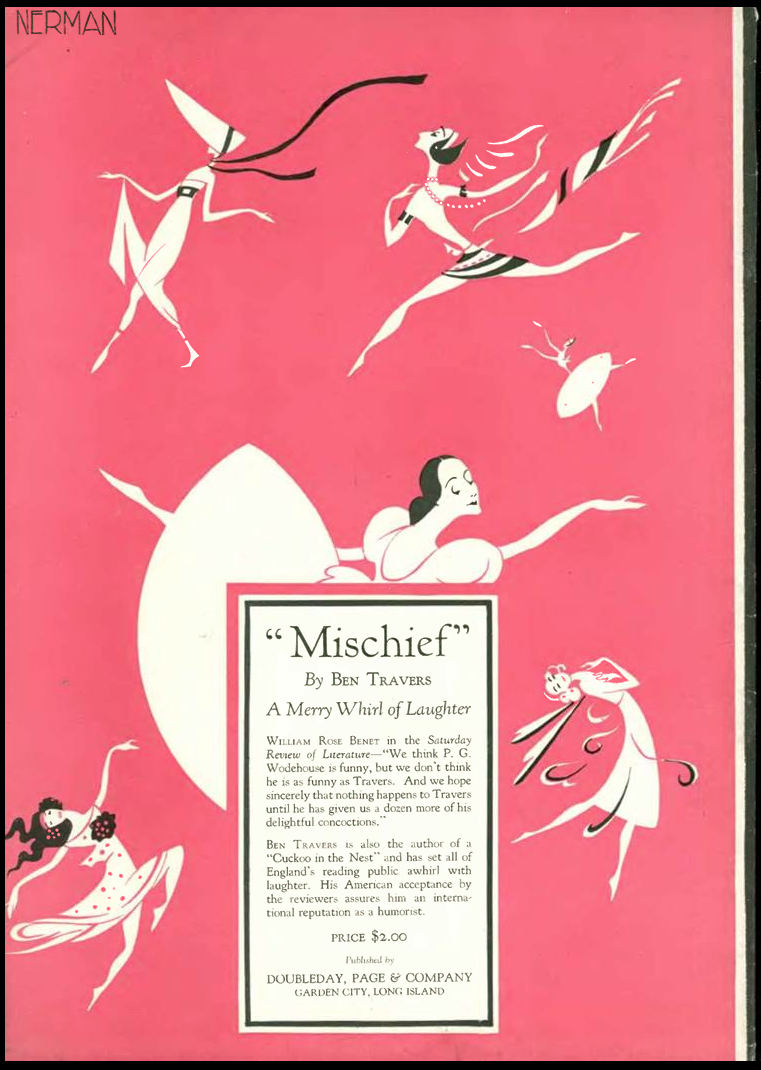
On the back cover, we are treated to some more great illustrations by artist Einar Nerman in this ad from Doubleday:

Screenshot 2015-06-24 15.59.53

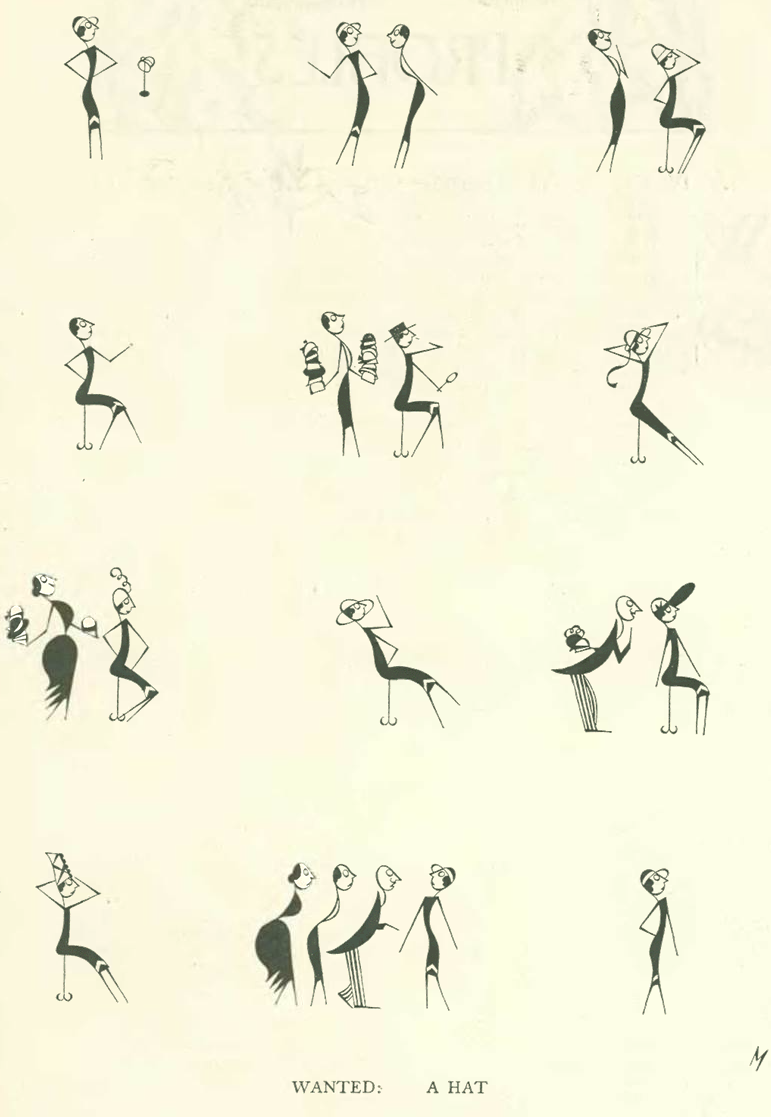
And a whimsey from Julian de Miskey:

Screenshot 2015-06-24 15.13.00

Next time: Signs of Autumn…

Screenshot 2015-06-24 16.52.50

Invasion from the Hinterland

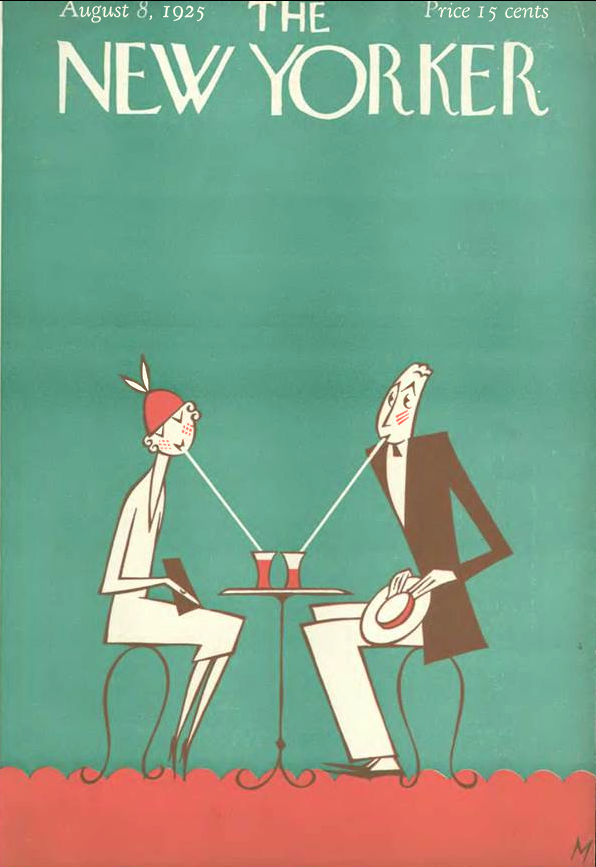
Screenshot 2015-06-04 12.52.15
August 8, 1925 cover by Julian de Miskey.

The dog days of summer were ushered in by the news that “the buyers” had “invaded” the city.

The “buyers” in question were tourists (and no doubt some clothing store merchants) from across the country who had descended upon Gotham in search of the latest fashions that could be bundled off to the hinterlands.

“The Talk of the Town,” speaking through the fictional persona “Van Bibber III,” took a sneering view of this annual migration:

Screenshot 2015-06-04 13.47.57

Screenshot 2015-06-04 13.48.07
(New Yorker Digital Archive)

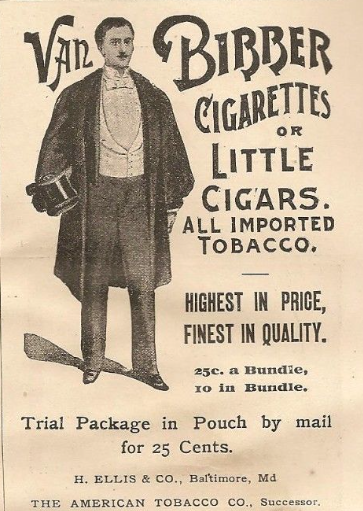
In the first issues of The New Yorker, the “Van Bibber III” signature appeared occasionally at the end of “Talk” or other items.

Screenshot 2015-06-04 15.12.01
Van Bibber advertisement in Cosmopolitan, 1896

In her book, Defining New Yorker Humor, Judith Yaross Lee wrote that early readers of The New Yorker would have recognized the Van Bibber III persona “as a joke, a personification of Van Bibber cigarettes, whose ads targeted the devil-may-care, swagger young man about town all dressed up for the opening night. As an insiders view of the urban scene, Van Bibber’s accounts featured casual conversation—that is, talk.”

“Of All Things” offered this update on the activities of illusionist Harry Houdini:

Houdini, charged with disorderly conduct after smashing up an office, replied: They locked the door and I had to fight my way out.” Bang goes another illusion! We thought he could open anything but a car window.

Murdock Pemberton wrote about the life of poet Harry Kemp in “Profiles,” and cartoonist Al Frueh offered this twist on the uses of “hot air:”

Screenshot 2015-06-04 14.16.14
(New Yorker Digital Archive)

And more art from Ralph Barton, this time along with his views on the play Artists and Models and the contrasts between life in New York and Paris:

Screenshot 2015-06-04 14.18.13
(New Yorker Digital Archive)

“Moving Pictures” offered praise for Sally of the Sawdust, featuring W.C. Fields. Theodore Shane wrote that Fields had distinguished himself from other movie comedians through his act as a “snooty sort of superclown.”

Screenshot 2015-06-04 14.47.03
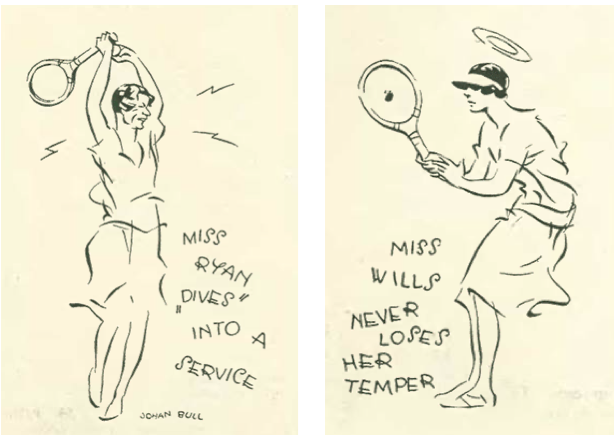
Art work  by Johan Bull from “Sports of the Week.” In their careers, Elizabeth Ryan won 30 Grand Slam Titles, and Helen Wills won 31 (New Yorker Digital Archive).

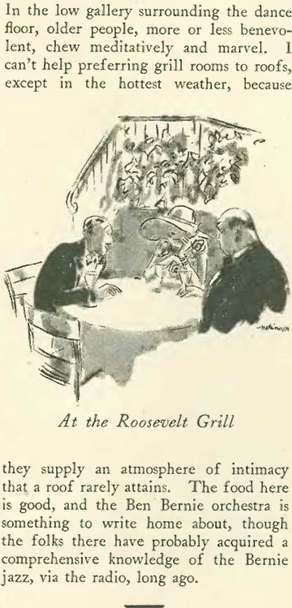
The tennis tournament at Seabright featuring Elizabeth Ryan and Helen Wills was the subject of “Sports of the Week,” and in “When Nights Are Bold,” Lois Long continued her look at nighttime entertainment venues to beat the summer heat:

Screenshot 2015-06-04 14.27.23

Screenshot 2015-06-04 14.27.30
(New Yorker Digital Archive)
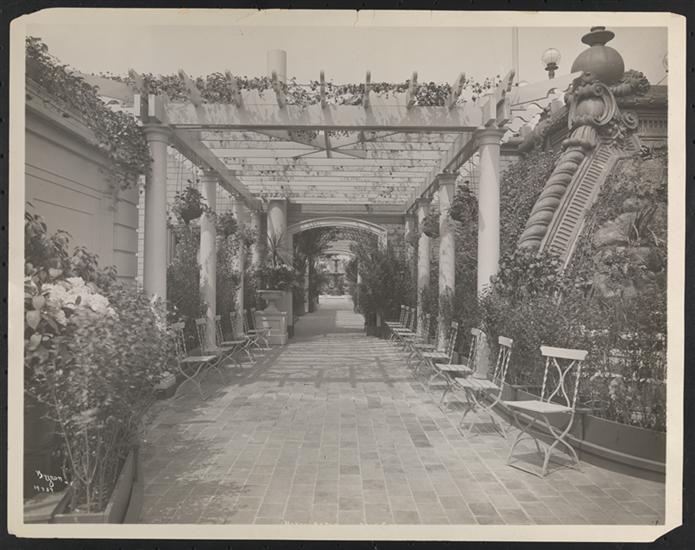
MNY19570
Hotel Astor Roof Garden in 1905 (Museum of the City of New York)

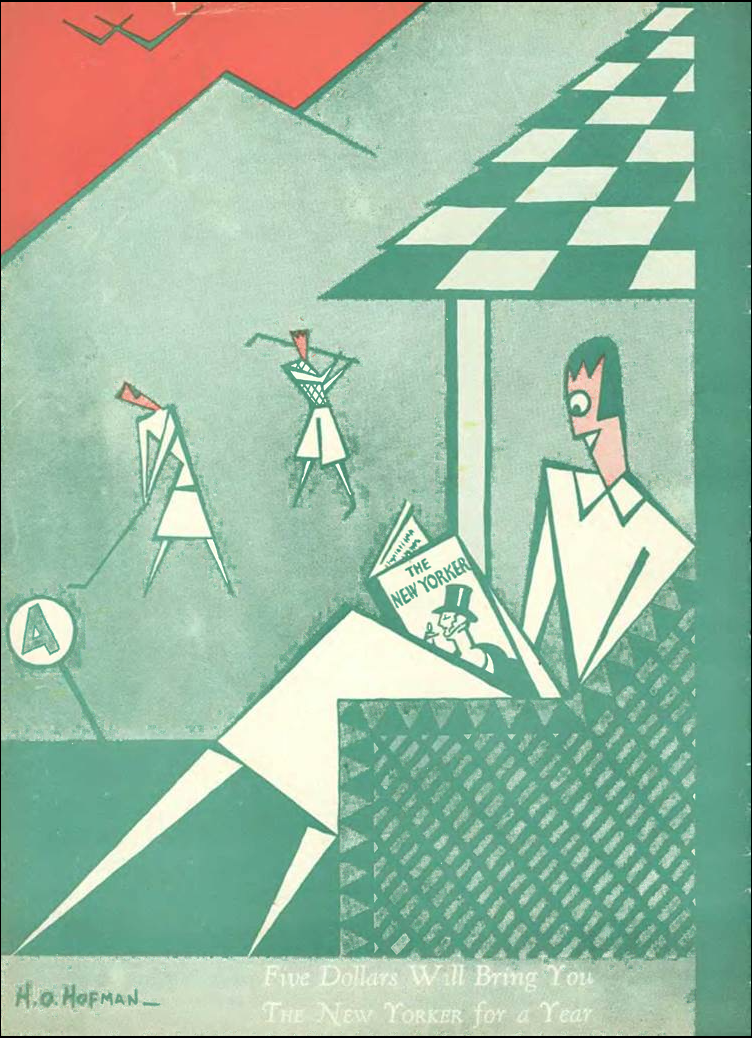
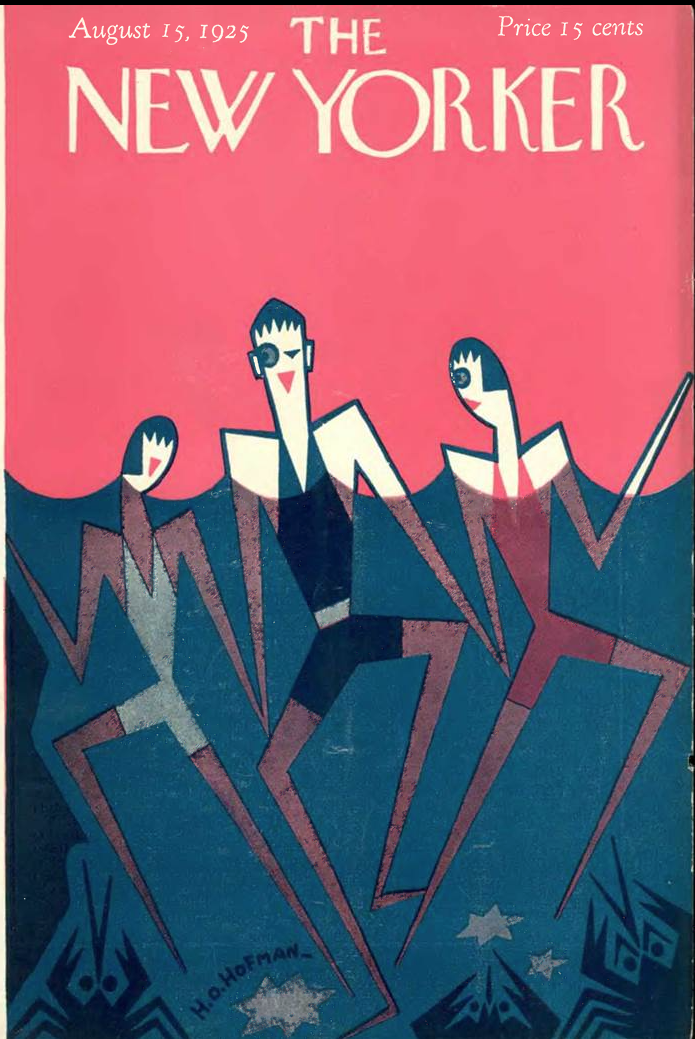
Advertising remained sparse in the pages of The New Yorker, with both inside front and inside back covers devoted to in-house ads promoting the magazine. In addition, the color back cover was also a house ad, featuring a rendering by H. O. Hofman:

Screenshot 2015-06-04 14.28.05
(New Yorker Digital Archive)

Next time. Will The New Yorker sink or swim?

Screenshot 2015-06-04 15.04.48


The Vicious Circle

Screenshot 2015-05-08 15.49.29
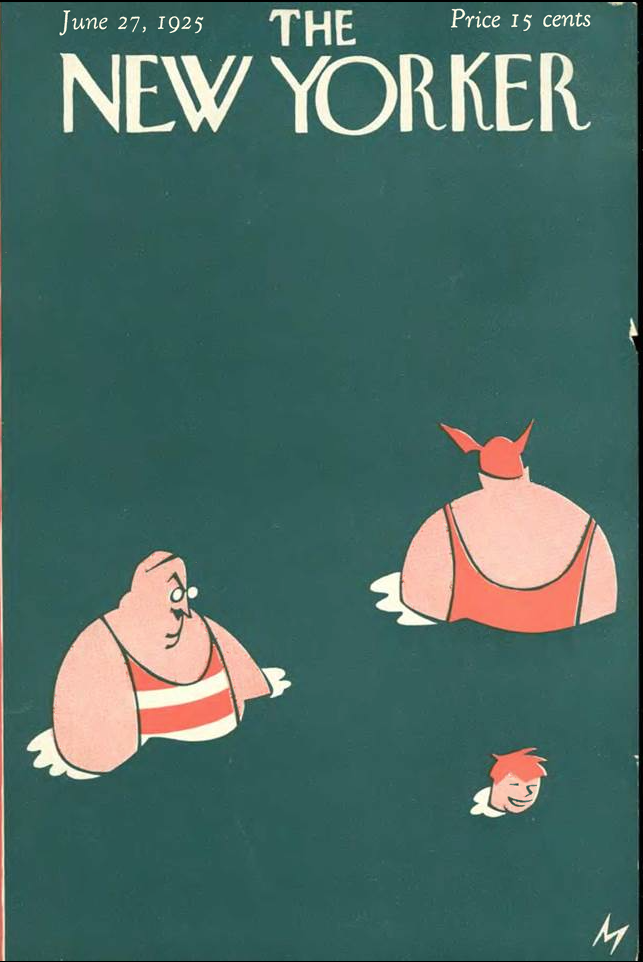
June 27, 1925, cover by Julian de Miskey (New Yorker digital archive)

With a lull in the news from the Scopes Trial, the June 27, 1925 is another hodgepodge of seemingly random bits. Perhaps this is a good time to look at  some of the magazine’s early artists, editors and writers.

The masthead of the very first issue listed these founding (ceremonial) Advisory Editors: Ralph Barton, Marc Connelly, Rea Irvin, George S. Kaufman, Alice Doerr Miller, Dorothy Parker and Alexander Woollcott. Not listed was founding editor Harold Ross.

The list remained the same for the June 27 issue, minus Ralph Barton. His story is rather sad.

In his day, Barton was well known for his celebrity caricatures, the most famous being his group drawings. He was also a regular early contributor to The New Yorker of brief theater reviews that were accompanied by a large illustration:

Screenshot 2015-05-11 10.47.29
(New Yorker digital archive)

Despite his short stint as a ceremonial advisory editor, the Kansas City native contributed often to the magazine during its first years. Barton also contributed drawings to such publications as Collier’s, Vanity Fair and Harper’s Bazaar.

180px-Ralph_Barton_1926
Ralph Barton in 1926 (Wikipedia)

Although his work earned him an impressive income, Barton was a manic-depressive with four failed marriages. In May 1931 he shot himself through the right temple in his East Midtown penthouse. He was only 39.

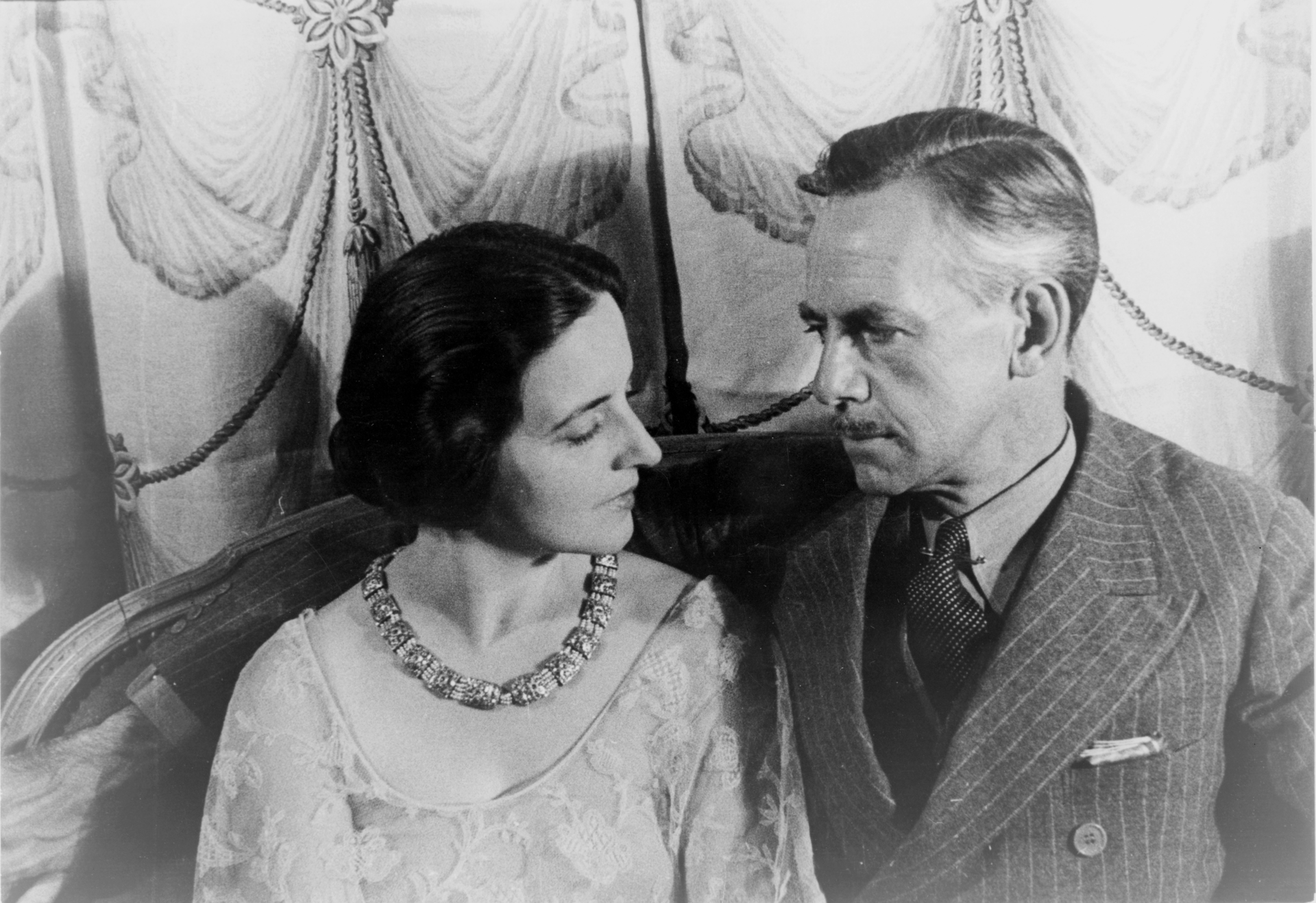
According to Wikipedia, Barton wrote in a suicide note that he had irrevocably “lost the only woman I ever loved” (the actress Carlotta Monterey, who divorced Barton in 1926 and married playwright Eugene O’Neill in 1929), and that he feared his worsening manic-depression was approaching insanity.

Portrait_of_Eugene_O'Neill_and_Carlotta_Monterey_O'Neill
Carl Van Vechten photograph of Carlotta Monterey and Eugene O’Neill, 1933 (Library of Congress)

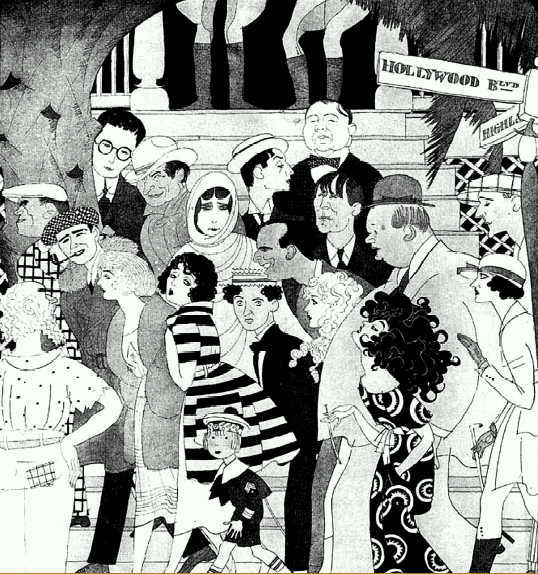
Following his death, Barton’s artistic reputation quickly dropped from sight, due not only to his demise but also to the waning of the Jazz Age subjects he drew with such verve:

RalphBartonExtract
A 1921 Vanity Fair Hollywood caricature by Ralph Barton. (Wikipedia)

A 1928 letter from Harold Ross to Barton (posted on The American Reader website) seems to be an attempt by Ross to cheer up the artist:

Wednesday 27 June 1928

Dear Ralph,

I was on the brink of writing you when your letter came—this morning—telling me about your latest predicament. I knew, of course, that you had reached some conclusion as this. You are a creative soul and therefore a restless soul; therefore, a damn fool. I would leave this to any fair-minded banker. I wish I were a banker. I also wish I were Henry Ford or anybody who can accept the church, the government, conventions, and all those things.

I also had house trouble. I am thinking of burning the damn thing down. The insurance would net a tidy bit of cash and would enable me to get a room somewhere and fit up what I really ought to have. I am not competent to manage more space than this. I would be if I were a fairy. Fairies are the happiest people there are. All editors ought to be fairies. I fuss around with commas, semi-colons, dictionaries, and wordings, and it drives me crazy. I am too virile. I ought to be building subways. I was thinking of going to the North Pole with the Byrd expedition but that would take a year or two and I can spare, at most, only two months. It probably would be a bore anyhow. All life is a bore if you think at all…

As ever,

Ross

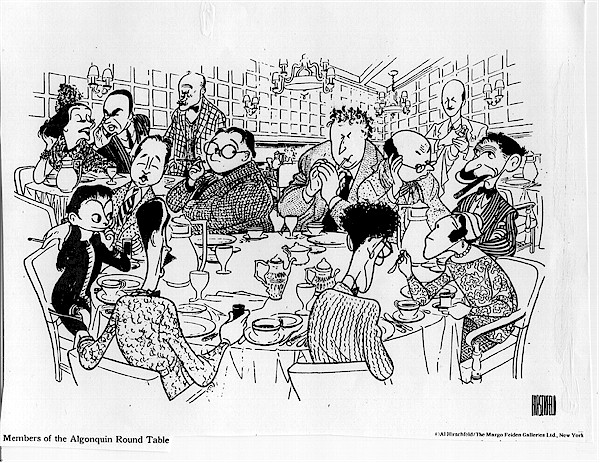
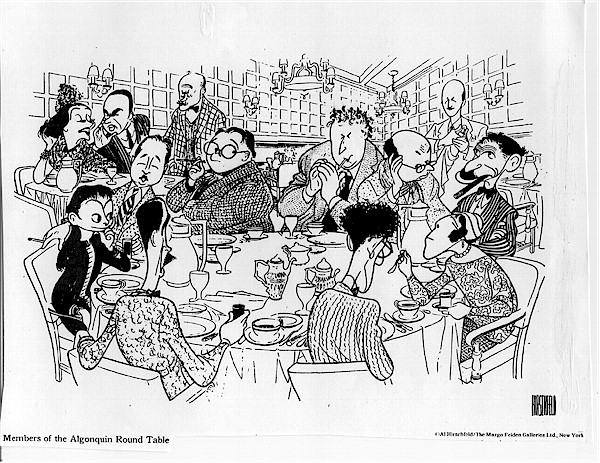
Others listed on The New Yorker masthead were associated with legendary Algonquin Round Table, including the playwrights Marc Connelly and George S. Kaufman and writers Dorothy Parker and Alexander Woollcott—all charter members. The writer Alice Duer Miller was also an occasional guest of this “Vicious Circle,” as they called themselves. From roughly 1919 to 1929, they met every day for lunch at the Algonquin Hotel.

Other regular Round Table members included Harold Ross, Franklin Pierce Adams, (best known for his newspaper column, “The Conning Tower”), New Yorker humorist Robert Benchley, husband-wife writers Heywood Broun and Ruth Hale, broadway producer Brock Pemberton, playwright Robert Sherwood and broadway publicist John Peter Toohey.

Those who moved in and out of the circle included feminist writer Jane Grant (who with her first husband Harold Ross co-founded The New Yorker), vaudeville comedian and later film star Harpo Marx, actresses Peggy Wood, Tallulah Bankhead, Lynn Fontanne and Margolo Gillmore, actor and director Alfred Lunt, playwrights Edna Ferber and David Ogden Stewart, humorist Frank Sullivan, writers Margaret Leech and Frank Crowninshield, illustrator Neysa McMein, playwright Beatrice Kaufman (George’s wife) and composer Deems Taylor.

It is important to make note of these various players in the “Vicious Circle,” since they figure prominently both as contributors and subjects in the early issues of The New Yorker.

table
Famed Al Hirschfeld illustration from 1962 of the Algonquin Round Table includes (counterclockwise, from far left) Dorothy Parker, Robert Sherwood, George S. Kaufman, Edna Ferber, Franklin P. Adams, Marc Connelly, Heywood Broun, Alexander Woollcott, and Robert Benchley. Rounding out the back row are, from left, Lynn Fontanne, Alfred Lunt, Frank Crowninshield and hotel manager Frank Case. (Al Hirschfeld Foundation)

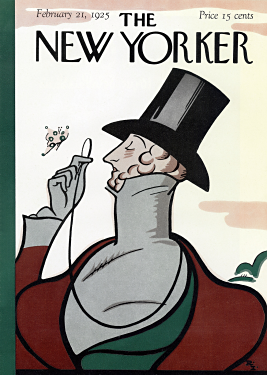
A prominent name on The New Yorker’s masthead absent from the Round Table is graphic artist Rea Irvin, creator of the magazine’s distinctive look and its mascot, Eustace Tilley.

Original_New_Yorker_cover
Rea Irvin’s Eustace Tilley on Issue #1 (New Yorker Digital Archive)

Irvin signed on as an advisory editor with the assumption that the magazine would fold after a few issues. Little did he realize that his illustrations, department headings, caricatures, and cartoons would grace the pages of The New Yorker for many years; that he would go on to illustrate 169 covers between 1925 and 1958; and that his distinctive typeface and mascot would continue to serve the magazine to this very day (Irvin died in 1972 at age 90).

Not to give the June 27 issue short shrift, “The Talk of the Town” reported Roald Amundsen had returned from his North Pole flight; “Profiles” looked at the life of theatrical producer Morris Gest; and “Books” offered a brief and somewhat mixed review of D.H. Lawrence’s new book, St. Mawr.

nazimova-nerman-caricature
In The New Yorker’s “Critique” section, a terrific caricature of Russian-American actress Alla Nazimova, by Swedish artist Einar Nerman. (New Yorker Digital Archive)

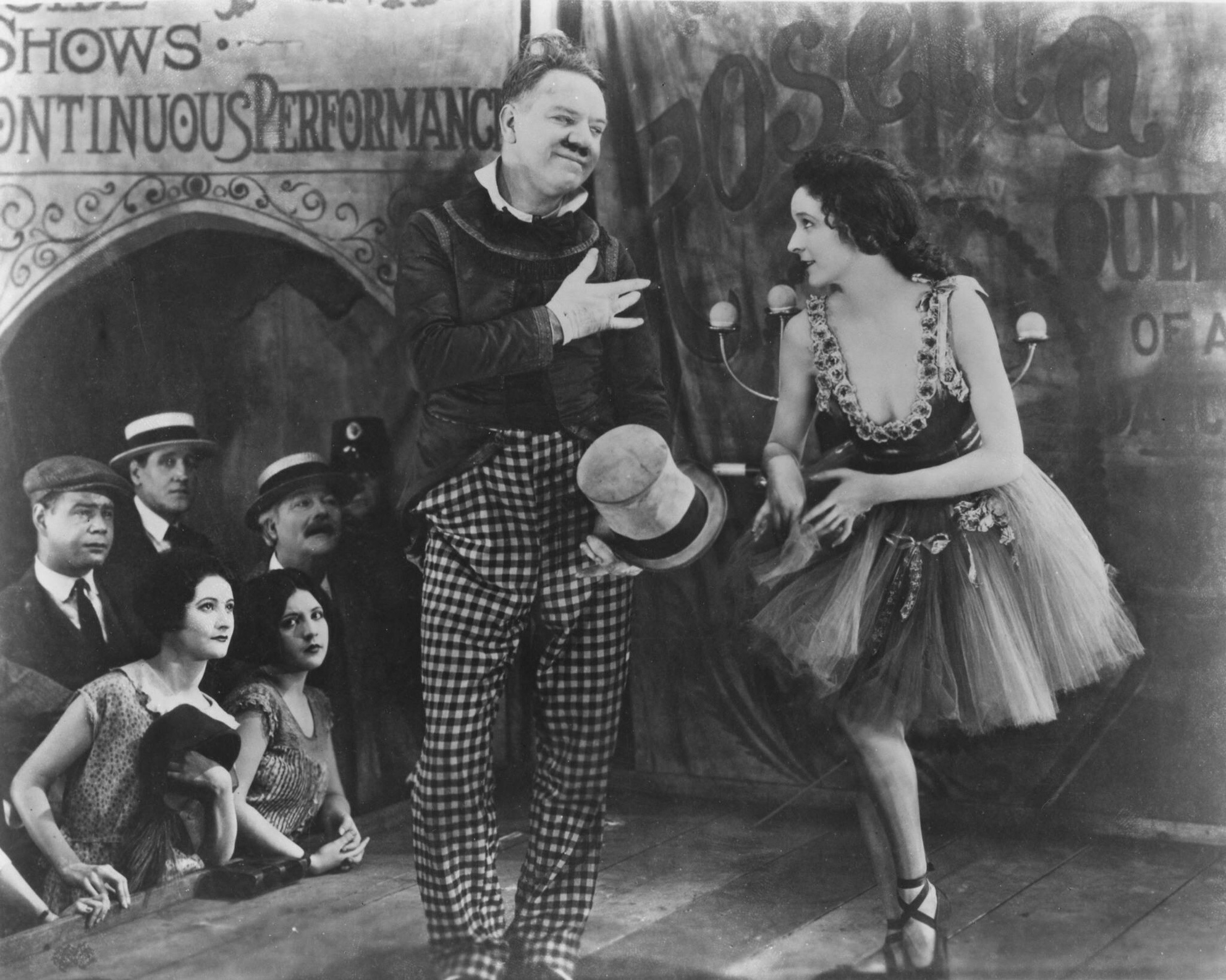
In “The Theatre,” W.C. Fields continued to impress in his performances with the Ziegfeld Follies. The New Yorker noted that Fields was becoming a “talking comedian” comparatively late in life, and that after 26 years “as a straight and comic juggler,” he has become “ever so many people’s favorite comedian.” Under “Moving Pictures” it was also observed that D. W. Griffith’s Sally of the Sawdust was going to “put W.C. Fields across as a big screen comedian. Wait and see!”

image
Sideshow “Professor” Eustace McGargle (W.C. Fields) and his ward, Sally (Carole Dempster, who was director D.W. Griffith’s real-life lover and protégée) are circus carnies in Sally of the Sawdust (1925). The movie was based on Fields’ stage hit Poppy, and featured stage legend Alfred Lunt in a rare film role. (Film Forum)

The June 27 issue offered yet another full page cartoon, this time by Gardner Rea, taking aim at the droll antics of the moneyed classes:

Screenshot 2015-05-11 10.46.19
(New Yorker Digital Archive)

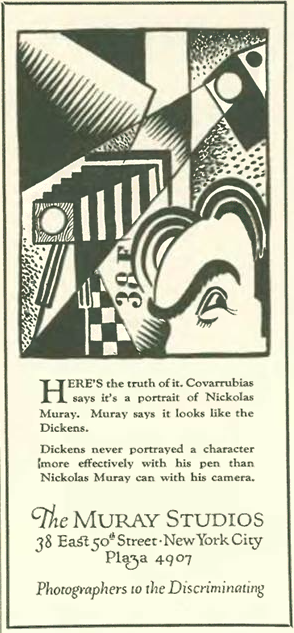
And finally, we are shown the answer to the mystery drawing by Covarrubias–ahem–an advertisement for a photography studio:

Screenshot 2015-05-11 10.58.43
(New Yorker Digital Archive)


Of Queens and Cold Cream

Screenshot 2015-04-27 16.11.16
June 6, 1925 cover by Julian de Miskey (New Yorker Digital Archive)

The June 6, 1925 “Talk of the Town” was jumble of odds and ends. There were musings on William Randolph Hearst’s indecision over a redesign of his Cosmopolitan magazine (to incorporate the defunct Hearst’s Magazine), and an update on “the Queen of Rumania”…”persuaded by Miss Zoe Beckley to write that series of articles for her newspaper which are appearing currently, in this city, in the World. Her Majesty also received a tidy piece of money for endorsing, under the royal signature, a certain facial cream much favored by young ladies ion the great Middle West, where men are men.”

Screenshot 2015-04-21 13.18.41
The “Queen of Rumania” and her Pond’s endorsement were featured in this April 1925 ad in Motion Picture magazine. See my blog post on Issue #4 titled “The Queen of Romania” to learn more about this enterprising monarch. (Image scan)

“Talk” reported that the facial cream company (Ponds) was approaching other notables for endorsements: “Alice Roosevelt, known in some circles as Mrs. Nicholas Longworth, is reported to have succumbed to the lure of the facial cream. The sum mentioned is five thousand dollars. There will be a photograph of Princess Alice and, one hears, a statement of what she owes to the beneficent workings of the cream in question. She will be in good company, for Mrs. Reginald Vanderbilt, Mrs. Marshall Field and Lady Diana Duff-Cooper have appeared already, among others.

Also noted was the closing of Joel’s, “perhaps the last of the older order of restaurants, whose hosts were individuals, not corporations.” Frequent patrons were novelist Booth Tarkington and artist George Luks.

“The Talk of the Town” also featured drawings by Rea Irvin lampooning William Jennings Bryan’s role in the Scopes Trial, but there was no mention of the event in the “Talk” section itself. However, “Of All Things” noted that “Professor Scopes will now sing that popular ballad: ‘The truth I loved in funny Tennessee.’” The next item followed with “It is said that the KKK is a strong element in the Southern anti-evolution fight. One would expect them to fight klanfully for the Jewish tribal legends.”

Screenshot 2015-04-27 16.15.03

Another stand-alone, full-page illustration depicted Tennessee as a dark jungle:

Screenshot 2015-04-27 16.42.06
(New Yorker Digital Archive)

“Profiles” featured Deems Taylor, who was dubbed “Versatility Personified” for his work as both a music critic and gifted composer, among other talents. According to Wikipedia, Taylor’s operas were given more performances by the Metropolitan Opera than any other American composer (including his 1927 work The King’s Henchman, with libretto by Edna St. Vincent Millay).

1101310216_400
Deems Taylor on the cover of Time, Feb, 16, 1931 (Time Inc.)

Taylor was well-known to New Yorker editors and writers as a friend of the Algonquin Round Table, and briefly dated Dorothy Parker. He was also friends with composers George Gershwin, Jerome Kern and novelist F. Scott Fitzgerald. He later appeared in Walt Disney’s 1940 film Fantasia as the master of ceremonies, and helped select pieces for the film’s musical score.

The New Yorker was seemingly hitting a rough patch as it entered its fifth month. The thin 16th issue (just 24 pages plus cover) reveals the editors still fiddling with the magazine’s format, including an odd new section titled “Critique” that looked variously at happenings in theater, motion pictures, art, music and books—apparently an attempt to consolidate all of these formerly separate sections into one. There was yet another reference to writer Michael Arlen, the magazine characterizing him as an author of light entertainments and thrillers whose best book was These Charming People.

It is noteworthy how much ink the writer Michael Arlen commands in the pages of early New Yorker, considering how little known he is today. And this was at the same time F. Scott Fitzgerald’s The Great Gatsby was receiving tepid reviews, including a brief one in The New Yorker.

Chaplin’s Angst

A “Profile” piece by Frank Waldo (aka “Searchlight”) in the May 23, 1925 issue took a look at the 36-year-old Charlie Chaplin and his “magical popularity,” recounting how he was nearly “devoured” by an adoring crowd in Paris (Chaplin was decorated by the French government in 1921 for his film work and made Officer of the Légion d’Honneur in 1952). Chaplin dismissed the attention as “nothing,” and was reported to spend much of his time off-screen brooding and in despair.

Screenshot 2015-04-21 11.30.19
May 23, 1925 cover by Julian de Miskey (New Yorker Digital Archive)

Waldo wrote that the “pity” of Chaplin is that “he does not understand the adoration he receives, and therefore has become a self-doubting, melancholy, haunted man…caught in a vast machine he has created and which he does not run…he has created for himself a mask (that) has satisfied the world, from China to Paris. It has failed in but a single way—a cruel one: for it has failed to satisfy its maker.”

Chaplin004 copy.tif
Chaplin directs on the set of The Gold Rush (1925) in Truckee, California (Critics At Large)
Screenshot 2015-04-21 12.04.19
Conrado Massaguer’s “Profile” illustration

Waldo wrote that Chaplin seeks his answer wistfully through women or through association with intellectuals, leaving him “as will-less as a Russian romantic, in the quicksands of Los Angeles: lost in a world of which he is the king, and which he does not love and which distrusts him, knowing him different from it.”

William Jennings Bryan, “The Great Commoner,” was a frequent target of the early New Yorker. “Talk of the Town” reported that he denied making a million dollars on a Florida land deal (“it was only five hundred thousand dollars, Mr. Bryan indignantly averred”).

rc0-266
Villa Serena, the Miami winter home of Nebraska statesman William Jennings Bryan (State Archives of Florida)

Apparently Bryan, “the great statesman and religionist,” also controlled a choice site in Miami, toward which “a certain church cast longing glances.” The church pleaded poverty, but Bryan wouldn’t budge on the price. Instead, he said if the church bought the plot at said price and built on the site he would agree to preach eight sermons there, which, the “Talk” writer observed, “would unquestionably attract many casual worshippers, so swelling the collections.”

Screenshot 2015-04-22 17.33.17
Cosmopolitan, June 1925

“Talk” also reported on the wedding of Mrs. David Meriwether Milton, nee Abby Rockefeller. Guests included New York Governor Alfred Smith and Mayor John Hylan. The New Yorker also reported receiving a letter from writer Michael Arlen prior to his departure for England. Referring to a previous issue that pondered what impressions of America he would relate to England, he wrote “I shall say that I found America charming. And Oh, I have!” The New Yorker dryly observed that Arlen, before boarding his ship, “made an arrangement with one of our monthly periodicals; that is to say, The Cosmopolitan.” It was reported that this rival Hearst publication was paying Arlen the princely sum of $3,500 for each short story delivered. No doubt a pang of jealousy was felt at the fledgling New Yorker.

A feature by “Susan Simple, Spinster” titled “Husbands, An Appreciation,” described various types of husbands including those who are acrobatic, helpless, doggy (“so friendly and believing”) and those who have no time for their wives (“the Metered One”).

Screenshot 2015-04-21 12.04.10
(New Yorker Digital Archive)
40
Scribner’s 1925 edition of The Great Gatsby.

“Books noted the passing of Amy Lowell, and briefly reviews F. Scott Fitzgerald’s latest novel The Great Gatsby; the reviewer writes that the novel “revives our interest” in Fitzgerald, though the book is “not in a Byronic promise he probably never had. He still reveres and pities romantic constancy, but with detachment. Gatsby, its heroic victim, is otherwise a good deal of a nut…Parts are solidly good, all has to be read, The young man is not petering out.”

History would not be kind to Fitzgerald, who received similar mixed reviews from other publications. The book sold only 20,000 copies in its first year, and when the writer died in 1940, he believed himself to be a failure and his work forgotten. Little did he know that he had written what many still believe to be “The Great American Novel.”