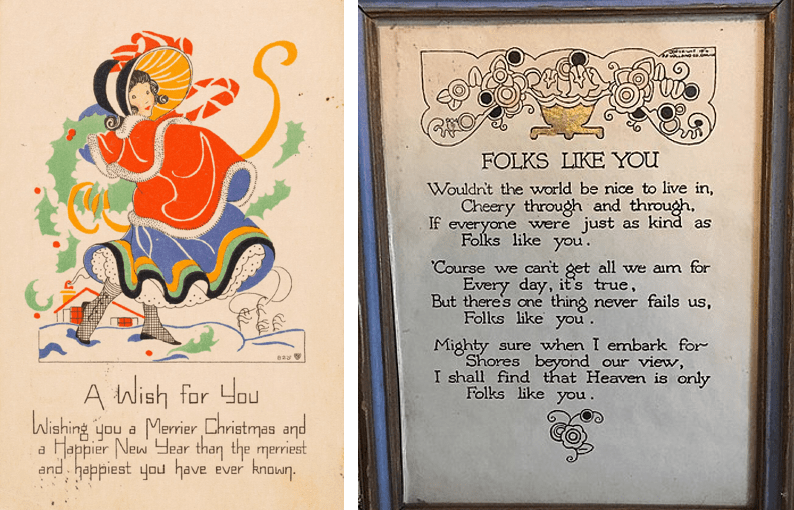
Above: Holiday greeting card circa 1920 (left) and framed poetry (1916) from the P.F. Volland Company, which rejected E.B. White's attempt at a get-well card. (Newberry Library/Wikipedia)
A deep reading of The New Yorker’s back issues can lead a person down some interesting rabbit holes as well as to new insights. For instance, who knew that the greeting card business could lead to murder?

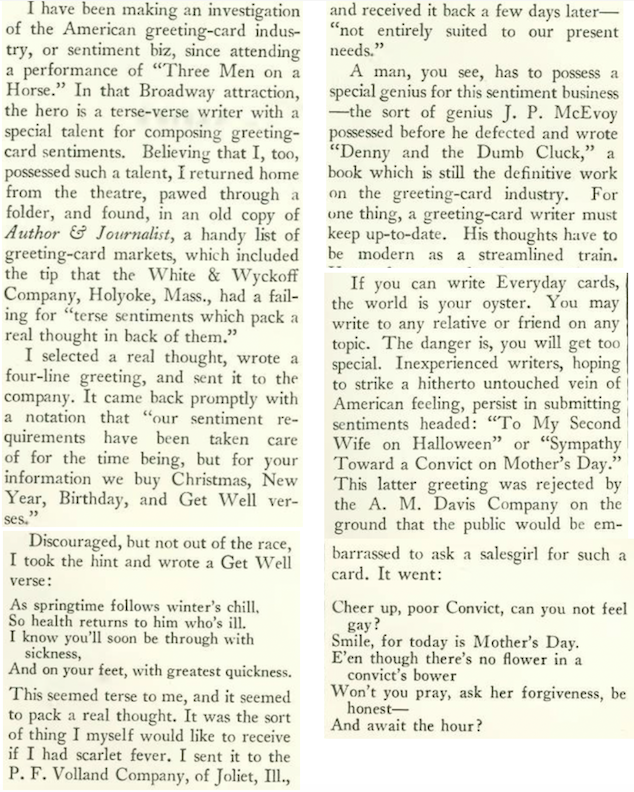
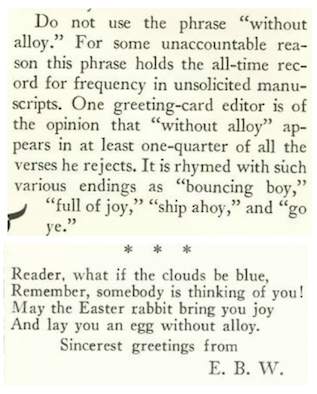
Writing for the occasional feature “Onward And Upward With The Arts,” E.B. White examined the hardboiled world of the “sentiment biz,” a world in which each year 42,000 eager writers elbowed their way into a few hundred positions, and even a smaller number made a decent living at it. To test his own mettle at the craft, White submitted a get-well message to the P. F. Volland Company.
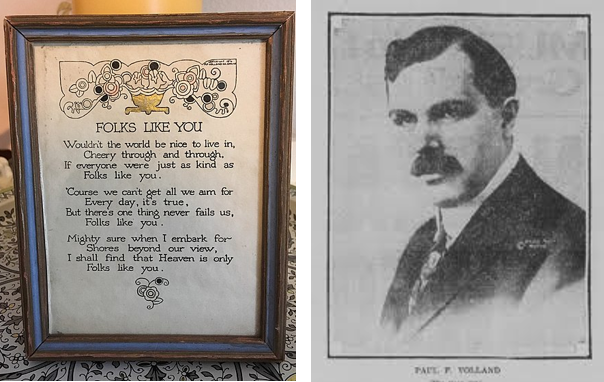

The Volland Company employed scores of artists and writers including L. Frank Baum, Edgar Rice Burroughs, John Held Jr, Ring Lardner, Robert Louis Stevenson, and J.P. McEvoy—a writer little known today, McEvoy was influential in the 1920s and 30s, writing everything from children’s tales (he likely inspired Raggedy Ann) to short stories, novels and comic strips, including the popular Dixie Dugan. He also wrote a hit Broadway play, and several of his stories were turned into movies, including W.C. Fields’ 1934 classic It’s a Gift.
White also offered some “tips” on sentiment writing, suggesting that one avoid rhyming words such as “smother” and “mother”…
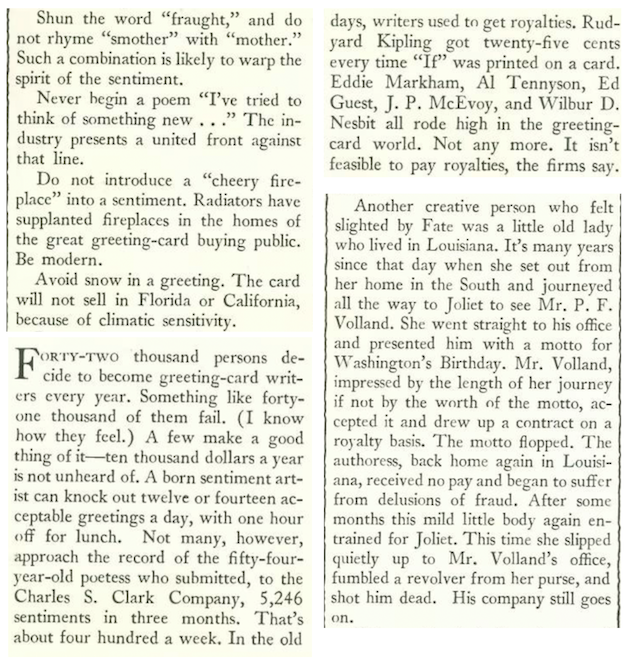
…he also cautioned about the use of certain phrases, and concluded with a cheeky Easter poem of his own…
* * *
More Thoughts From E.B.W.
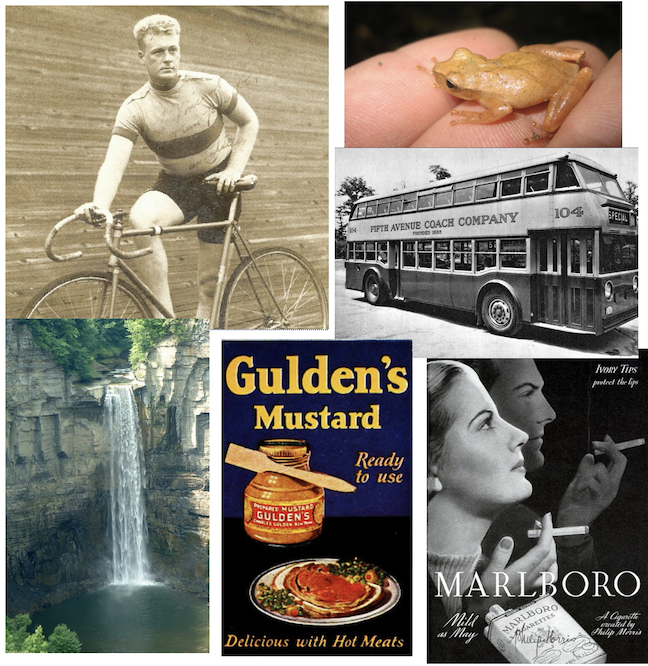
White occasionally led off his column with observations on the passing scene, in this case springtime happenings in the city and beyond…

* * *
Star Struck
“The Talk of Town” anticipated the completion of the Hayden Planetarium at the American Museum of Natural History. When it opened in October 1935, it was only the fourth planetarium in the United States. Excerpts:


* * *
Broadway Slugfest

The profile by Meyer Berger looked at the life of a “chiseller,” that is, someone who lived day to day by skimming off the labors of others. Today it is mostly done digitally, but in 1935 the mechanical world could be manipulated by a handful of slugs. Excerpts:


…there were many ads with Easter themes to move the merch…

…here’s a detail from an Easter-themed ad for neckties, a retired Colonel, presumably, proudly strutting in the Easter Parade with his crop and monocle as he elbows aside his chauffeur and granddaughter…

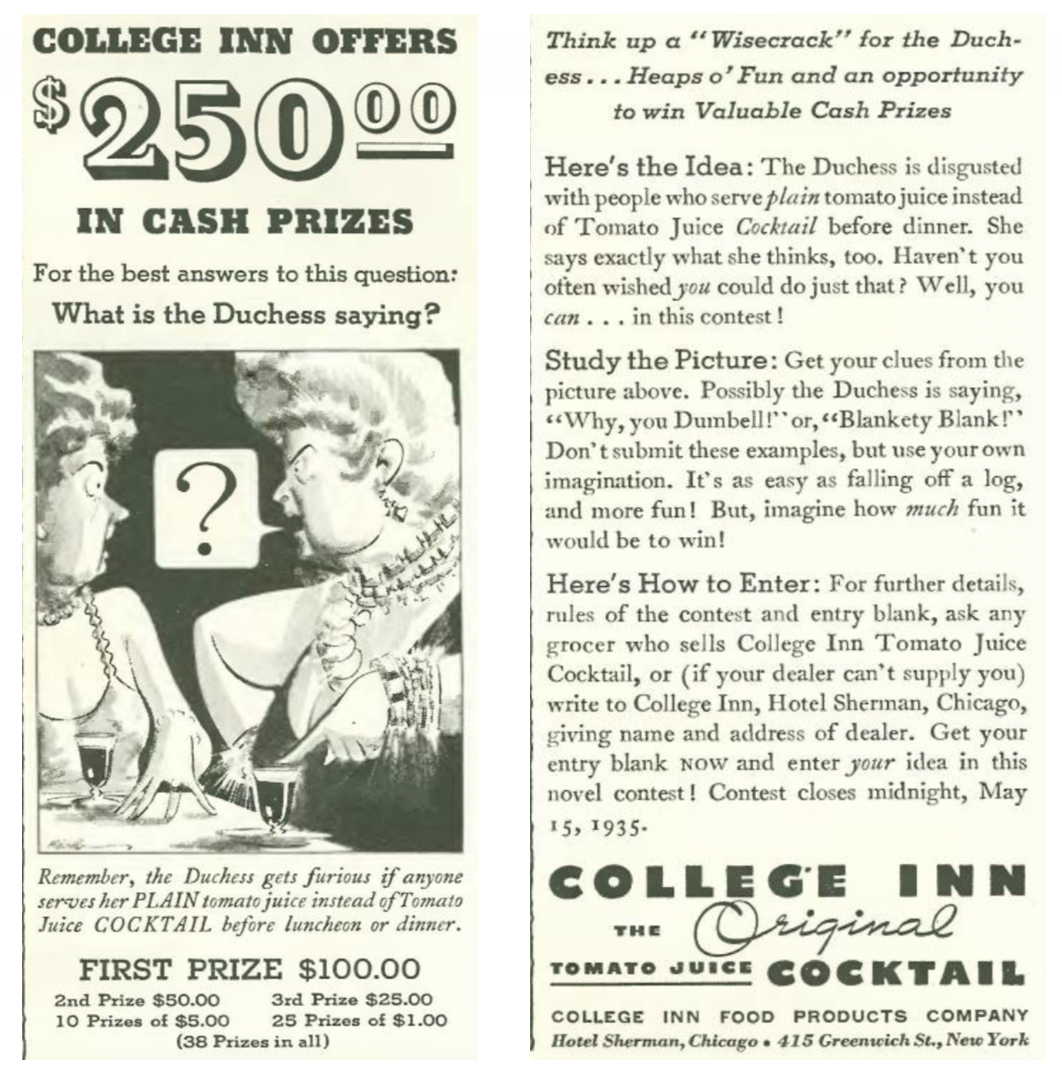
…the Duchess returns, and she’s still pissed about her tomato juice…I wish I could have entered this contest…
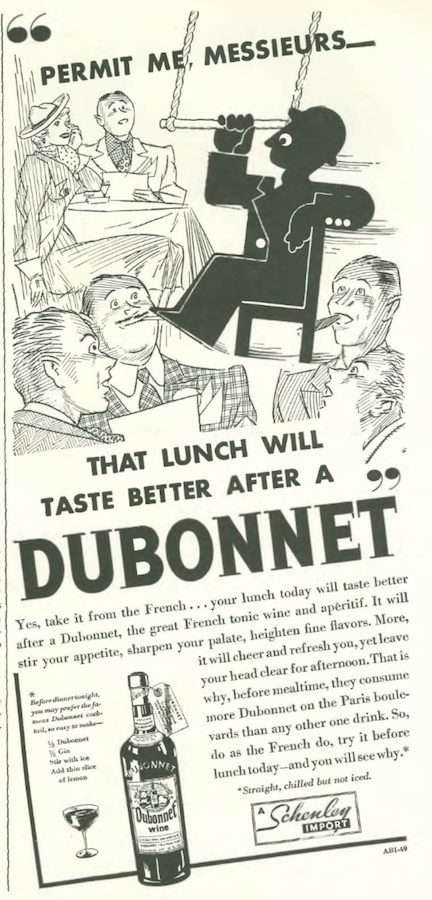
…the Dubonnet mascot, Dubo-Dubon-Dubonnet, made a startling appearance in this ad…the creation of French graphic designer Adolphe Mouron Cassandre, Paul Rand took over the drawing of Dubonnet Man when the liquor came to the United States…
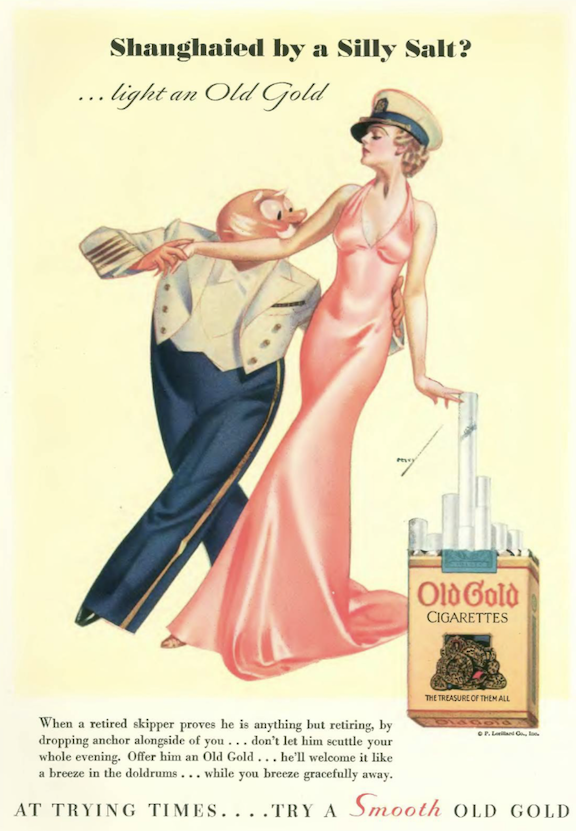
…Old Gold continued its campaign (illustrated by pin-up artist George Petty) featuring a homely, clueless sugar daddy…
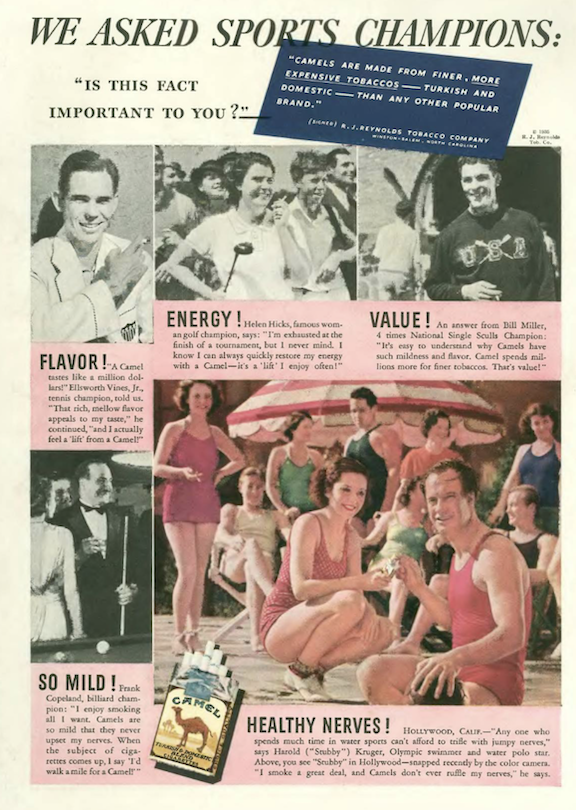
…while Camel turned out another group of “sports champions” who testified to the energizing effects of cigarettes…
…another grim message from General Tire…this time featuring dear old dad, contemplating a different fate for his wife and children…
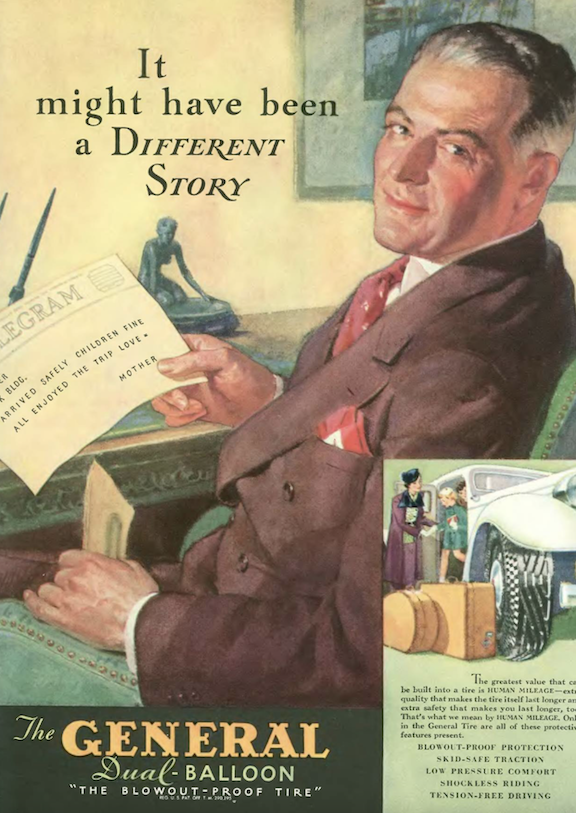
…recall the General ad from March 23…

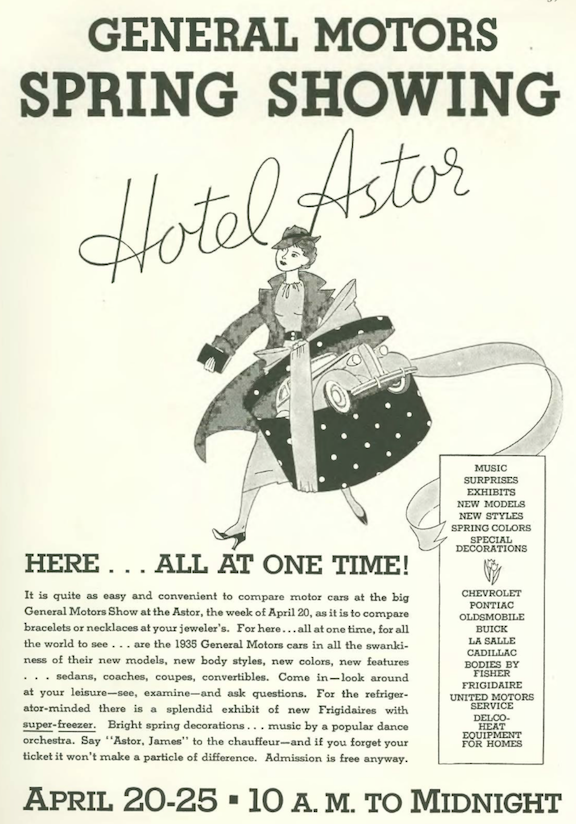
…General Motors was touting its lineup of 1935 models at the Hotel Astor…
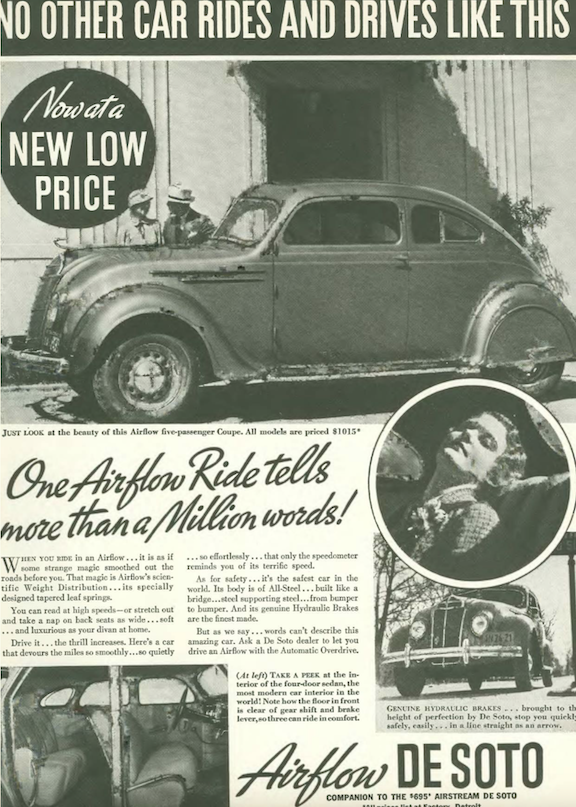
…Chrysler was known as an innovator, introducing radical designs like the Airflow, but consumers weren’t ready for the ultra-streamlined model, even if it did ride so smoothly that one could apparently lose consciousness…
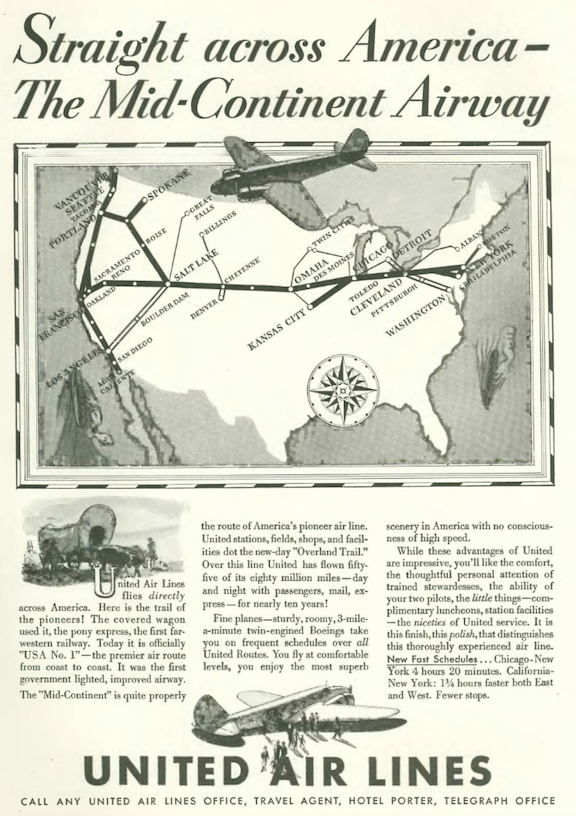
…if a car trip was not your thing, you could fly across America, with a few stops…
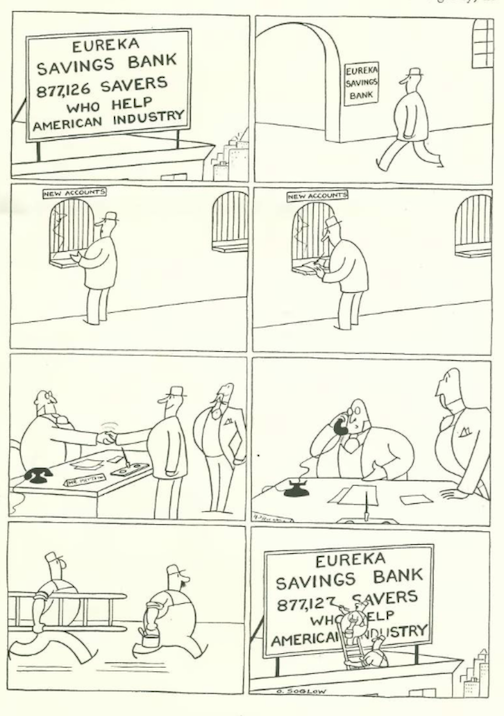
…and we fly into our cartoons, where we keep up to date with Otto Soglow…
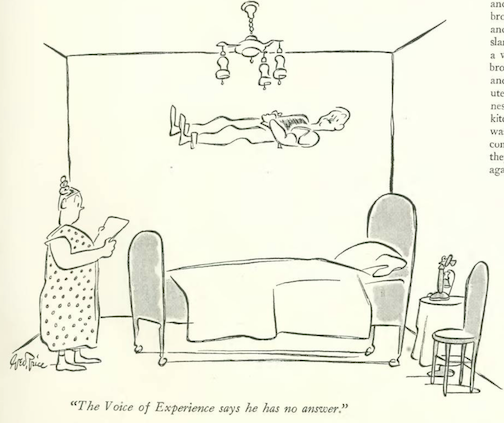
…George Price was still up in the air with this fellow…
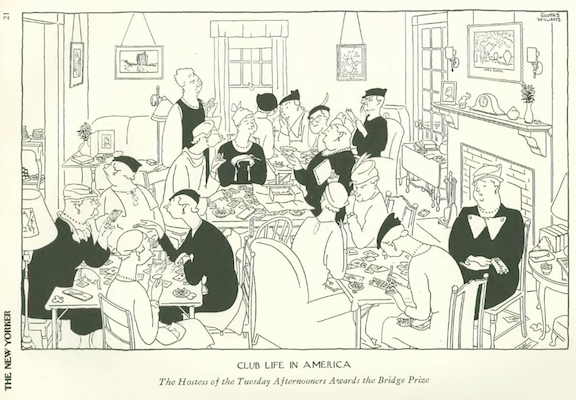
…Gluyas Williams continued to look at club life with this cartoon which originally ran sideways on page 21…
…compliments to the cook, from Syd Hoff…

…Walter Lippmann put the scare in this James Thurber subject…

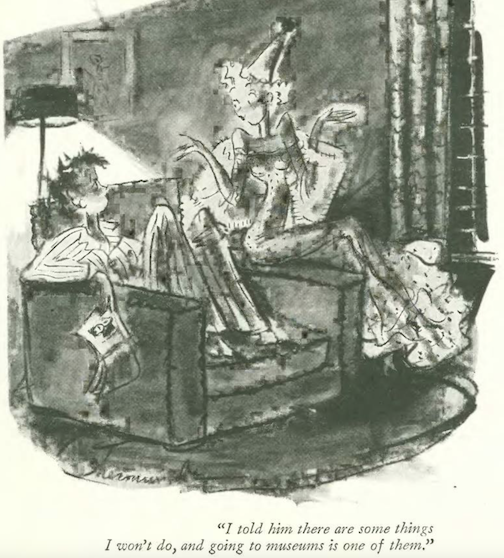
…and we end with Barbara Shermund, and one young woman who won’t be visiting the new planetarium…
Next Time: A Tour of Broadacre City…
 A New Yorker State of Mind