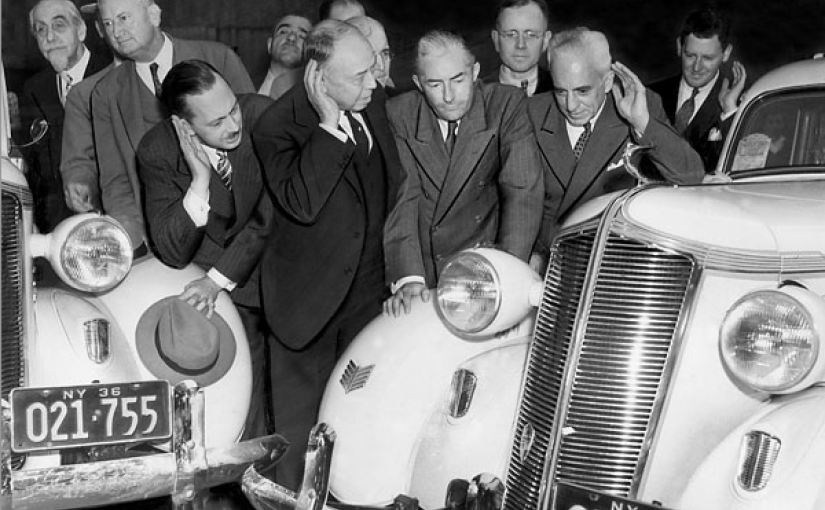
City life is a noisy life, especially in places like Manhattan, one of the most densely populated places in the world.

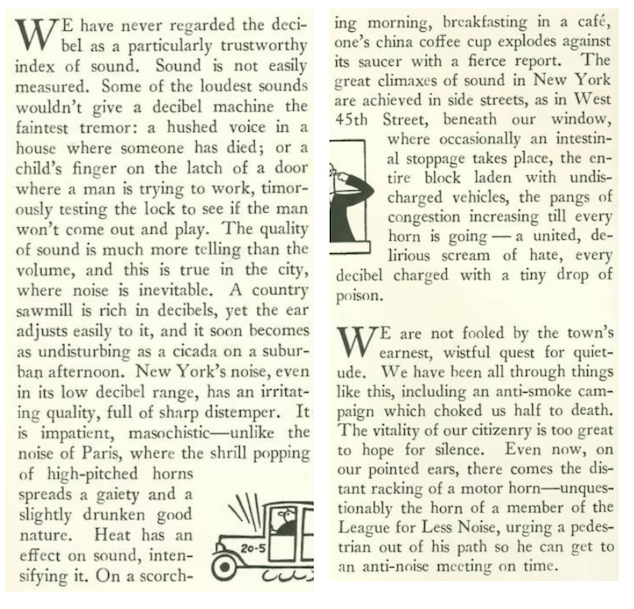
In his “Notes and Comment” column, E.B. White described the occasional “intestinal stoppage” of traffic outside The New Yorker’s offices at West 45th Street, an entire block “laden with undischarged vehicles, the pangs of congestion increasing till every horn is going—a united, delirious scream of hate, every decibel charged with a tiny drop of poison.”

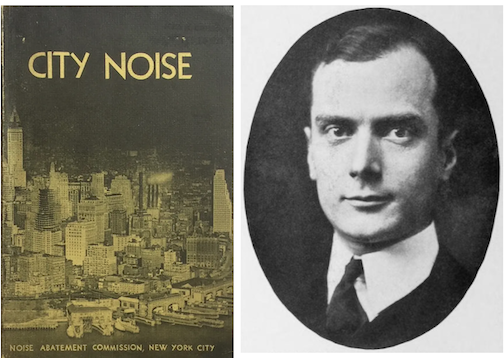
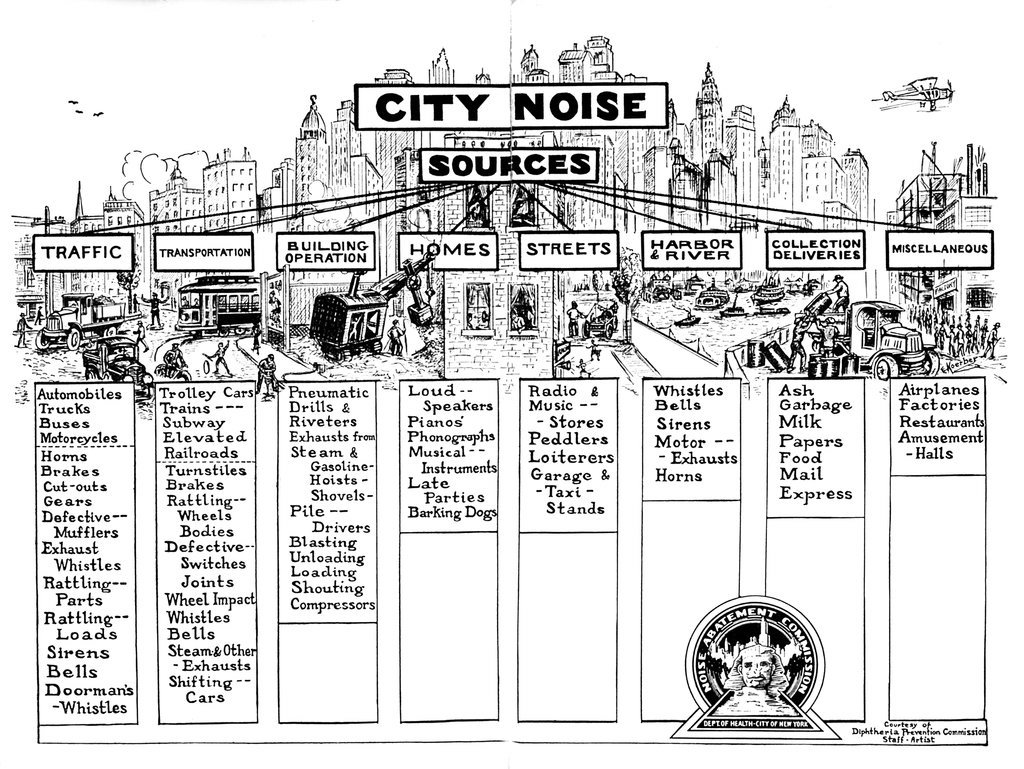
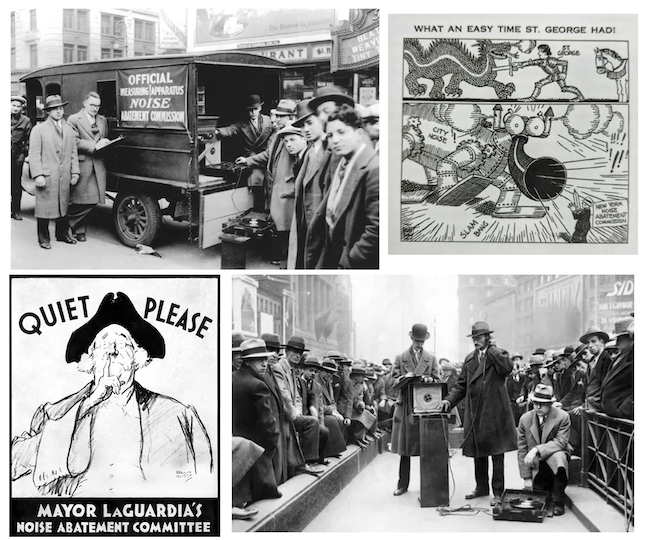
The city began addressing the problem in 1929, when New York City’s Commissioner of Health, Shirley Wynne (1882-1942), created a Noise Abatement Commission, likely the first such commission in the U.S. The Commission cited the “mounting roar and crash of traffic, building, manufacture and sundry other noises which have accompanied the growth of the city.” After eight months of research the Commission published City Noise, which included recommendations for a quieter city.
Not one to leave a stone unturned, White also added this note about the noisy doors on Pullman train car toilets…

Here are the Otto Soglow spot drawings that accompanied the “Talk” piece:

Final note: A colorful exploration of sound can be found on the One Thousand Birds site, Hii Magazine. Check it out!
* * *
Puff Pushers
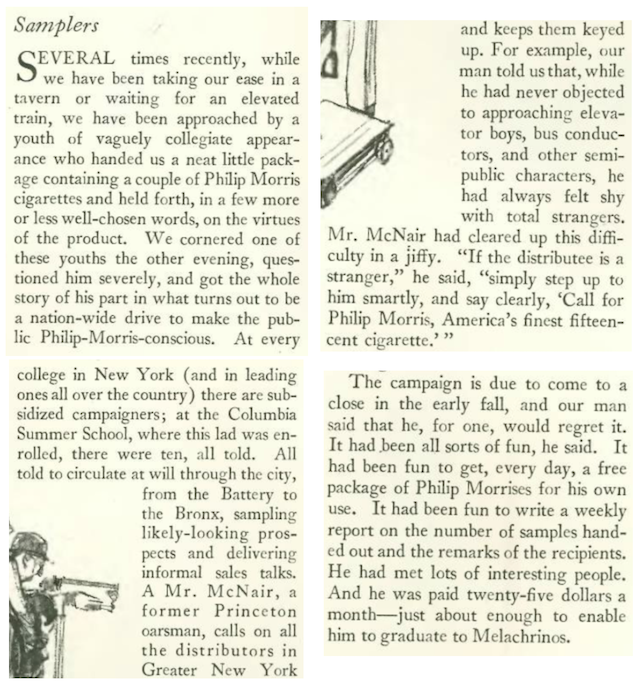
Tobacco companies like Philip Morris have long been savvy in finding ways to expand their market, including taking their product directly to the consumer, as “The Talk of the Town” explained in this entry:

* * *
A Rare Glimpse
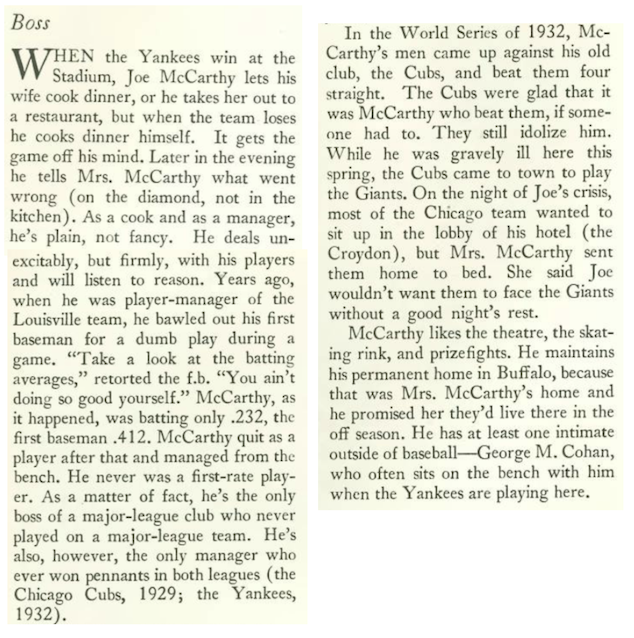
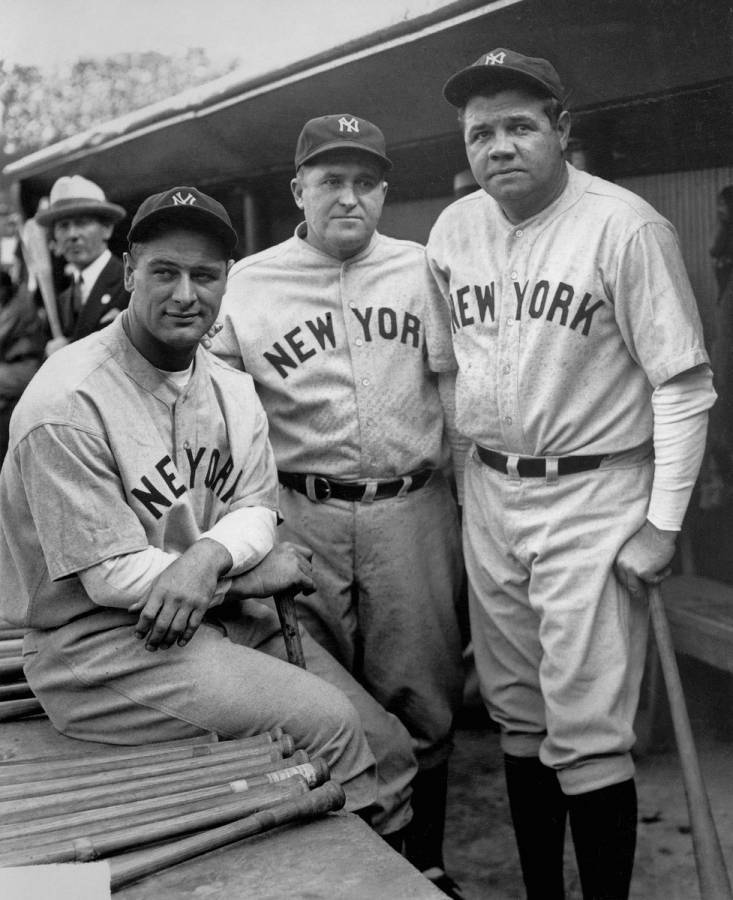
Before Roger Angell started writing about baseball in 1962, there wasn’t a whole lot written about the sport in the pages of The New Yorker. In the magazine’s early years, the game was probably perceived as too low-brow, while other athletic pursuits such as golf, tennis, and polo were more in line with the desired or perceived readership. Early contributors such as Ring Lardner had also soured on the sport, thanks to the Black Sox Scandal of 1919 and the greed of team owners. So here is a rare look at baseball, and Yankee coach Joe McCarthy (1887-1978), in “The Talk of the Town.” Excerpts:
* * *
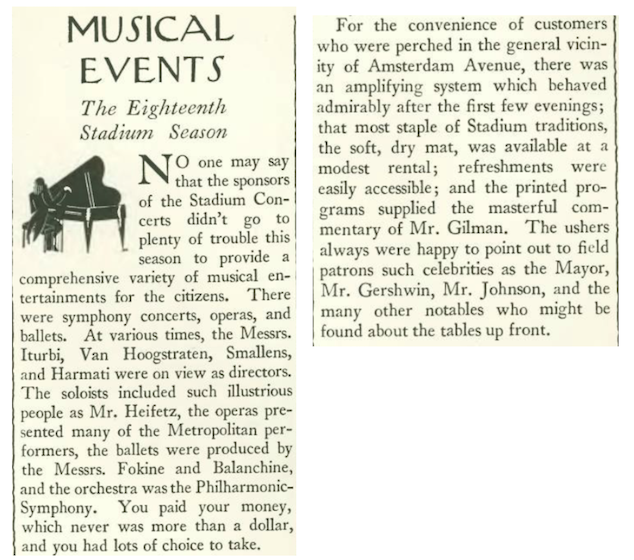
Music Under the Stars
The monumental Lewisohn Stadium was a popular classical music venue on the City College of New York campus until its unfortunate demolition in 1973. According to BBC Music Magazine, “for nearly half a century, Lewisohn Stadium gave people from all walks of life the chance to hear performances by the likes of violinist Fritz Kreisler, soprano Leontyne Price and clarinettist Benny Goodman for as little as 25 cents admission. The New Yorker paid a visit during eighteenth season of the Stadium Concerts. Excerpts:

* * *
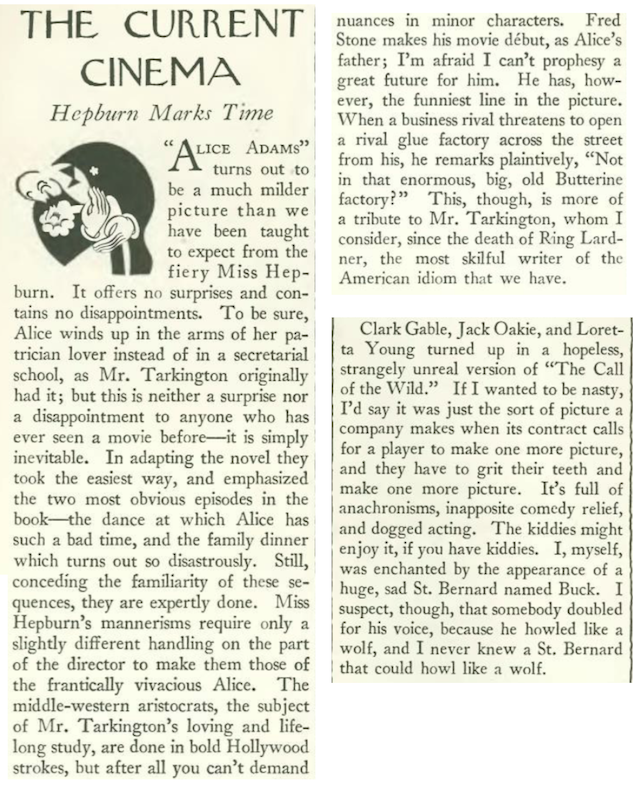
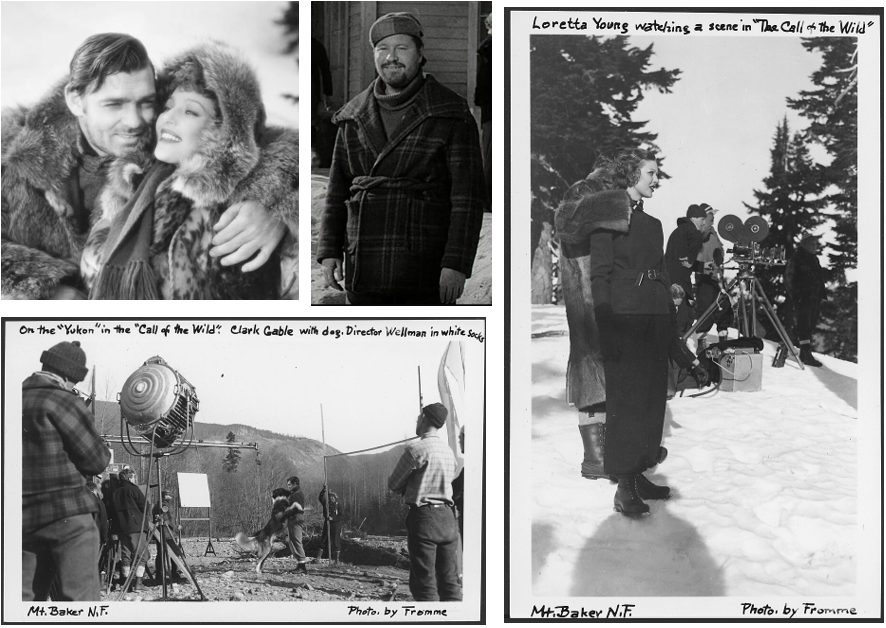
At the Movies
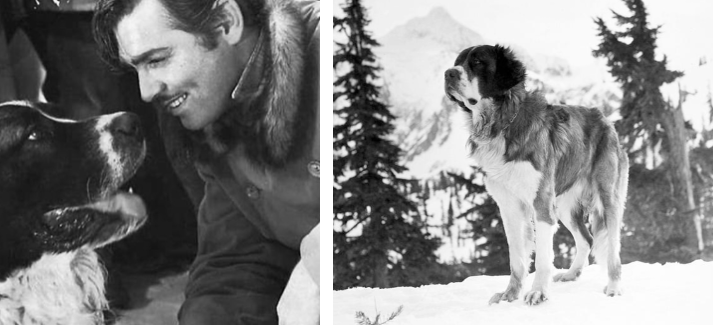
Film critic John Mosher continued to search in vain for a film he could endorse, but he came away empty-handed after screening a star-studded screen adaptation of Jack London’s novel The Call of the Wild. Star power also fell short for Mosher in the screen version of Booth Tarkington’s Alice Adams.

* * *
From Our Advertisers
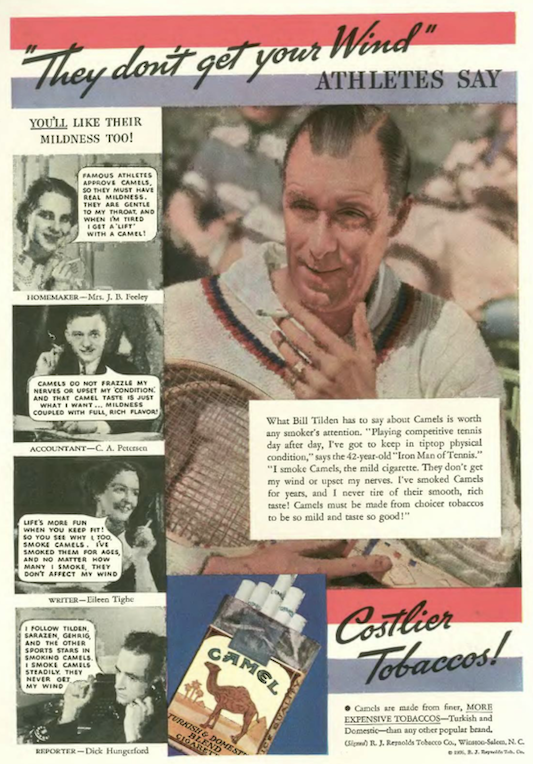
Colorful ads returned to the August 24 issue, featuring familiar sponsors who could afford full-page, full-color spots, namely tobacco and liquor producers…Camel was back with their athletic theme, however they might have chosen someone other than Bill Tilden, who looked perfectly ancient…
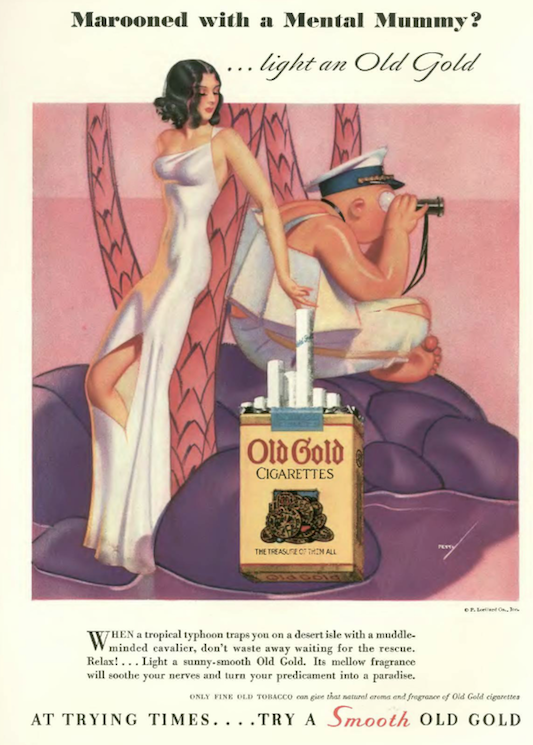
…Old Gold returned with another George Petty-illustrated ad…
…Courvoisier cognac took the back page spot…

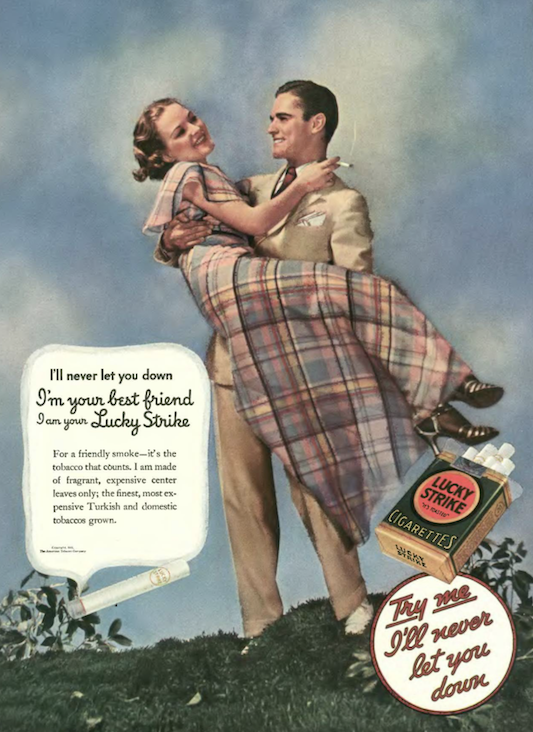
…Powers Reproduction showed off their color printing expertise…I wonder if that is a Lucky she is smoking…
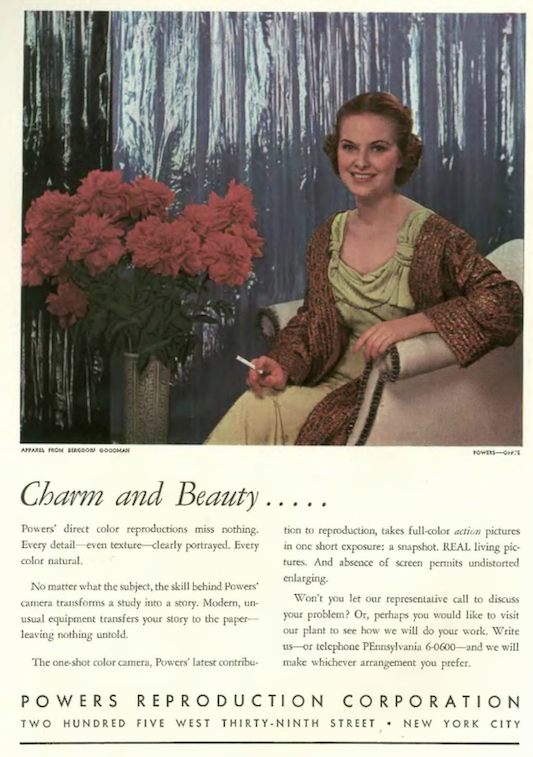
…because I believe she is the same woman who appeared in this ad from the July 27 issue:
…back to August 24, where we were encouraged to enjoy a Johnny Walker highball to stave off the late summer heat…

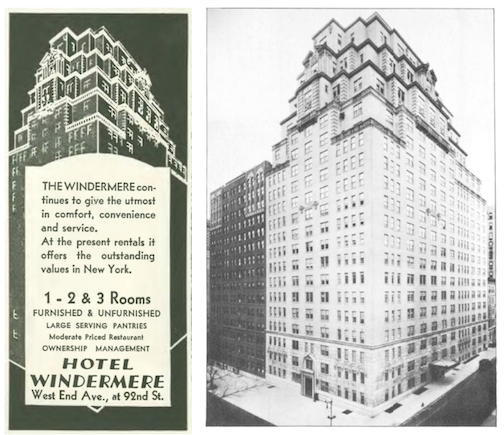
…the distinctive crown of Hotel Windemere on the Upper West Side was an eye-catcher even in this one-column ad from the back of the book…photo at right from around the time it was completed, 1927…
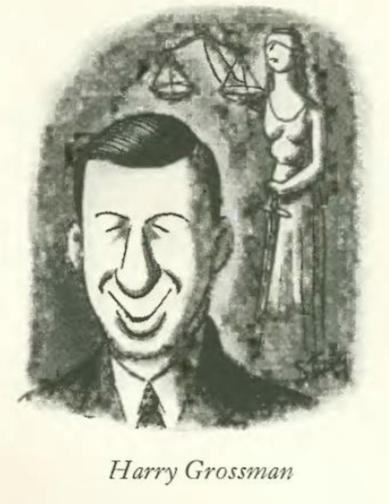
…on to our cartoonists, an unexpected profile caricature by William Steig (this two-part profile featured process-server Harry Grossman)…
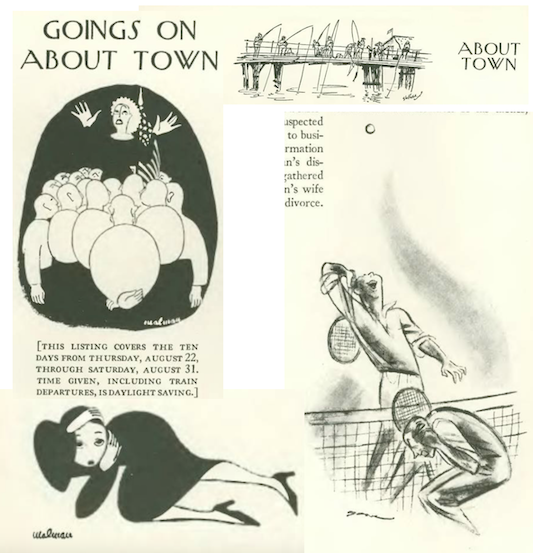
…interesting spot drawings by George Shellhase (top) and Leonard Dove (bottom right), and at left, two by Christina Malman…
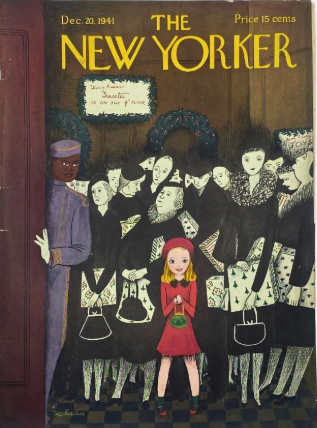
…Malman (1912-1959) produced at least two-dozen covers for The New Yorker between 1937 and 1956, including this gem from 1941:
…some baby names have real meaning, according to Alan Dunn…

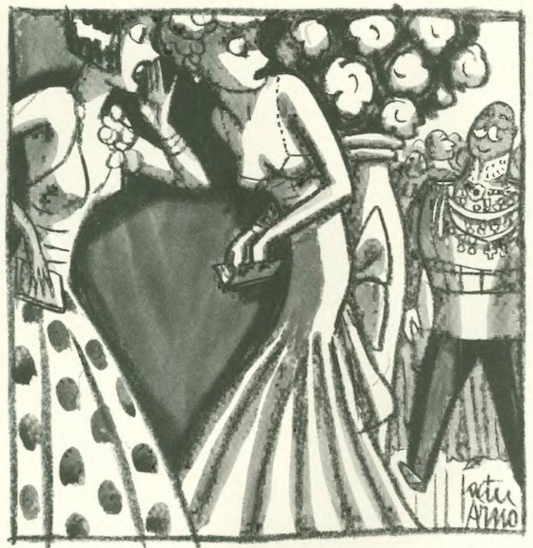
…Peter Arno offered caution about dancing with a prickly Colonel…

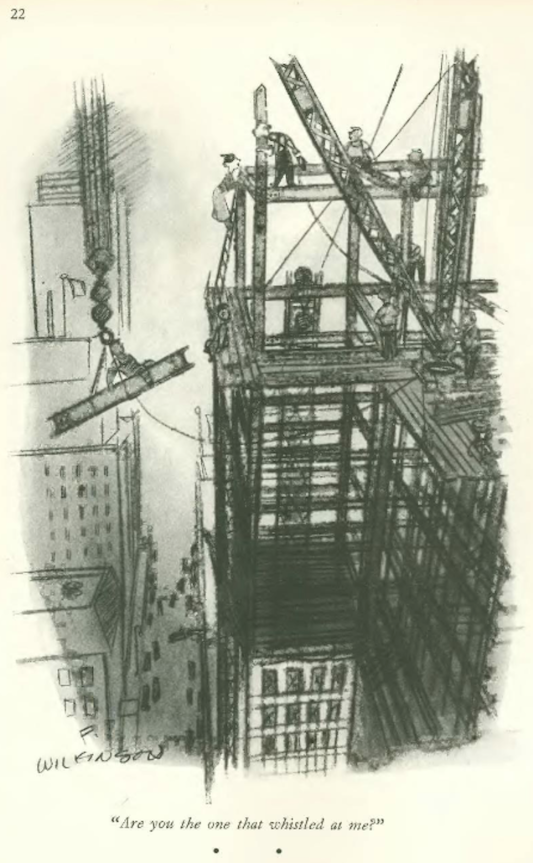
…Fritz Wilkinson answered one cat call high above the city…
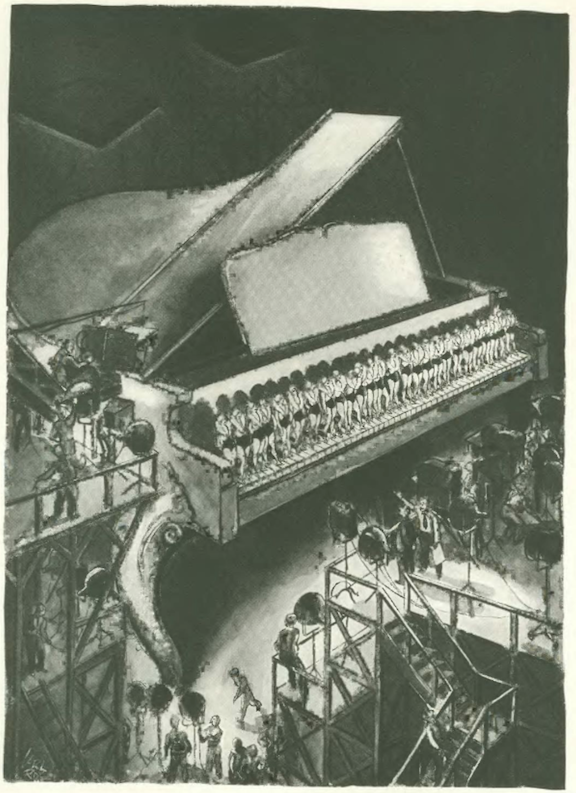
…Franz Shubert met Busby Berkeley, via Carl Rose…

…George Price persisted in threading a needle…

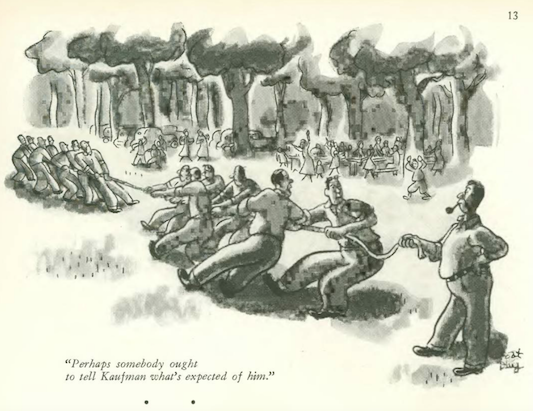
…Robert Day gave us a pacifist of sorts in a game of tug-of-war…
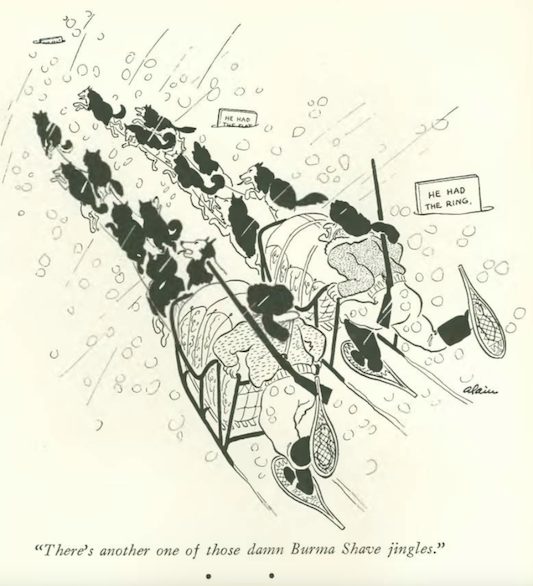
…Burma Shave jingles seemed to be everywhere in the 1930s, per Alain…
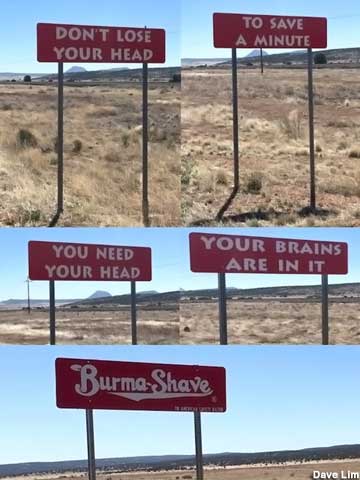
…An example of replica Burma Shave signs along Route 66:
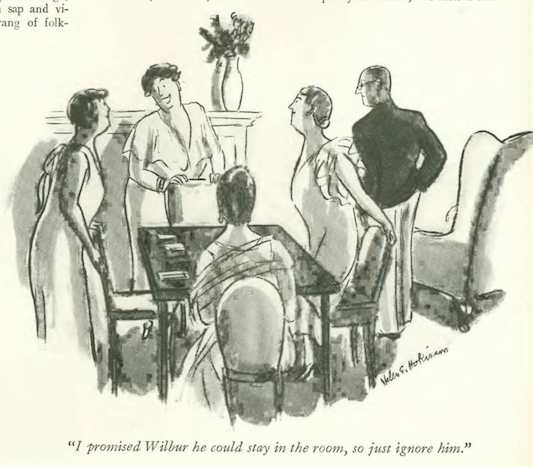
…some parenting tips came our way via Helen Hokinson…
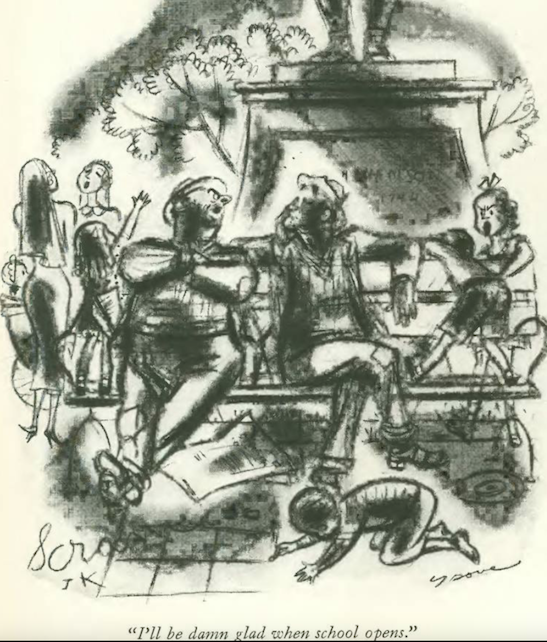
…and Leonard Dove took us back to school…finally…
Next Time: Down to Earth…
 A New Yorker State of Mind