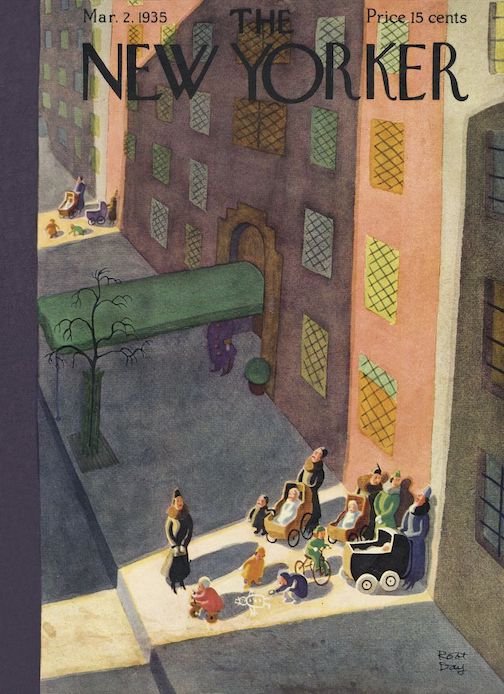
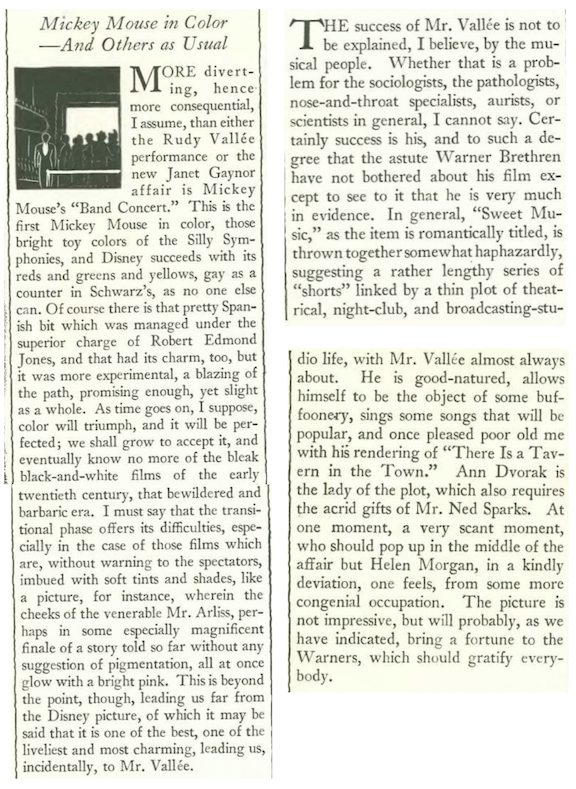
John Chapin Mosher was the first regularly assigned film critic for The New Yorker, writing reviews for the magazine from 1928 to 1942. He was also a fan of Disney animated shorts, and one particular mouse.
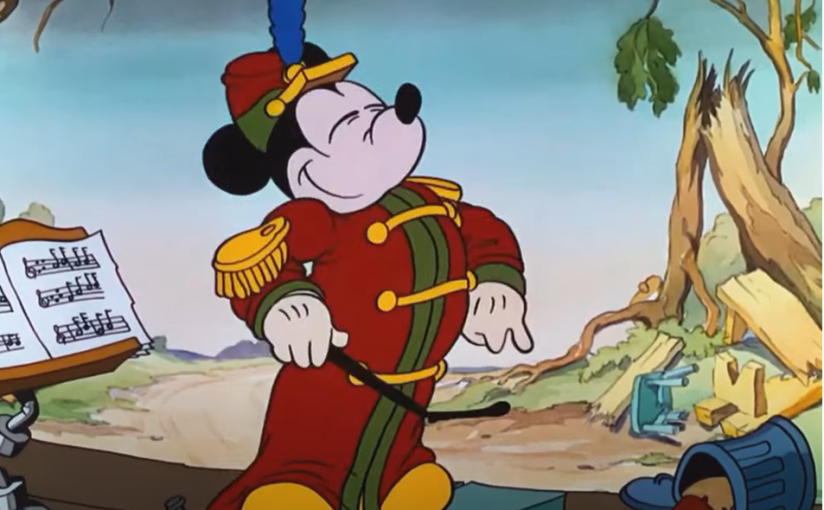
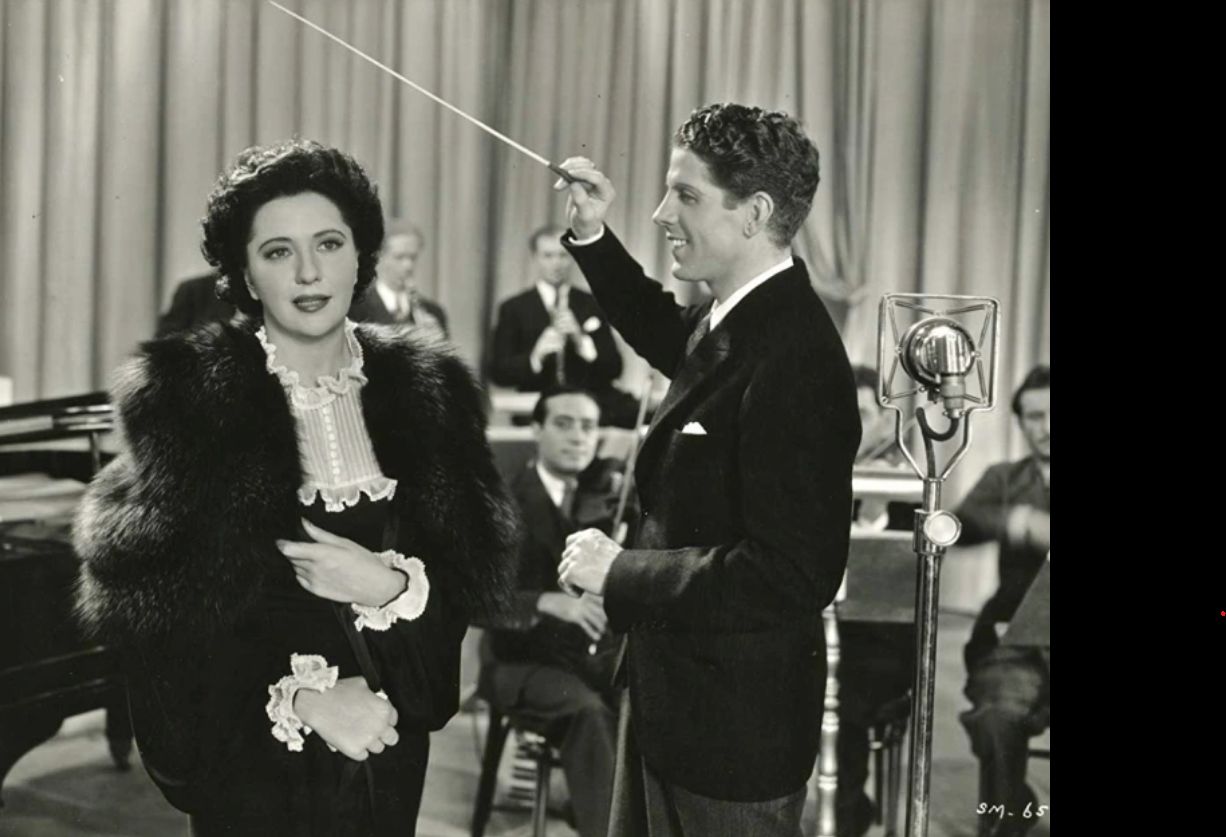
Mosher, who also contributed short stories to the magazine, displayed a lively, witty style in his reviews, and in the early years of Walt Disney animation he was quite partial to Mickey Mouse, who from his sound debut in 1928’s Steamboat Willie had quickly grown into an international star—when the cartoon mouse first appeared in color in The Band Concert, it was a sensation. Mosher’s other review was not so enthusiastic, even though Sweet Music featured another major star of the 1930s, Rudy Vallée.
The 73rd short film in Disney’s Mickey Mouse series, The Band Concert was acclaimed by no less than conductor Arturo Toscanini, who saw it six times. Esquire’s culture critic Gilbert Seldes wrote that “[none of] dozens of works produced in America at the same time in all the other arts can stand comparison with this one.”

* * *
Rudy Was Here, Too
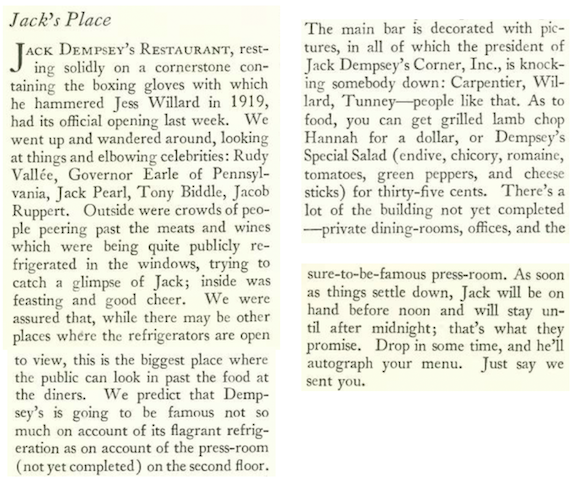
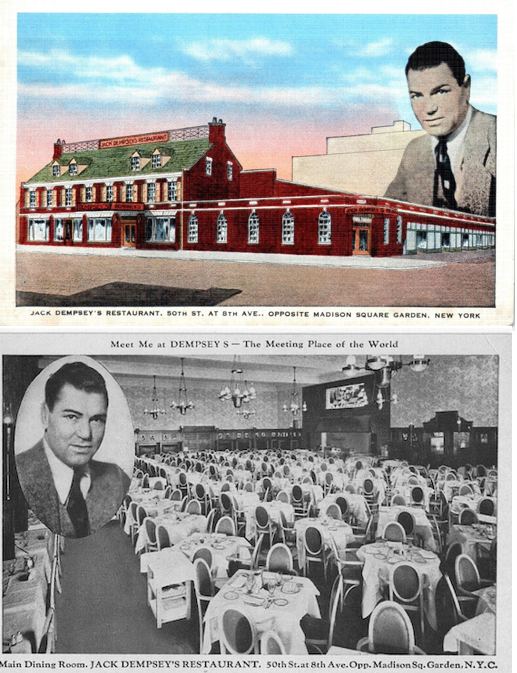
Rudy Vallée was among the celebrities gathered at Jack Dempsey’s Restaurant, a placed visited in the previous issue by Lois Long. This time Russell Maloney and Charles Cook took a look inside for “The Talk of the Town”…
* * *
Keeping It to Themselves
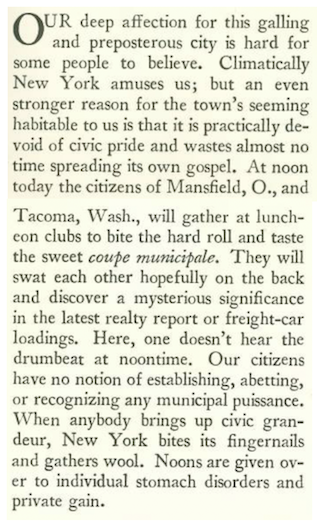
New Yorkers typically don’t boast about their city because they often consider it a natural part of their lives and identity. Indeed, overt displays of civic boosterism are found to be embarrassing, if not distasteful. E.B. White, in his “Notes and Comment,” explained:
White observed, however, that New Yorkers weren’t so thrilled about the cost of living in their fair city…

* * *
Those Excitable French
In her “Letter from Paris,” Janet Flanner recalled the previous year’s “Bloody Sixth” riot that resulted in the police fatally shooting seventeen people. She noted that things were more peaceful on the riot’s anniversary.


* * *
From Our Advertisers
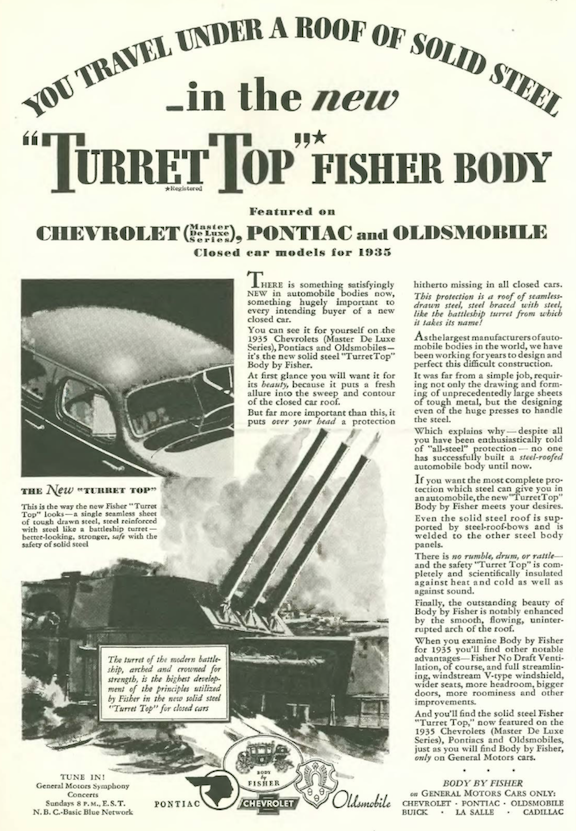
Auburn made some of America’s most beautiful and technologically advanced automobiles, but the Depression was too much for luxury brands like Auburn, which would sadly fold in 1937…

…while luxury brands struggled, Americans turned to less expensive cars that touted safety and economy…in the 1930’s safety meant strong body construction, although this didn’t address the problem of unharnessed riders rattling around inside the “TurretTop” shell, or being launched through the windshield…
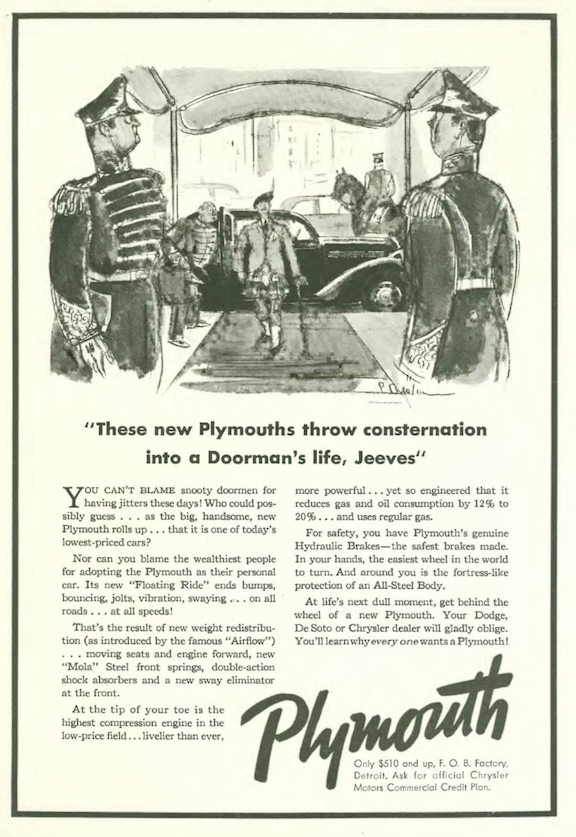
…the bargain brand Plymouth, however, employed snob appeal, and safety, to move their “Floating Ride” autos…
…Feel classy driving that Plymouth? Well apparently beer drinking is classy too…just ask this chap, who is apparently toasting a successful fox hunt…

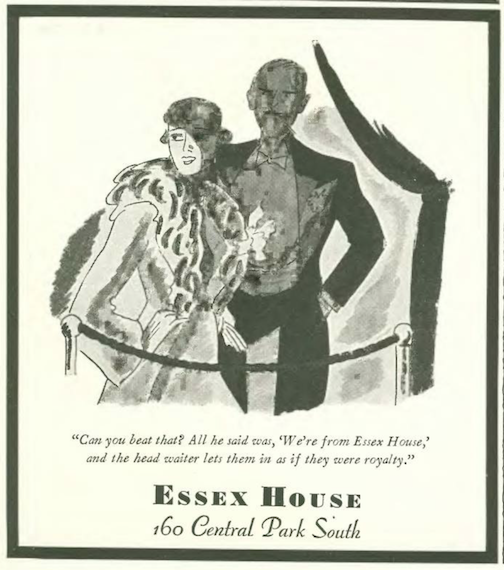
…Speaking of class, the folks at Essex House played on class anxieties to fill their rooms at Central Park South…
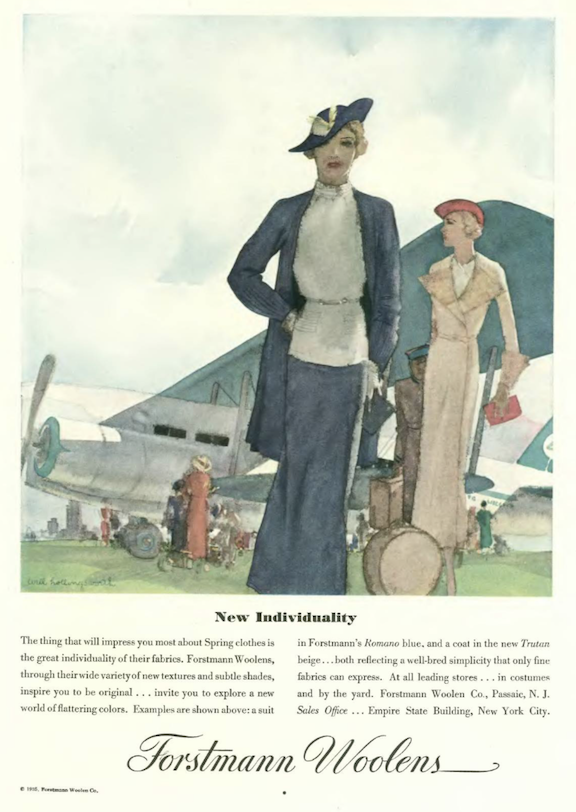
…a common theme in upscale fashion ads was aviation; that is, the suggestion that the smart set took to the air when they traveled–they were the only ones who could afford it…
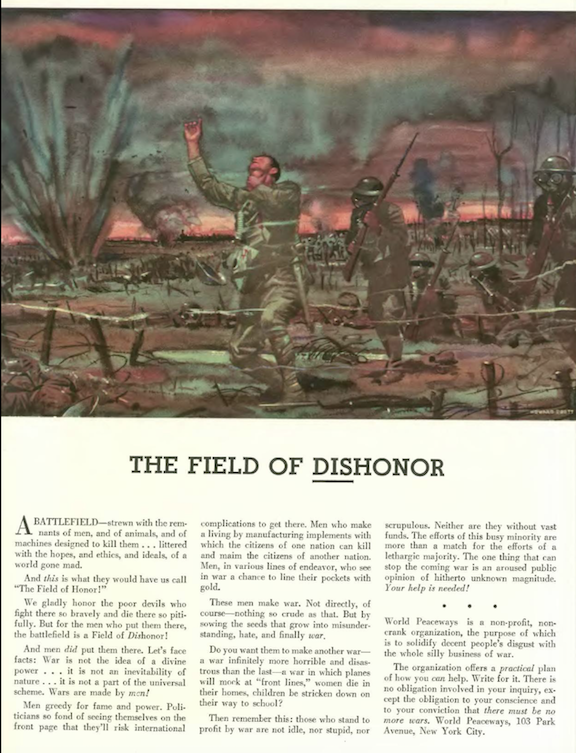
…in stark contrast is this ad from the pacifist/antiwar organization World Peaceways…their bold and unflinching ads described soldiers as pawns in the corrupt games of the rich and powerful…
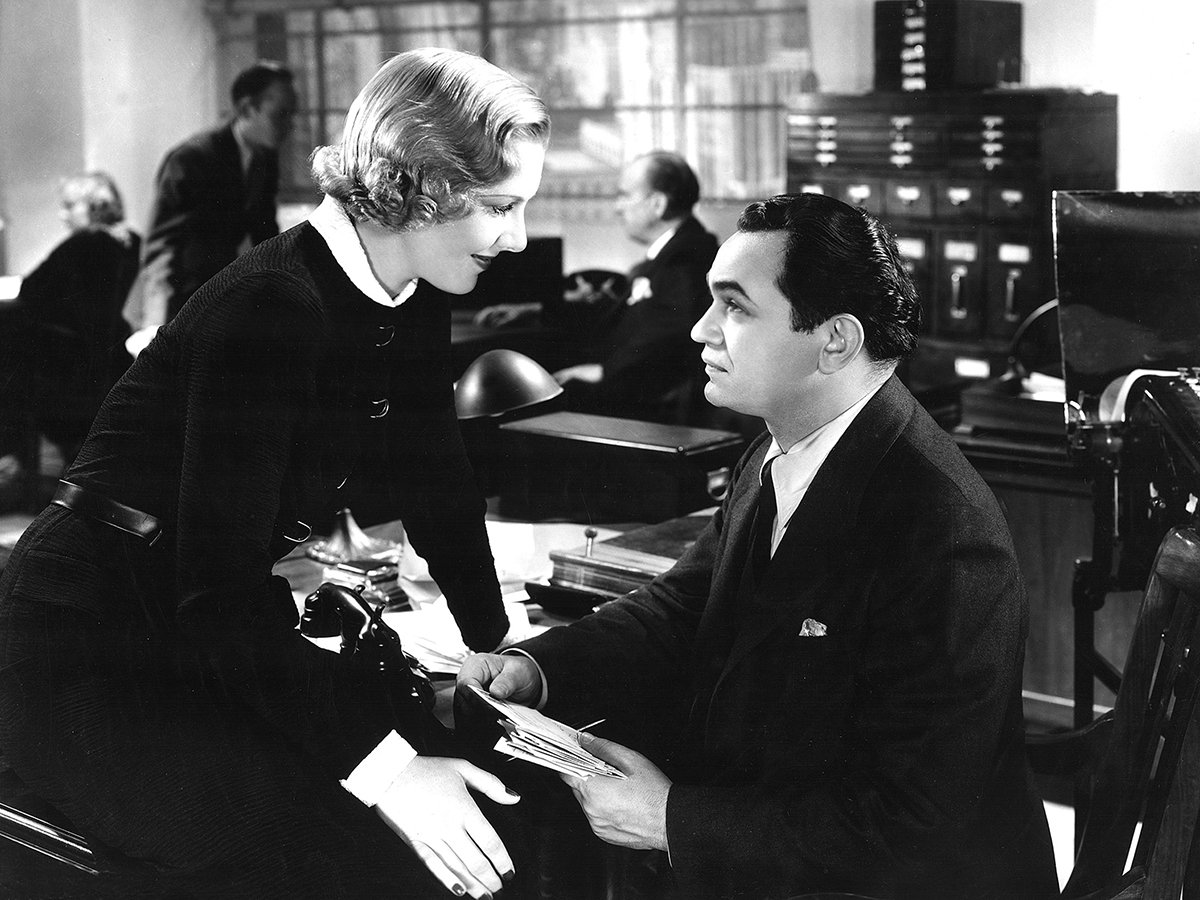
…Radio City Music Hall was originally opened in December 1932 as a live performance venue, but the cavernous hall wasn’t particularly suited to theatrical performances, and just two weeks after opening, managers announced that the theatre would switch to showing feature films. This modest one-column ad tried to stir up interest in a comedy featuring none other than Edward G. Robinson, who was known for his tough guy, gangster roles…

…beautifully photographed, stylish women smoking cigarettes were common in 1930s advertising as tobacco companies continued to tap the growth potential of this demographic…

…this next spot employs of the talents of Otto Soglow to promote blended Penn Maryland whiskey…
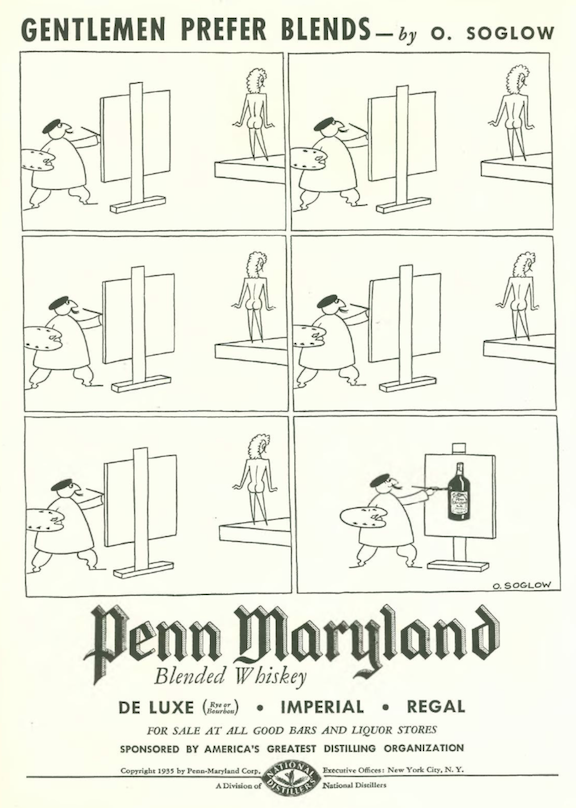
…which segues to our cartoonists, and Soglow again…his popular Little King stopped running in The New Yorker when it was acquired by Hearst in 1934, but Soglow simply created other King-like characters to run the gags…

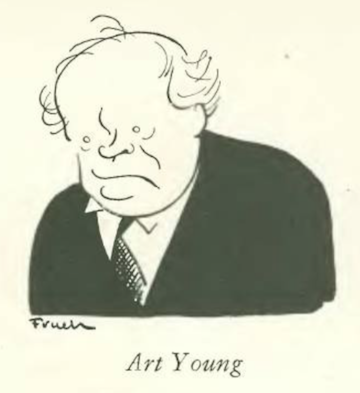
…”Profiles” featured socialist cartoonist Art Young, with an illustration by Al Frueh…
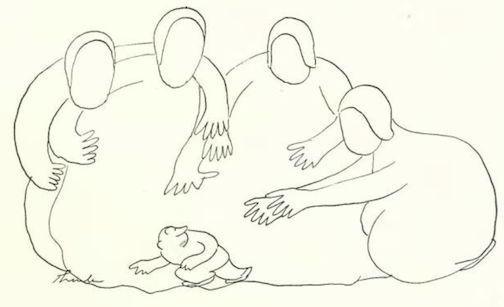
…James Thurber contributed this illustration/cartoon at bottom of page 12 in “The Talk of the Town” section…not sure what this means…fear of being attacked by giant Puritan women?…
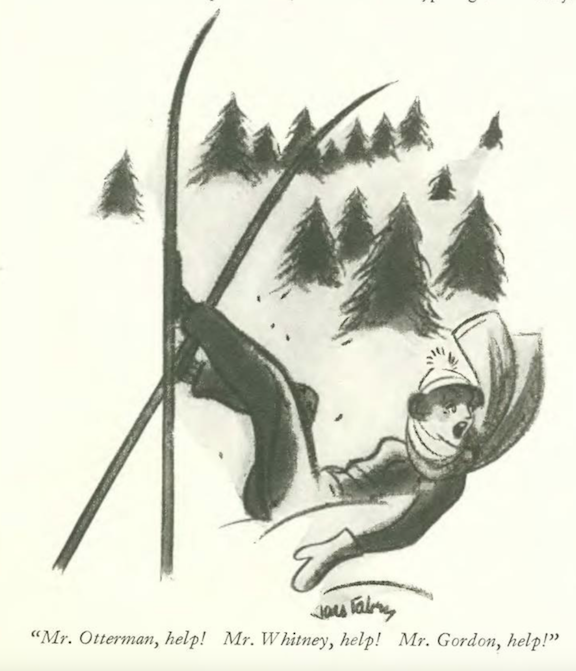
…Jaro Fabry contributed only one cartoon to The New Yorker…the meaning is lost on me…
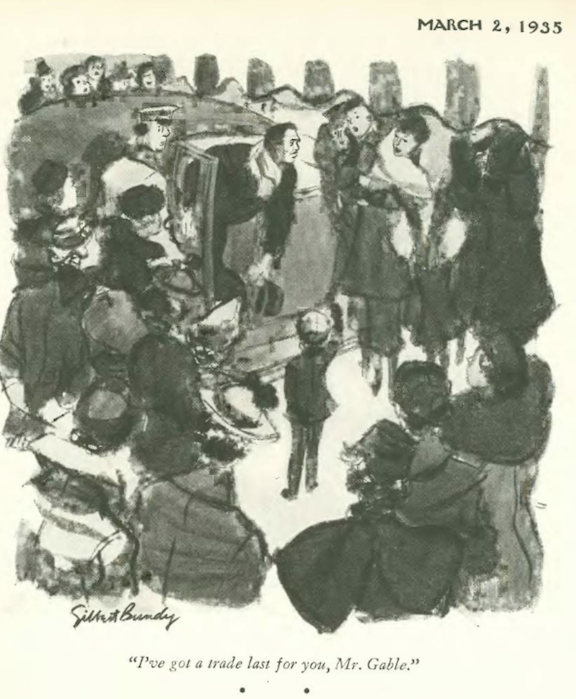
…I was also baffled by this Gilbert Bundy cartoon, until I consulted this excerpt from a Paris Review article (“Trading Places” by Sadie Stein 3/19/14): Time was, the passing on of compliments was so ritualized a part of life that the practice had a name: trade-last. Merriam-Webster’s defines it as “a complimentary remark by a third person that a hearer offers to repeat to the person complimented if he or she will first report a compliment made about the hearer,” and dates the first recorded use of the term to 1891…
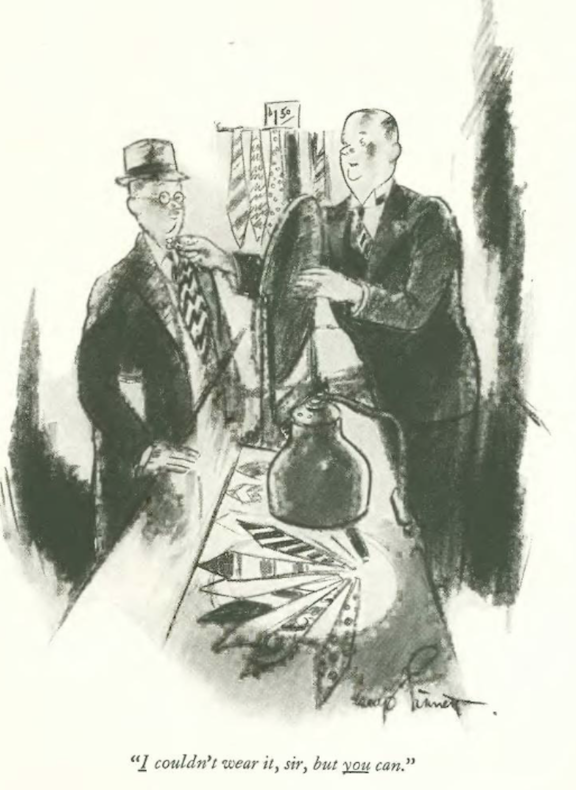
…Kemp Starrett offered up a uniquely honest sales pitch…
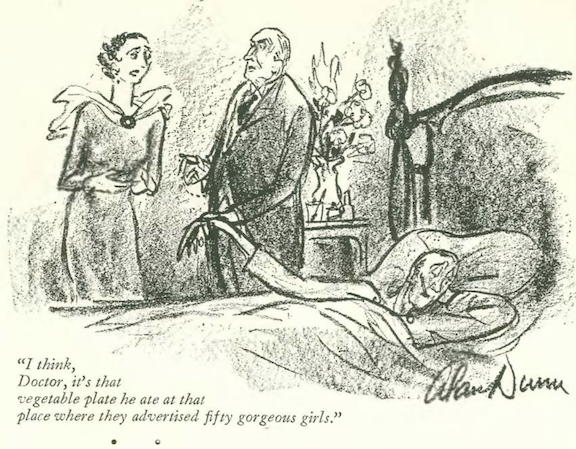
…Alan Dunn advised against eating your vegetables…
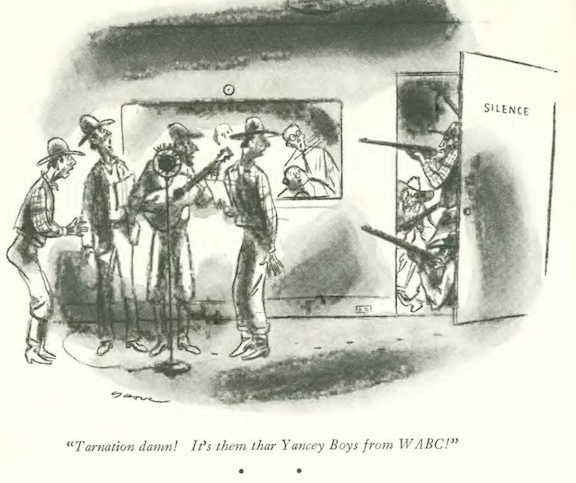
…Leonard Dove, and where old-timey music met an old-timey feud…
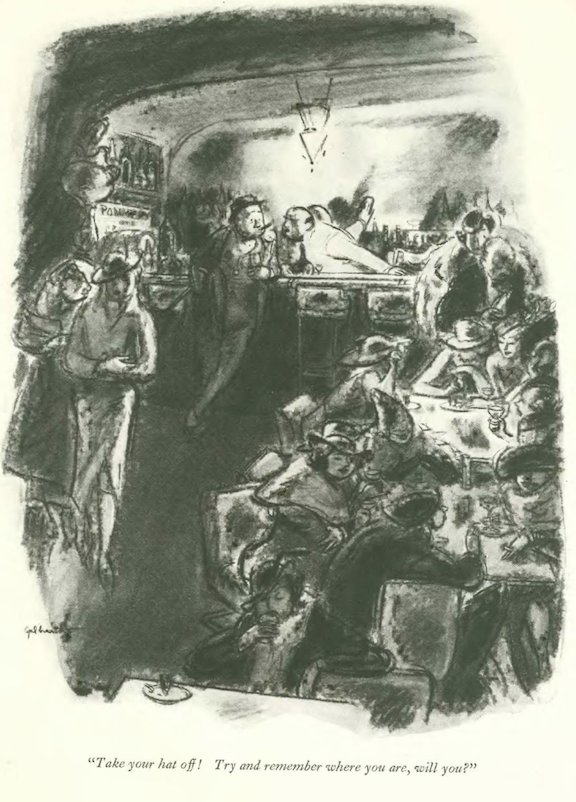
…and we close with William Crawford Galbraith, and a bartender trying to class up his joint…
Next Time: Snapshot of a Dog…
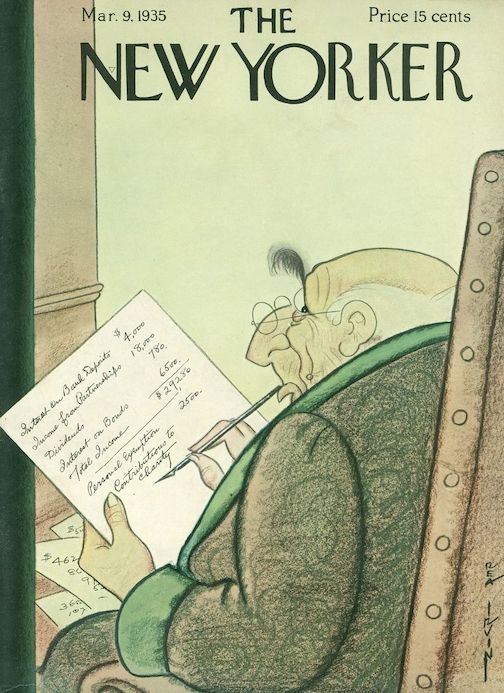

 A New Yorker State of Mind
One thought on “The Mouse That Roared, In Color”