Morris Markey embodied the ideal of “A Reporter at Large,” and for his Sept. 7 column he decided to stroll the steamy streets of Manhattan on a late summer night, finding the sidewalks alive with folks seeking a break from their stifling dwellings.
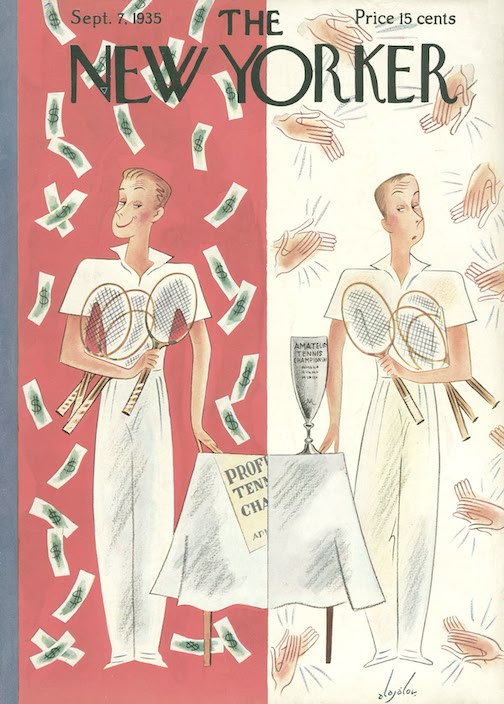
September 7, 1935 cover by Constantin Alajalov.
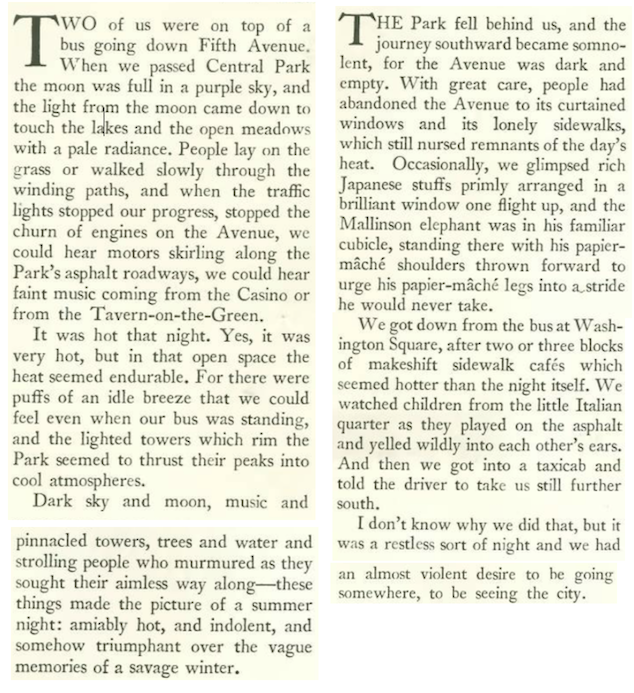
Markey (1899-1950) began “Summer Night” by describing a bus ride from Midtown to Washington Square with (I assume) his wife, Helen Turman Markey. They enjoyed the breeze atop the bus as they passed Central Park and heard the faint strains of music in the air.
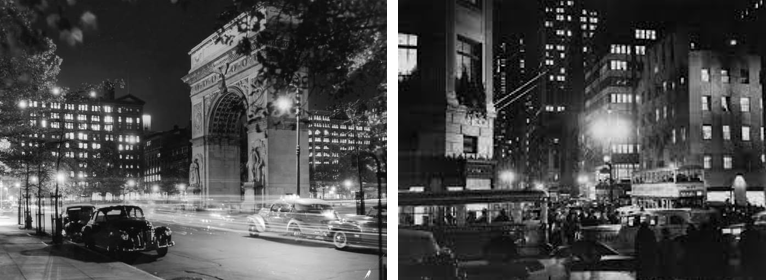
FINAL NOTES…Morris Markey thought he heard music coming from the Central Park Casino (left) on that hot summer night; it would prove to be one of the Casino’s last summer nights since Robert Moses would have it demolished the following May; at right, Adolf Dehn lithograph Central Park at Night, 1934. (NYC Parks/Art Institute of Chicago)AMID THE BUSTLE the Markeys hopped off the bus at Washington Square and set out on foot. At left, Washington Square by night, 1945; at right, cacophony on Fifth Avenue, circa 1940. (Facebook)
The scenes described by Markey offer a glimpse of what has changed and what still remains of Manhattan night life after ninety years.
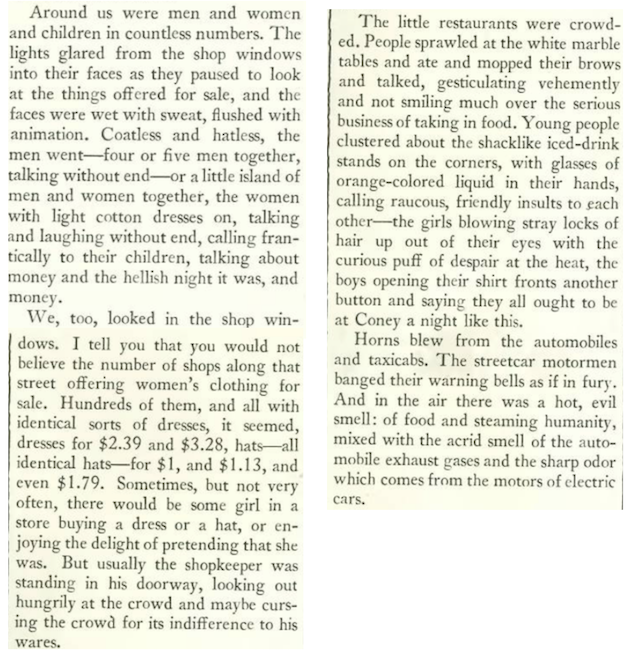
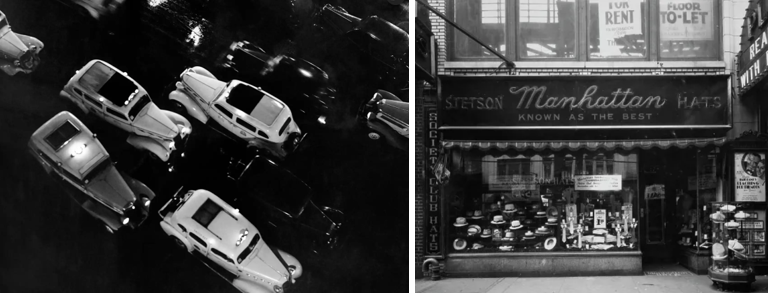
GO BLOW YOUR HORN…Something taxis did then and do now; Markey described folks looking at hats in a shop window, probably similar to this 1930s store at right. (theguardian.com/Pinterest)
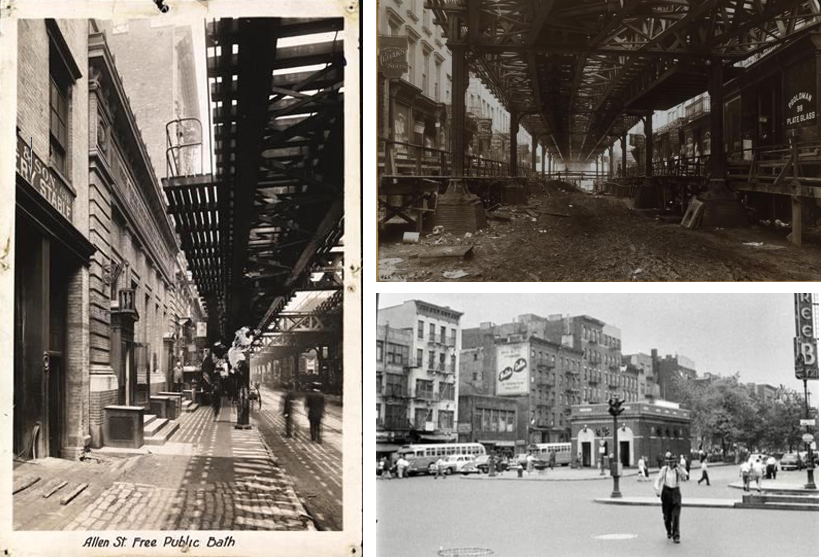
They concluded their stroll on the Lower East Side, where Markey noted a tenement clearance project on Allen Street. Considered one of the most densely populated places in the world, the street was widened by demolishing all of the buildings on its east side from Division to Houston Street.
HERE COMES THE SUN…The densely populated Allen Street was called “a place where the sun never shines.” The narrow street was mostly under the shadow of the elevated train tracks until it was widened in 1930s by demolishing all of buildings on its east side. Photo at left shows the public bath at 133 Allen Street (now used as a church). The demolition project, and the removal of the overhead “El” tracks in 1942, created a broad thoroughfare with a meridian mall in the center, as seen in the bottom photo of the intersection of Allen and Delancey circa 1950. (mcny.org/leshp.org/Facebook)
* * *
At the Movies
Film critic John Mosher finally found a film he could gush about in Anna Karenina, and most notably its star Greta Garbo, who in Mosher’s words “sets the pace and the tone for the whole thing.” Mosher was not alone in his praise: Writing for The Spectator in 1935, Graham Greene wrote that Garbo’s acting in the film overwhelmed the acting of all the supporting cast save that of Basil Rathbone. This observation was later echoed by Roland Barthes, who wrote in 1957 that Garbo belonged “to that moment in cinema when the apprehension of the human countenance plunged crowds into the greatest perturbation, where people literally lost themselves in the human image.” Here is Mosher’s review:
GARBO AND THE OTHERS…Greta Garbo dominated the screen in 1935’s Anna Karenina. Clockwise, from top left, MGM poster for the film; Garbo with Fredric March as Anna’s lover, Count Vronksy; Garbo with Basil Rathbone, who portrayed Anna’s husband Karenin, and child actor Freddie Bartholomew as their son, Sergei; Maureen O’Sullivan took a break from the Tarzan films to portray Anna’s friend Kitty (here with Gyles Isham as Levin). (filmforum.org/Wikipedia/IMDB)
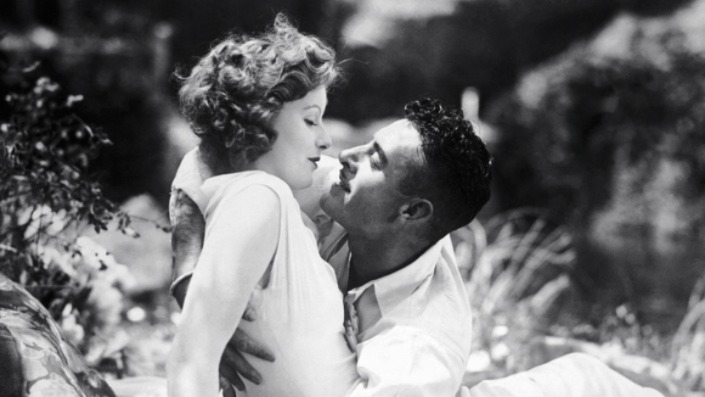
As Mosher noted, Garbo also portrayed Anna Karenina in the 1927 silent film Love, in which she co-starred with John Gilbert as Count Vronsky.
BEEN HERE BEFORE…Greta Garbo as Anna Karenina and John Gilbert as Count Vronsky in the 1927 silent film Love, the second of four films they made together. They were also lovers off-screen in the 1920s, but with the advent of sound pictures her star rose as his began to fall; in their last film together, Queen Christina (1933), Garbo insisted that Gilbert be cast opposite her in a final attempt to revive his declining career. He essentially drank himself to an early grave, dying of a heart attack in January 1936. (rottentomatoes.com)
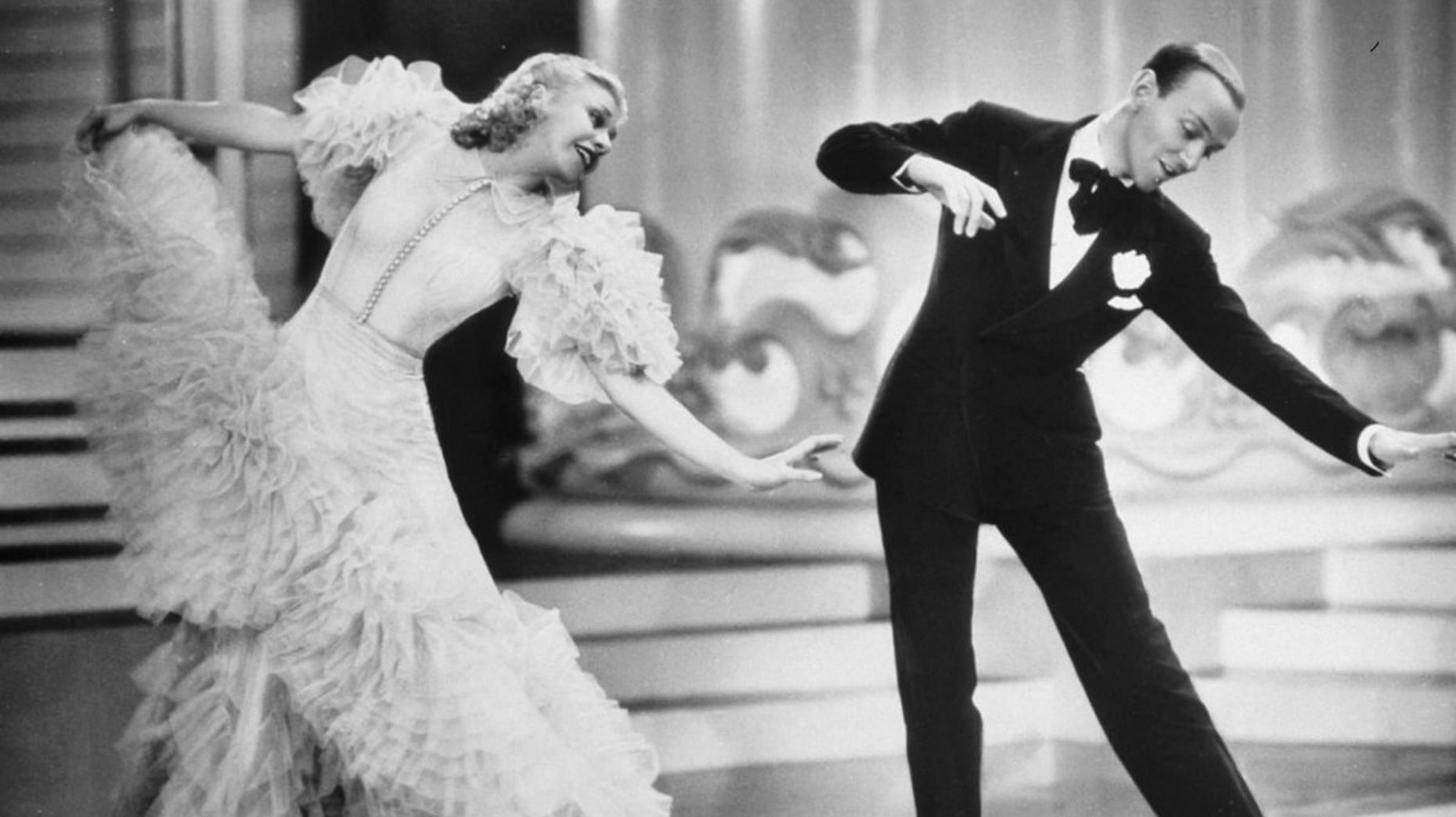
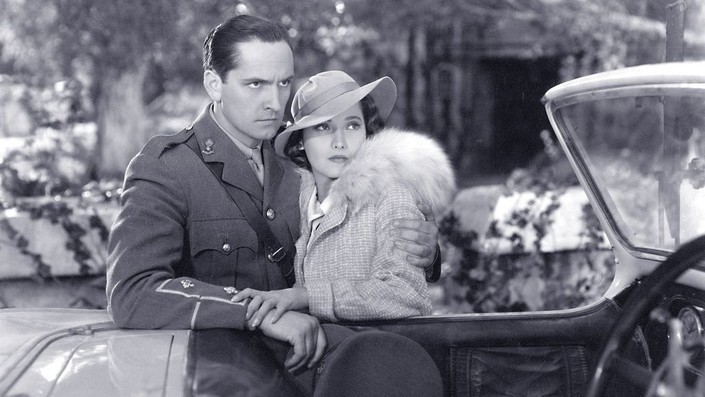
Mosher also enjoyed the dance moves of Fred Astaire and Ginger Rogers in Top Hat (although it could have used less “patter and piffle”), and brought out his hankie for The Dark Angel, where he once again encountered the acting of Fredric March.
DEFYING GRAVITY…Ginger Rogers and Fred Astaire made their complex dance moves look effortless as they glided through Top Hat, the fourth of ten films they made together. (americancinematheque.com)TEARS FOR FEARS…Fredric March and Merle Oberon portrayed old friends and lovers facing a rival lover and the horrors of World War I in the 1935 weeper The Dark Angel. (rottentomatoes.com)
* * *
From Our Advertisers
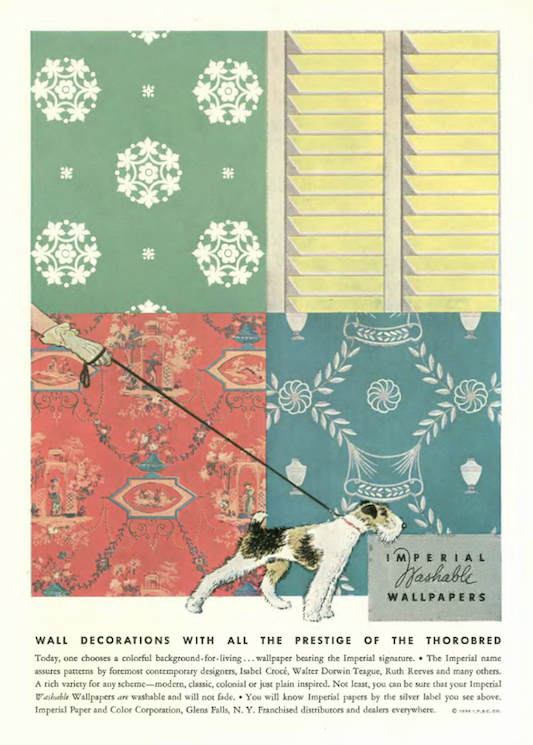
We begin with a splash of color from the makers of Imperial washable wallpapers…not sure why a wire fox terrier is featured in the advertisement…they were a popular breed, and maybe Fido was the reason one needed washable walls…
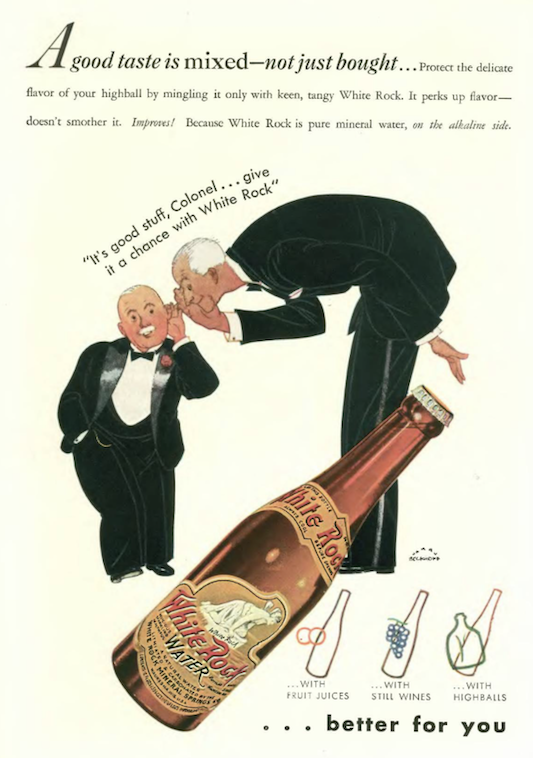
…White Rock rolled out their tiny Colonel to promote mineral water as an ideal mixer…
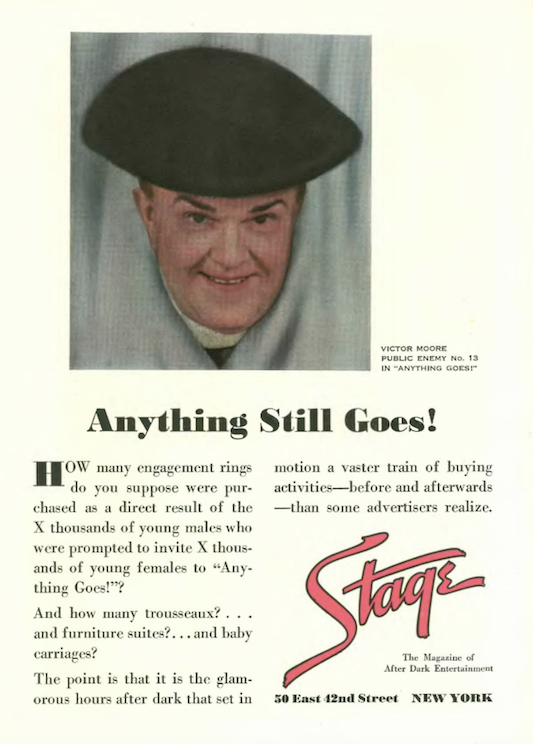
…ever heard of Victor Moore?…well, he was quite the comedian back in the day, playing timid, mild-mannered characters on stage and screen…Moore (1876-1962) was also famous for his 1942 marriage to dancer Shirley Paige when Moore was 65 and Paige was 20…
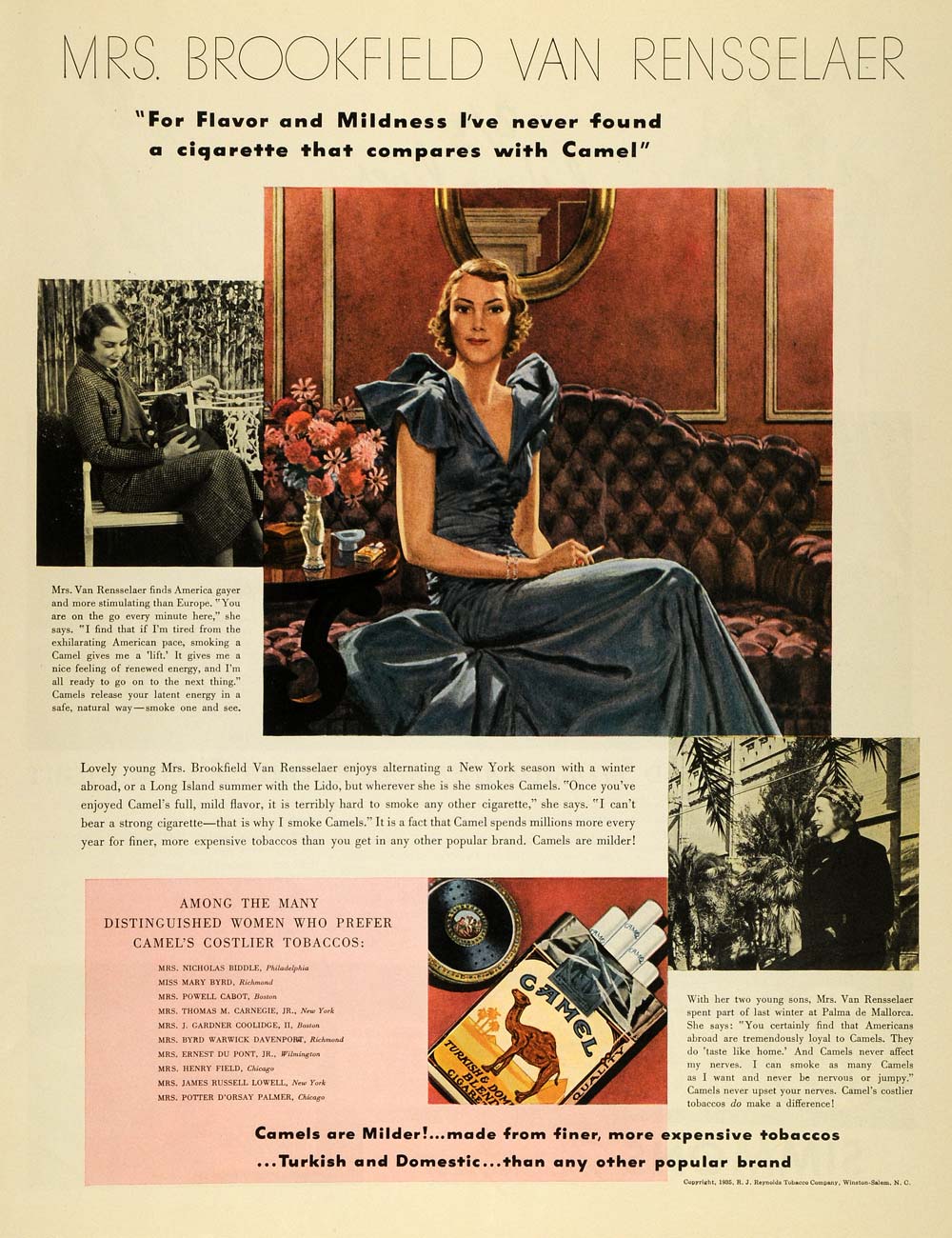
…Camel rolled out another high society endorser, Maude Adele Brookfield van Rensselaer (1904-1945)…her color image is a watercolor by Leslie Saalburg…
…on to our cartoonists, we begin with spot art by Abe Birnbaum…
and Maurice Freed…
…also in the opening pages this wordless contribution by James Thurber…
…Gluyas Williams found this midday repast anything but relaxing…
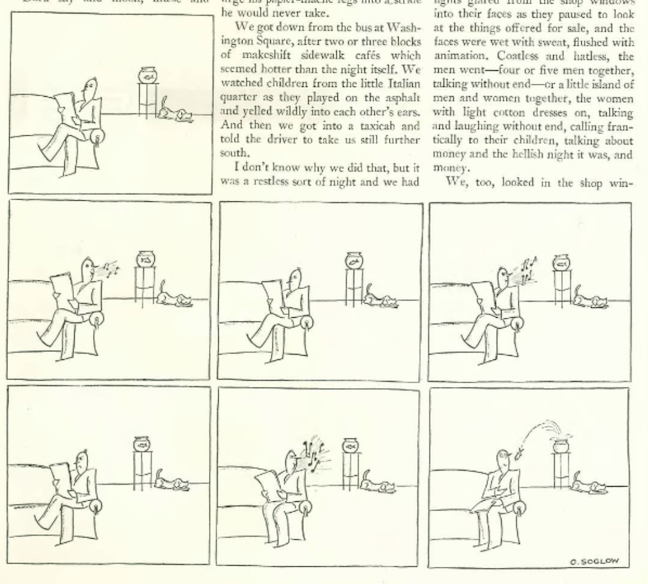
…Otto Soglow found a new “man’s best friend”…
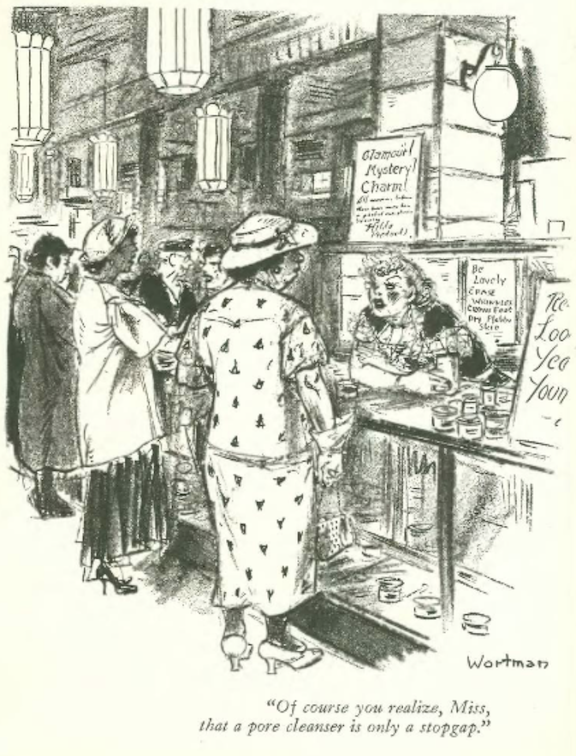
…Denys Wortman encountered some frank advice at the cosmetics counter…
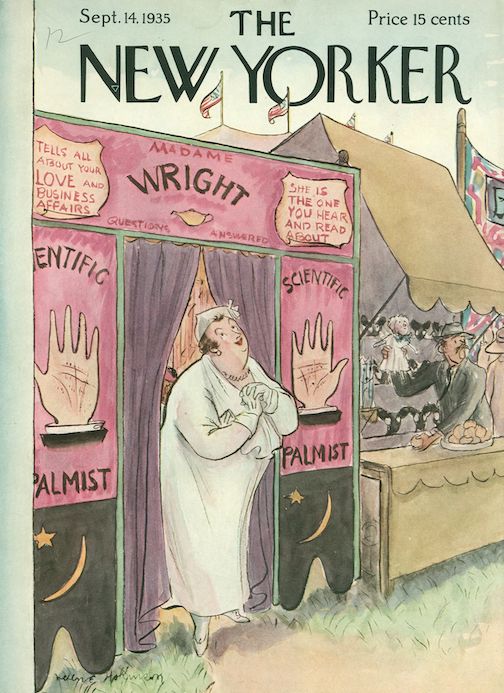
…Helen Hokinson found appreciation for the “strong and silent” acting style…
…Peter Arno gave us a department store clerk in need of some time off…
…and we close with Richard Decker, finding some truth in advertising…
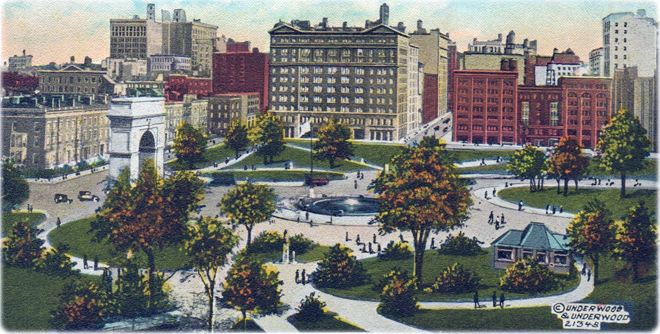
Above: Postcard image of Washington Square Park, circa 1930. (citybeautifulblog.com)
New Yorkers know all about change, and especially during the 1920s and 30s when the city razed everything from Dutch settler houses to the Gilded Age mansions of Fifth Avenue. Landmarks such as the old Waldorf-Astoria were leveled to make way for the Empire State Building, while several blocks—22 acres of residential and commercial buildings—were scraped clean for Rockefeller Center.
June 8, 1935 cover by Harry Brown. This June bride-themed cover was Brown’s fourteenth of the eighteen covers he would create for The New Yorker.
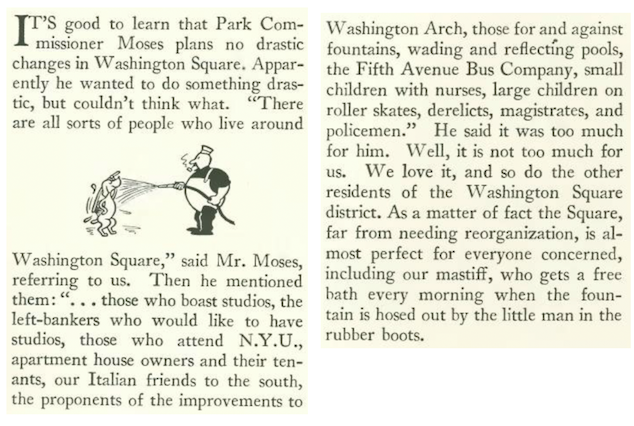
Some things, like Washington Square, were still held dear by city residents. But very little was sacred to the city’s new park commissioner, Robert Moses, who had no problem leveling whole neighborhoods if they stood in way of a road or some other ambitious project.
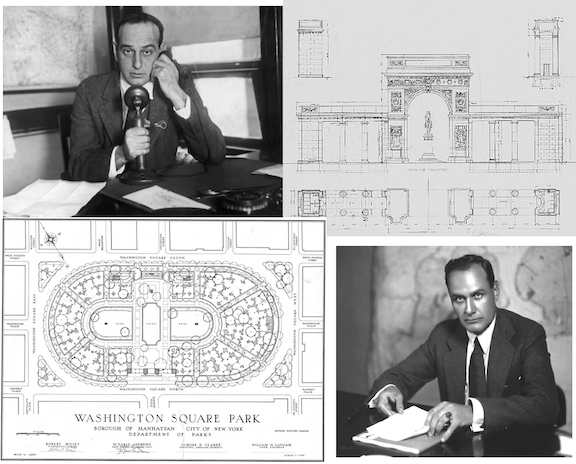
It all seemed well at first when Moses called for the repair of neglected parks, including Washington Square. However, when changes to the park were revealed by the Villager, residents were outraged. Moses’ plan, designed by landscape architect Gilmore Clarke, was a complete reversal of the park’s existing design. In “Notes and Comment,” E.B. White explained:
Village residents organized a “Save Washington Square” committee and successfully blocked Moses from implementing his plan; in true Moses style, he responded by allowing the park to deteriorate.
MAKE NO LITTLE PLANS…Clockwise, from top left, Parks Commissioner Robert Moses; proposal to add colonnades to either side of the arch; landscape architect Gilmore Clarke; Clarke’s plan for the redesign. (Wikipedia/washingtonsqpark.org)
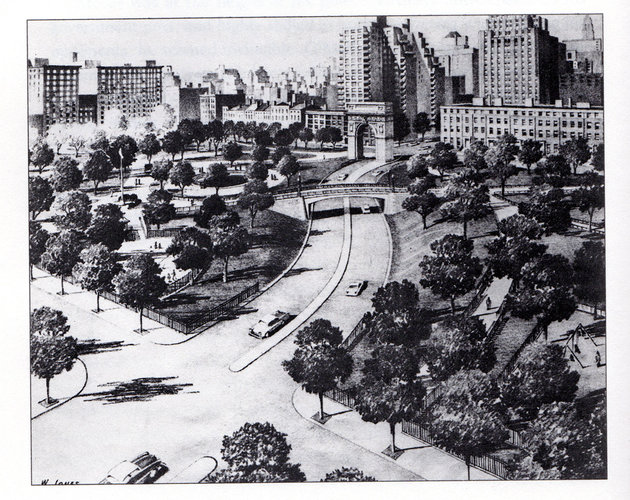
Moses, however, didn’t give up on Washington Square. Around 1940 he began floating the idea of building a double highway through the park. Local residents again rallied, joining business owners and NYU officials in blocking the audacious scheme.
DOUBLE TROUBLE…Around 1940 Moses began floating the idea of building a double highway through Washington Square Park. This illustration is circa 1950. (MTA Archives)
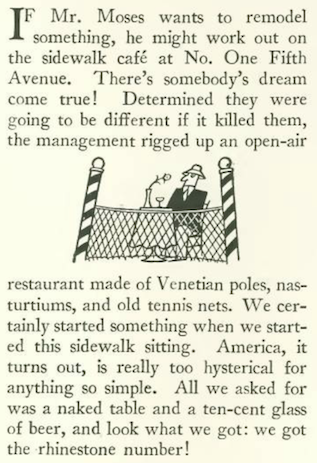
White continued on the theme of city planning, calling on Moses this time to figure out a better plan for sidewalk cafés.
AL FRESCO…Postcard images of sidewalk cafés at 24 Fifth Avenue (top) and 23rd and Lexington, circa 1935. (picryl.com)
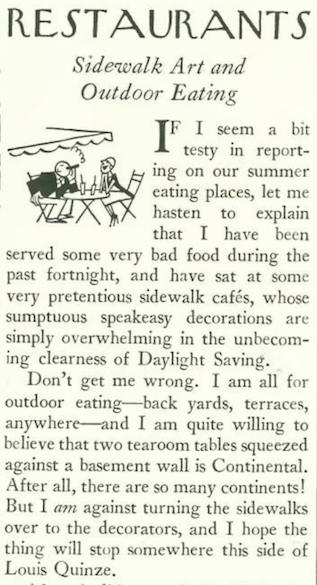
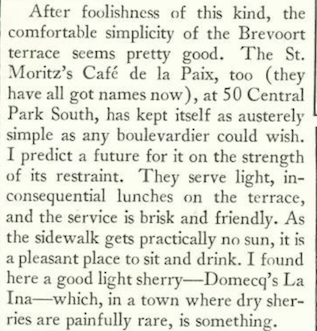
Additional note: The magazine’s June 15, 1935 issue featured Lois Long’s criticisms of sidewalk cafés in Manhattan:
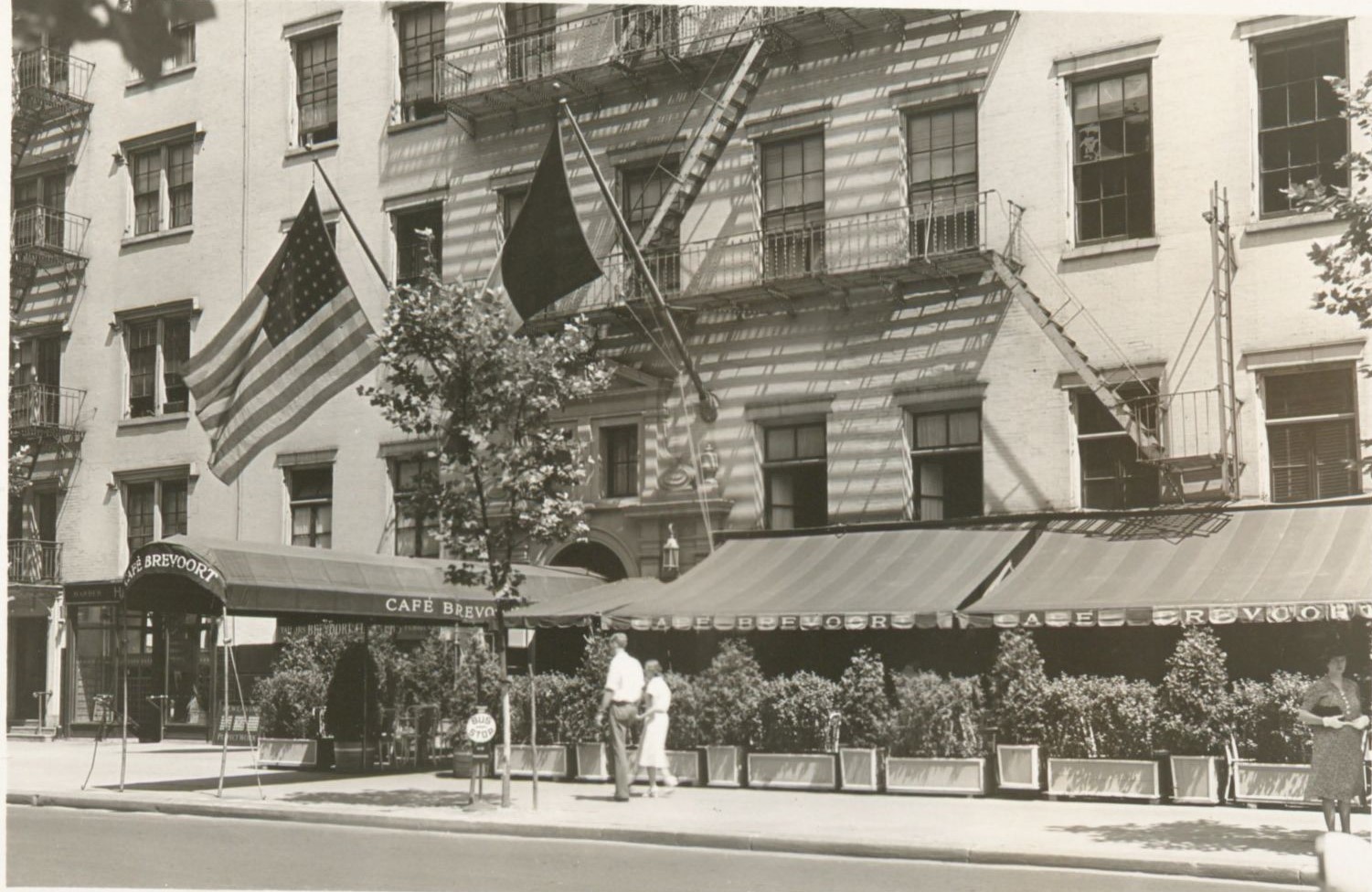
Long did offer, however, a couple of recommendations for sidewalk dining, including the Breevort in Greenwich Village…
If you really wanted to eat outside, Lois Long suggested the Breevort in Greenwich Village. (New York Public Library)
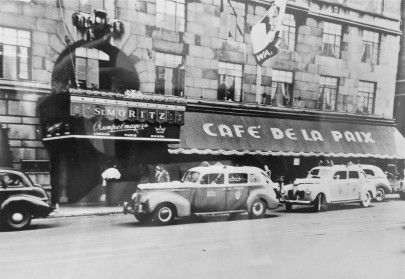
…and the St. Moritz’s Café de la Paix at 50 Central Park South…
The St. Moritz’s Café de la Paix in the 1940s. (blog.bondbrand.com)
* * *
Sexily Danced the Burlesques
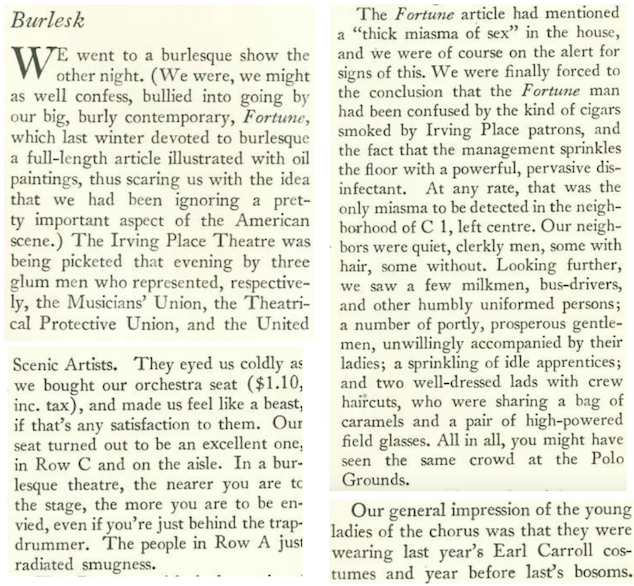
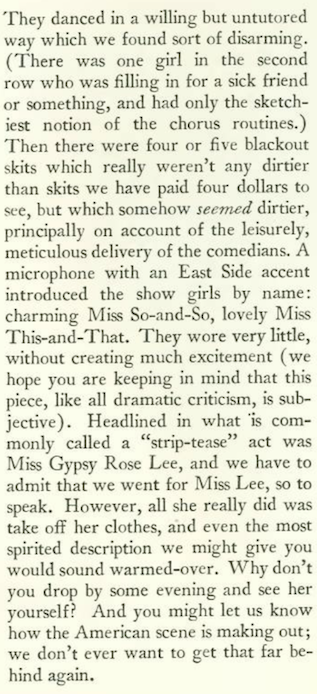
New Yorker writers loved to take shots at Henry Luce, publisher of Time and Fortune. Wolcott Gibbs famously satirized Time’s writing style in a parody profile in 1936: “Backward ran sentences until reeled the mind.” When Fortune decided to take a look behind the curtain at a burlesque show (February 1935), “The Talk of the Town” was ready to pounce.
The Fortune piece featured oil paintings by Stuyvesant Van Veen, including this one depicting the Proscenium at the Irving Place…
Fortune images courtesy fulltable.com
…Van Veen got behind the curtain to create this painting (below) of “Burlesque Queens,” and the magazine chastely demonstrated the “cycle of the strip act” with the help of Miss Jean Lee, aka Miss Jess Mack…
The New Yorker also took a sideways glance at Fortune’s stuffy approach to the subject of striptease, suggesting that it was much ado about nothing.
IT’S ALL AN ACT, FELLAS…Gypsy Rose Lee in 1943. (nypl.org)
* * *
Futures and Fascists
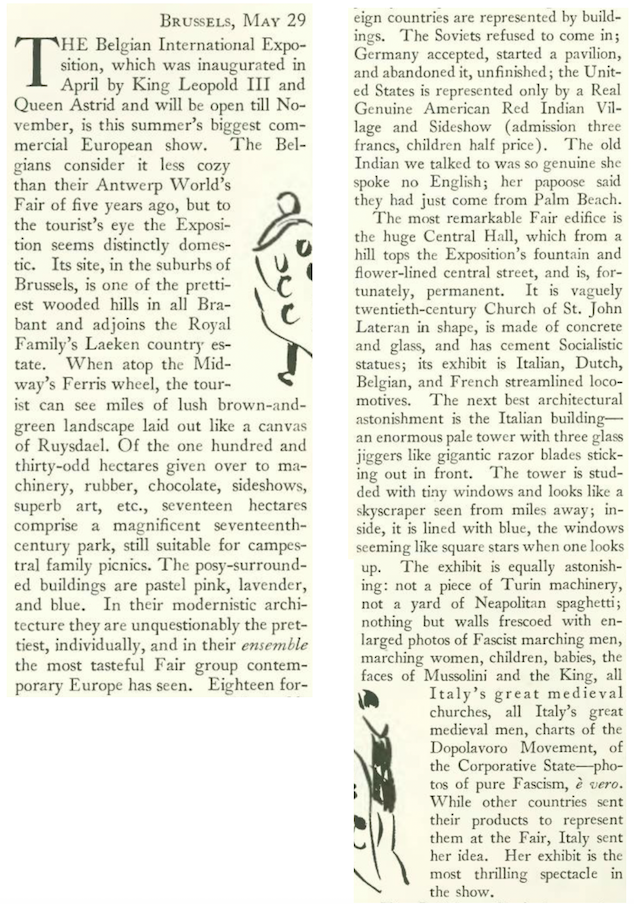
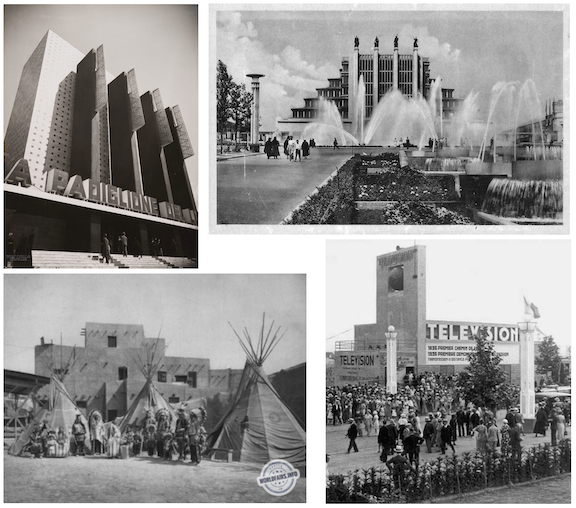
Before the days of television and the Internet, a world’s fair was the place to go to see the latest technologies and other attractions from countries around the world. Paris correspondent Janet Flanner filed a special report on the Brussels International Exposition of 1935, which attracted 20 million visitors in a little over six months.
EURO SPECTACLE…Clockwise, from top left, the menacing facade of the Italian Pavilion—its interior walls featured frescoes of marching fascists; the Palais des Expositions (Grand Palais) still stands today as the Brussels Exhibition Centre; an early demonstration of television; the U.S. featured an “Indian Village” at the Expo. (fomo.be/Wikimedia/en.worldsfairs.info)
* * *
Matchbox Cars
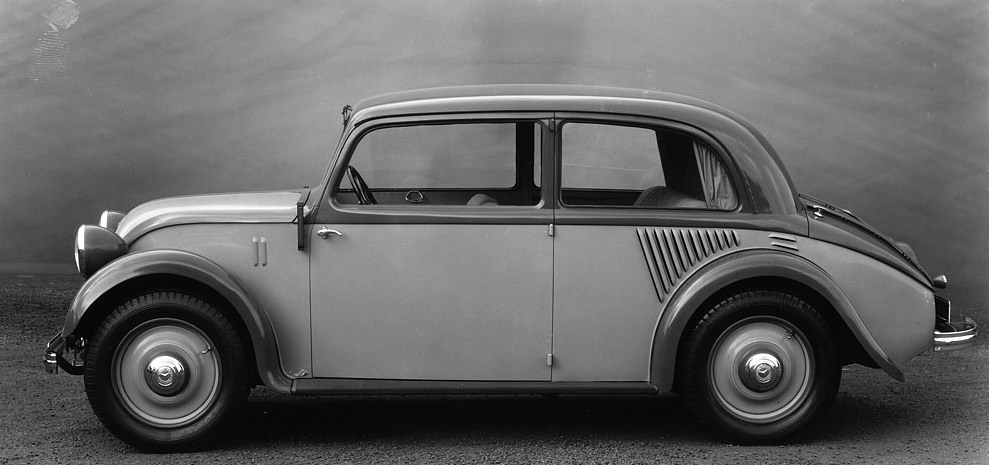
The New Yorker regularly checked the automobile competition from overseas, and found a tiny German car to be “perfectly amazing,” even if it didn’t go over so well with consumers.
IT’S CUTE, BUT…Due to its extreme unbalance of the Mercedes-Benz 130 H (two-thirds of the mass, including the engine, was on the rear axle), the car apparently was awkward to handle. It was discontinued in 1936. (automobile-catalog.com)
* * *
From Our Advertisers
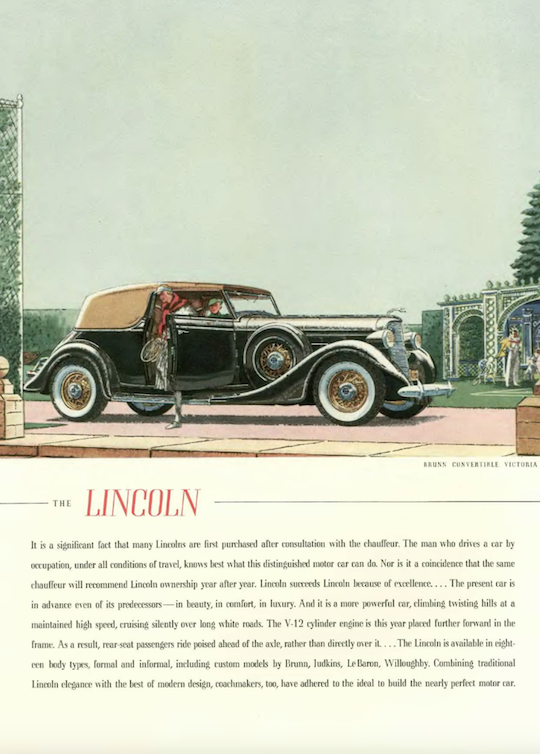
Anyway, most Americans preferred bigger cars, especially ones by luxury makers such as Lincoln, if they could afford them…
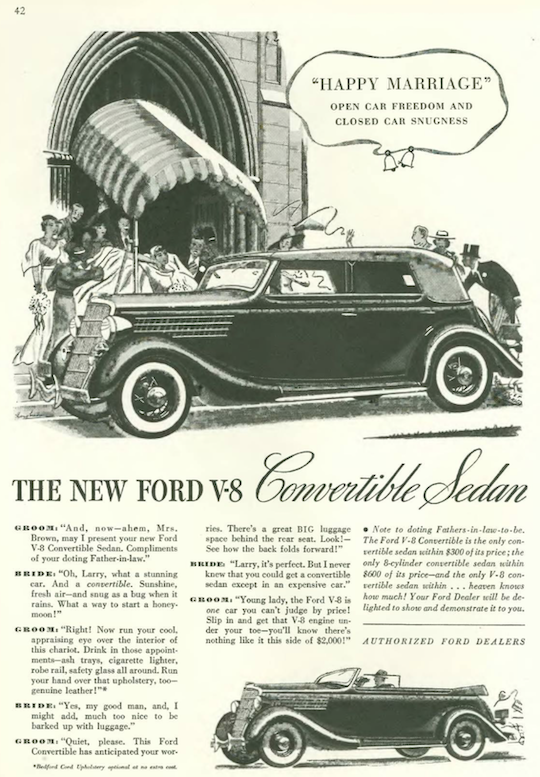
…Lincoln’s parent company, Ford, offered up a more affordable convertible with some flair of its own…automakers were fond of the marriage theme in advertisements, especially in the month of June…
…automakers and related industries were important advertisers during The New Yorker’s first years…
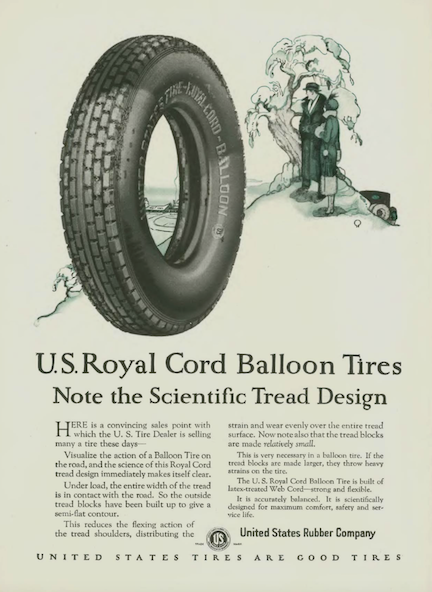
…indeed, the back cover of Issue #1 (Feb. 21, 1925) featured this ad from the United States Rubber Company, promoting its U.S. Royal Cord Balloon Tires…
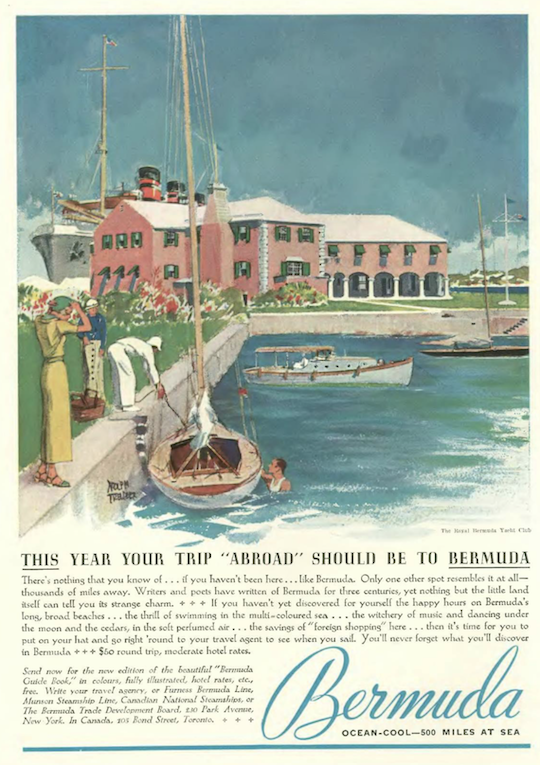
…another faithful advertiser in the magazine’s first decade was the Bermuda Trade Development Board…
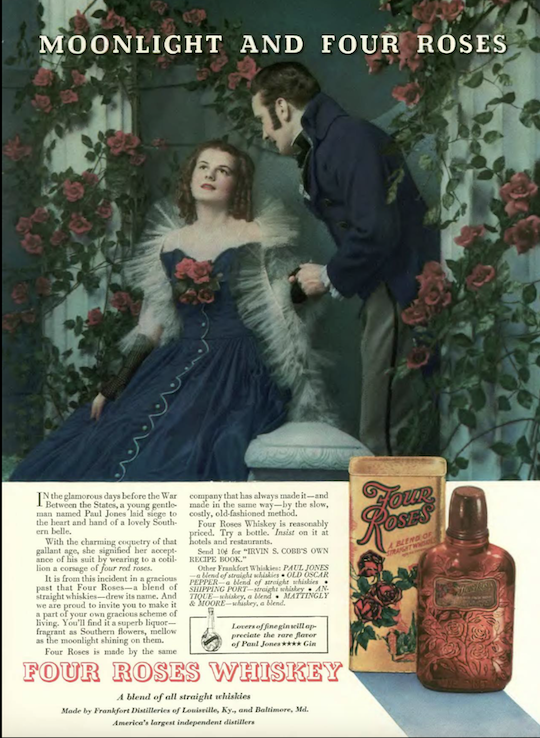
…this ad for Four Roses whiskey recalled “the glamorous days” (ahem) before the Civil War…
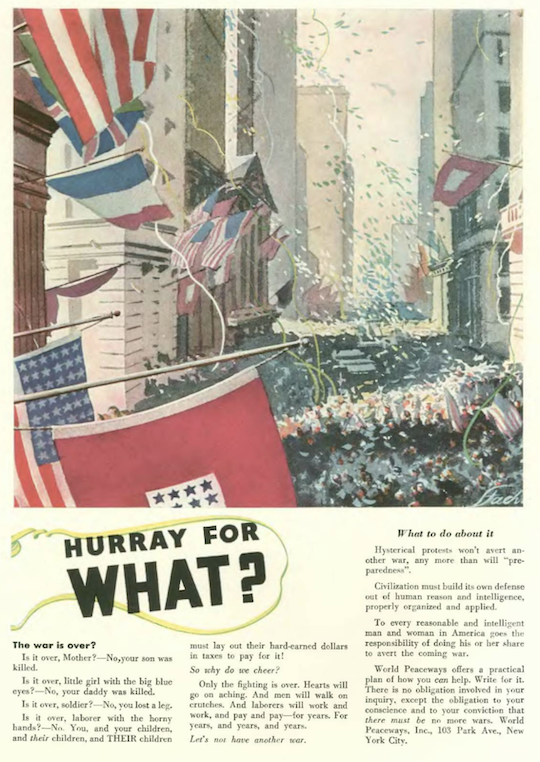
…and this colorful ad from World Peaceways reminded readers there was nothing to celebrate about wars…these ads pulled no punches (read the first few lines)…
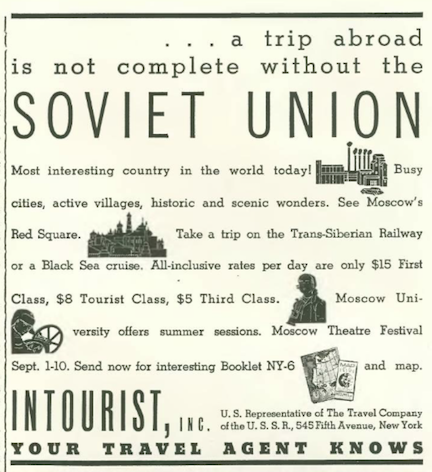
…”most interesting country in the world today!” proclaimed this ad inviting tourists to the Soviet Union…during 1934-35 Joseph Stalin was ruthlessly purging the Party, and local leaders across the country were being annihilated…of the 2.3 million people who had been party members in 1935, just under half were executed or perished in labor camps…this fact probably wasn’t mentioned in the travel folder…
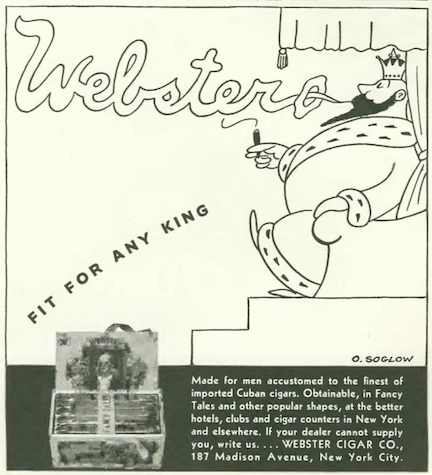
…the Webster Cigar Company hired Otto Soglow to create an ad doubtless based on the popularity of “The Little King,” but this isn’t the diminutive monarch…
…which takes us to our cartoonists, beginning with this spot signed E.S., I believe, or L.S. (anyone know?)…at any rate, its whimsical…
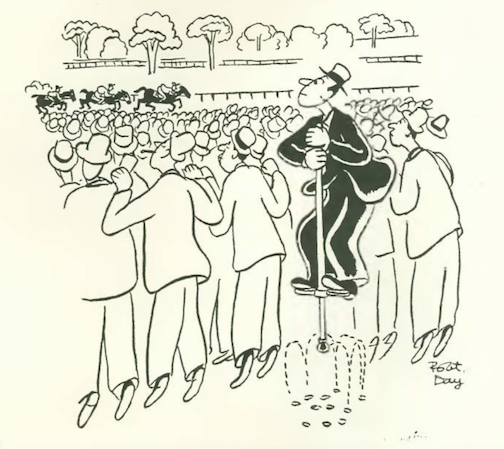
…of course we know Robert Day…
…Day again, in a very different style…
…Helen Hokinson, sounding a contemporary note…
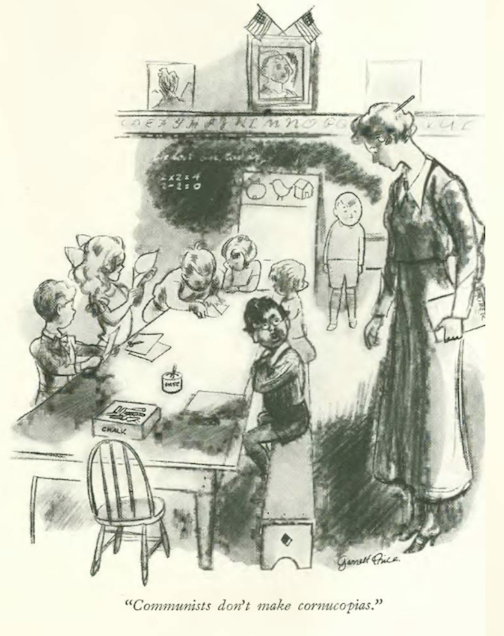
…a kindergarten political standoff, courtesy Garrett Price…
…Rea Irvin, and the obsolescence of Pan (today she’d have a cell phone)…
…Peter Arno, and a clueless, cold, cuckold…
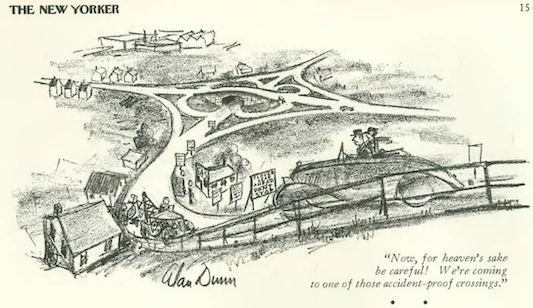
…and we close with Alan Dunn, and the future of transportation…
























 A New Yorker State of Mind