Enter Peter Arno

Screen Shot 2015-07-27 at 4.20.57 PM
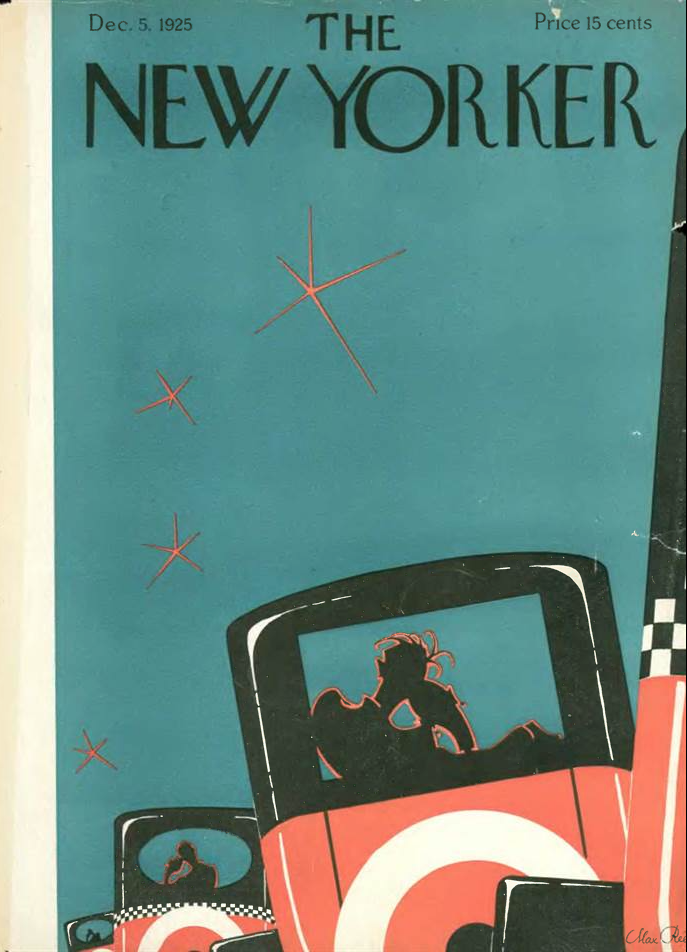
Dec. 5, 1925 cover by Max Ree.

In the fall of 1925, Peter Arno’s illustrations began to pop up in the pages of The New Yorker magazine.

Arno’s early illustrations were surprisingly understated, given that he would go on to become one of the magazine’s best known cartoonists, contributing many memorable illustrations and cartoons–and 99 covers–to the magazine from 1925 until 1968, the year of his death.

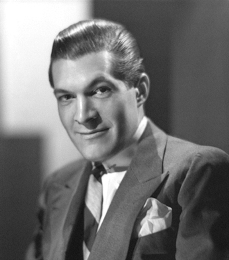
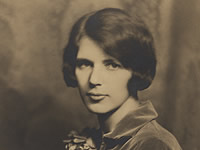
Recently described by longtime New Yorker writer Roger Angell as “the magazine’s first genius,” in 1927 Arno would marry fellow New Yorker contributor Lois Long (“Tables for Two” and “On and Off the Avenue”).
1220_Arno-Peter
Peter Arno

In his memoir Here at The New Yorker, Brendan Gill wrote that editor Harold Ross frowned on office romances, but “it was perhaps inevitable that Arno and Miss Long should have fallen in love.”

To keep his party-loving contributors close to the workplace, Ross opened a staff speakeasy in the basement of a near-by property. Long later relayed this story to writer Harrison Kinney about Ross’s ill-fated experiment:
2082501823-bio
Lois Long

“(Ralph) Ingersoll came in one morning and found Arno and me stretched out on the sofa nude and Ross closed the place down…Arno and I may have been married to one another then; I can’t remember. Maybe we began drinking and forgot that we were married and had an apartment to go to.”

The marriage would last only three years (and produce a daughter…more on that in a later post), but they would collectively give more than eight decades of their lives to the magazine.

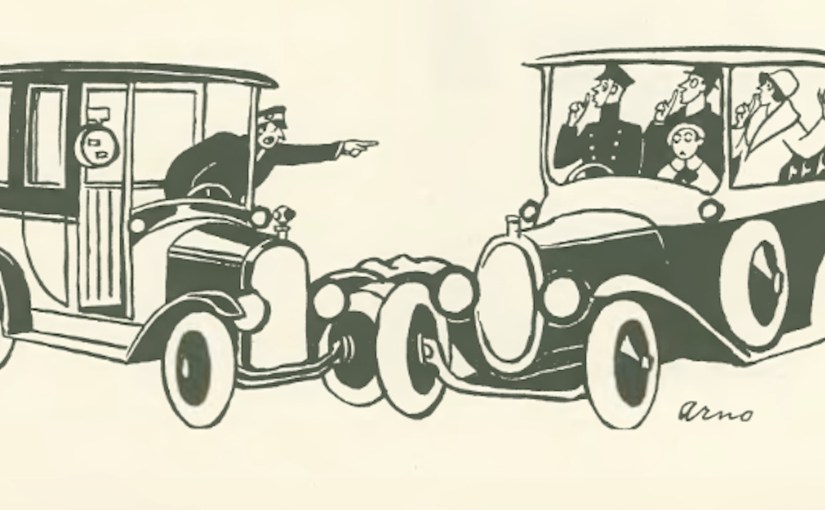
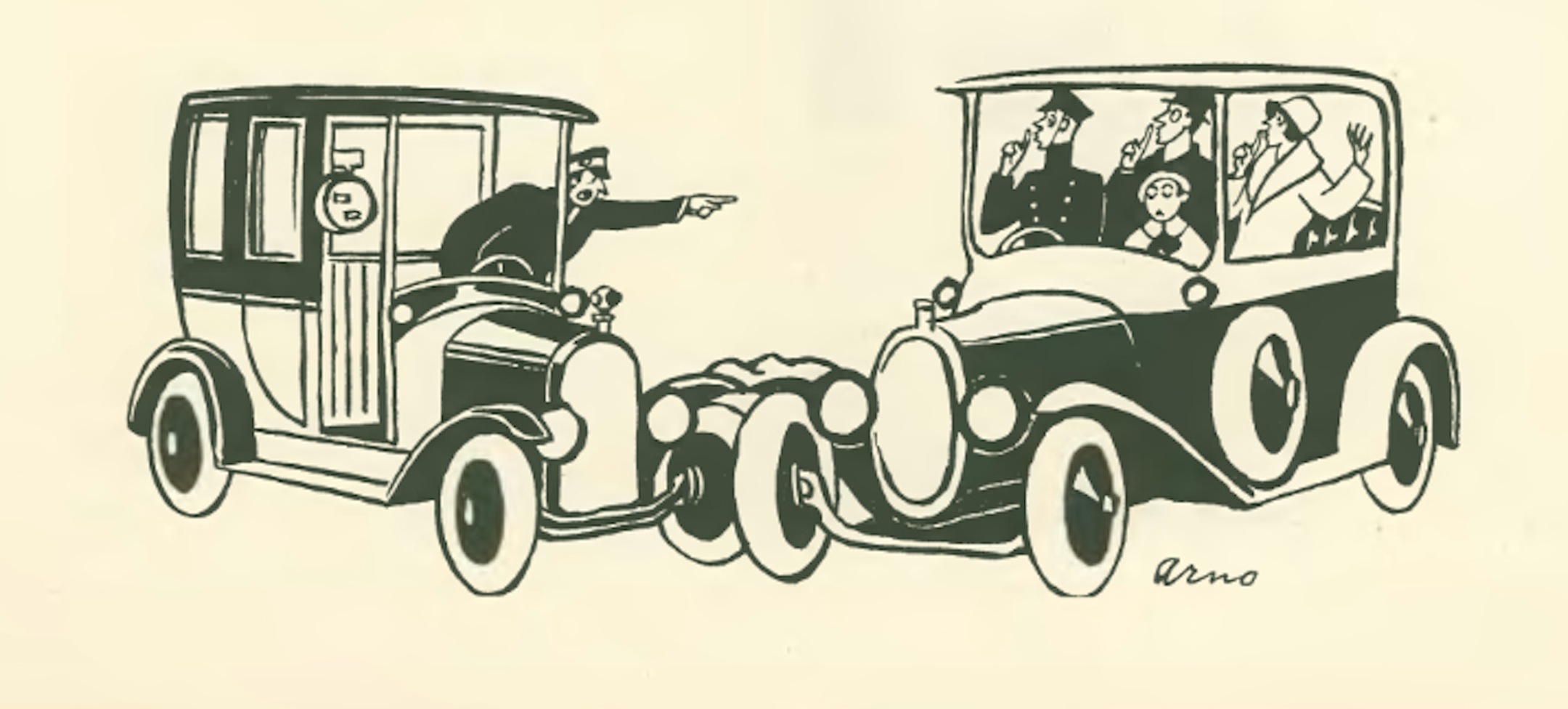
Examples of Arno’s early contributions:
2013-12-01-baddrivers
August 1925
Screen Shot 2015-08-13 at 1.00.41 PM
Dec. 5, 1925

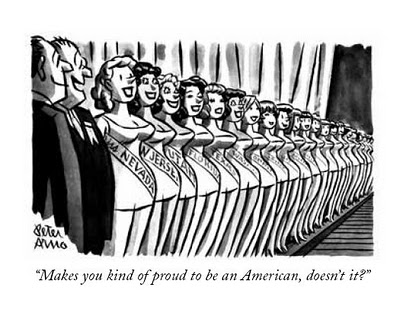
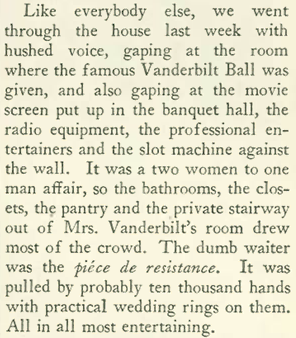
And his later work…a cartoon from 1960:Peter-Arno-10-Sept-1960-beauty-contestIn other news, “The Talk of the Town” editors also joined the throng of gapers taking one last look at the Vanderbilt mansion:
Screen Shot 2015-08-13 at 11.48.30 AM

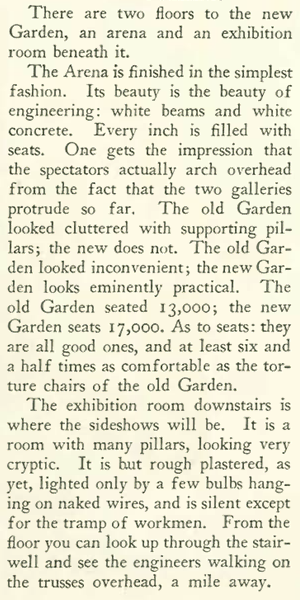
And they rhapsodized about the new Madison Square Garden, which was nearing completion at Eighth Avenue between 49th and 50th streets:
Screen Shot 2015-08-13 at 11.46.09 AM

scoutingny.com
Postcard image of New York City’s Madison Square Garden No. 3, which remained in use until 1968. (Wikipedia)

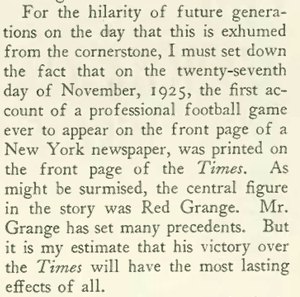
“Profiles” featured the “Apostle of Perfection,” Dutch conductor Willem Mengelberg, famed for his performances of Mahler and Strauss. “The Current Press” noted the first-ever coverage of a professional football game by a New York newspaper (NY Times):
Screen Shot 2015-08-13 at 12.50.39 PM

An excerpt from the lengthy Times article referenced by The New Yorker:

Screen Shot 2015-08-14 at 12.28.49 PM

THE GALLOPING GHOST…Red Grange with the Chicago Bears in 1925. (Library of Congress)

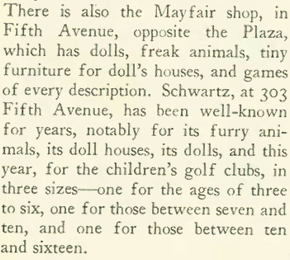
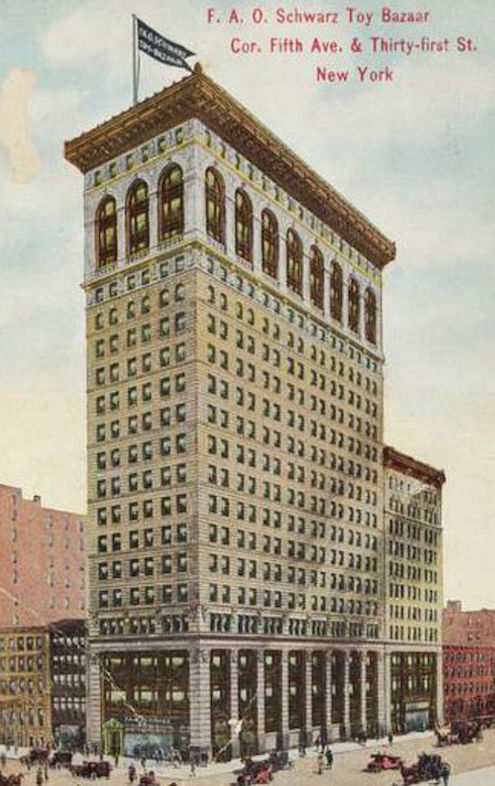
In “On and Off the Avenue,” Lois Long wrote about the wonders of children’s toys on display for the Christmas season:
Screen Shot 2015-08-13 at 1.05.41 PM

It is worth noting that the “Schwartz” store to which she referred (known to most of us as FAO Schwartz) will be closing its current Fifth Avenue store at the end of 2016. The name will live on (sadly) in online retailing as a unit of Toy’s R Us.
FAO-Schwarz-23rd-and-31st
This is the F.A.O. Schwarz store that would have been familiar to Lois Long. (6sqft.com)

And in her “Tables for Two” column, Long referred to the previous issue’s blockbuster article penned by the reluctant debutant, Ellin Mackay, which perhaps made Long’s nighttime forays a bit less novel:

Screen Shot 2015-08-13 at 1.10.00 PM

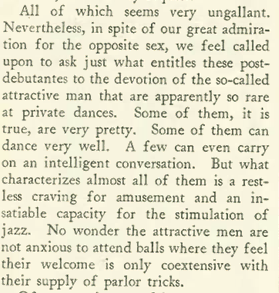
The Dec. 5 issue also carried a response to Mackay’s article, written by a young Yale alumnus named William Adee. A couple of brief excerpts:

Screen Shot 2015-08-13 at 1.19.57 PM

Later in his lengthy rebuttal, Adee offers this (exasperated) observation:
Screen Shot 2015-08-13 at 1.21.04 PM

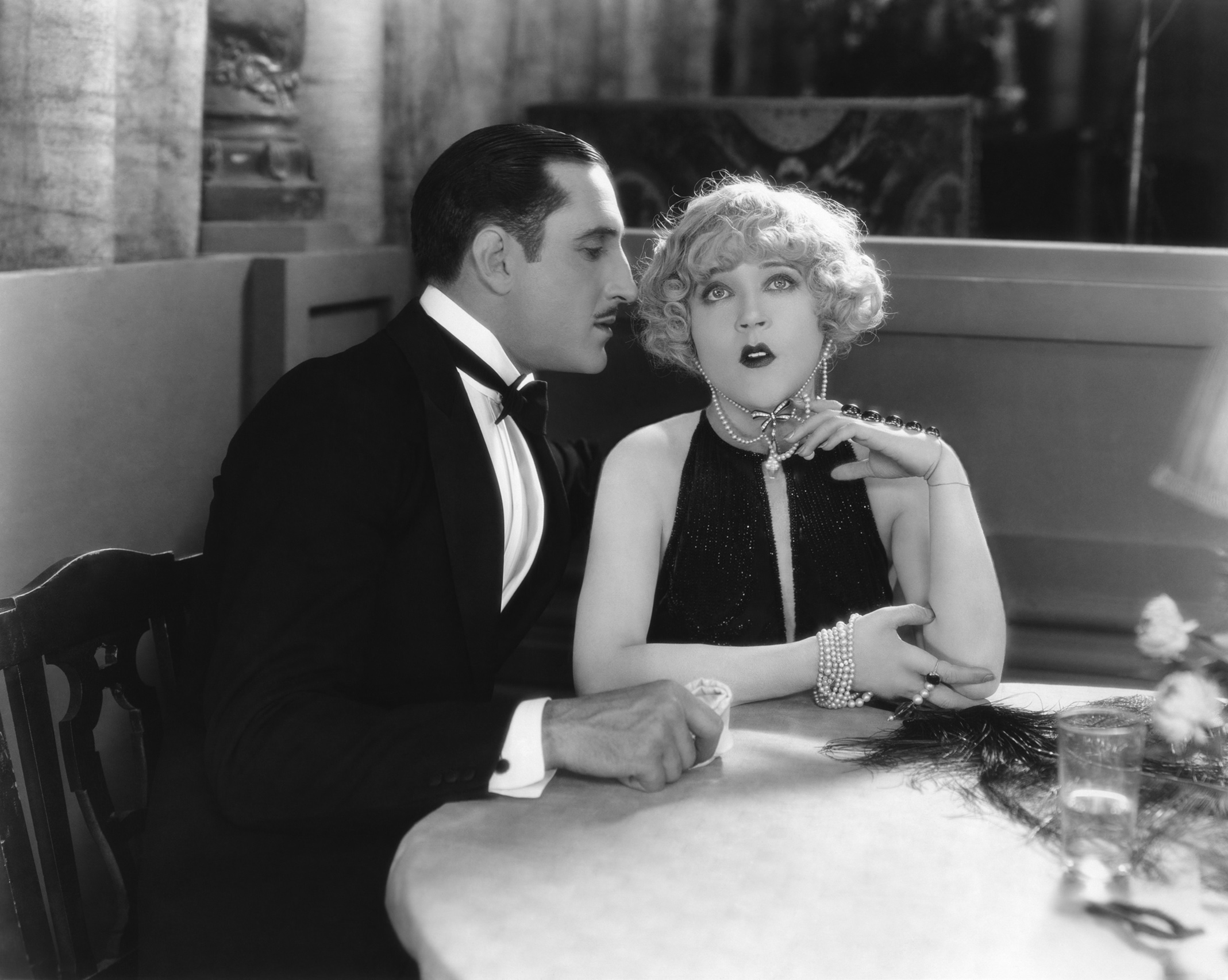
In “Motion Pictures,” Theodore Shane found little to recommend: Cecille B. DeMille’s The Road to Yesterday was “hokum,” The Masked Bride tame, and the new Tom Mix picture, The Best Bad Man, was in need of a plot.
Murray, Mae (Masked Bride, The)_01
HO HUM…Basil Rathbone and Mae Murray in The Masked Bride. The film is now lost. (doctormacro.com)

Next Time: Yuletide Approaches…
Screen Shot 2015-08-13 at 1.28.18 PM


Oh Those French

Screenshot 2015-07-10 16.32.07
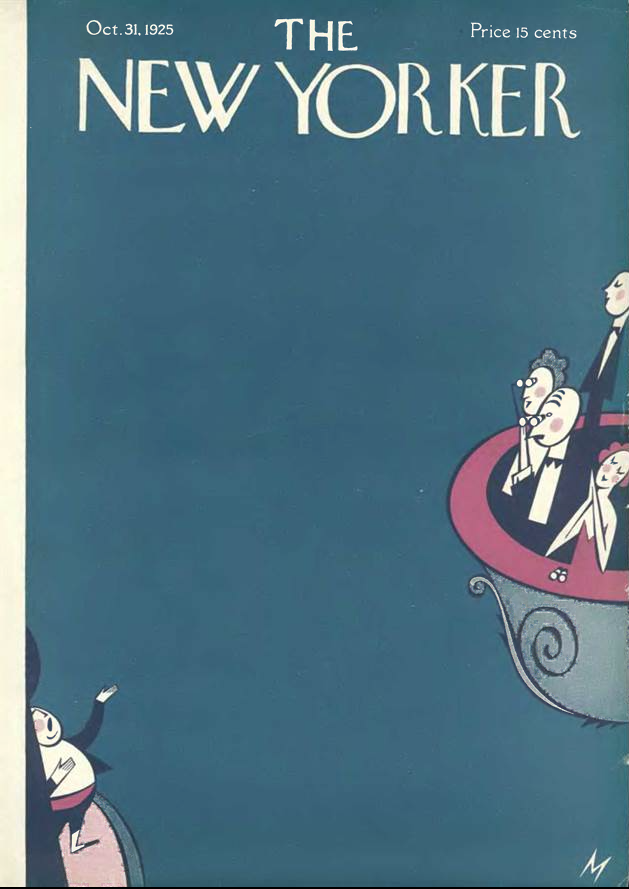
Oct. 24 cover by Max Ree.

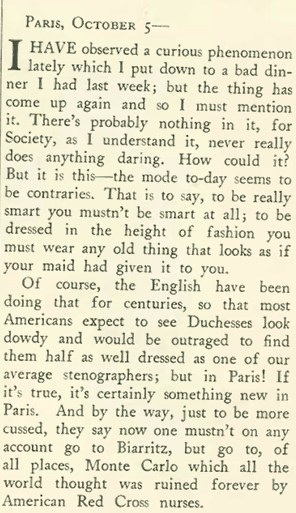
Apparently even Parisians have fashion lapses from time to time. Janet Flanner (Genêt) reported with some alarm a “curious phenomenon” from Paris in the Oct. 24, 1925 issue of The New Yorker.

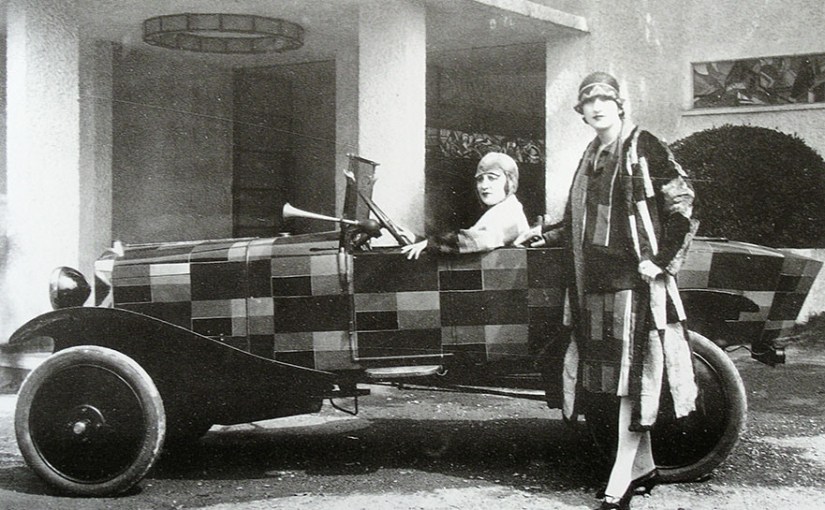
It seemed that the otherwise fashionable Parisians were slumming it a bit and had adopted a dowdy look previously associated with residents of the British Isles. (The un-dowdy image at the top of the page is French designer Sonia Delaunay and her matching Citroen in 1925).

Apparently such pedestrian tastes had also caused a shift from formerly fashionable travel destinations on the Atlantic coasts to Mediterranean destinations:

Screenshot 2015-07-14 10.25.03

And to top things off, the French were agog over the latest Charlie Chaplin film, The Gold Rush (another French favorite of American clown-dom, Jerry Lewis, would be born the following year):

Screenshot 2015-07-14 10.25.26

But then there was another new distraction in town, the Autumn Salon:

Screenshot 2015-07-14 10.26.17

6865003683_3b4a1952df
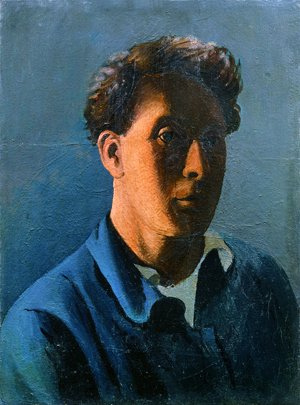
Pavel Tchelitchew, self-portrait, 1925 (Flickr)

Pavel Tchelitchew was known as a leader of “mystical surrealist” painting. He left his native Russia in 1920 and lived in Berlin before moving to Paris in 1923. There he became acquainted with Gertrude Stein and Edith Sitwell, the latter with whom he had a long-standing friendship.

The French were also on display in a comic piece by Theodore Shane, who also served as the magazine’s movie critic.

Shane wrote a piece titled “Fra~nce” in a style that suggested he was teaching children about France by dividing words into syllables (it was similar to a piece about Russia (“Rus~sia”) in the Aug. 29 issue, signed “Freudy”) Here’s a sample:

Screenshot 2015-07-13 16.18.19

A full-page ad on the Page 1 announced the “The Midnight Open” event at The 19th Hole Club in the Hotel Roosevelt, with an impressive lineup of golf professionals such as Walter Hagen and Gene Sarazen and even “prominent amateurs” including Bobby Jones.

41864_172_z
The Roosevelt Hotel, which opened in 1924 (Expedia)

I was surprised that the annual membership fee was advertised as only $10, which would roughly translate to $135 today—a bargain compared to what it costs today to join even the lowliest golf club.

Screenshot 2015-07-13 12.13.32

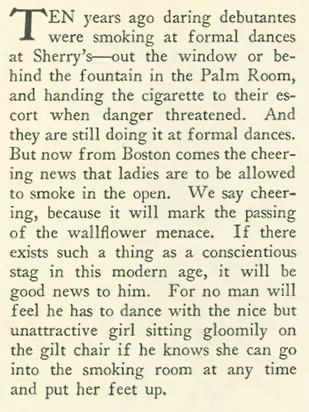
“Talk of the Town” welcomed news from Boston that “ladies are to be allowed to smoke in the open” in that city (drawing by Johan Bull):

Screenshot 2015-07-13 12.17.13

Screenshot 2015-07-13 12.17.05

In a feature “Our Collegiate Hilltop,” Elmer Davis wrote about the droves of college students who had taken over much of the available housing along Morningside, “a ghetto for the Nordic native-born.” Davis offered this lament about Columbia’s continued creep into the surrounding neighborhoods (with accompanying art by Helen Hokinson):

Screenshot 2015-07-13 12.27.15

Screenshot 2015-07-13 12.37.51

“Profiles” examined the life of “A Kind Man,” William Lyon Phelps. That title was not meant as a complement from writer Waldo Frank, but rather it was his “kindness” toward authors that caused him to praise books that were not worthy of praise and made him the personification of the “most American of disasters: the disaster of Good Intentions, when they are not fortified by intellectual hardness, when they are not drained of all sentimental juices.”

ethel-27
Ethel Barrymore in 1925 as Ophelia in Walter Hampden’s Production of Hamlet. (barrymorefamily.com)

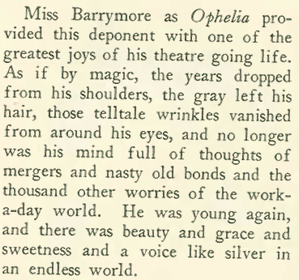
In “The Theatre” Elsie Ferguson and Basil Rathbone were appearing in The Grand Duchess and the Waiter at the Lyceum (“an agreeable piece of work”), while Ethel Barrymore “wowed” critic Herman J. Mankiewicz with her performance as Ophelia in a revival of Hamlet at Walter Hampden’s Theatre.

Or at least I think she wowed him. Mankiewicz knew and worked with the Barrymore family, and I wonder if his over-the-top style here is a wink to the fact that a 45-year-old Ethel was playing the part of a young virgin. Here’s an excerpt from the review:

Screenshot 2015-07-14 15.05.43

I hate to jump ahead, but in the Nov. 14 issue, “Talk of the Town” offered this humorous anecdote from one of Barrymore’s performances:

Screen Shot 2015-07-22 at 4.48.09 PM

In sporting news, John R. Tunis continued his coverage of rivalry matches staged at Yankee Stadium, this time the fiercely competitive Notre Dame vs Army matchup. Despite Notre Dame’s renown under Knute Rockne, Army was a worthy foe in the 1920s and in this particular matchup the Cadets blanked the Irish 27-0. The matchup between these teams was so popular that it was played at Yankee Stadium until 1947.

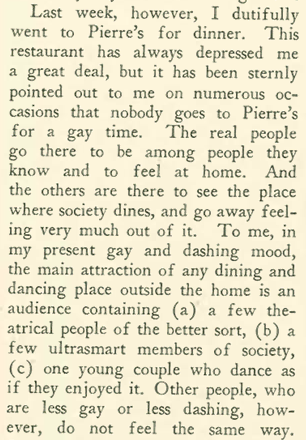
And finally, Lois Long sharpened her pencil and offered her thoughts on a dull dinner crowd at Pierre’s:

Screenshot 2015-07-14 10.21.39

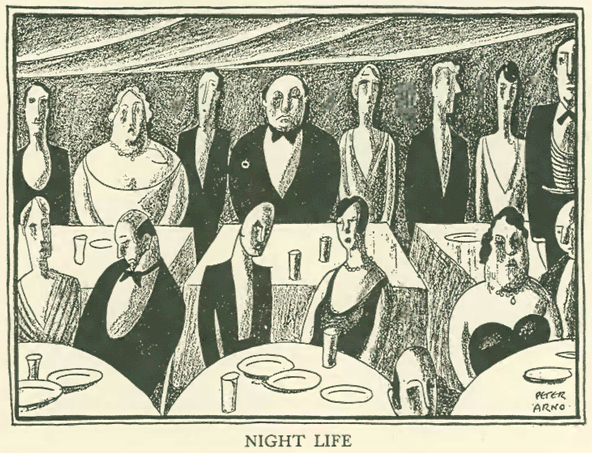
A drawing by Peter Arno (who would marry Long in 1927) in another section of the magazine seemed to refer to Long’s lament:

Screenshot 2015-07-13 16.10.04

Long also offered some criticisms of a “new negro revue” that decidedly differed from the mainstream:

Screenshot 2015-07-14 10.20.34

A great illustration by Julian de Miskey of the Bellows exhibition at the Met:

Screenshot 2015-07-13 16.08.51

Next Time: Short-tempered about Temperance…
Screenshot 2015-07-14 10.28.30

Fighting For Respect

Screenshot 2015-07-09 11.55.39
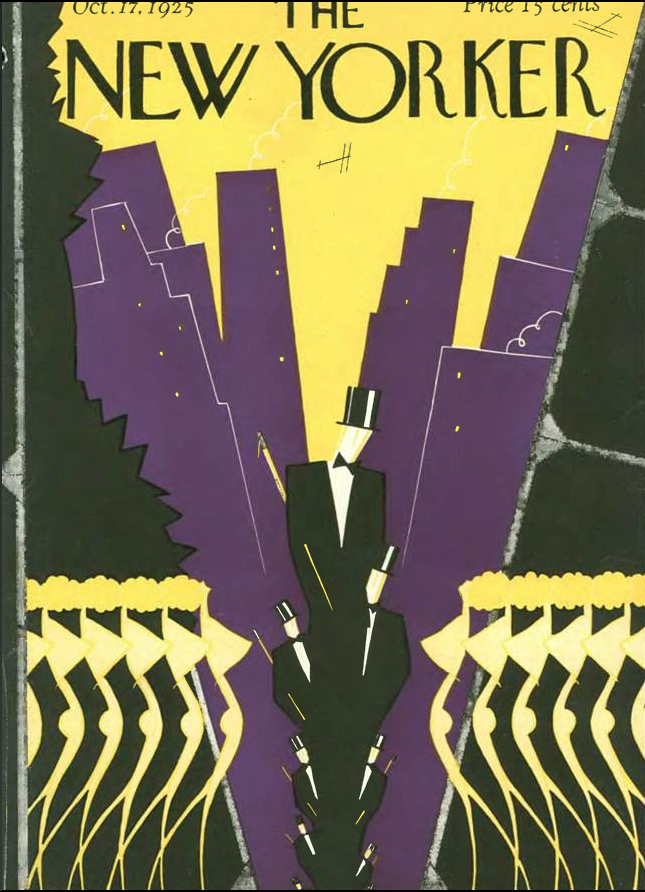
Oct. 17, 1925 cover by Max Ree.

The New Yorker catered to both Anglo- and Francophile readers in its early issues, especially in advertisements, although such pretensions were also satirized in its pages. The fledgling magazine, however, took great pains to show that it was something new, modern and very American.

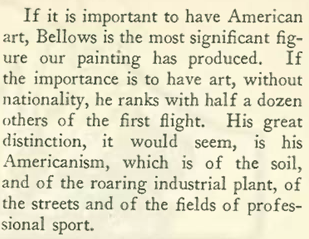
A case in point is the treatment of artist George Bellows, whose untimely death from appendicitis earlier that year, at the age of 43, was followed by a memorial exhibition of his work at the Metropolitan Museum of Art.

George_bellows
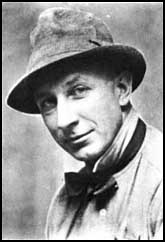
George Bellows. (Wikipedia)

Bellows was from Columbus, Ohio, and was a pupil of fellow Midwesterner Robert Henri (Nebraska) at the New York School of Art. There Bellows became closely associated with Henri’s Ashcan School, a group of artists who advocated painting contemporary American society in all its grittiness.

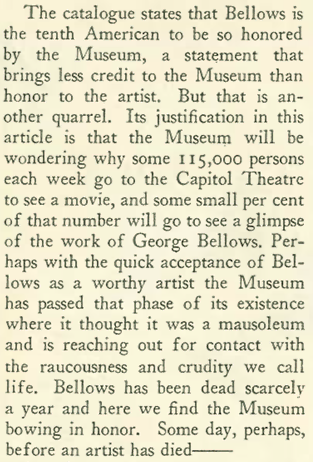
In Bellows The New Yorker saw a fresh voice that gave form to the roiling life of a great city (Joseph Mitchell would later do the same with words for the magazine). The magazine also used the memorial exhibit as an opportunity to chide the Metropolitan Museum and its old-fashioned, Euro-centric tastes in art.

Bellows_George_Dempsey_and_Firpo_1924
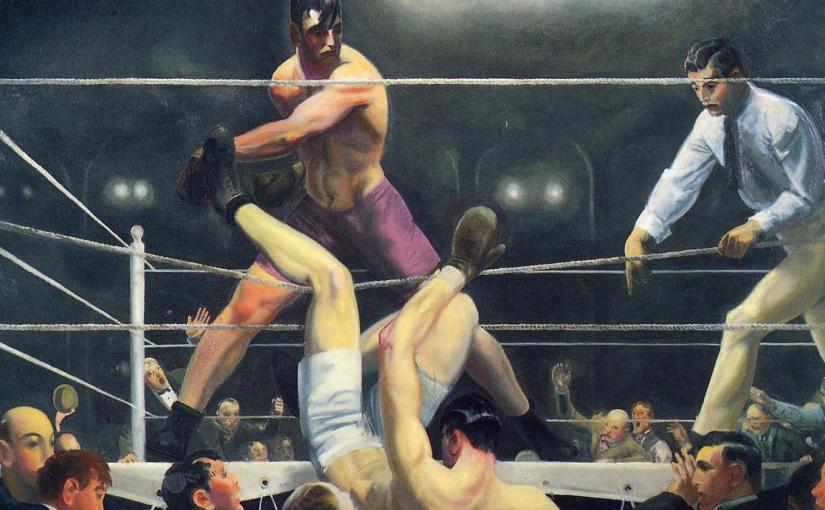
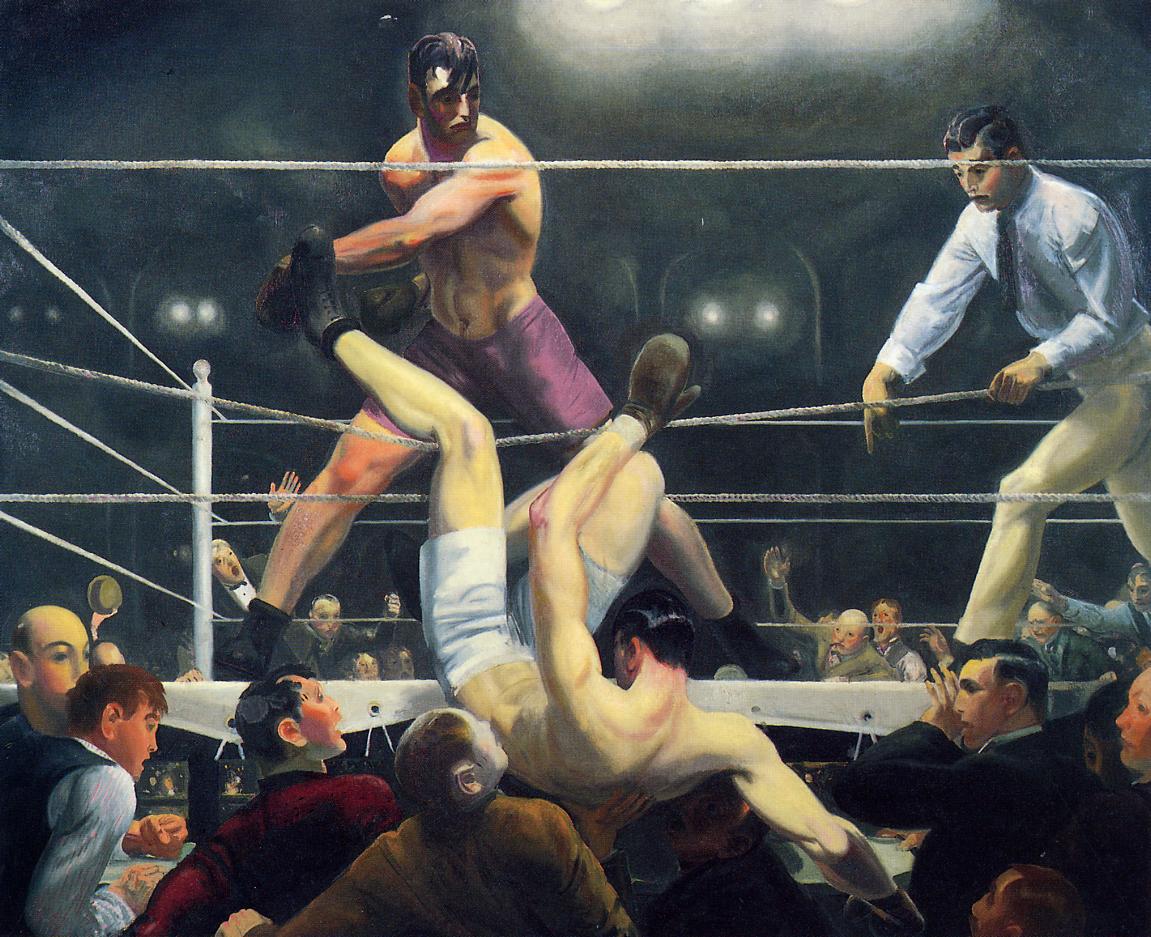
One of George Bellow’s last and perhaps most famous paintings from 1924 depicted the famous 1923 Dempsey-Firpo fight at the Polo Grounds (Wikipedia)

In the previous week’s issue (Oct. 10), “The Talk of the Town” noted that the upcoming memorial exhibition was “not quite the usual thing” for the Met (that is, to accord such recognition to an American artist). The “lanky Midwesterner” Bellows offered something unique:

Screenshot 2015-07-09 12.07.44

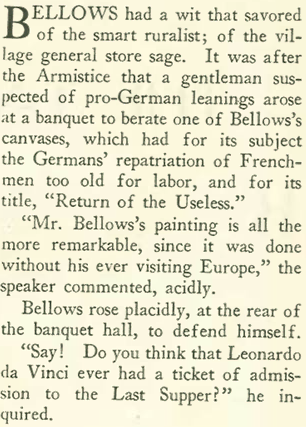
The same column noted that Bellows possessed something of a wit:

Screenshot 2015-07-09 12.08.12

In the Oct. 17 issue, art critic Murdock Pemberton offered these pointed observations of the opening of the memorial exhibition:

Screenshot 2015-07-10 16.24.53

murdock1
Murdock Pemberton (New York Observer)

Murdock Pemberton himself is something of an interesting story. He co-hosted the luncheon that started the Algonquin Round Table, and was art critic at The New Yorker for more than seven years. The dismissal of this gifted and influential writer was probably one of Harold Ross’s biggest screw-ups as editor. You can read more about Pemberton in this Jan. 24, 2012, New Yorker article by Andrea Scott, who wrote that Pemberton “may be the most interesting person you’ve never heard of.”

Screenshot 2015-07-10 16.14.58
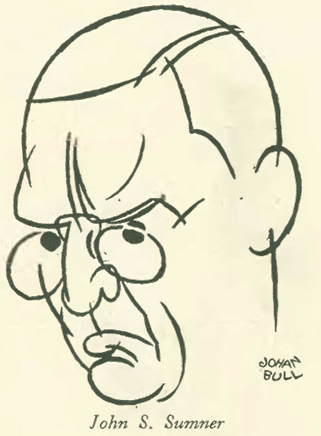
Sumner, by Johan Bull

The Oct. 17 issue also included an interview with John Saxton Sumner, who headed the New York Society for the Suppression of Vice, a state censorship body empowered to recommend obscenity cases to prosecutors.

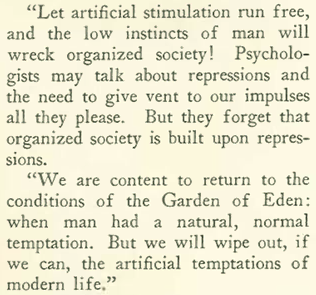
Sumner was quoted as saying it “may be impossible to legislate morals into humanity. But we can legislate decent conduct into humanity.” He also offered these insights:

Screenshot 2015-07-10 16.14.44

As I mentioned in my last post, thanks to an ailing Babe Ruth and the slumping Yankees, college football took center stage in “Sports of the Week,” especially with “rivalry” games that drew crowds (and revenue) to Yankee Stadium. John R. Tunis continued his coverage of the sport with an account of a game between the North and the South (Penn State and Georgia Tech) in Yankee Stadium. Georgia Tech prevailed 16-7.

“Profiles” examined the life of Dr. Abraham Arden Brill, an Austrian-born psychiatrist who was the first psychoanalyst to practice in the United States and the first translator of Freud into English. It was no surprise that Brill found America ripe for this new type of therapy.

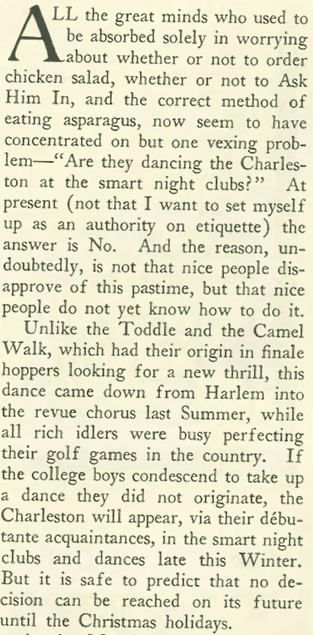
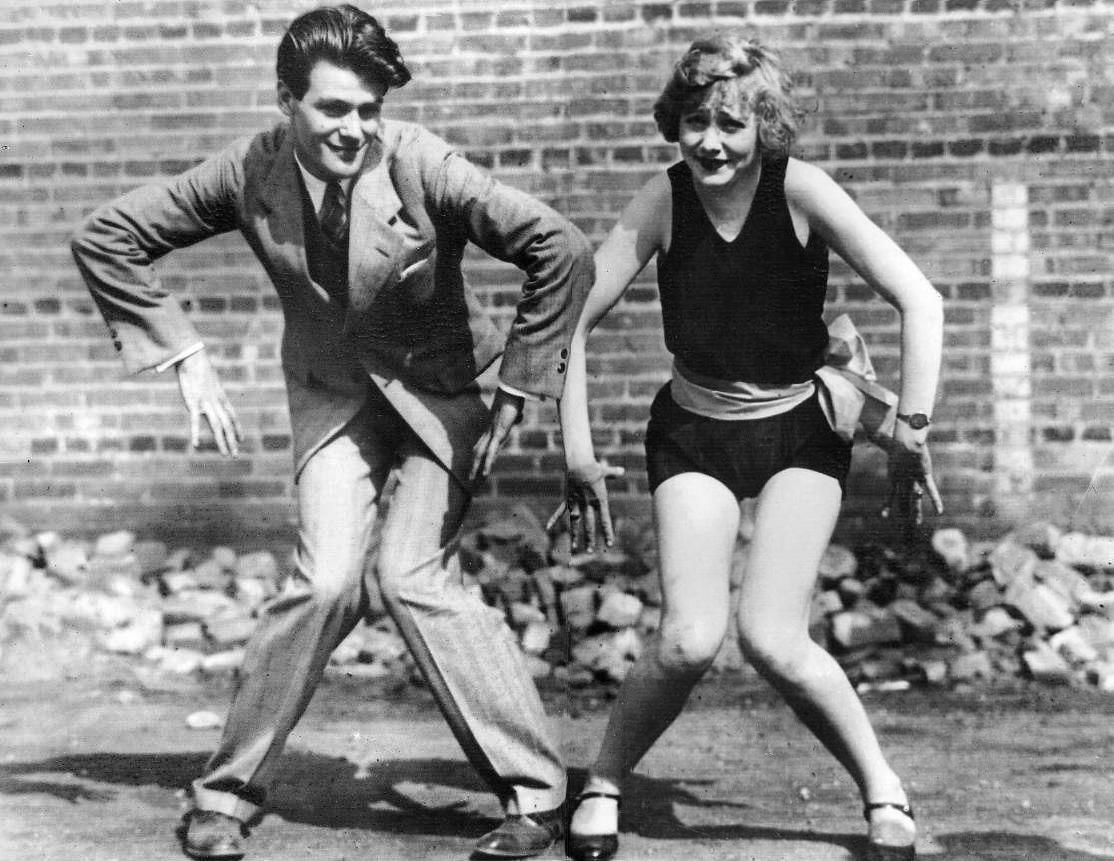
In “Tables for Two,” Lois Long pondered the popularity of “the Charleston” at smart night clubs:

Screenshot 2015-07-10 16.30.17

C’MON…Teens dancing the Charleston in the 1920s. (flavorwire.com)

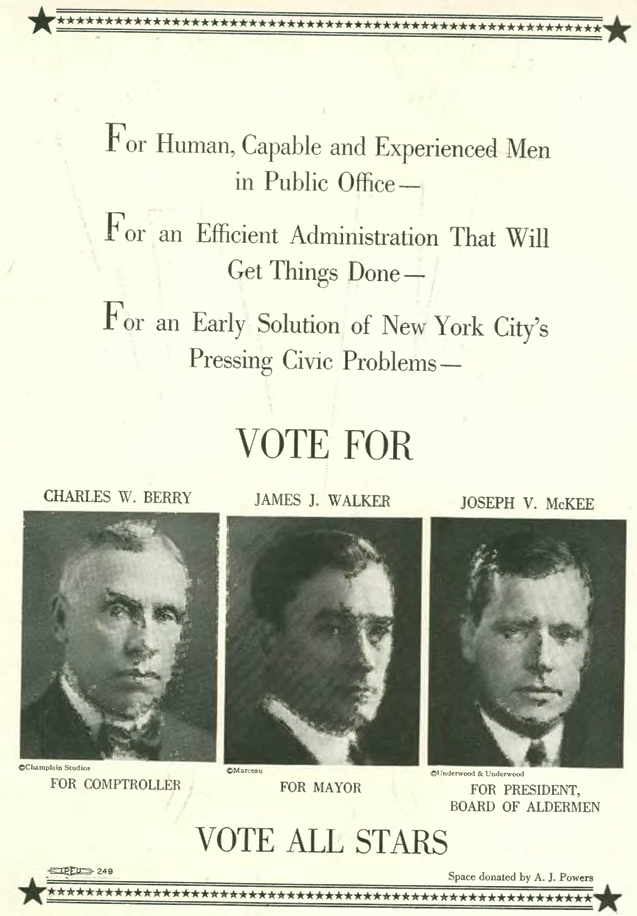
And to close, another political ad that seems out of place in The New Yorker:

Screenshot 2015-07-10 16.05.39

There’s something sobering about the ad. Perhaps it’s because the unsmiling faces of Tammany Hall suggest more a rogue’s gallery than a political line-up. As we know, Walker will get elected and go down in scandal in 1932, with McKee then serving as acting mayor for remainder of Walker’s term–just three months.

Next Time: A French Twist.

Screenshot 2015-07-10 16.32.07

Amateur Beauty

Screenshot 2015-06-24 16.52.50
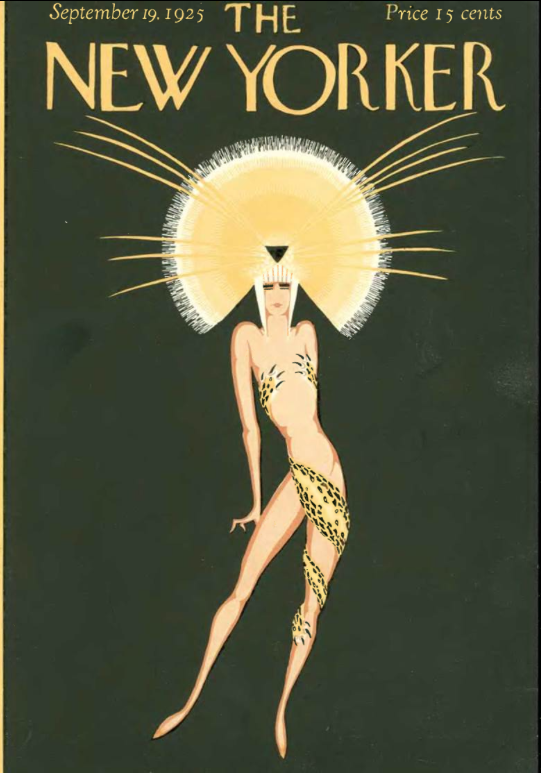
Cover for Sept. 19 by Max Ree.

It was a busy week for the Sept. 19 issue of The New Yorker. “The Talk of the Town” reported that ‘amateur beauties” at the Atlantic City Beauty Pageant (known today as the Miss America Pageant) were “protesting against the presence of professional sisters in the contest.” Talk then posed this question:

“Is beauty, one wondered, ever amateur? Is it not the most professional of all professional matters? To a man it would seem so. But women may know better. And if there is a distinction—if we are to have amateur and professional beauties—why should not the Atlantic City promoters take a leaf from golf’s book and hold an open championship, wherein the two classes may meet?

Talk concluded:

The winner of last year’s beauty contest, Miss Ruth Malcomson, tells how she won it in a recent issue of Liberty; and from these writings we leap hastily to the conclusion that the very beautiful are also very very simple.

Miss America 1924 - Ruth Malcomson (1)
Ruth Malcomson, Miss America 1924. (Vintage Everyday)

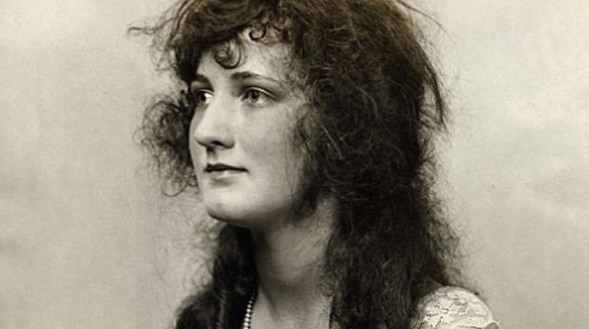
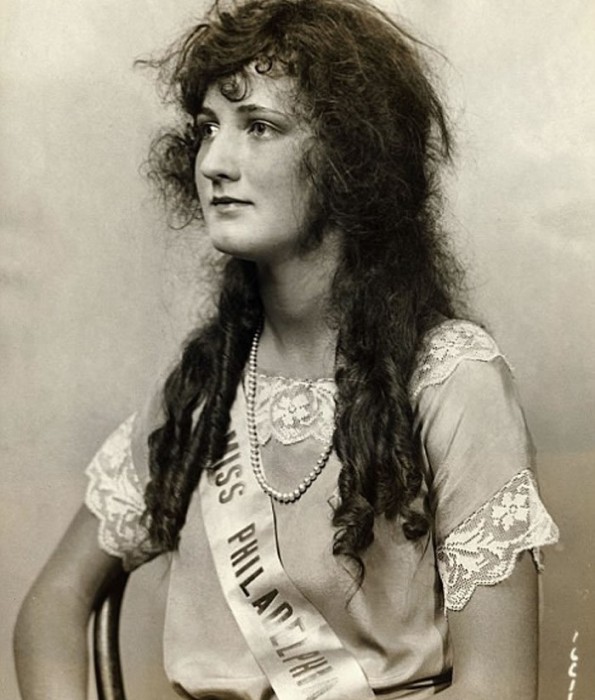
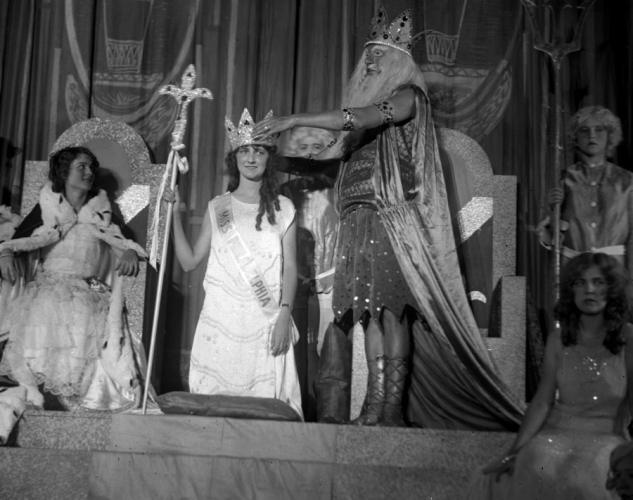
“Talk” was right about Ruth Malcomson, who was just 18 when she won the title. A native of Philadelphia, she defeated 85 fellow contestants including incumbent Mary Campbell, who was seeking her third consecutive crown. At the time the contest was only in its fourth year, and the winner was called “The Golden Mermaid.”

Miss America 1924 - Ruth Malcomson (3)
Malcomson crowned “The Golden Mermaid,” Miss America 1924

Malcomson was among the critics of the “professional” contestants. According to her obituary in the Philadelphia Inquirer (May 28, 1988) Malcomson stated in 1925 that “The pageant now has become nothing but a commercial proposition to exploit the beauties who make their living from their good looks. What chance has an ordinary girl, untrained, to win a contest in which girls who have been trained to make the most of their beauty are competing?”

miss-america-e1410754333210
Ninety-one years later…Miss New York Kira Kazantsev crowned Miss America 2015. (The Blaze)

In her Liberty Magazine interview, she also blasted women’s groups for berating her involvement in the competition.

Malcomson hinted that the women’s groups were exploiting her, not the pageant (yes, there is nothing new under the sun…).

True to her word, Malcomson married an unassuming Carl Schaubel in 1931 and returned to a quiet, simple life in suburban Philadelphia.

Miss America 1924 - Ruth Malcomson (5)
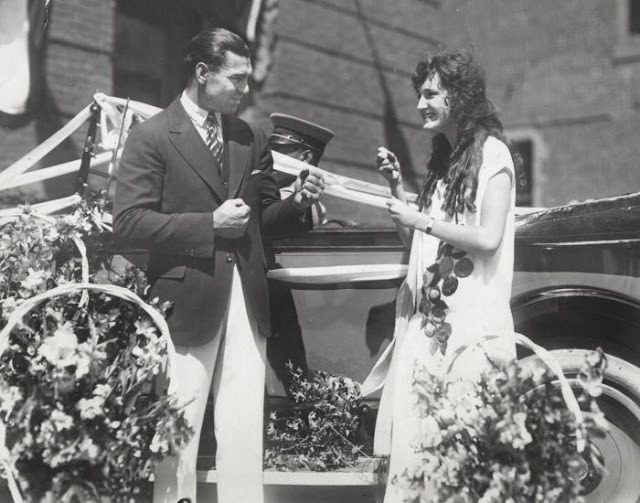
Standing next to the Rickenbacker car she won as Miss America in 1924, Ruth Malcomson playfully spars with World Heavyweight Champion boxer Jack Dempsey. (Vintage Everyday)

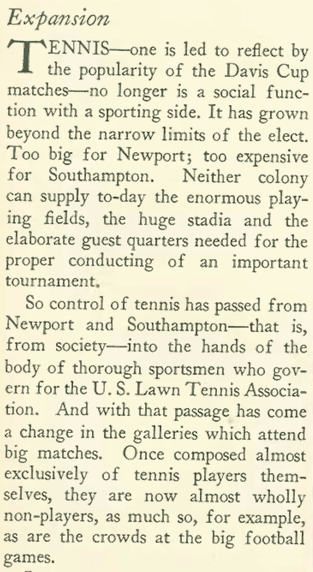
In other “Talk” items, the “No Smoking” rule at the public library was challenged, and arguments were made for special smoking rooms that could be reserved for writers. The column also offered comment on the growing popularity of tennis as a professional spectator sport, rather than merely a side activity for a society weekend:

Screenshot 2015-06-26 13.45.06

“Profiles” turned its attention to bodybuilder and publisher Bernarr McFadden (featured in an earlier post in this blog). McFadden was always at the cutting-edge of scandal, whether for the nearly nude photos featured in his Physical Culture Magazine, or for the celebrity scandal and sensational crime reported in his Evening Graphic.

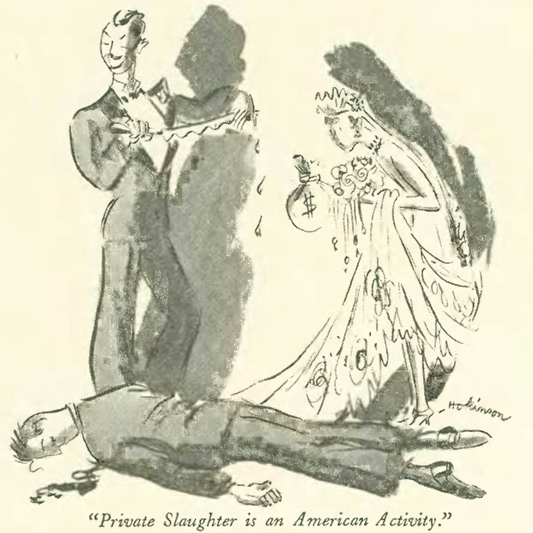
In his essay “Murder As Bad Art,” Waldo Frank pondered America’s high homicide rate, and suggested that murder is an expedient means toward an end for the impatient American. An excerpt, with artwork by Helen Hokinson:

Screenshot 2015-06-26 13.59.42

Screenshot 2015-06-26 13.59.13

Screenshot 2015-06-26 13.59.22

cather
Willa Cather (Nebraska History)

In “Books,” Harry Este Dounce offered a lengthy, thoughtful and positive review of Willa Cather’s latest novel, The Professor’s House, and likened its tone to an Ibsen play. Cather would continue to receive praise from New Yorker critics throughout the remainder of her career.

In “Sports Of The Week” John Tunis offered extensive coverage of the Davis Cup matches, and noted that American star Bill Tilden was hurt and was “far from the Tilden of old.” There were rumors that Tilden was determined to throw his match with French tennis champion Jean Borotra. Tunis wrote that he had his suspicions, but offered that perhaps Tilden was playing carelessly as he had done before “with other less celebrated opponents.”

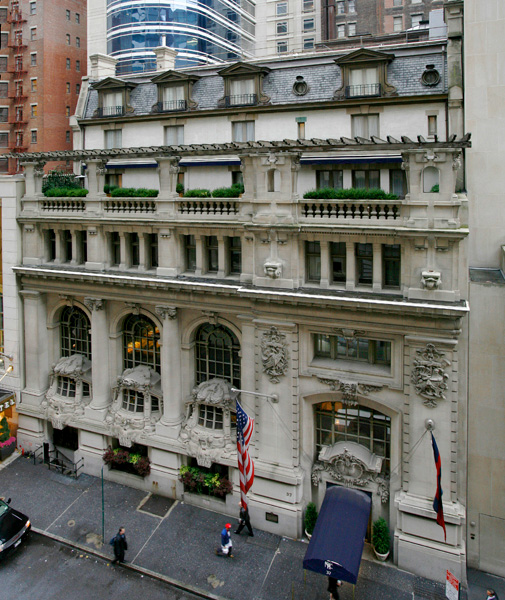
And Lois Long offered her frank opinions on two New York hotspots, the 45th Street Yacht Club and the Owl Club at 125 East 45th:

new-york-city-yacht-club-jeffrey-erb1
The Yacht Club building today (erbology.com)

Screenshot 2015-06-26 14.32.35

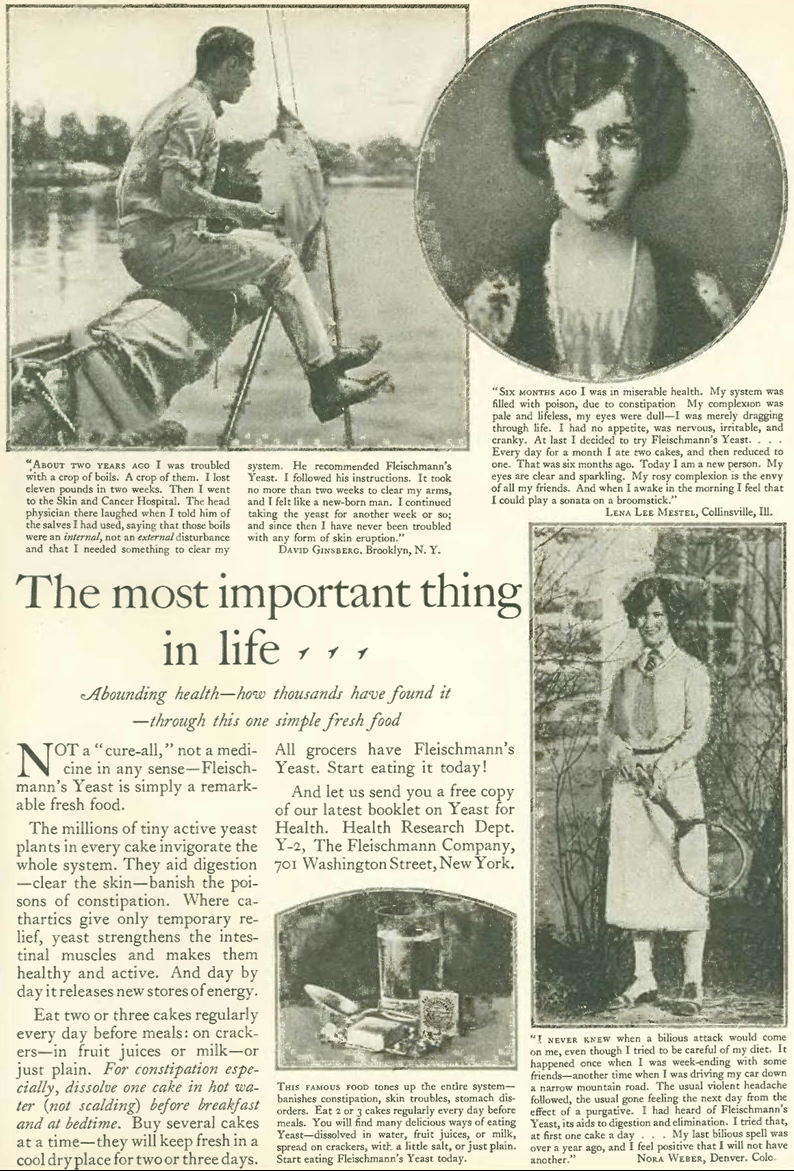
And another ad courtesy of Raoul Fleischmann, with testimonials from a man and two women who credit Fleischmann yeast with curing them of boils, constipation and “bilous” attacks:

Screenshot 2015-06-26 14.36.08

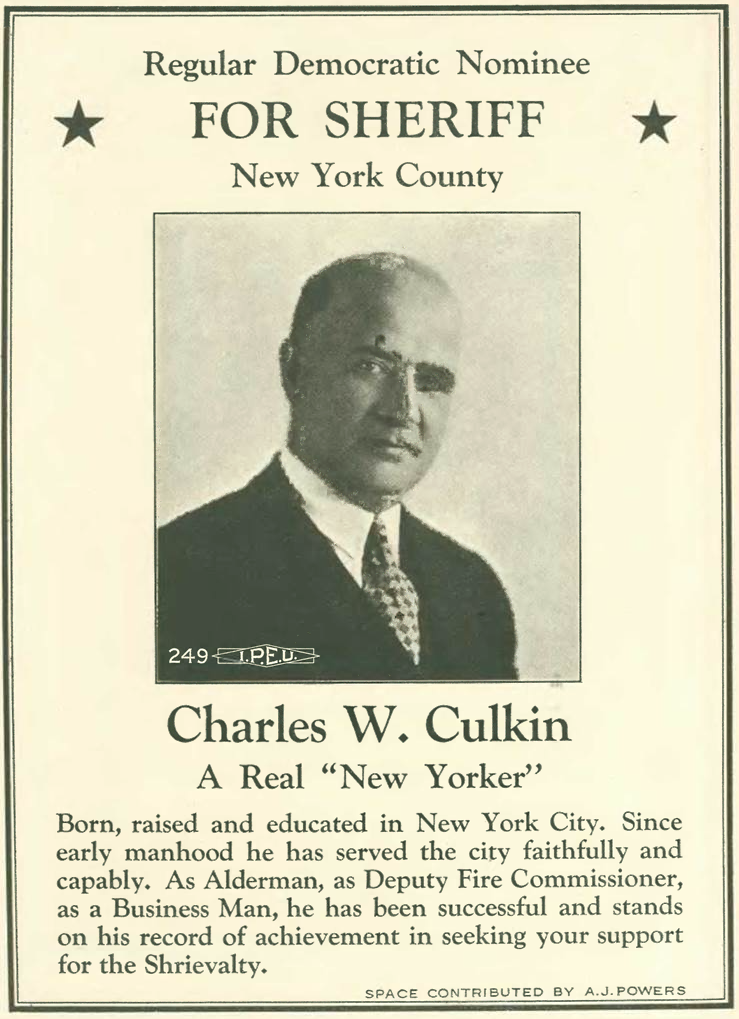
Well, at least advertising revenue is up, but this ad seems out of place in a magazine like The New Yorker:

Screenshot 2015-06-26 14.37.04

Charles Culkin was a Tammany Hall politician who would serve as county sheriff from 1926 to 1929. He was later indicted for embezzling interest money from the sheriff’s office, part of the whole mess that brought down Mayor Jimmy Walker (we will explore that later, I am sure).

Now, for a couple of cartoons by Isadore Klein and Johann Bull, featured on facing pages, that illustrate two very different aspects of New York life in the 1920s:

Screenshot 2015-06-26 14.04.38

Screenshot 2015-06-26 14.04.55

Next time: Fall fashions!

Screenshot 2015-06-26 15.03.49