Writer and cultural critic Gilbert Seldes apparently wasn’t so put off by The New Yorker’s scathing review of his play, The Wisecrackers (Dec. 26, 1925) that he couldn’t continue writing for the magazine. In the Jan. 30, 1926 issue he offered an interesting essay on the particular appeal of Cuba. Titled “Annexation is the Best Policy,” it is an interesting read given the current reopening of diplomatic relations between Cuba and the U.S.
Given that Seldes penned his article about 30 years before the Cuban revolution, he offers some interesting insights into the independent character of the island nation and, perhaps inadvertently, also reveals American attitudes that helped to fuel the revolutionary fire. Seldes writes “the fact that Cuba has never been officially Americanized is supposed to be proof of our innate idealism; to me it seems more like a proof of the lack of imagination which ran through the whole McKinley period. To have taken the Philippines and passed up Cuba–how incredibly naive!” He goes on to observe that the total lack of “peaceful penetration” is proof that the island “will cling to its character no matter how many Americans do their worst.” Here is the entire article, interspersed with vintage images:
Havana Club atop the Hotel Sevilla in 1920s Havana (Havana Club)
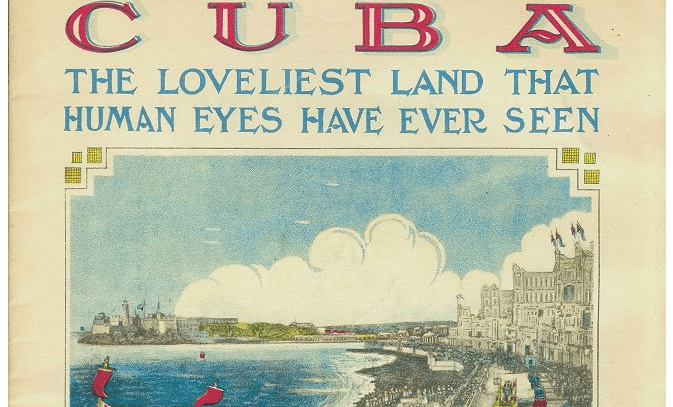
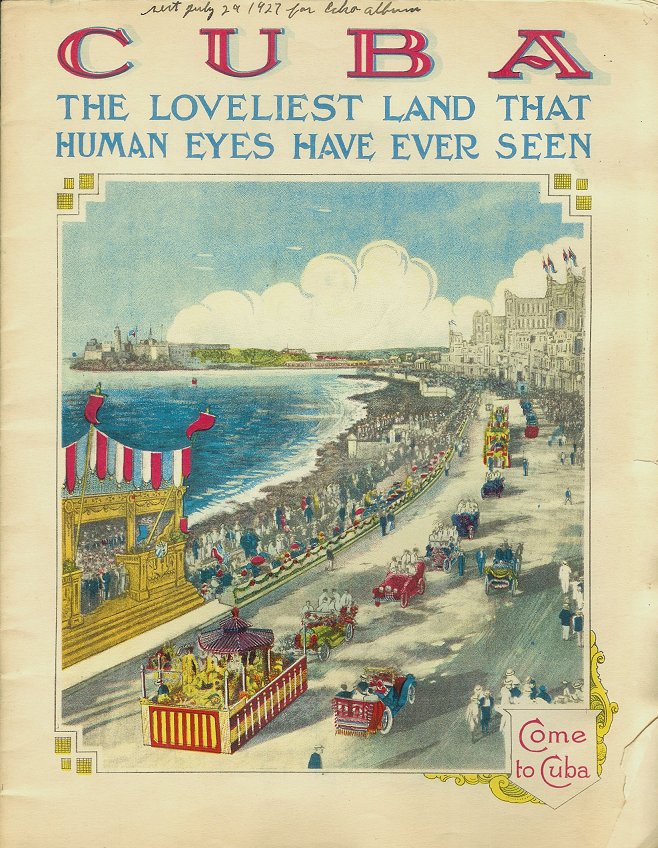
1927 tourist brochure enticing visitors to Cuba (Havana Journal)
Also in the issue was profile of the life of silent film star Harold Lloyd. The writer R. E. Sherwood marveled at how a man from small town Nebraska became one of Hollywood’s most bankable stars and was even building a home in Beverly Hills for the staggering sum of $1 million.
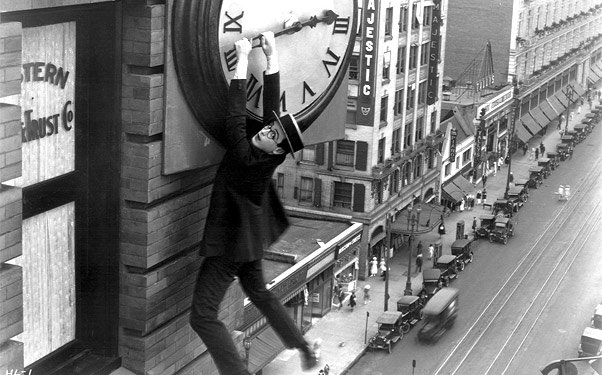
HANG ON HAROLD…Lloyd in Safety Last, 1923. Illustration of Harold Lloyd by James House Jr. for the New Yorker profile.
In his “Of All Things” Column, Howard Brubaker made note of the following:
Neither Brubaker, nor Edwin Hubble for that matter, could have ever imagined that in 64 years a telescope bearing Hubble’s name would be launched into space and resolve a number of long-standing problems in astronomy.
To close, a couple of advertisements from the front section of the magazine. Now we know what youth wear at smart tea dances…
Silent film star (and sometime French “noble”) Gloria Swanson was back in the States after a summer sojourn at her Paris residence.
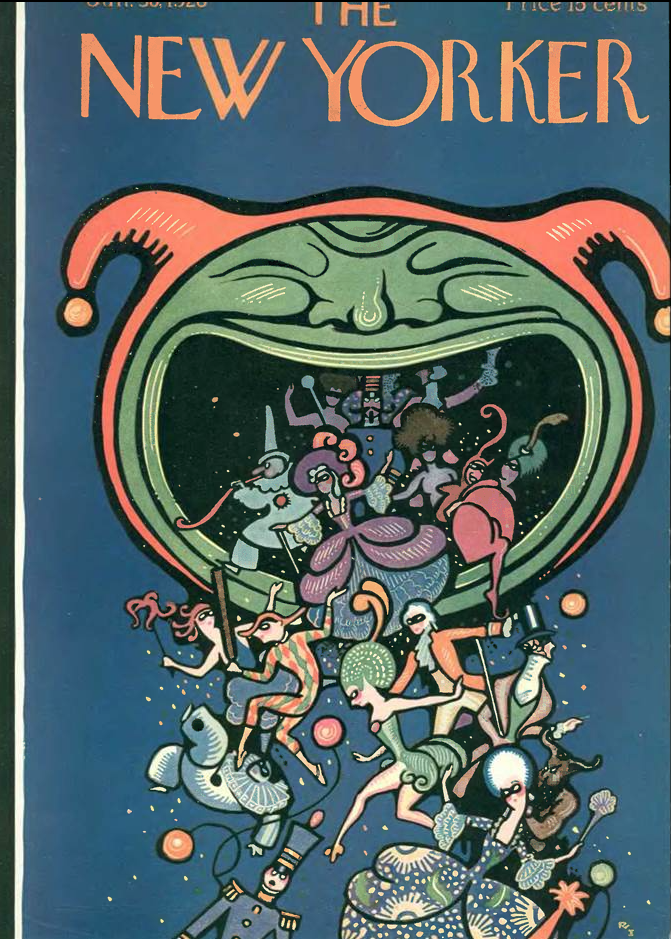
Nov. 14, 1925 cover by Joseph Fannel.
“The Talk of the Town” reported that she had arrived on the steamer Paris, with the great Polish pianist and statesman Jan Paderewski in tow…
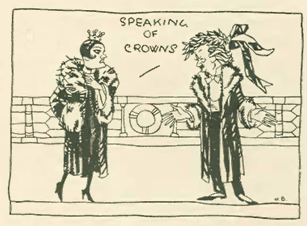
Johan Bull’s take on Swanson’s grand arrival with Paderewski, who was much decorated as both a statesman and artist:
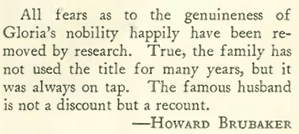
The New Yorker made light of the fact that Swanson assumed a rather regal bearing not only as a famous film star but also as the new wife of French aristocrat Henri, Marquis de la Falaise de la Coudraye, her third husband. In his column, “Of All Things,” Howard Brubaker added this swipe at the Swanson’s pretensions to royalty:
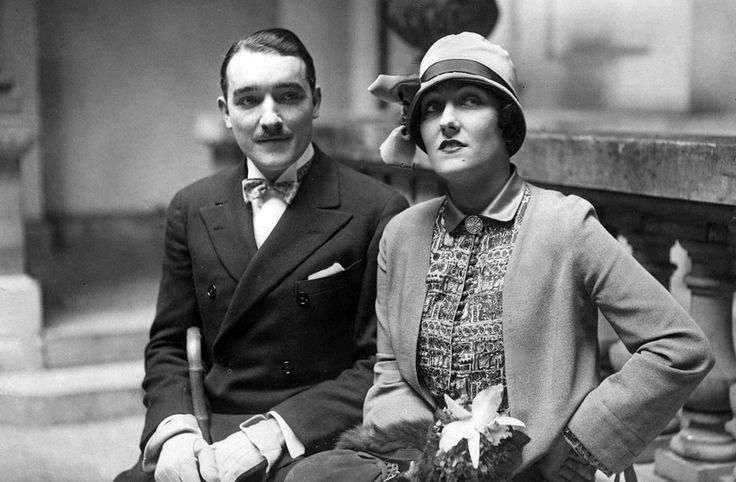
Although a marquis and member of the famous Hennessy Cognac family, Henri was not wealthy and worked for a living. He met Swanson when he was hired to be her assistant and interpreter during the filming of Madame Sans-Gêne (1925) in France. The match of a Hollywood star with European nobility made the marriage a global sensation.
MON CHÉRI…Photo taken around the time of the wedding of Marquis Henri de la Falaise and Gloria Swanson, January 1925. (indypendent-thinking.tumblr.com)
The marriage ended in divorce in 1930. According to Wikipedia, (citing two books on the subject), Swanson had an affair with Joseph P. Kennedy Sr. for several years during her marriage to Henri:
Henri became a film executive representing Pathé (USA) in France through Joseph P. Kennedy, Sr., who was running the studio. Many now assume he was given the position, which kept him in France for ten months a year, to simply keep him (Henri) out of the way…(Kennedy) became her business partner and their relationship was an open secret in Hollywood. He took over all of her personal and business affairs and was supposed to make her millions. Unfortunately, Kennedy left her after the disastrous “Queen Kelly” and her finances were in worse shape than when he came into her life.
GOOD OLD DAYS…Life beneath the Sixth Avenue El (Wikipedia)
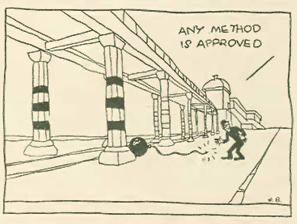
In another Talk item, the Sixth Avenue Elevated rail line continued to serve as a “blot” upon the city of New York (Johan Bull illustration):
According to a Wikipedia, the old Sixth Avenue El (constructed during the 1870s) was notoriously noisy, made buildings shake, and bombarded pedestrians underneath with dropping ash, oil, and cinders. Eventually, a coalition of commercial establishments and building owners would stage a successful campaign to have the El removed because it was hurting business and property values. It would be razed in 1939 and replaced by the underground IND Sixth Avenue Line.
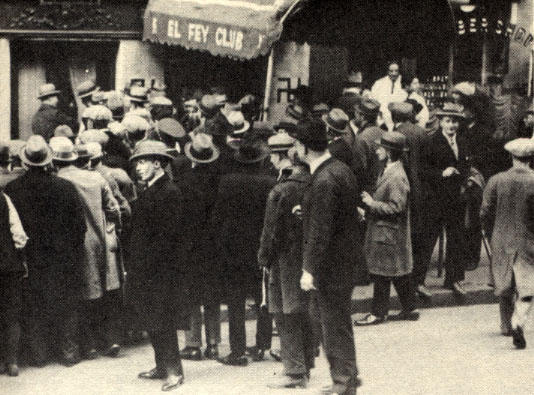
SPOIL SPORTS…Buckner’s agents padlock New York’s El Fey Club in 1925 before a gathering crowd.
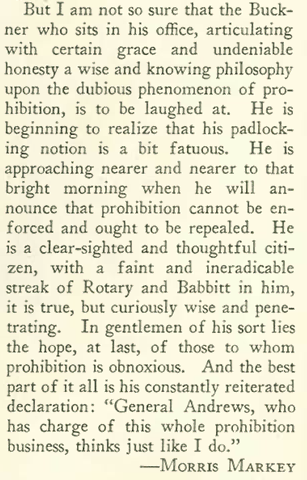
The New Yorker also featured a lengthy interview with Emory Buckner (conducted by Morris Markey), in which the New York District Attorney discussed his approach to Prohibition enforcement, including the padlocking of restaurants and clubs found to be serving alcohol. In a surprisingly frank interview, Buckner said his zealous crusade had nothing to do with moral conviction:
Buckner also admitted that the government wasn’t making a serious effort to enforce Prohibition (e.g. low salaries for agents), and if it wasn’t going to make the effort then the law should be repealed. Markey concluded his article with words of surprising admiration for a man who had been so thoroughly excoriated in previous issues of The New Yorker.
In other items, theatre critic Herman J. Mankiewicz stepped out of the “Critique” section to write about his experience travelling by train to a football game. He found the whole spectacle (especially the coonskin coat-clad fans) wanting.
No doubt Mankiewicz’s fellow travellers were clad in something similar to this. The ad appeared in the same issue as Mankiewicz’s article.
Waldo Frank contributed a profile of the popular poet Carl Sandburg, whom he described as moving “through the Machine of our world” with “a peasant’s mind.” Frank used the term not necessarily as a criticism but as a way to describe Sandburg’s Midwestern simplicity. However, a drawing by James House Jr. that accompanied the article depicted Sandburg not as a man of letters, but more like some dim-witted forebear of Homer Simpson:
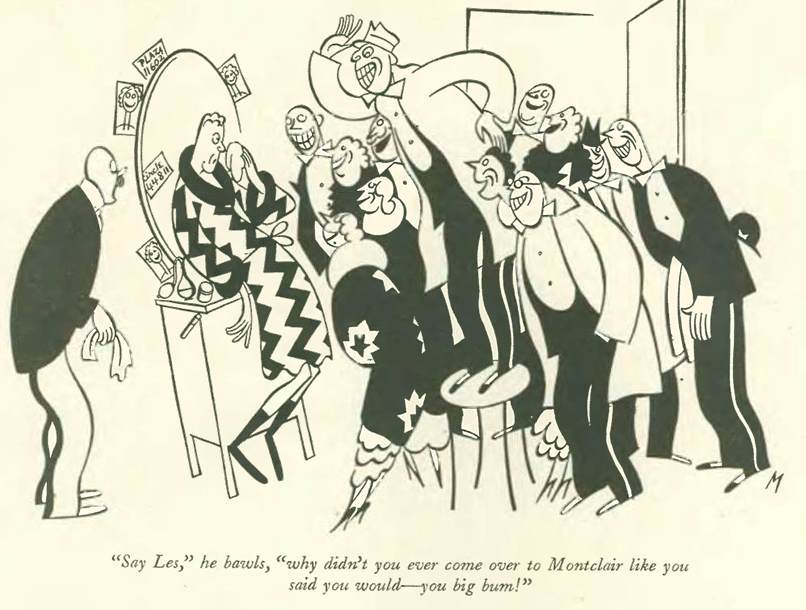
The actor Leslie Howard contributed another humorous piece to The New Yorker titled “Such is Fame,” accompanied by this Julian de Miskey illustration:
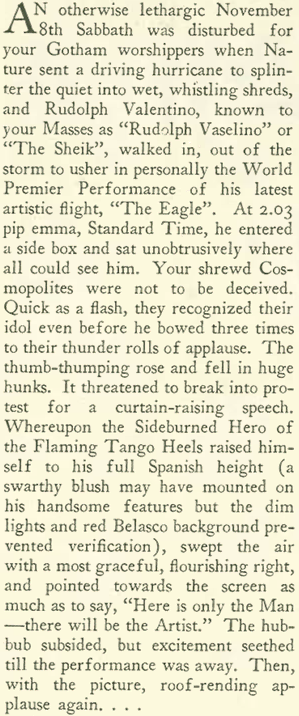
Theodore Shane reported in “Motion Pictures” that Rudolph Valentino appeared in person at the opening of his new film, The Eagle. Known for his aversion to public appearances, Valentino handled the occasion with a silent flourish:
Vilma Bánky and Rudolph Valentino in The Eagle. (Wikimedia Commons)
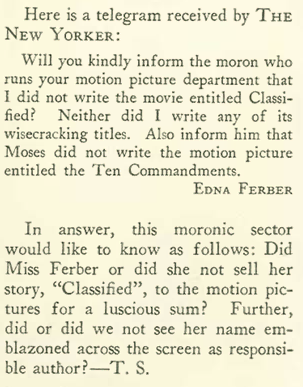
At the end of his column Shane included this exchange with novelist and playwright Edna Ferber, who was also one of the regular wits at the Algonquin Round Table:
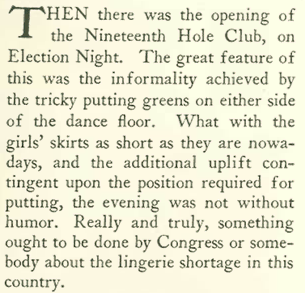
In “Tables for Two,” Lois Long wrote about the opening of the Nineteenth Hole Club at the Roosevelt Hotel, and noted that the putting greens on either side of the dance floor offered “additional uplift” to short skirts worn by some female patrons:
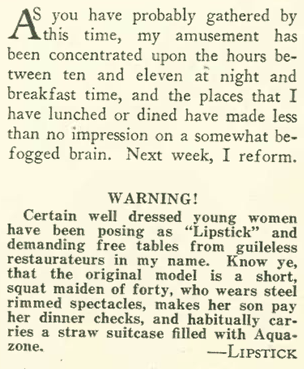
She closed her column with this observation and a “warning” about “Lipstick” imposters:
This was a familiar jest by Long in her “Tables for Two” column–describing herself as short and squat–since most readers did not know her true identity or appearance, which was quite the opposite.
In Long’s other column, “On And Off The Avenue,” she offered this advice to women who were fashion-conscious but also thrifty:















 A New Yorker State of Mind